
W 3 C and RDF Why OCLC is
- Slides: 14
W 3 C and RDF
Why OCLC is a W 3 C Member 4 The Web is transforming our environment 4 Access to networked information resources – the browser and online access – the breath and depth of networked information resources – new ways of publishing 4 Less obvious ways – enhanced interoperability – restructuring of business relations – a transformational way in how goods and services are delivered
RDF Objectives 4 Resource Description Framework 4 Machine understandable metadata 4 Support structured values 4 Support metadata bureaus 4 Encourage authenticated metadata 4 Base for a variety of descriptions: – cataloging, privacy, accessibility, IPR, . . .
RDF Components 4 Formal data model 4 Syntax for interchange of data 4 Schema Type system (schema model) 4 Syntax for machine-understandable schemas 4 Query and profile protocols
RDF Data Model 4 Imposes structural constraints on the expression of application data models – for consistent encoding, exchange and processing of metadata 4 Enables resource description communities to define their own semantics 4 Provides for structural interoperability
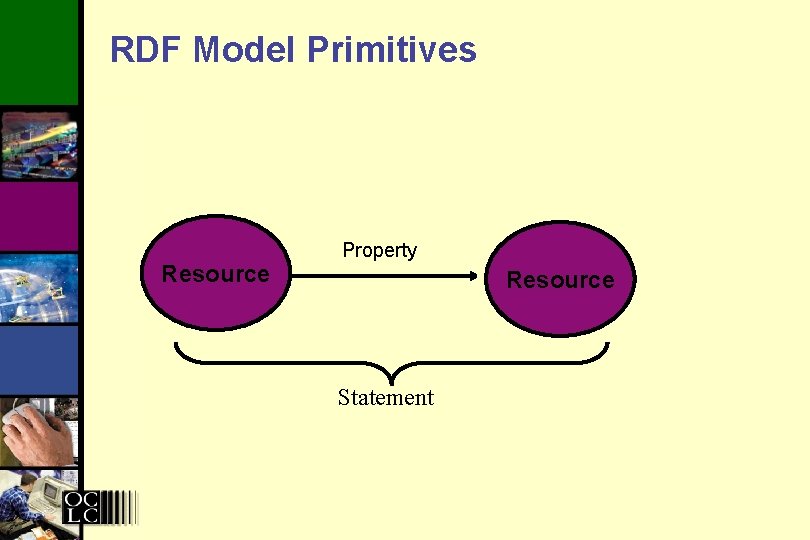
RDF Model Primitives Resource Property Value Resource Statement
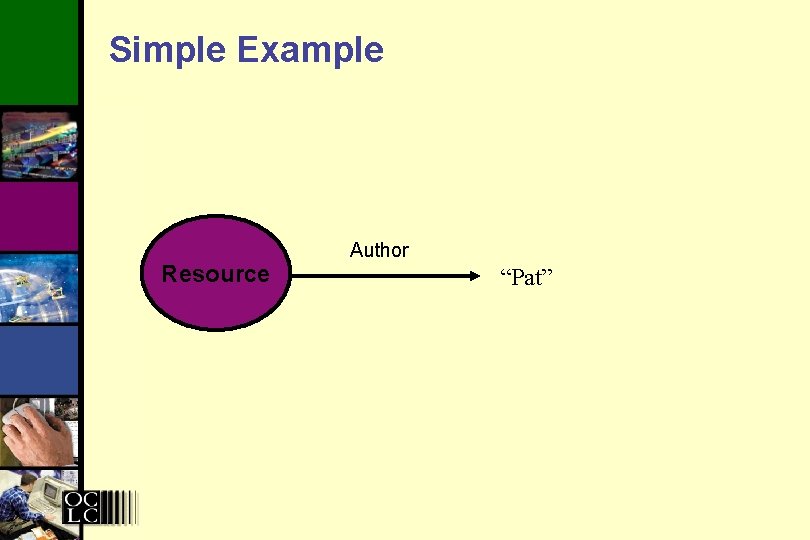
Simple Example Resource Author “Pat”
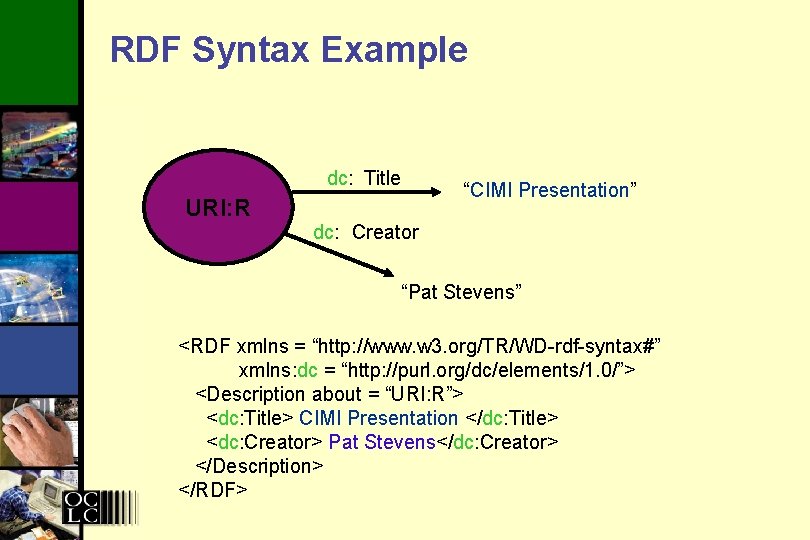
RDF Syntax 4 RDF Model defines a formal relationships among resources, properties and values 4 Syntax is required to. . . – Store instances of the model into files – Communicate files from one application to another 4 W 3 C XML e. Xtensible Markup Language – http: //www. w 3. org/XML
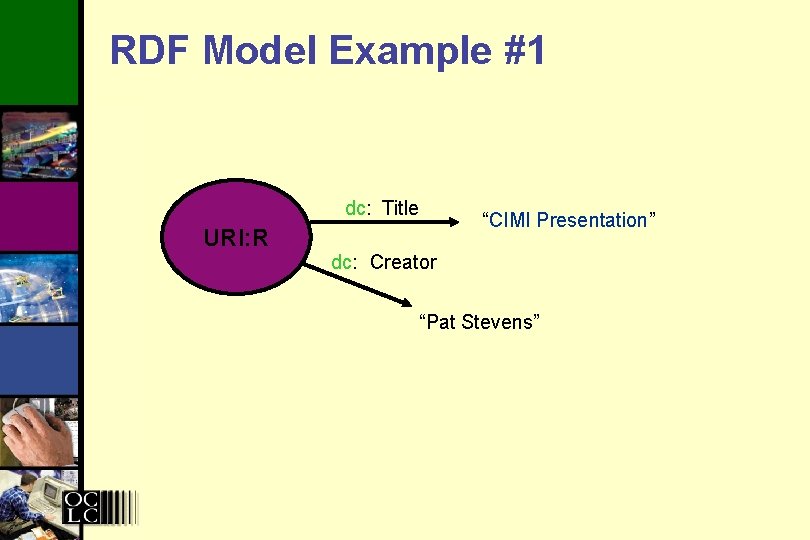
RDF Model Example #1 dc: Title URI: R “CIMI Presentation” dc: Creator “Pat Stevens”
RDF Syntax Example dc: Title URI: R “CIMI Presentation” dc: Creator “Pat Stevens” <RDF xmlns = “http: //www. w 3. org/TR/WD-rdf-syntax#” xmlns: dc = “http: //purl. org/dc/elements/1. 0/”> <Description about = “URI: R”> <dc: Title> CIMI Presentation </dc: Title> <dc: Creator> Pat Stevens</dc: Creator> </Description> </RDF>
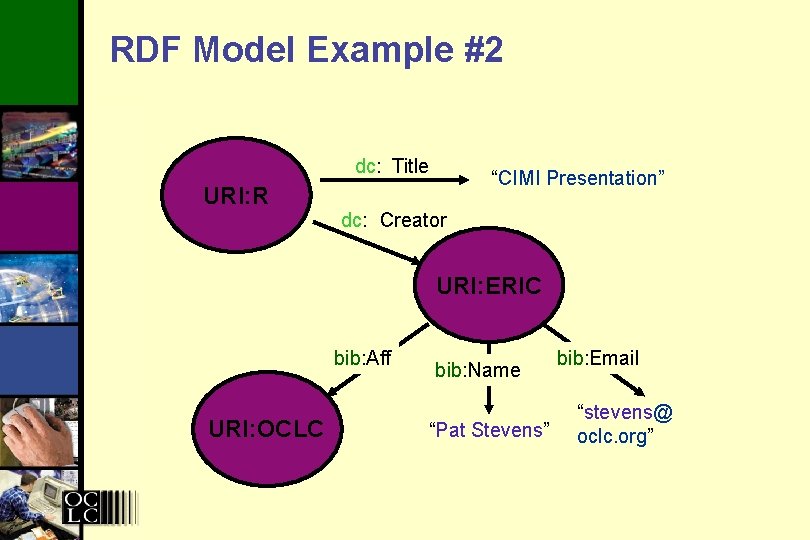
RDF Model Example #2 dc: Title URI: R “CIMI Presentation” dc: Creator “Eric Miller” URI: ERIC bib: Aff “OCLC” URI: OCLC bib: Name “Pat Stevens” bib: Email “stevens@ oclc. org”
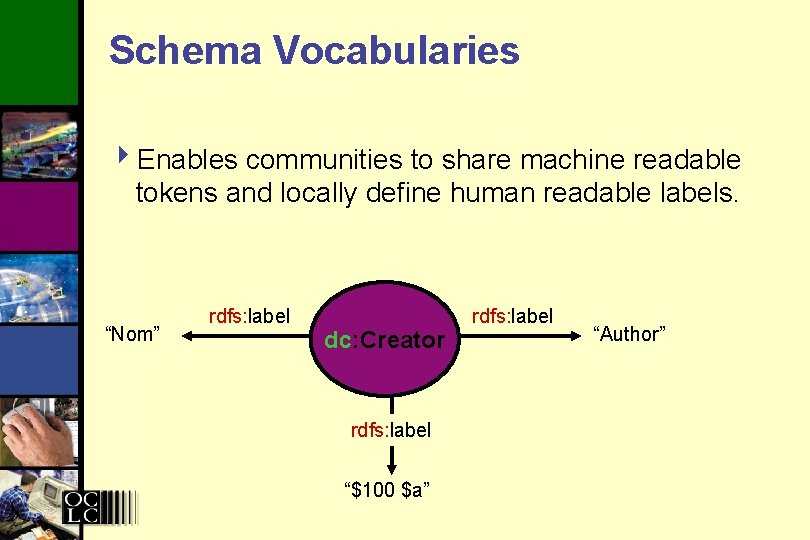
Schema Vocabularies 4 Enables communities to share machine readable tokens and locally define human readable labels. “Nom” rdfs: label dc: Creator rdfs: label “$100 $a” rdfs: label “Author”
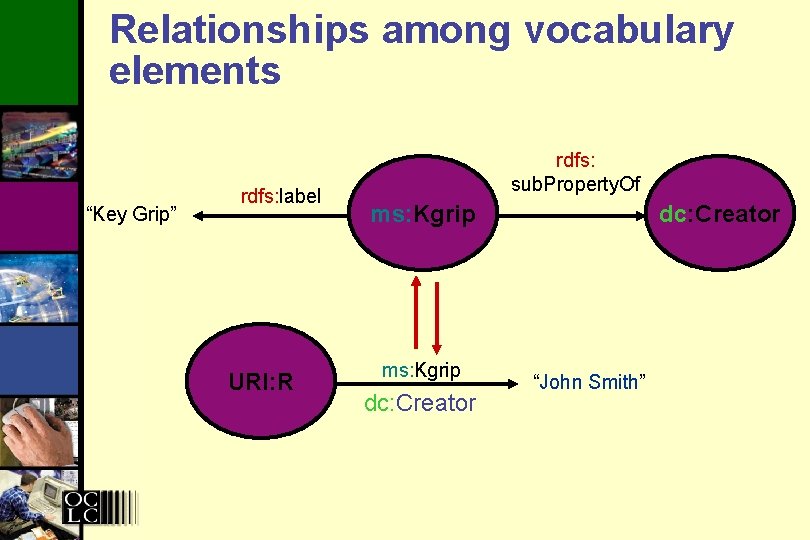
Relationships among vocabulary elements “Key Grip” rdfs: label URI: R rdfs: sub. Property. Of ms: Kgrip dc: Creator “John Smith”
RDF Information 4 W 3 C RDF Model and Syntax Speciation – Recommendation Status Feb 24, 1999 4 W 3 C RDF Schema Specifications – Proposed Recommendation Status Mar 4, 1999 4 W 3 C RDF Home Page – http: //www. w 3. org/RDF/