
VUS 10 b The Causes and Consequences of
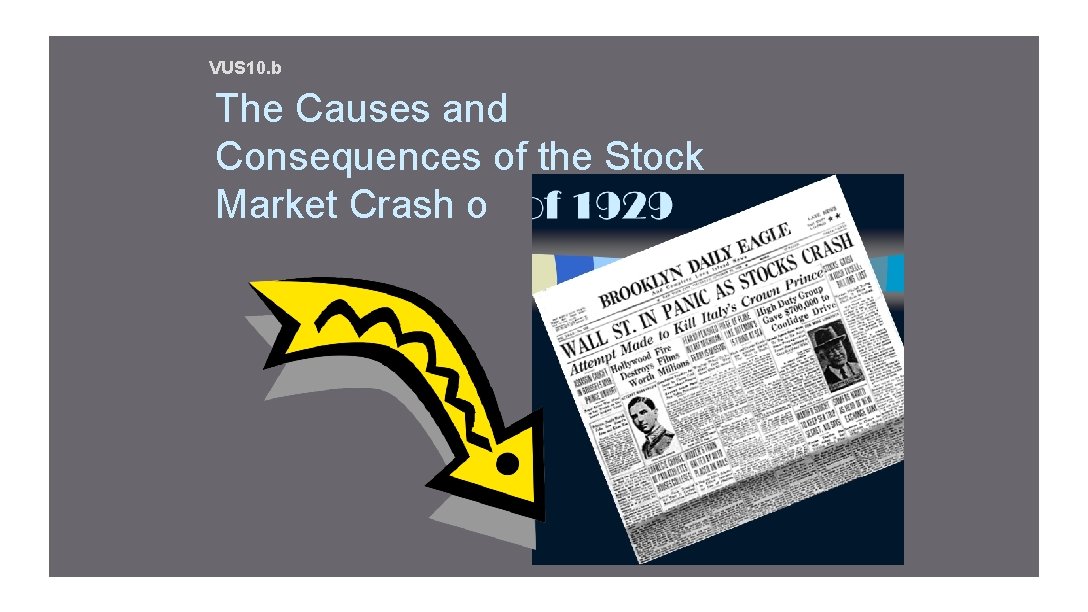
VUS 10. b The Causes and Consequences of the Stock Market Crash o f 1929
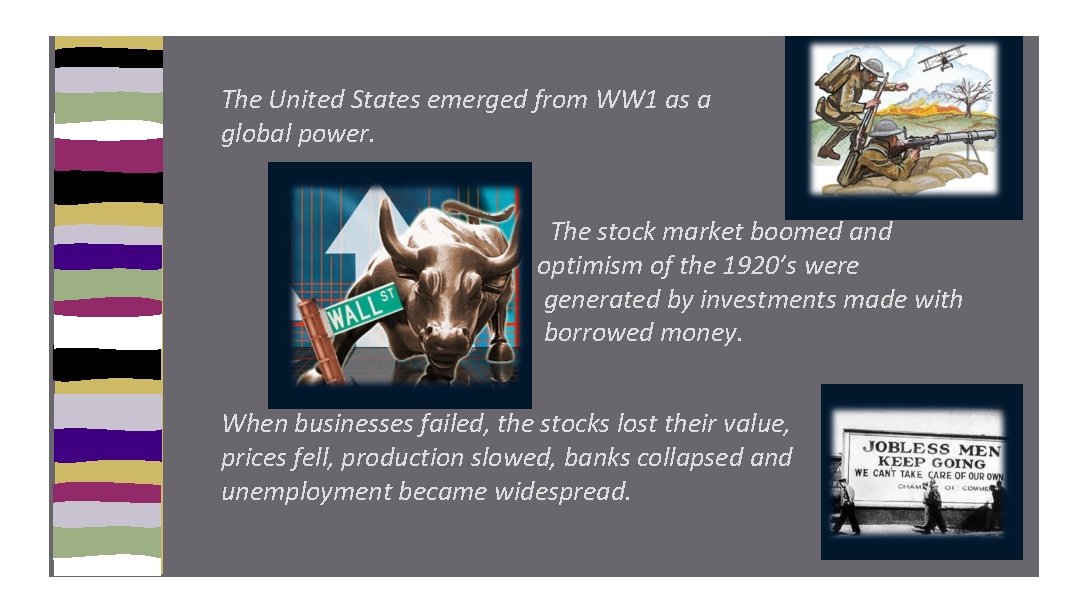
The United States emerged from WW 1 as a global power. The stock market boomed and optimism of the 1920’s were generated by investments made with borrowed money. When businesses failed, the stocks lost their value, prices fell, production slowed, banks collapsed and unemployment became widespread.
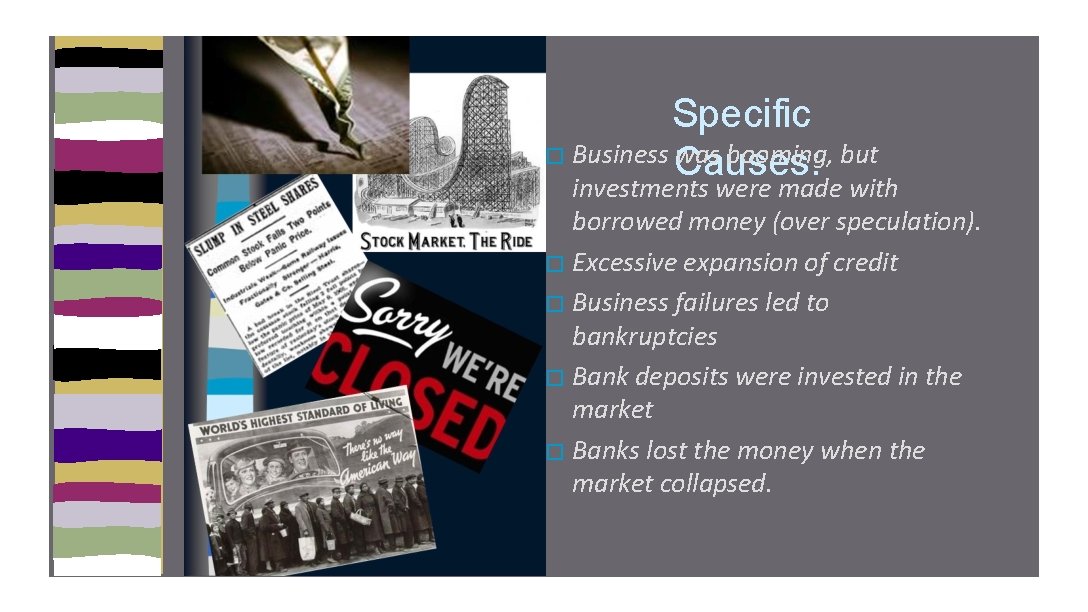
Specific � Business was booming, but Causes: investments were made with borrowed money (over speculation). � Excessive expansion of credit � Business failures led to bankruptcies � Bank deposits were invested in the market � Banks lost the money when the market collapsed.
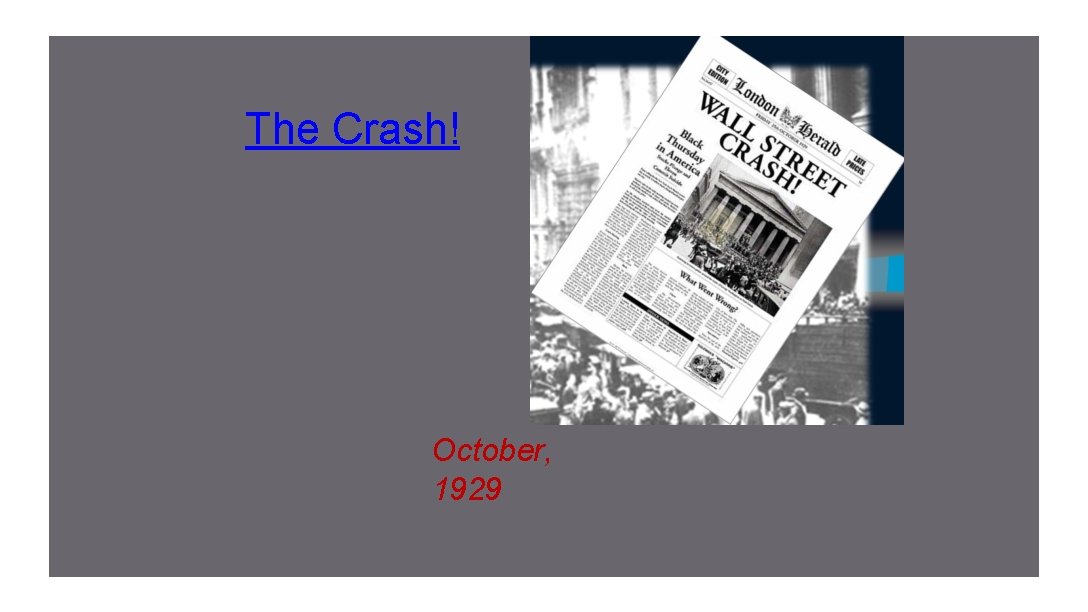
The Crash! October, 1929
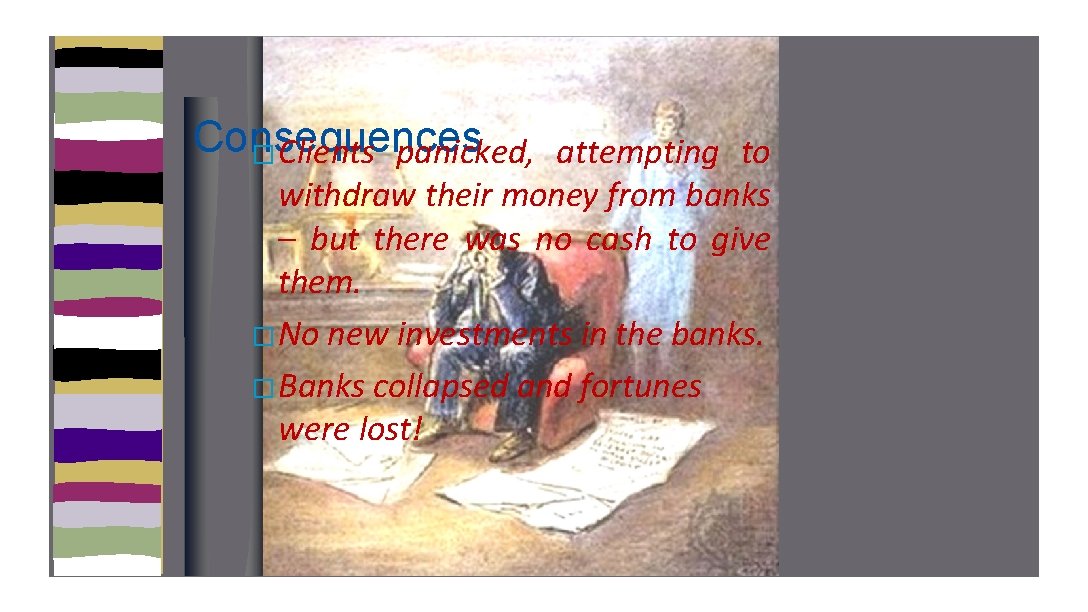
Consequences � Clients panicked, attempting to withdraw their money from banks – but there was no cash to give them. � No new investments in the banks. � Banks collapsed and fortunes were lost!

VUS 10. c HARDSHIPS OF
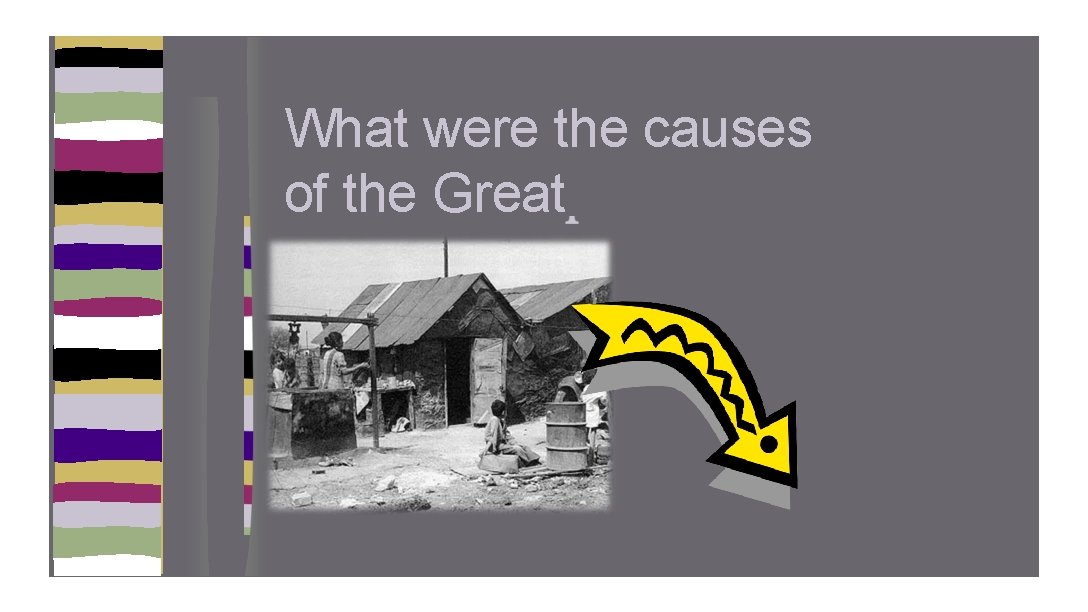
What were the causes of the Great Depression?
Causes of the Great Depression �Over speculation on stocks using borrowed money that could not be repaid when the stock market crashed in 1929 and stock prices collapsed. This was also called buying stocks “on margin”.
Causes of the Great Depression � Federal Reserve’s failure to prevent widespread collapse of the nation’s banking system in the late 1920 s and early 1930 s, leading to severe contraction in the nation’s supply of money in circulation.
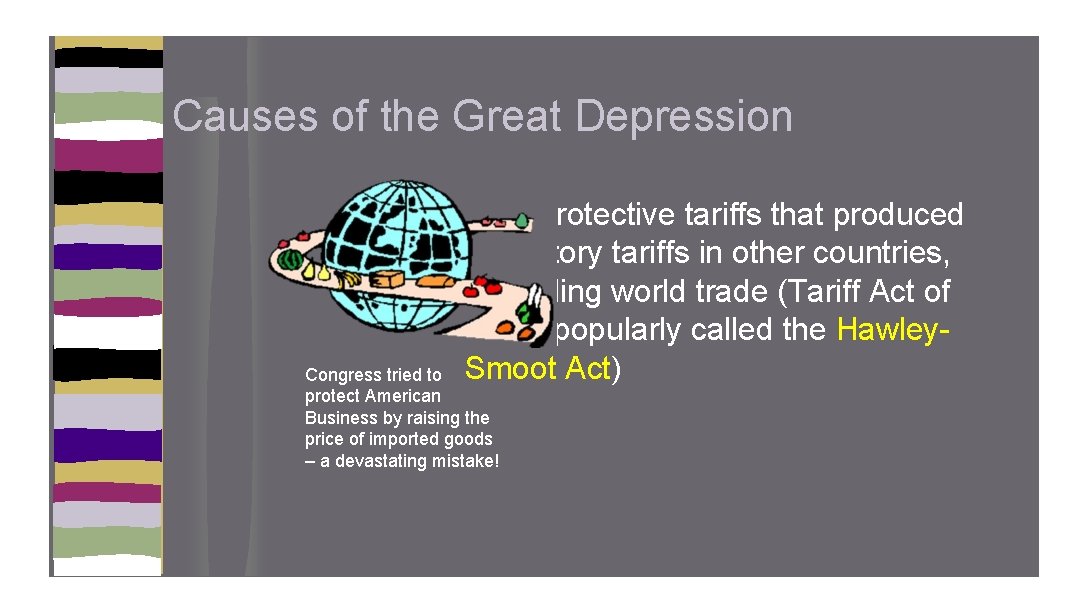
Causes of the Great Depression �High protective tariffs that produced retaliatory tariffs in other countries, strangling world trade (Tariff Act of 1930, popularly called the Hawley. Congress tried to Smoot Act) protect American Business by raising the price of imported goods – a devastating mistake!

How did the depression affect the lives of Americans?
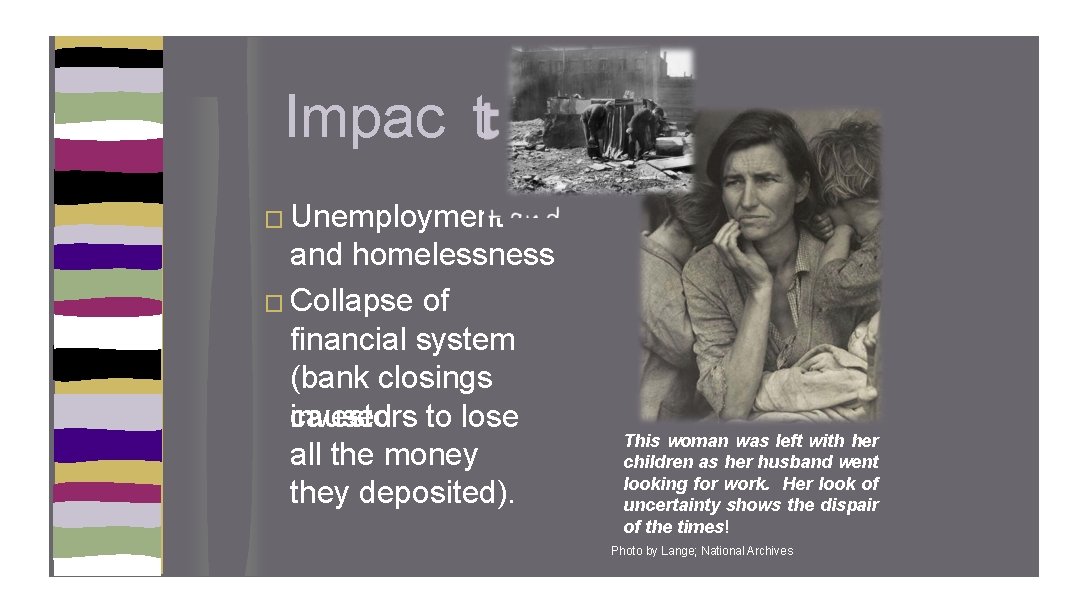
Impac t � Unemployment and homelessness � Collapse of financial system (bank closings caused to lose investors all the money they deposited). This woman was left with her children as her husband went looking for work. Her look of uncertainty shows the dispair of the times! Photo by Lange; National Archives
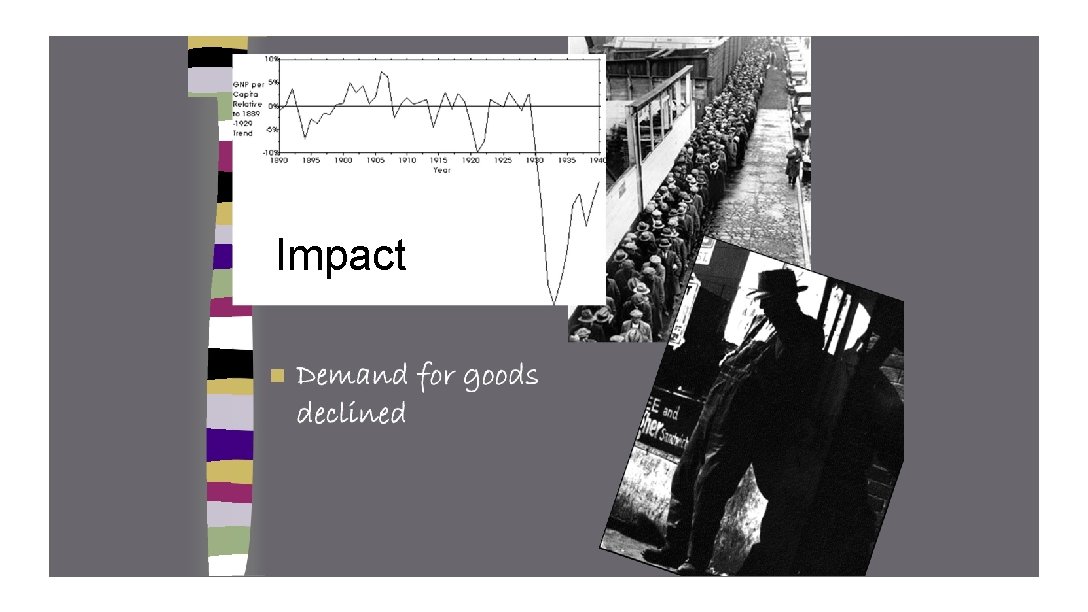
Impact � Demand for goods declined
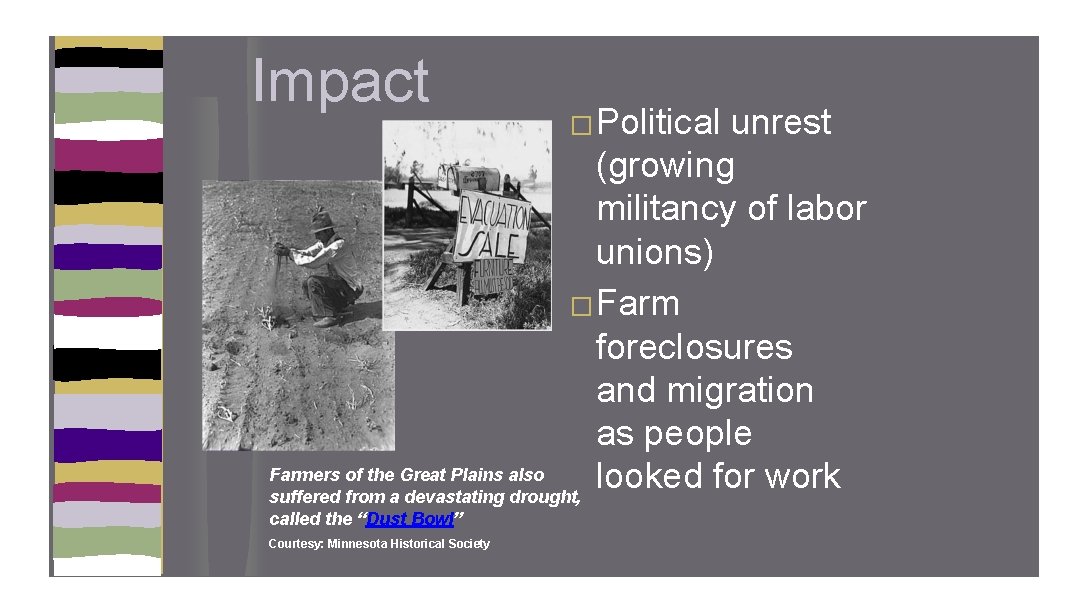
Impact unrest (growing militancy of labor unions) � Farm foreclosures and migration as people Farmers of the Great Plains also looked for work suffered from a devastating drought, called the “Dust Bowl” Courtesy: Minnesota Historical Society � Political
- Slides: 14