
Vulnerability of open ocean food webs in the
Vulnerability of open ocean food webs in the tropical Pacific to climate change Presented by Valerie Allain
Authors This presentation is based on Chapter 4 ‘Vulnerability of open ocean food webs in the tropical Pacific to climate change’ in the book Vulnerability of Tropical Pacific Fisheries and Aquaculture to Climate Change, edited by JD Bell, JE Johnson and AJ Hobday and published by SPC in 2011. The authors of Chapter 4 are: Robert Le Borgne, Valerie Allain, Shane P Griffiths, Richard J Matear, A David Mc. Kinnon, Anthony J Richardson and Jock Young
Photo: Marc Taquet, FADIO, IRD/IFREMER Photo: Photoshot/Superstock
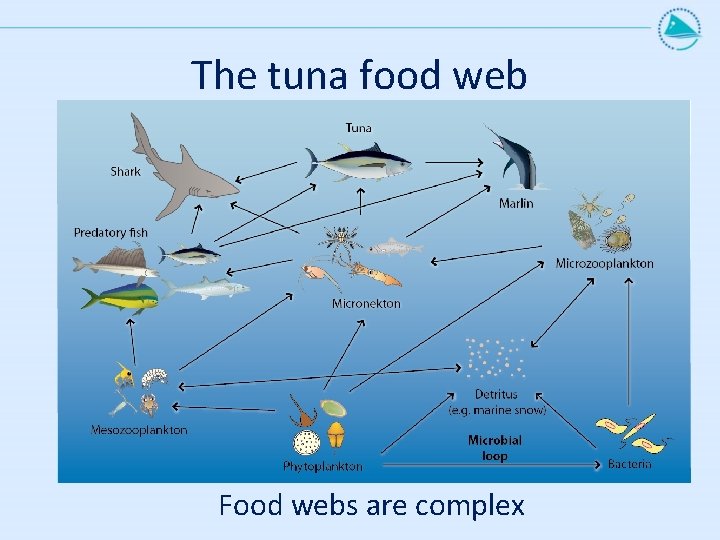
The tuna food web Food webs are complex
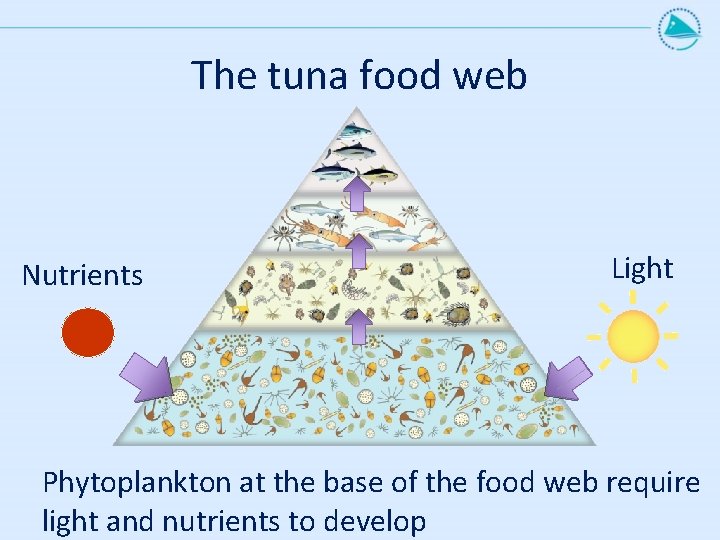
The tuna food web Nutrients Light Phytoplankton at the base of the food web require light and nutrients to develop
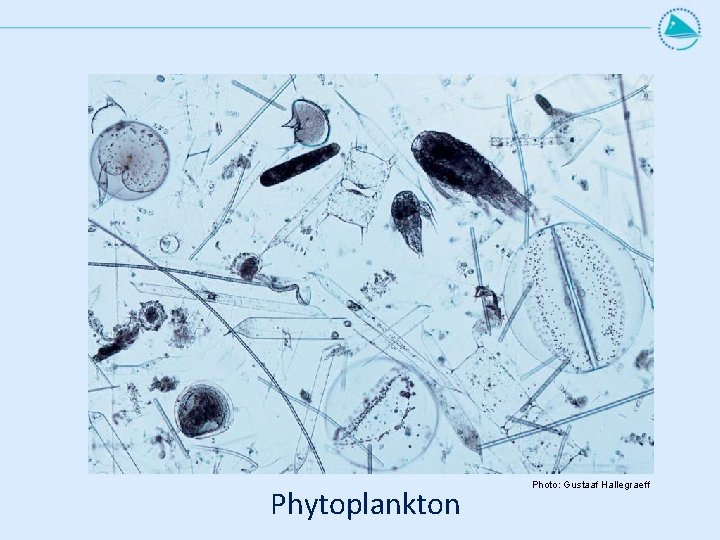
Phytoplankton Photo: Gustaaf Hallegraeff
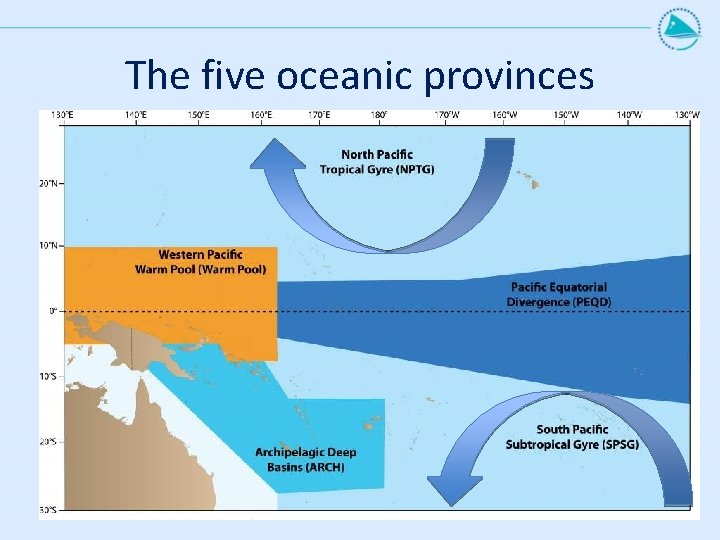
The five oceanic provinces
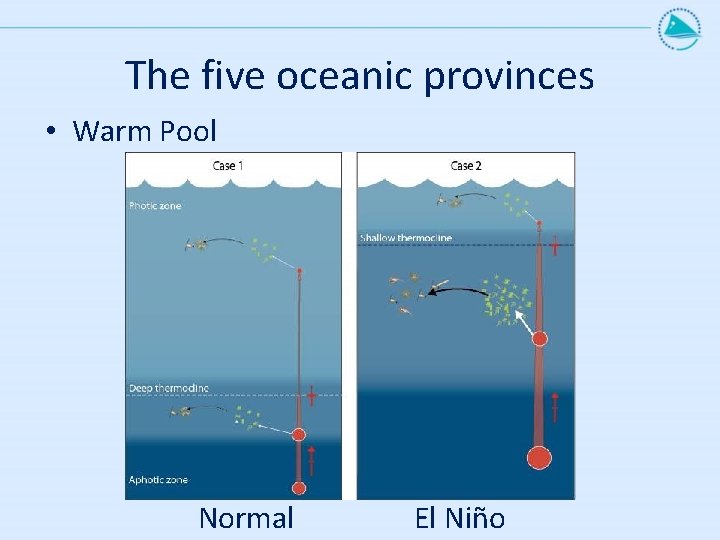
The five oceanic provinces • Warm Pool Normal El Niño
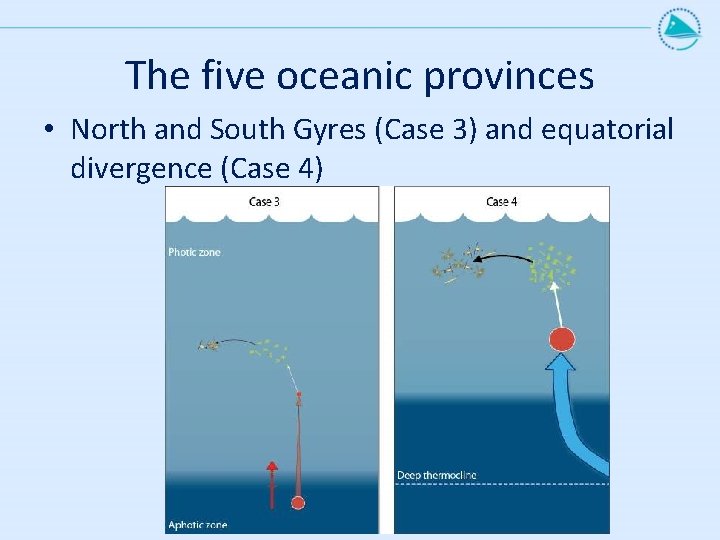
The five oceanic provinces • North and South Gyres (Case 3) and equatorial divergence (Case 4)
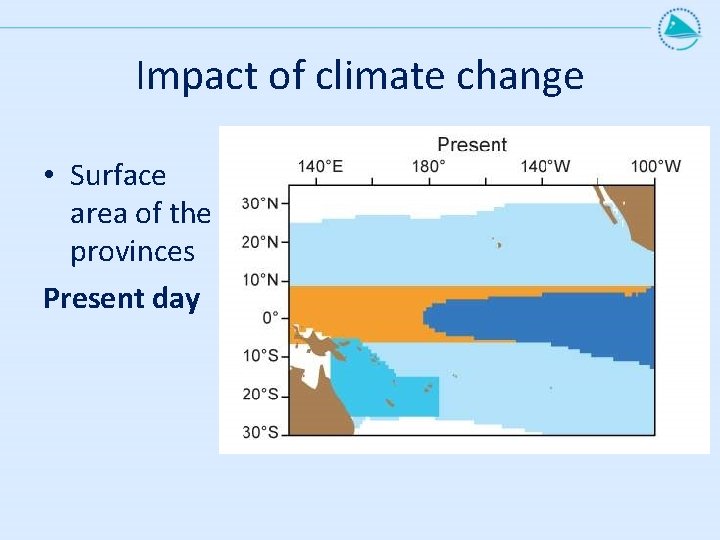
Impact of climate change • Surface area of the provinces Present day
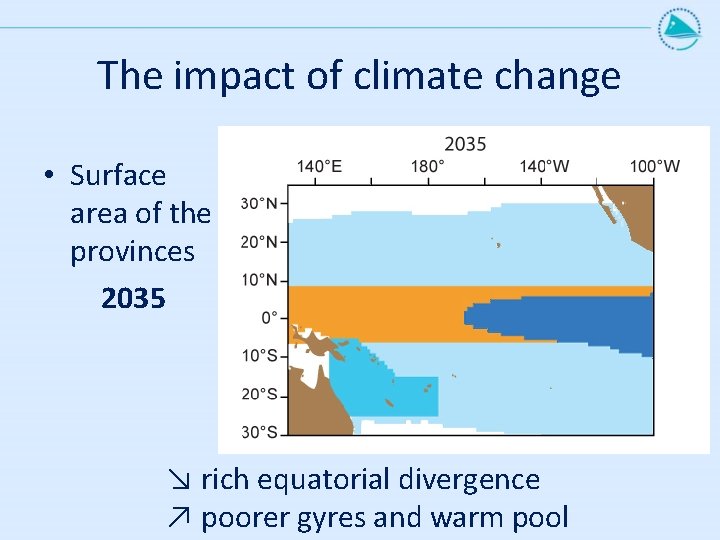
The impact of climate change • Surface area of the provinces 2035 ↘ rich equatorial divergence ↗ poorer gyres and warm pool
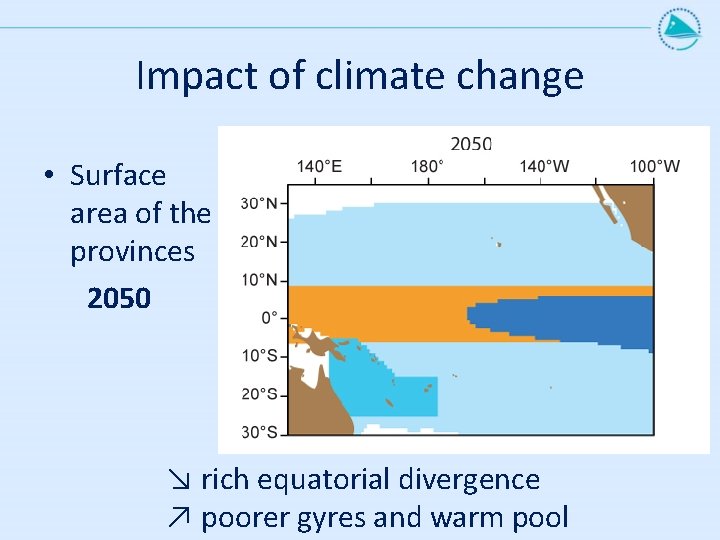
Impact of climate change • Surface area of the provinces 2050 ↘ rich equatorial divergence ↗ poorer gyres and warm pool
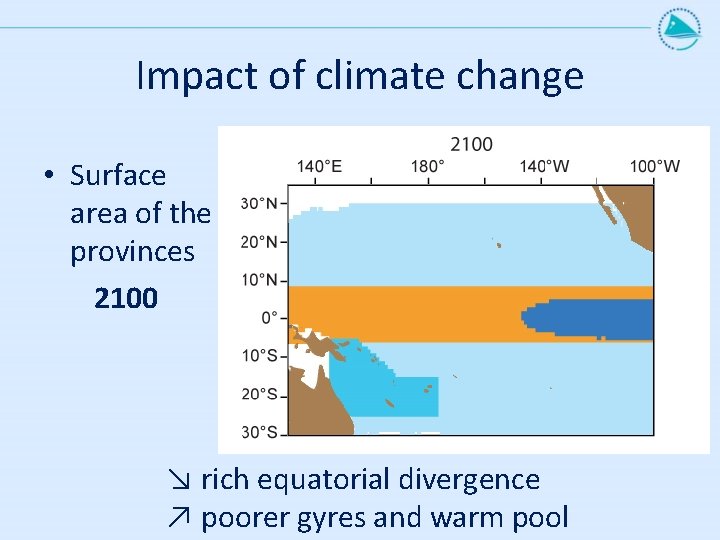
Impact of climate change • Surface area of the provinces 2100 ↘ rich equatorial divergence ↗ poorer gyres and warm pool
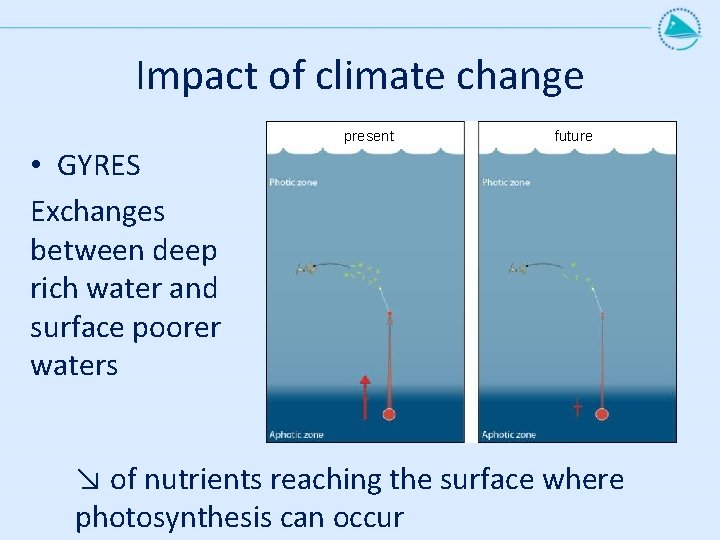
Impact of climate change present future • GYRES Exchanges between deep rich water and surface poorer waters ↘ of nutrients reaching the surface where photosynthesis can occur
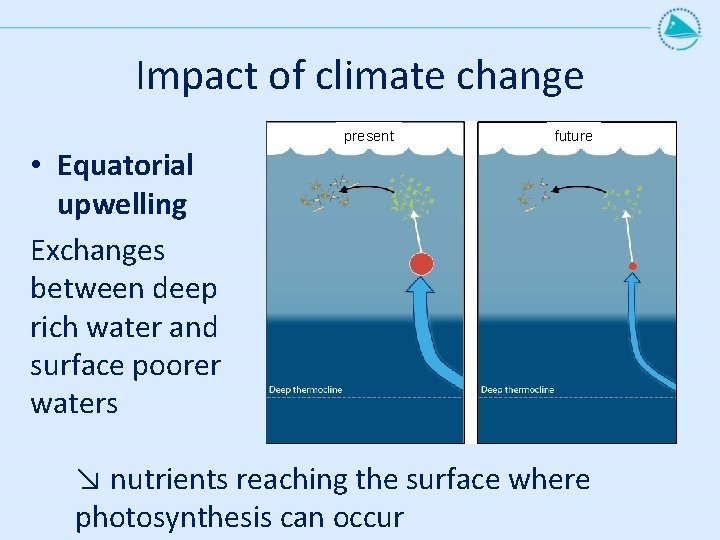
Impact of climate change present future • Equatorial upwelling Exchanges between deep rich water and surface poorer waters ↘ nutrients reaching the surface where photosynthesis can occur
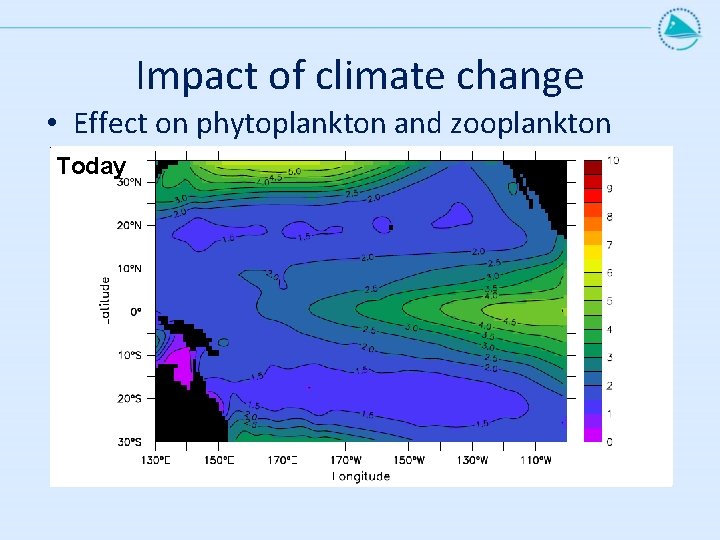
Impact of climate change • Effect on phytoplankton and zooplankton present 2050 2035 Today
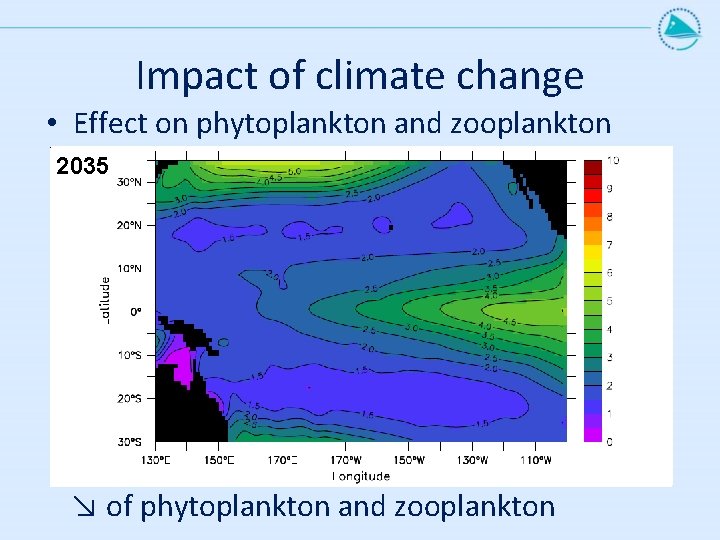
Impact of climate change • Effect on phytoplankton and zooplankton present 2050 2035 ↘ of phytoplankton and zooplankton
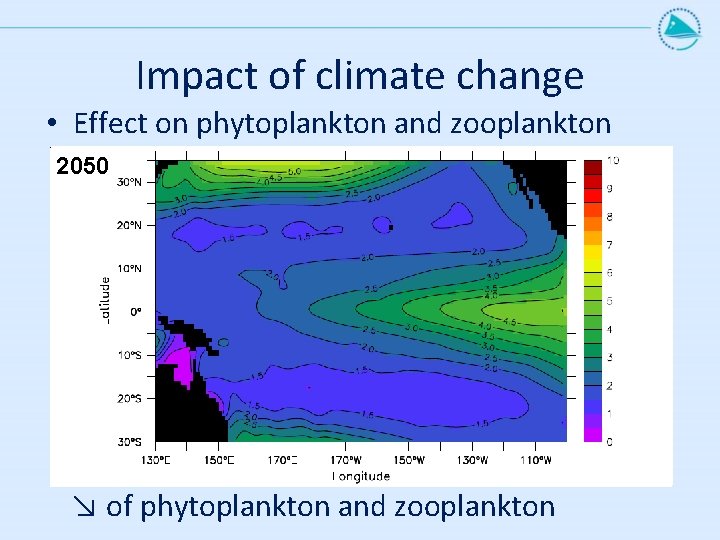
Impact of climate change • Effect on phytoplankton and zooplankton present 2050 2035 2050 ↘ of phytoplankton and zooplankton
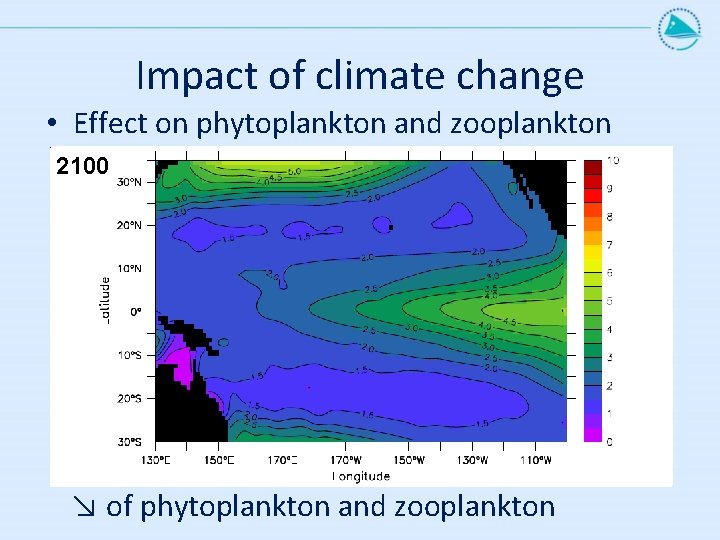
Impact of climate change • Effect on phytoplankton and zooplankton present 2050 2035 2100 ↘ of phytoplankton and zooplankton
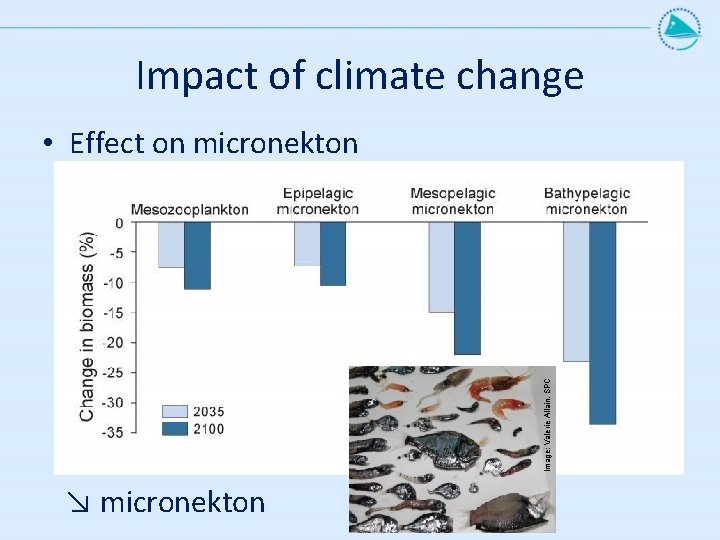
Impact of climate change Image: Valerie Allain, SPC • Effect on micronekton ↘ micronekton
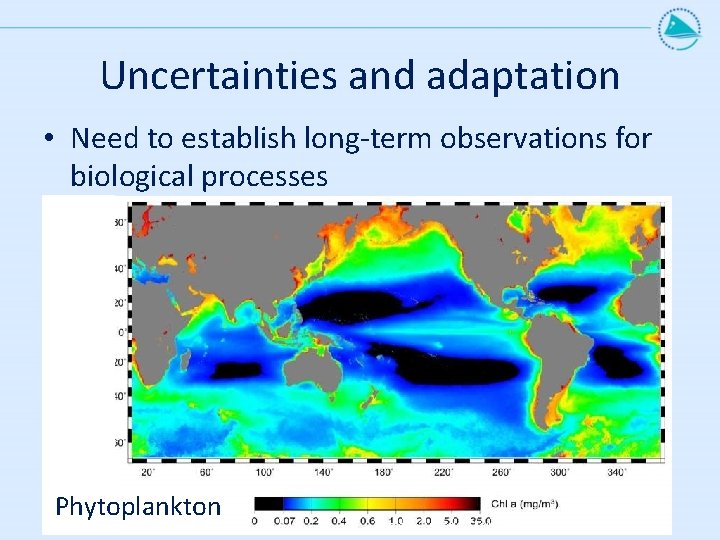
Uncertainties and adaptation • Need to establish long-term observations for biological processes Phytoplankton Image: Valerie Allain, SPC
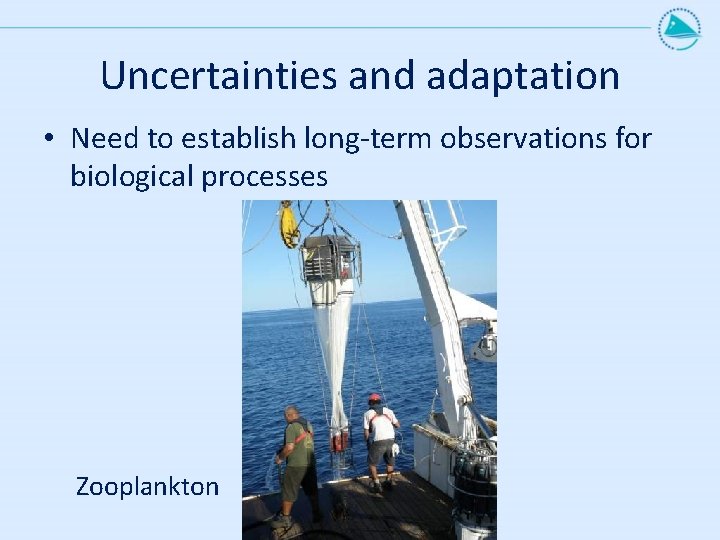
Uncertainties and adaptation • Need to establish long-term observations for biological processes Zooplankton
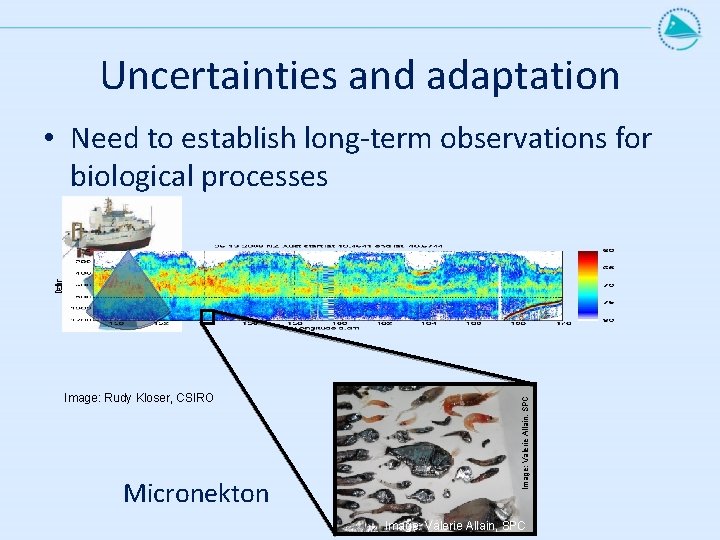
Uncertainties and adaptation Image: Rudy Kloser, CSIRO Micronekton Image: Valerie Allain, SPC • Need to establish long-term observations for biological processes Image: Valerie Allain, SPC
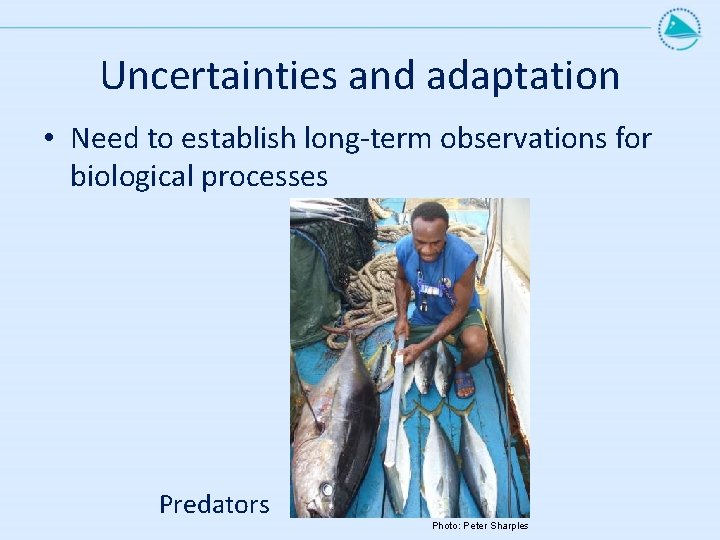
Uncertainties and adaptation • Need to establish long-term observations for biological processes Predators Photo: Peter Sharples
Uncertainties and adaptation • Global reduction of greenhouse gas emissions • Appropriate tuna fisheries management measures can help maintain healthy food webs and fisheries giving better chances to food webs and tuna to adapt to climate change
Conclusions • • • Food webs are complex, based on phytoplankton 5 provinces and food webs in the Pacific Reduction of the production Long-term monitoring is needed Reducing greenhouse gas emissions and managing tuna fisheries
- Slides: 26