
Vu Find Open Source and the Power of
- Slides: 24
Vu. Find, Open Source, and the Power of Community Demian Katz Director of Library Technology, Falvey Memorial Library, Villanova University demian. katz@villanova. edu
Introduction / Overview Topics: • What is Vu. Find, how is it developed, and what is next? • What are the advantages and costs of open source development, and how can you participate? • How do Vu. Find and open source software relate to the profession of librarianship? What lessons can be learned?
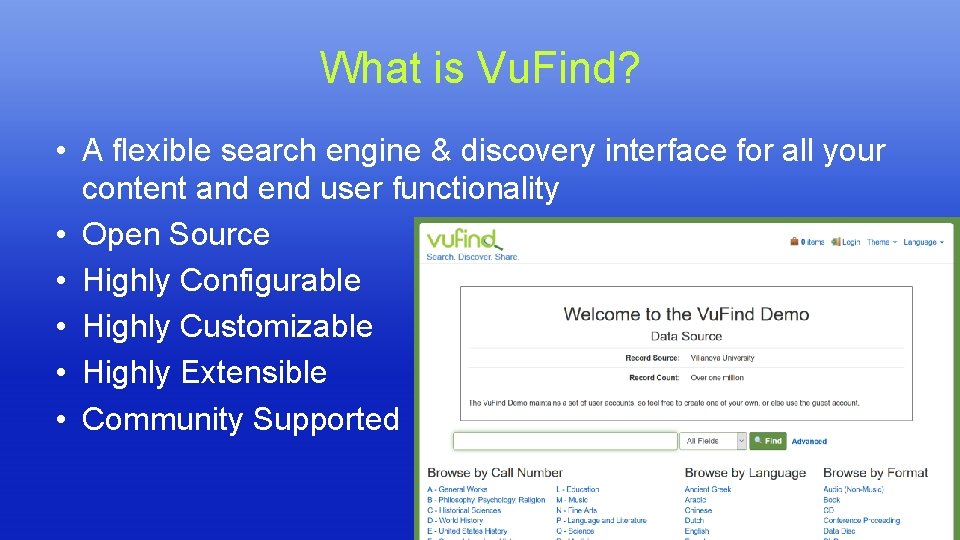
What is Vu. Find? • A flexible search engine & discovery interface for all your content and end user functionality • Open Source • Highly Configurable • Highly Customizable • Highly Extensible • Community Supported
Supported Content and Systems • Built using PHP, Laminas components, and Apache Solr. • Can import many types of record, including MARC and common flavors of XML. • Integrates with most popular library systems, including Koha, FOLIO and Alma. • Can be layered on top of commercial APIs such as EBSCO Discovery Service, Summon and World. Cat.
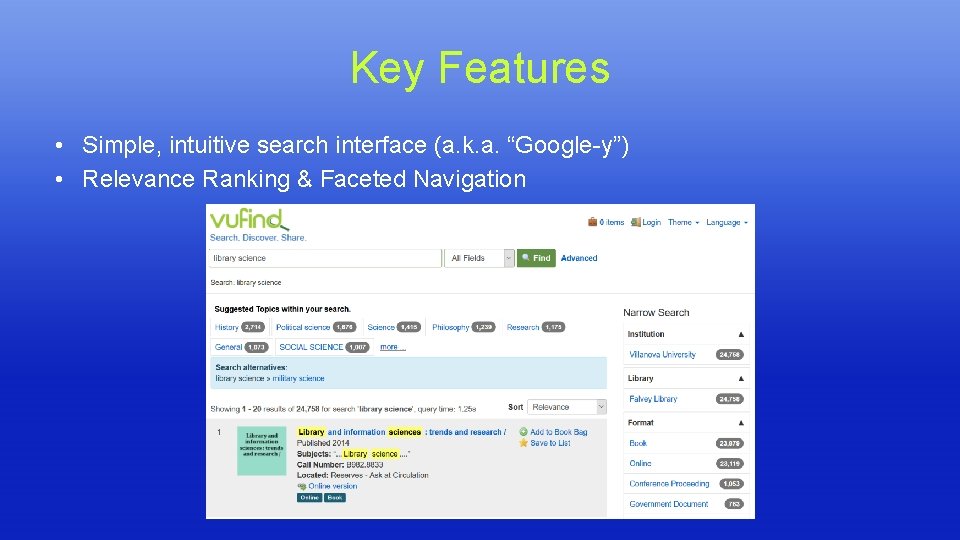
Key Features • Simple, intuitive search interface (a. k. a. “Google-y”) • Relevance Ranking & Faceted Navigation
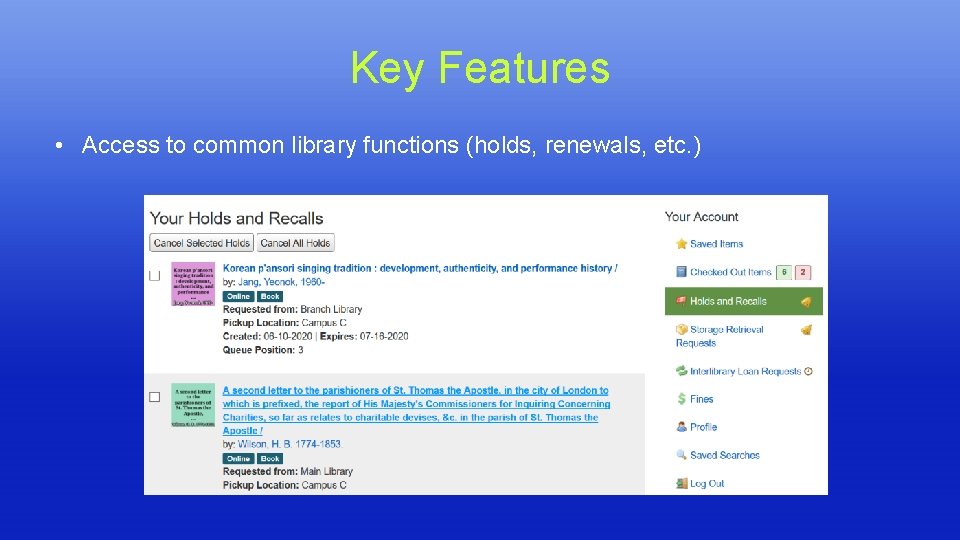
Key Features • Access to common library functions (holds, renewals, etc. )
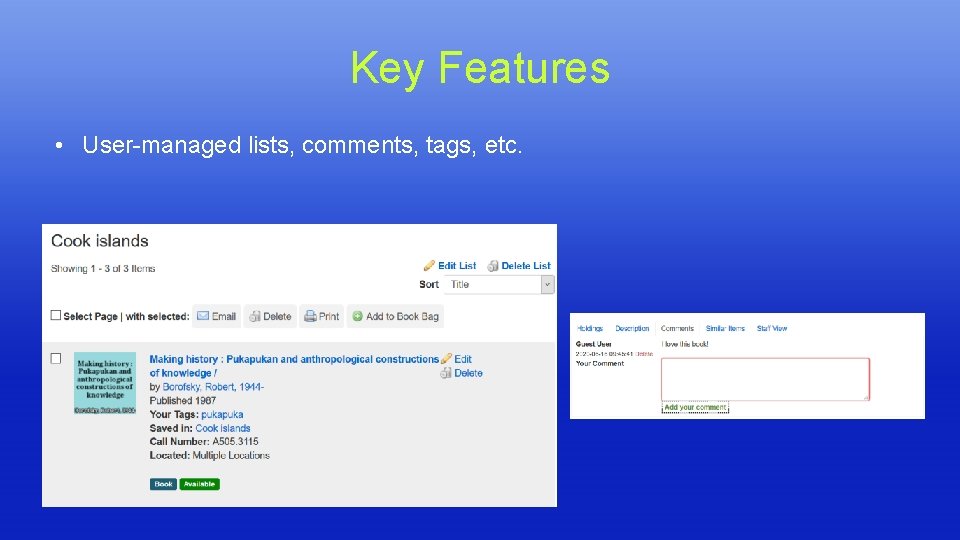
Key Features • User-managed lists, comments, tags, etc.
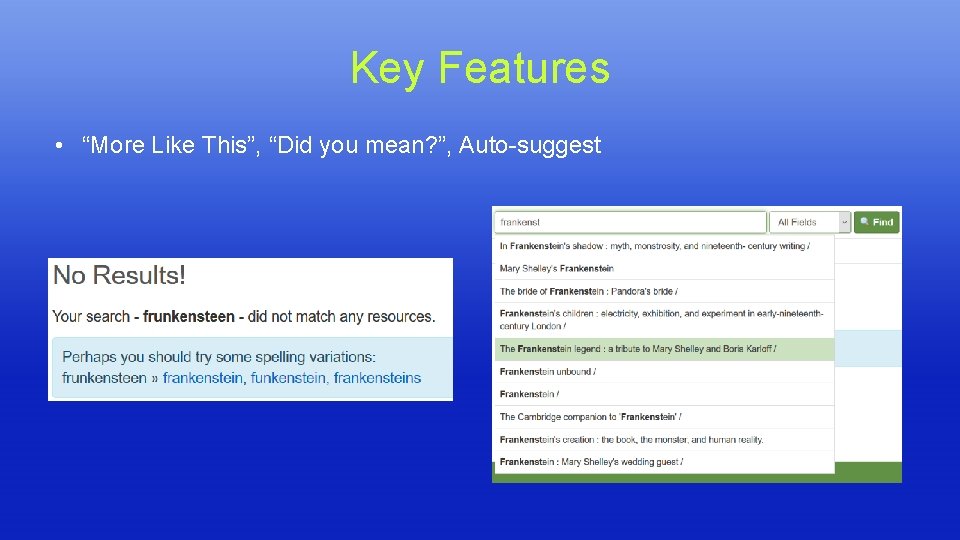
Key Features • “More Like This”, “Did you mean? ”, Auto-suggest
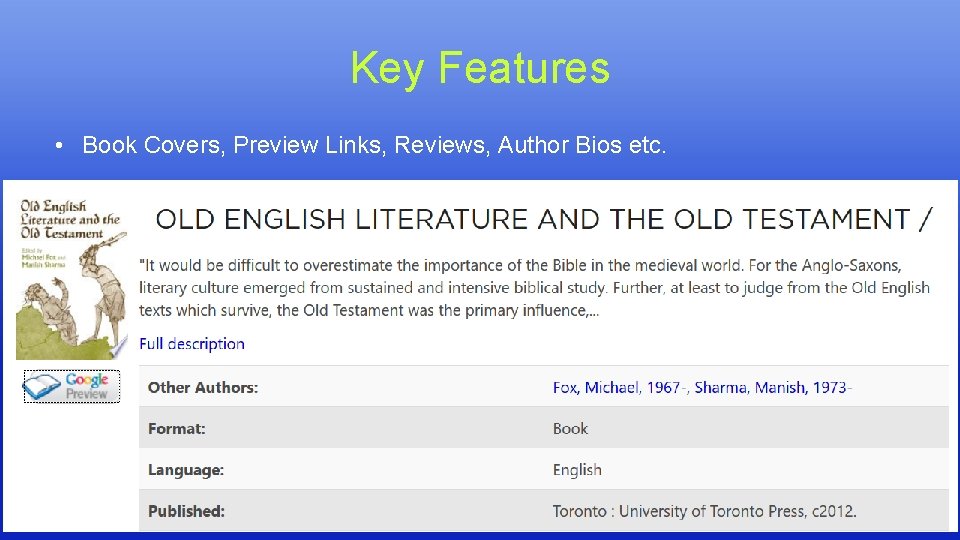
Key Features • Book Covers, Preview Links, Reviews, Author Bios etc.
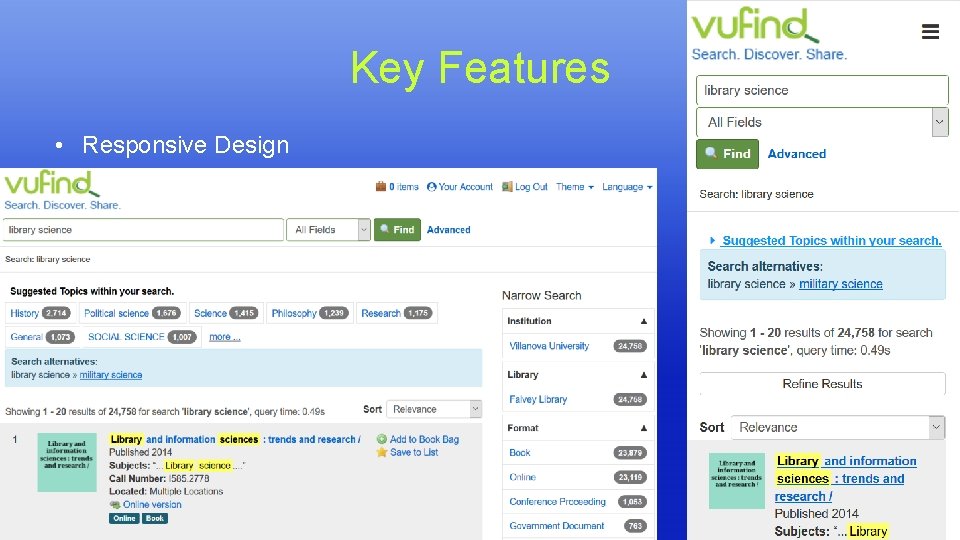
Key Features • Responsive Design
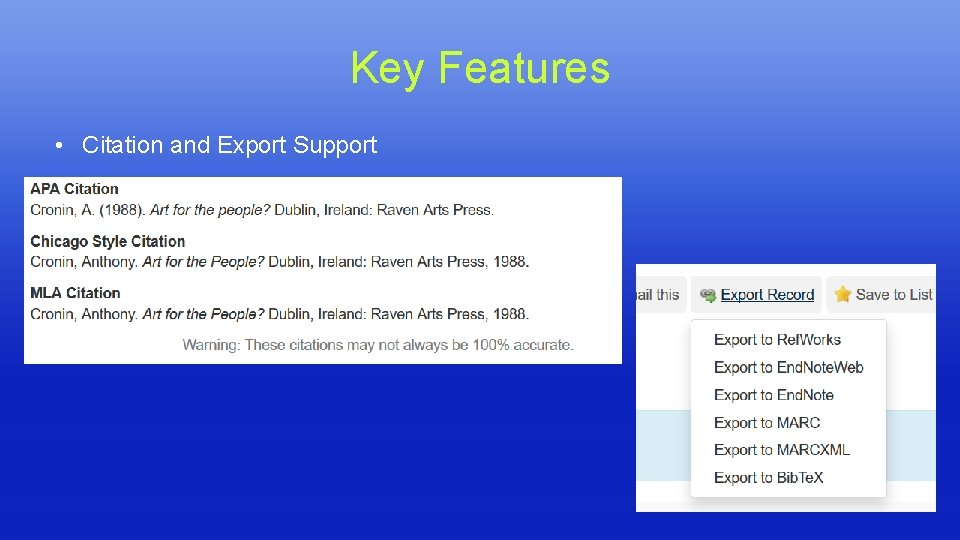
Key Features • Citation and Export Support
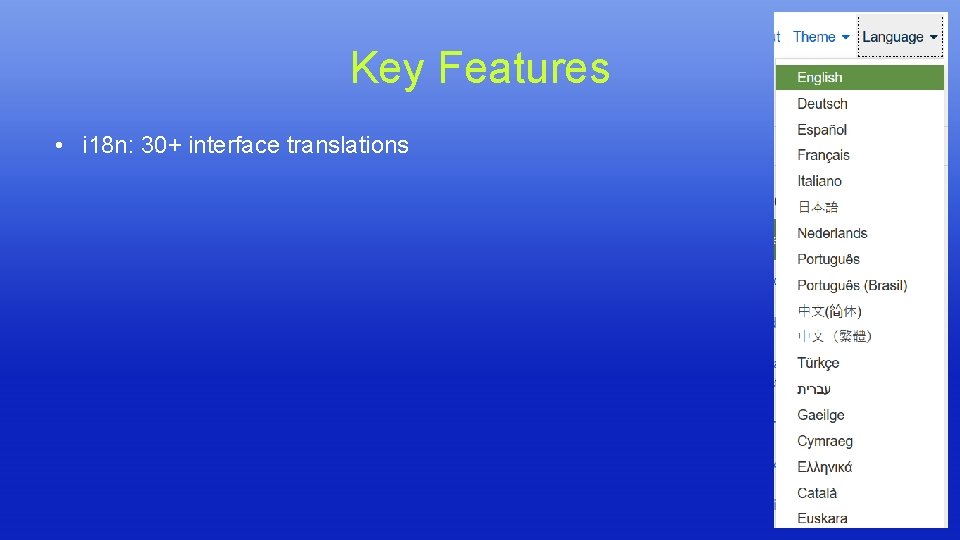
Key Features • i 18 n: 30+ interface translations
More Features • How to find out about additional Vu. Find features: – Check the changelog: https: //vufind. org/wiki/changelog – Check the configuration files: https: //github. com/vufind-org/vufind/tree/master/config/vufind – Ask the community!
Vu. Find Community • Project Lead: Villanova University – Infrastructure: • • • vufind. org & wiki JIRA Issue Tracker Continuous Integration Server Github & Sourceforge Administration Community calls – Development: • Large % of core development & bug fixing • Code review & merging of contributor patches/pull-requests
Vu. Find Community • Open Library Foundation – Home to FOLIO, Re. Share, Go. KB, Coral, and now Vu. Find – Provides institution-neutral project support / sustainability – Supports inter-project cooperation – Hosts WOLFCon conferences
Vu. Find Community • How to participate: – Join the mailing list(s): https: //vufind. org/vufind/support. html – Join the Community Call: https: //vufind. org/wiki/community_call – Attend the Summit: https: //vufind. org/vufind/schedule. html – Watch the video tutorials: https: //vufind. org/wiki/videos – Open JIRA tickets: https: //vufind. org/jira – Contribute code: https: //github. com/vufind-org/vufind
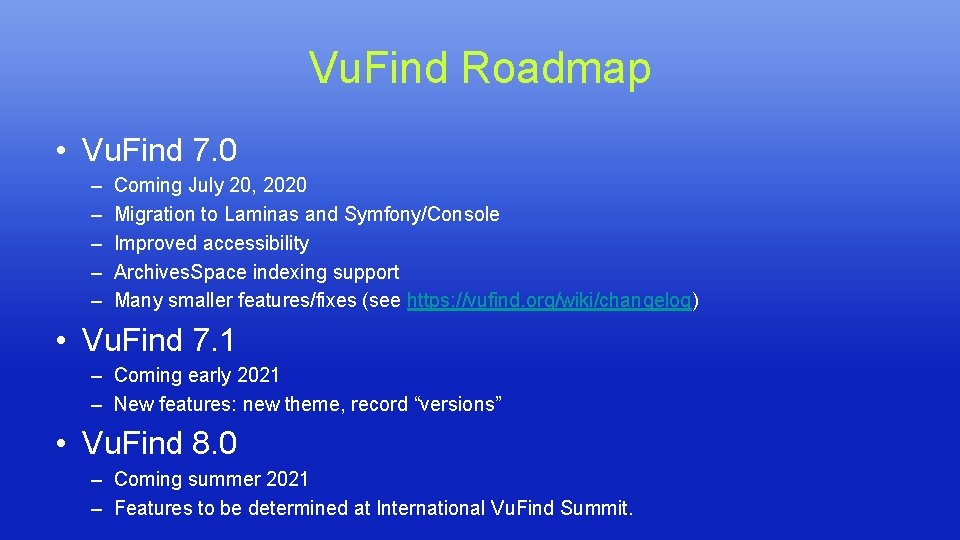
Vu. Find Roadmap • Vu. Find 7. 0 – – – Coming July 20, 2020 Migration to Laminas and Symfony/Console Improved accessibility Archives. Space indexing support Many smaller features/fixes (see https: //vufind. org/wiki/changelog) • Vu. Find 7. 1 – Coming early 2021 – New features: new theme, record “versions” • Vu. Find 8. 0 – Coming summer 2021 – Features to be determined at International Vu. Find Summit.
Open Source: Advantages • • • No licensing costs Community development/testing/support Transparency Vendor independence Ability to customize functionality
Open Source: Costs • • Supporting technology in-house requires skilled staff Open source communities demand active participation Sustainability is challenging Documentation is rarely complete
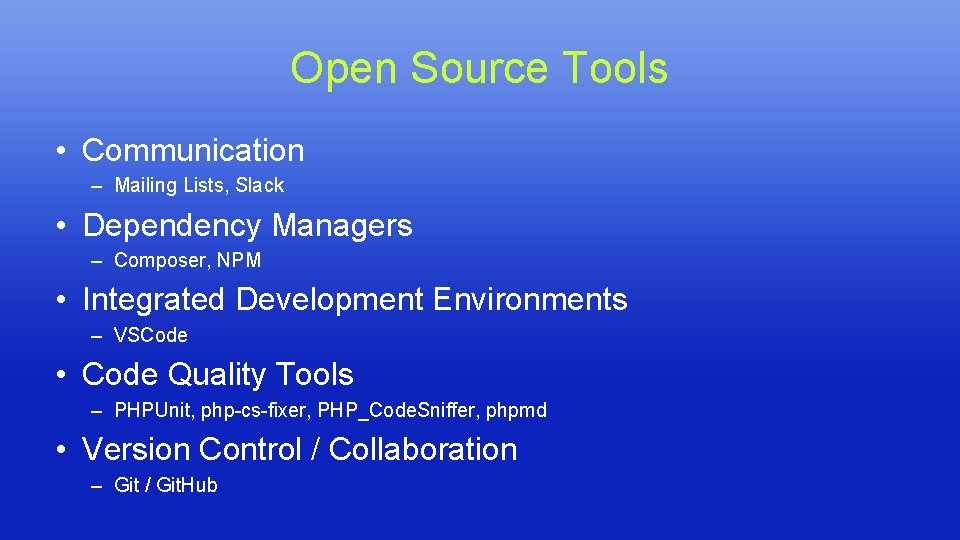
Open Source Tools • Communication – Mailing Lists, Slack • Dependency Managers – Composer, NPM • Integrated Development Environments – VSCode • Code Quality Tools – PHPUnit, php-cs-fixer, PHP_Code. Sniffer, phpmd • Version Control / Collaboration – Git / Git. Hub
Lessons Learned • Systems change, but the user experience shouldn’t (unless there’s a reason). • Looking at data differently helps you find and fix problems. • The way librarians communicate with end users has changed dramatically; web interfaces really matter. • Web interface design is a form of collection development. • Agility is critical to success.
Challenges and Threats • Opaque, commercially-motivated information services. – Pressure to develop increasingly complex systems – Need to train users in critical information seeking behavior • Rapid technological change; increasing complexity. – Technical debt • Vendor consolidation. – High costs – Outsourcing of skilled work
Skills for the 21 st Century Library Team • • • Systems administration (Linux, Docker, etc. ) Web technologies (HTML, CSS, etc. ) Programming (PHP, Python, Ruby, Javascript, etc. ) Metadata (MARC, XML, RDF, etc. ) User Interface Design and Best Practices (web accessibility standards, etc. ) • Project Planning and Collaboration
More Information / Contact Details • Learn more about Vu. Find: http: //vufind. org • Demian’s contact information: – email: demian. katz@villanova. edu – Slack: https: //vufind. slack. com (@demiankatz) – Twitter: @demiankatz