
VTE Prophylaxis 1 Disclosures 2 Learning Objectives Identifying

VTE Prophylaxis 1

Disclosures 2

Learning Objectives • Identifying the risk & likelihood of developing a VTE • Rationale for initiating VTE prophylaxis • Available agents for VTE prophylaxis • and associated ODB coverage • Familiarization of HSN VTE prophylaxis policy • Identifying which patients require post-discharge prophylaxis and the duration of such treatment 3

What does VTE Prophylaxis mean? Anticoagulation to prevent venous thromboembolism ● Deep vein thrombosis (DVT) ● Pulmonary embolism Why? 4

Outline • Reason for VTE prophylaxis • Indication • Contraindications • Available Agents • Duration of Therapy • Coverage • VTE Prophylaxis : Surgical Oncology 5

Why use VTE prophylaxis in hospital? 6

>1 Risk Factor Liability 10% - 20% VTE in med pts VTE Prophylaxis (Hospitalized Patients) 42% at mod or high risk (CHEST) Morbidity & Mortality Resource Burden Accreditation Autopsy data : >10% med pts Most common preventable death http: //www. saferhealthcarenow. ca/EN/Interventions/vte/Documents/VTE%20 Getting%20 Started%20 Kit. pdf 7
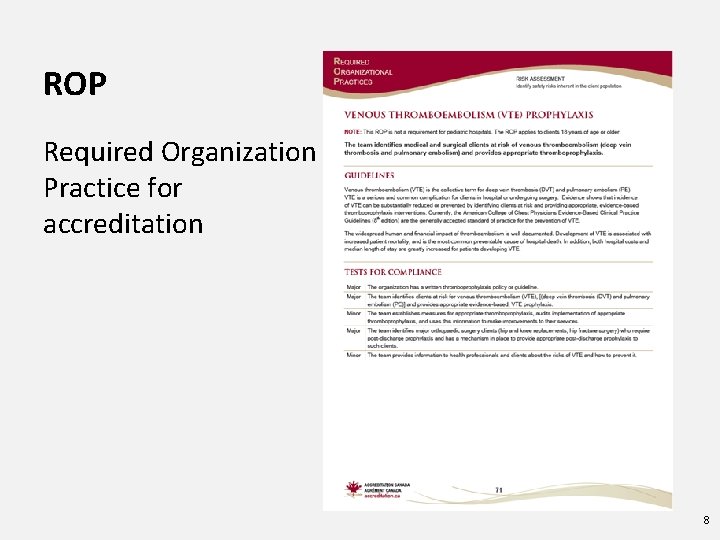
ROP Required Organization Practice for accreditation 8

9

10

Risk Factors ● Surgery ● Trauma (major trauma or lower-extremity injury) ● Immobility, lower-extremity paresis ● Cancer (active or occult) ● Cancer therapy (hormonal, chemotherapy, angiogenesis inhibitors, radiotherapy) ● Venous compression (tumor, hematoma, arterial abnormality) ● Previous VTE ● Increasing age (>60) ● Pregnancy and the postpartum period ● Heart failure ● Acute respiratory disease ● Estrogen-containing oral contraceptives or hormone replacement therapy ● Selective estrogen receptor modulators ● Erythropoiesis-stimulating agents ● Acute medical illness ● Inflammatory bowel disease ● Nephrotic syndrome ● Myeloproliferative disorders ● Paroxysmal nocturnal hemoglobinuria ● Obesity ● Central venous catheterization ● Inherited or acquired thrombophilia http: //www. saferhealthcarenow. ca/EN/Interventions/vte/Documents/VTE%20 Getting%20 Started%20 Kit. pdf 11
Meanwhile, in hospital… Immobility 12

Virchow’s Triad 13
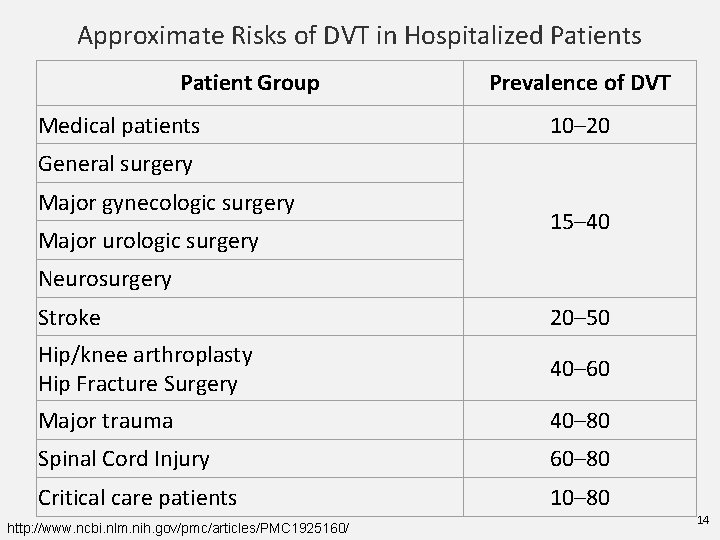
Approximate Risks of DVT in Hospitalized Patients Patient Group Medical patients Prevalence of DVT 10– 20 General surgery Major gynecologic surgery Major urologic surgery 15– 40 Neurosurgery Stroke 20– 50 Hip/knee arthroplasty Hip Fracture Surgery 40– 60 Major trauma 40– 80 Spinal Cord Injury 60– 80 Critical care patients 10– 80 http: //www. ncbi. nlm. nih. gov/pmc/articles/PMC 1925160/ 14
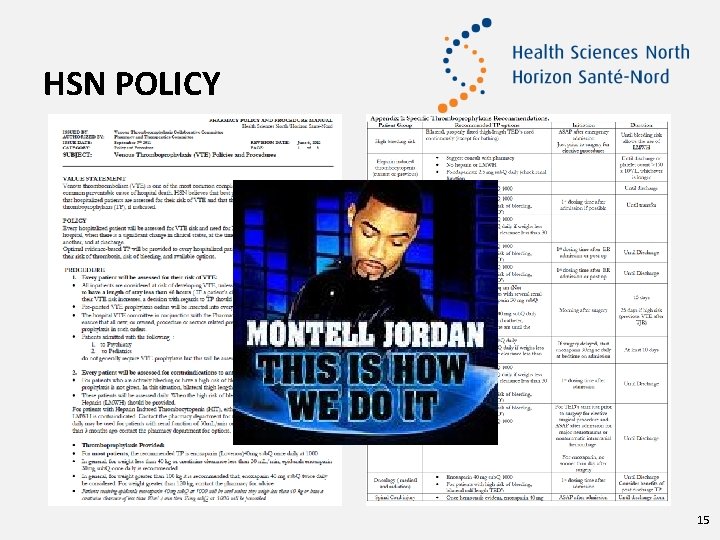
HSN POLICY 15
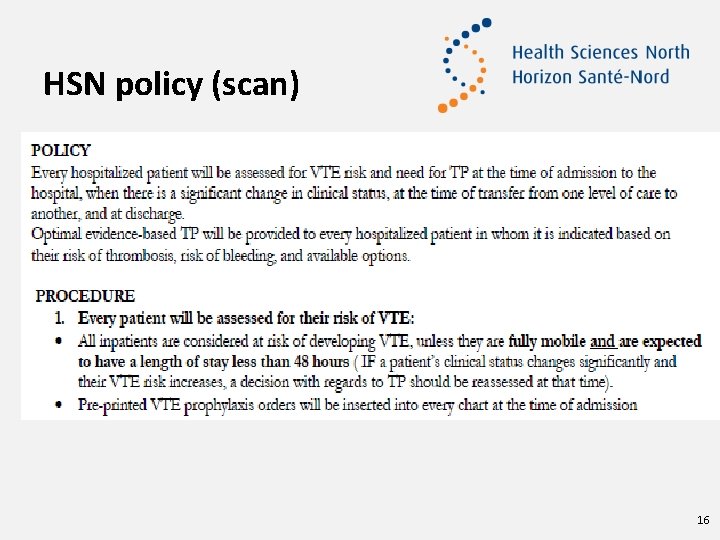
HSN policy (scan) 16
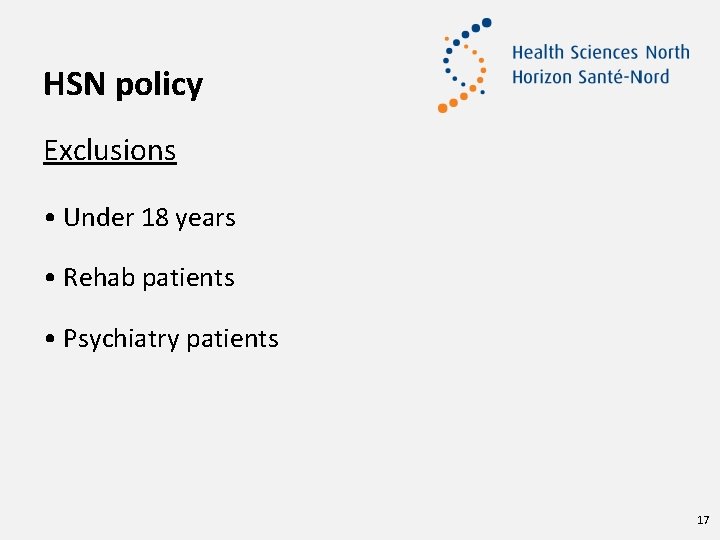
HSN policy Exclusions • Under 18 years • Rehab patients • Psychiatry patients 17
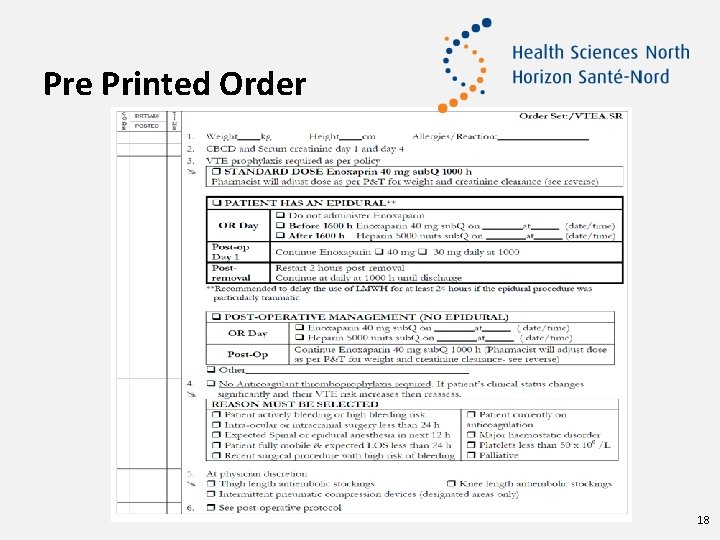
Pre Printed Order 18
19
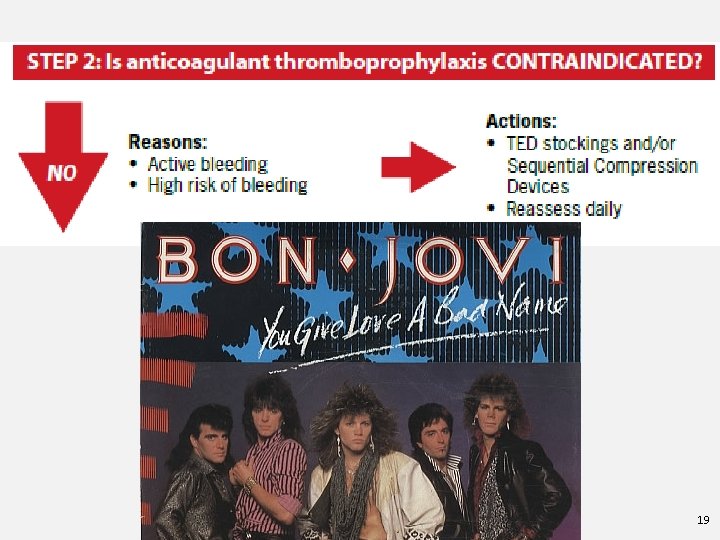
Contraindications Absolute Bleeding Risk • Active hemorrhage • Thrombolytics used within the past 24 hours Patients should still be re-assessed as contraindications may resolve http: //www. saferhealthcarenow. ca/EN/Interventions/vte/Documents/VTE%20 Getting%20 Started%20 Kit. pdf 20
Relative Bleeding Risk If the risk for bleed out weighs the risk for VTE: • GI/GU hemorrhage within the past 30 days • INR ≥ 2. 0 • End stage liver disease with coagulopathy • Transfusion ≥ 2 units PRBC in last 72 hours • Vitamin K use in last 24 hours • Hgb drop ≥ 20 g/L or 10% • Epidural catheter placement or removal • Craniotomy within the past 2 weeks http: //www. saferhealthcarenow. ca/EN/Interventions/vte/Documents/VTE%20 Getting%20 Started%20 Kit. pdf 21
Relative Bleeding Risk – continued… If the risk for bleed out weighs the risk for VTE: • Severe trauma to spinal cord or head with hemorrhage in the past 4 weeks • Recent intraocular, spinal or intracranial surgery • Recent intraabdominal, retroperitoneal, intrathoracic surgery in last 24 hours • Hypertensive crisis • Multiple trauma • Acute leukemia or other high-grade hematologic malignancy http: //www. saferhealthcarenow. ca/EN/Interventions/vte/Documents/VTE%20 Getting%20 Started%20 Kit. pdf 22
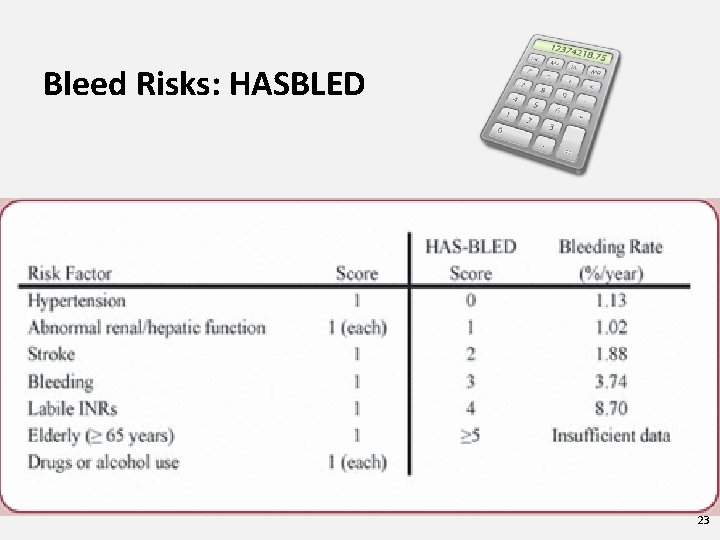
Bleed Risks: HASBLED 23
24

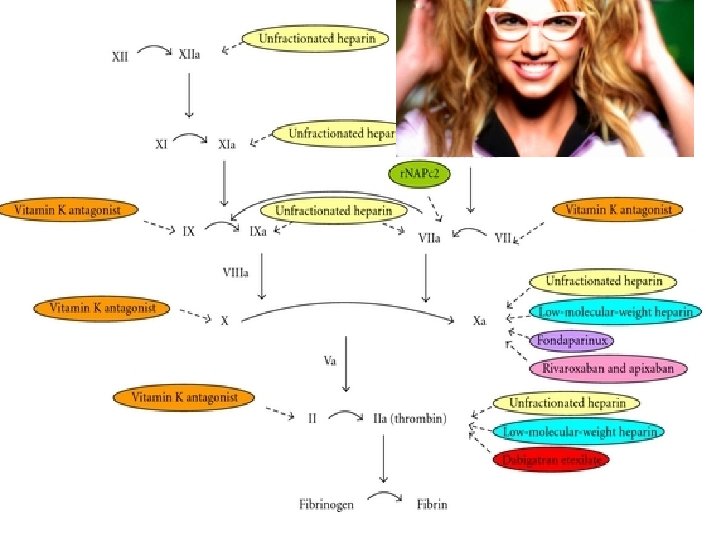
Agents for VTE prophylaxis DRUG MOA Dosing for Prophylaxis Route Unfractionated Inactivation of Factor heparin (UFH)** Xa and thrombin 5000 Units BID-TID IV, Sub. Q Low molecular weight heparin (LMWH) Factor Xa inhibition; some thrombin inhibition Lovenox: 40 mg daily Adjust if >100 kg, poor renal function, or <40 kg Sub. Q, IV Fondaparinux Factor Xa inhibition 2. 5 mg daily Sub. Q Warfarin Vitamin K antagonist Daily PO NOAC: Rivaroxaban Factor Xa inhibitor 10 mg daily PO NOAC: Apixaban Factor Xa inhibitor 2. 5 mg BID PO 25
26
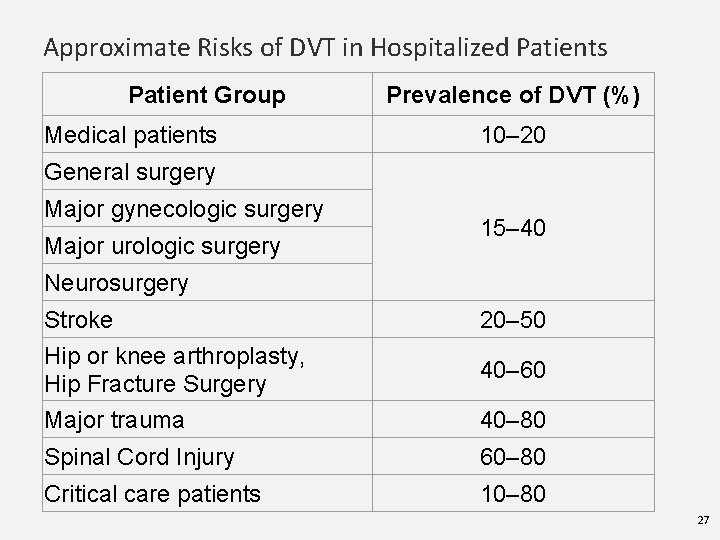
Approximate Risks of DVT in Hospitalized Patients Patient Group Medical patients Prevalence of DVT (%) 10– 20 General surgery Major gynecologic surgery Major urologic surgery 15– 40 Neurosurgery Stroke Hip or knee arthroplasty, Hip Fracture Surgery Major trauma 20– 50 Spinal Cord Injury 60– 80 Critical care patients 10– 80 40– 60 40– 80 27
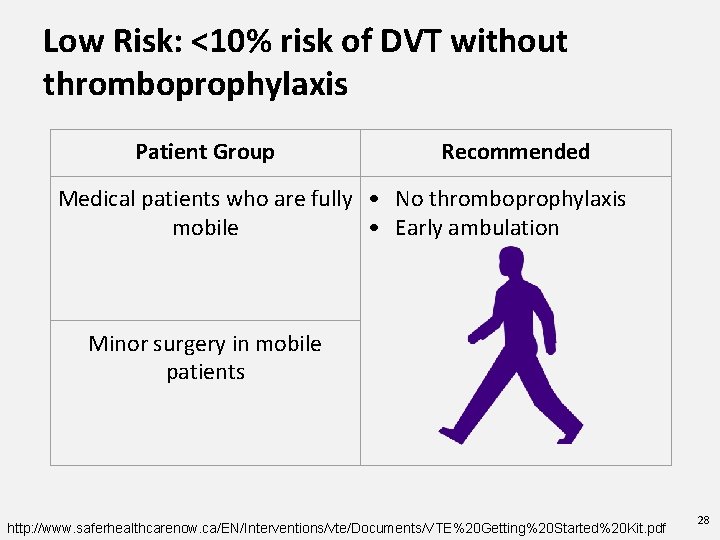
Low Risk: <10% risk of DVT without thromboprophylaxis Patient Group Recommended Medical patients who are fully • No thromboprophylaxis mobile • Early ambulation Minor surgery in mobile patients http: //www. saferhealthcarenow. ca/EN/Interventions/vte/Documents/VTE%20 Getting%20 Started%20 Kit. pdf 28
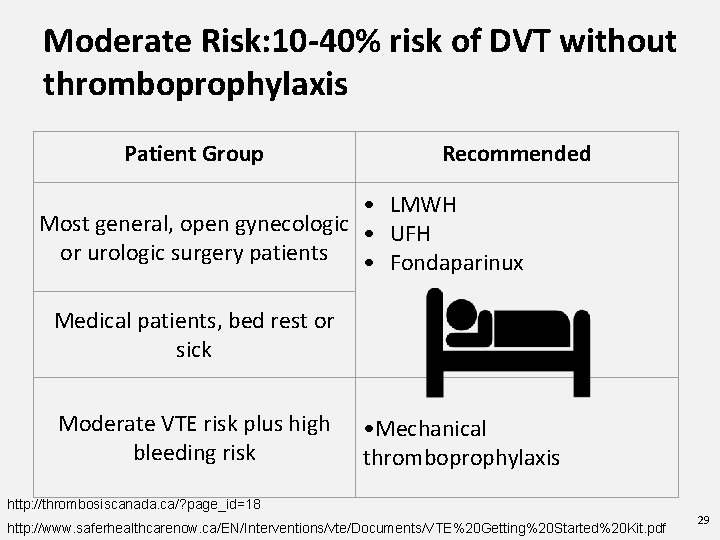
Moderate Risk: 10 -40% risk of DVT without thromboprophylaxis Patient Group Recommended • LMWH Most general, open gynecologic • UFH or urologic surgery patients • Fondaparinux Medical patients, bed rest or sick Moderate VTE risk plus high bleeding risk • Mechanical thromboprophylaxis http: //thrombosiscanada. ca/? page_id=18 http: //www. saferhealthcarenow. ca/EN/Interventions/vte/Documents/VTE%20 Getting%20 Started%20 Kit. pdf 29
High Risk: 40 -80% risk of DVT without thromboprophylaxis Patient Group Hip or knee arthroplasty Hip Fracture Surgery Major trauma, spinal cord injury High VTE risk + high bleed risk Recommended • LMWH • Fondaparinux • Warfarin (INR 2– 3) • NOACs • Mechanical thromboprophylaxis http: //www. saferhealthcarenow. ca/EN/Interventions/vte/Documents/VTE%20 Getting%20 Started%20 Kit. pdf 30
31
Who SHOULD NOT continue prophylaxis? Acutely ill hospitalized medical patients Outpatients with cancer who have no additional risk factors http: //thrombosiscanada. ca/? page_id=18 32

VTE prophylaxis until discharge • Cardiovascular surgery • Spinal Cord injury (discharge from rehab) • Critical Care (until transfer) • • General Major Surgery • Gynecology • • Internal medicine/subspecialties Spine surgery Stroke (ischemic or hemorrhagic) • Trauma (discharge from rehab) • Urology • Nephrology • Neurosurgery • Oncology (depends) • Peds 33
Special Scenarios Transfer to nursing home • In chronically immobilized persons residing at home or at a nursing home, we suggest against the routine use of thromboprophylaxis (Grade 2 C). In-hospital > 30 days • Automatic stop date of 15 days • Checkpoint for re-assessment 34
Who SHOULD get discharged on prophylaxis? 35

VTE Prophylaxis post - discharge Post-natal at high risk • Hx VTE (unprovoked/estrogen, multiple VTEs, family hx, thrombophilia) • 6 weeks Post-natal at intermediate risk • C-section, BMI>40, prolonged hospitalization, medical comorbidities • 7 days http: //thrombosiscanada. ca/? page_id=18# 36
VTE Prophylaxis post - discharge Oncology outpatients + solid tumours + risk factors - risk of bleeds Additional risk factors for venous thrombosis in cancer outpatients include previous venous thrombosis, immobilization, hormonal therapy, angiogenesis inhibitors, thalidomide, and lenalidomide. 37

VTE Prophylaxis post-discharge Hip and Knee arthroplasty: Rivaroxaban 10 mg or Lovenox 40 mg sub. Q daily : 15 days; 28 days if high risk (hx VTE post TJR) : minimum 10 days (up to 35 days) Hip fracture: Lovenox 40 mg sub. Q daily : minimum 10 days (up to 35 days) Falck-Ytter Y, et al. Chest 2012; 141(2 Suppl): e 278 S-325 S 38 http: //thrombosiscanada. ca/? page_id=18
Coverage Lovenox (enoxaparin) No LU code for prophylaxis Patients must pay out of pocket Heparin Not covered Warfarin Covered https: //www. healthinfo. moh. gov. on. ca/formulary/ 39
Coverage Fondaparinux 2. 5 mg Requires LU code 378: For the post-operative prophylaxis of venous thromboembolic events in patients undergoing orthopedic surgery of the lower limbs such as hip fracture, hip replacement or knee surgery. NOTE: Limited to 9 days of reimbursement https: //www. healthinfo. moh. gov. on. ca/formulary/ 40
Coverage Xarelto/Apixaban Requires LU code 433: For the prevention of venous thromboembolic events in patients who have undergone elective total knee replacement surgery. Note: Limited to 14 days of reimbursement in TKR. Limited to 1 claim in a 120 day period. 434: For the prevention of venous thromboembolic events in patients who have undergone elective total hip replacement. Note: Limited to 35 days of reimbursement in THR. Limited to 1 claim in a 120 day period. https: //www. healthinfo. moh. gov. on. ca/formulary/ 41
Dosing Recommendations Heparin • 5000 units sub. Q BID-TID Lovenox ● 40 mg Sub. Q daily ● 30 mg Sub. Q daily if o o o Cr. Cl <30 ml/min Weight <40 kg if post-cardiac surgery o Weight>100 kg ● 40 mg Sub. Q BID if Xarelto/Apixaban- 10 mg daily/2. 5 mg BID (orthopedic) 42
Key Points We must ask ourselves ● Is it indicated (or still indicated)? ● Risk vs benefit ● Duration (indication may no longer be there) 43
Your Role Pharmaceutical opinion to discontinue Lovenox • • Risk of bleeds Indication/Contraindications Cost Patient injection Assess for indication and duration. 44
Summary: Who might need VTE prophylaxis on discharge? • Hip/Knee • Just had a baby! • Cancer Nursing home: Not indicated unless other risk factors! 45
Counselling Xarelto/Apixaban ● Adherence: Importance and reason e. g. 40 -60% VTE in patients with hip/knee surgery ● Same time each day ● Monitor for bleeds 46
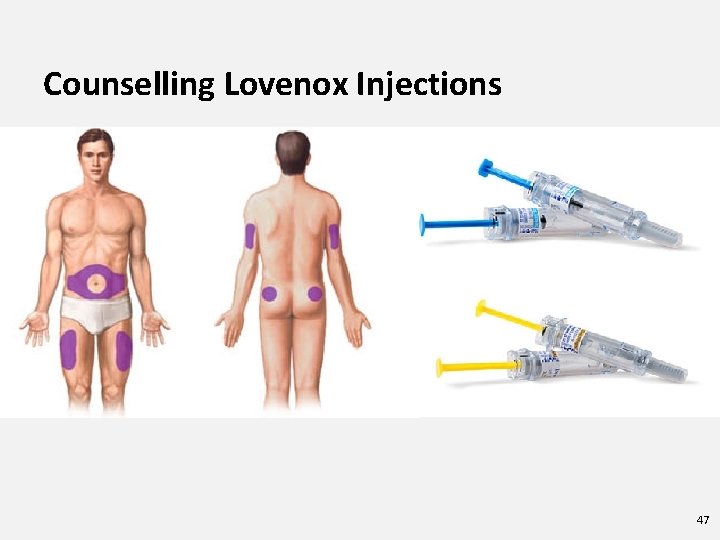
Counselling Lovenox Injections 47
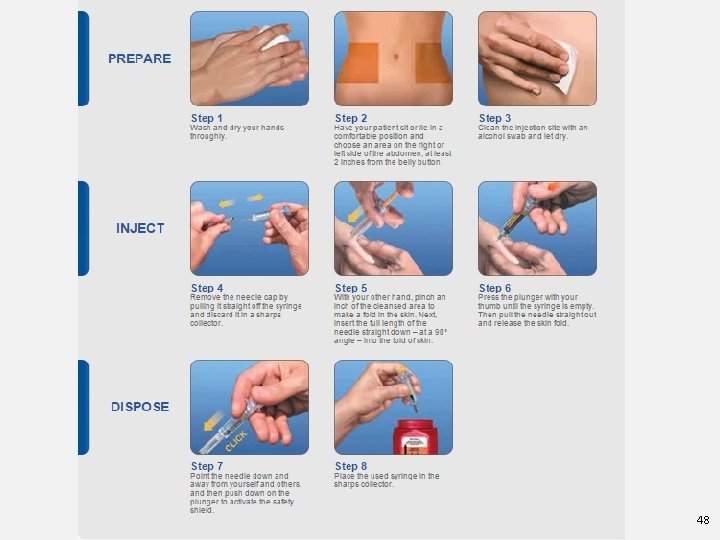
48

Questions? 49

VTE Prophylaxis focusing on Surgical Oncology General Urology Gynecological 50

No conflicts 51
Objectives • To describe the kind of tool used to determine VTE risk • Look at the key evidence-based clinical data and guidelines related to VTE prophylaxis in surgical patients • Outline current best practices for this small patient population 52
Risk Factors • Major abdominal surgery and cancer either treated with chemotherapy or untreated are independent risk factors. • Looked at the Caprini Predictive Model • Score 5 or high is considered high risk • Add on a cancer diagnosis and the recommended length of prophylaxis increases. 53
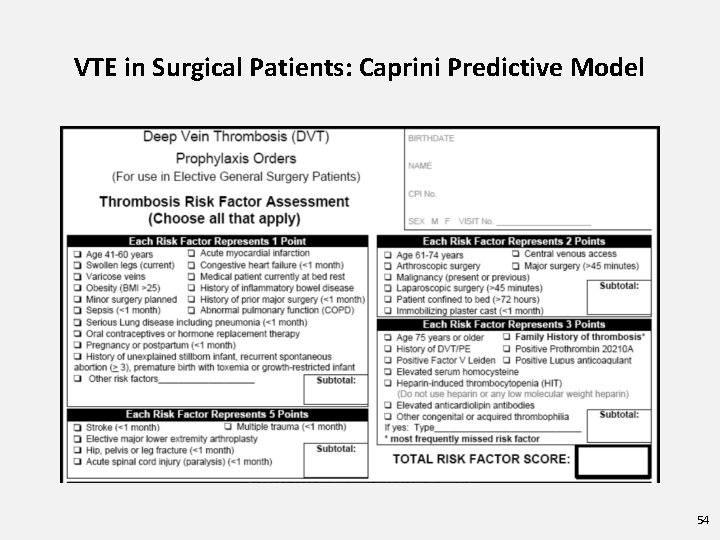
VTE in Surgical Patients: Caprini Predictive Model 54
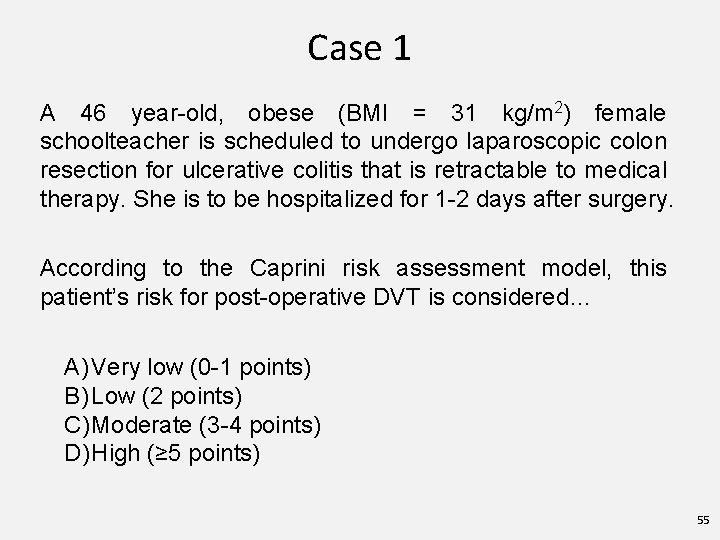
Case 1 A 46 year-old, obese (BMI = 31 kg/m 2) female schoolteacher is scheduled to undergo laparoscopic colon resection for ulcerative colitis that is retractable to medical therapy. She is to be hospitalized for 1 -2 days after surgery. According to the Caprini risk assessment model, this patient’s risk for post-operative DVT is considered… A) Very low (0 -1 points) B) Low (2 points) C) Moderate (3 -4 points) D) High (≥ 5 points) 55
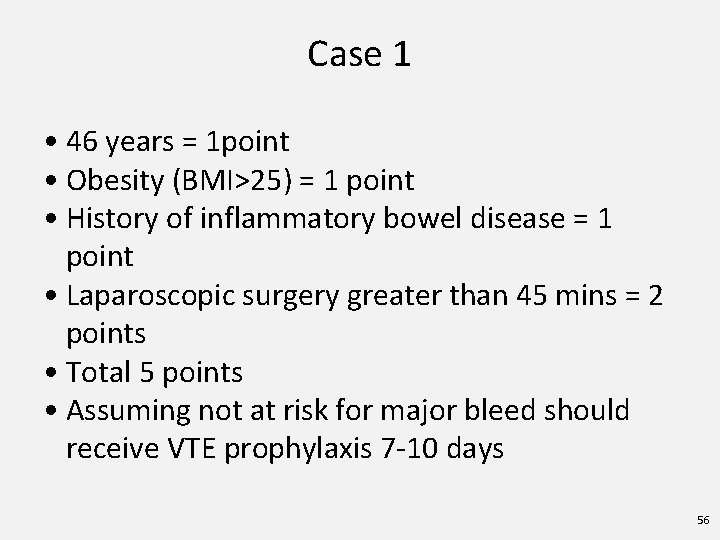
Case 1 • 46 years = 1 point • Obesity (BMI>25) = 1 point • History of inflammatory bowel disease = 1 point • Laparoscopic surgery greater than 45 mins = 2 points • Total 5 points • Assuming not at risk for major bleed should receive VTE prophylaxis 7 -10 days 56

Recommendations for Prevention of VTE in Surgical Cancer ASCO NCCN ESMO ACCP Throm can Initial prophylaxis All patients with malignancies undergoing major surgery should be considered for prophylaxis with UFH or LMWH unless contraindicated (active bleeding or high risk bleeding) Prophylaxis anticoagulation is recommended with LMH , UFH or Fondaparinux Prophylaxis anticoagulation with s. c. LMWH or UFH for patients undergoing elective major abdominal or pelvic surgery LMWH , UFH for moderate /high VTE-risk patients who are not at risk of major bleed Cancer patients undergoing surgery should receive LMWH prophylaxis while in hospital Prolonged prophylaxis LMWH for up to 4 wks should be considered in major abdominal /pelvic surgery in high risk patients (eg. Restricted mobility, residual malignancy disease, history of VTE) or those with additional risk factors Outpatient prophylaxis is recommended for up to 4 wks postop. Particularly for high risk abdominal or pelvic surgery. Should receive postdischarge prophylaxis with LMWH for up to one month after elective major abdominal or pelvic surgery Extended prophylaxis (4 wks) with LMWH is recommended for high –VTE risk patients undergoing abdominal or pelvic surgery who are not at high risk for bleeding. (Grade 1 B) Patients with additional risk factors may benefit from extended prophylaxis until 1 month after surgery UFH: Unfractionaled heparin; LMWH: Low molecular weight heparin; s. c. : Subcutaneous; VTE: Venous thromboembolism; wks: Weeks; pts: patients; 1. Lyman GH, et al. J Clin Oncol. 2013; 31(17): 2189 -2204; 2. National Comprehensive Cancer Network. 2013. Available at: www. nccn. org; 3. Mandalà M, et al. Ann Oncol. 2011; 20(Suppl 6): vi 85 -92. ; 4. Gould MK, et al. Chest. 2012; 141(2 Suppl): e 227 S-77 S. ; 5. Thrombosis Canada Clinical Guides, Available at: www. thrombosiscanada. ca 57
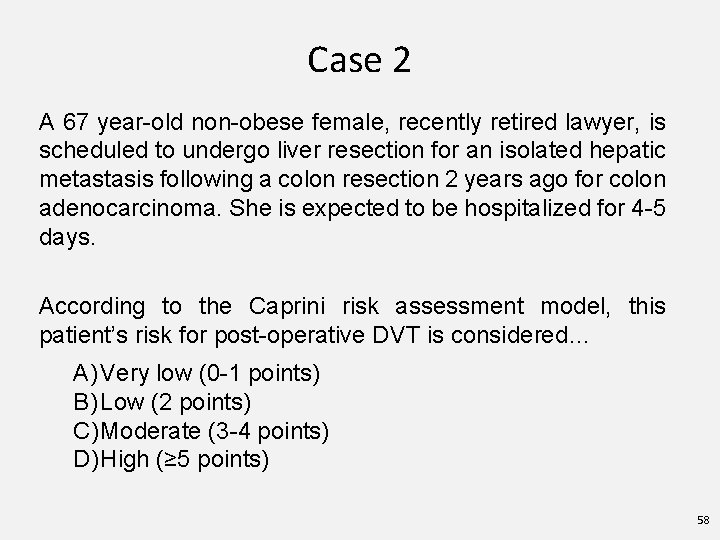
Case 2 A 67 year-old non-obese female, recently retired lawyer, is scheduled to undergo liver resection for an isolated hepatic metastasis following a colon resection 2 years ago for colon adenocarcinoma. She is expected to be hospitalized for 4 -5 days. According to the Caprini risk assessment model, this patient’s risk for post-operative DVT is considered… A) Very low (0 -1 points) B) Low (2 points) C) Moderate (3 -4 points) D) High (≥ 5 points) 58
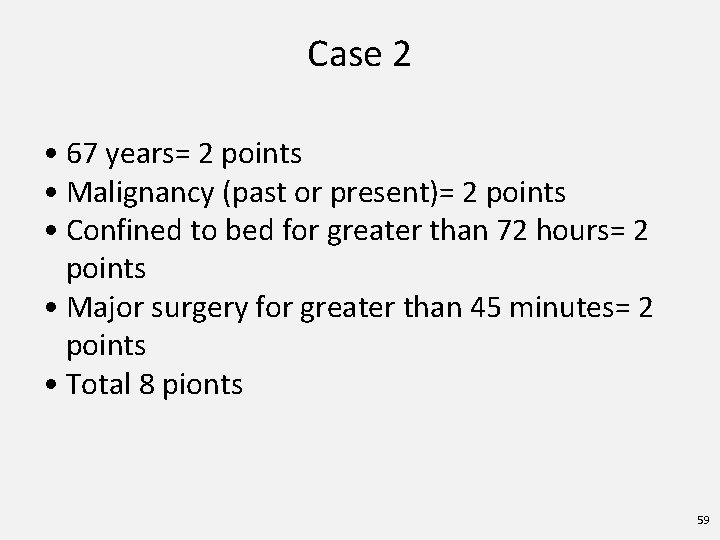
Case 2 • 67 years= 2 points • Malignancy (past or present)= 2 points • Confined to bed for greater than 72 hours= 2 points • Major surgery for greater than 45 minutes= 2 points • Total 8 pionts 59

What do guidelines recommend for post-operative DVT prophylaxis? (Grade 1 = strong, Grade 2 = weak) VTE Risk Category Average Bleeding Risk (~1%) Very Low Risk Caprini Score 0 Low Risk Caprini Score 1 -2 Moderate Risk Caprini Score 3 -4 LMWH (Grade 2 B), LDUH (Grade 2 B) or mechanical prophylaxis with ES or IPC (Grade 2 C) High Risk Caprini Score ≥ 5 LMWH (Grade 1 B), LDUH (Grade 1 B) plus mechanical prophylaxis with ES or IPC (Grade 2 C) High Risk Cancer Surgery High Risk LMWH and LDUH contraindicated High Bleed Risk (~2%) or Severe Impact No Specific Prophylaxis (Grade 1 B) Mechanical prophylaxis, preferably with IPC (Grade 2 C) Mechanical prophylaxis, preferably LMWH or LDUH plus mechanical prophylaxis with ES with IPC, until risk of or IPC and extended-duration prophylaxis (4 weeks) bleeding diminishes with LMWH post-discharge (Grade 1 B) and pharmacologic Fondaparinux or low-dose ASA (160 mg), mechanical prophylaxis can be prophylaxis, preferable with IPC or both (Grade 2 C) added (Grade 2 C) 60
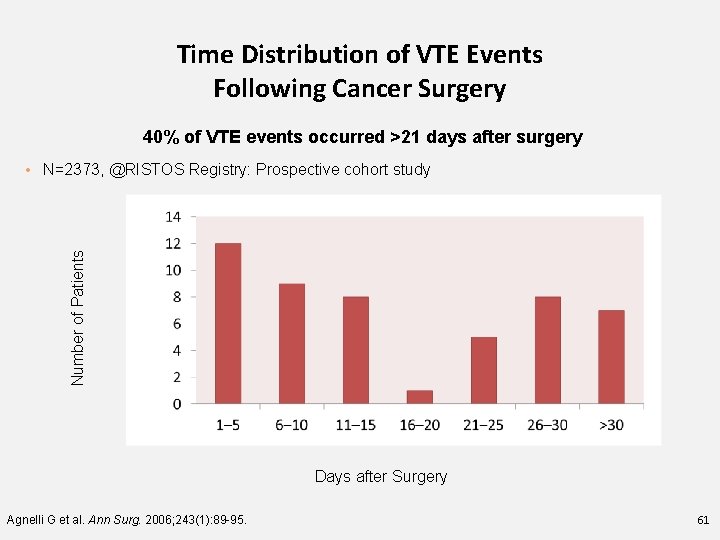
Time Distribution of VTE Events Following Cancer Surgery 40% of VTE events occurred >21 days after surgery Number of Patients • N=2373, @RISTOS Registry: Prospective cohort study Days after Surgery Agnelli G et al. Ann Surg. 2006; 243(1): 89 -95. 61
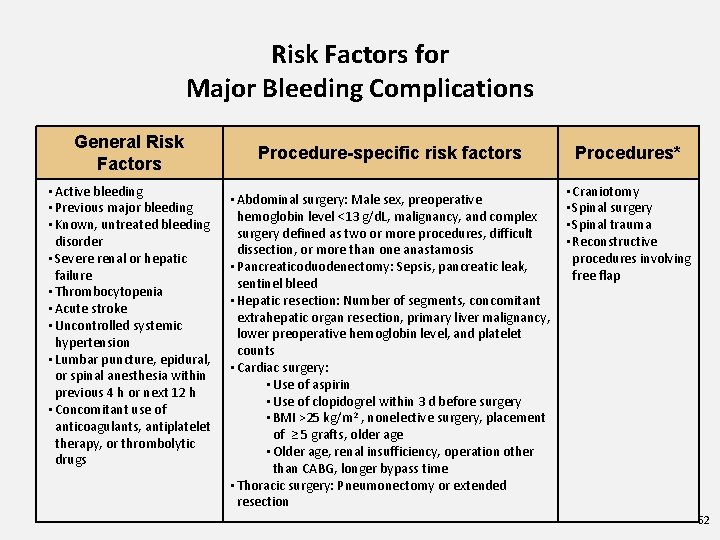
Risk Factors for Major Bleeding Complications General Risk Factors • Active bleeding • Previous major bleeding • Known, untreated bleeding disorder • Severe renal or hepatic failure • Thrombocytopenia • Acute stroke • Uncontrolled systemic hypertension • Lumbar puncture, epidural, or spinal anesthesia within previous 4 h or next 12 h • Concomitant use of anticoagulants, antiplatelet therapy, or thrombolytic drugs Procedure-specific risk factors • Abdominal surgery: Male sex, preoperative hemoglobin level ˂13 g/d. L, malignancy, and complex surgery defined as two or more procedures, difficult dissection, or more than one anastamosis • Pancreaticoduodenectomy: Sepsis, pancreatic leak, sentinel bleed • Hepatic resection: Number of segments, concomitant extrahepatic organ resection, primary liver malignancy, lower preoperative hemoglobin level, and platelet counts • Cardiac surgery: • Use of aspirin • Use of clopidogrel within 3 d before surgery • BMI >25 kg/m 2 , nonelective surgery, placement of ≥ 5 grafts, older age • Older age, renal insufficiency, operation other than CABG, longer bypass time • Thoracic surgery: Pneumonectomy or extended resection Procedures* • Craniotomy • Spinal surgery • Spinal trauma • Reconstructive procedures involving free flap 62

VTE Prophylaxis dosing regimens in Surgical Patients with Cancer Drug Regimen Unfractionated Heparin 5000 units 2 -4 hours pre-op and once every 8 hours thereafter or 5000 units 10 -12 hours pre-op and 5000 units q 8 h Dalteparin 2500 units 2 -4 hours pre-op and 5000 units daily there after or 5000 units 10 -12 hours pre-op and 5000 units daily there after Enoxaprin 20 mg 2 -4 hours pre-op and 40 mg once daily thereafter or 4 mg 10 -12 hours pre-op and 40 mg daily thereafter Fondaparinux 2. 5 mg once daily beginning 6 -8 hours post-op 63
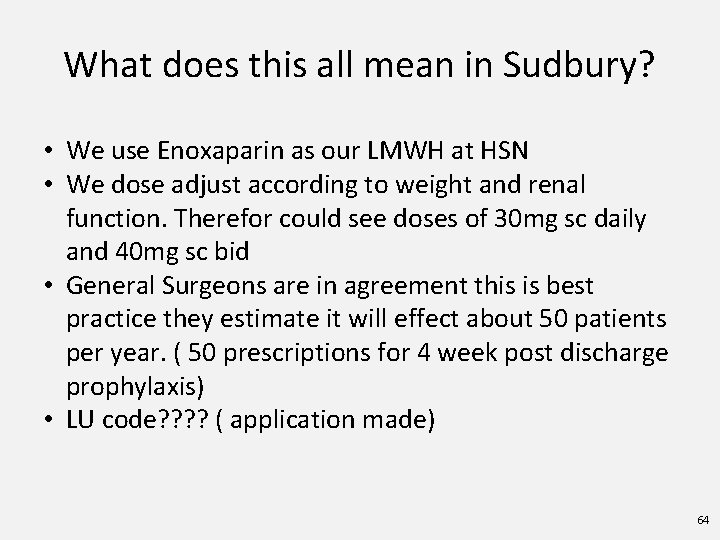
What does this all mean in Sudbury? • We use Enoxaparin as our LMWH at HSN • We dose adjust according to weight and renal function. Therefor could see doses of 30 mg sc daily and 40 mg sc bid • General Surgeons are in agreement this is best practice they estimate it will effect about 50 patients per year. ( 50 prescriptions for 4 week post discharge prophylaxis) • LU code? ? ( application made) 64

QUESTIONS? 65
- Slides: 65