
VT CORS VECTOR Benefits Daniel J Martin National
VT CORS (VECTOR) Benefits Daniel J. Martin National Geodetic Survey VT Geodetic Advisor VTrans Monthly Survey Meeting February 02, 2009
What is VECTOR? ? • Network of Continuously Operating GNSS Reference Stations. • Provides access to the National Spatial Reference System (NSRS) • Access available for post processing (Static) and Real-time.
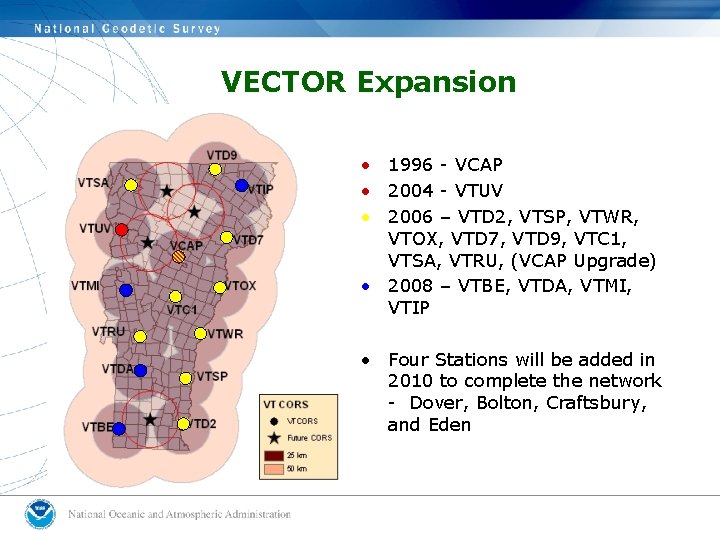
VECTOR Expansion • 1996 - VCAP • 2004 - VTUV • 2006 – VTD 2, VTSP, VTWR, VTOX, VTD 7, VTD 9, VTC 1, VTSA, VTRU, (VCAP Upgrade) • 2008 – VTBE, VTDA, VTMI, VTIP • Four Stations will be added in 2010 to complete the network - Dover, Bolton, Craftsbury, and Eden
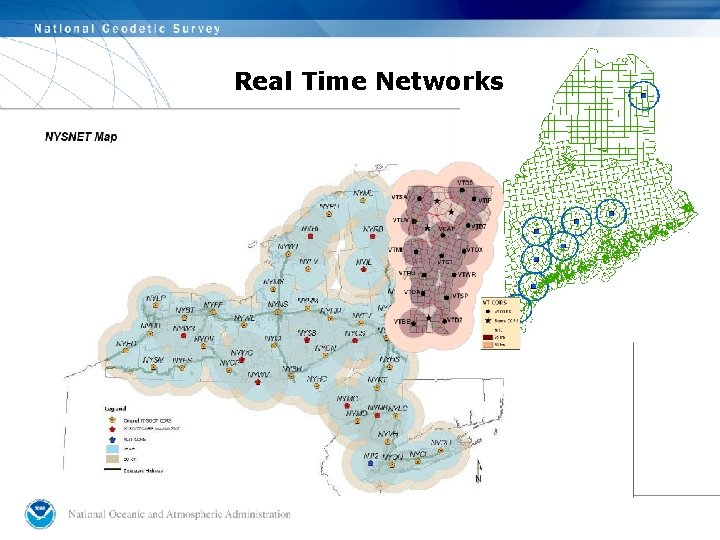
Real Time Networks
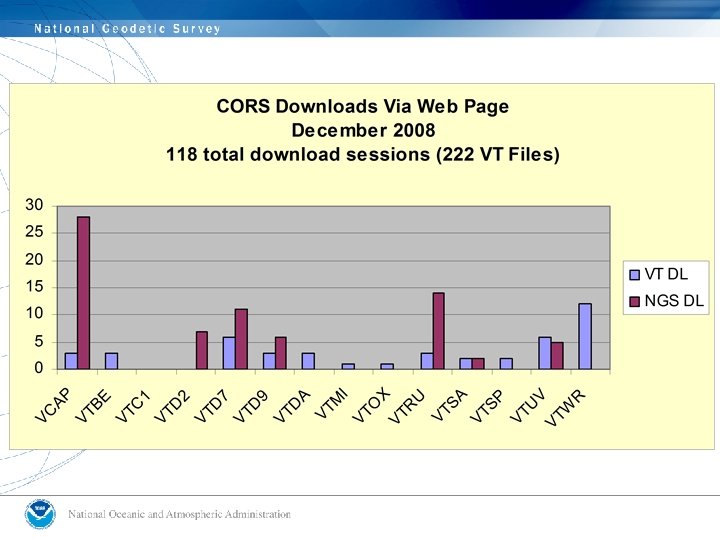
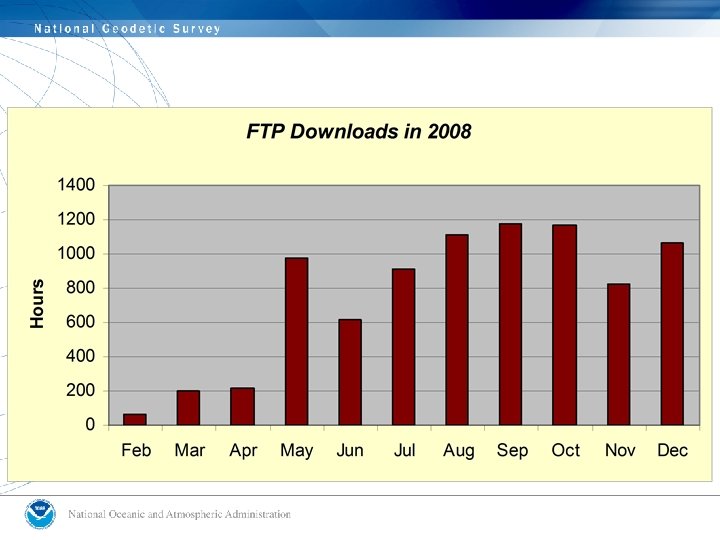
So What? ? • What is the benefit to having these station out there? – Are they being used? – How are they being used? – Who is using them? – How are they being accessed? – How much are they being accessed?
How are they being used? • Highway Surveys • Collection of inventory and resource data – Culvert inventory, Rest Area re-design, and ITS elements such as RWIS, PCMS/VMS, and WIMS location and planning • Control surveys for photography and Li. DAR • Topo • Boundary • • Flood Plane mapping Wetland Surveys Construction stakeout Geodetic and Geophysical applications – Ionospheric modeling – Plate tectonics – Precipitable Water Vapor modeling (weather forecasting
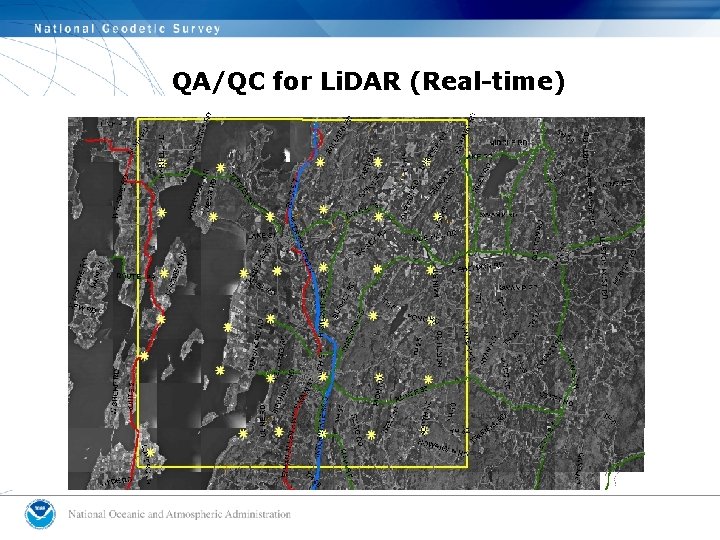
QA/QC for Li. DAR (Real-time)
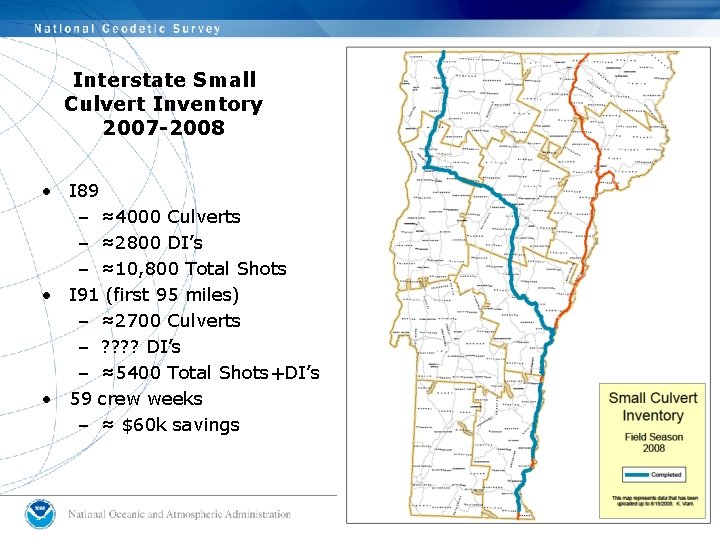
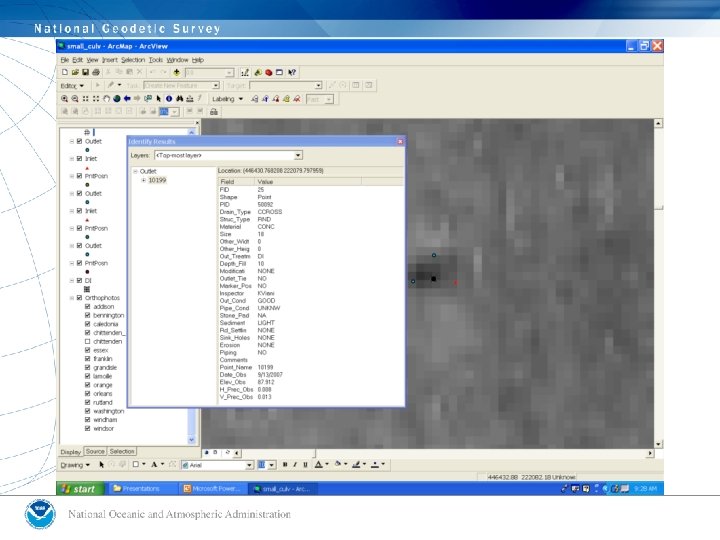
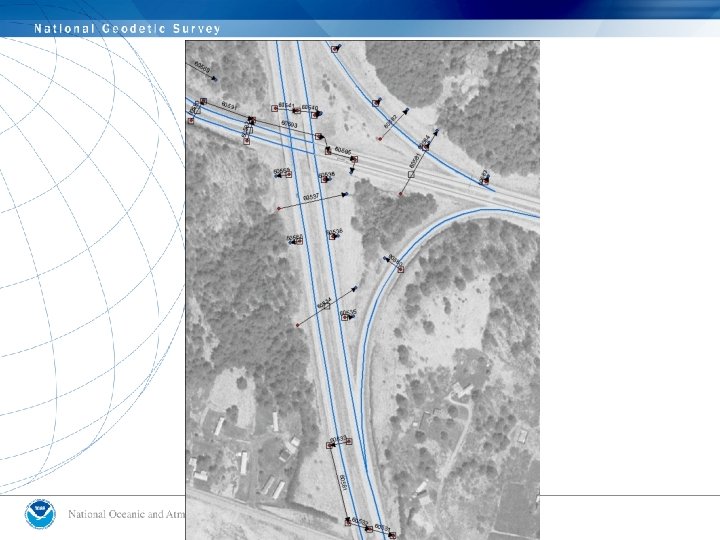
Interstate Small Culvert Inventory 2007 -2008 • I 89 – ≈4000 Culverts – ≈2800 DI’s – ≈10, 800 Total Shots • I 91 (first 95 miles) – ≈2700 Culverts – ? ? DI’s – ≈5400 Total Shots+DI’s • 59 crew weeks – ≈ $60 k savings
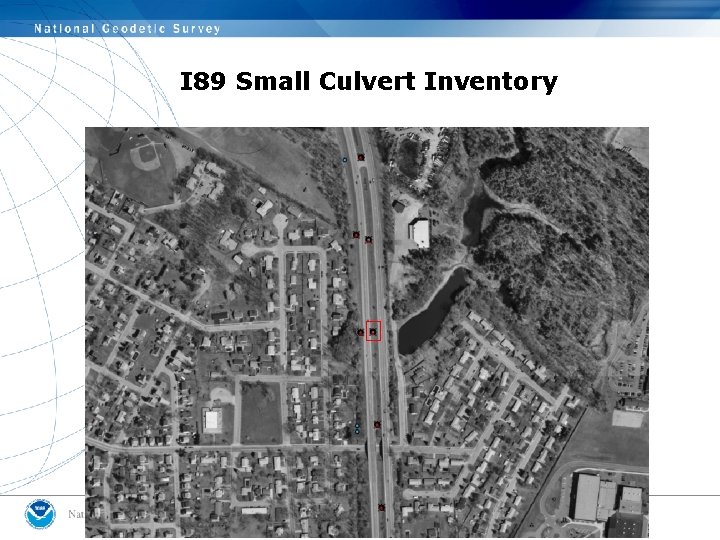
I 89 Small Culvert Inventory
Who is using them • • • VTrans • Federal and International Agencies and educational Land Surveyors institutions Engineering firms – National Weather Service GIS Professionals – National Geodetic Survey Foresters – US Geological Survey Other State Agencies Such – Geodetic Survey Canada as Agency of Natural Resources and Department – International GNSS of Agriculture Service • Other non-VT State Agencies – UVM, UNH, UMaine, Lyndon and Johnson State, Norwich University
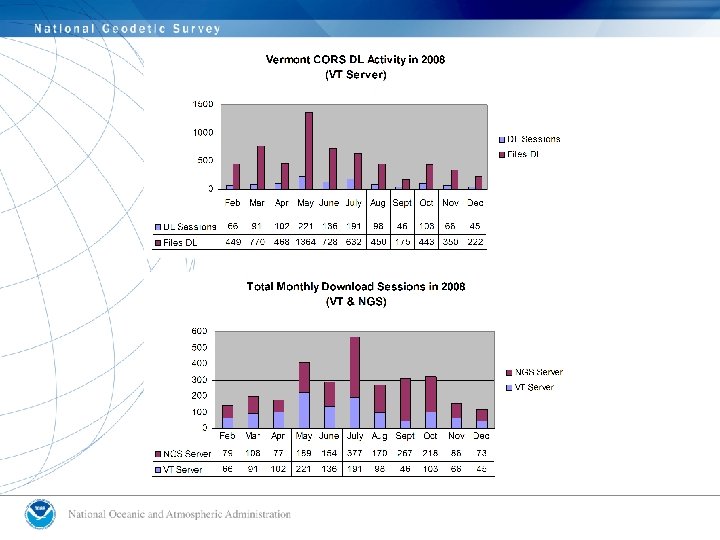
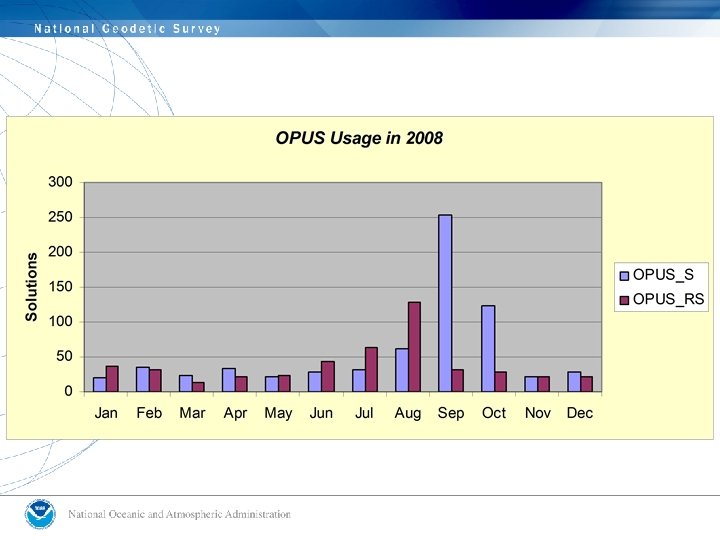
How are the VT CORS being Accessed? • Raw Data (post processing) – VTGS Web – VTGS FTP – NGS Web (UFCORS) • Derived Products – OPUS_S – OPUS_RS – OPUS_DB – RTK Corrections • Incorporated into other networks (NY, Keynet, MTS)
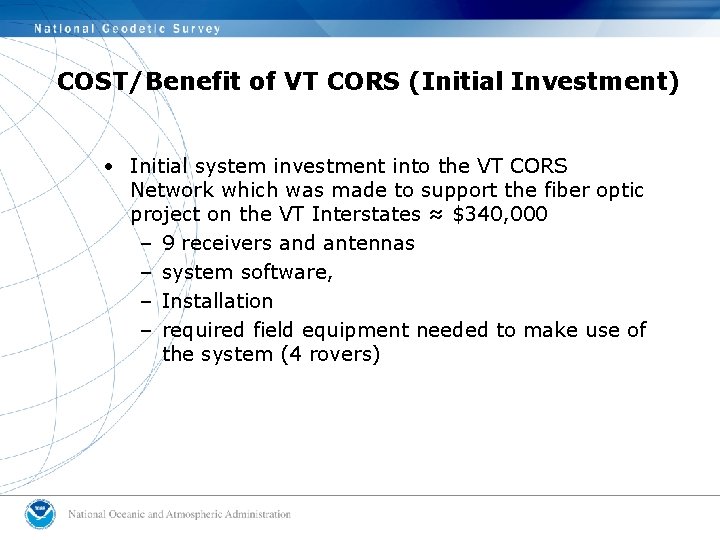
COST/Benefit of VT CORS (Initial Investment) • Initial system investment into the VT CORS Network which was made to support the fiber optic project on the VT Interstates ≈ $340, 000 – 9 receivers and antennas – system software, – Installation – required field equipment needed to make use of the system (4 rovers)
Benefit • Easy to quantify (included in report) – Reduction in person hours to accomplish a task – Reduction in purchased equipment to accomplish a task – Reduction in purchased software • Difficult to quantify (not included in report) – Reduced training (multiple types of equipment) – Reduced maintenance (multiple types of equipment) – Consistency and reliability of a system
Some generalities need to be made • One CORS replaces one receiver and operator • Without CORS network, one receiver and observer would need to spend an average of 2 hours to collect and download one hour of data (including travel) • Average UFCORS download consists of 2 hours of data • Cost of one observer and receiver is $50/hour • Most VT FTP users are “Resource Grade” users who require less accuracy. Could operate without VT CORS but would be subjected to even lower accuracy. FTP data has half the $$ benefit of data retrieved from the web page
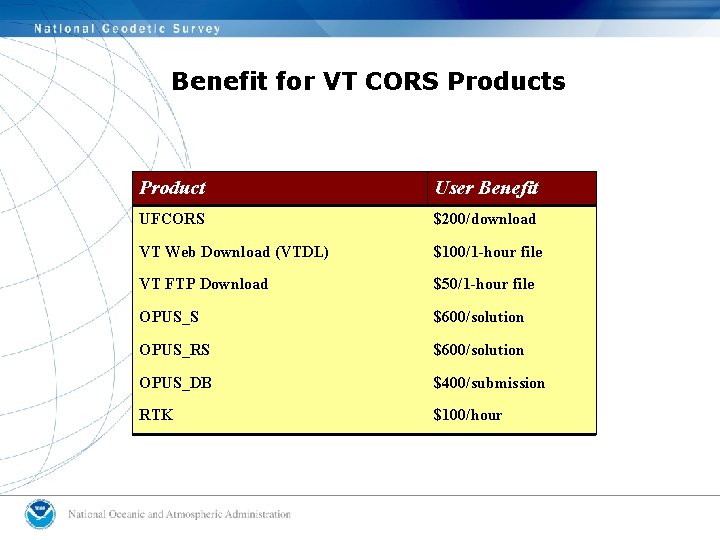
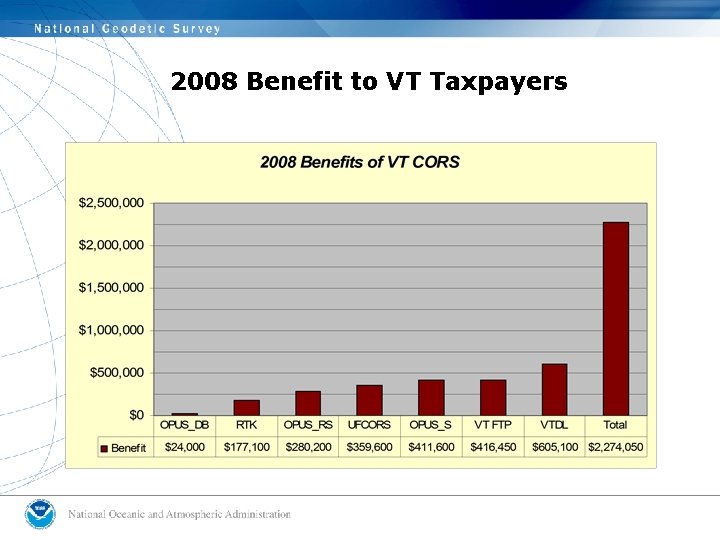
Benefit for VT CORS Products Product User Benefit UFCORS $200/download VT Web Download (VTDL) $100/1 -hour file VT FTP Download $50/1 -hour file OPUS_S $600/solution OPUS_RS $600/solution OPUS_DB $400/submission RTK $100/hour
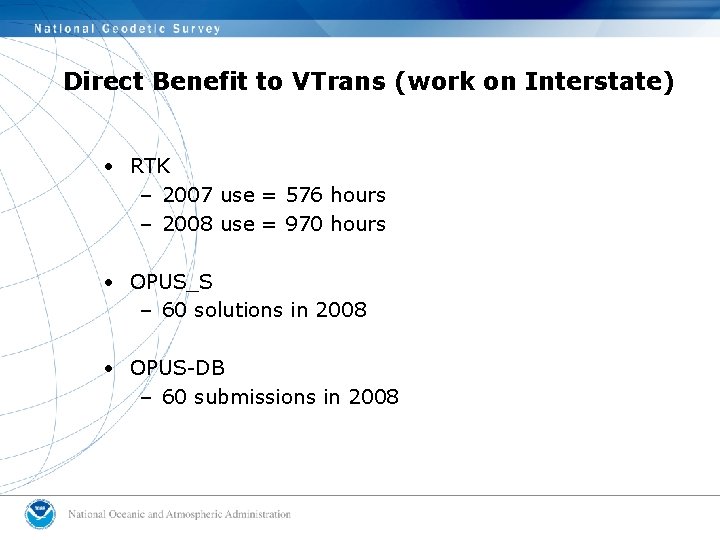
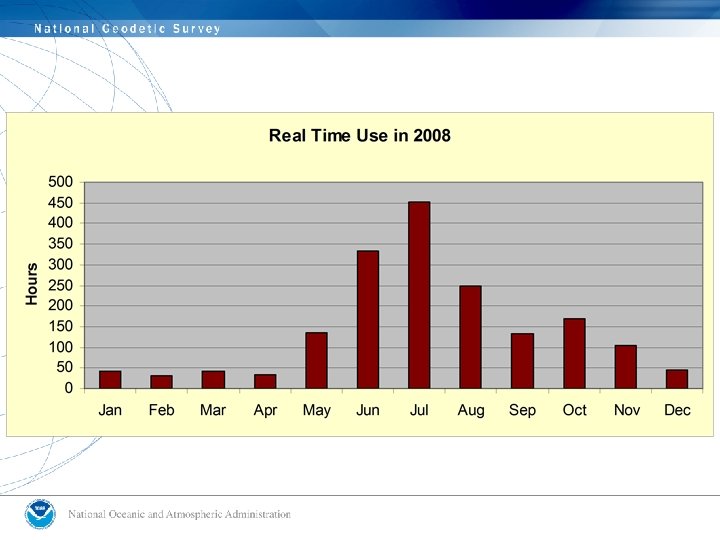
Direct Benefit to VTrans (work on Interstate) • RTK – 2007 use = 576 hours – 2008 use = 970 hours • OPUS_S – 60 solutions in 2008 • OPUS-DB – 60 submissions in 2008
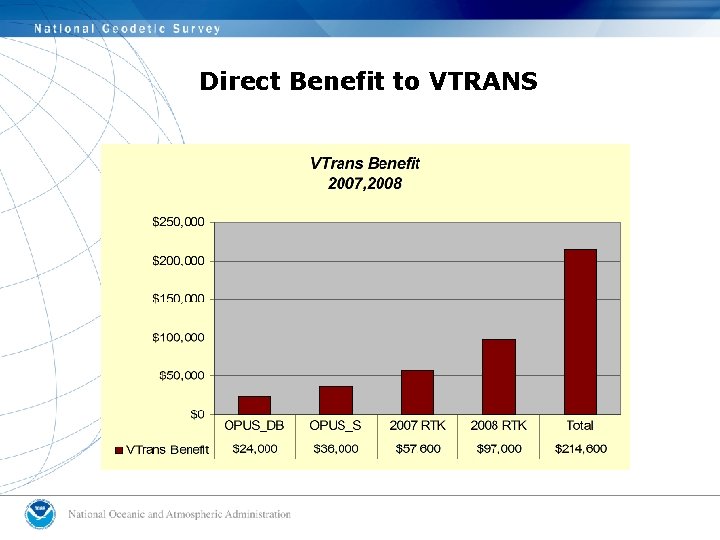
Direct Benefit to VTRANS
Direct Benefit to VTrans • 2 year benefit (2007 -2008) ≈ 63% of initial system investment • If 2009 benefit is equal to 2008 then the three year benefit ≈ 99% of initial system investment (three year return on investment)
Cost/Benefit (Current level of investment) • Current level of investment ≈ $481, 400 which includes the initial investment ($340, 000) plus $141, 400 after year 1 – 4 new CORS – Extended Warranty on firmware and software
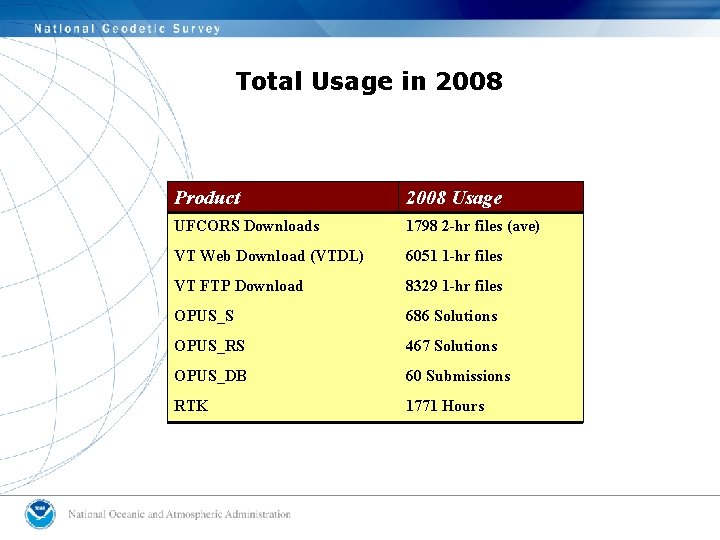
Total Usage in 2008 Product 2008 Usage UFCORS Downloads 1798 2 -hr files (ave) VT Web Download (VTDL) 6051 1 -hr files VT FTP Download 8329 1 -hr files OPUS_S 686 Solutions OPUS_RS 467 Solutions OPUS_DB 60 Submissions RTK 1771 Hours
2008 Benefit to VT Taxpayers
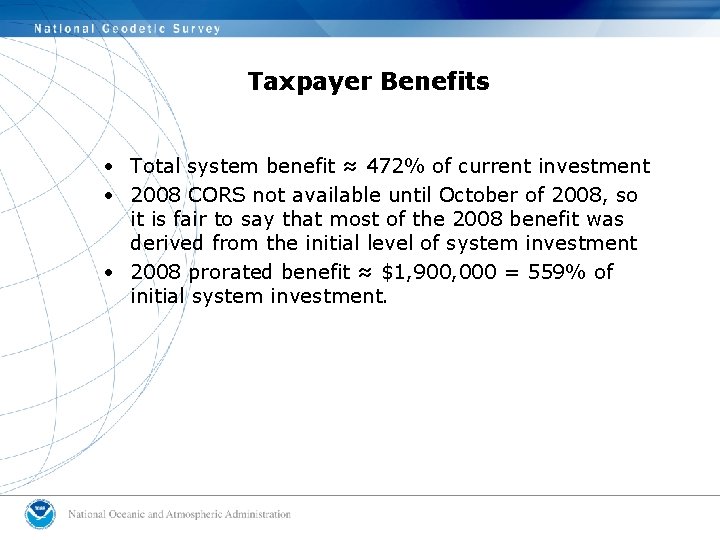
Taxpayer Benefits • Total system benefit ≈ 472% of current investment • 2008 CORS not available until October of 2008, so it is fair to say that most of the 2008 benefit was derived from the initial level of system investment • 2008 prorated benefit ≈ $1, 900, 000 = 559% of initial system investment.
Summary • The VT CORS Network has provided significant benefit to VTrans and the taxpayers of VT • It supports a wide variety of different applications from a diverse user community • Anticipated three-year cost recovery based on VTrans usage only • 2008 benefit realized by entire user community exceeds total investment by almost 500%
Recommendations • Continue with expansion of network to provide state-wide coverage • Work to get as many stations into the National Network as possible • Work to increase the use of the network inside VTrans • Continue to promote the network outside of VTrans
- Slides: 32