
VSR Unit5 Surgical Affections of Male Reproductive SystemII
- Slides: 17
VSR Unit-5: Surgical Affections of Male Reproductive System-II Dr. Ramesh Tiwary Assistant Professor Deptt. of Veterinary Surgery and Radiology
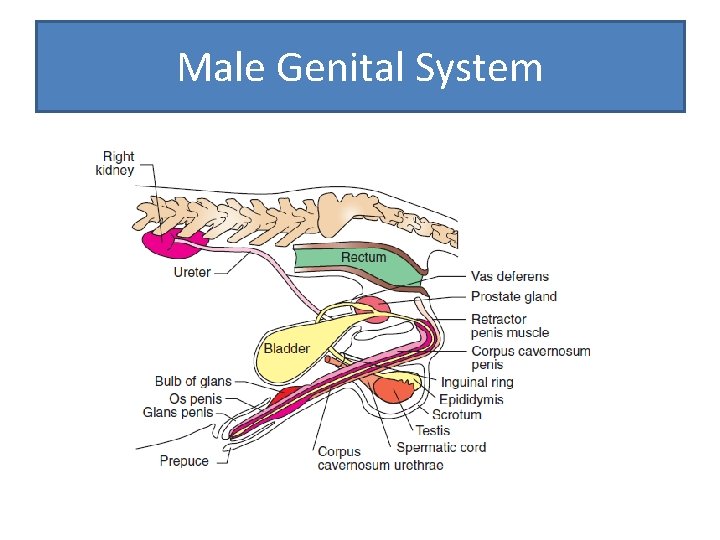
Male Genital System
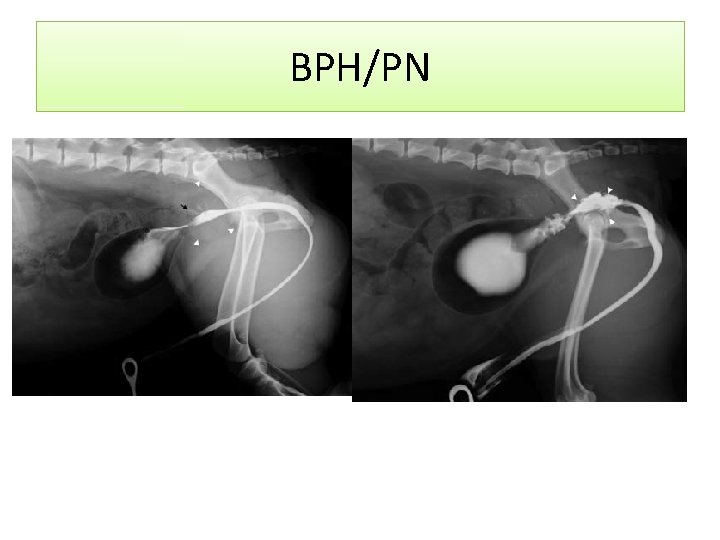
Benign Prostatic Hyperplasia (BPH) v. Spontaneous enlargement of the prostate gland in dogs as they age. v. Both hypertrophy and hyperplasia occur with diffuse glandular proliferation v. Hyperplasia affects dogs as young as 1 year of age and peaks at 5 to 6 years v. Prevalence: 50% in all adult dogs by 4 to 5 years of age. v 95% of the male dogs affected by 9 years of age.
Clinical Signs • Hindquarter Weakness. • Ribbon like stool due to partial occlusion of lumen of large bowel • Bloody urethral discharge, • Hemospermia, infertility • Decreased libido, reluctance to breed • Perineal hernia (concurrent condition)
BPH/PN
Medicinal Treatment Finasteride • Testosterone- 5 alfa reductase- Dihydrotestosterone • Finasteride 5 -mg tablet per dog/day for 1 to 50 kg • Significantly decreases dihydrotestosterone (58%) • Finasteride reduces prostate diameter (20%) and volume (43%) • Not adversely affect the serum testosterone, libido, semen quality, and fertility.
Surgical Treatment • Castration is the best treatment for benign prostatic hyperplasia • Involution of the gland begins within days of surgery • 50% size decrease in in 3 weeks • 70% reduction in size is expected by 9 weeks.
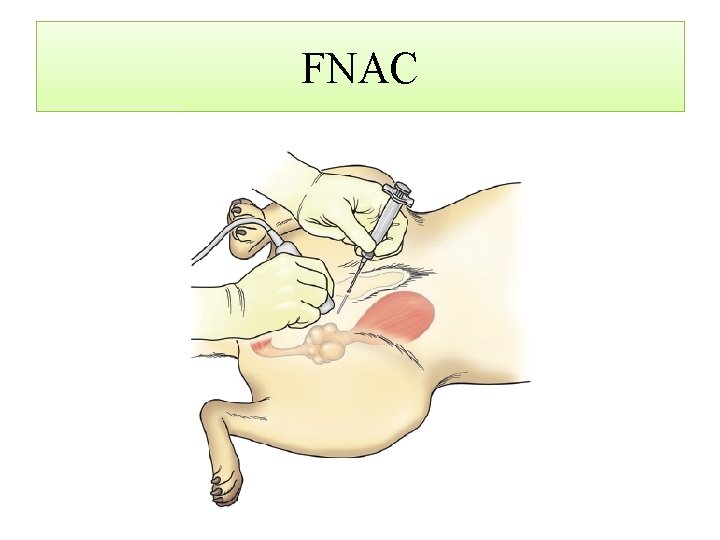
FNAC
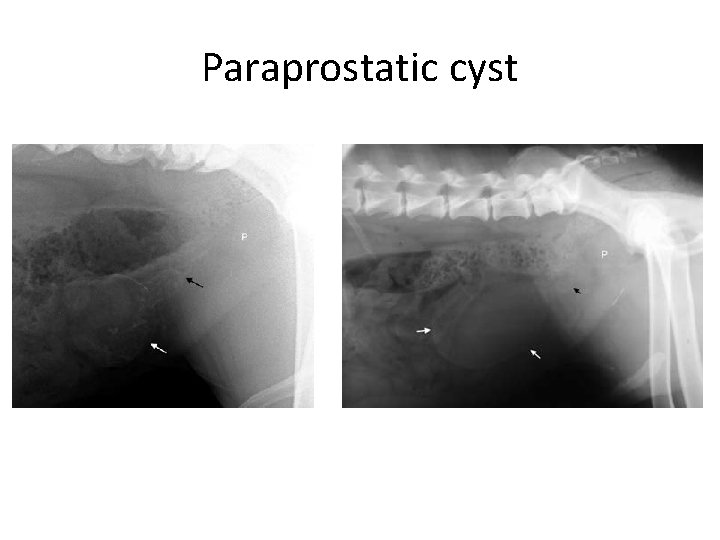
Paraprostatic cyst
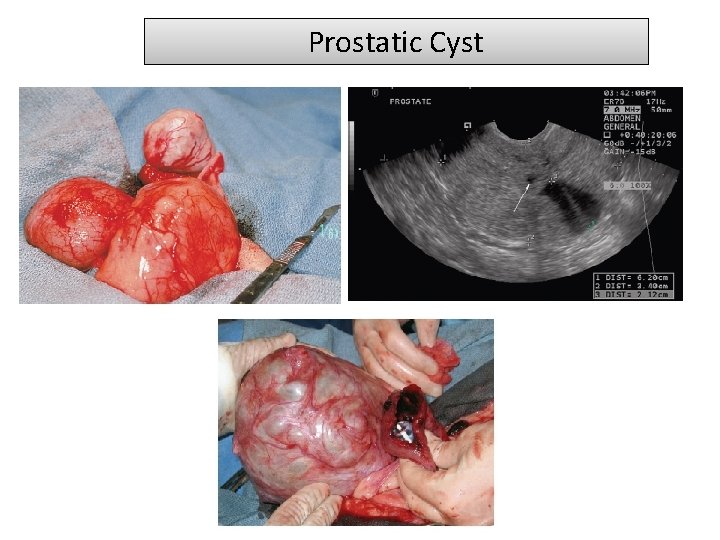
Prostatic Cyst
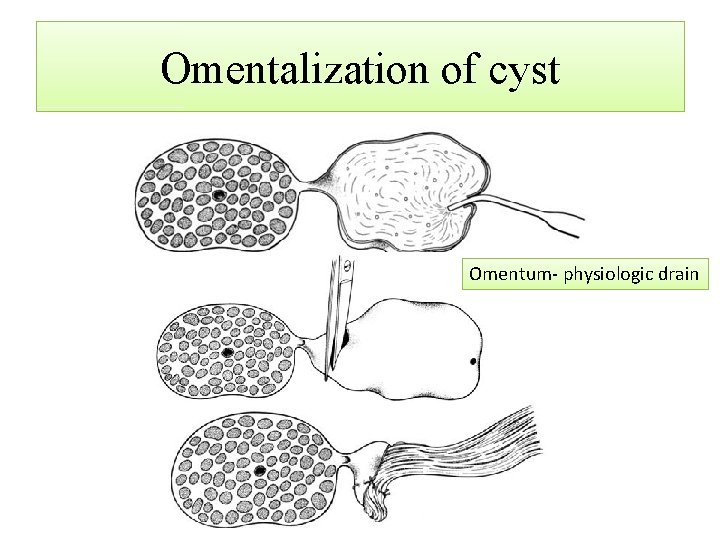
Omentalization of cyst Omentum- physiologic drain
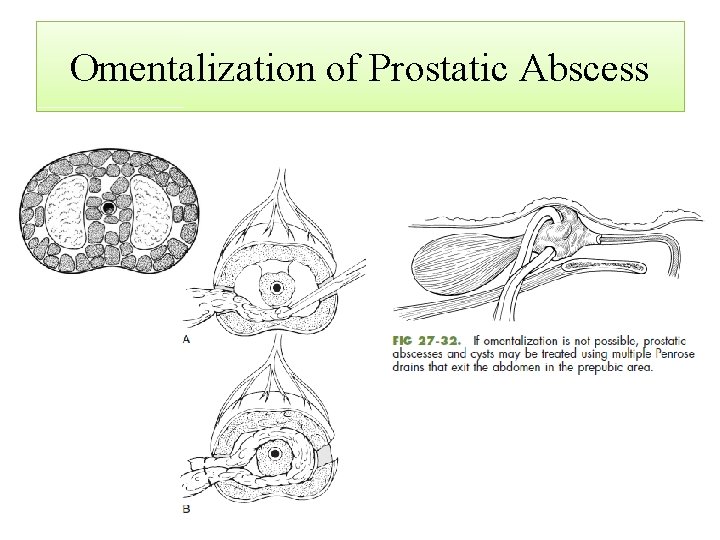
Omentalization of Prostatic Abscess
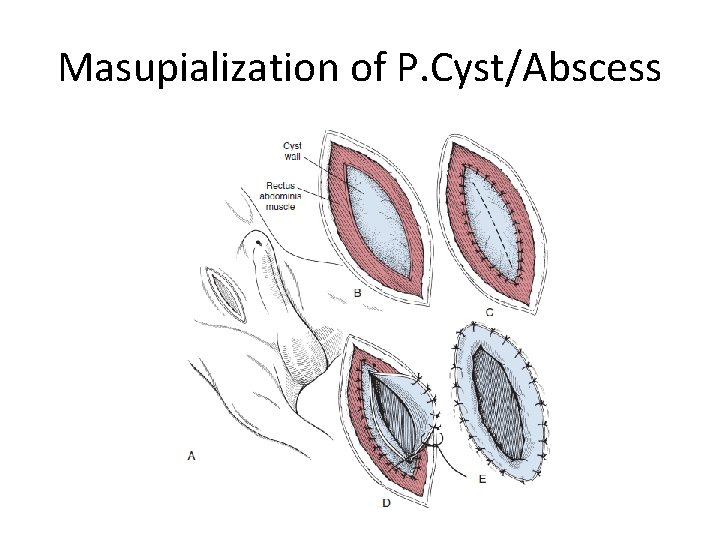
Masupialization of P. Cyst/Abscess
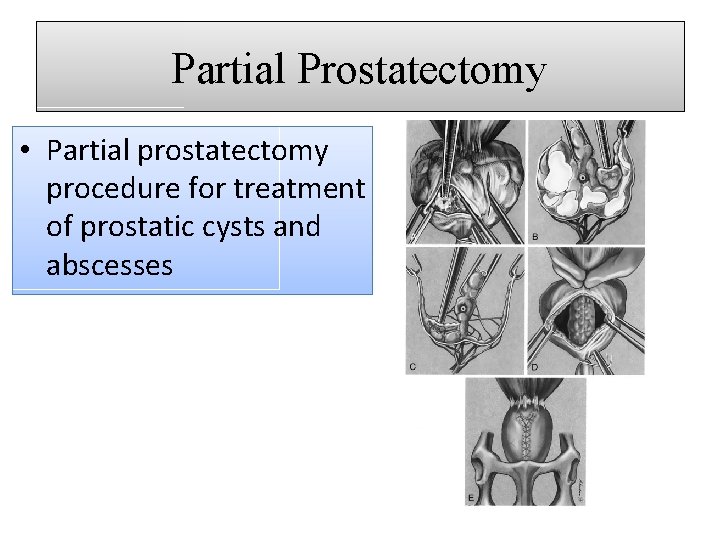
Partial Prostatectomy • Partial prostatectomy procedure for treatment of prostatic cysts and abscesses
• Excisional prostatectomy is used to treat cancer • Treatment is usually palliative • Transitional and prostatic carcinomas usually grow slowly. • Neither medical therapy nor radiation treatment provides significant benefits in patients with prostatic cancer.
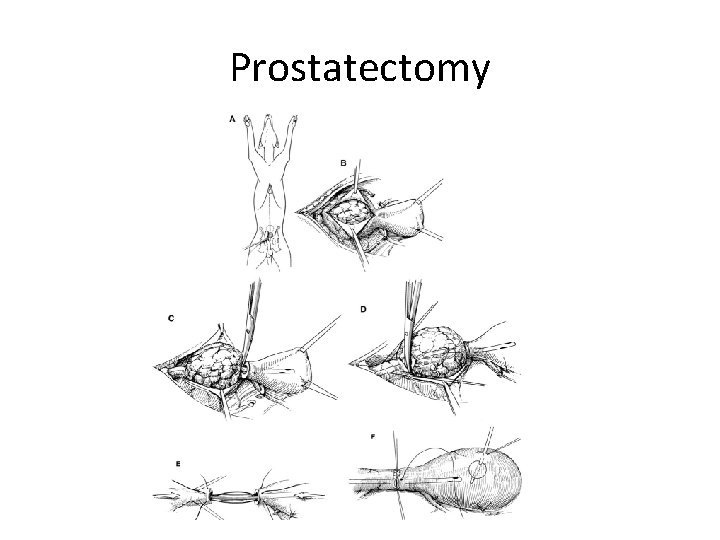
Prostatectomy
BACTERIAL PROSTATITIS • Intermittent hematuria and dysuria or bacterial UTI • Clinical abnormalities pain, fever, and lethargy • Pain during rectal palpation • Common organism is Escherichia coli, followed by staphylococci and streptococci • In septic dogs, without C/S start treatment with a combination of clindamycin and enrofloxacin