
VSEPR plan Importance of molecular shapes Drug molecules




- Slides: 13
VSEPR plan • Importance of molecular “shapes” – Drug molecules / interactions • CO 2 vs SO 2 vs H 2 O – Similarities? – Differences? (How to explain these? ) • Quick answer/run through • 5 “Parent” Structures (What “family” are you in? ) • Importance of how to count electron “groups” (or electron clouds) [not just for VSEPR!] • My approach (Family first, then consider lone pairs)
Pages possibly shown in class • http: //www. worldofmolecules. com/drugs/ • http: //www. worldofmolecules. com/3 D/codeine_ 3 d. htm • http: //en. wikipedia. org/wiki/Codeine • Try other drug molecules at the above sites! • http: //www. youtube. com/watch? v=ke. HS-CASZfc • http: //www. youtube. com/watch? v=KJj. Nfs. Rf. FXU &feature=related
Nice VSEPR Summary on web • http: //intro. chem. okstate. edu/1314 F 97/Chap ter 9/VSEPR. html
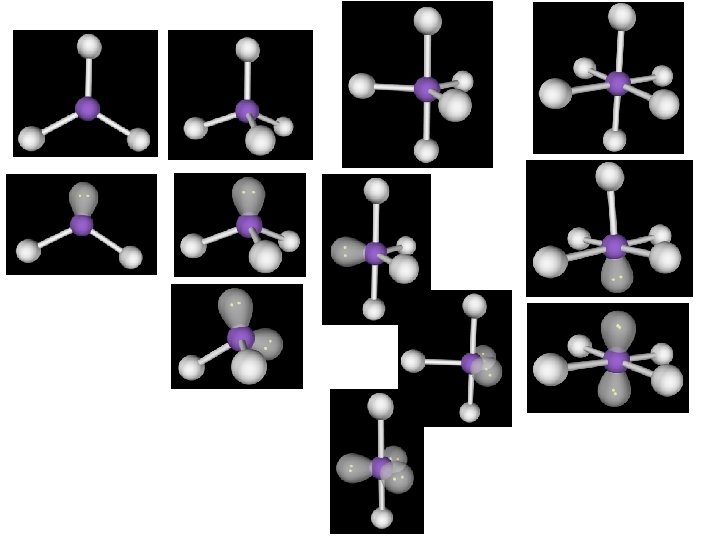
Part A— 4 “Families”
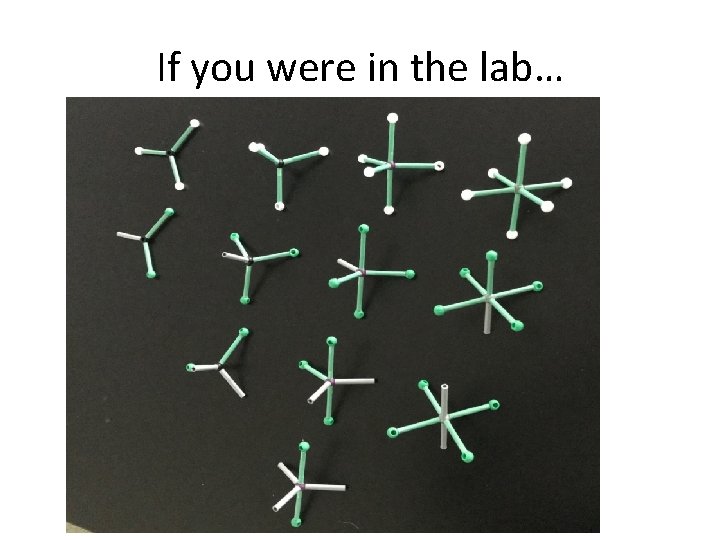
Part B—All the AG’s in the 4 Familiesj (you build the ones with lone pairs) • Think of these in “columns”—one column = one famiy • Parent structure at top (no lone pairs)
If you were in the lab…
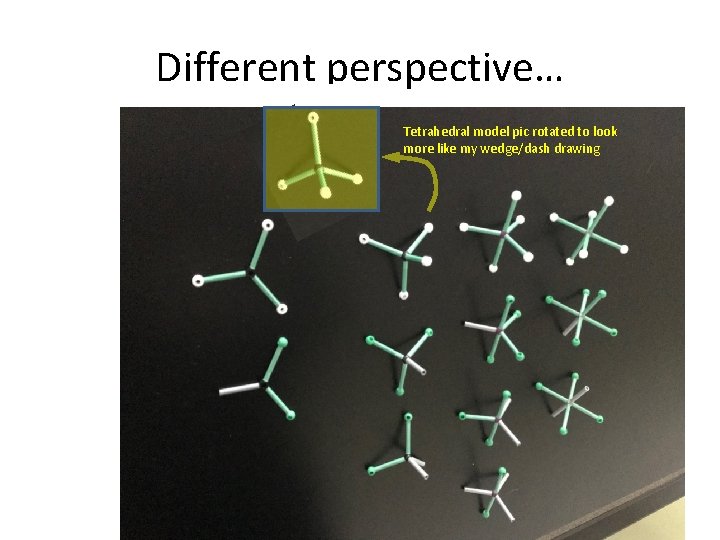
Different perspective… Tetrahedral model pic rotated to look more like my wedge/dash drawing
Part C—Applying the Model, Part I (single centered structures) • LDS • # electron clouds – “family” – ECG, can draw “sticks” – idealized angles • Lone pairs? – Go down one row per each lone pair! – Angles a bit “squeezed” (smaller angle) when lone pairs
Part D—Applying the Model, Part II (structures with more than one center) • LDS • # electron clouds only around one center (at at time) – “family” – ECG, can draw “sticks” – idealized angles • Lone pairs? – Go down one row per each lone pair! – Angles a bit “squeezed” (smaller angle) when lone pairs