
VS Respiration Function of the Lungs Provide transfer
- Slides: 21
V/S, Respiration
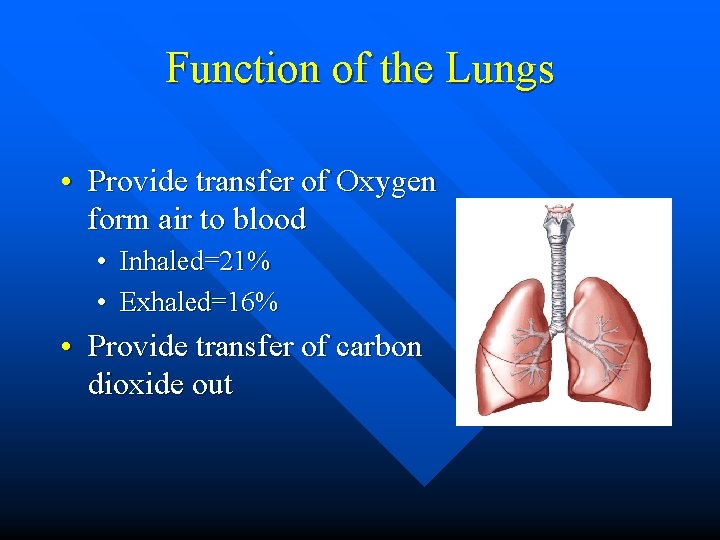
Function of the Lungs • Provide transfer of Oxygen form air to blood • Inhaled=21% • Exhaled=16% • Provide transfer of carbon dioxide out
What is the Respiration? It is the act of breathing through inhalation (inspiration) and exhalation. External respiration : interchange of O 2 and CO 2 b/w alveoli and pulmonary blood. Internal respiration : interchange of O 2 and CO 2 b/w circulating blood and cells of body tissues.
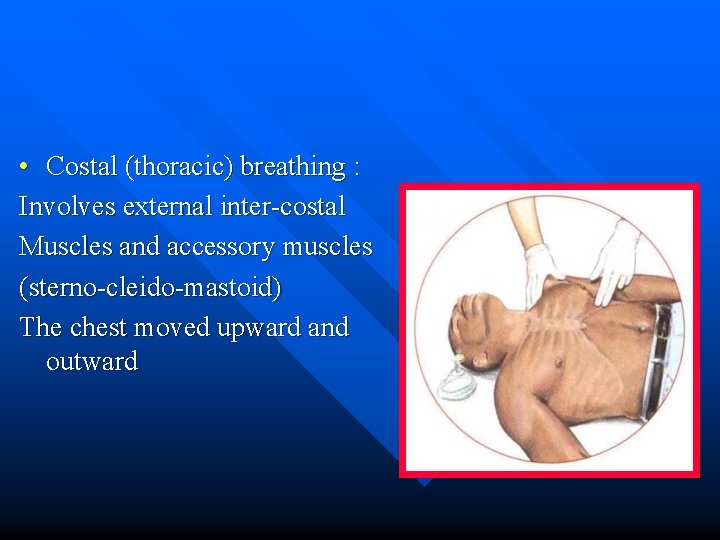
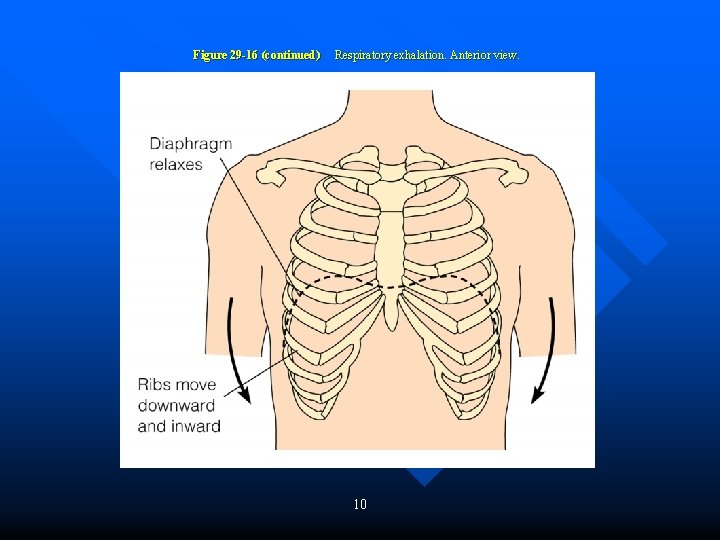
• Costal (thoracic) breathing : Involves external inter-costal Muscles and accessory muscles (sterno-cleido-mastoid) The chest moved upward and outward
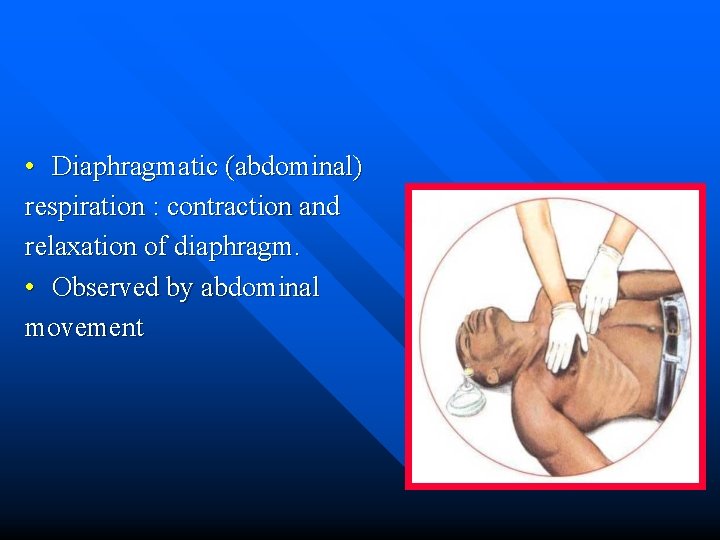
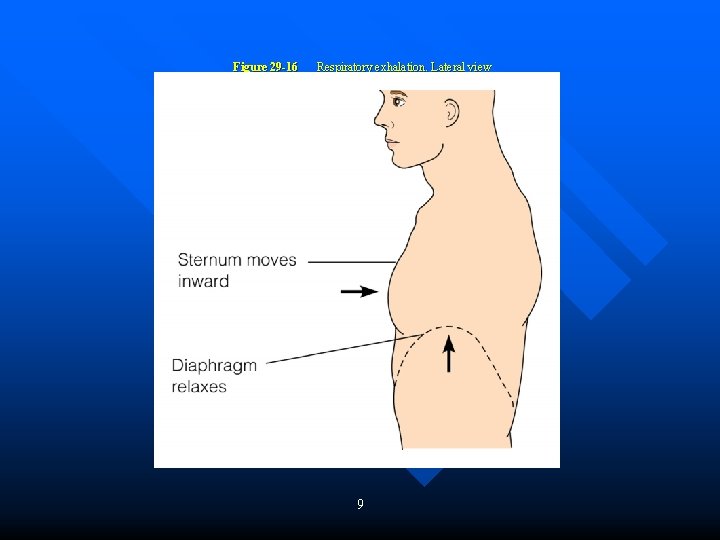
• Diaphragmatic (abdominal) respiration : contraction and relaxation of diaphragm. • Observed by abdominal movement
Mechanics and Regulation of Breathing 6
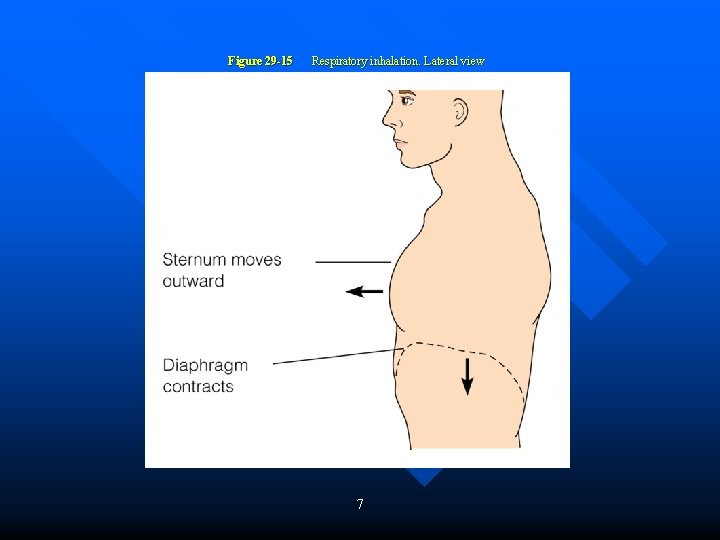
Figure 29 -15 Respiratory inhalation. Lateral view 7
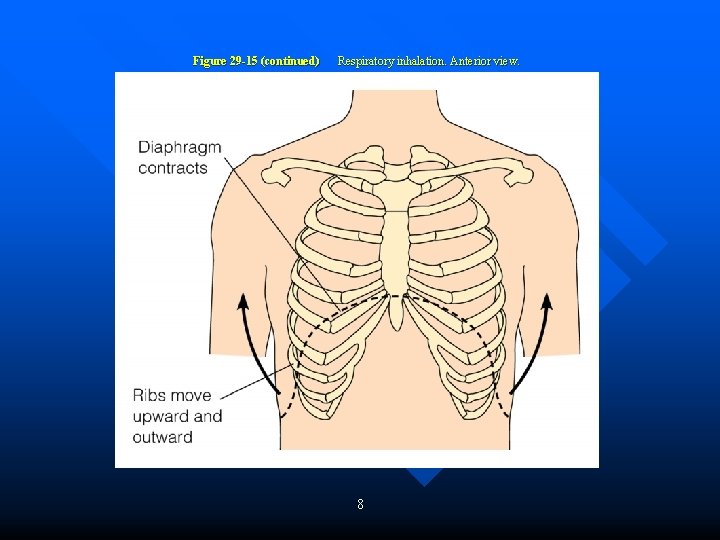
Figure 29 -15 (continued) Respiratory inhalation. Anterior view. 8
Figure 29 -16 Respiratory exhalation. Lateral view 9
Figure 29 -16 (continued) Respiratory exhalation. Anterior view. 10
Respiratory control • Respiratory center in medulla oblongata and the pons of the brain • Chemo-receptors located in medulla and carotid artery and aorta
Factors Affecting Respiration Factors ↑ Resp. • • Exercise Stress ↑ environmental temp. Lowered O 2 concentrations at increased altitudes Factors ↓ Resp. • Certain medication e. g. narcotics • ↑ ICP 12
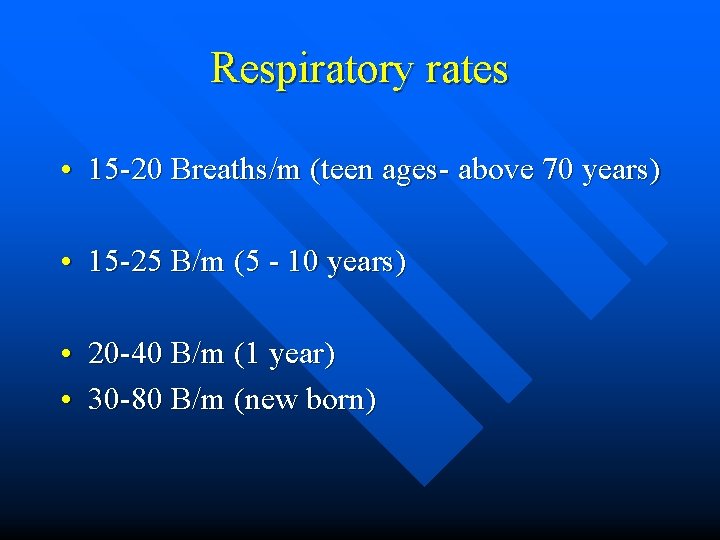
Respiratory rates • 15 -20 Breaths/m (teen ages- above 70 years) • 15 -25 B/m (5 - 10 years) • 20 -40 B/m (1 year) • 30 -80 B/m (new born)
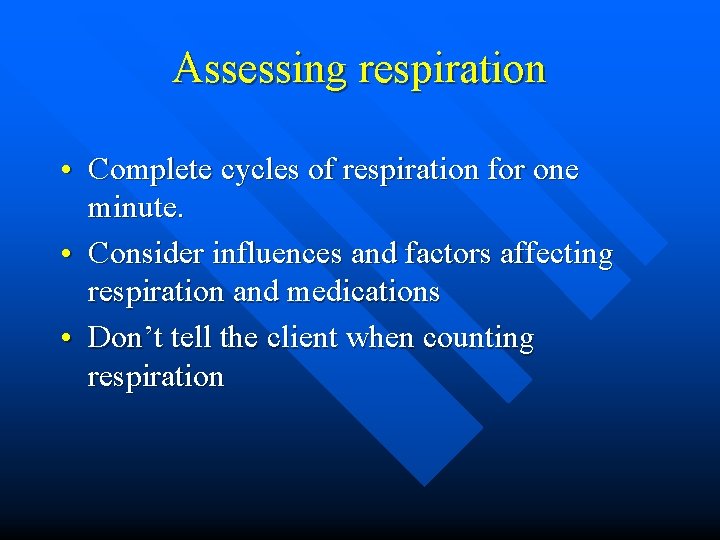
Assessing respiration • Complete cycles of respiration for one minute. • Consider influences and factors affecting respiration and medications • Don’t tell the client when counting respiration
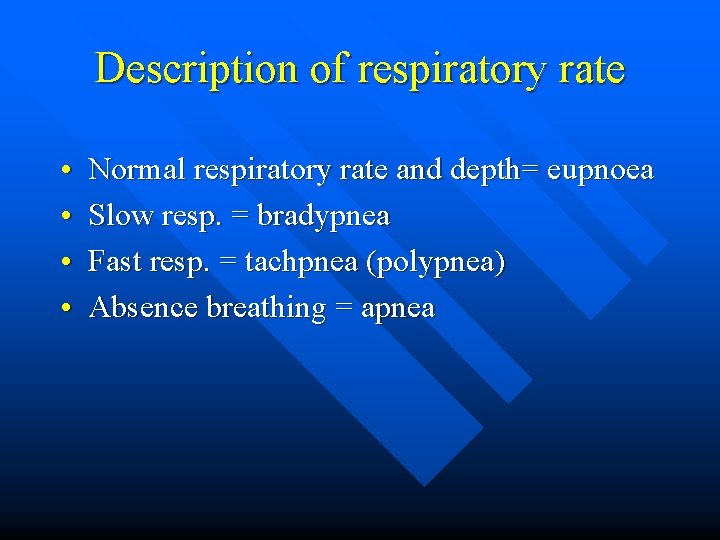
Description of respiratory rate • • Normal respiratory rate and depth= eupnoea Slow resp. = bradypnea Fast resp. = tachpnea (polypnea) Absence breathing = apnea
Respiratory volume • Hypoventilation • Hyperventilation
Respiratory Rhythm • Cheyne-stokes breathing : very deep to very shallow and temporary apnea.
Ease and Efforts • Dyspnea • Orthopnea : ability to breath only in upright sitting or standing positions.
Breathing sounds • Stridor (laryngeal obstruction) • Stretor (snoring)(partial obstruction of URT) • Wheeze (whistling) (narrowed or partial obstruction of airways) • Bubbling (gurgling) (moist secretions in respiratory tract)
Chest movements • Intercostal retraction (b/w ribs) • Substernal retraction (beneath breast bone) • Suprasternal retraction (above clavicles)
Secretions and coughing • Hemoptysis • Productive cough • Non-productive cough