
Vowels in English Spelling vs Pronunciation IPA Symbol
Vowels in English: Spelling vs. Pronunciation
![IPA Symbol English Examples [ ij ] * n [ɪ] n [ ej ]](http://slidetodoc.com/presentation_image_h/027766a3144646bf7a159e1309c6a013/image-2.jpg "IPA Symbol English Examples [ ij ] * n [ɪ] n [ ej ]")
IPA Symbol English Examples [ ij ] * n [ɪ] n [ ej ] * n seat, feet, be, field, funny sit, did, with, this cake, hate, rain, play
![[ɛ] n [æ] n [a] father n get, help, red, head cat, hat, that,](http://slidetodoc.com/presentation_image_h/027766a3144646bf7a159e1309c6a013/image-3.jpg "[ɛ] n [æ] n [a] father n get, help, red, head cat, hat, that,")
[ɛ] n [æ] n [a] father n get, help, red, head cat, hat, that, after not, stop, fond, want,
![[ə] n [ uw ] * n [ʊ] n sun, but, today, sofa spoon,](http://slidetodoc.com/presentation_image_h/027766a3144646bf7a159e1309c6a013/image-4.jpg "[ə] n [ uw ] * n [ʊ] n sun, but, today, sofa spoon,")
[ə] n [ uw ] * n [ʊ] n sun, but, today, sofa spoon, new, glue, fruit put, would, good, look
![[ ow ] * n [ɔ] n [aw] n those, bone, goes, coat dog,](http://slidetodoc.com/presentation_image_h/027766a3144646bf7a159e1309c6a013/image-5.jpg "[ ow ] * n [ɔ] n [aw] n those, bone, goes, coat dog,")
[ ow ] * n [ɔ] n [aw] n those, bone, goes, coat dog, talk, caught, saw cow, town, house, found
![[aj] n [ɔj] n I, buy, why, high, night toy, boy, oil, soil](http://slidetodoc.com/presentation_image_h/027766a3144646bf7a159e1309c6a013/image-6.jpg "[aj] n [ɔj] n I, buy, why, high, night toy, boy, oil, soil")
[aj] n [ɔj] n I, buy, why, high, night toy, boy, oil, soil
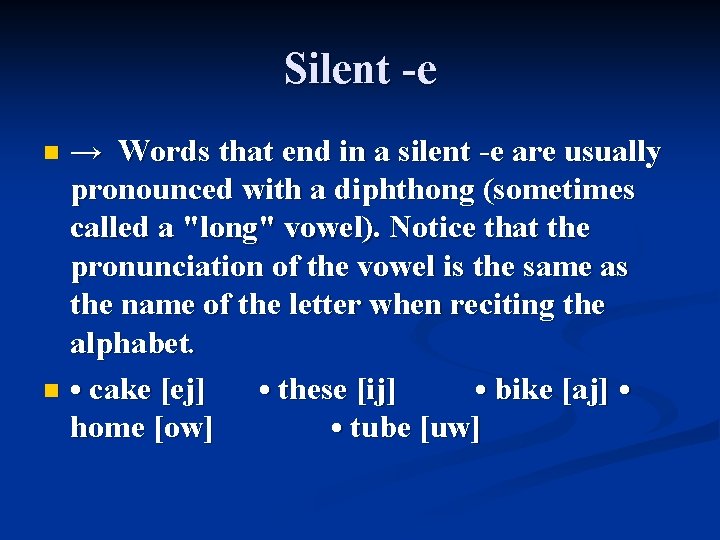
Silent -e → Words that end in a silent -e are usually pronounced with a diphthong (sometimes called a "long" vowel). Notice that the pronunciation of the vowel is the same as the name of the letter when reciting the alphabet. n • cake [ej] • these [ij] • bike [aj] • home [ow] • tube [uw] n
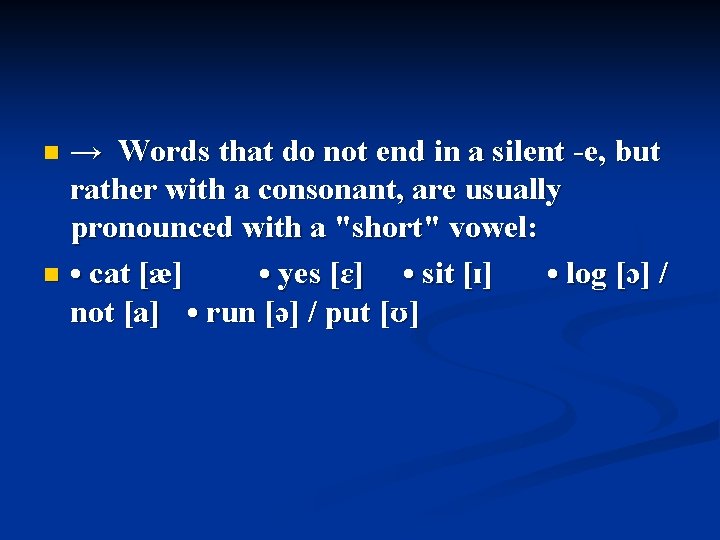
→ Words that do not end in a silent -e, but rather with a consonant, are usually pronounced with a "short" vowel: n • cat [æ] • yes [ɛ] • sit [ɪ] • log [ɔ] / not [a] • run [ə] / put [ʊ] n
![Some Exceptions to the Rules 1. Rule: EA pronounced as [ij]: speak, eat, sea,](http://slidetodoc.com/presentation_image_h/027766a3144646bf7a159e1309c6a013/image-9.jpg "Some Exceptions to the Rules 1. Rule: EA pronounced as [ij]: speak, eat, sea,")
Some Exceptions to the Rules 1. Rule: EA pronounced as [ij]: speak, eat, sea, teach, leave, dear, fear, read (present) n Exceptions: n EA can also be pronounced as [ɛ]: head, sweat, threat, read (past) n EA can also be pronounced as [ej]: break, great, bear, pear n
![3. Rule: OO pronounced as [uw]: spoon, moon, food, choose, loose, goose, boot, zoo](http://slidetodoc.com/presentation_image_h/027766a3144646bf7a159e1309c6a013/image-10.jpg "3. Rule: OO pronounced as [uw]: spoon, moon, food, choose, loose, goose, boot, zoo")
3. Rule: OO pronounced as [uw]: spoon, moon, food, choose, loose, goose, boot, zoo n Exceptions: n OO can also be pronounced as [ʊ]: look, cook, book, hook, good, wood, foot OO can also be pronounced as [ow]: door, floor, poor n
![n n n 2. Rule: OW and OU pronounced as [aw]: now, town, clown,](http://slidetodoc.com/presentation_image_h/027766a3144646bf7a159e1309c6a013/image-11.jpg "n n n 2. Rule: OW and OU pronounced as [aw]: now, town, clown,")
n n n 2. Rule: OW and OU pronounced as [aw]: now, town, clown, house, mouse, found Exceptions: OW/OU can also be pronounced as [ow]: know, show, own, flown, dough, though OU can also be pronounced as [ɔ]: cough, fought, brought, thought OU can also be pronounced as [ə]: rough, tough, enough OU can also be pronounced as [uw]: through, you
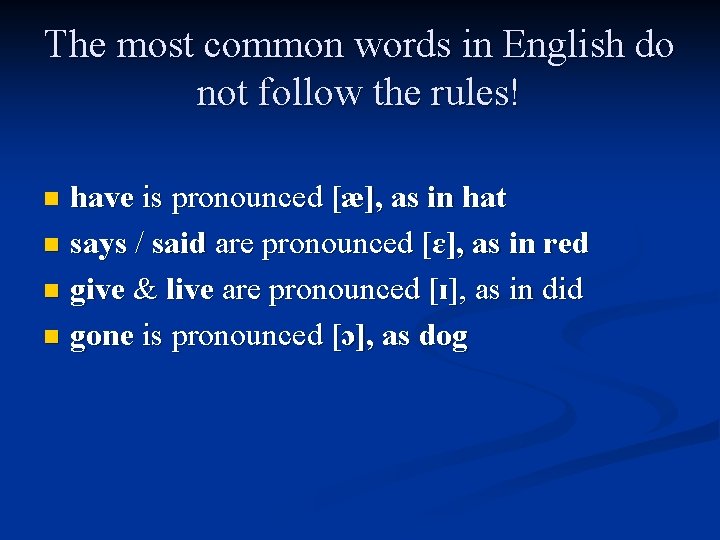
The most common words in English do not follow the rules! have is pronounced [æ], as in hat n says / said are pronounced [ɛ], as in red n give & live are pronounced [ɪ], as in did n gone is pronounced [ɔ], as dog n
![what / was / come / some / done / does are pronounced [ə],](http://slidetodoc.com/presentation_image_h/027766a3144646bf7a159e1309c6a013/image-13.jpg "what / was / come / some / done / does are pronounced [ə],")
what / was / come / some / done / does are pronounced [ə], as in run n lose is pronounced [uw], as in new n would / could / should / put is pronounced [ʊ], as in good n find is pronounced [aj], as in buy n
Practice saying these sentences:

1. What have you gone and done now? n 2. I live in a white house that my father owns. n 3. You always read so much that your head hurts. n
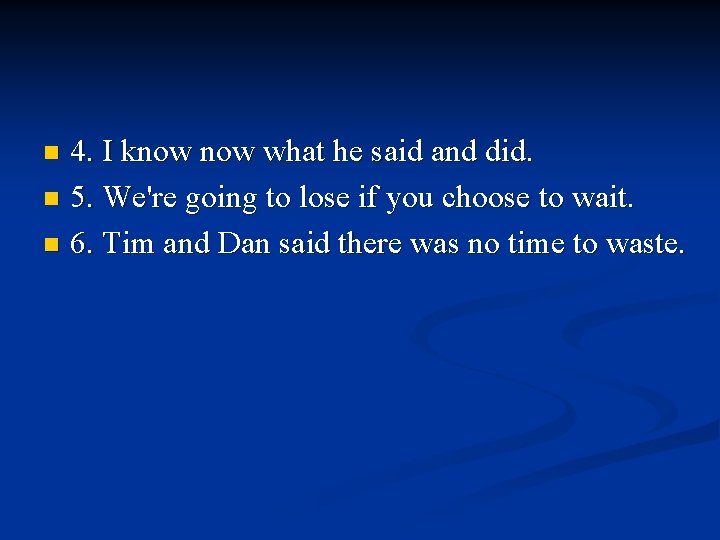
4. I know what he said and did. n 5. We're going to lose if you choose to wait. n 6. Tim and Dan said there was no time to waste. n
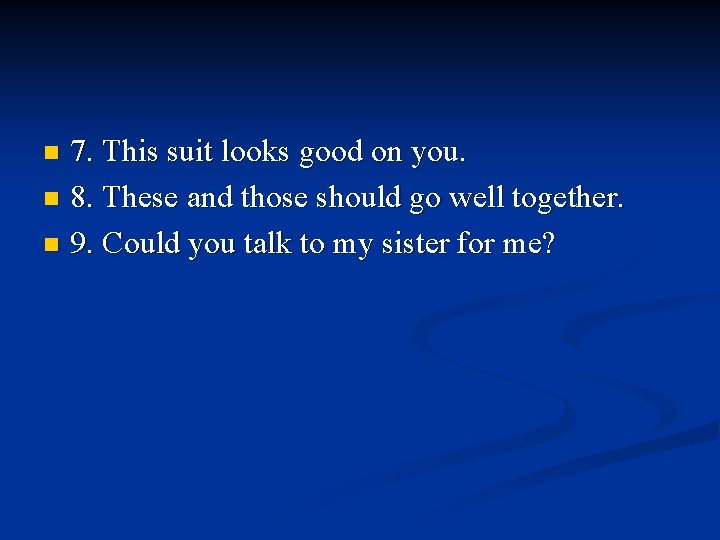
7. This suit looks good on you. n 8. These and those should go well together. n 9. Could you talk to my sister for me? n
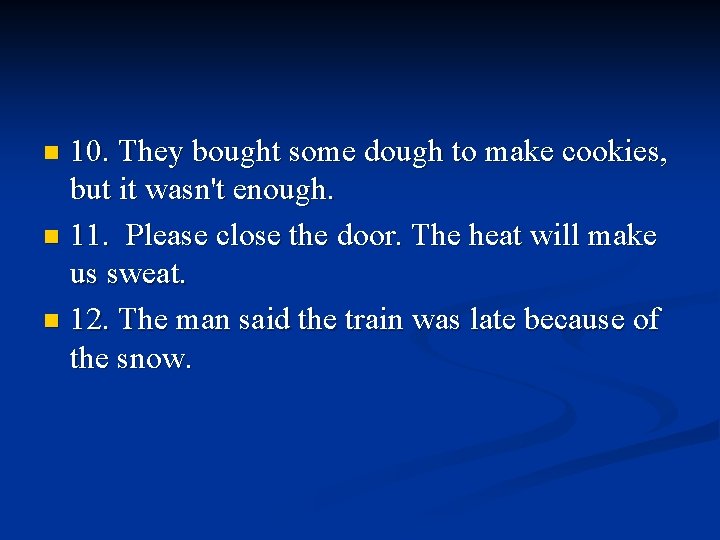
10. They bought some dough to make cookies, but it wasn't enough. n 11. Please close the door. The heat will make us sweat. n 12. The man said the train was late because of the snow. n
13. I thought you said that rugby was too rough to play. n 14. Jane went to the store because she wanted to buy some peaches. n 15. This cat hates to eat meat but he loves other good food. n
16. Don't yell at me because I won't help you cook. n 17. An apple fell on the ground, and another fell in the pond. n 18. The plural of mouse is mice, but the plural of goose is geese. n
19. The queen sat on her throne and ate grapes from a plate. n 20. The cat and dog fought all day until I brought one inside the house. n 21. First I made the bed and then I had some tea and bread with jam. n 22. I didn't hear what you said, my dear. Is it over here or over there? n
23. Why didn't you read this book last night? You had enough time. n 24. I have a big fear of bears and snakes, but not spiders or wolves. n 25. What is this blue and green fruit? Is it ripe enough to eat? n
- Slides: 22