
VOTING BEHAVIOR PATTERNS 1 Make sure to read
VOTING BEHAVIOR PATTERNS
1) Make sure to read the supplemental reading posted on class website Pew Research Institute Article: Who Votes, Who Doesn’t
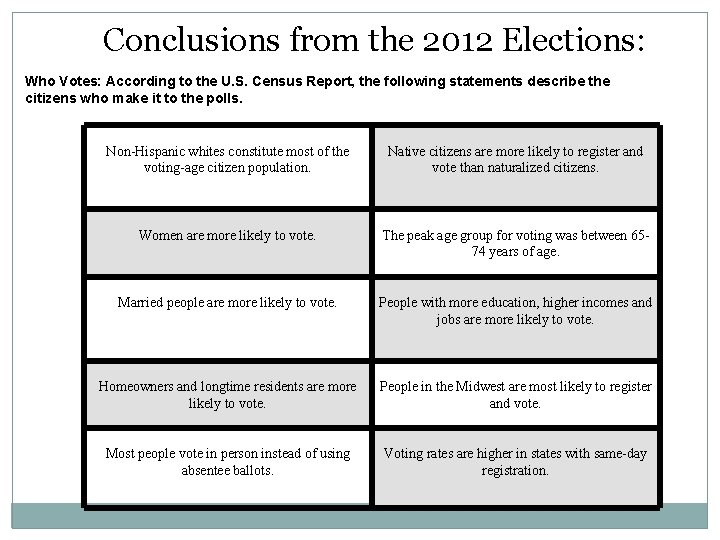
Conclusions from the 2012 Elections: Who Votes: According to the U. S. Census Report, the following statements describe the citizens who make it to the polls. Non-Hispanic whites constitute most of the voting-age citizen population. Native citizens are more likely to register and vote than naturalized citizens. Women are more likely to vote. The peak age group for voting was between 6574 years of age. Married people are more likely to vote. People with more education, higher incomes and jobs are more likely to vote. Homeowners and longtime residents are more likely to vote. People in the Midwest are most likely to register and vote. Most people vote in person instead of using absentee ballots. Voting rates are higher in states with same-day registration.
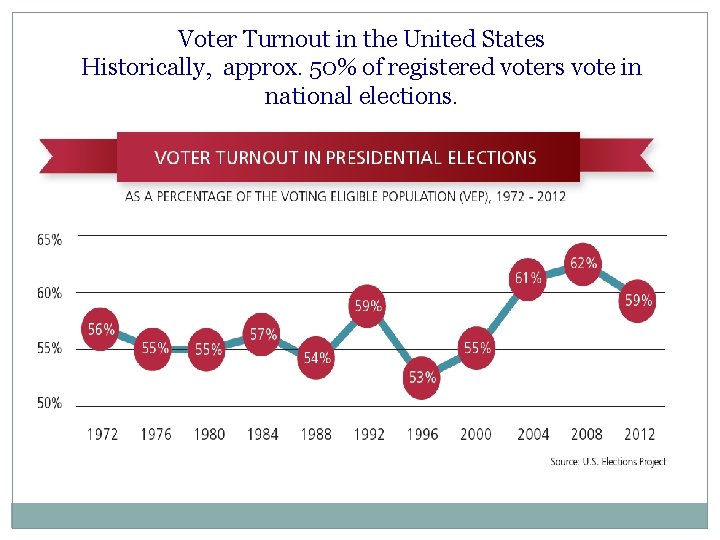
Voter Turnout in the United States Historically, approx. 50% of registered voters vote in national elections.

Which groups have higher voter participation? Which statistic did you find to be the most surprising?

Presidential vs. Midterm Elections Voter Turnout in Midterm Elections – Lowers the average for overall voter turnout!
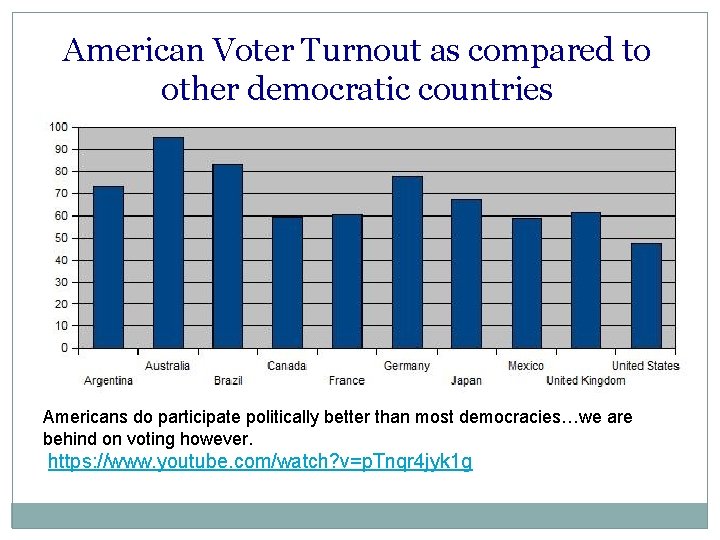
American Voter Turnout as compared to other democratic countries Americans do participate politically better than most democracies…we are behind on voting however. https: //www. youtube. com/watch? v=p. Tnqr 4 jyk 1 g
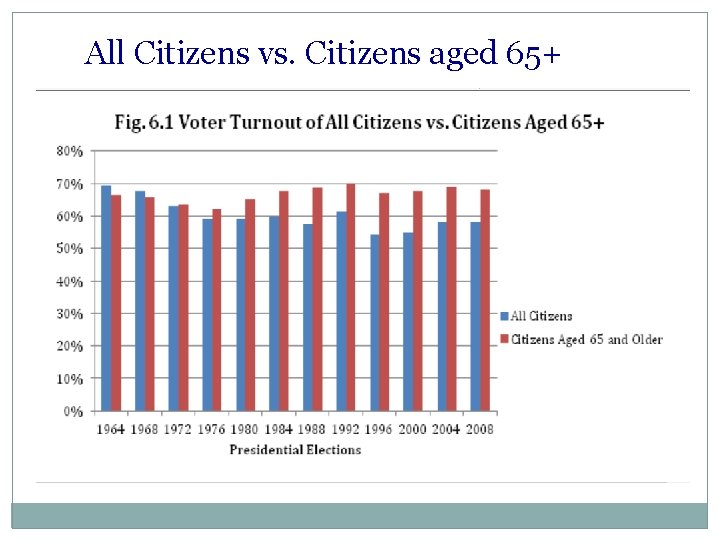
All Citizens vs. Citizens aged 65+
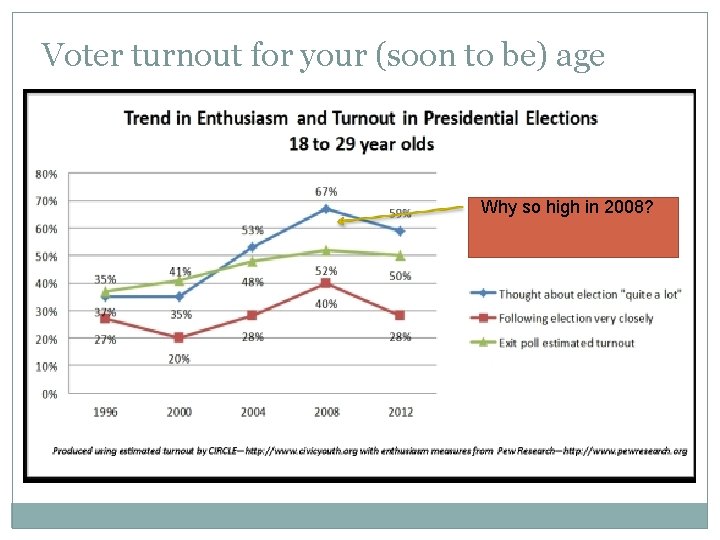
Voter turnout for your (soon to be) age Why so high in 2008?
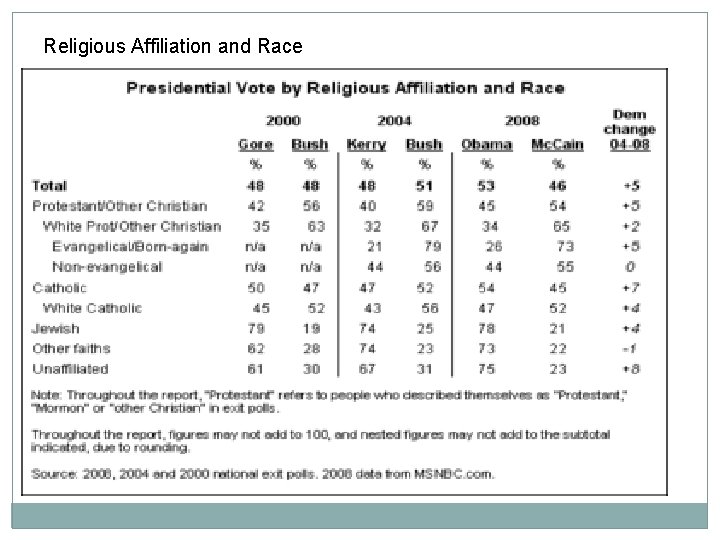
Religious Affiliation and Race
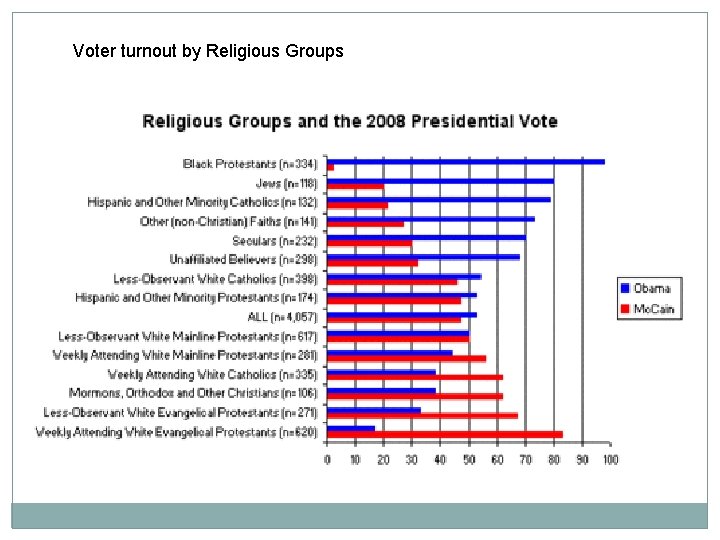
Voter turnout by Religious Groups
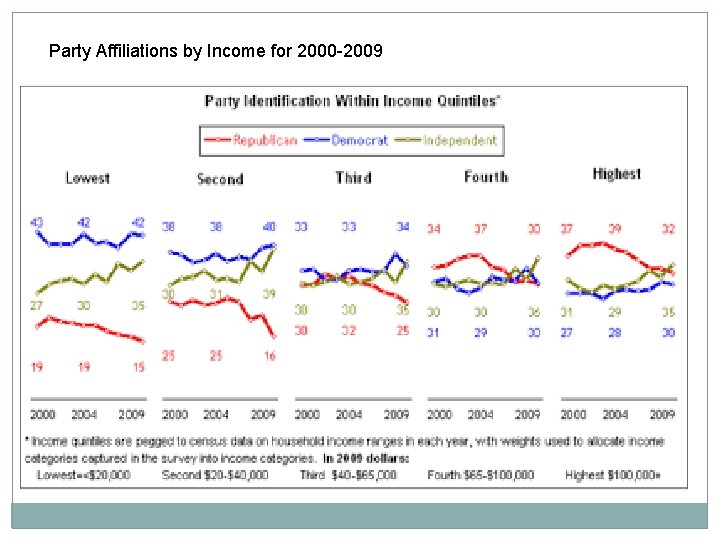
Party Affiliations by Income for 2000 -2009
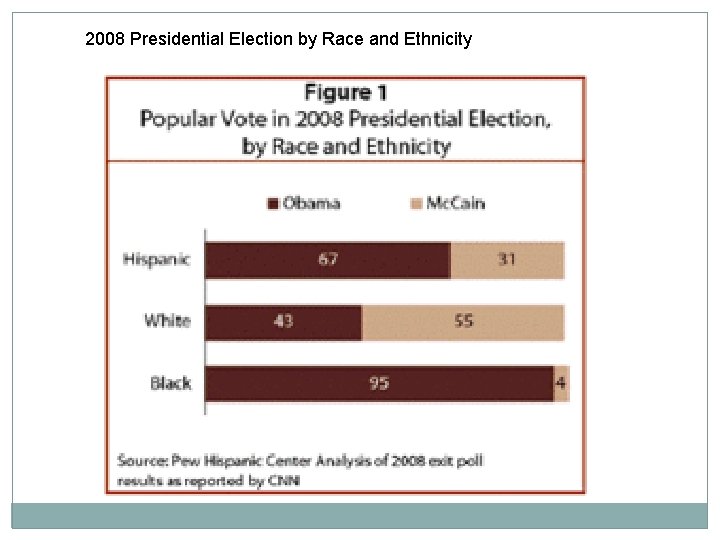
2008 Presidential Election by Race and Ethnicity
Party Identification Patterns: (not true for all of course!) ● Who tends to vote republican? ● Who tends to vote democrat? ● Check out these resources regarding Party Affiliation and voting ○ A deep dive into party affiliation ○ A closer look at who identifies as democrat and republican ● Another resource ○ 24 interesting Democrat and Republican Demographics
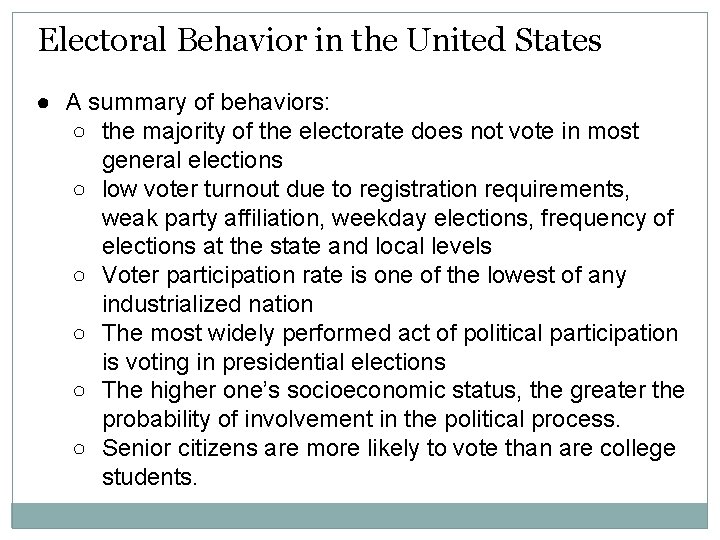
Electoral Behavior in the United States ● A summary of behaviors: ○ the majority of the electorate does not vote in most general elections ○ low voter turnout due to registration requirements, weak party affiliation, weekday elections, frequency of elections at the state and local levels ○ Voter participation rate is one of the lowest of any industrialized nation ○ The most widely performed act of political participation is voting in presidential elections ○ The higher one’s socioeconomic status, the greater the probability of involvement in the political process. ○ Senior citizens are more likely to vote than are college students.
The role of voting in the U. S. Is voting a civic duty? Responsibility? ● Do we want everyone to vote? ● ● https: //www. youtube. com/watch? v=qz. Tts. If 43 WY ● 4 min.
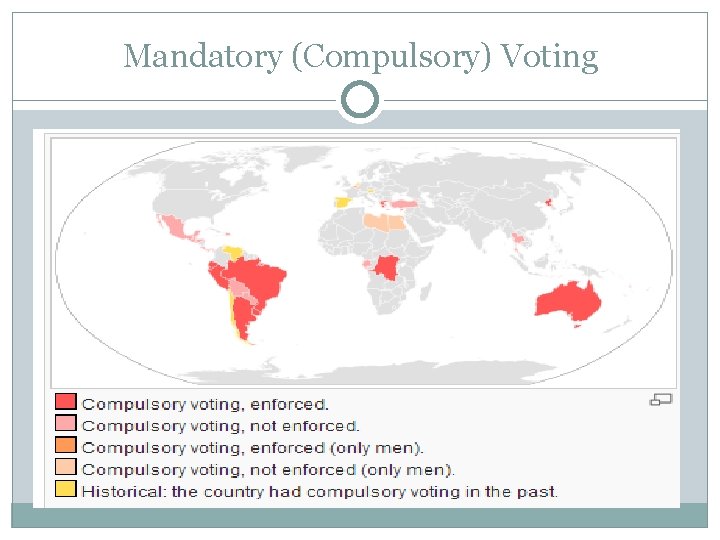
Mandatory (Compulsory) Voting
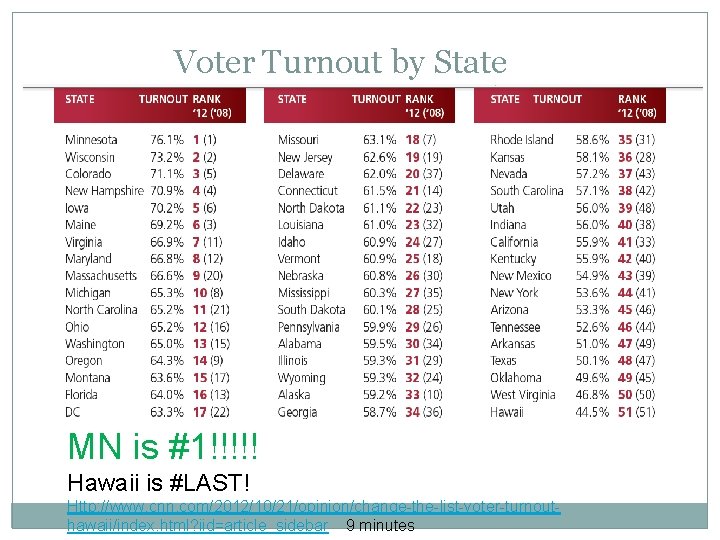
Voter Turnout by State MN is #1!!!!! Hawaii is #LAST! Http: //www. cnn. com/2012/10/21/opinion/change-the-list-voter-turnouthawaii/index. html? iid=article_sidebar 9 minutes
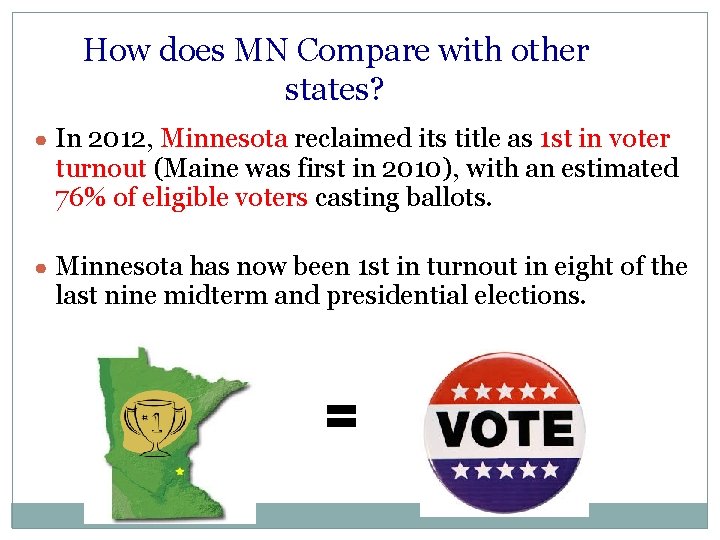
How does MN Compare with other states? ● In 2012, Minnesota reclaimed its title as 1 st in voter turnout (Maine was first in 2010), with an estimated 76% of eligible voters casting ballots. ● Minnesota has now been 1 st in turnout in eight of the last nine midterm and presidential elections. =
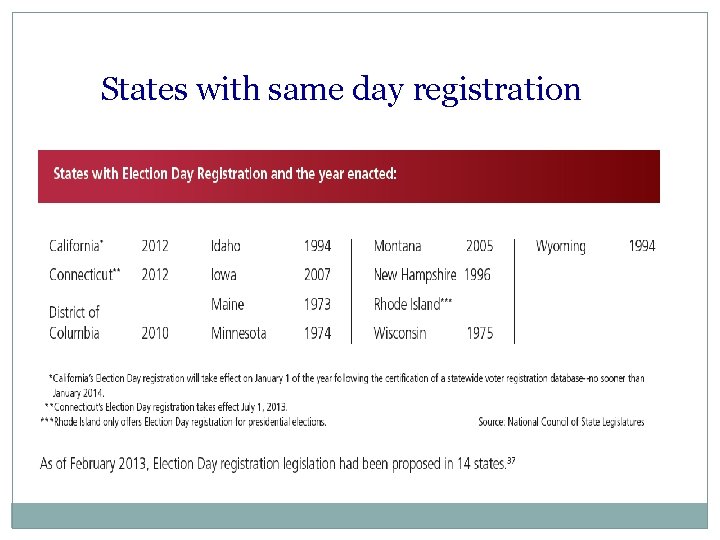
States with same day registration
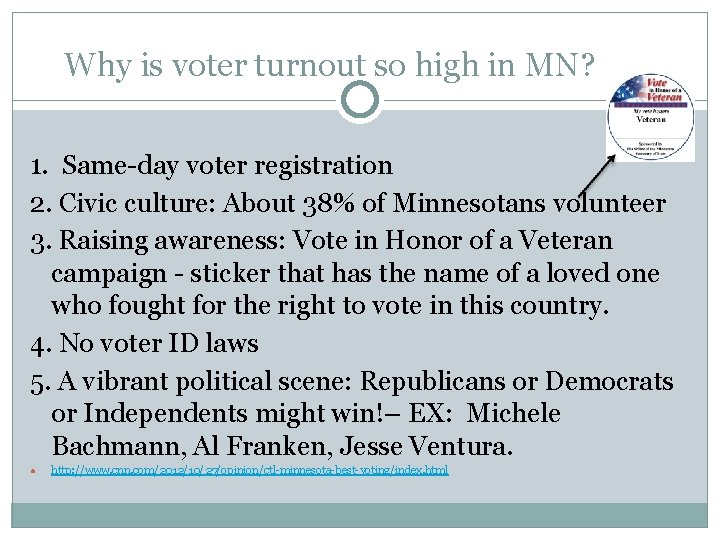
Why is voter turnout so high in MN? 1. Same-day voter registration 2. Civic culture: About 38% of Minnesotans volunteer 3. Raising awareness: Vote in Honor of a Veteran campaign - sticker that has the name of a loved one who fought for the right to vote in this country. 4. No voter ID laws 5. A vibrant political scene: Republicans or Democrats or Independents might win!– EX: Michele Bachmann, Al Franken, Jesse Ventura. ● http: //www. cnn. com/2012/10/27/opinion/ctl-minnesota-best-voting/index. html
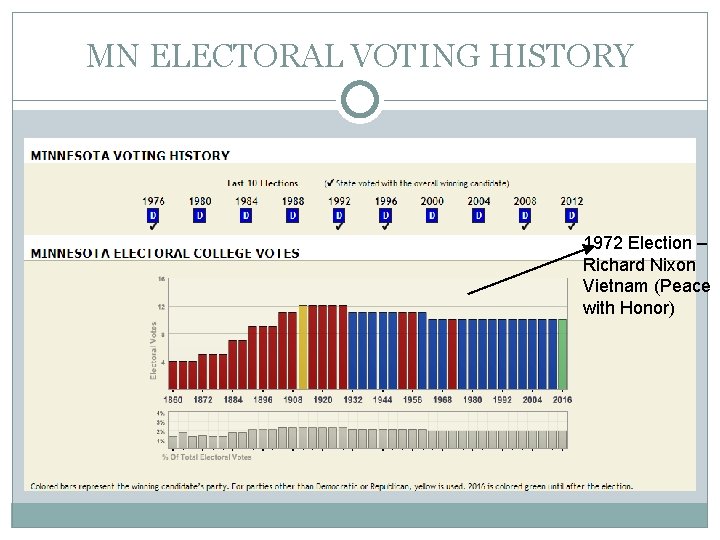
MN ELECTORAL VOTING HISTORY 1972 Election – Richard Nixon Vietnam (Peace with Honor)
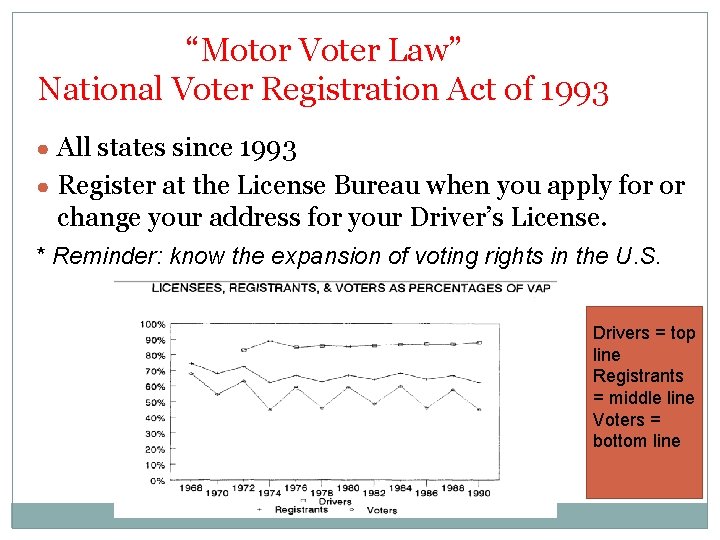
“Motor Voter Law” National Voter Registration Act of 1993 ● All states since 1993 ● Register at the License Bureau when you apply for or change your address for your Driver’s License. * Reminder: know the expansion of voting rights in the U. S. Drivers = top line Registrants = middle line Voters = bottom line
Why does America have low voter turnout? ● Voters have a lack of political efficacy (buzz word!) (Political efficacy = being able to politically “effect” society through the political process). Other reasons? ? ?
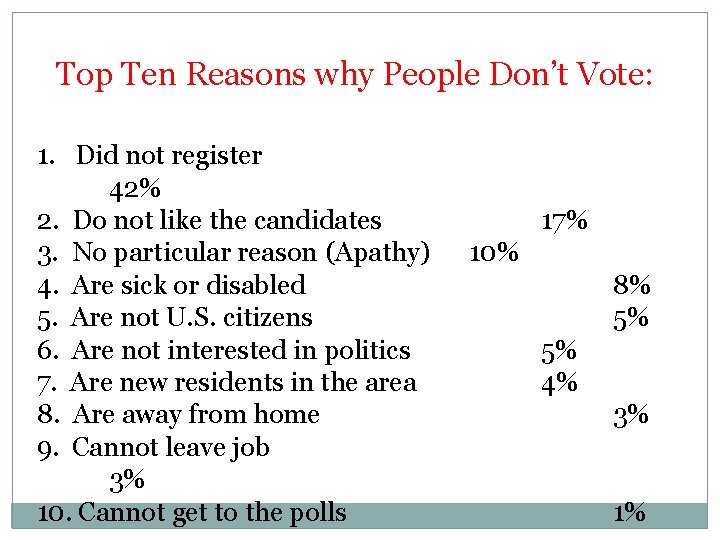
Top Ten Reasons why People Don’t Vote: 1. Did not register 42% 2. Do not like the candidates 3. No particular reason (Apathy) 4. Are sick or disabled 5. Are not U. S. citizens 6. Are not interested in politics 7. Are new residents in the area 8. Are away from home 9. Cannot leave job 3% 10. Cannot get to the polls 17% 10% 8% 5% 5% 4% 3% 1%
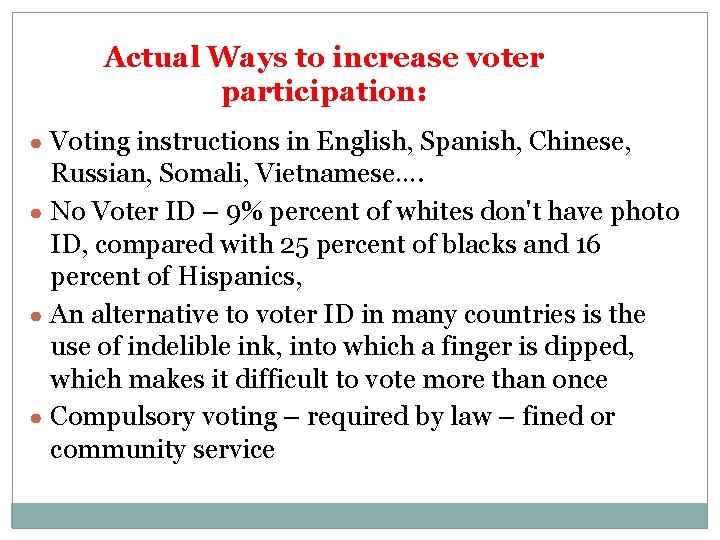
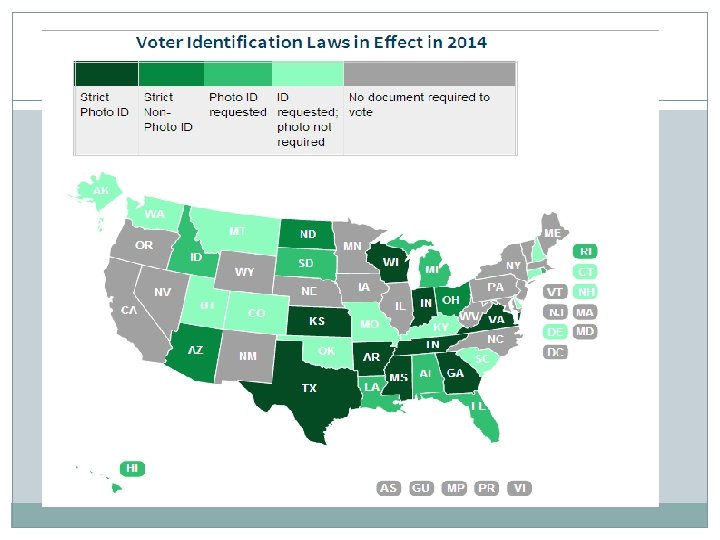
Actual Ways to increase voter participation: ● Voting instructions in English, Spanish, Chinese, Russian, Somali, Vietnamese…. ● No Voter ID – 9% percent of whites don't have photo ID, compared with 25 percent of blacks and 16 percent of Hispanics, ● An alternative to voter ID in many countries is the use of indelible ink, into which a finger is dipped, which makes it difficult to vote more than once ● Compulsory voting – required by law – fined or community service
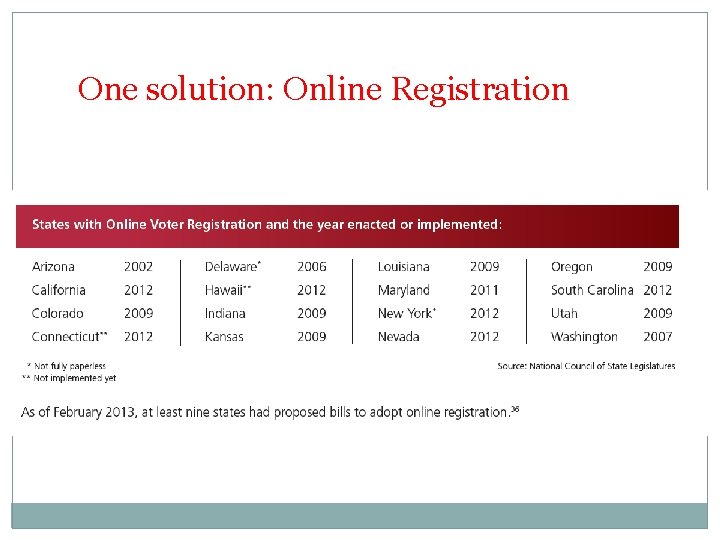
One solution: Online Registration
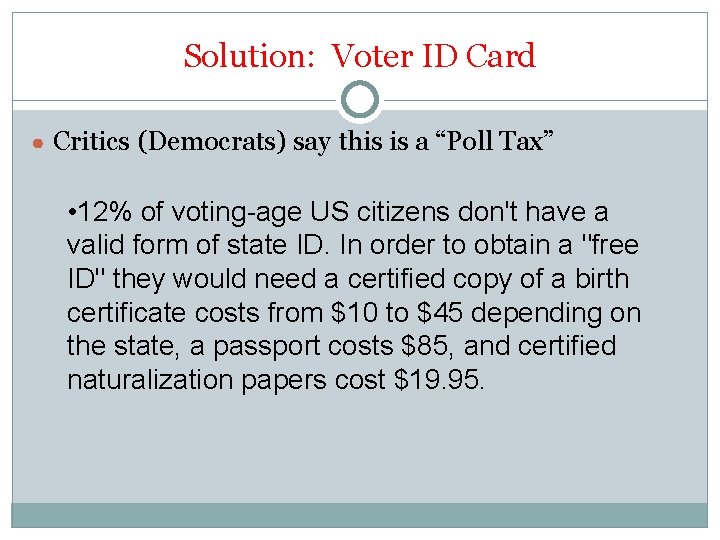
Solution: Voter ID Card ● Critics (Democrats) say this is a “Poll Tax” • 12% of voting-age US citizens don't have a valid form of state ID. In order to obtain a "free ID" they would need a certified copy of a birth certificate costs from $10 to $45 depending on the state, a passport costs $85, and certified naturalization papers cost $19. 95.
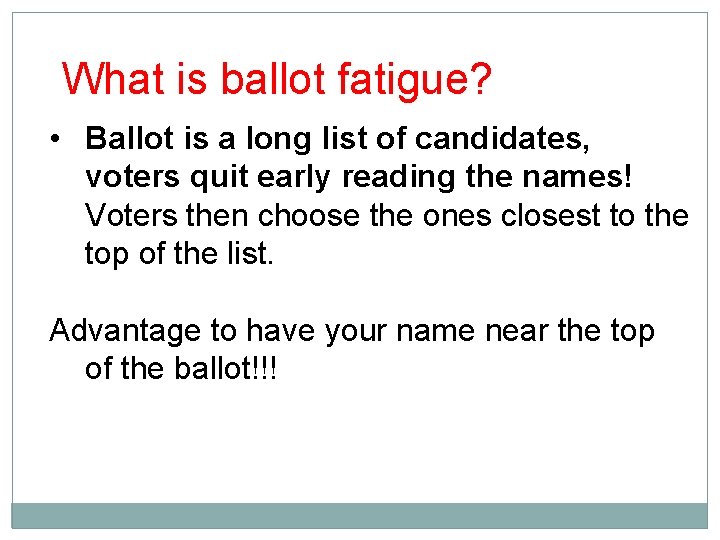
What is ballot fatigue? • Ballot is a long list of candidates, voters quit early reading the names! Voters then choose the ones closest to the top of the list. Advantage to have your name near the top of the ballot!!!
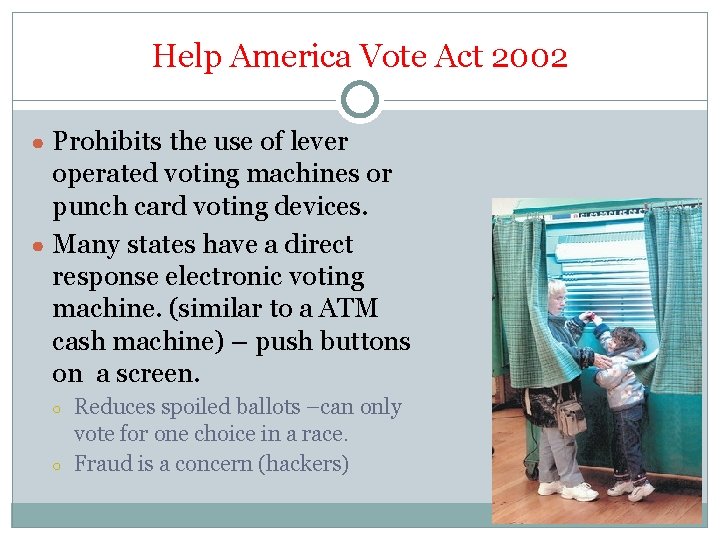
Help America Vote Act 2002 ● Prohibits the use of lever operated voting machines or punch card voting devices. ● Many states have a direct response electronic voting machine. (similar to a ATM cash machine) – push buttons on a screen. ○ ○ Reduces spoiled ballots –can only vote for one choice in a race. Fraud is a concern (hackers)
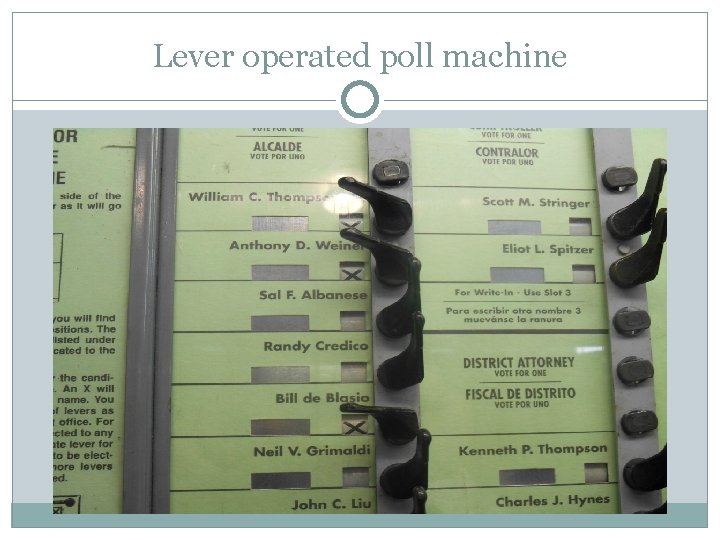
Lever operated poll machine
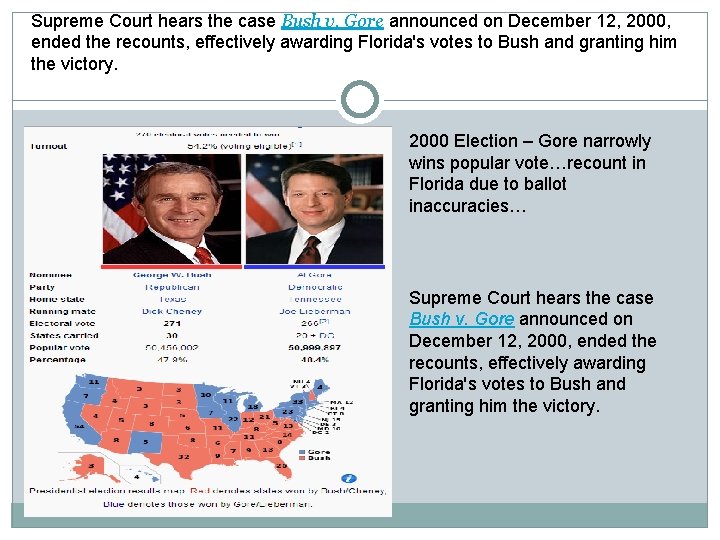
Supreme Court hears the case Bush v. Gore announced on December 12, 2000, ended the recounts, effectively awarding Florida's votes to Bush and granting him the victory. 2000 Election – Gore narrowly wins popular vote…recount in Florida due to ballot inaccuracies… Supreme Court hears the case Bush v. Gore announced on December 12, 2000, ended the recounts, effectively awarding Florida's votes to Bush and granting him the victory.
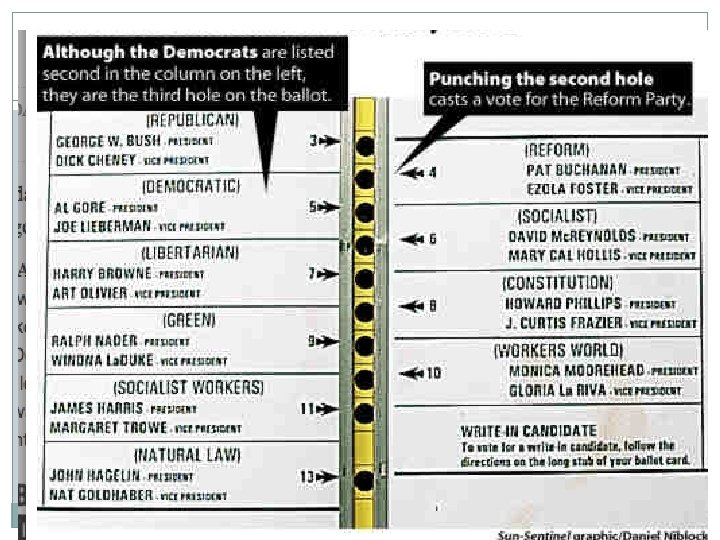

2000 Dangling Chads!
- Slides: 35