
von Mises Distribution Package PRESENTED BY VEDANT MEHTA
von Mises Distribution Package PRESENTED BY: VEDANT MEHTA KANCHAN SATPUTE
Directional (circular) statistics §Type of data you use determines the kind of statistics to be used §Circular statistics should be used whenever you have a vector dataset §A vector dataset that has: § Angles § Periodicity § No true zero
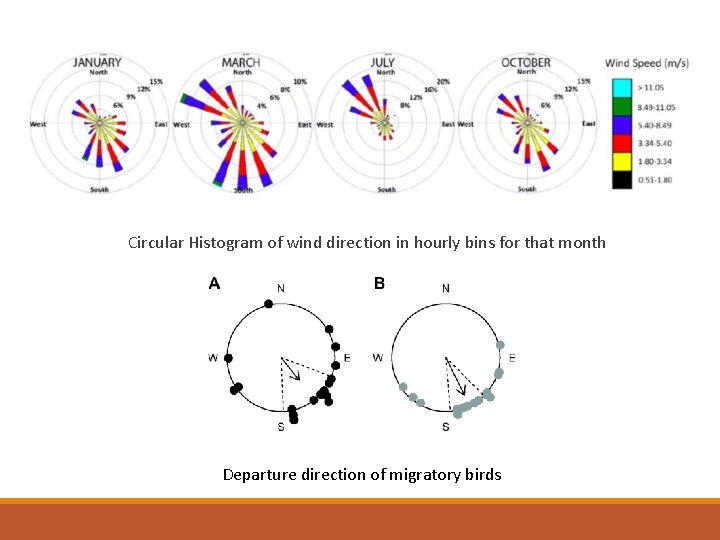
Circular Histogram of wind direction in hourly bins for that month Departure direction of migratory birds
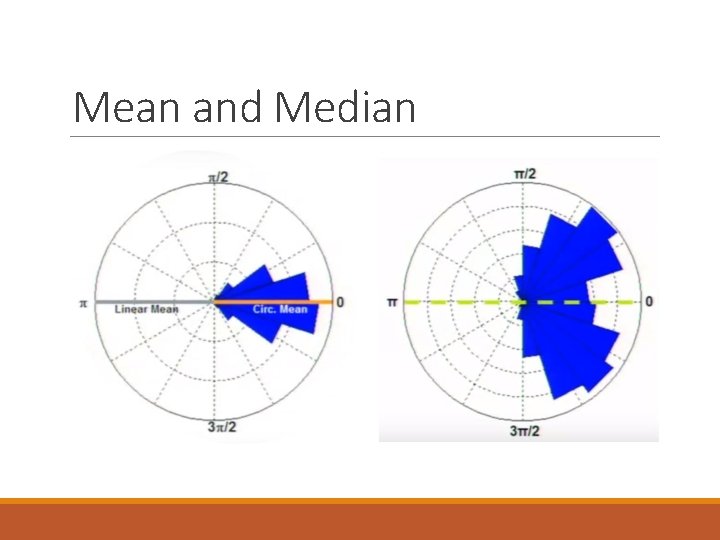
Mean and Median
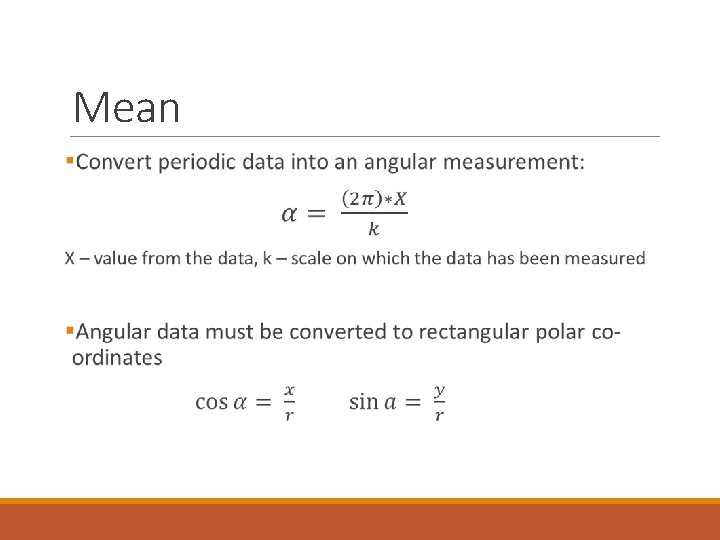
Mean
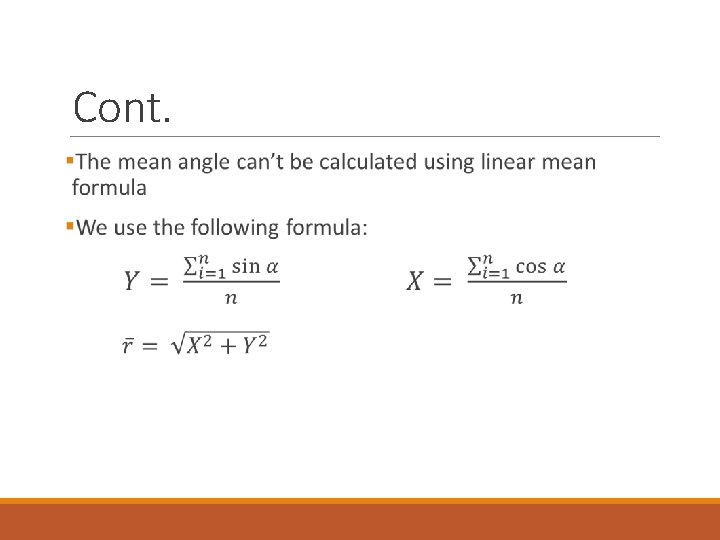
Cont.
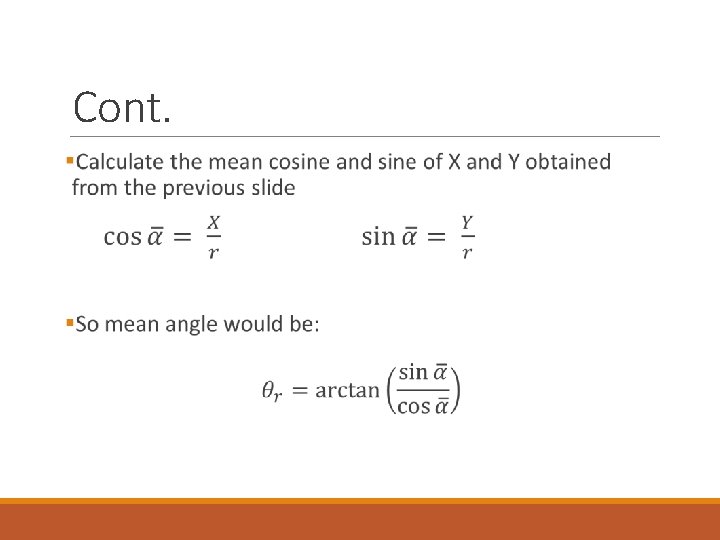
Cont.
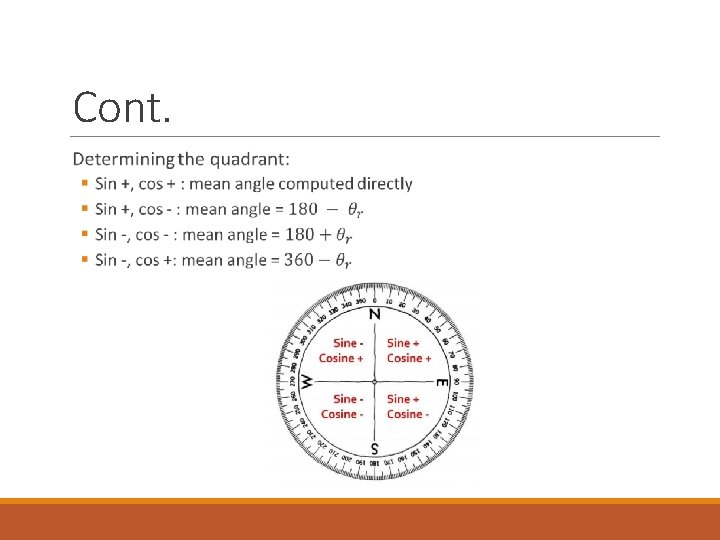
Cont.
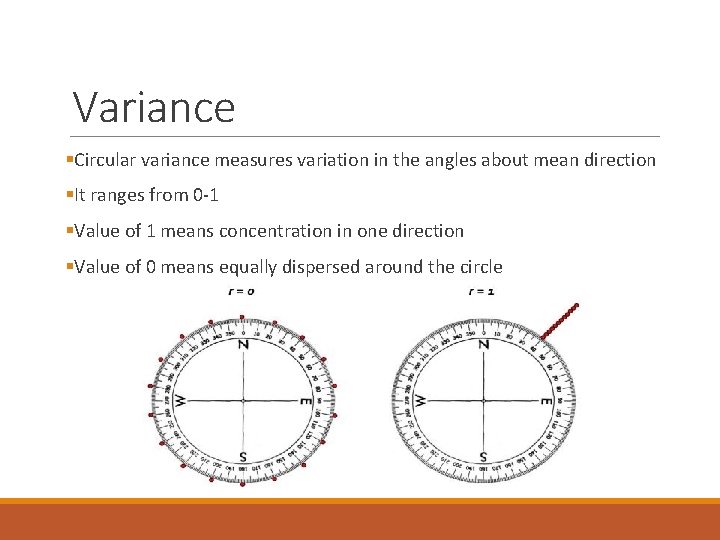
Variance §Circular variance measures variation in the angles about mean direction §It ranges from 0 -1 §Value of 1 means concentration in one direction §Value of 0 means equally dispersed around the circle
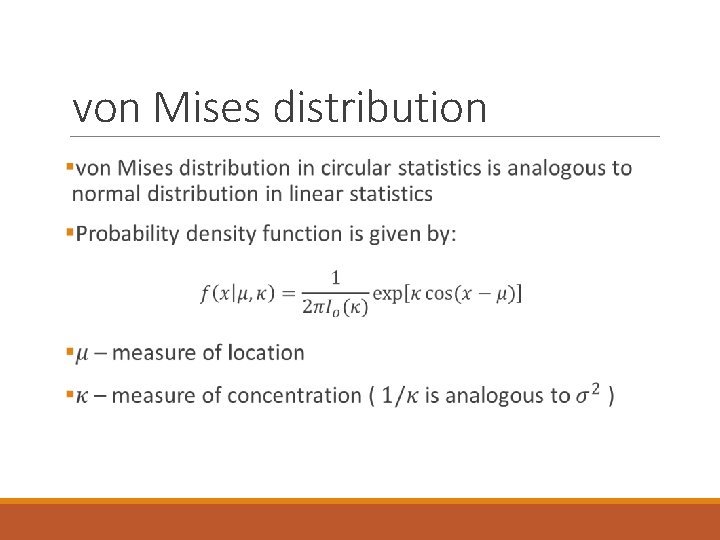
von Mises distribution
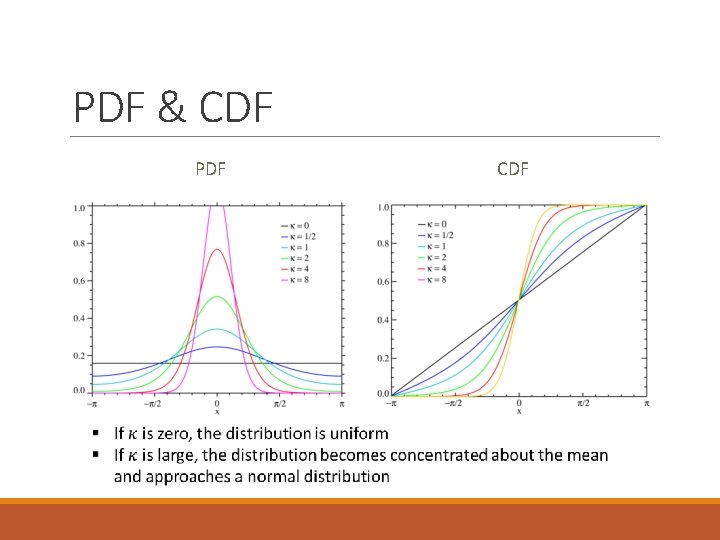
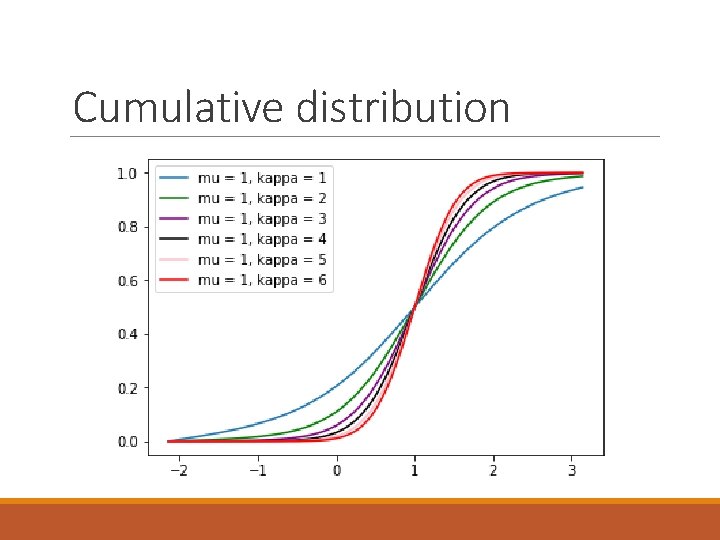
PDF & CDF PDF CDF
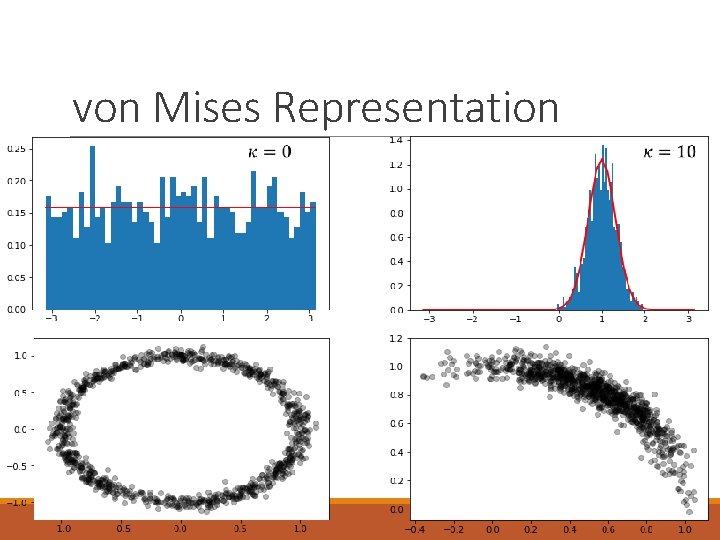
von Mises Representation
von Mises – R support §R has a popular package named “circular” which covers most of the functions for circular statistics (inclusive of von Mises distribution) §It also has another package named “Circ. Stats” which has most of the basic functionalities of circular statistics covered §Python doesn’t have a very good support for circular statistics and von Mises distribution in specific
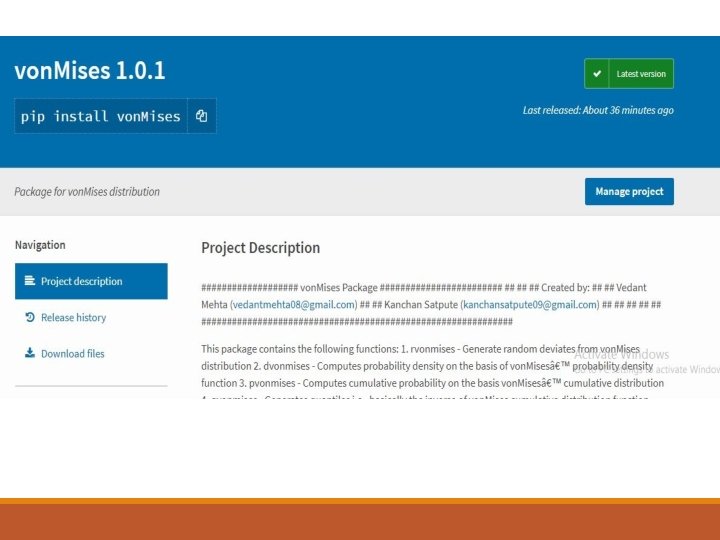
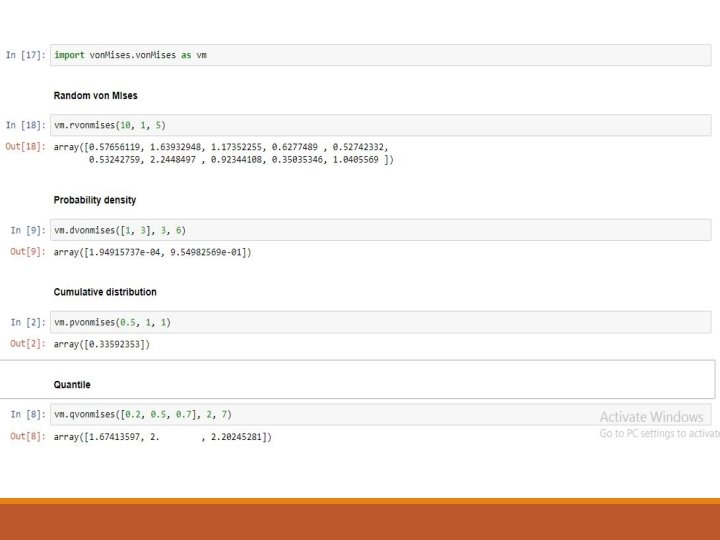
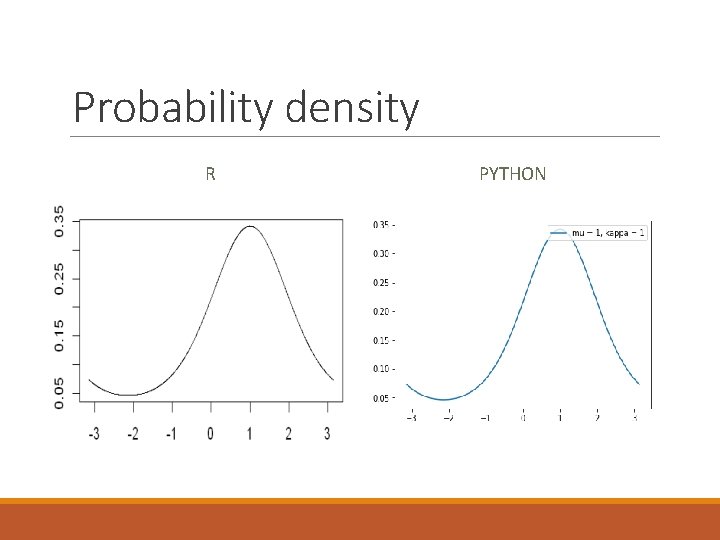
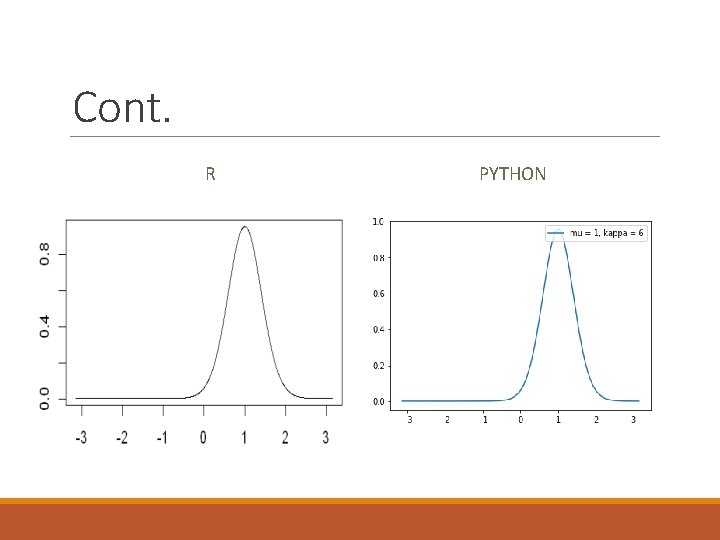
von Mises package §We have built a package “von. Mises” for Python 3 and is available on Py. Pi §It consists of following functions: § rvonmises - Generate random deviates from von. Mises distribution § dvonmises - Computes probability density on the basis of von. Mises’ probability density function § pvonmises - Computes cumulative probability on the basis von. Mises’ cumulative distribution function § qvonmises - Generates quantiles i. e. , basically the inverse of von. Mises cumulative distribution function
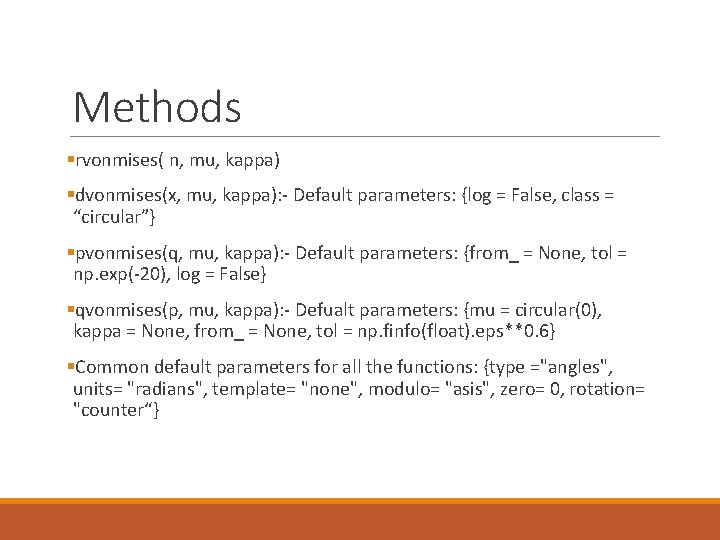
Methods §rvonmises( n, mu, kappa) §dvonmises(x, mu, kappa): - Default parameters: {log = False, class = “circular”} §pvonmises(q, mu, kappa): - Default parameters: {from_ = None, tol = np. exp(-20), log = False} §qvonmises(p, mu, kappa): - Defualt parameters: {mu = circular(0), kappa = None, from_ = None, tol = np. finfo(float). eps**0. 6} §Common default parameters for all the functions: {type ="angles", units= "radians", template= "none", modulo= "asis", zero= 0, rotation= "counter“}
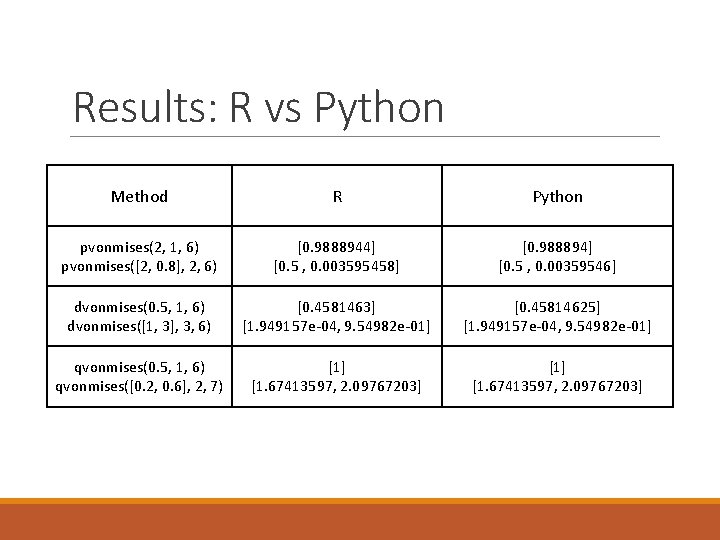
Results: R vs Python Method R Python pvonmises(2, 1, 6) pvonmises([2, 0. 8], 2, 6) [0. 9888944] [0. 5 , 0. 003595458] [0. 988894] [0. 5 , 0. 00359546] dvonmises(0. 5, 1, 6) dvonmises([1, 3], 3, 6) [0. 4581463] [1. 949157 e-04, 9. 54982 e-01] [0. 45814625] [1. 949157 e-04, 9. 54982 e-01] qvonmises(0. 5, 1, 6) qvonmises([0. 2, 0. 6], 2, 7) [1] [1. 67413597, 2. 09767203]
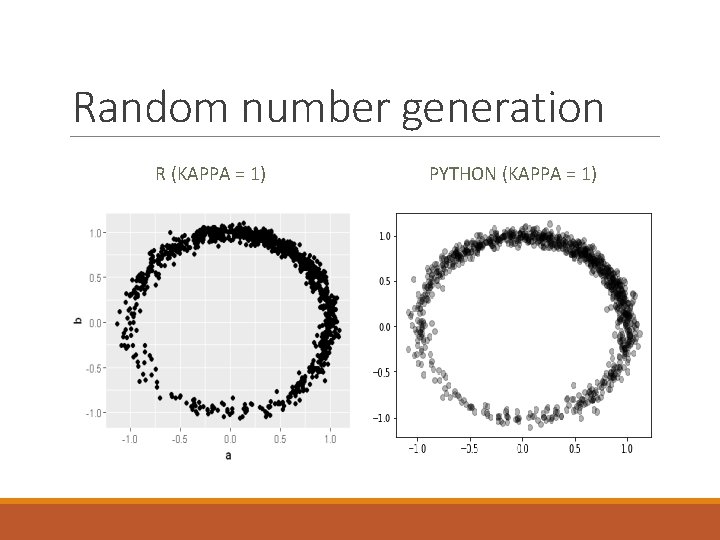
Random number generation R (KAPPA = 1) PYTHON (KAPPA = 1)
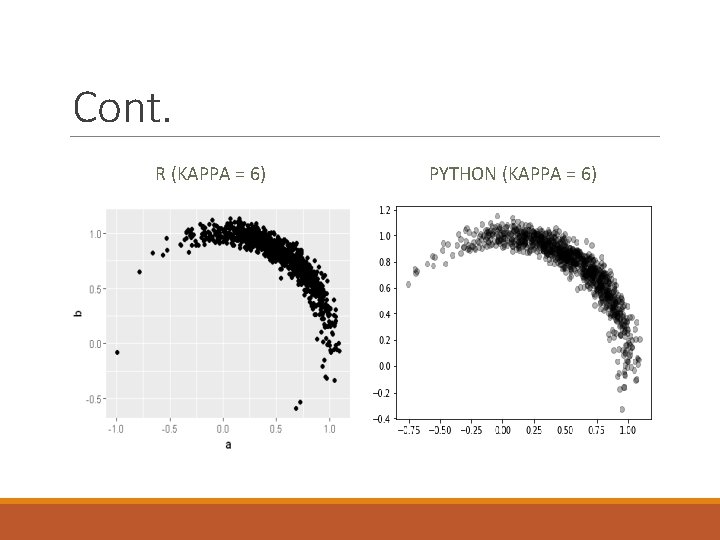
Cont. R (KAPPA = 6) PYTHON (KAPPA = 6)
Probability density R PYTHON
Cont. R PYTHON
Cumulative distribution
Benchmarking Function R Python rvonmises 1. 98 ms 175 ms dvonmises 25 ms 4 ms
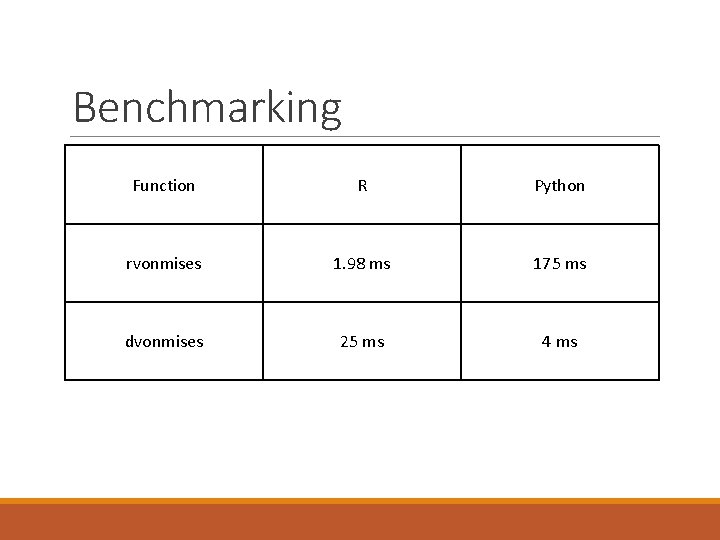
Future scope §Making the package more robust to different kind of inputs §Optimize the code to decrease runtime §Include other functions of circular statistics, similar to “circular” package, under one hood
- Slides: 25