
Volvulus Colorectal Conference 12105 Nicole Lee MD Volvulus
- Slides: 17
Volvulus Colorectal Conference 12/1/05 Nicole Lee, MD
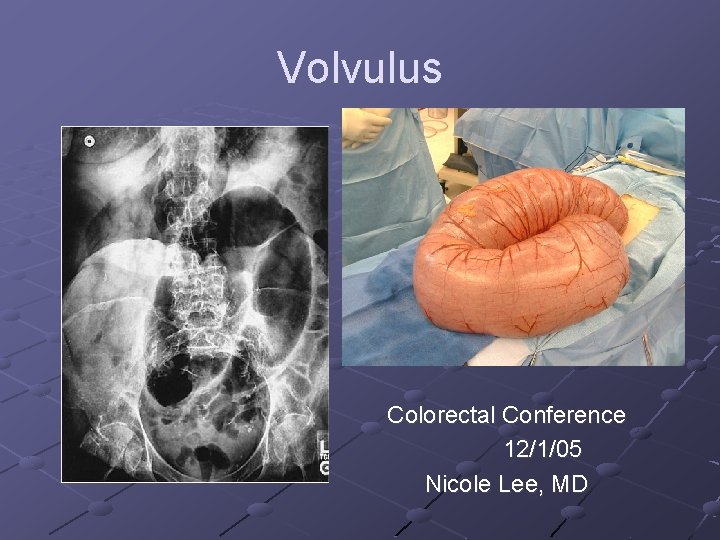
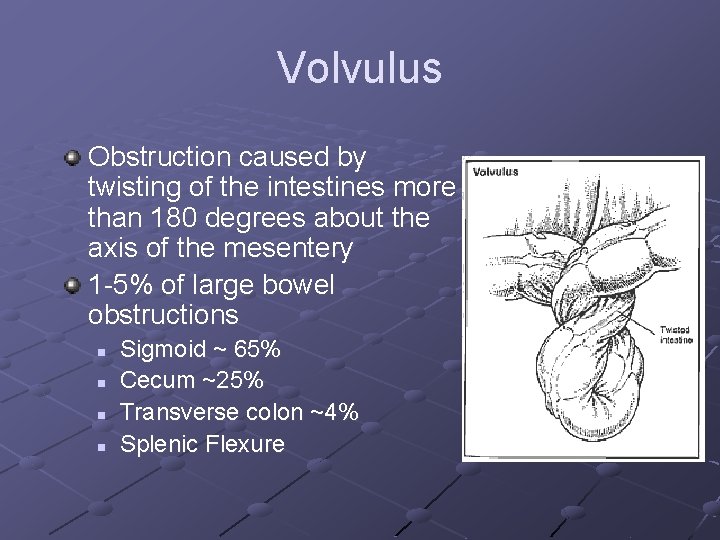
Volvulus Obstruction caused by twisting of the intestines more than 180 degrees about the axis of the mesentery 1 -5% of large bowel obstructions n n Sigmoid ~ 65% Cecum ~25% Transverse colon ~4% Splenic Flexure
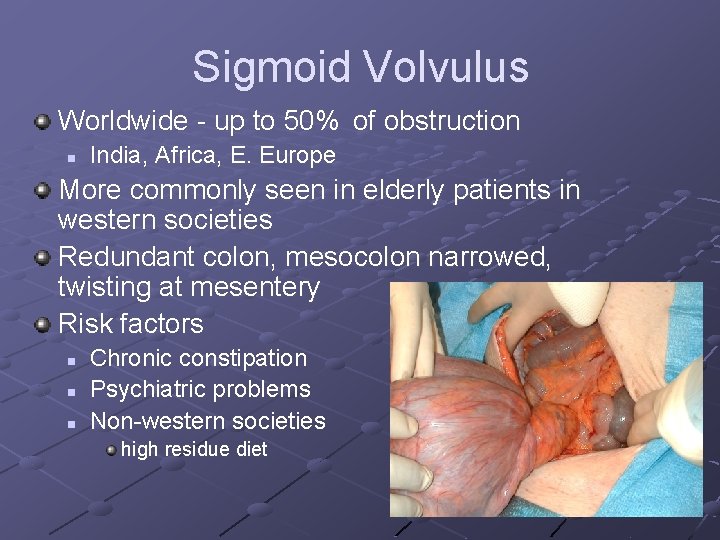
Sigmoid Volvulus Worldwide - up to 50% of obstruction n India, Africa, E. Europe More commonly seen in elderly patients in western societies Redundant colon, mesocolon narrowed, twisting at mesentery Risk factors n n n Chronic constipation Psychiatric problems Non-western societies high residue diet
Presentation Hx: Abdominal pain, distension, no flatus or bowel movements Exam: tympanitic abdomen, distension, mild tenderness, palpable mass
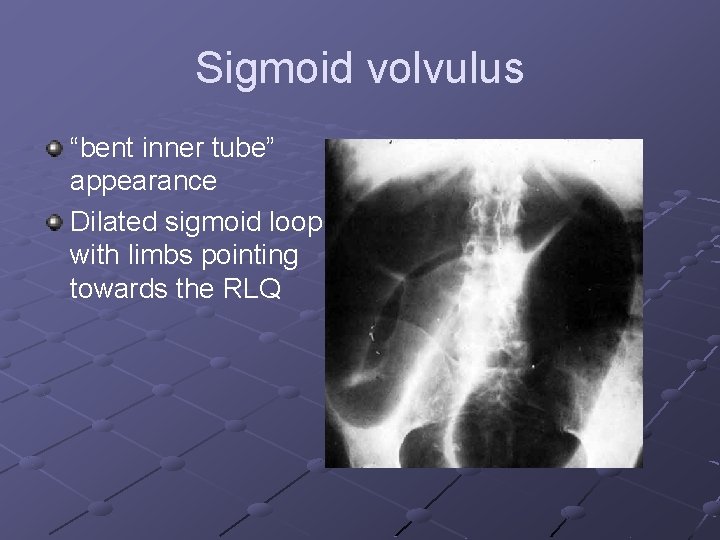
Sigmoid volvulus “bent inner tube” appearance Dilated sigmoid loop with limbs pointing towards the RLQ
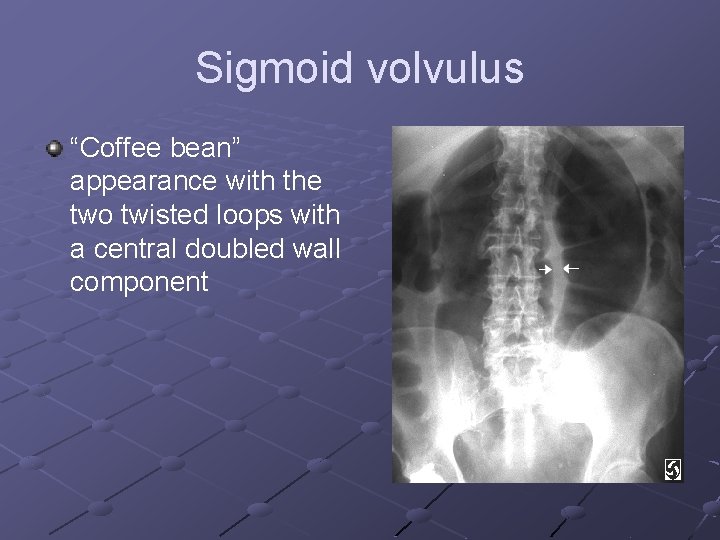
Sigmoid volvulus “Coffee bean” appearance with the two twisted loops with a central doubled wall component
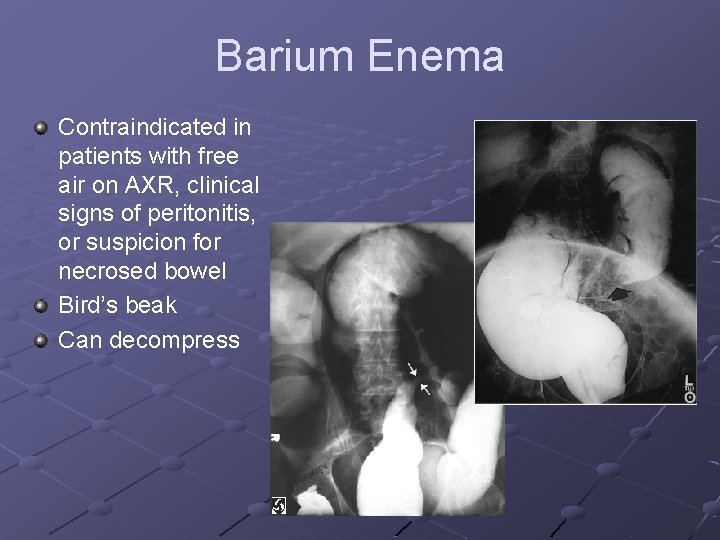
Barium Enema Contraindicated in patients with free air on AXR, clinical signs of peritonitis, or suspicion for necrosed bowel Bird’s beak Can decompress
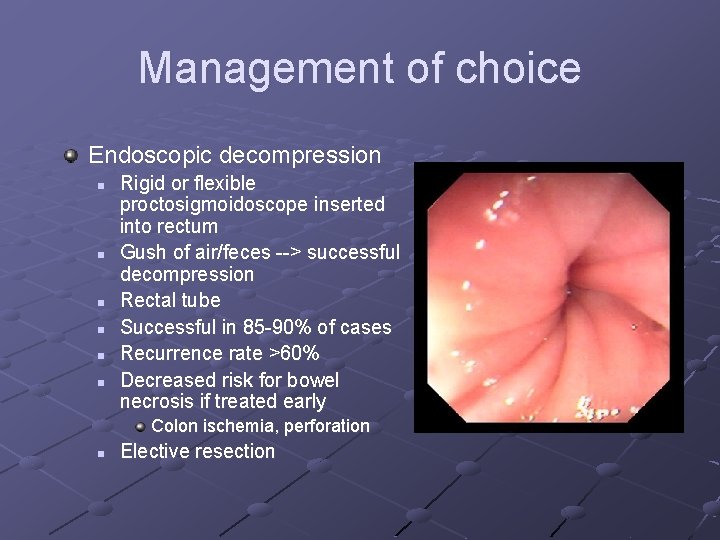
Management of choice Endoscopic decompression n n n Rigid or flexible proctosigmoidoscope inserted into rectum Gush of air/feces --> successful decompression Rectal tube Successful in 85 -90% of cases Recurrence rate >60% Decreased risk for bowel necrosis if treated early Colon ischemia, perforation n Elective resection
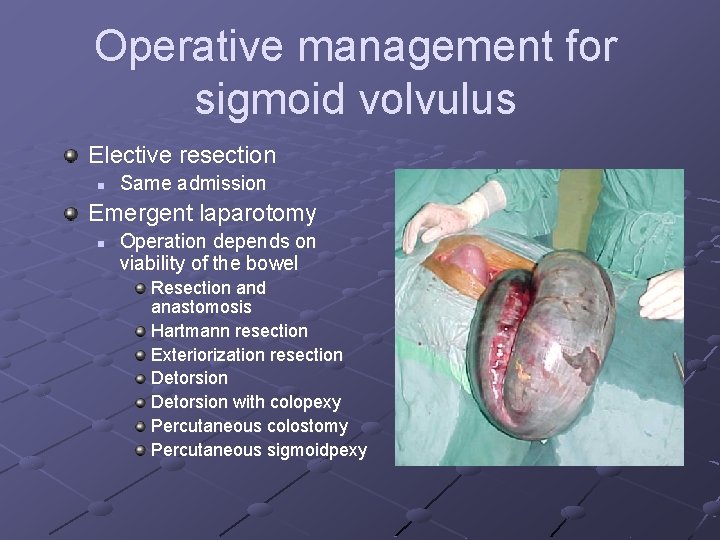
Operative management for sigmoid volvulus Elective resection n Same admission Emergent laparotomy n Operation depends on viability of the bowel Resection and anastomosis Hartmann resection Exteriorization resection Detorsion with colopexy Percutaneous colostomy Percutaneous sigmoidpexy
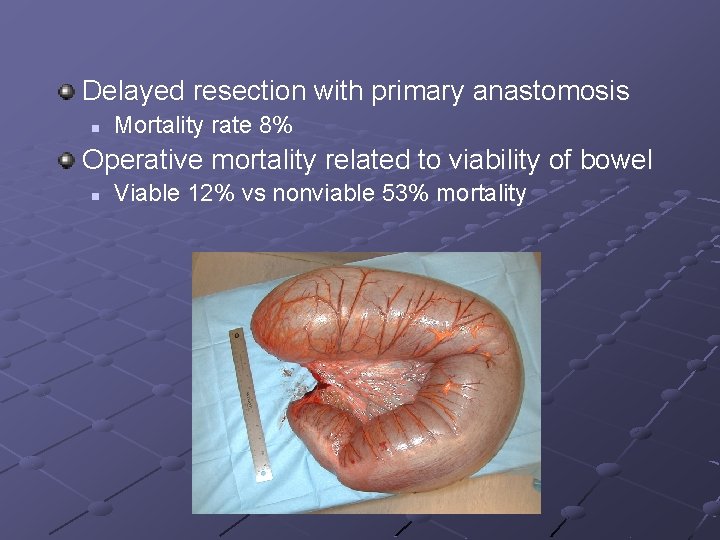
Delayed resection with primary anastomosis n Mortality rate 8% Operative mortality related to viability of bowel n Viable 12% vs nonviable 53% mortality
Cecal Volvulus Less common than sigmoid volvulus Parietal peritoneum fails to connect with the cecum and right colon n Present in about 10% of population Increased mobility of bowel, resulting in it folding on its axis or upward Torsion occurs proximal to cecum Risk factors: n Distal obstruction, pregnancy, adhesions, congenital bands, prolonged constipation, meteorism (air in intestines) that occurs with nonpressurized air travel
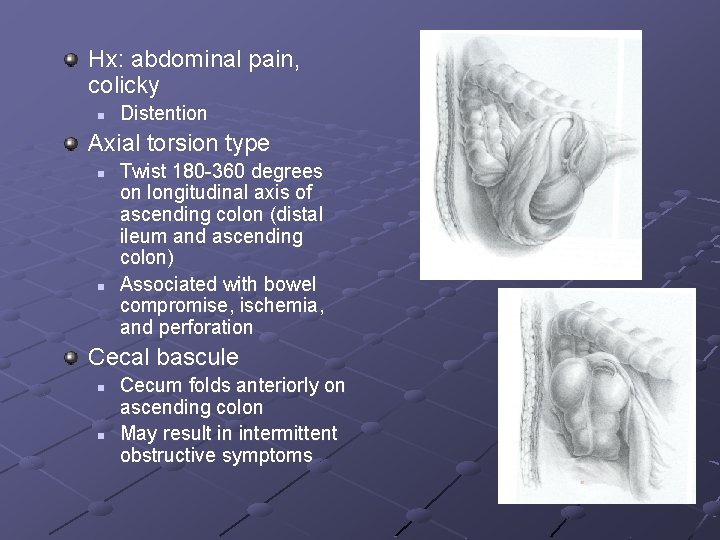
Hx: abdominal pain, colicky n Distention Axial torsion type n n Twist 180 -360 degrees on longitudinal axis of ascending colon (distal ileum and ascending colon) Associated with bowel compromise, ischemia, and perforation Cecal bascule n n Cecum folds anteriorly on ascending colon May result in intermittent obstructive symptoms
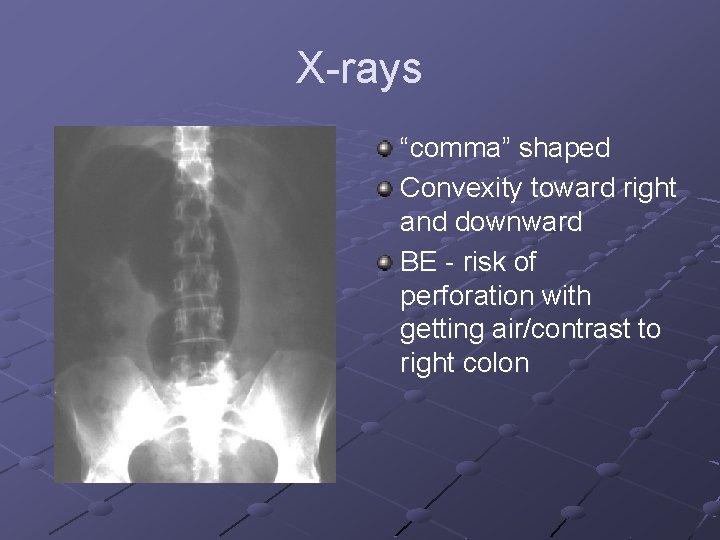
X-rays “comma” shaped Convexity toward right and downward BE - risk of perforation with getting air/contrast to right colon
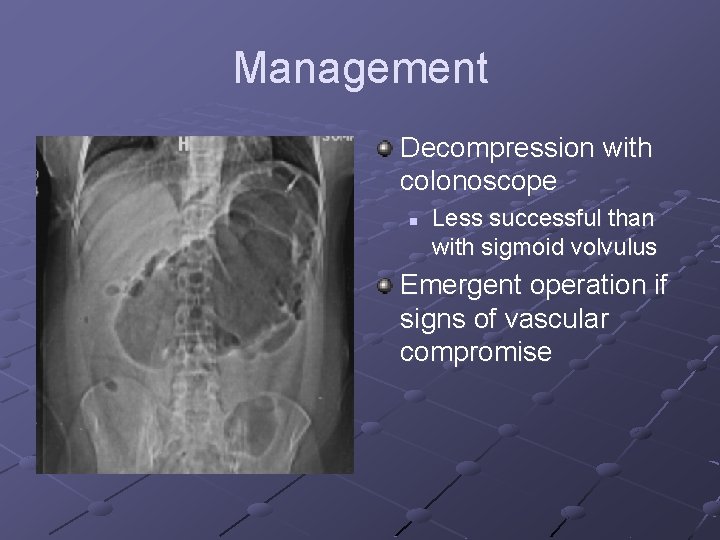
Management Decompression with colonoscope n Less successful than with sigmoid volvulus Emergent operation if signs of vascular compromise
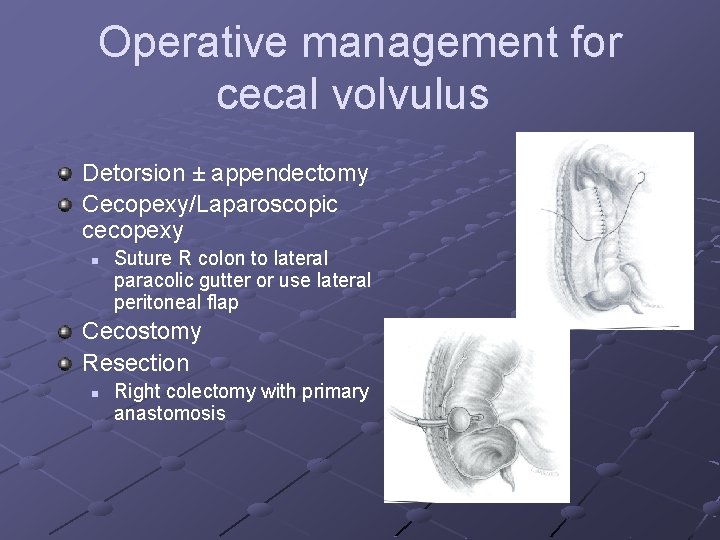
Operative management for cecal volvulus Detorsion ± appendectomy Cecopexy/Laparoscopic cecopexy n Suture R colon to lateral paracolic gutter or use lateral peritoneal flap Cecostomy Resection n Right colectomy with primary anastomosis
Results Detorsion ± appendectomy n High rate of recurrence (not commonly done anymore) Cecopexy n n Do not need to have prepped bowel Recurrence 25% Cecostomy ± cecopexy n Combined procedure more effective in preventing recurrence Resection n Primary anastomosis unless peritoneal contamination is present
Transverse colon volvulus Less common area for volvulus(4%) Associated with mobile right colon, distal obstruction, chronic constipation, congenital malrotation of the midgut Usually not diagnosed preoperatively No characteristic radiological findings except colonic dilatation Resection of transverse colon n High rate of recurrence if treated with detorsion alone