
Volunteers make a world of difference CLOSE YOUR
- Slides: 55
Volunteers make a world of difference!
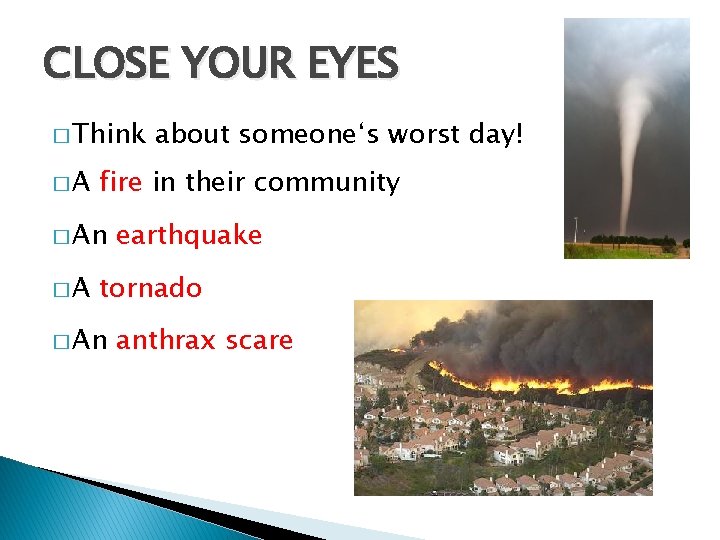
CLOSE YOUR EYES � Think �A fire in their community � An �A about someone‘s worst day! earthquake tornado � An anthrax scare
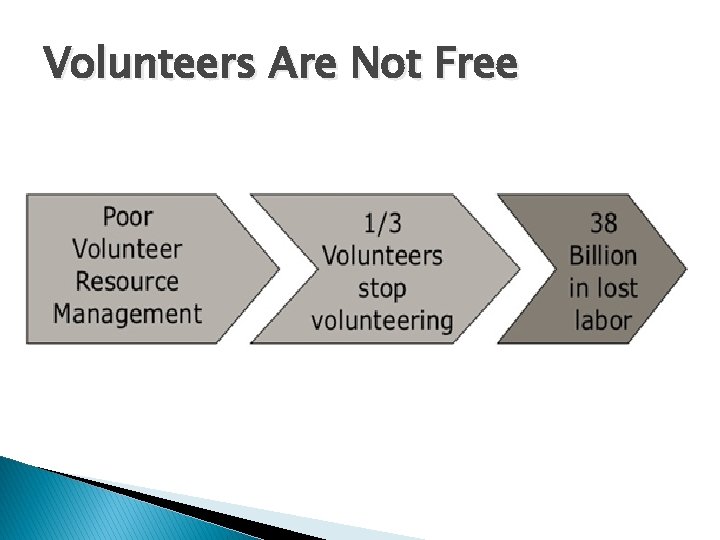
Volunteers Are Not Free
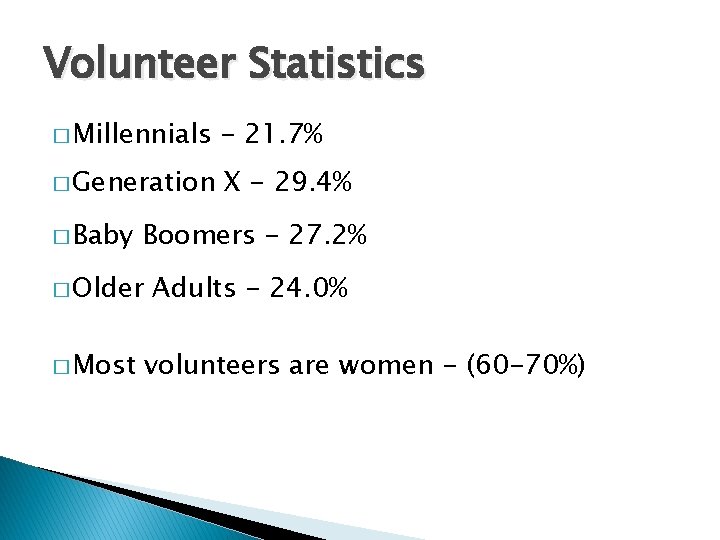
Volunteer Statistics � Millennials - 21. 7% � Generation X - 29. 4% � Baby Boomers - 27. 2% � Older � Most Adults - 24. 0% volunteers are women - (60 -70%)
National Picture of Volunteering �Past 13 years – Americans volunteered ◦ 104. 9 ___? ___hours ◦ worth $2. 1 ___? ___ Source: Corporation for National Community Service. (2015). Available at: https: //www. volunteeringin america. gov
National Picture of Volunteering �In past 13 years, Americans volunteered ◦ 104. 9 billion hours ◦ Worth $2. 1 trillion
National Picture of Volunteering �In 2014, 62. 8 million Americans Volunteered a total of ◦ 7. 9 ___? ___ hours an estimated value of ◦ $___? ___ billion ($23. 07/hr)
National Picture of Volunteering �In 2014, 62. 8 million Americans volunteered ◦ Total of 7. 9 billon hours ◦ Estimated value of $182 billion ($23. 07/hr) Source: Corporation for National & Community Service. (2015) Available at https: //www. volunteeringinamerica. gov/
Why do people volunteer? � #1 Because they were asked. � To donate their professional skills. � To be challenged. � To learn something new. � To feel proud. � To be part of a team.
Why do people volunteer? � Satisfaction from accomplishment. � To share a skill. � To gain leadership skills. � To demonstrate commitment to a cause or belief. � To get to know the community. � To keep busy.
Why do people volunteer? � To gain social status. � To make new friends. � To have an impact. � Because � For Fun! of pressure from a friend/colleague.
What do Volunteers Want? � Introductions/Made comfortable � Training � Good Communication � Want to know time commitments � Number and length of meetings � Recognition celebrated – being thanked appreciated and
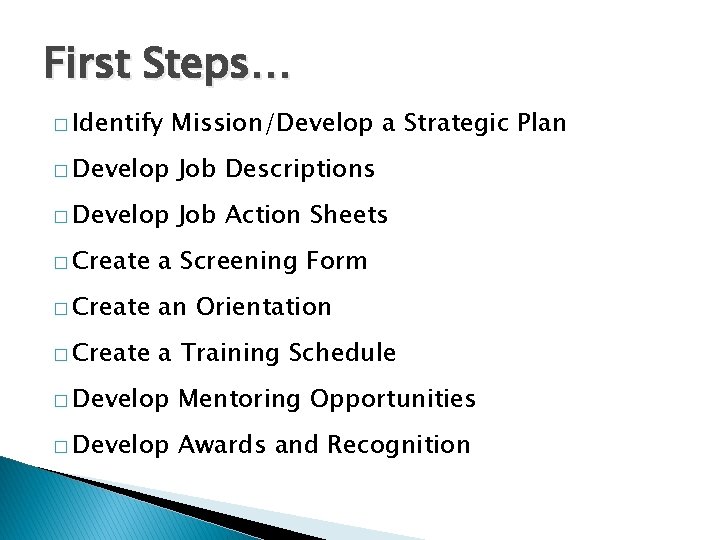
First Steps… � Identify Mission/Develop a Strategic Plan � Develop Job Descriptions � Develop Job Action Sheets � Create a Screening Form � Create an Orientation � Create a Training Schedule � Develop Mentoring Opportunities � Develop Awards and Recognition
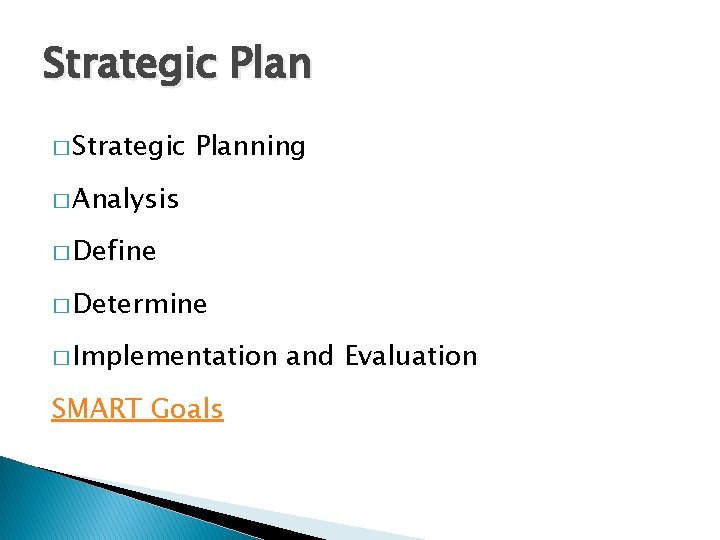
Strategic Plan � Strategic Planning � Analysis � Define � Determine � Implementation SMART Goals and Evaluation
Work – What do volunteers want? � Job descriptions � Agenda � Meaningful tasks � Leadership opportunities
Volunteer Position Description � Outlines the volunteer tasks, skills, abilities and interests � Align with the organization’s needs, goals and mission � Description is what you build all recruitment and placement efforts
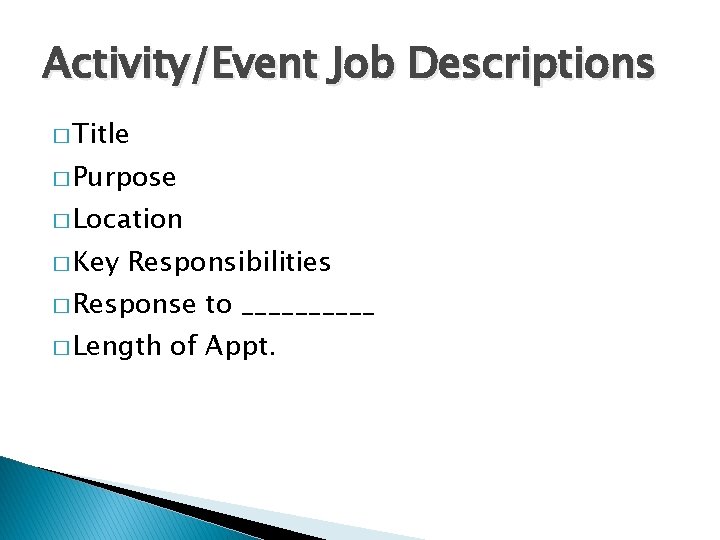
Activity/Event Job Descriptions � Title � Purpose � Location � Key Responsibilities � Response � Length to _____ of Appt.
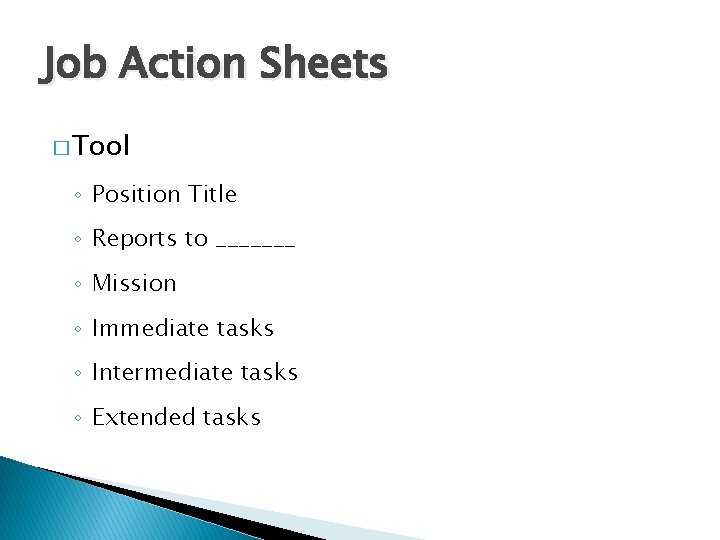
Job Action Sheets � Tool ◦ Position Title ◦ Reports to _______ ◦ Mission ◦ Immediate tasks ◦ Intermediate tasks ◦ Extended tasks
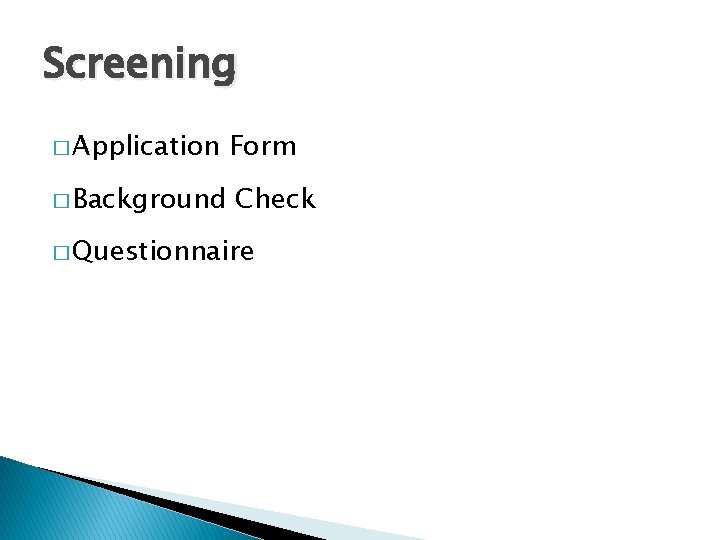
Screening � Application � Background Form Check � Questionnaire
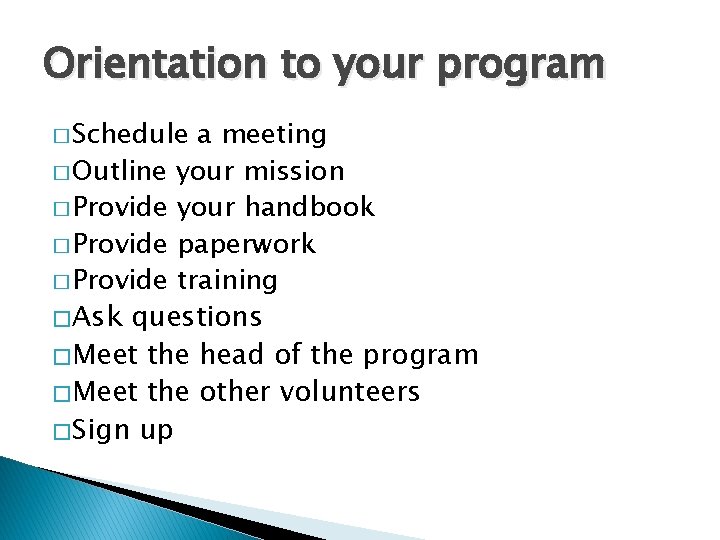
Orientation to your program � Schedule a meeting � Outline your mission � Provide your handbook � Provide paperwork � Provide training � Ask questions � Meet the head of the program � Meet the other volunteers � Sign up
Tracking System � Contact information � Trainings � Background checks � Skills � Reports � Credentials � Other information
Your expectations… � Reliable and dependable. � Understand the mission, vision and value statements. � Strategic � Act plan. respectfully and ethically.
Your expectations… � Understand � Ability the importance of confidentiality. to work as a team or alone. � Understanding � Help of commitment. uphold the agencies, standards and promote a positive public image.
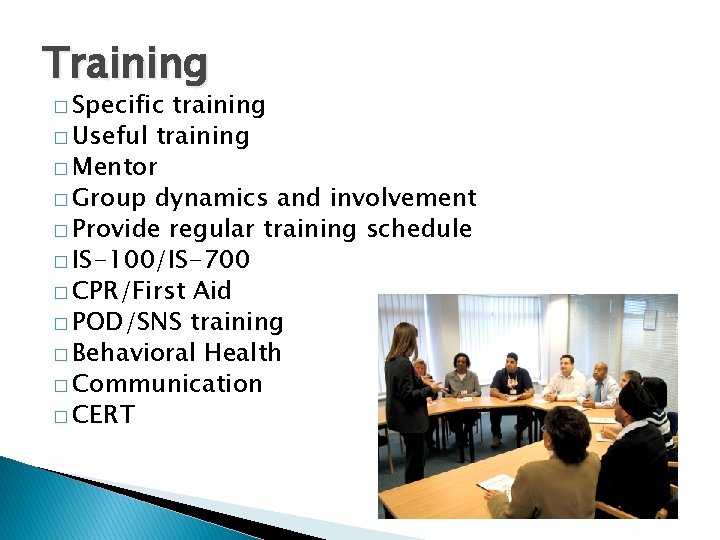
Training � Specific training � Useful training � Mentor � Group dynamics and involvement � Provide regular training schedule � IS-100/IS-700 � CPR/First Aid � POD/SNS training � Behavioral Health � Communication � CERT
Mentoring � Confirm the commitment. � Establish � Match � The � So the basic parameters. the volunteers. role of a mentor what exactly does a mentor do?
What makes volunteers stay? � Motivation � Skill Development � Personal Growth � Challenge � Contact with Clients � Recognition of Service
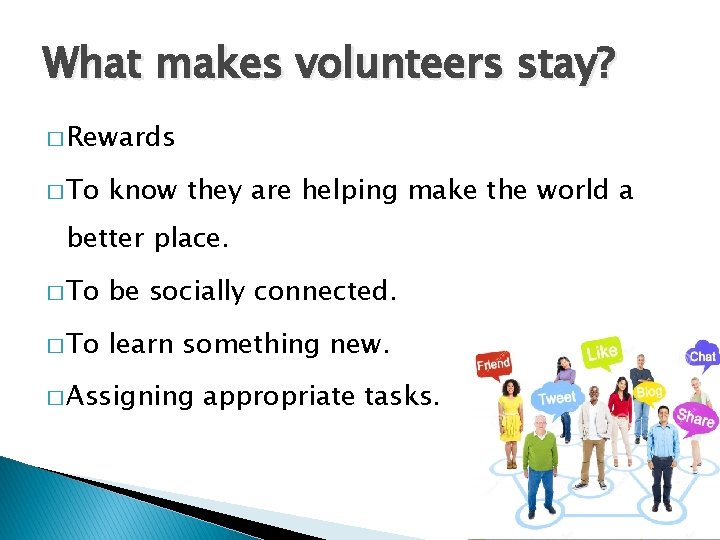
What makes volunteers stay? � Rewards � To know they are helping make the world a better place. � To be socially connected. � To learn something new. � Assigning appropriate tasks.
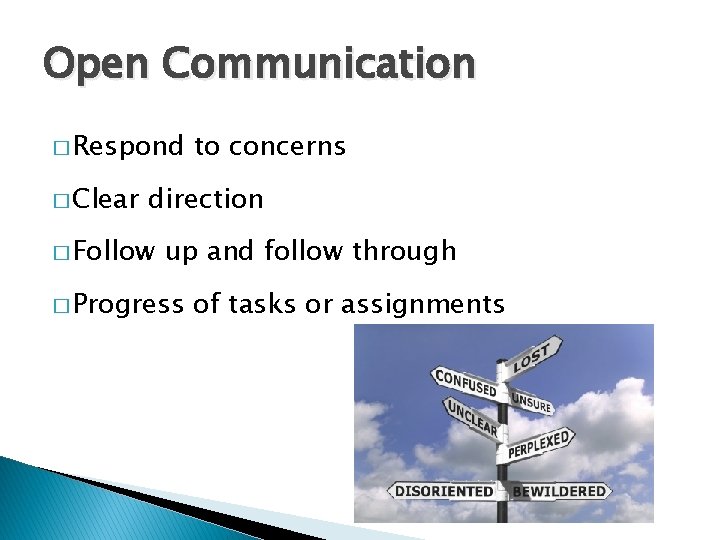
Open Communication � Respond � Clear to concerns direction � Follow up and follow through � Progress of tasks or assignments
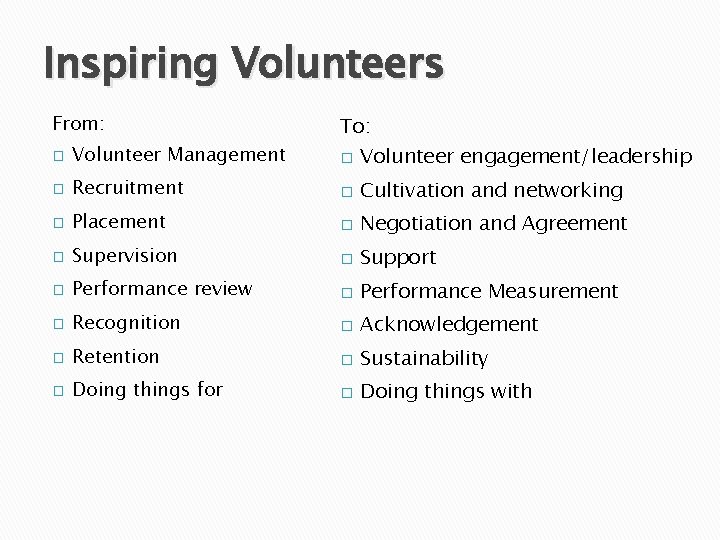
Inspiring Volunteers From: To: � Volunteer Management � Volunteer engagement/leadership � Recruitment � Cultivation and networking � Placement � Negotiation and Agreement � Supervision � Support � Performance review � Performance Measurement � Recognition � Acknowledgement � Retention � Sustainability � Doing things for � Doing things with
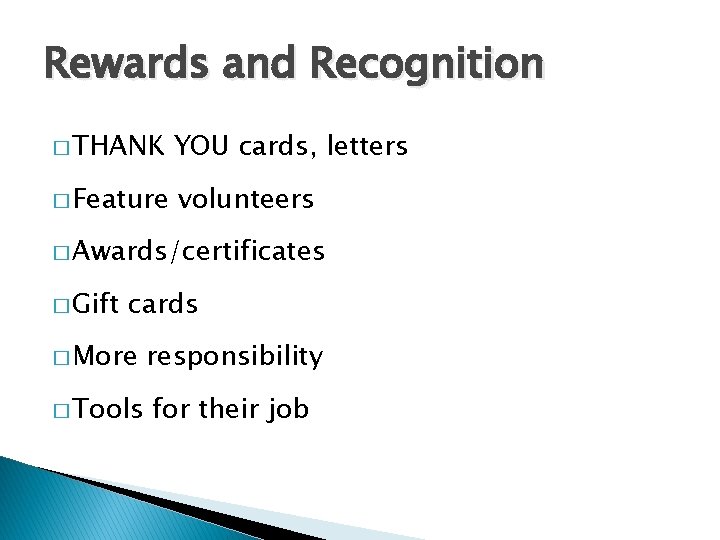
Rewards and Recognition � THANK YOU cards, letters � Feature volunteers � Awards/certificates � Gift cards � More responsibility � Tools for their job
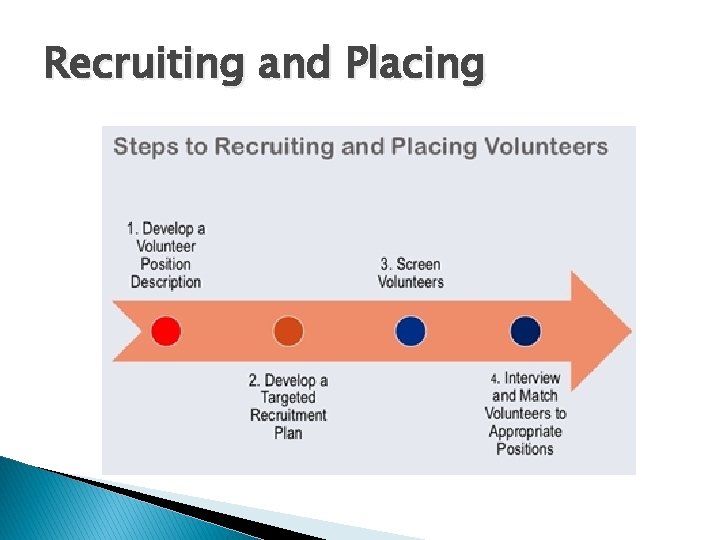
Recruiting and Placing
Prepare Your Organization � Understand � Align your organization's history. and articulate connection to mission. � Identify impact of workplace culture and environment. � Ask for support. � Allow others to have input.
Questions to ask � Who is your target audience? � What strategies should be used to reach potential volunteers? � What are features of the position? � What would appeal to the volunteer about the position? � What would they consider a barrier? � What other things do you need to know about potential volunteers?
What is Volunteer Recruitment? The process of matching an organization’s needs with a volunteer’s interests and skills
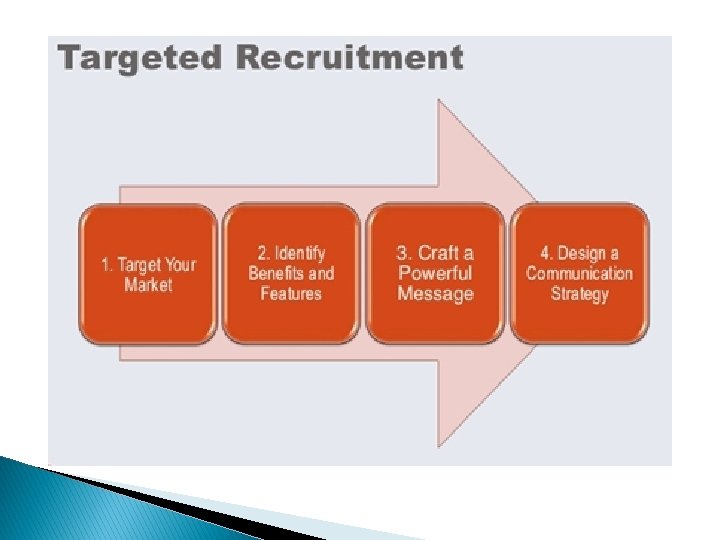
Methods for Recruitment � Targeted – specific, focused on the volunteers who are most likely to possess your needs. � Broad-based – recruitment is the most effective for jobs that don’t require specific volunteer characteristics or qualifications. Most appropriate for large scale, short term events.
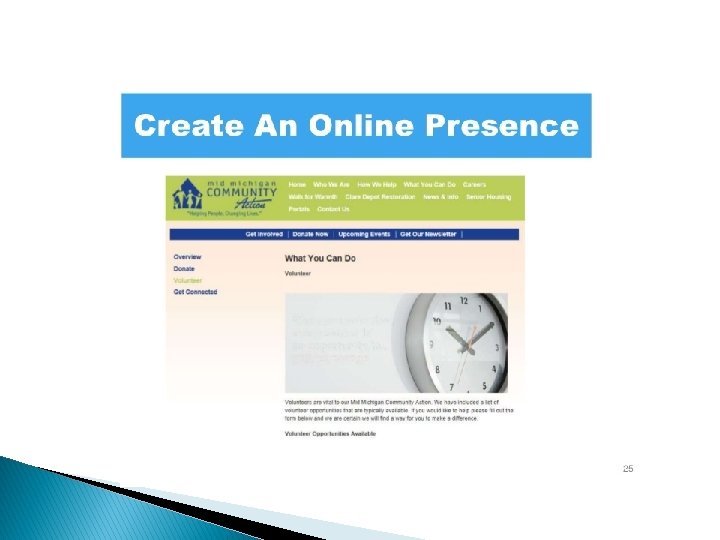
Where do you find volunteers? � Word of mouth � Online � Senior Centers � Colleges � Community Service � Faith-based � Other _______
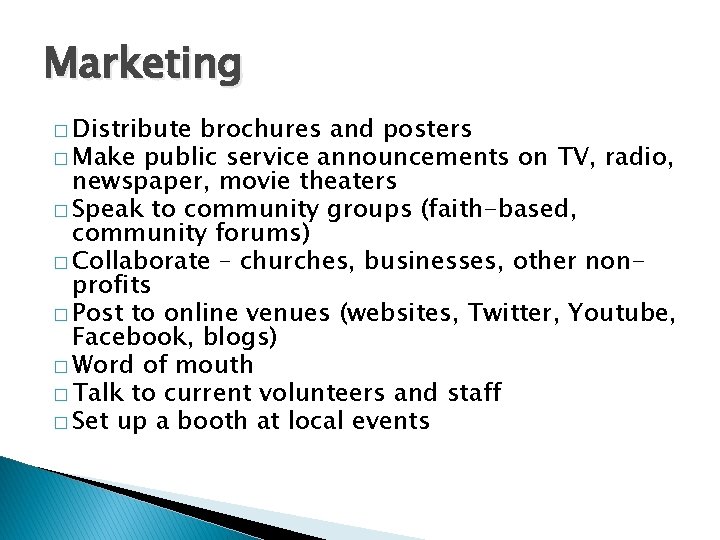
Marketing � Distribute brochures and posters � Make public service announcements on TV, radio, newspaper, movie theaters � Speak to community groups (faith-based, community forums) � Collaborate – churches, businesses, other nonprofits � Post to online venues (websites, Twitter, Youtube, Facebook, blogs) � Word of mouth � Talk to current volunteers and staff � Set up a booth at local events
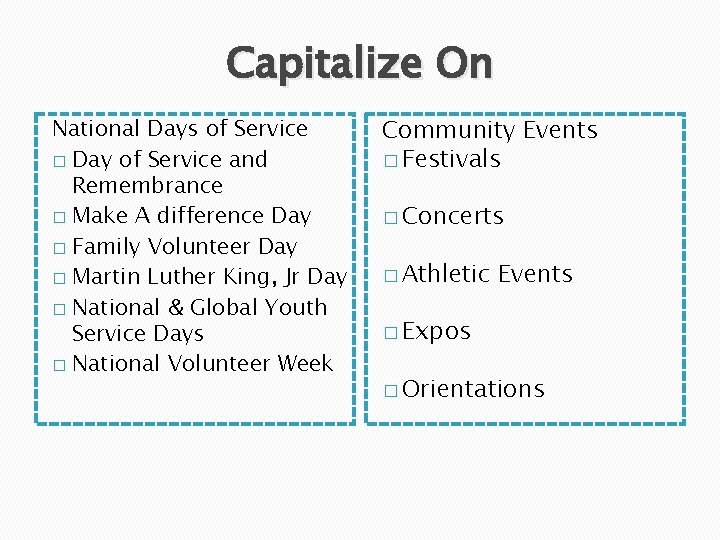
Capitalize On National Days of Service � Day of Service and Remembrance � Make A difference Day � Family Volunteer Day � Martin Luther King, Jr Day � National & Global Youth Service Days � National Volunteer Week Community Events � Festivals � Concerts � Athletic Events � Expos � Orientations
TOP TEN REASONS VOLUNTEERS LEAVE � Reason #10: The reality of their experience is not what they expected when they signed on.
Reason #10 � The reality of their experience is not what they expected when they signed on.
Reason #9 � They don’t like the work they are being asked to do nor how it is being done.
Reason #8 � Veteran or leadership volunteer won’t let them into the “insider” group.
Reason #7 � They spend more time meeting than doing.
Reason #6 � No one listens to their suggestions.
Reason #5 � They feel unrecognized, and see thanks are unfairly given to everyone no matter who did the most work or none at all.
Reason #4 � They are no longer asked to participate.
Reason #3 not actually understand how to get more involved. � They do
Reason #2 � They can no longer see how their involvement makes a difference.
Reason #1 � It stopped being fun.
Why do Volunteers Leave? � Failure to recognize contributions � Not measuring their value � Failure to train and invest in Volunteers and Staff � Failure to provide strong leadership � Clear communications � Volunteers perception of wasted time � Paid staff give the volunteers same respect