
Voluntary Action Islington Volunteers Reward and Retention Rebecca
Voluntary Action Islington Volunteers: Reward and Retention Rebecca Tully www. rebeccatully. co. uk
@volunteersyeah rebeccatully. co. uk
“There’s no way we could get the volunteers together for support, the timings wouldn’t work. ” “We don’t have time or money for training. We just take people who know what they’re doing. ” “We don’t have time for volunteers to go round “Tell us about RETENTION!” meeting everybody when they start, they get a handbook - that’s enough. ” “Task descriptions? No, there are things that need doing and we just get on and do them. ”
…all about the basics… • • Expectations and Boundaries Recruitment and Selection Inductions and Training Role Descriptions Expenses Problem Solving Procedure Support
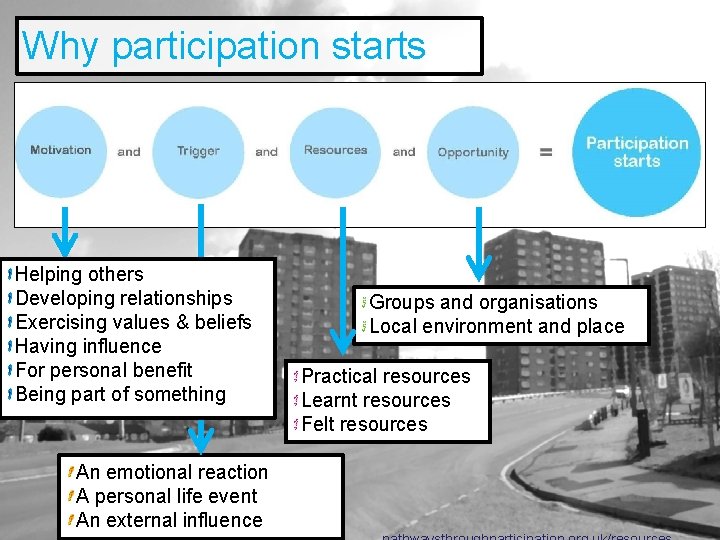
Why participation starts Helping others Developing relationships Exercising values & beliefs Having influence For personal benefit Being part of something An emotional reaction A personal life event An external influence Groups and organisations Local environment and place Practical resources Learnt resources Felt resources
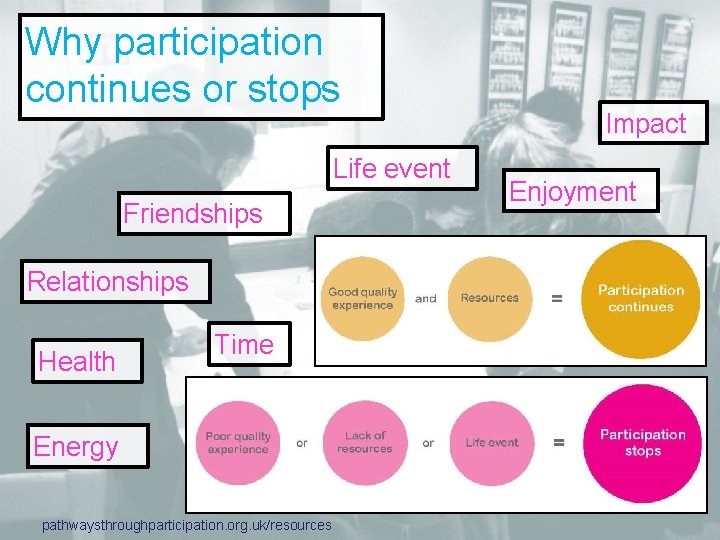
Why participation continues or stops Life event Friendships Relationships Health Time Energy pathwaysthroughparticipation. org. uk/resources Impact Enjoyment
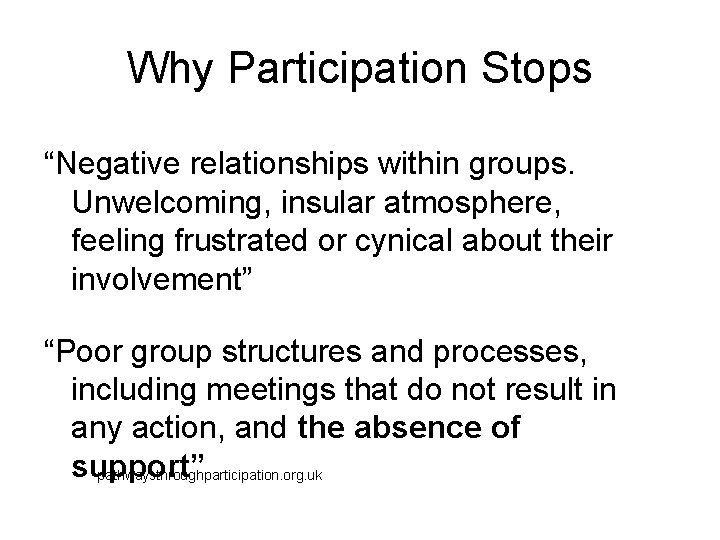
Why Participation Stops “Negative relationships within groups. Unwelcoming, insular atmosphere, feeling frustrated or cynical about their involvement” “Poor group structures and processes, including meetings that do not result in any action, and the absence of support” pathwaysthroughparticipation. org. uk
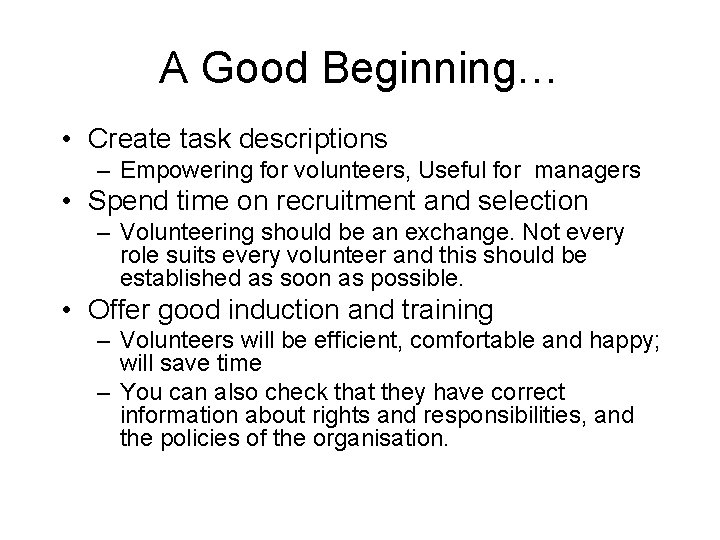
A Good Beginning… • Create task descriptions – Empowering for volunteers, Useful for managers • Spend time on recruitment and selection – Volunteering should be an exchange. Not every role suits every volunteer and this should be established as soon as possible. • Offer good induction and training – Volunteers will be efficient, comfortable and happy; will save time – You can also check that they have correct information about rights and responsibilities, and the policies of the organisation.
IDEAS -> TASKS -> ROLES If you do not work out what your needs and boundaries are then it is difficult to judge whether an individual has the skills that you need, and whether you can offer them the support that they need
People are much more likely to contact you regarding roles that they can imagine themselves doing
Volunteer Tasks èKeep tasks specific: then you can pick and choose for different volunteers èKeep a list of core tasks, and other more specific tasks: marketing, websites etc. èBe clear, use words everybody will ‘get’ èBe realistic –some skills will definitely be needed, but don’t aim unnecessarily high èIf a volunteer needs a lot of support maybe they could be matched with another?
Creating a Role èWhat tasks do you have that you need volunteers to do? èHow might these tasks be combined to create a role? èHow much support and supervision can you give? Are there ways roles can support each other – and you? èAre there any areas of role development? èWhat skills would the volunteer need to have already?
Beyond the start… • Include personal goals and wider organisation information in induction • Reimburse expenses • Include support of, and from, volunteers in job descriptions of employees • Plan regular, appropriate support for each other – group, individual, social activities • Accept when its time to leave
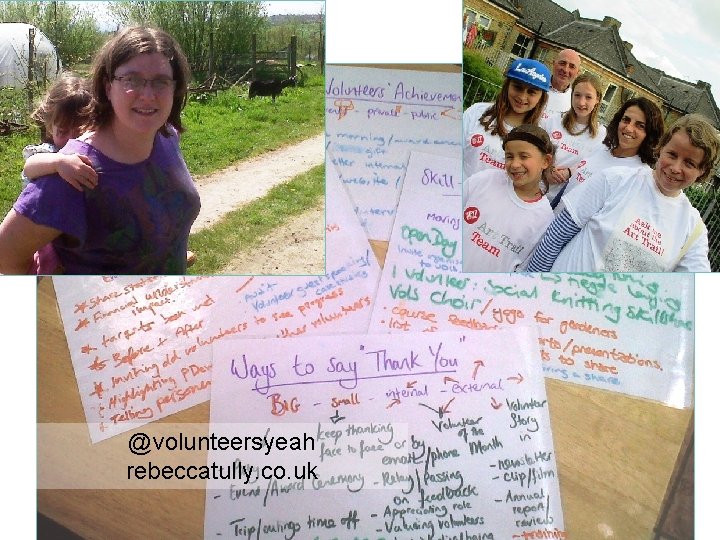
Involved, Informed, Appreciated • Saying thank you: small, big, internal, external… • Social events: outings, meals, coffee… • Information sharing: notice boards, texts, emails, meetings… • Feeding Back Volunteers’ impact • Highlighting achievements: private or public • Acknowledging and counting time and hours • Skill sharing workshops • Recognition: certificates, award ceremonies…

rebecca@rebeccatully. co. uk www. rebeccatully. co. uk @volunteersyeah
- Slides: 15