
Volcanoes Why do the Plates move Convection Currents
- Slides: 13
Volcanoes
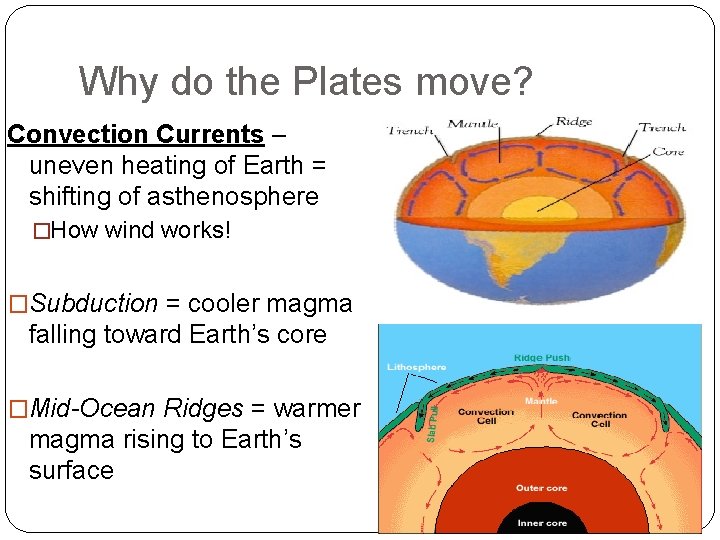
Why do the Plates move? Convection Currents – uneven heating of Earth = shifting of asthenosphere �How wind works! �Subduction = cooler magma falling toward Earth’s core �Mid-Ocean Ridges = warmer magma rising to Earth’s surface
Rock Cycle Review: Part III �Igneous – magma cooling (granite, basalt) �Majority of rocks on EARTH �Metamorphic – heat and pressure (coal) �Sedimentary – sediment (particles) compacting �Majority of rocks on Earth’s SURFACE �FOSSILS found in these
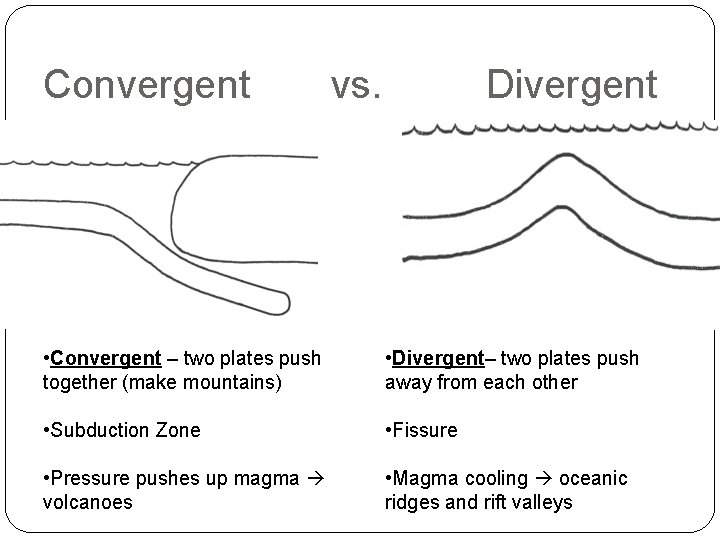
Convergent vs. Divergent • Convergent – two plates push together (make mountains) • Divergent– two plates push away from each other • Subduction Zone • Fissure • Pressure pushes up magma volcanoes • Magma cooling oceanic ridges and rift valleys
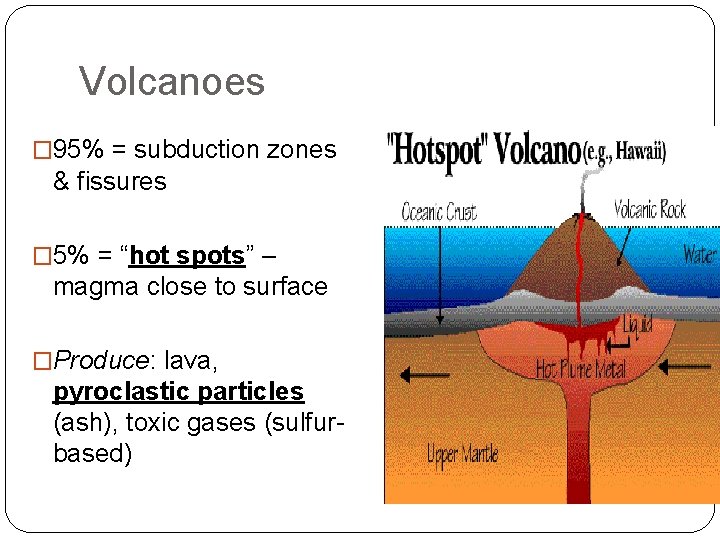
Volcanoes � 95% = subduction zones & fissures � 5% = “hot spots” – magma close to surface �Produce: lava, pyroclastic particles (ash), toxic gases (sulfurbased)
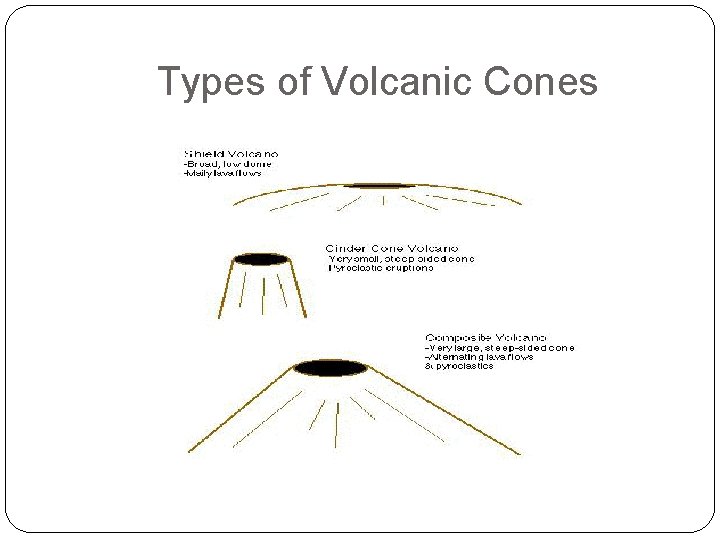
Types of Volcanic Cones
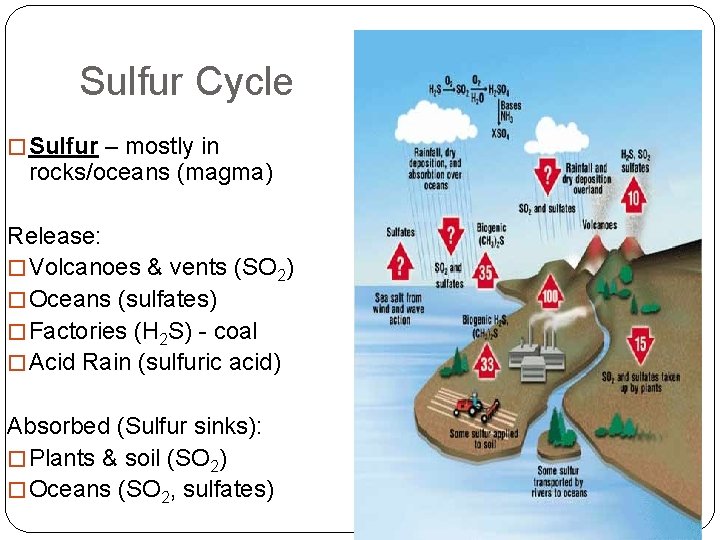
Sulfur Cycle � Sulfur – mostly in rocks/oceans (magma) Release: � Volcanoes & vents (SO 2) � Oceans (sulfates) � Factories (H 2 S) - coal � Acid Rain (sulfuric acid) Absorbed (Sulfur sinks): � Plants & soil (SO 2) � Oceans (SO 2, sulfates)
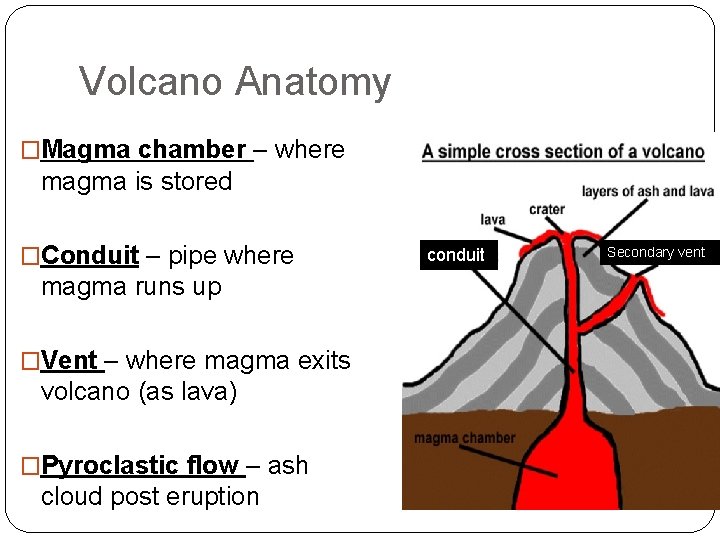
Volcano Anatomy �Magma chamber – where magma is stored �Conduit – pipe where magma runs up �Vent – where magma exits volcano (as lava) �Pyroclastic flow – ash cloud post eruption conduit Secondary vent
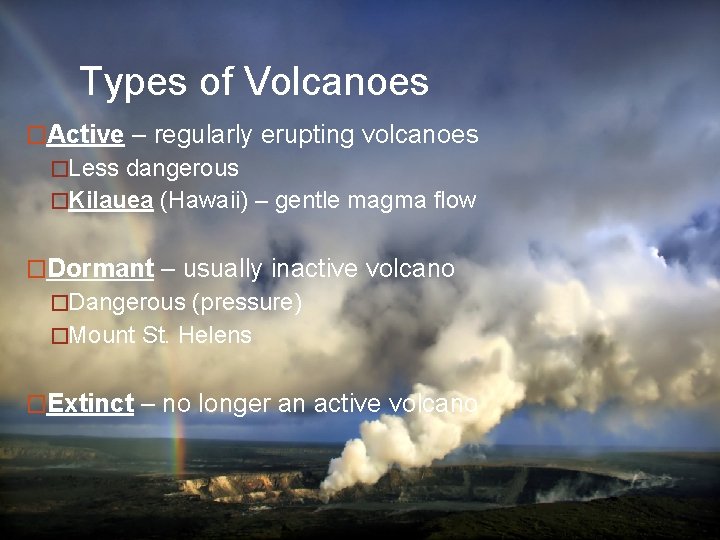
Types of Volcanoes �Active – regularly erupting volcanoes �Less dangerous �Kilauea (Hawaii) – gentle magma flow �Dormant – usually inactive volcano �Dangerous (pressure) �Mount St. Helens �Extinct – no longer an active volcano
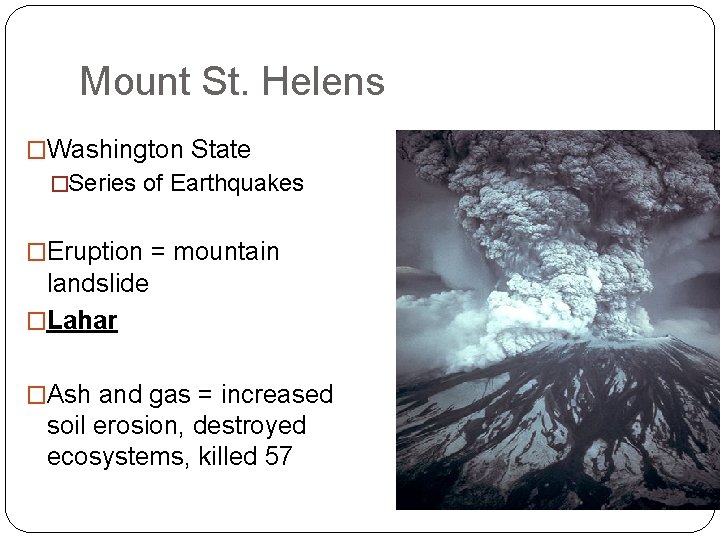
Mount St. Helens �Washington State �Series of Earthquakes �Eruption = mountain landslide �Lahar �Ash and gas = increased soil erosion, destroyed ecosystems, killed 57
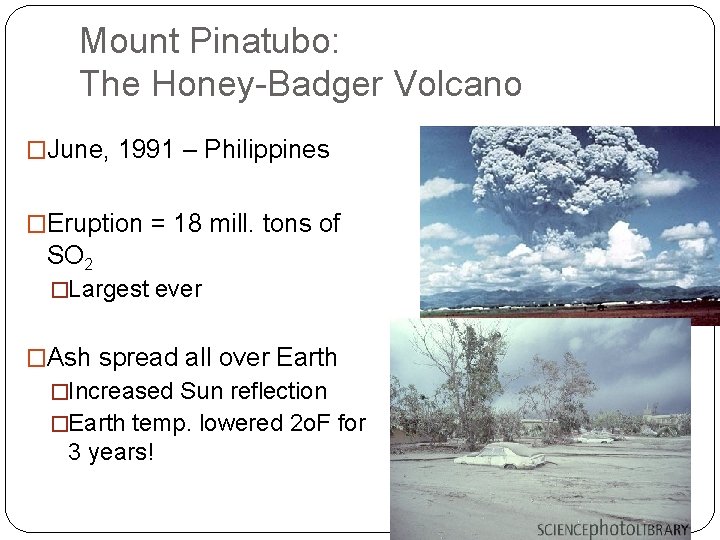
Mount Pinatubo: The Honey-Badger Volcano �June, 1991 – Philippines �Eruption = 18 mill. tons of SO 2 �Largest ever �Ash spread all over Earth �Increased Sun reflection �Earth temp. lowered 2 o. F for 3 years!
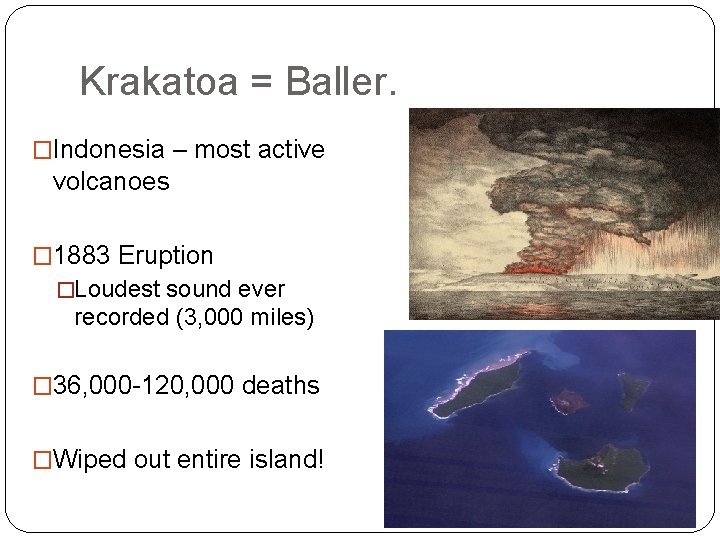
Krakatoa = Baller. �Indonesia – most active volcanoes � 1883 Eruption �Loudest sound ever recorded (3, 000 miles) � 36, 000 -120, 000 deaths �Wiped out entire island!
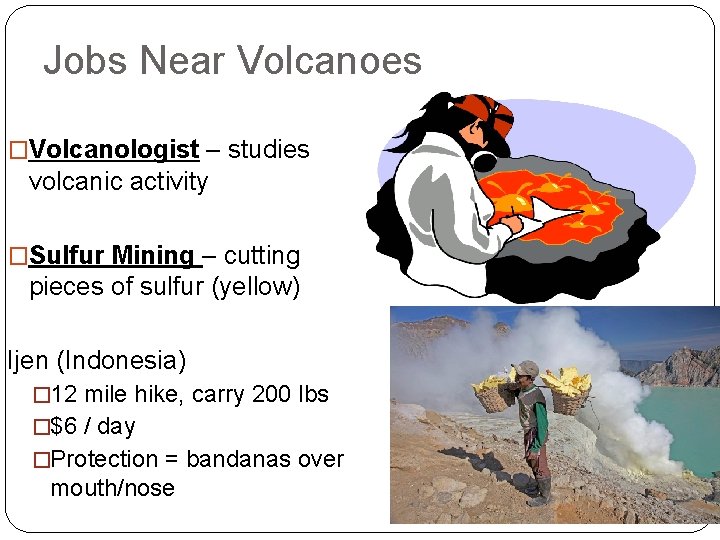
Jobs Near Volcanoes �Volcanologist – studies volcanic activity �Sulfur Mining – cutting pieces of sulfur (yellow) Ijen (Indonesia) � 12 mile hike, carry 200 lbs �$6 / day �Protection = bandanas over mouth/nose