
Volcanoes What is Volcanic Activity 1 An opening
- Slides: 28
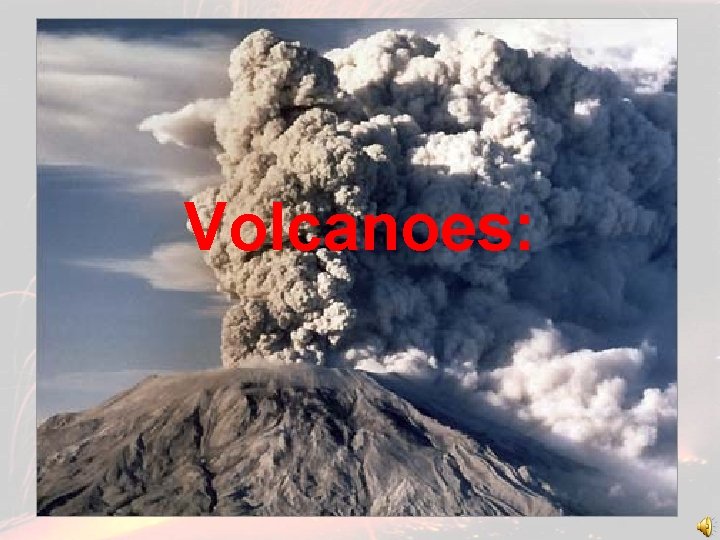
Volcanoes:
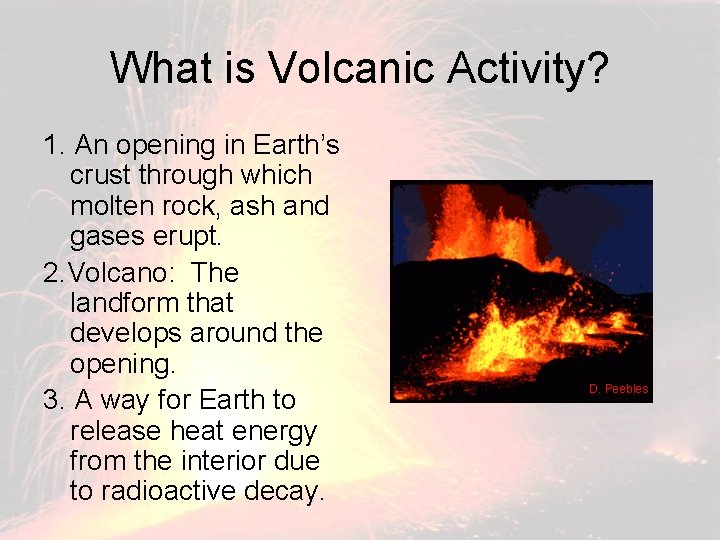
What is Volcanic Activity? 1. An opening in Earth’s crust through which molten rock, ash and gases erupt. 2. Volcano: The landform that develops around the opening. 3. A way for Earth to release heat energy from the interior due to radioactive decay. D. Peebles
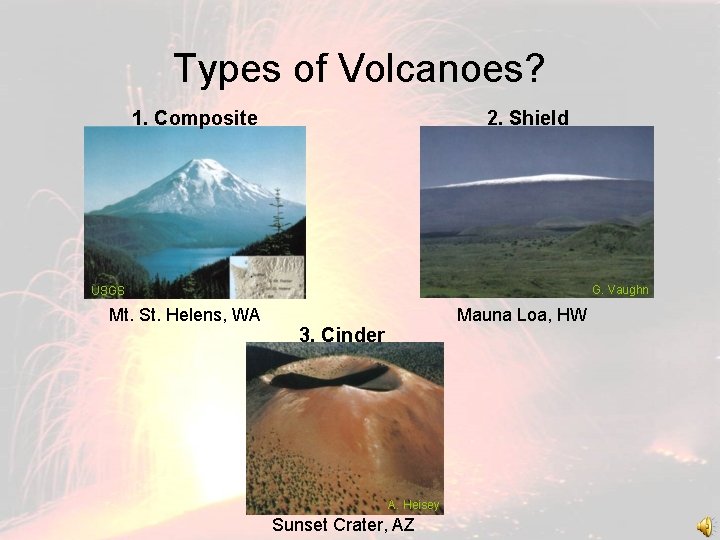
Types of Volcanoes? 1. Composite 2. Shield G. Vaughn USGS Mt. St. Helens, WA Mauna Loa, HW 3. Cinder A. Heisey Sunset Crater, AZ
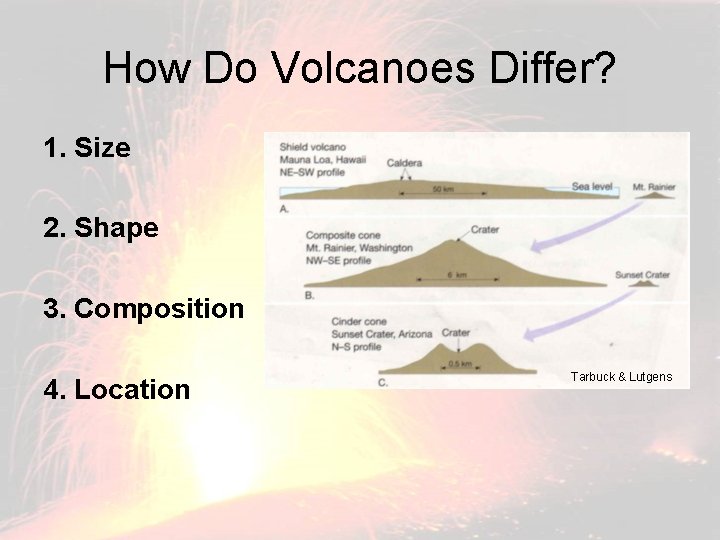
How Do Volcanoes Differ? 1. Size 2. Shape 3. Composition 4. Location Tarbuck & Lutgens
Questions • Which type of volcano is the widest? A. Cinder B. Composite C. Shield • What type of volcano typically produces the largest explosions? A. Cinder B. Composite C. Shield
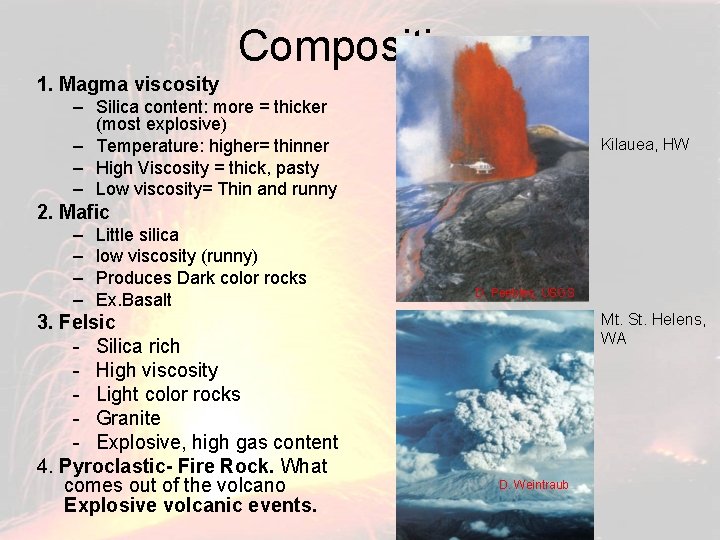
Composition 1. Magma viscosity – Silica content: more = thicker (most explosive) – Temperature: higher= thinner – High Viscosity = thick, pasty – Low viscosity= Thin and runny Kilauea, HW 2. Mafic – – Little silica low viscosity (runny) Produces Dark color rocks Ex. Basalt 3. Felsic - Silica rich - High viscosity - Light color rocks - Granite - Explosive, high gas content 4. Pyroclastic- Fire Rock. What comes out of the volcano Explosive volcanic events. D. Peebles, USGS Mt. St. Helens, WA D. Weintraub
Questions 3 • Which variable determines how explosive a volcanic eruption will be? A. Gases B. Silica C. Temperature
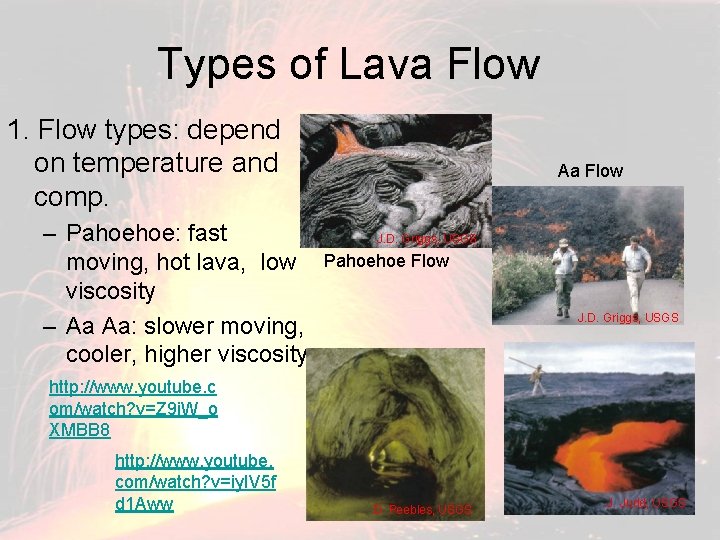
Types of Lava Flow 1. Flow types: depend on temperature and comp. – Pahoehoe: fast moving, hot lava, low viscosity – Aa Aa: slower moving, cooler, higher viscosity Aa Flow J. D. Griggs, USGS Pahoehoe Flow J. D. Griggs, USGS http: //www. youtube. c om/watch? v=Z 9 i. W_o XMBB 8 http: //www. youtube. com/watch? v=iy. IV 5 f d 1 Aww D. Peebles, USGS J. Judd, USGS
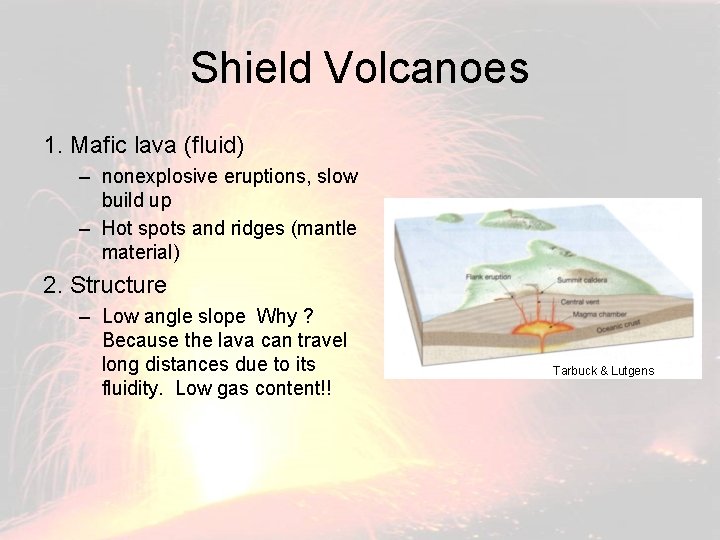
Shield Volcanoes 1. Mafic lava (fluid) – nonexplosive eruptions, slow build up – Hot spots and ridges (mantle material) 2. Structure – Low angle slope Why ? Because the lava can travel long distances due to its fluidity. Low gas content!! Tarbuck & Lutgens
Questions • Shield volcanoes are composed of what type of lavas? A. Mafic • B. Felsic C. Andesitic The shape of a shield volcano is due to A. fluid, low viscosity lavas B. high viscosity lavas C. pyroclastics D. gases • Shield volcanoes are usually associated with what landform feature/s or processes? A. pyroclastic flows C. steep sided cones B. explosive eruptions D. Gentle sloped cones
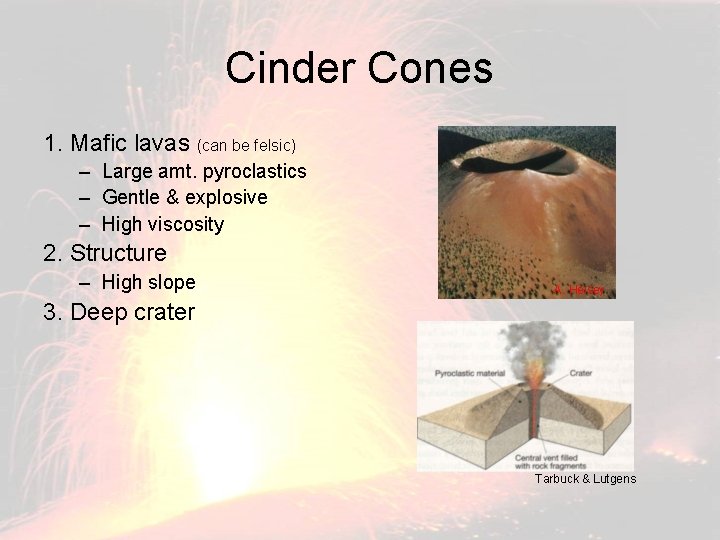
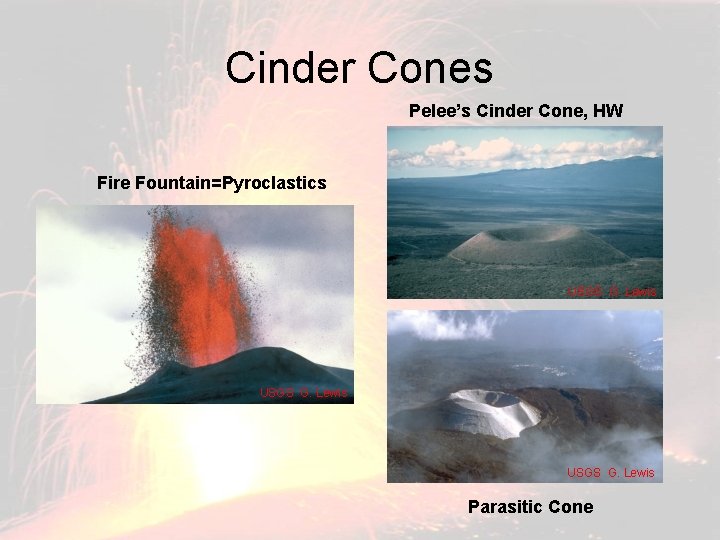
Cinder Cones 1. Mafic lavas (can be felsic) – Large amt. pyroclastics – Gentle & explosive – High viscosity 2. Structure – High slope A. Heisey 3. Deep crater Tarbuck & Lutgens
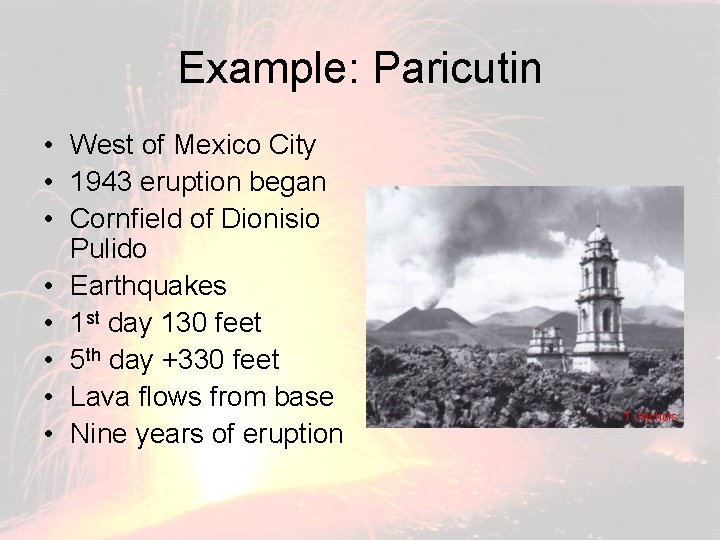
Example: Paricutin • West of Mexico City • 1943 eruption began • Cornfield of Dionisio Pulido • Earthquakes • 1 st day 130 feet • 5 th day +330 feet • Lava flows from base • Nine years of eruption T. Nichols
Cinder Cones Pelee’s Cinder Cone, HW Fire Fountain=Pyroclastics USGS G. Lewis Parasitic Cone
Question • Cinder cones are mainly composed of -? lavas A. Mafic B. Felsic C. Andesitic
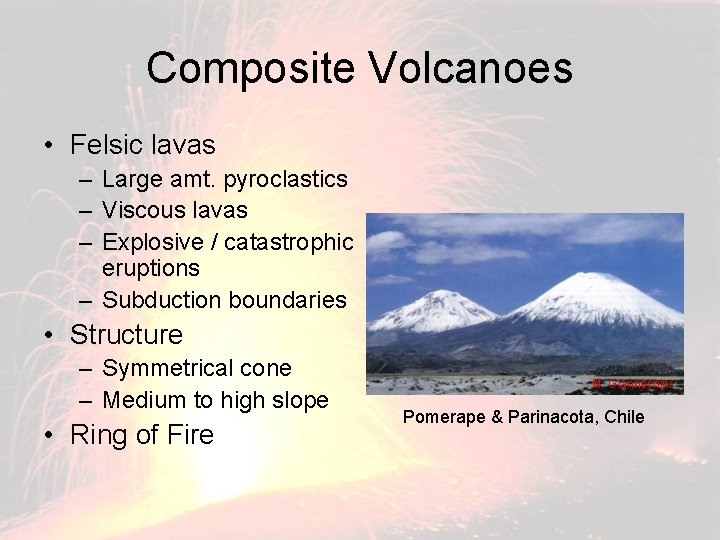
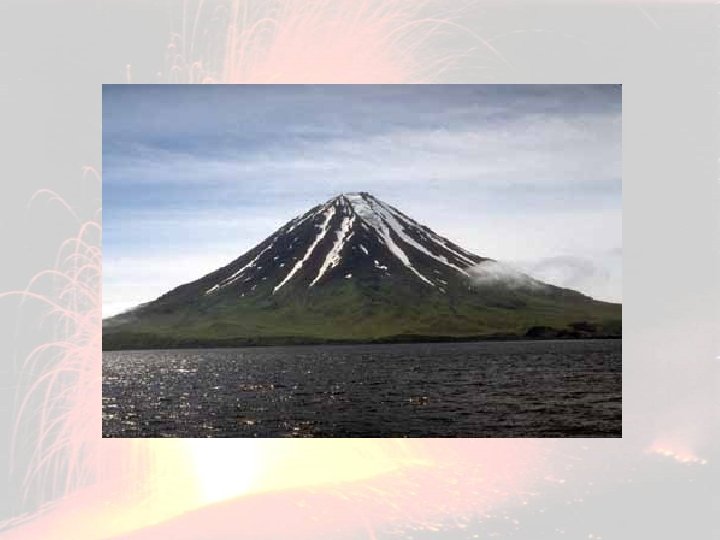
Composite Volcanoes • Felsic lavas – Large amt. pyroclastics – Viscous lavas – Explosive / catastrophic eruptions – Subduction boundaries • Structure – Symmetrical cone – Medium to high slope • Ring of Fire M. Giannechini Pomerape & Parinacota, Chile
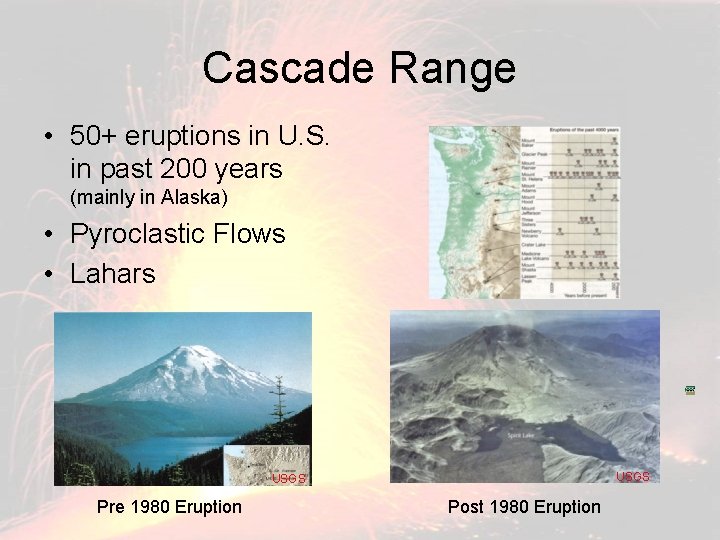
Cascade Range • 50+ eruptions in U. S. in past 200 years (mainly in Alaska) • Pyroclastic Flows • Lahars USGS Pre 1980 Eruption Post 1980 Eruption
Questions • Composite volcanoes are composed of -? lavas A. Mafic • B. Felsic The volcano with the steepest slope is a A. Shield cone • C. Andesitic B. Cinder cone C. Composite cone Volcanoes of the Cascade Range are mainly A. Shield B. Cinder C. Composite
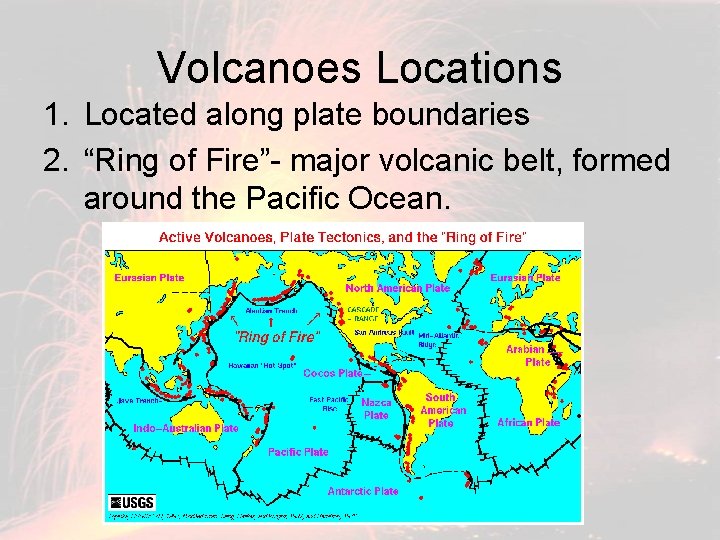
Volcanoes Locations 1. Located along plate boundaries 2. “Ring of Fire”- major volcanic belt, formed around the Pacific Ocean.
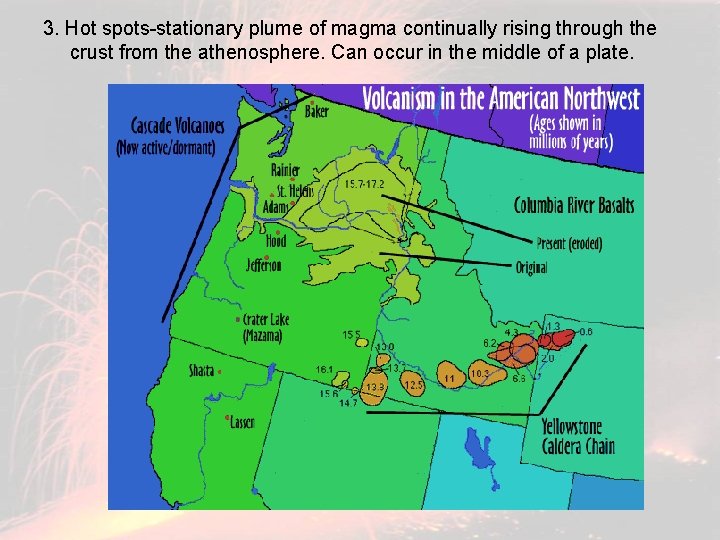
3. Hot spots-stationary plume of magma continually rising through the crust from the athenosphere. Can occur in the middle of a plate.
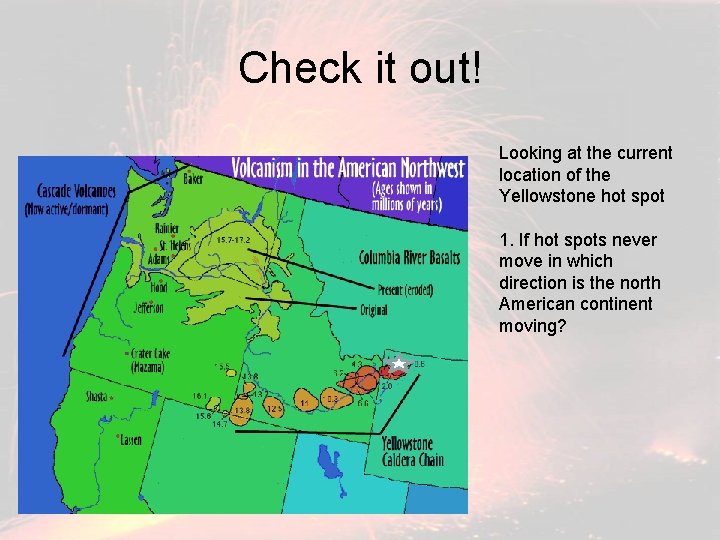
Check it out! Looking at the current location of the Yellowstone hot spot 1. If hot spots never move in which direction is the north American continent moving?
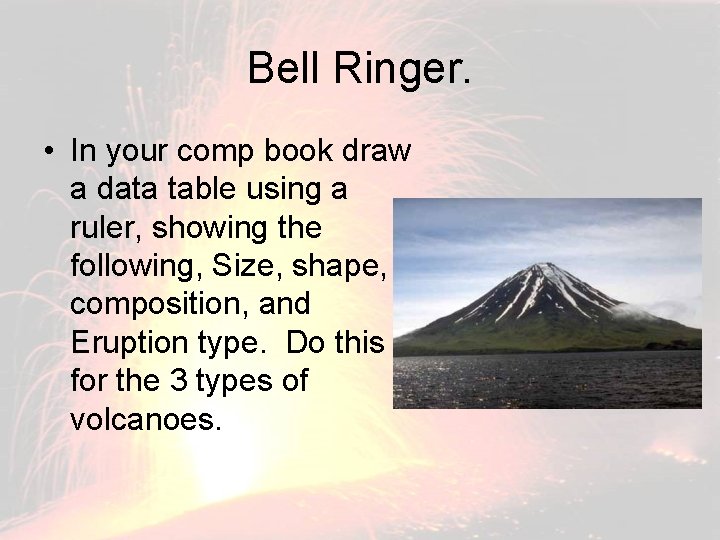
Bell Ringer. • In your comp book draw a data table using a ruler, showing the following, Size, shape, composition, and Eruption type. Do this for the 3 types of volcanoes.
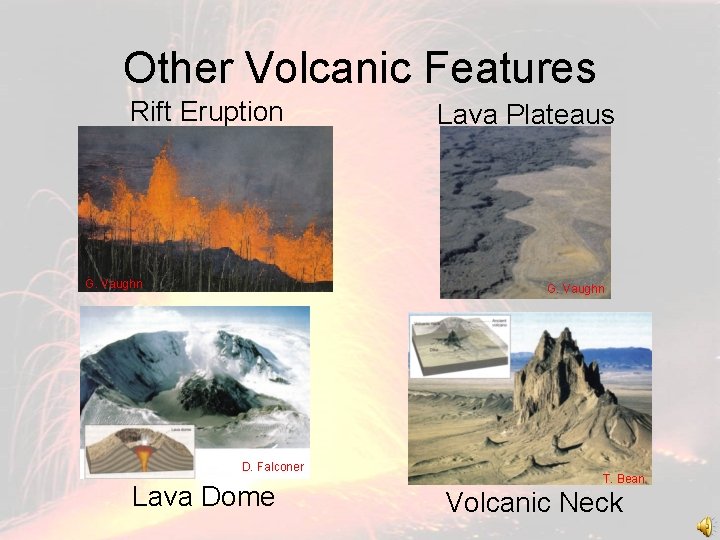
Other Volcanic Features Rift Eruption G. Vaughn Lava Plateaus G. J. Vaughn Shelton D. Falconer Lava Dome T. Bean Volcanic Neck
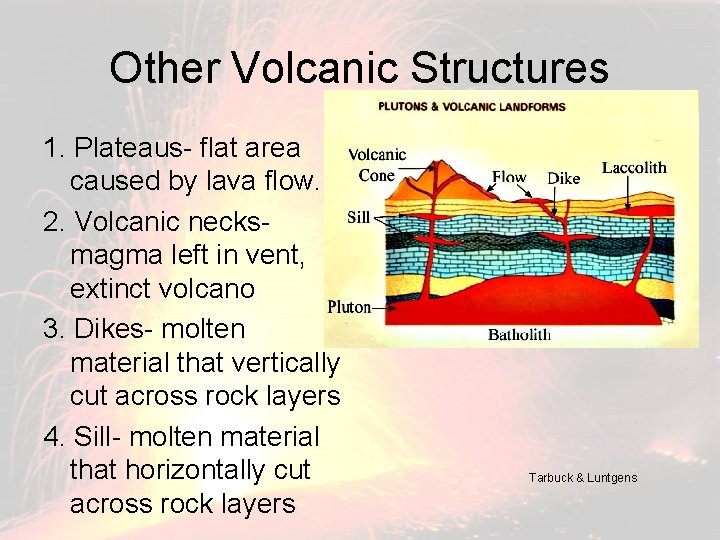
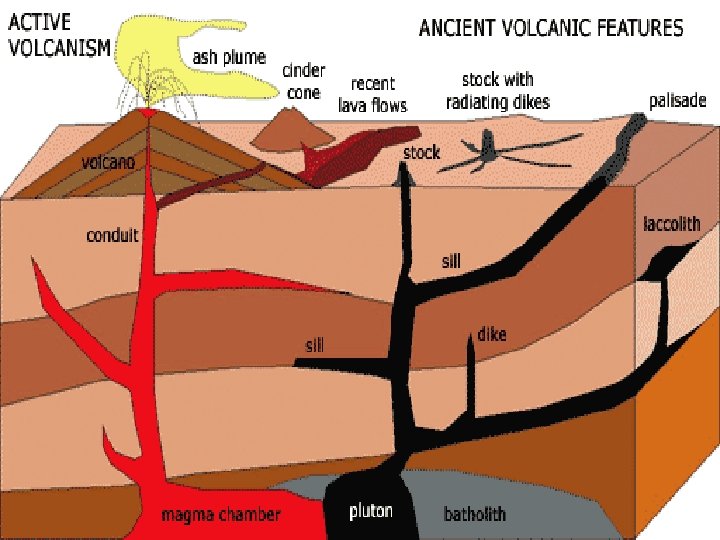
Other Volcanic Structures 1. Plateaus- flat area caused by lava flow. 2. Volcanic necksmagma left in vent, extinct volcano 3. Dikes- molten material that vertically cut across rock layers 4. Sill- molten material that horizontally cut across rock layers Tarbuck & Luntgens
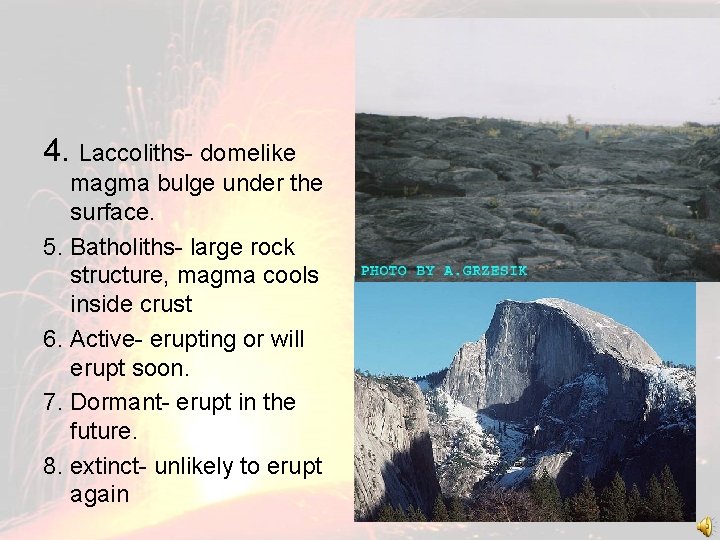
4. Laccoliths- domelike magma bulge under the surface. 5. Batholiths- large rock structure, magma cools inside crust 6. Active- erupting or will erupt soon. 7. Dormant- erupt in the future. 8. extinct- unlikely to erupt again
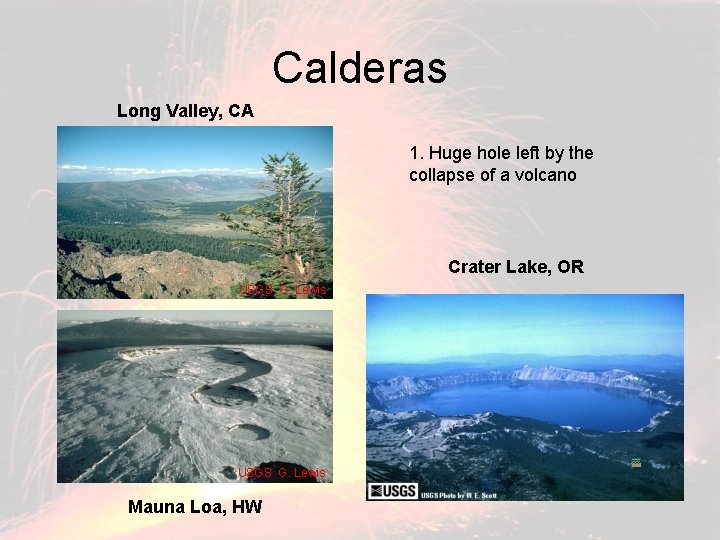
Calderas Long Valley, CA 1. Huge hole left by the collapse of a volcano Crater Lake, OR USGS G. Lewis Mauna Loa, HW
Classwork Page 227 & 228 • Page 227 Concept Map • Page 227 & 228 1 -16, 17, 19, 21 -24 Rewrite question as part of the answer. • Page 229 1 -6 Rewrite question as part of the answer.