
VOLCANOES What are three types of volcanoes What
- Slides: 26
VOLCANOES What are three types of volcanoes? What are the parts of a volcano? What are the types of eruptions?
VOLCANOES
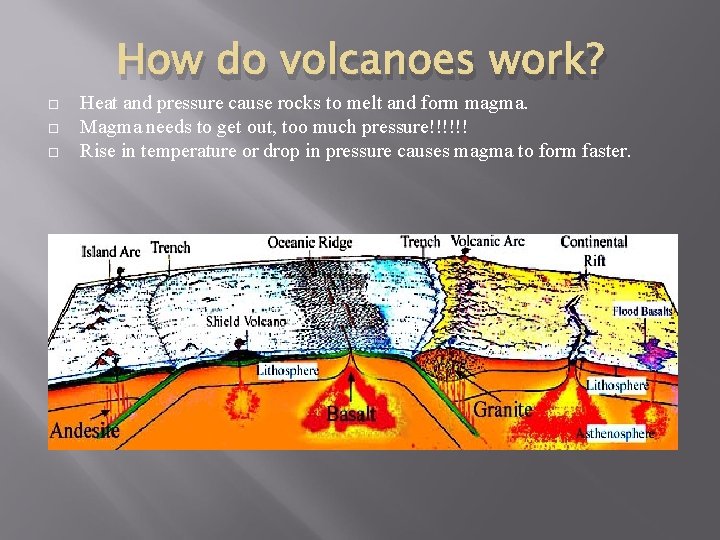
How do volcanoes work? Heat and pressure cause rocks to melt and form magma. Magma needs to get out, too much pressure!!!!!! Rise in temperature or drop in pressure causes magma to form faster.
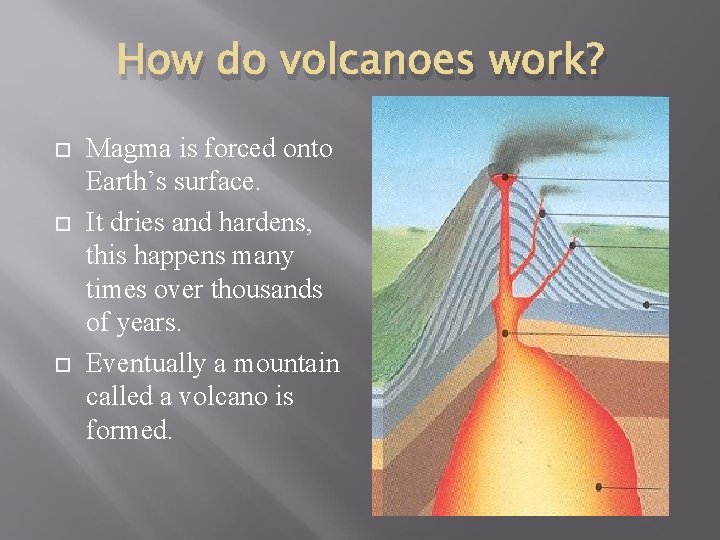
How do volcanoes work? Magma is forced onto Earth’s surface. It dries and hardens, this happens many times over thousands of years. Eventually a mountain called a volcano is formed.
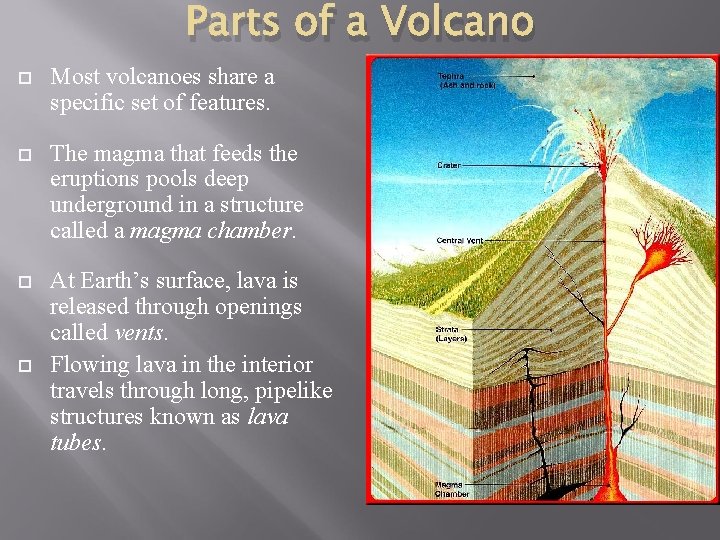
Parts of a Volcano Most volcanoes share a specific set of features. The magma that feeds the eruptions pools deep underground in a structure called a magma chamber. At Earth’s surface, lava is released through openings called vents. Flowing lava in the interior travels through long, pipelike structures known as lava tubes.
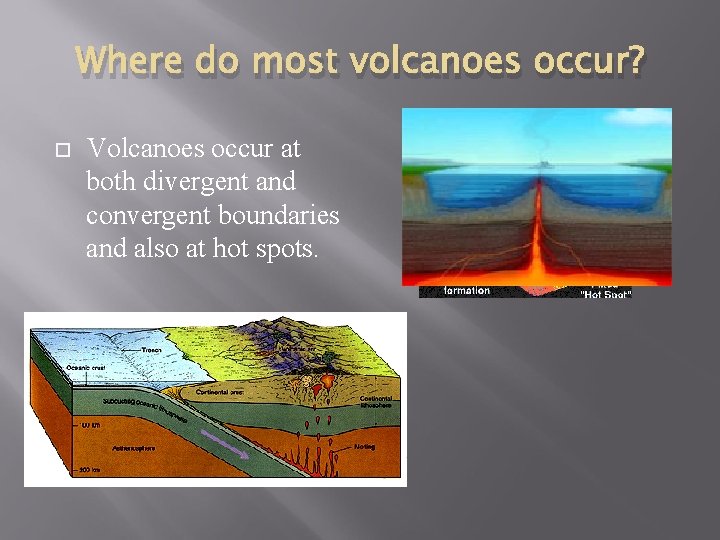
Where do most volcanoes occur? Volcanoes occur at both divergent and convergent boundaries and also at hot spots.
Why do we have different types of Volcanoes? � The process of magma formation is different at each type of plate boundary. � Therefore, the composition of magma differs in each tectonic setting. � Tectonic settings determine the types of volcanoes that form and the types of eruptions that take place.
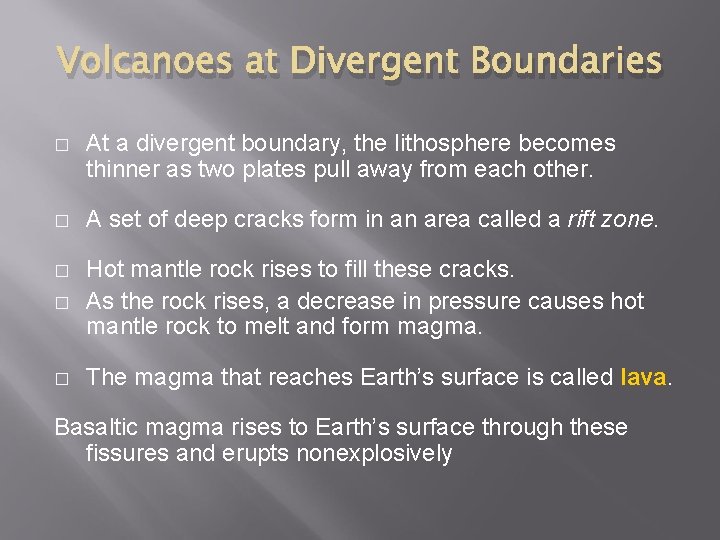
Volcanoes at Divergent Boundaries � At a divergent boundary, the lithosphere becomes thinner as two plates pull away from each other. � A set of deep cracks form in an area called a rift zone. � � Hot mantle rock rises to fill these cracks. As the rock rises, a decrease in pressure causes hot mantle rock to melt and form magma. � The magma that reaches Earth’s surface is called lava. Basaltic magma rises to Earth’s surface through these fissures and erupts nonexplosively
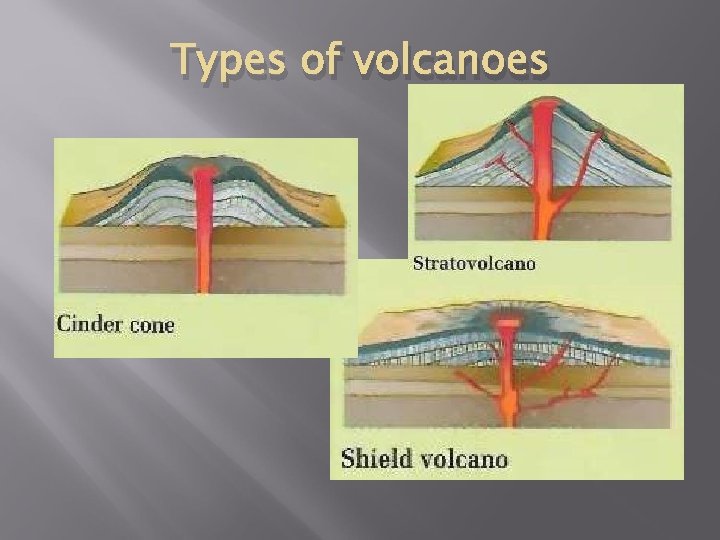
Types of volcanoes
Types of volcanoes � � � Shield volcano: usually form at hot spots, from non explosive eruptions Cinder cone volcano: form from explosive eruptions, very steep. Composite volcano: form from both explosive and non explosive eruptions.
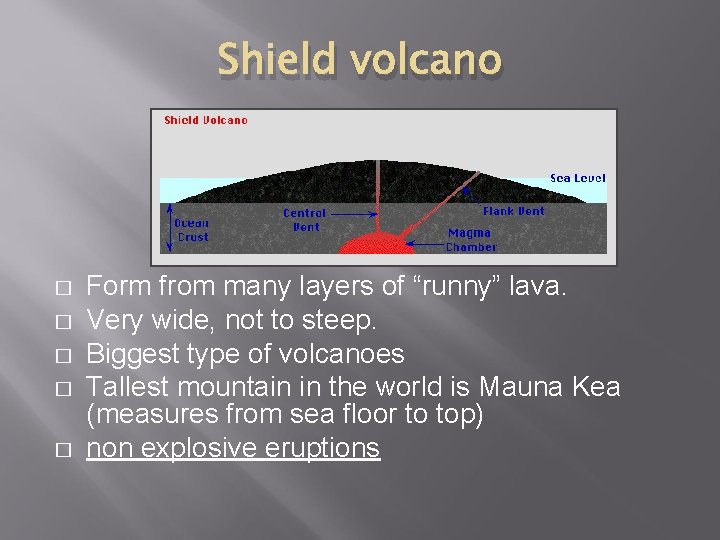
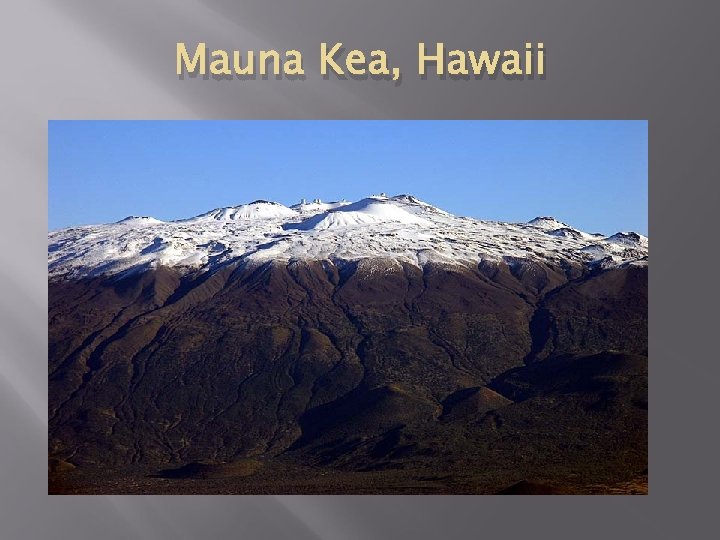
Shield volcano � � � Form from many layers of “runny” lava. Very wide, not to steep. Biggest type of volcanoes Tallest mountain in the world is Mauna Kea (measures from sea floor to top) non explosive eruptions
Mauna Kea, Hawaii
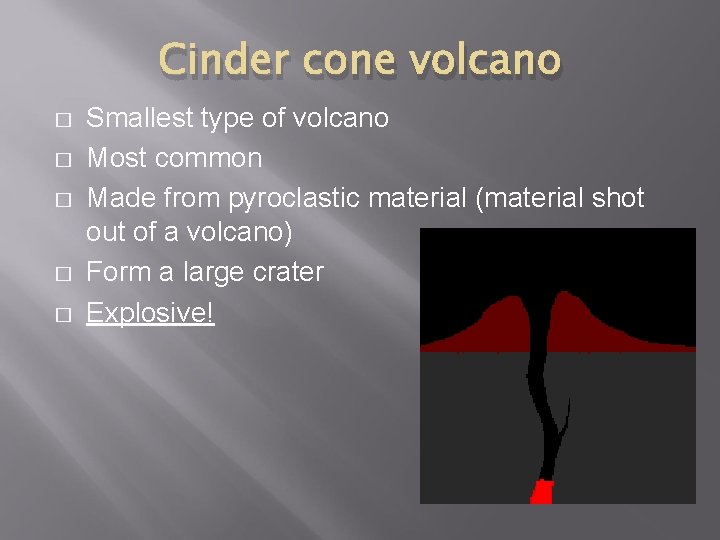
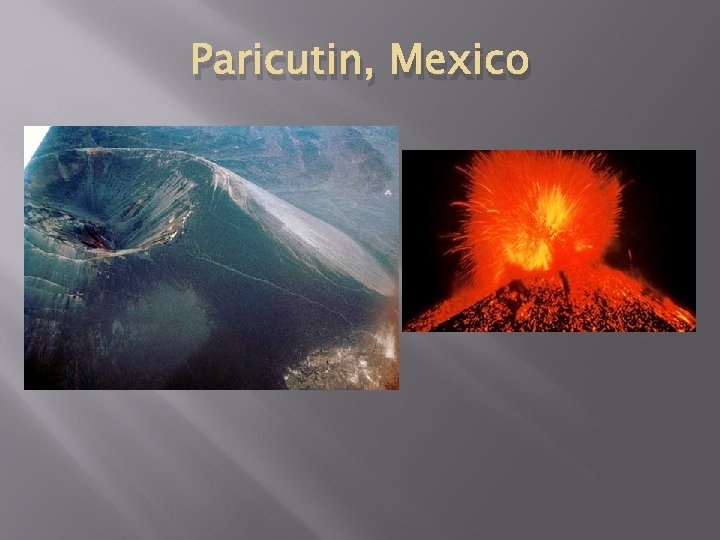
Cinder cone volcano � � � Smallest type of volcano Most common Made from pyroclastic material (material shot out of a volcano) Form a large crater Explosive!
Paricutin, Mexico
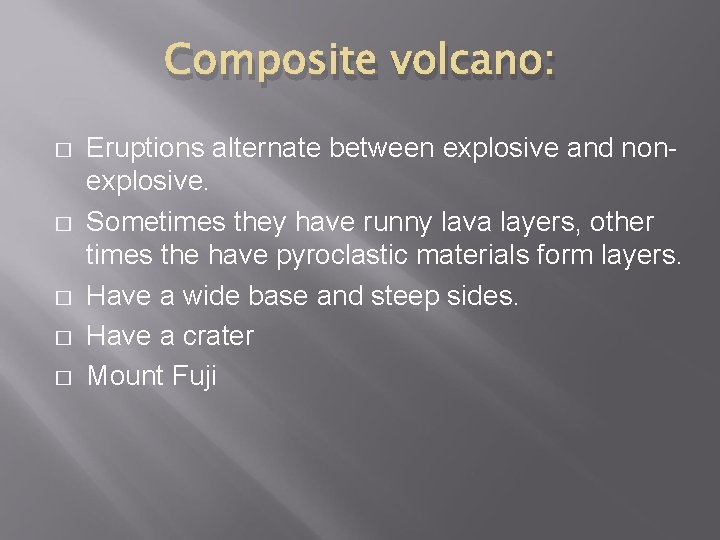
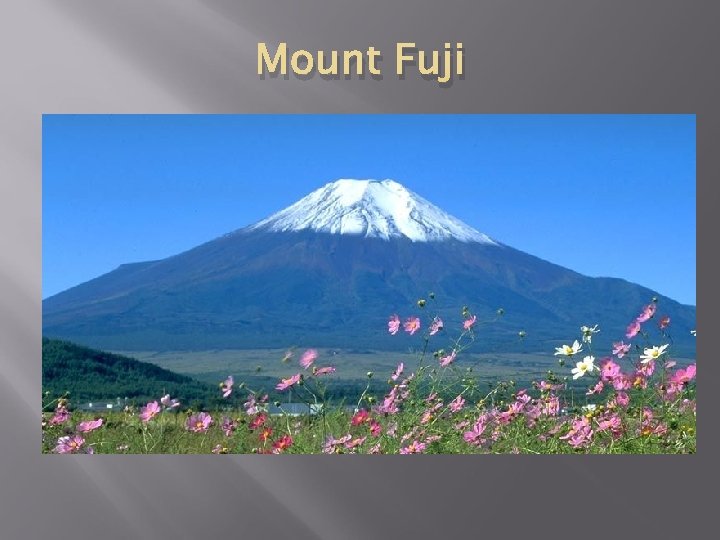
Composite volcano: � � � Eruptions alternate between explosive and nonexplosive. Sometimes they have runny lava layers, other times the have pyroclastic materials form layers. Have a wide base and steep sides. Have a crater Mount Fuji
Mount Fuji
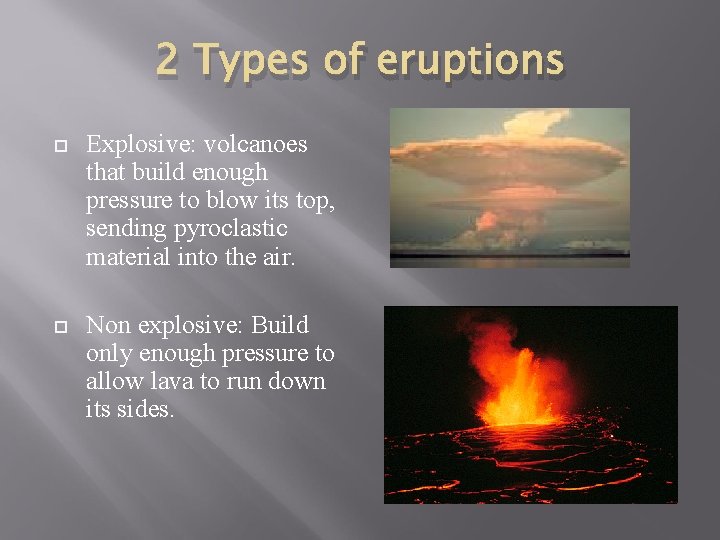
2 Types of eruptions Explosive: volcanoes that build enough pressure to blow its top, sending pyroclastic material into the air. Non explosive: Build only enough pressure to allow lava to run down its sides.
Non explosive eruption � � Mafic: refers to rocks and magma rich in iron and magnesium. This type of lava that is very runny. As magma nears the surface there is little pressure, causing gasses escape easily. Magma low in Silica have quiet eruptions
Explosive eruptions � � � Felsic: means magma with high silica and feldspar content. Felsic magma traps water and gas bubbles, which leads to lots of pressure. Silica acts like a cork Explosive eruptions are caused by a build up of high pressure. Convergent zones contain lots of water, therefore have explosive eruptions.
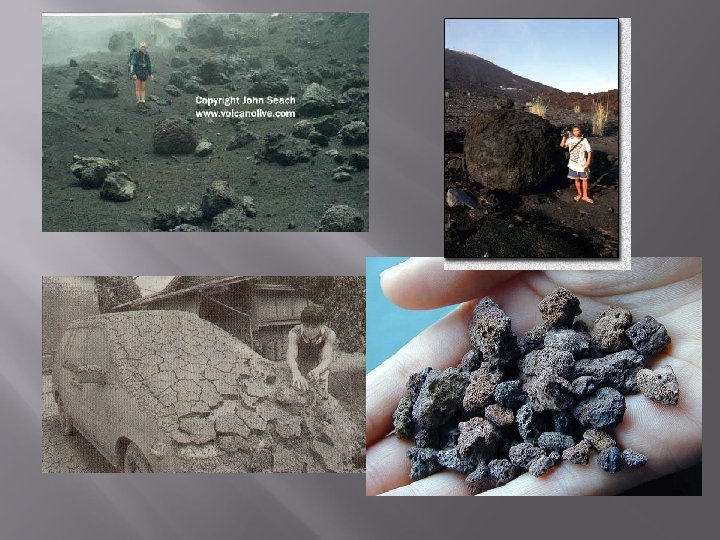
Pyroclastic materials � � Material that is thrown into the air during an explosion. Volcanic bombs: large blobs of magma that harden in the air. Lapilli: pebble size rocks Volcanic ash: tiny powder like material
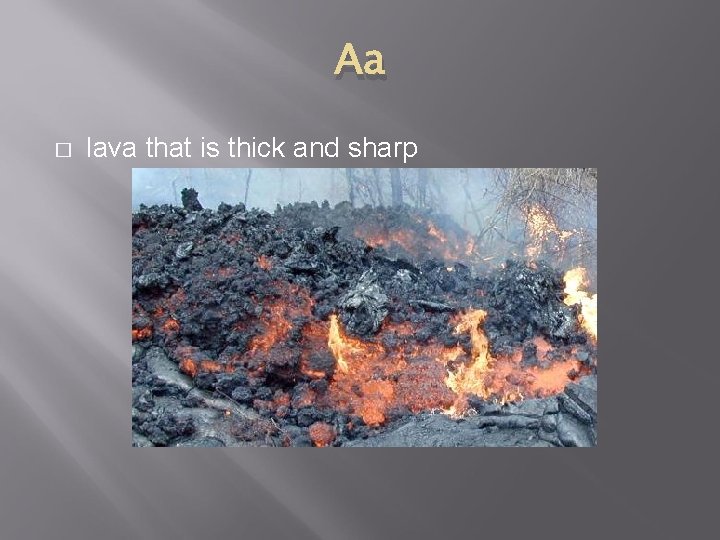
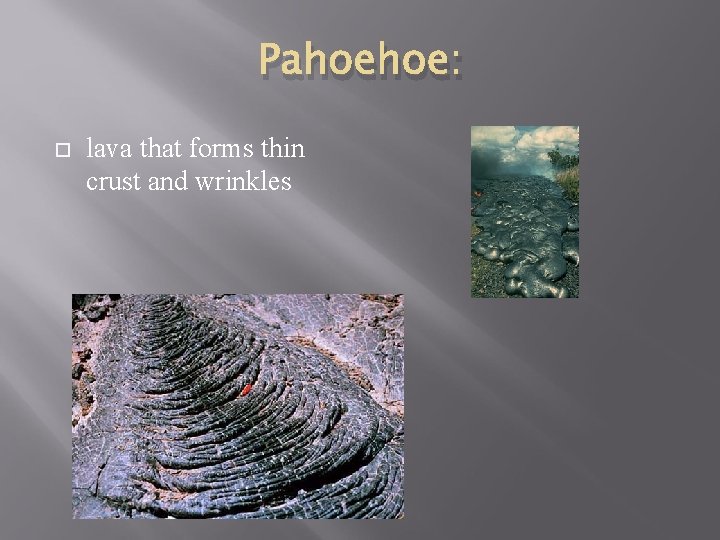
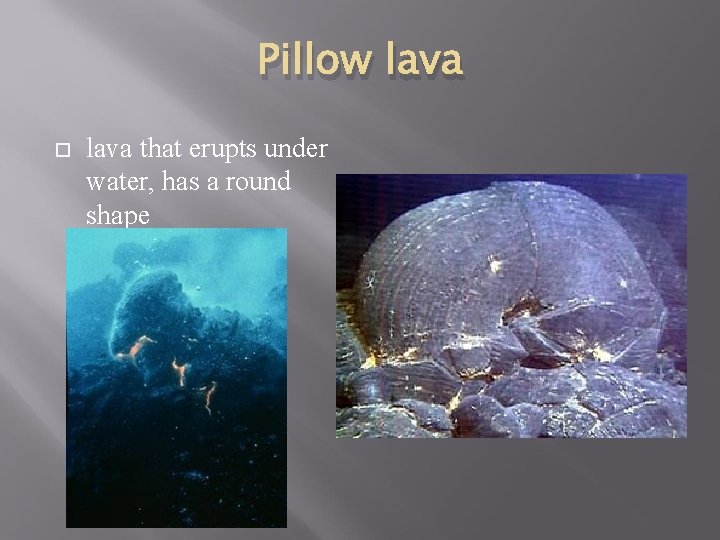
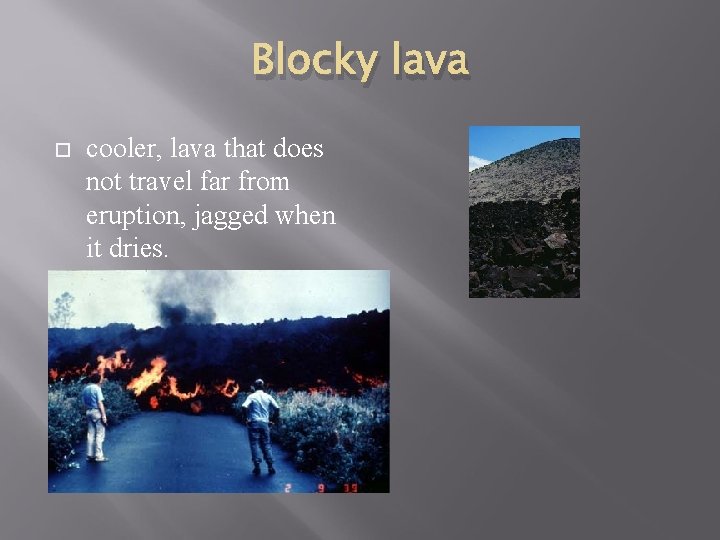
Four types of lava � � Aa: lava that is thick and sharp Pahoehoe: lava that forms thin crust and wrinkles Pillow lava: lava that erupts under water, has a round shape Blocky lava: cooler, lava that does not travel far from eruption, jagged when it dries.
Aa � lava that is thick and sharp
Pahoehoe: lava that forms thin crust and wrinkles
Pillow lava that erupts under water, has a round shape
Blocky lava cooler, lava that does not travel far from eruption, jagged when it dries.