
VOLCANOES Volcanology The Study of Volcanoes Magma molten
- Slides: 33
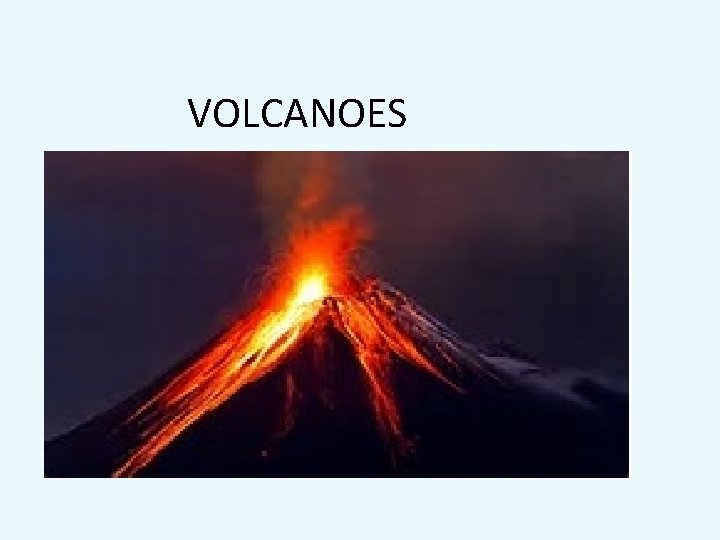
VOLCANOES
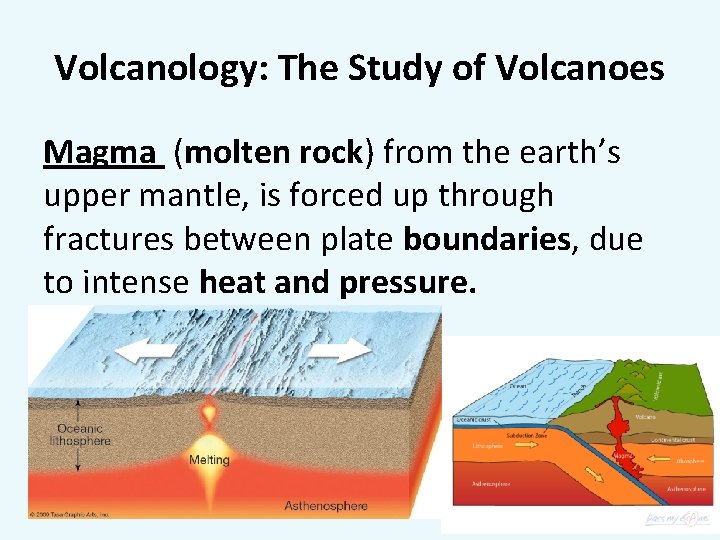
Volcanology: The Study of Volcanoes Magma (molten rock) from the earth’s upper mantle, is forced up through fractures between plate boundaries, due to intense heat and pressure.
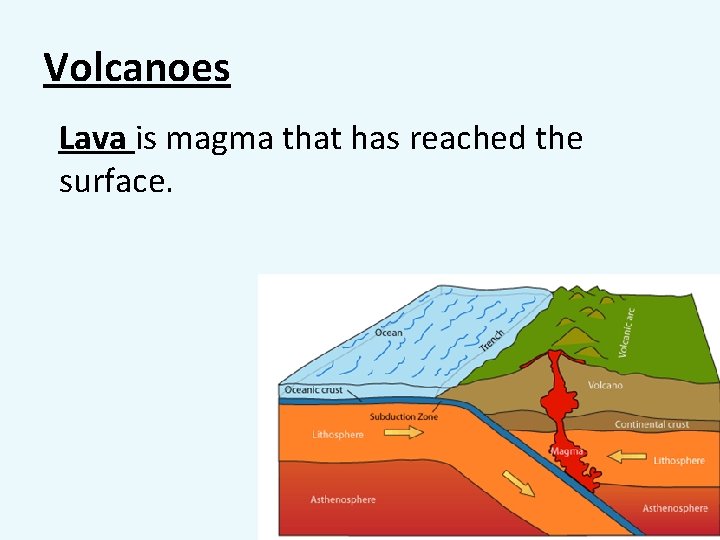
Volcanoes Lava is magma that has reached the surface.
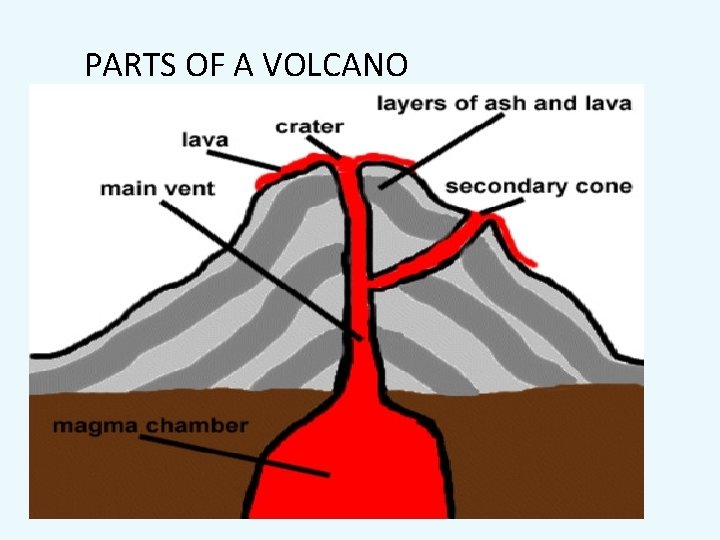
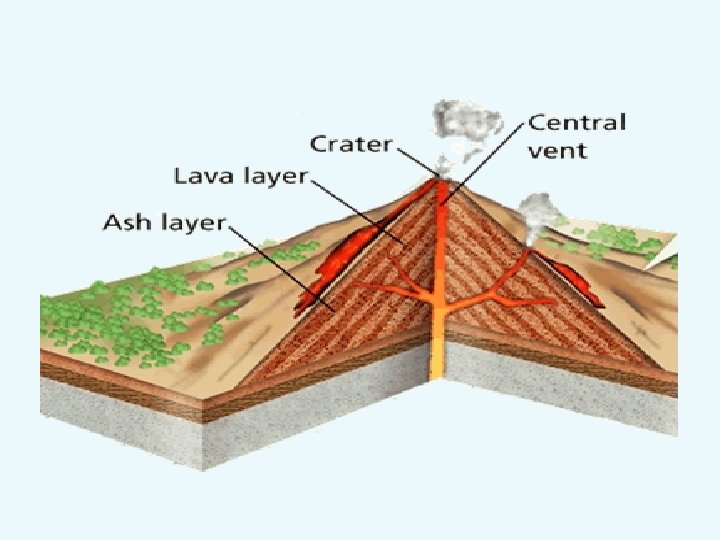
PARTS OF A VOLCANO
What comes out of a Volcano? • • Lava Rocks, Ash Gases
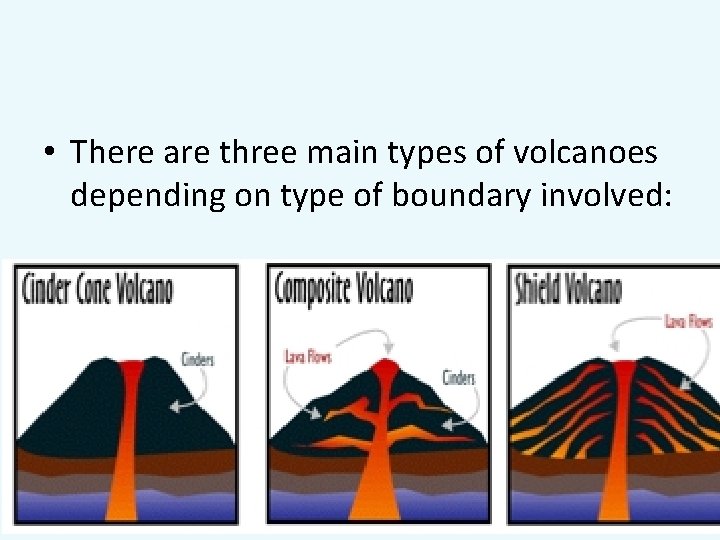
• There are three main types of volcanoes depending on type of boundary involved:
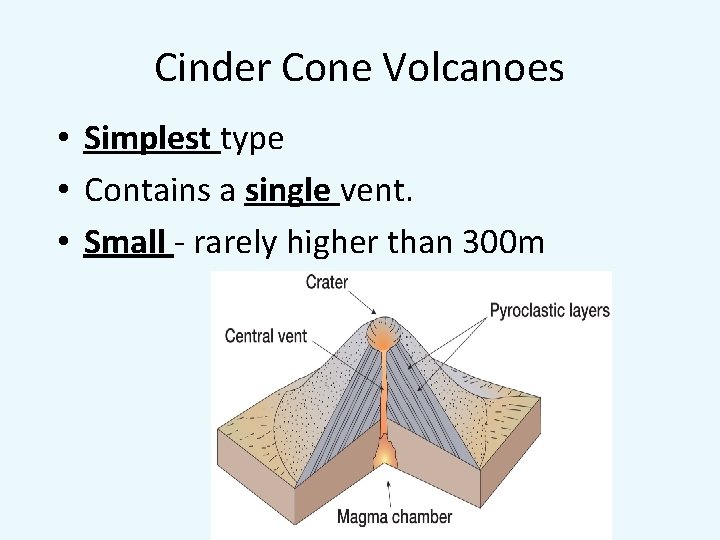
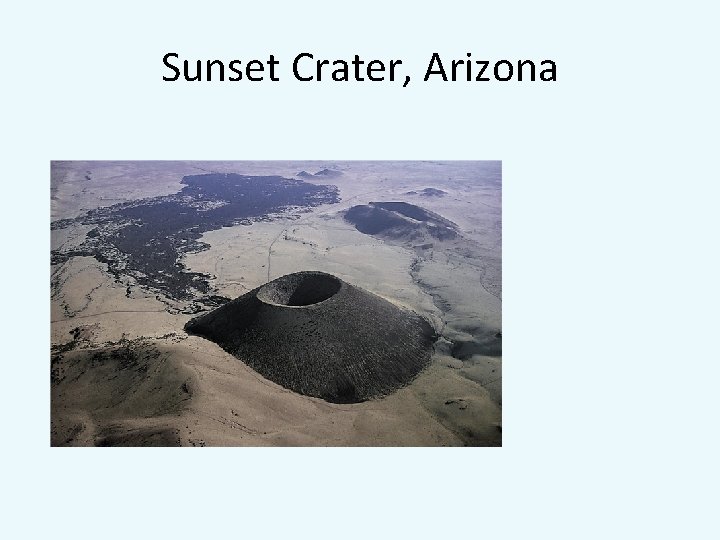
Cinder Cone Volcanoes • Simplest type • Contains a single vent. • Small - rarely higher than 300 m
Cinder Cone Volcanoes • Alternating layers of rock and ash and lava (not much lava) • very violent, explosive, eruptions. • Tend to be made with one eruption.
Sunset Crater, Arizona
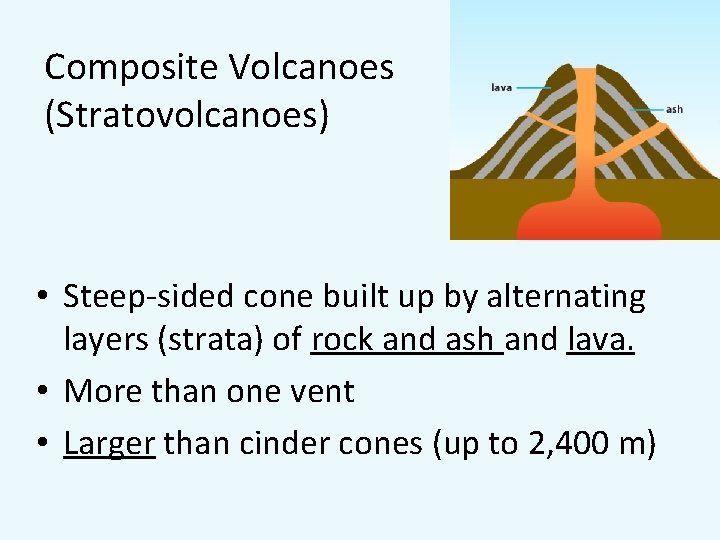
Composite Volcanoes (Stratovolcanoes) • Steep-sided cone built up by alternating layers (strata) of rock and ash and lava. • More than one vent • Larger than cinder cones (up to 2, 400 m)
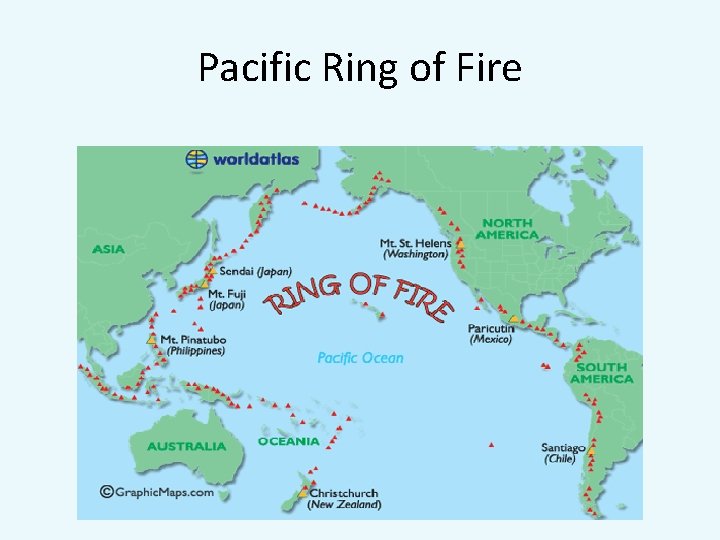
Composite Volcanoes: Famously destructive • Mt. St. Helens and Rainier in Washington, • Mt. Fuji in Japan, • Mt. Pinatubo in the Philippines, and • Mt. Etna in Sicily.
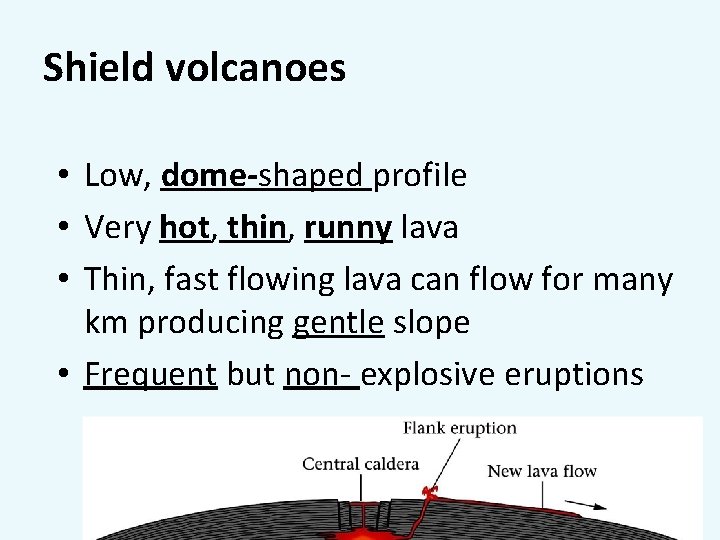
Shield volcanoes • Low, dome-shaped profile • Very hot, thin, runny lava • Thin, fast flowing lava can flow for many km producing gentle slope • Frequent but non- explosive eruptions
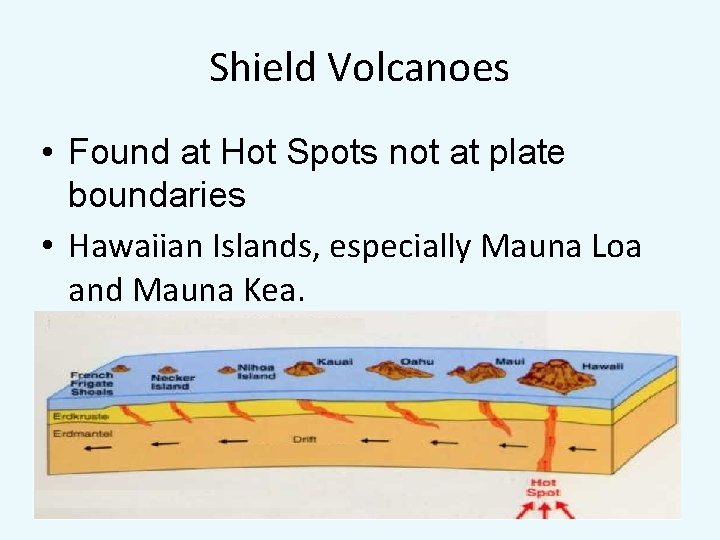
Shield Volcanoes • Found at Hot Spots not at plate boundaries • Hawaiian Islands, especially Mauna Loa and Mauna Kea.
Pacific Ring of Fire
HAZARDS
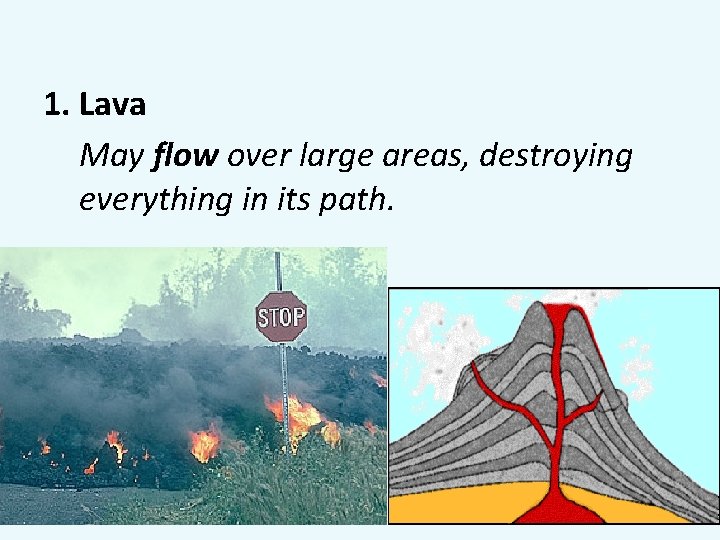
1. Lava May flow over large areas, destroying everything in its path.
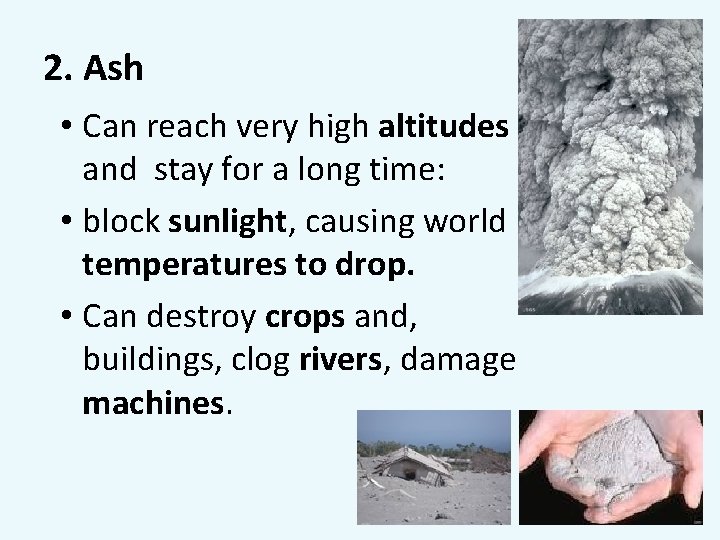
2. Ash • Can reach very high altitudes and stay for a long time: • block sunlight, causing world temperatures to drop. • Can destroy crops and, buildings, clog rivers, damage machines.
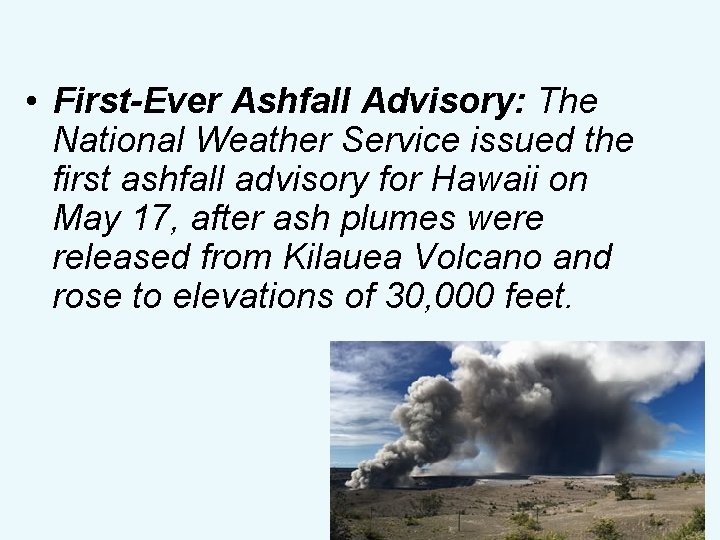
• First-Ever Ashfall Advisory: The National Weather Service issued the first ashfall advisory for Hawaii on May 17, after ash plumes were released from Kilauea Volcano and rose to elevations of 30, 000 feet.
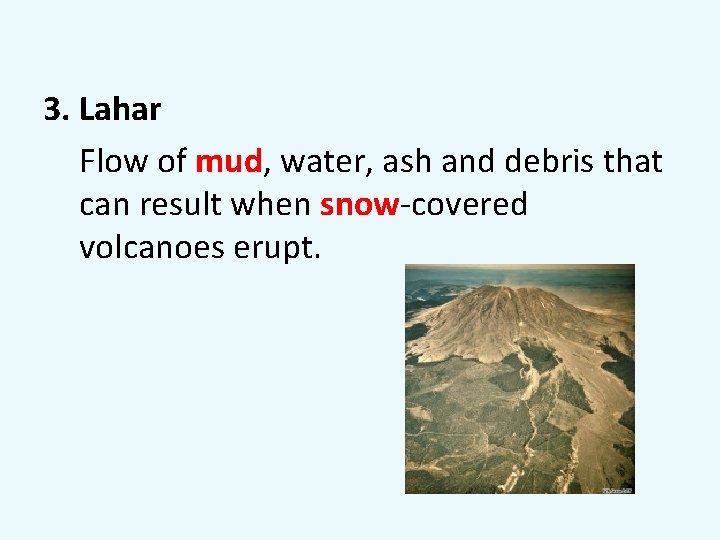
3. Lahar Flow of mud, water, ash and debris that can result when snow-covered volcanoes erupt.
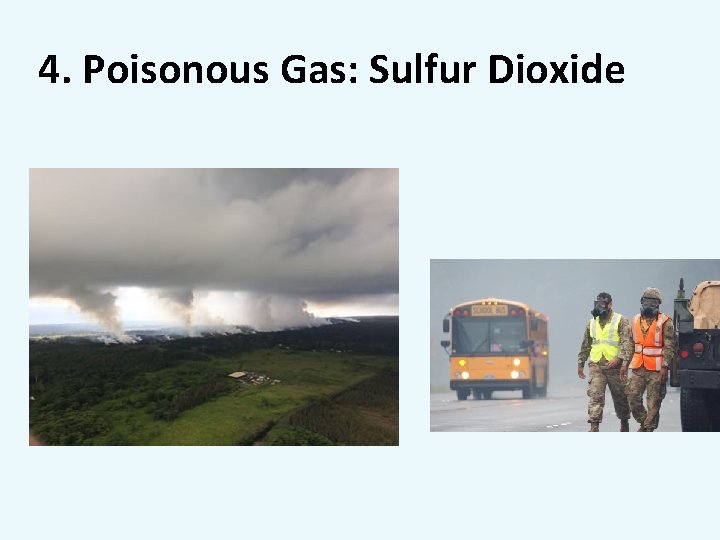
4. Poisonous Gas: Sulfur Dioxide
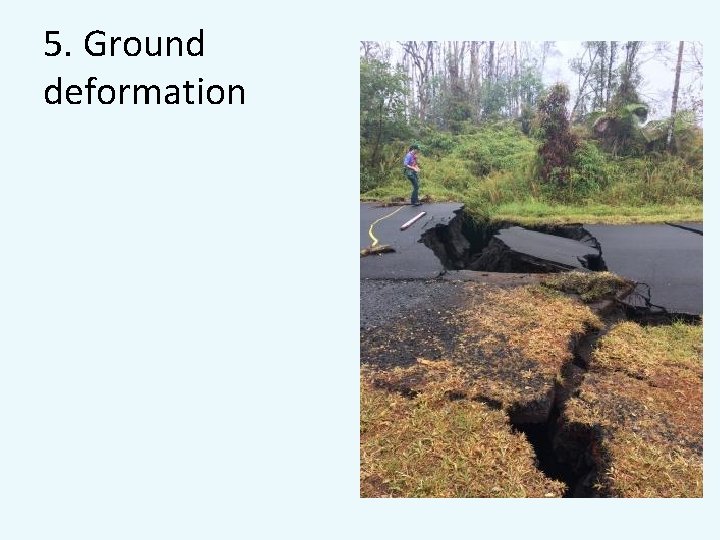
5. Ground deformation
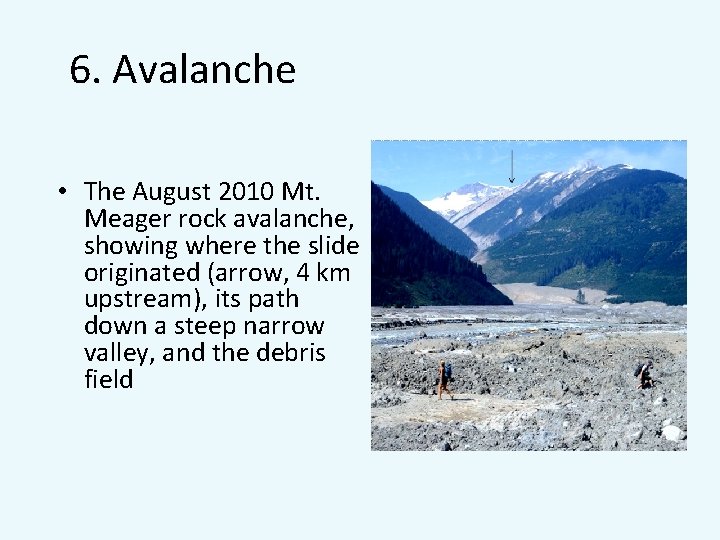
6. Avalanche • The August 2010 Mt. Meager rock avalanche, showing where the slide originated (arrow, 4 km upstream), its path down a steep narrow valley, and the debris field
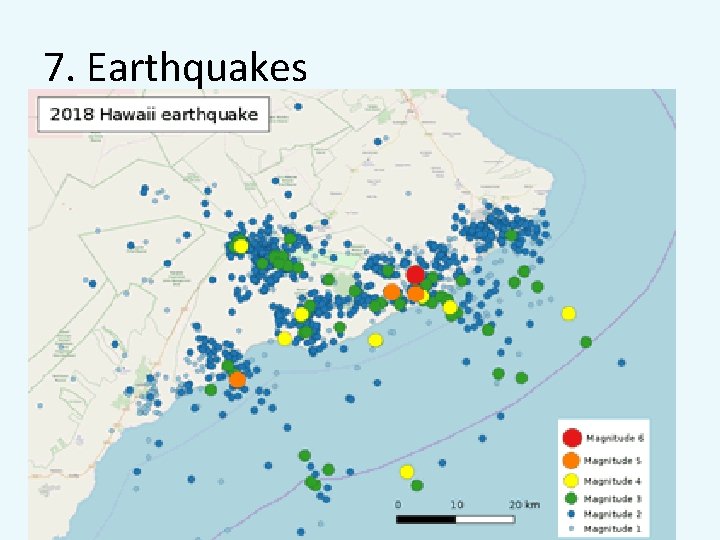
7. Earthquakes
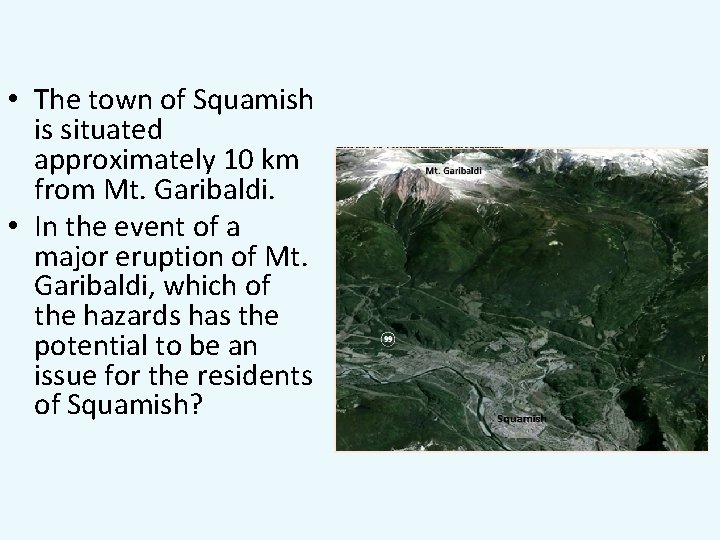
• The town of Squamish is situated approximately 10 km from Mt. Garibaldi. • In the event of a major eruption of Mt. Garibaldi, which of the hazards has the potential to be an issue for the residents of Squamish?
Predicting Volcanoes
1. Increase in Seismic Activity • will increase in frequency and intensity before a volcano erupts.
2. Increase in Temperature • Satellites can record the surface temperatures at and around volcanoes. • As magma rises, the surface temperature of the volcano may increase. • Therefore, an increase in surface temperature can indicate that an eruption is likely.
3. Increased Amount of Gases Released • Just before an eruption, many volcanoes give off more gas. • The composition of the gas may also change before an eruption.
4. Bulging of surface of volcano • As magma rises before an eruption, it can cause the Earth’s surface to swell. • The side of a volcano may even bulge. • Scientists can use an instrument called a tiltmeter to measure the slope of the volcano’s sides. • Changes in the slope can indicate that an eruption is likely.
Assignment: Volcano Comic Strip • Comic strip illustrating: • The warning signs of a volcano about to erupt • The type of eruptive materials that come out • The Hazards the nearby community is in danger of.
Active Volcanoes • An active volcano is a volcano that has had at least one eruption during the past 10, 000 years. • Either erupting or dormant.
Extinct Volcano • Has NOT erupted in last 10, 000 years • NOT expected to erupt again any time soon.