
Volcanoes Plate Tectonics Inside Earth Chapter 3 1
- Slides: 25
Volcanoes & Plate Tectonics Inside Earth Chapter 3. 1 Pages 88 -92
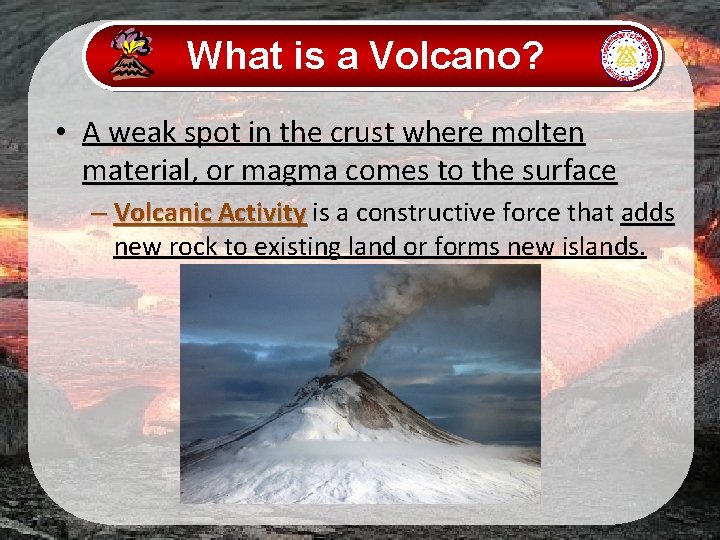
What is a Volcano? • A weak spot in the crust where molten material, or magma comes to the surface – Volcanic Activity is a constructive force that adds new rock to existing land or forms new islands.
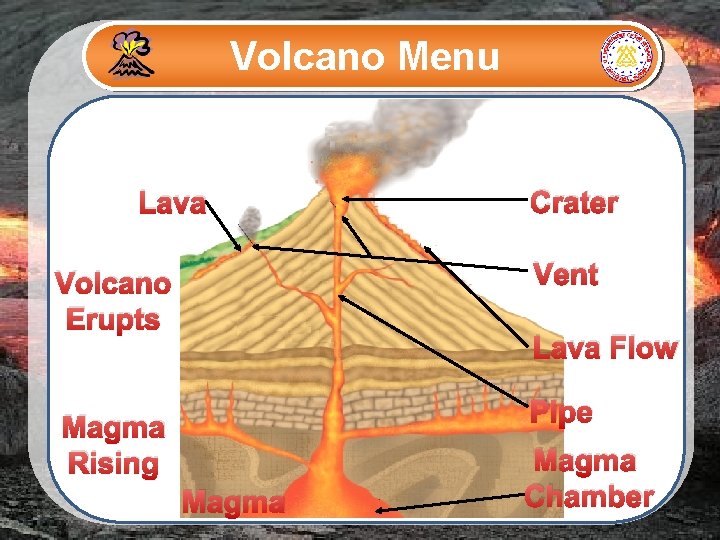
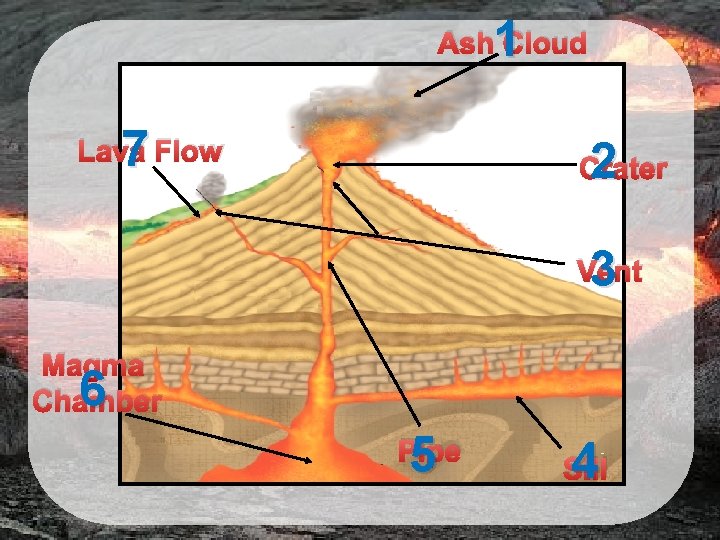
Volcano Menu Lava Crater Vent Volcano Erupts Lava Flow Pipe Magma Rising Magma Chamber
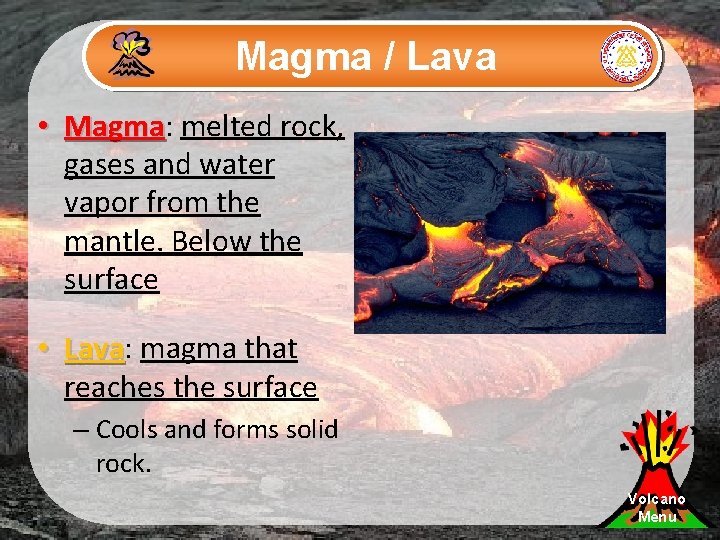
Magma / Lava • Magma: Magma melted rock, gases and water vapor from the mantle. Below the surface • Lava: Lava magma that reaches the surface – Cools and forms solid rock. Volcano Menu
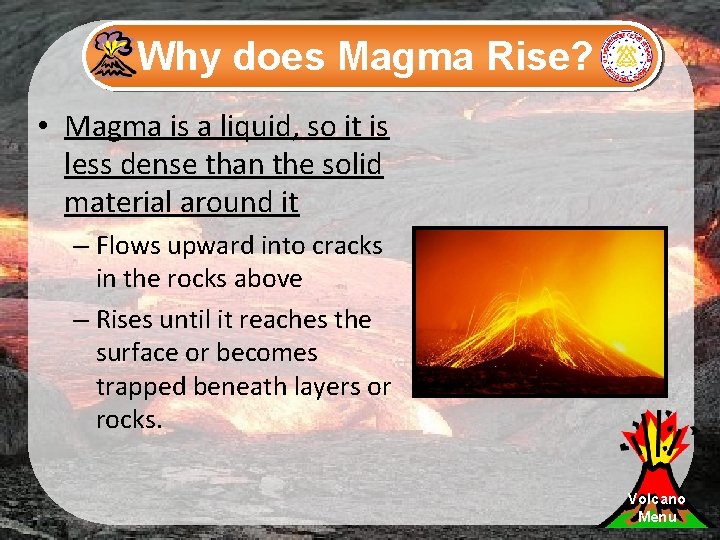
Why does Magma Rise? • Magma is a liquid, so it is less dense than the solid material around it – Flows upward into cracks in the rocks above – Rises until it reaches the surface or becomes trapped beneath layers or rocks. Volcano Menu
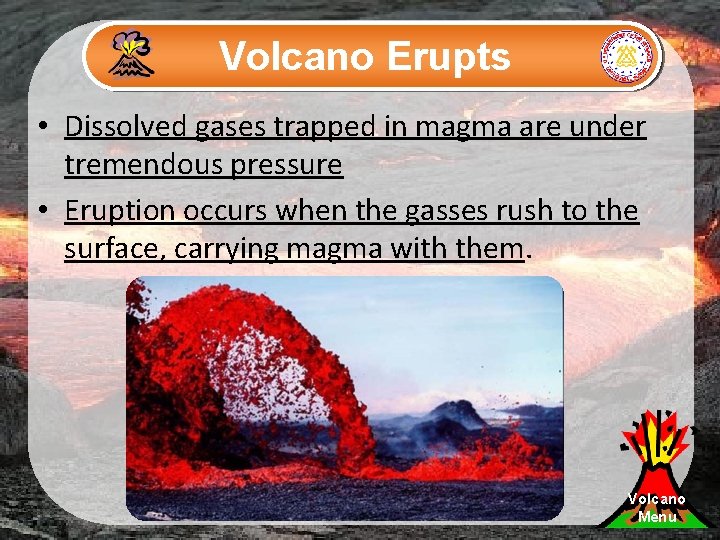
Volcano Erupts • Dissolved gases trapped in magma are under tremendous pressure • Eruption occurs when the gasses rush to the surface, carrying magma with them. Volcano Menu
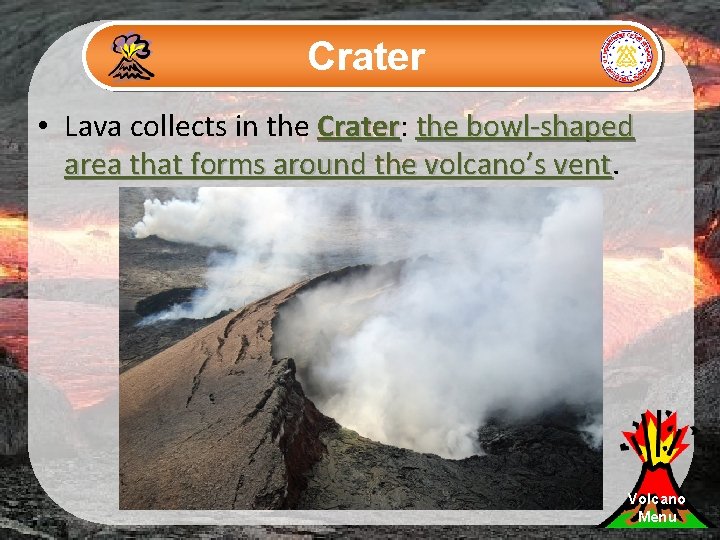
Crater • Lava collects in the Crater: Crater the bowl-shaped area that forms around the volcano’s vent Volcano Menu
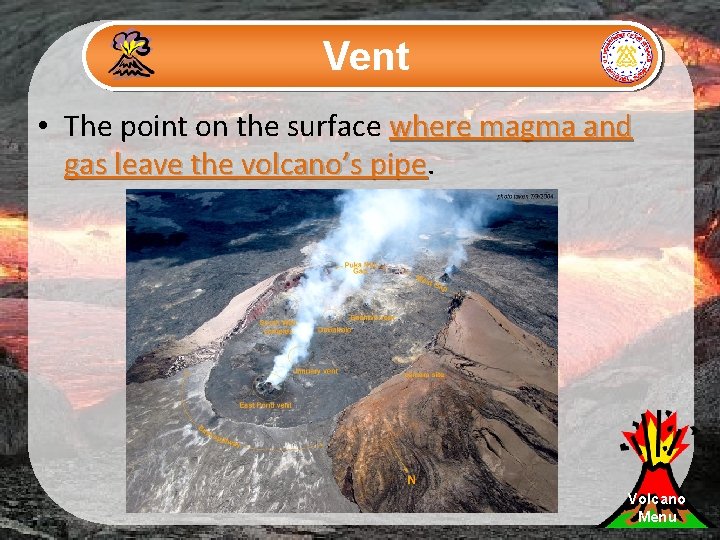
Vent • The point on the surface where magma and gas leave the volcano’s pipe Volcano Menu
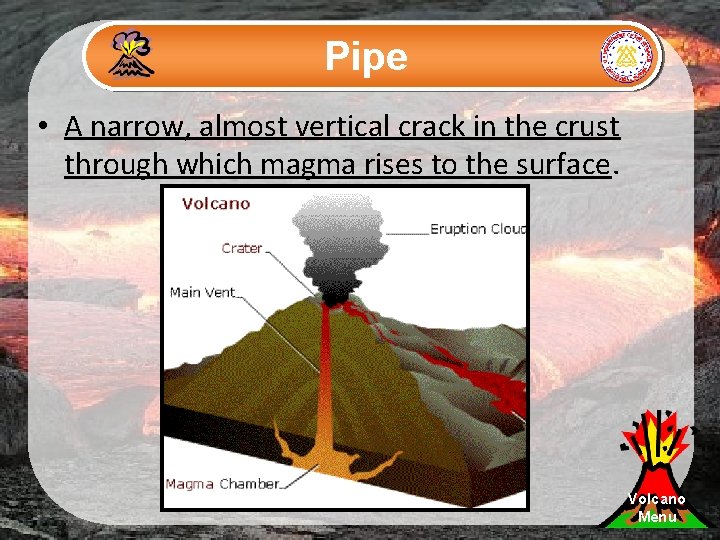
Pipe • A narrow, almost vertical crack in the crust through which magma rises to the surface. Volcano Menu
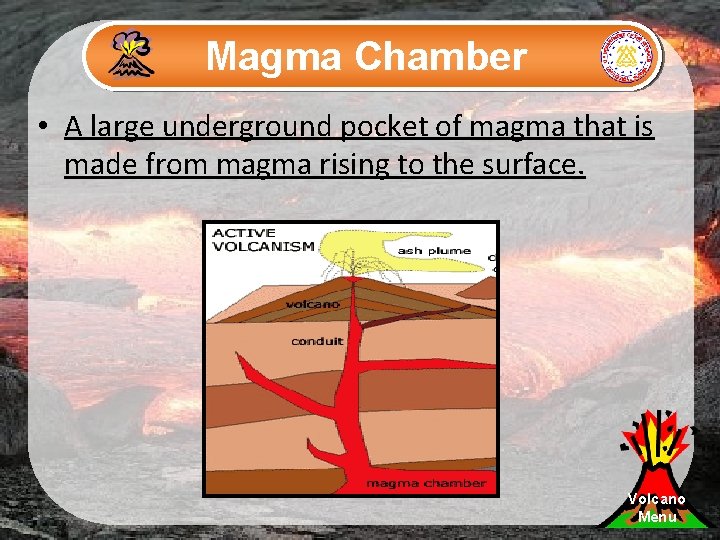
Magma Chamber • A large underground pocket of magma that is made from magma rising to the surface. Volcano Menu
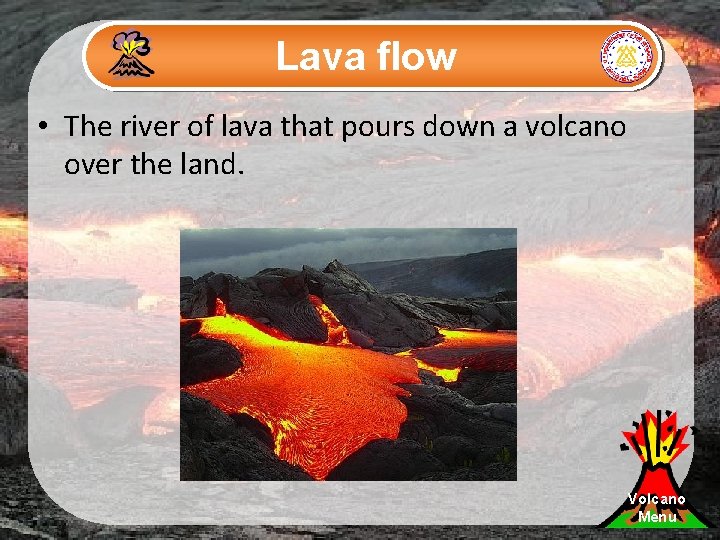
Lava flow • The river of lava that pours down a volcano over the land. Volcano Menu
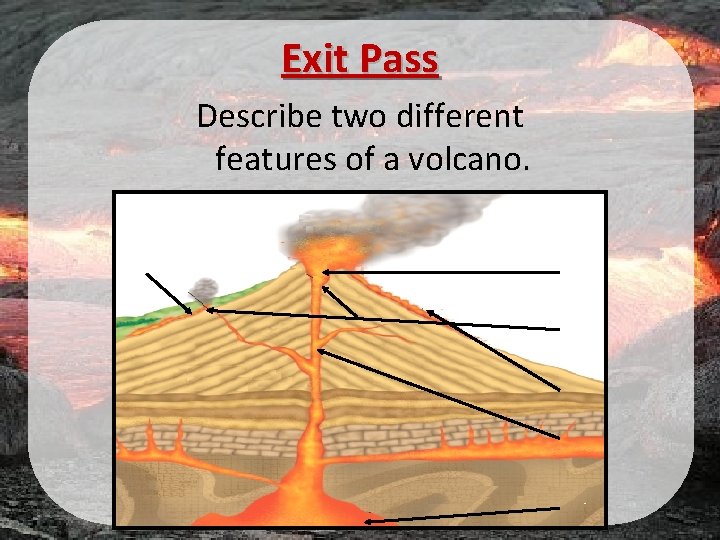
Exit Pass Describe two different features of a volcano.
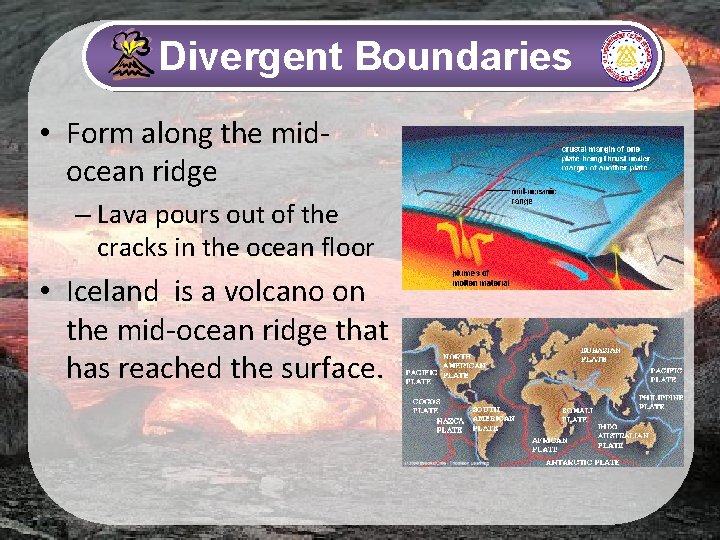
Divergent Boundaries • Form along the midocean ridge – Lava pours out of the cracks in the ocean floor • Iceland is a volcano on the mid-ocean ridge that has reached the surface.
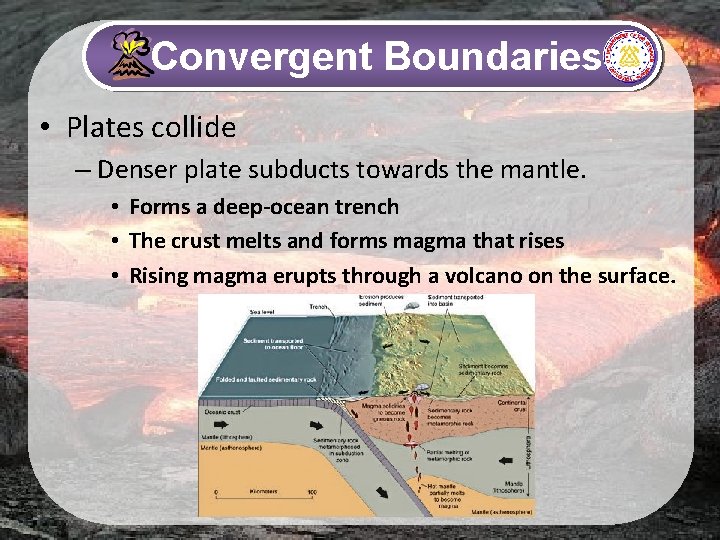
Convergent Boundaries • Plates collide – Denser plate subducts towards the mantle. • Forms a deep-ocean trench • The crust melts and forms magma that rises • Rising magma erupts through a volcano on the surface.
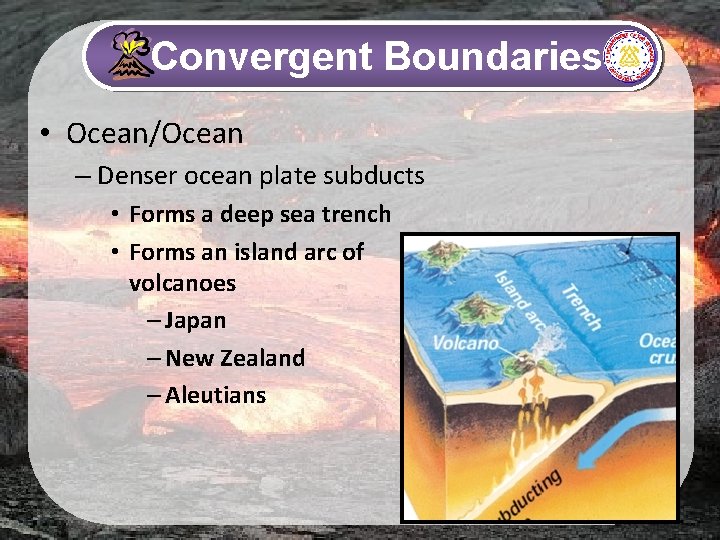
Convergent Boundaries • Ocean/Ocean – Denser ocean plate subducts • Forms a deep sea trench • Forms an island arc of volcanoes – Japan – New Zealand – Aleutians
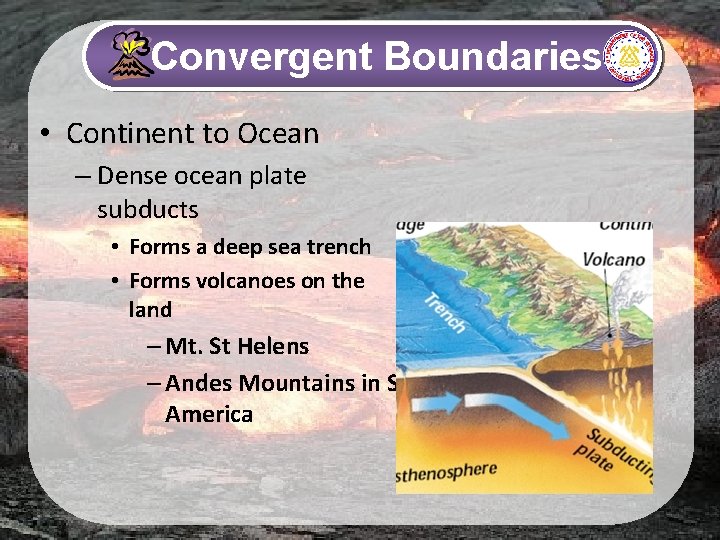
Convergent Boundaries • Continent to Ocean – Dense ocean plate subducts • Forms a deep sea trench • Forms volcanoes on the land – Mt. St Helens – Andes Mountains in S. America
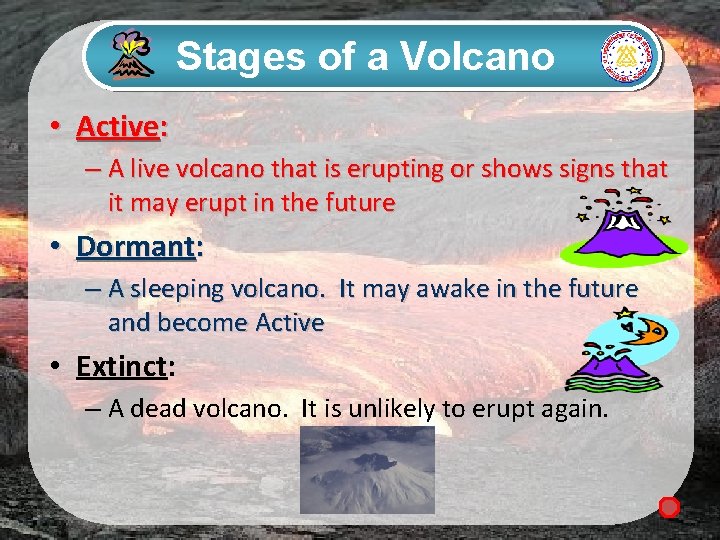
Stages of a Volcano • Active: – A live volcano that is erupting or shows signs that it may erupt in the future • Dormant: – A sleeping volcano. It may awake in the future and become Active • Extinct: – A dead volcano. It is unlikely to erupt again.
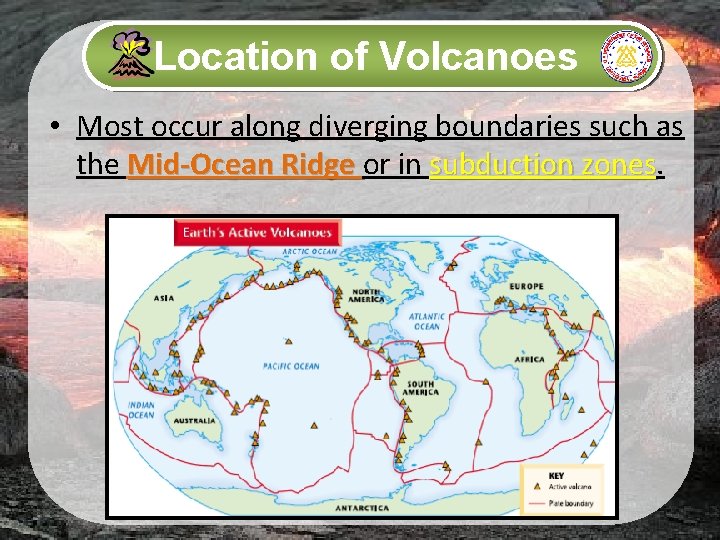
Location of Volcanoes • Most occur along diverging boundaries such as the Mid-Ocean Ridge or in subduction zones
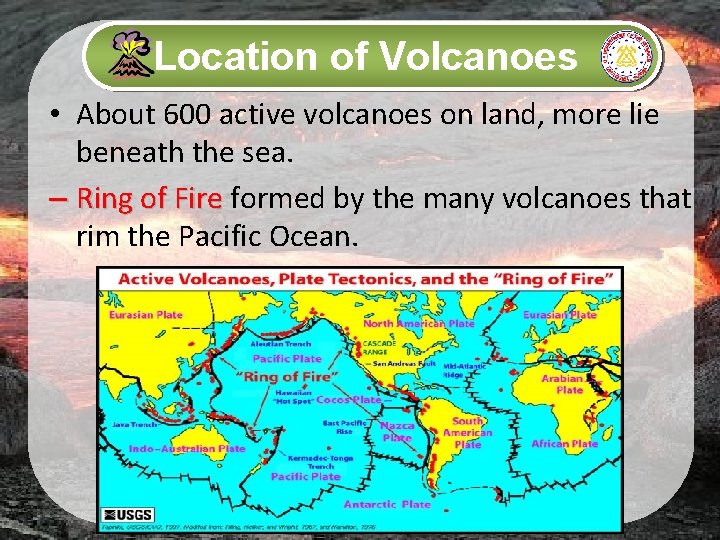
Location of Volcanoes • About 600 active volcanoes on land, more lie beneath the sea. – Ring of Fire formed by the many volcanoes that rim the Pacific Ocean.
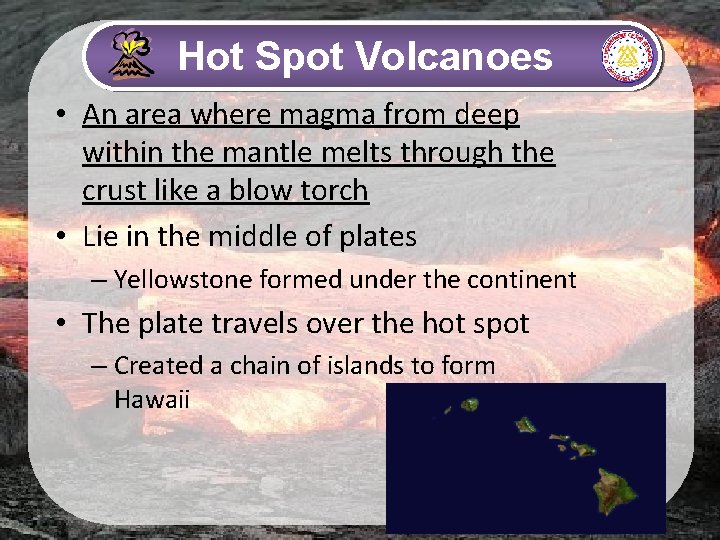
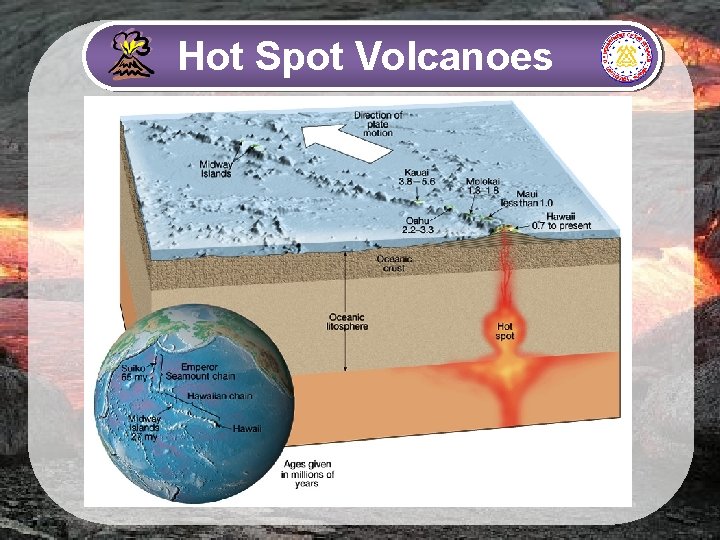
Hot Spot Volcanoes • An area where magma from deep within the mantle melts through the crust like a blow torch • Lie in the middle of plates – Yellowstone formed under the continent • The plate travels over the hot spot – Created a chain of islands to form Hawaii
Hot Spot Volcanoes
Exit Pass What are the 3 stages of a volcano’s life? Explain one of them.
1 Ash Cloud 7 Lava Flow 2 Crater 3 Vent Magma Chamber 6 5 Pipe 4 Sill
What to Work On • Read pages 88 -92 in the textbook ØAnswer the Section 3. 1 Review questions on page 91 (#’s 1 -4) DUE: Friday, November 4 th
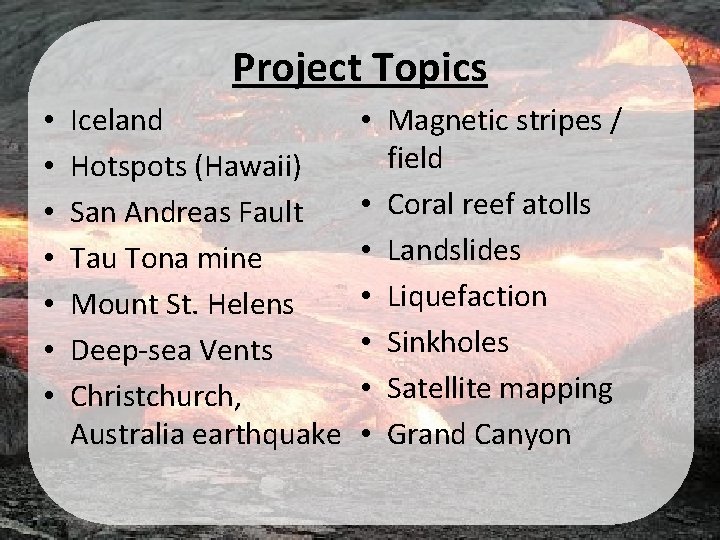
Project Topics • • Iceland Hotspots (Hawaii) San Andreas Fault Tau Tona mine Mount St. Helens Deep-sea Vents Christchurch, Australia earthquake • Magnetic stripes / field • Coral reef atolls • Landslides • Liquefaction • Sinkholes • Satellite mapping • Grand Canyon