
Volcanoes Plate Tectonics 6 E 2 2 Explain
- Slides: 45
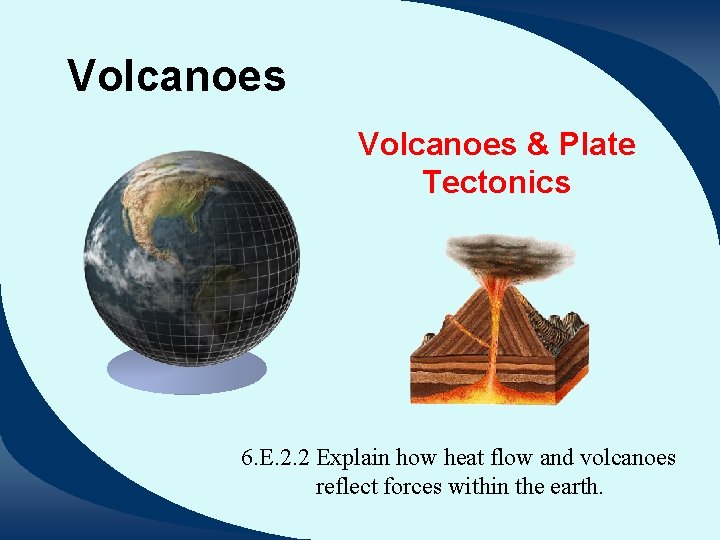
Volcanoes & Plate Tectonics 6. E. 2. 2 Explain how heat flow and volcanoes reflect forces within the earth.
What is a Volcano? • A volcano is a weak spot in the crust where molten material, or magma, comes to the surface. • Magma is a molten mixture of rockforming substances, gases, and water from the mantle. • When magma reaches the surface, it is called lava.
Location of Volcanoes • There about 600 active volcanoes on land. • Many more are found beneath oceans • Most occur in belts that extend across continents and oceans
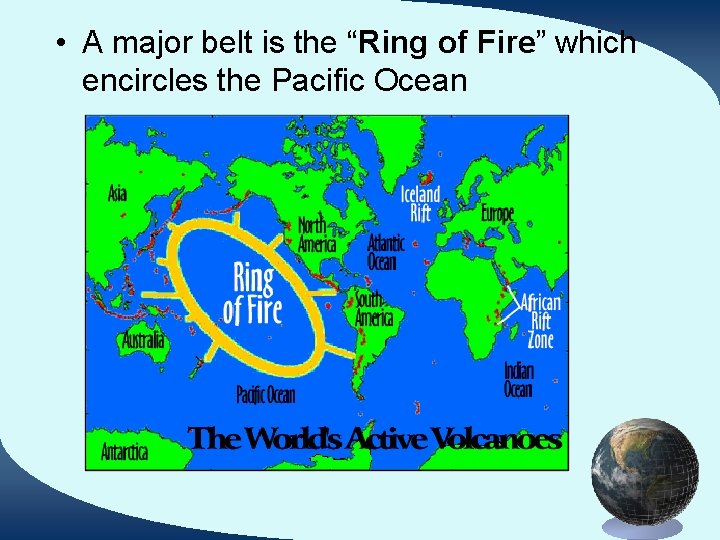
• A major belt is the “Ring of Fire” which encircles the Pacific Ocean
Volcanic belts form along the boundaries of Earth’s plates. Most volcanoes occur along diverging plate boundaries such as the mid-ocean ridge, or in subduction zones, around edges of oceans
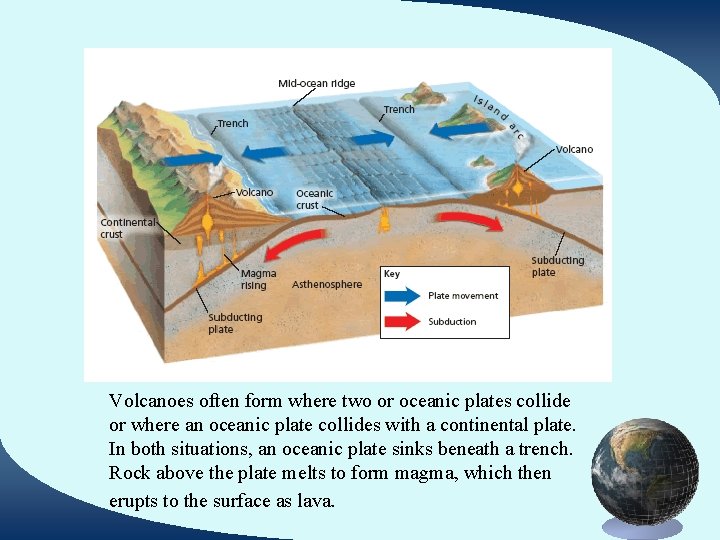
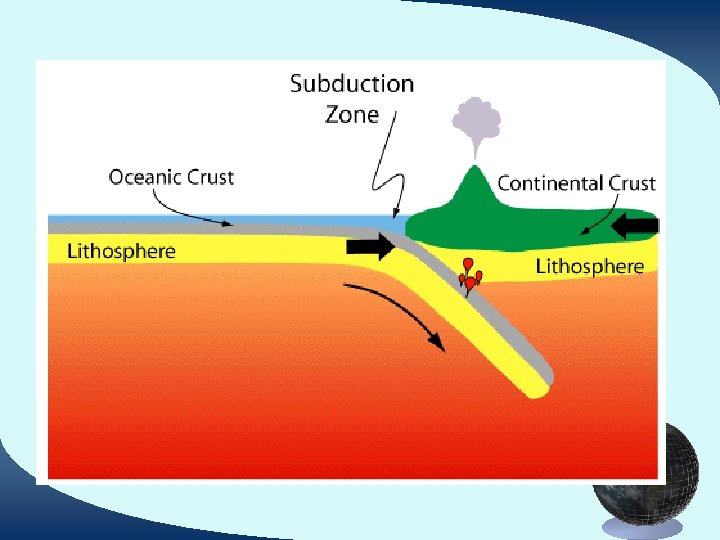
Volcanoes often form where two or oceanic plates collide or where an oceanic plate collides with a continental plate. In both situations, an oceanic plate sinks beneath a trench. Rock above the plate melts to form magma, which then erupts to the surface as lava.
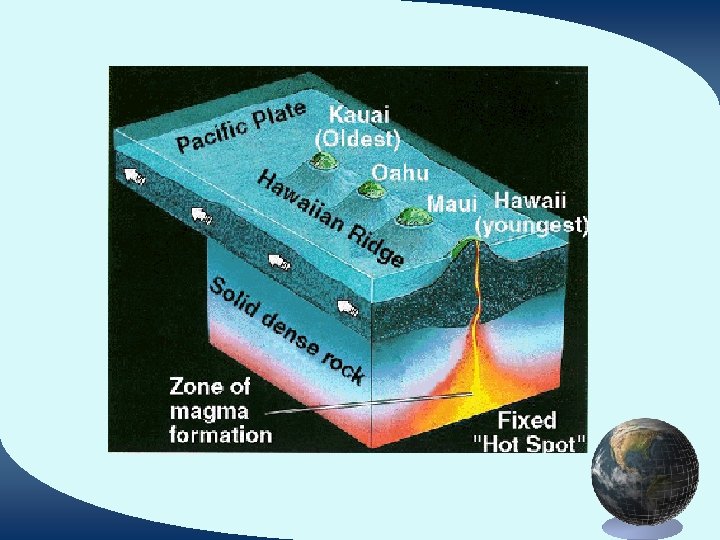
• “Hot Spot” volcanoes form where magma from deep within the mantle melts through the crust like a blow torch • Examples: – Hawaiian Islands – Yellowstone National Park
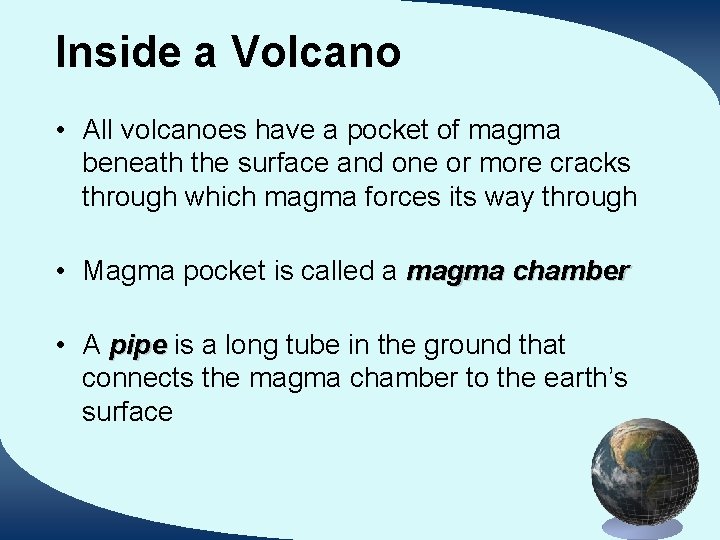
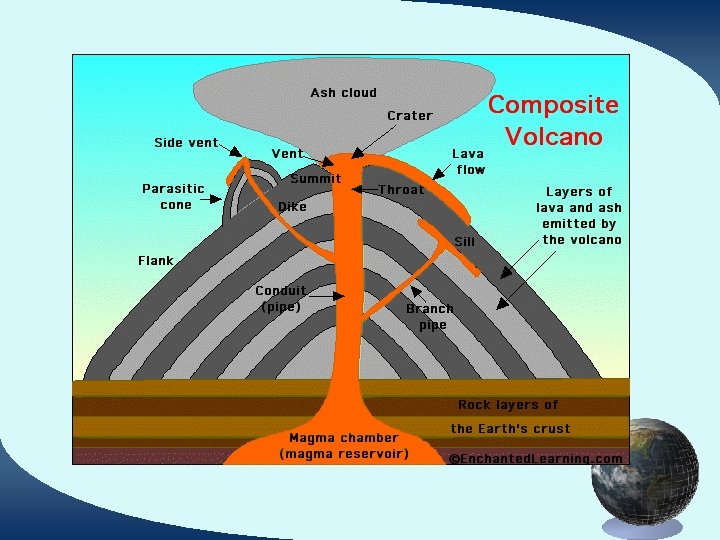
Inside a Volcano • All volcanoes have a pocket of magma beneath the surface and one or more cracks through which magma forces its way through • Magma pocket is called a magma chamber • A pipe is a long tube in the ground that connects the magma chamber to the earth’s surface
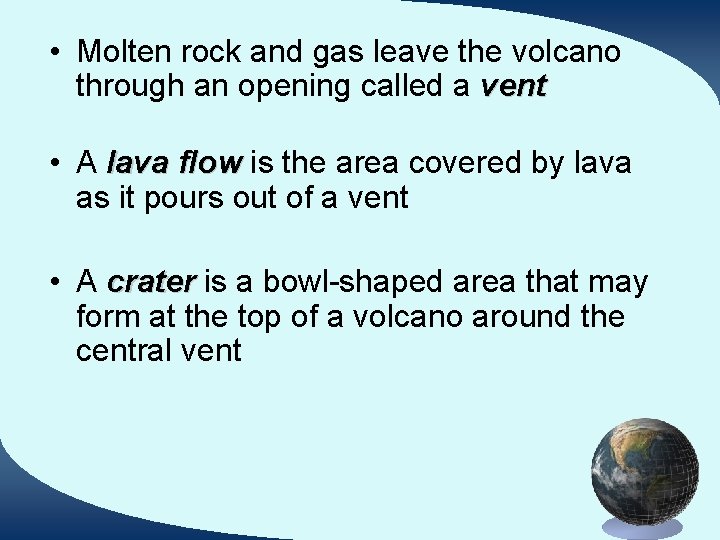
• Molten rock and gas leave the volcano through an opening called a vent • A lava flow is the area covered by lava as it pours out of a vent • A crater is a bowl-shaped area that may form at the top of a volcano around the central vent
A Volcanic Eruption • When a volcano erupts, the force of the expanding gases pushes magma from the magma chamber through the pipe until it flows or explodes out of the vent. • Once magma escapes from the volcano and becomes lava, the remaining gases bubble out.
Types of Volcanic Eruptions • Geologists classify volcanic eruptions as quiet or explosive. • The silica content of magma helps to determine whether the volcanic eruption is quiet or explosive • Silica is the material formed from the elements silicon and oxygen
• Silica is one of the most abundant materials in Earth’s crust and mantle • The more silica that magma contains, the thicker it is
Quiet Eruptions: • A volcano erupts quietly if its magma is low in silica. • Magma flows easily; the gas dissolved in the magma bubbles out gently • Examples: – Hawaii – Iceland
Quiet eruptions produce two types of lava: 1. Pahoehoe - fast moving, hot lava; Surface looks like a solid mass of wrinkles, billows, and rope-like coils. 2. Aa - cooler, slower-moving lava; when hardens, forms a rough surface consisting of jagged lava chunks.
Explosive Eruptions: • A volcano erupts explosively if its magma is high in silica. • Magma is thick and sticky • Magma slowly builds up in the volcanoes’ pipe • Dissolved gases cannot escape • Trapped gasses build up pressure until they explode
• A pyroclastic flow occurs when an explosive eruption hurls out ash, cinder, bombs, and gasses • Pebble-sized particles are called cinders. • Larger pieces, called bombs, may range from the size of a baseball to the size of a car.
Stages of a Volcano • Active - is erupting, or has shown signs that it may erupt in the near future • Dormant - does not show signs of erupting in the neat future • Extinct - unlikely to erupt
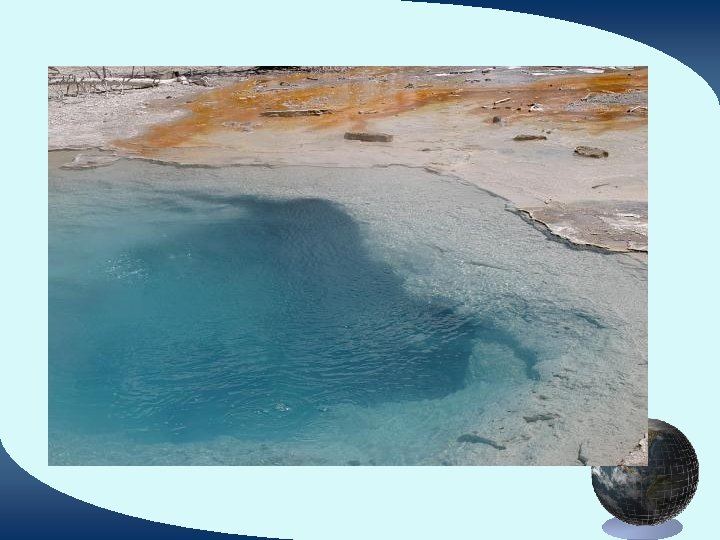
Related Volcanic Activities • Hot Spring - groundwater heated by a nearby body of magma rises to the surface and collects in a natural pool
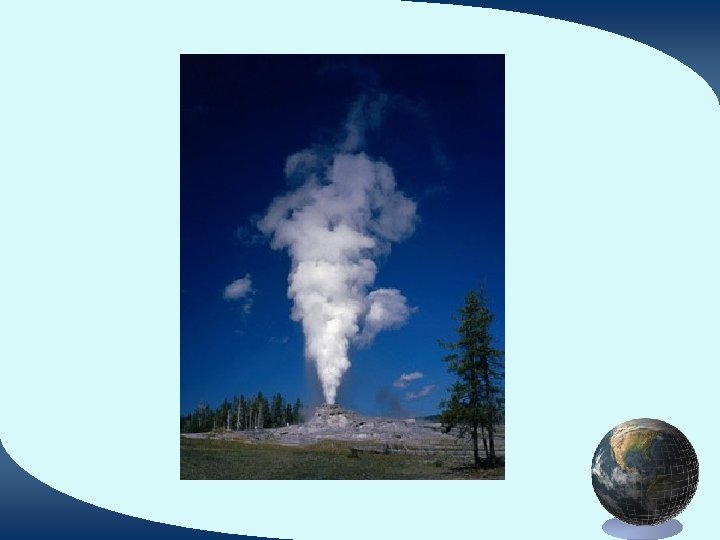
• Geyser - forms when rising hot water and steam become trapped underground in a narrow crack • Pressure builds until the mixture suddenly sprays upward, clearing the crack
Volcanoes Volcanic Landforms
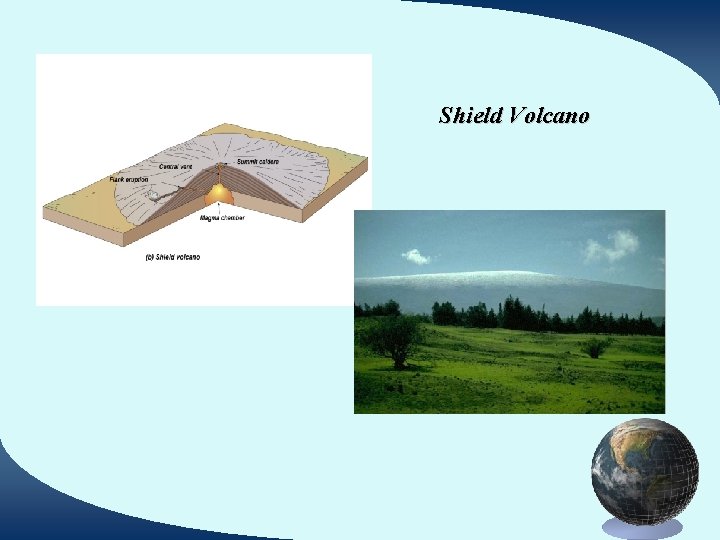
Types of Volcanoes • Shield Volcano: Volcano nonexplosive eruptions, fluid basaltic lava, gentle broad slopes – Thin layers of lava pour out of a vent and harden on top of previous layers – Example: Hawaiian Islands
Shield Volcano
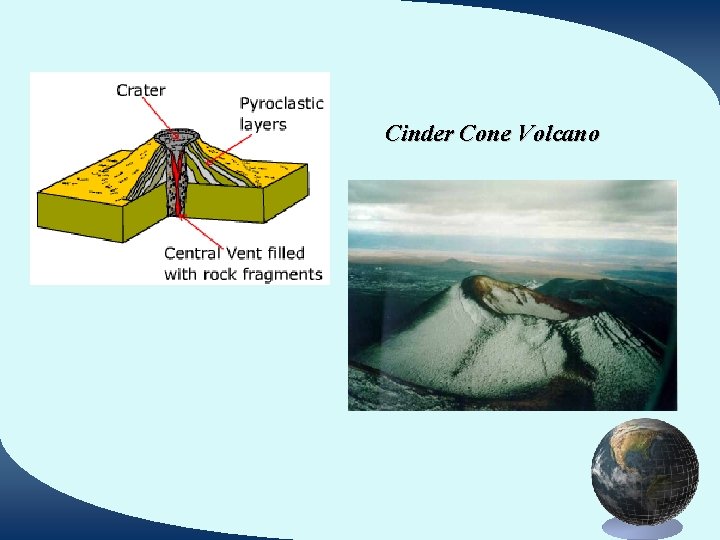
• Cinder Cone Volcano: Volcano explosive eruptions, small but steep slopes, pyroclastics – Form when cinders from a vent, pile up around the vent, forming a steepcone-shaped mountain
Cinder Cone Volcano
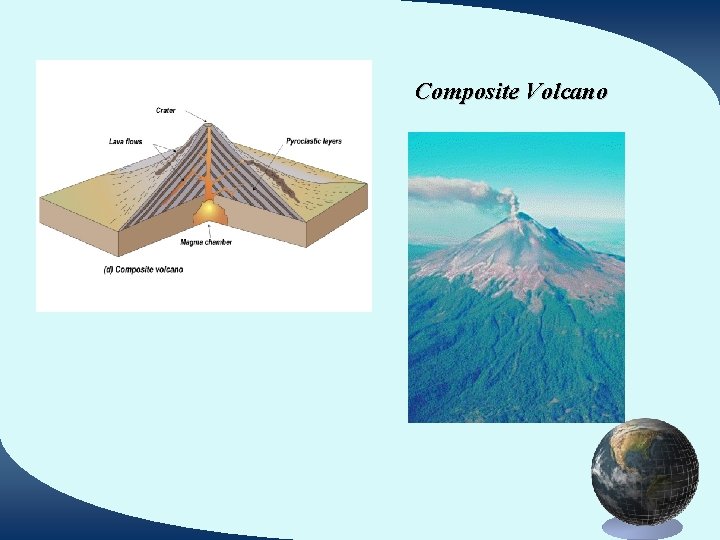
• Composite Volcano: Volcano alternating between lava and pyroclastics, explosive and nonexplosive eruptions, steep and tall – Layers of lava alternate with layers of ash, cinders, and bombs
Composite Volcano
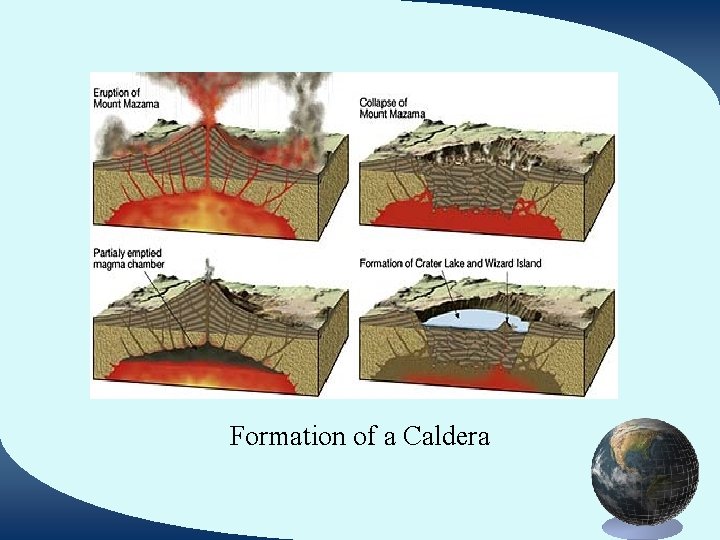
Related Volcanic Landforms • Caldera: Caldera – A large hole at the top of a volcano formed when the roof of a volcano’s magma chamber collapses
Formation of a Caldera
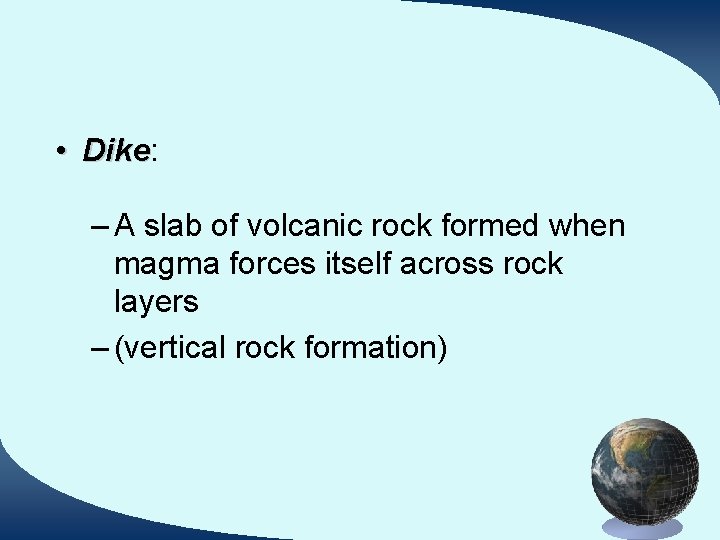
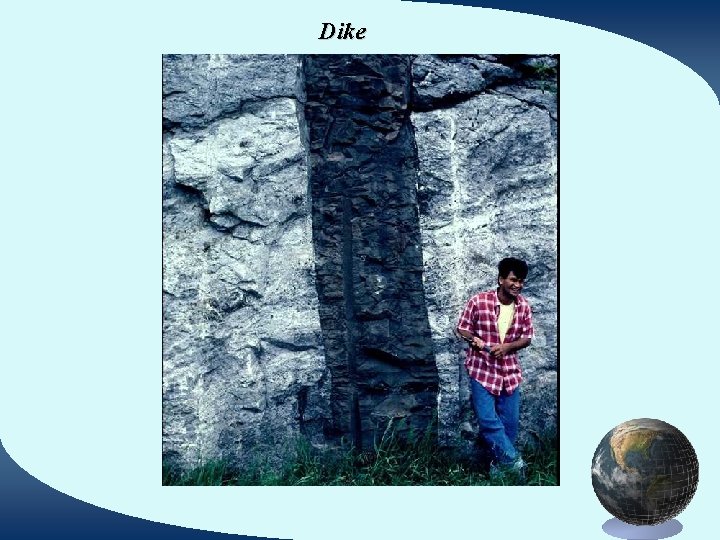
• Dike: Dike – A slab of volcanic rock formed when magma forces itself across rock layers – (vertical rock formation)
Dike
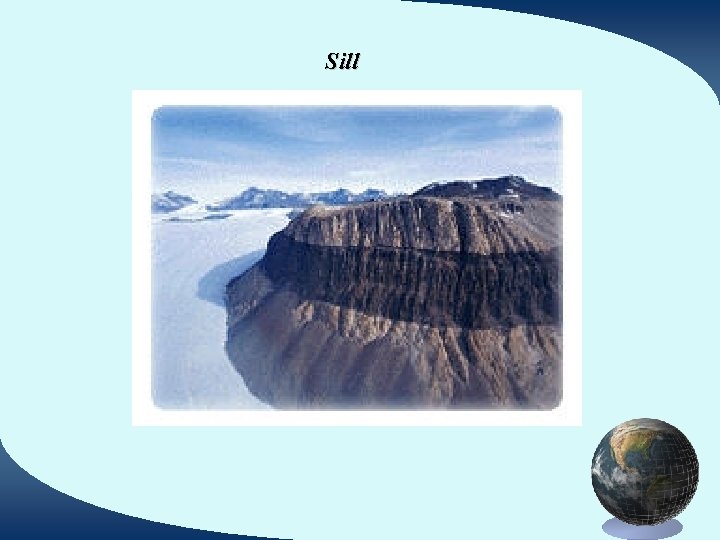
• Sill: Sill • A slab of volcanic rock formed when magma squeezes between layers of rock • (horizontal rock formation)
Sill
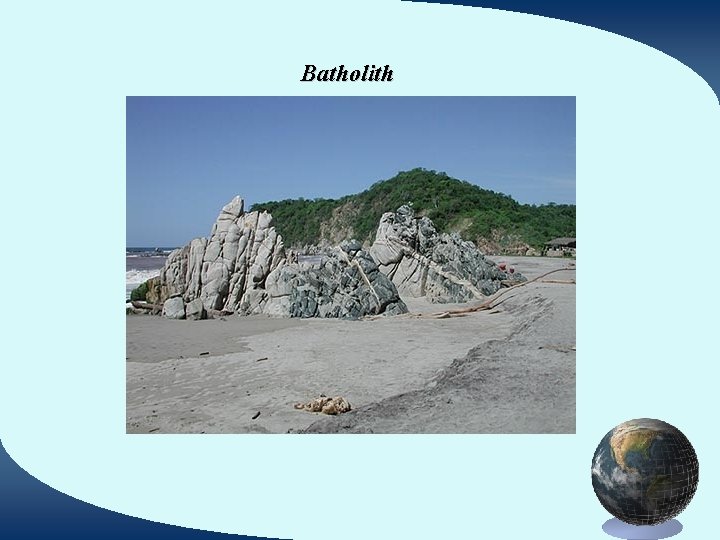
• Batholith: Batholith • A mass of rock formed when a large body of magma cooled inside the crust
Batholith
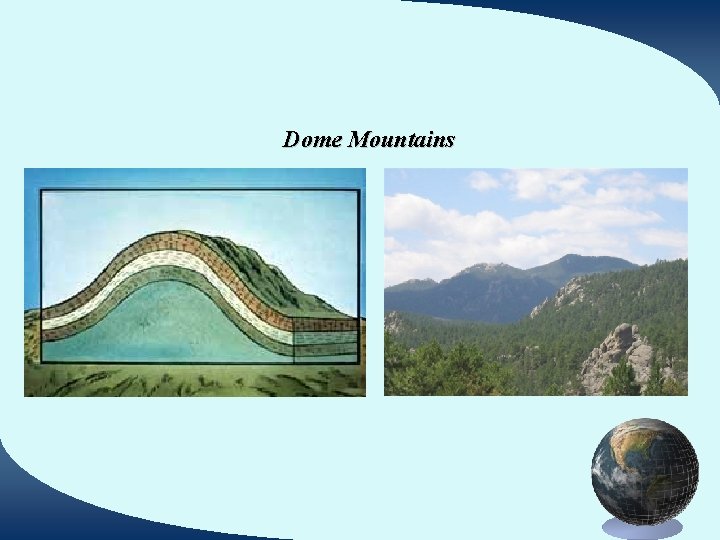
• Dome Mountains: Mountains – Rising magma within the crust is blocked by layers of rock – Magma forces layers of rock to bend upward into a dome shape – Example: Black Hills
Dome Mountains
Questions When magma reaches the surface, it is called? A. Larva B. Lava C. Lagoon D. Lump
What is a magma pocket called? A. Magma chamber B. Hot pocket C. Hot chamber D. None of the above
What type of lava is fast moving? A. Aa B. Naa C. Pahoehoe D. Ho. Ho
The End