
Volcanoes Liquid Hot Magma Tungerahua Volcano Ecuador Picture
- Slides: 25
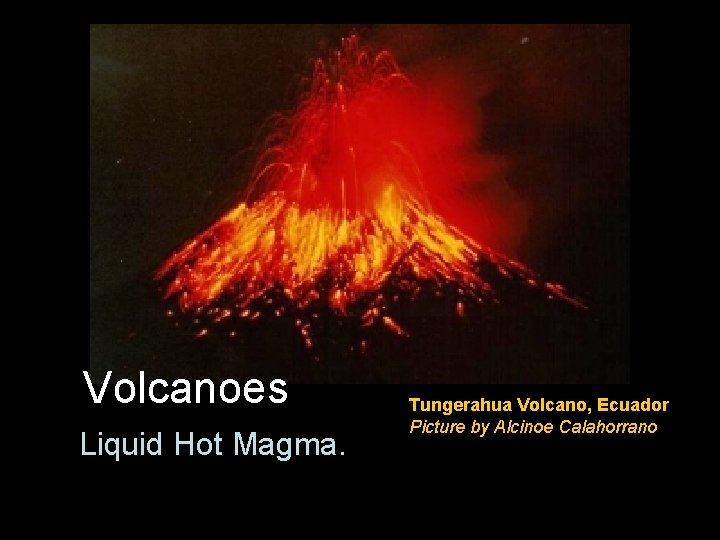
Volcanoes Liquid Hot Magma. Tungerahua Volcano, Ecuador Picture by Alcinoe Calahorrano
Volcano Stats • Definition of Volcano – Mountain that forms when molten rock (magma) is forced to the Earth’s surface • Number of active volcanos = ? – 20 erupting right now (50 -60/year) (160/decade) • Number of volcanologists = 1, 500
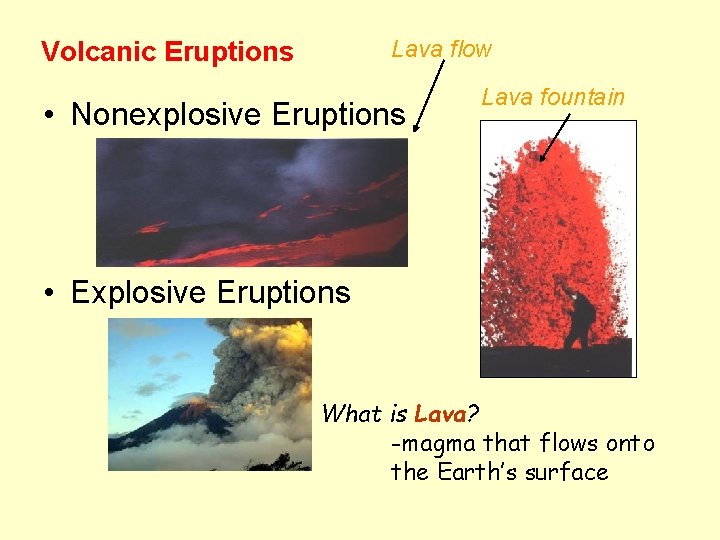
Lava flow Volcanic Eruptions • Nonexplosive Eruptions Lava fountain • Explosive Eruptions What is Lava? -magma that flows onto the Earth’s surface
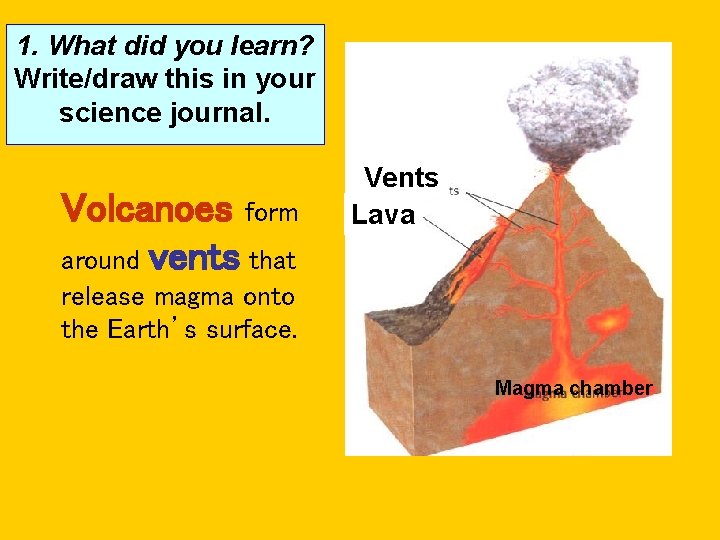
1. What did you learn? Write/draw this in your science journal. Volcanoes form around vents that Vents Lava release magma onto the Earth’s surface. Magma chamber
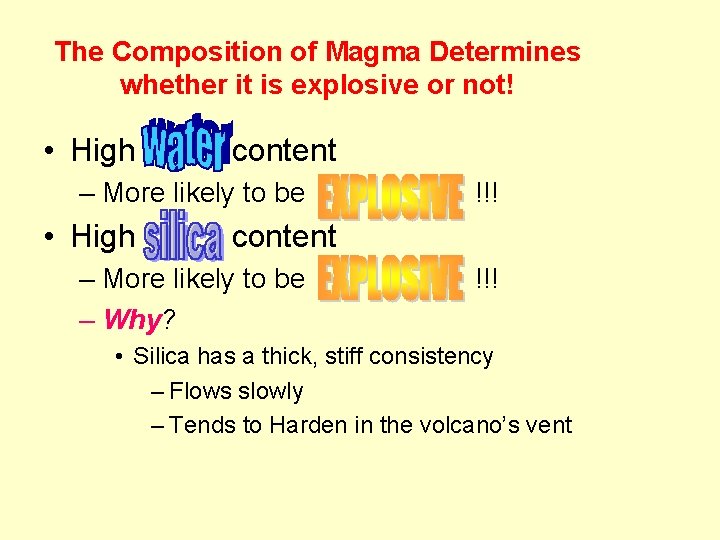
The Composition of Magma Determines whether it is explosive or not! • High water content – More likely to be • High !!! content – More likely to be – Why? !!! • Silica has a thick, stiff consistency – Flows slowly – Tends to Harden in the volcano’s vent
2. What did you learn? Write/draw this in your science journal. a. What physical event causes explosive eruptions? b. Would high water content increase the likelihood of having an explosive eruption? c. Would high silica content increase the likelihood of having an explosive eruption?
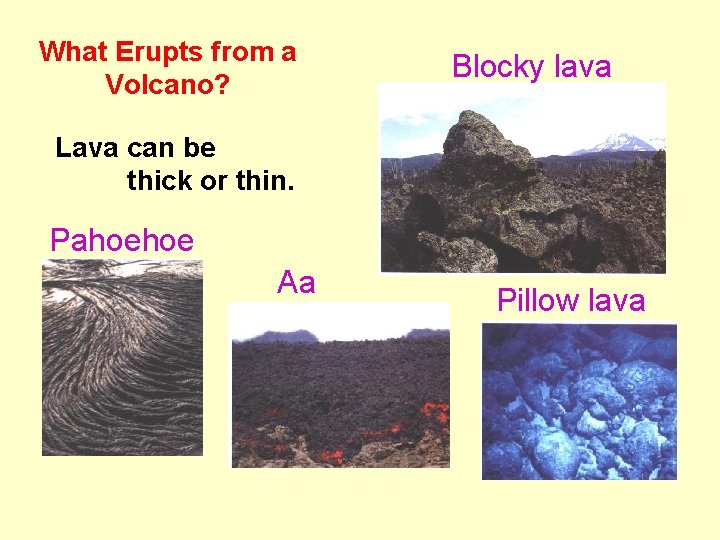
What Erupts from a Volcano? Blocky lava Lava can be thick or thin. Pahoehoe Aa Pillow lava
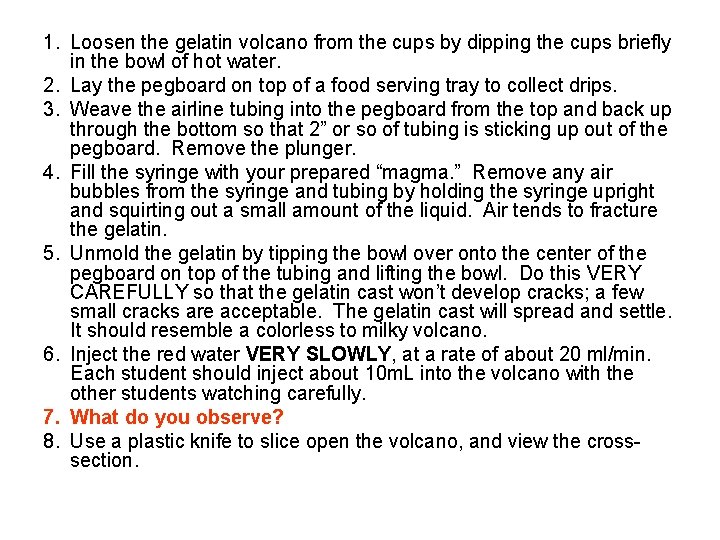
1. Loosen the gelatin volcano from the cups by dipping the cups briefly in the bowl of hot water. 2. Lay the pegboard on top of a food serving tray to collect drips. 3. Weave the airline tubing into the pegboard from the top and back up through the bottom so that 2” or so of tubing is sticking up out of the pegboard. Remove the plunger. 4. Fill the syringe with your prepared “magma. ” Remove any air bubbles from the syringe and tubing by holding the syringe upright and squirting out a small amount of the liquid. Air tends to fracture the gelatin. 5. Unmold the gelatin by tipping the bowl over onto the center of the pegboard on top of the tubing and lifting the bowl. Do this VERY CAREFULLY so that the gelatin cast won’t develop cracks; a few small cracks are acceptable. The gelatin cast will spread and settle. It should resemble a colorless to milky volcano. 6. Inject the red water VERY SLOWLY, at a rate of about 20 ml/min. Each student should inject about 10 m. L into the volcano with the other students watching carefully. 7. What do you observe? 8. Use a plastic knife to slice open the volcano, and view the crosssection.
3. What did you learn? Write/draw this in your science journal. a. Where did the lava flow in your model? b. Did the lava choose the path of least resistance (weakest places), like cracks? c. Did the lava deepen the existing cracks or make new cracks?
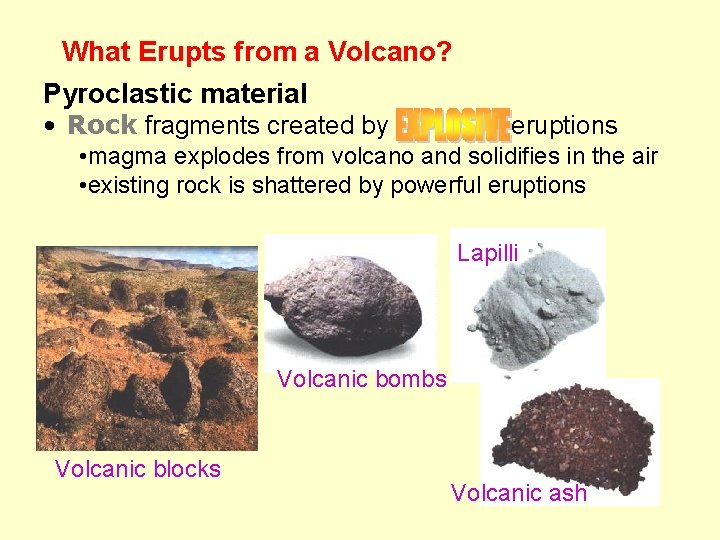
What Erupts from a Volcano? Pyroclastic material • Rock fragments created by eruptions • magma explodes from volcano and solidifies in the air • existing rock is shattered by powerful eruptions Lapilli Volcanic bombs Volcanic blocks Volcanic ash
How do volcanoes affect the Earth? Flows and Fallouts • hot ash can flow really quickly • Knock down buildings • Dam rivers (flooding/drought) • Kill crops and livestock Climatic Changes • Ash & Gases can block sunlight • Drop average global temperature noticeably
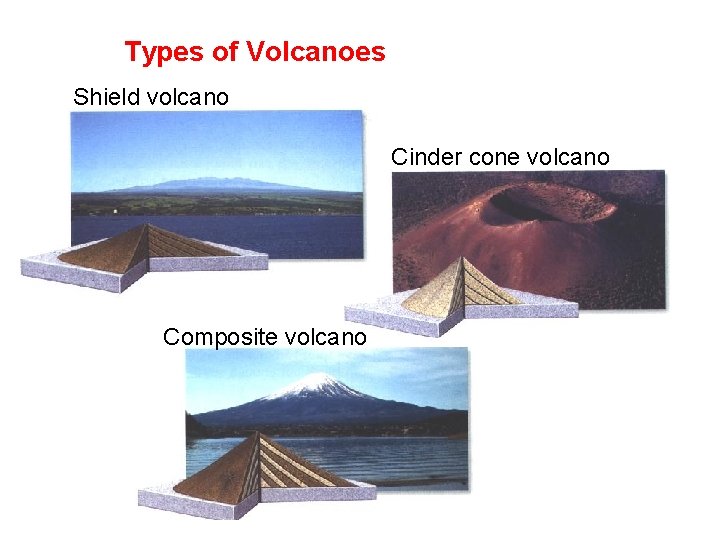
Types of Volcanoes Shield volcano Cinder cone volcano Composite volcano
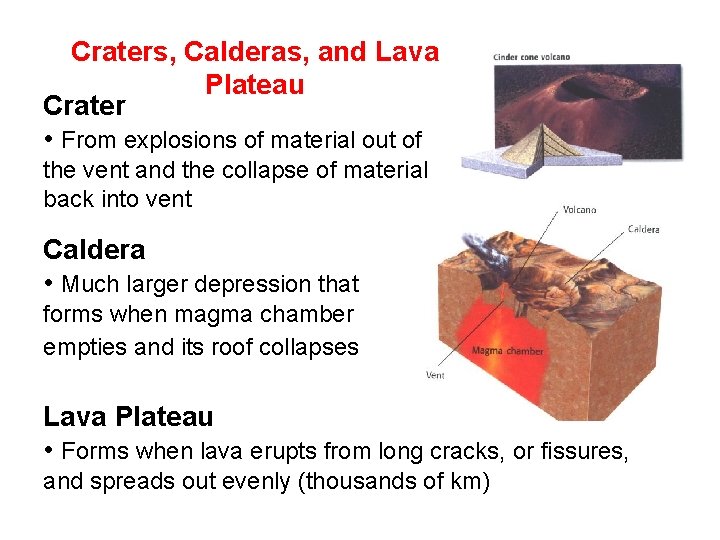
Craters, Calderas, and Lava Plateau Crater • From explosions of material out of the vent and the collapse of material back into vent Caldera • Much larger depression that forms when magma chamber empties and its roof collapses Lava Plateau • Forms when lava erupts from long cracks, or fissures, and spreads out evenly (thousands of km)
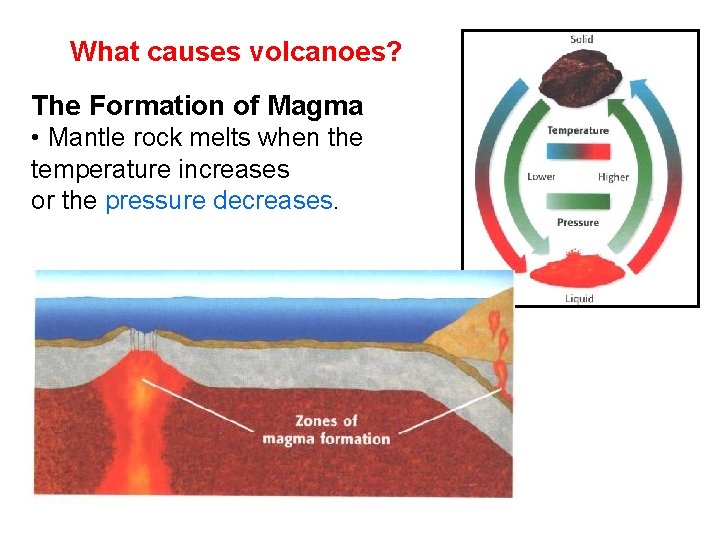
What causes volcanoes? The Formation of Magma • Mantle rock melts when the temperature increases or the pressure decreases.
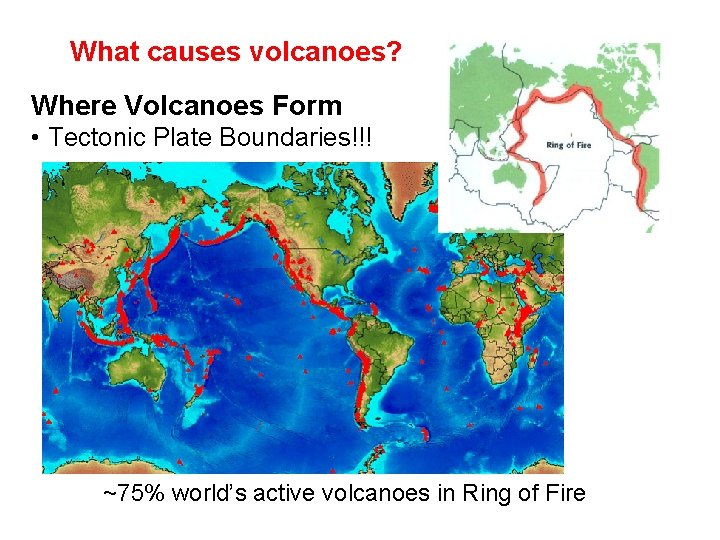
What causes volcanoes? Where Volcanoes Form • Tectonic Plate Boundaries!!! ~75% world’s active volcanoes in Ring of Fire
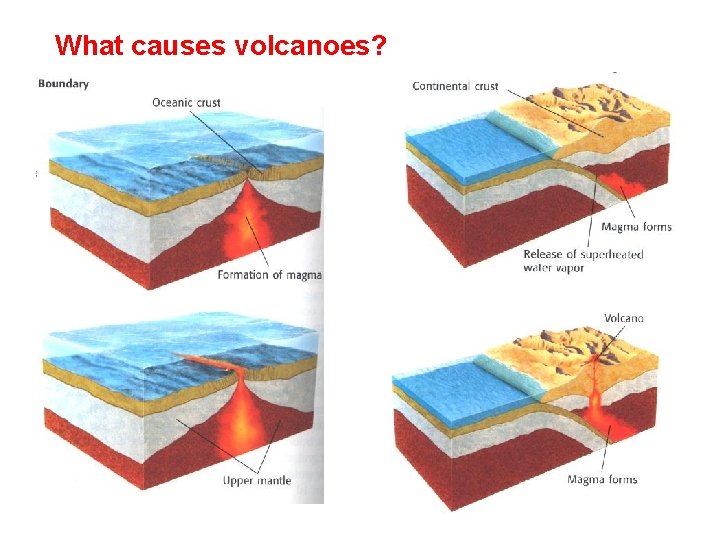
What causes volcanoes?
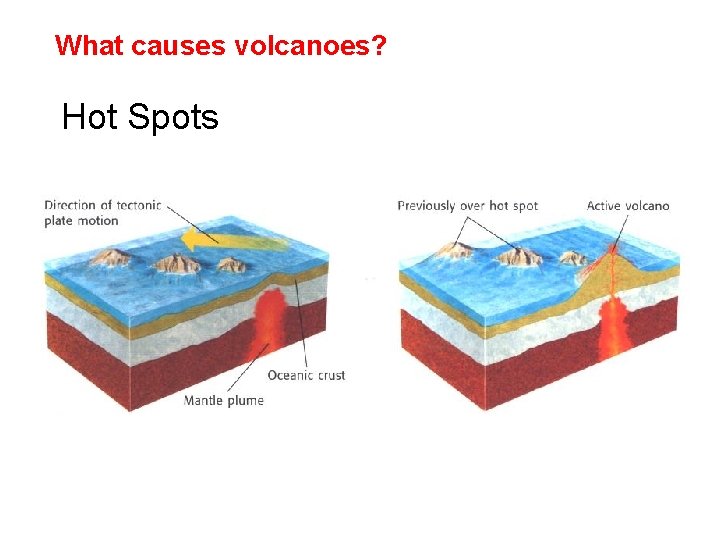
What causes volcanoes? Hot Spots
How do volcanologists predict eruptions? • Measuring Small Quakes – Before eruption, increase in number & intensity • Measuring Slope – Bulges may form with magma (tiltmeter) • Measuring Volcanic Gases – Outflow of volcanic gases • Sulfur dioxide, carbon dioxide • Measuring Temperature from Orbit – Measure changes in temperature over time
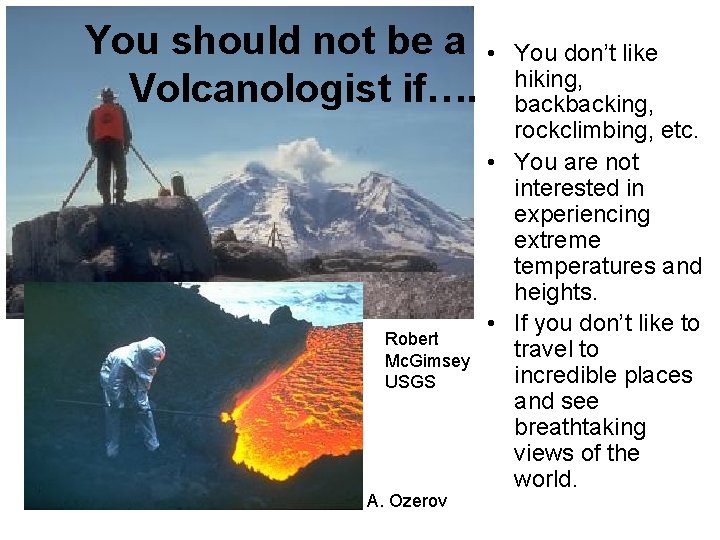
You should not be a • Volcanologist if…. Robert Mc. Gimsey USGS A. Ozerov You don’t like hiking, backing, rockclimbing, etc. • You are not interested in experiencing extreme temperatures and heights. • If you don’t like to travel to incredible places and see breathtaking views of the world.
1. Place 10 m. L of baking soda in center of a sheet of bathroom tissue. Fold the corners over the baking soda and crease the edges so that they stay in place. Place the tissue packet in the middle of a large disposable pan. 2. Put modeling clay around the top edge of a funnel. Turn the funnel upside down over the tissue packet. Press down to make a tight seal. 3. Put safety goggles on and add 50 m. L of vinegar and several drops of liquid dish soap to a 200 m. L beaker, and stir. 4. Predict how much time will elapse before your volcano erupts. WRITE THIS DOWN! 5. Pour the liquid into the upturned funnel. Using a stopwatch, record the time you began to pour and the time your volcano erupts. 6. How close was your prediction?
4. What did you learn? Write/draw this in your science journal. a. Was your time prediction close to the real time of eruption? b. Are the eruption times similar for every group? If not, give at least one reason why this might be. c. How is our experiment different from predicting the eruption of a real volcano?