
VOLCANOES AREAS OF EARTHS SURFACE WHERE MAGMA AND
- Slides: 24
VOLCANOES AREAS OF EARTH’S SURFACE WHERE MAGMA AND VOLCANIC GASES PASS
VOLCANOES HAVE…. . • Magma-molten rock INSIDE Earth • Lava-magma that flows OUTSIDE Earth This Photo by Unknown Author is licensed under CC BY-SA
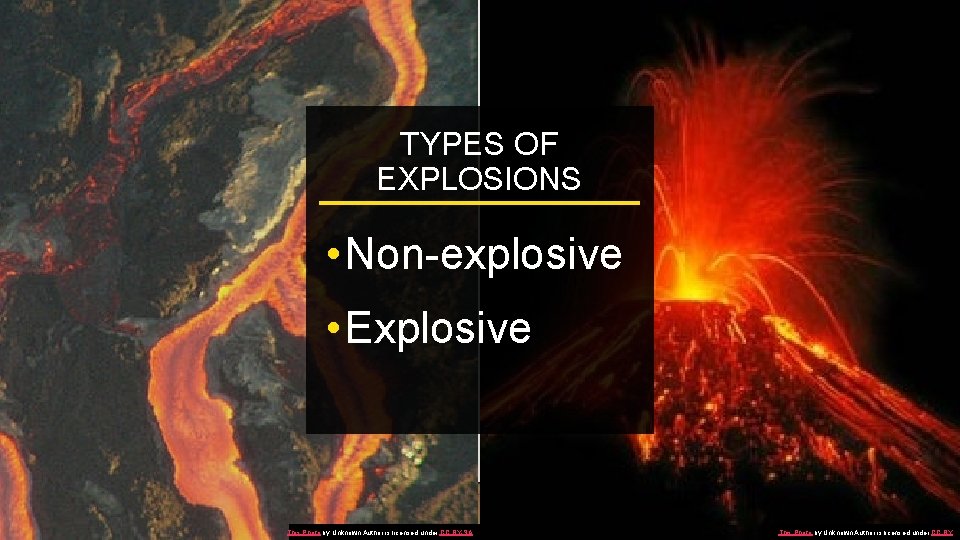
TYPES OF EXPLOSIONS • Non-explosive • Explosive This Photo by Unknown Author is licensed under CC BY-SA This Photo by Unknown Author is licensed under CC BY
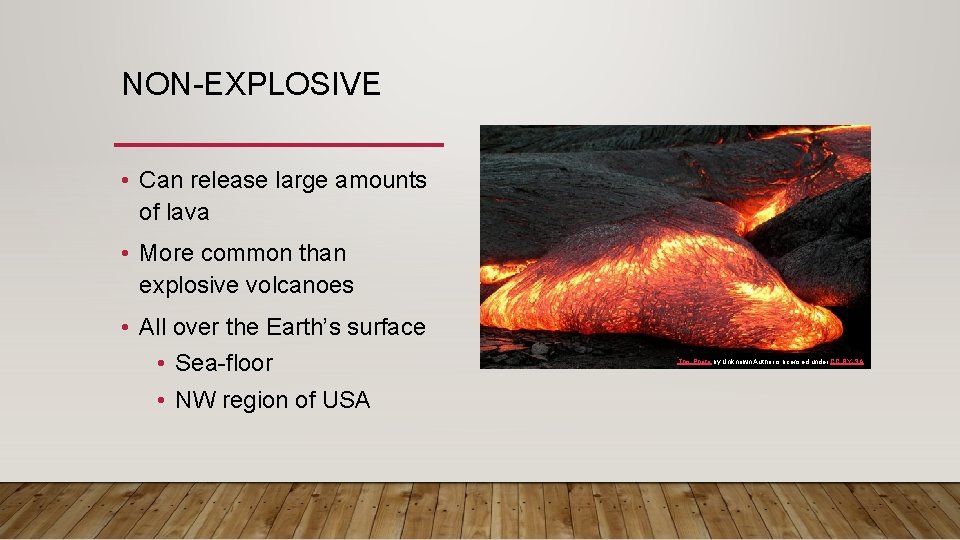
NON-EXPLOSIVE • Can release large amounts of lava • More common than explosive volcanoes • All over the Earth’s surface • Sea-floor • NW region of USA This Photo by Unknown Author is licensed under CC BY-SA
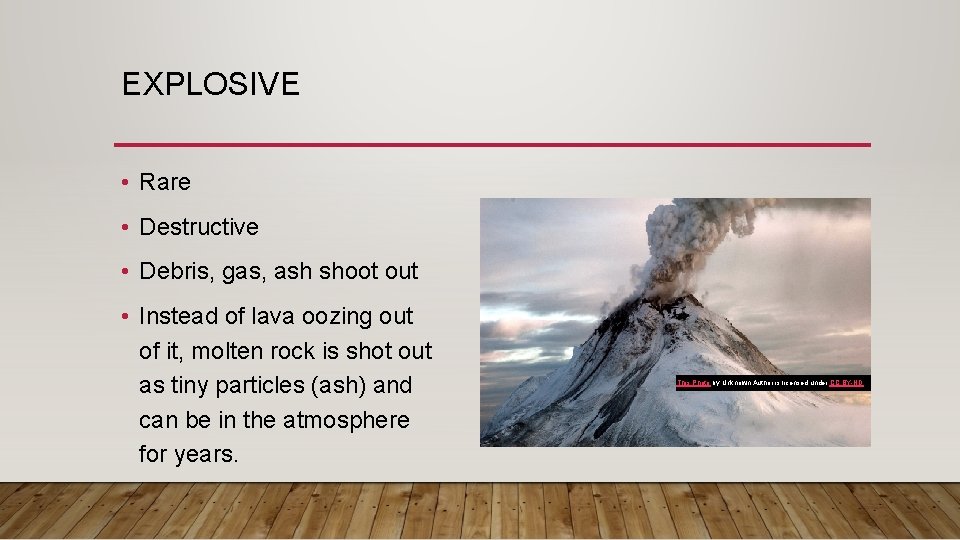
EXPLOSIVE • Rare • Destructive • Debris, gas, ash shoot out • Instead of lava oozing out of it, molten rock is shot out as tiny particles (ash) and can be in the atmosphere for years. This Photo by Unknown Author is licensed under CC BY-ND
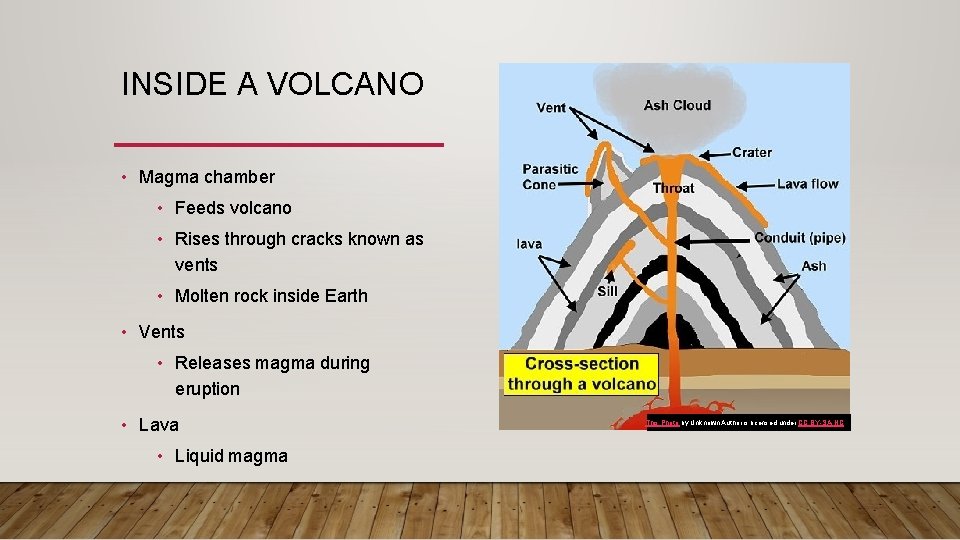
INSIDE A VOLCANO • Magma chamber • Feeds volcano • Rises through cracks known as vents • Molten rock inside Earth • Vents • Releases magma during eruption • Lava • Liquid magma This Photo by Unknown Author is licensed under CC BY-SA-NC
WATER AND MAGMA MIXED TOGETHER CAUSES EXPLOSIONS!!!!! • If magma has a high water content, it increases chances of an explosive eruption. • Similar to a can of soda when you shake it. The pressure needs to be released, causing an explosion.
MAGMA • Erupts as either lava or pyroclastic material • Lava is liquid magma • Pyroclastic material hardens as it’s blasted into the air • What type of magma do nonexplosive volcanoes produce?
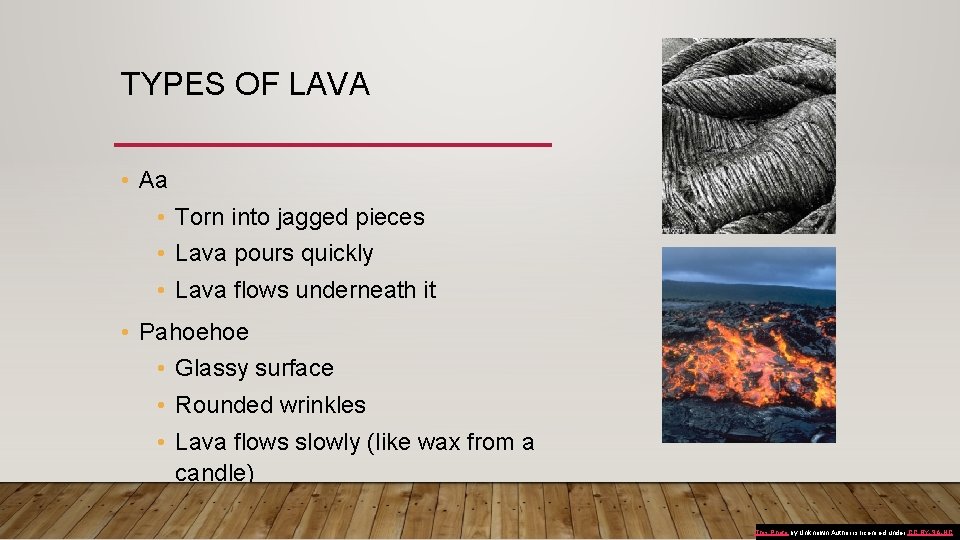
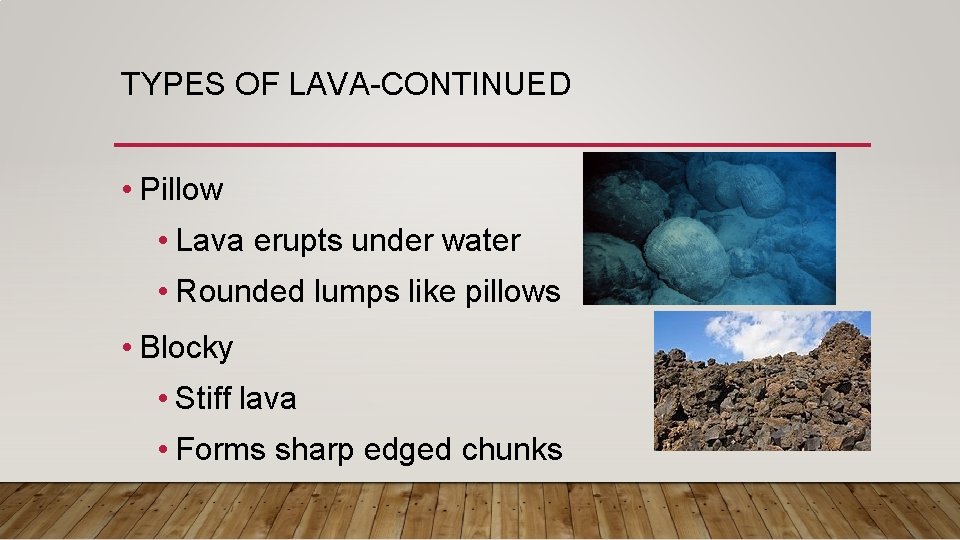
TYPES OF LAVA • Aa • Torn into jagged pieces • Lava pours quickly • Lava flows underneath it • Pahoehoe • Glassy surface • Rounded wrinkles • Lava flows slowly (like wax from a candle) • Resembles an elephant trunk This Photo by Unknown Author is licensed under CC BY-SA-NC
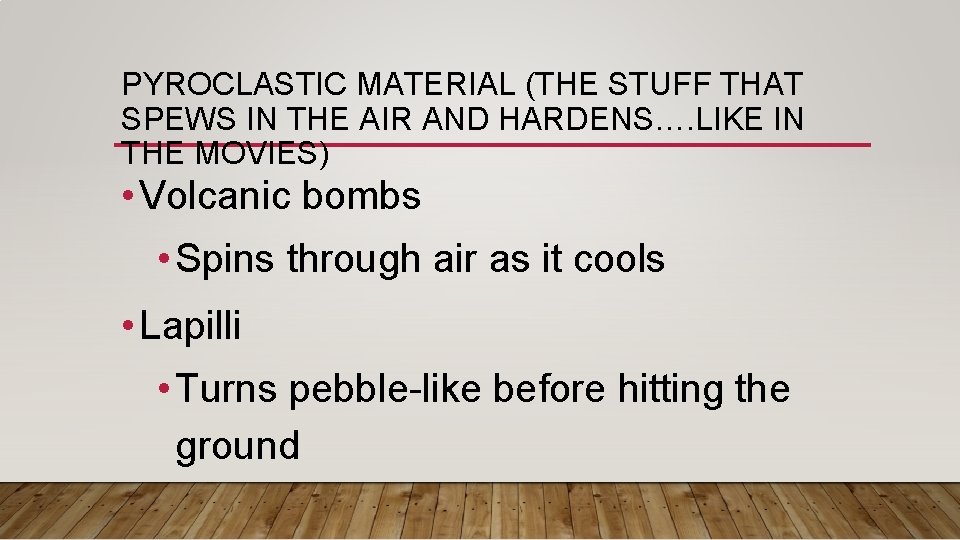
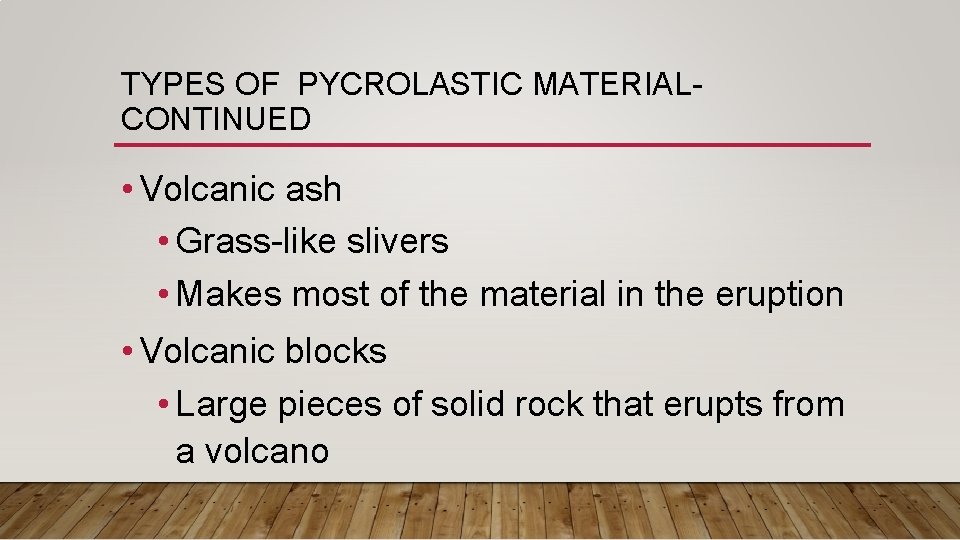
TYPES OF LAVA-CONTINUED • Pillow • Lava erupts under water • Rounded lumps like pillows • Blocky • Stiff lava • Forms sharp edged chunks
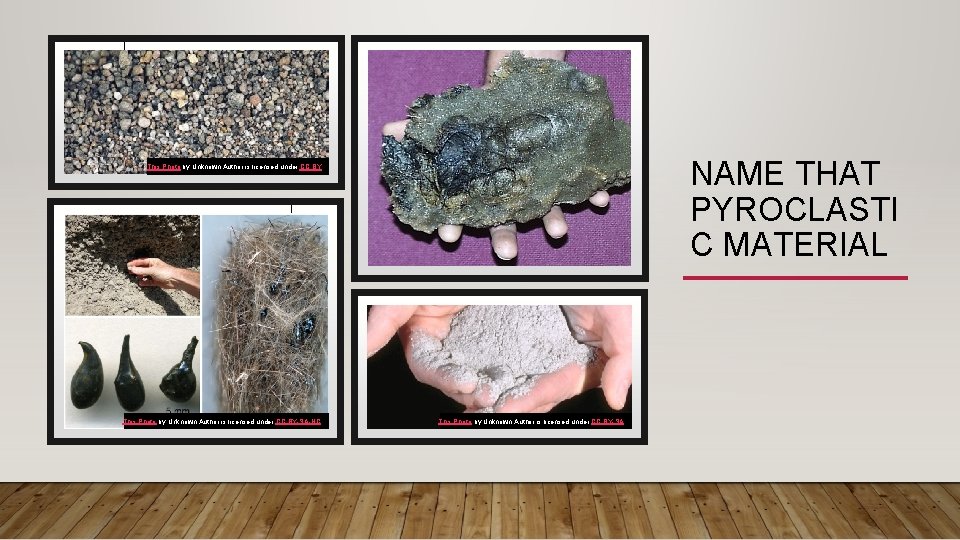
PYROCLASTIC MATERIAL (THE STUFF THAT SPEWS IN THE AIR AND HARDENS…. LIKE IN THE MOVIES) • Volcanic bombs • Spins through air as it cools • Lapilli • Turns pebble-like before hitting the ground
TYPES OF PYCROLASTIC MATERIALCONTINUED • Volcanic ash • Grass-like slivers • Makes most of the material in the eruption • Volcanic blocks • Large pieces of solid rock that erupts from a volcano
NAME THAT PYROCLASTI C MATERIAL This Photo by Unknown Author is licensed under CC BY-SA-NC This Photo by Unknown Author is licensed under CC BY-SA
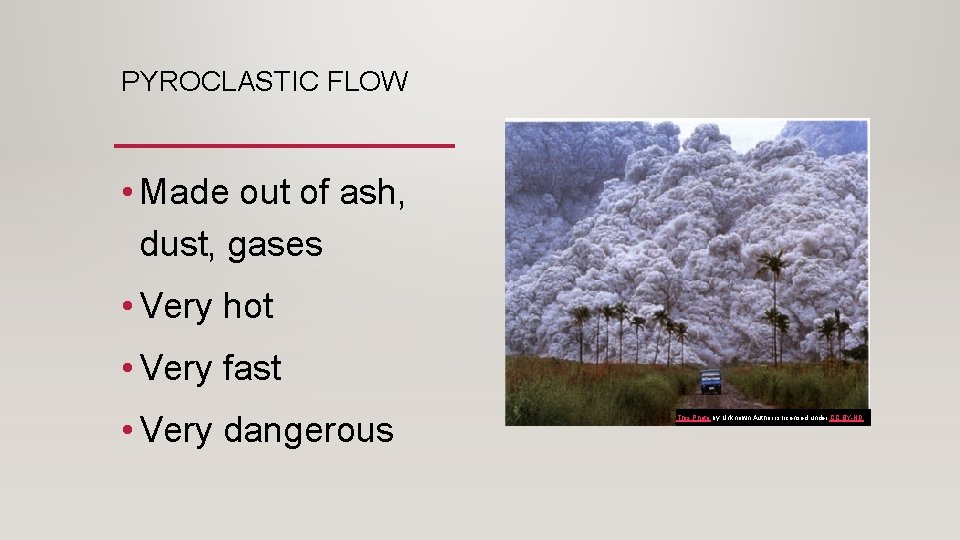
PYROCLASTIC FLOW • Made out of ash, dust, gases • Very hot • Very fast • Very dangerous This Photo by Unknown Author is licensed under CC BY-ND
3 TYPES OF VOLCANOES • Cinder cone • Shield • Composite
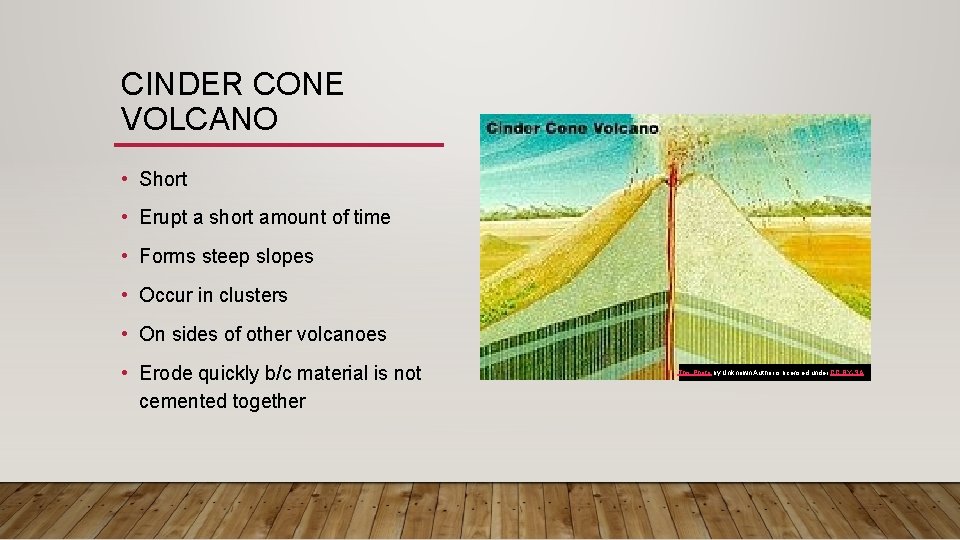
CINDER CONE VOLCANO • Short • Erupt a short amount of time • Forms steep slopes • Occur in clusters • On sides of other volcanoes • Erode quickly b/c material is not cemented together This Photo by Unknown Author is licensed under CC BY-SA
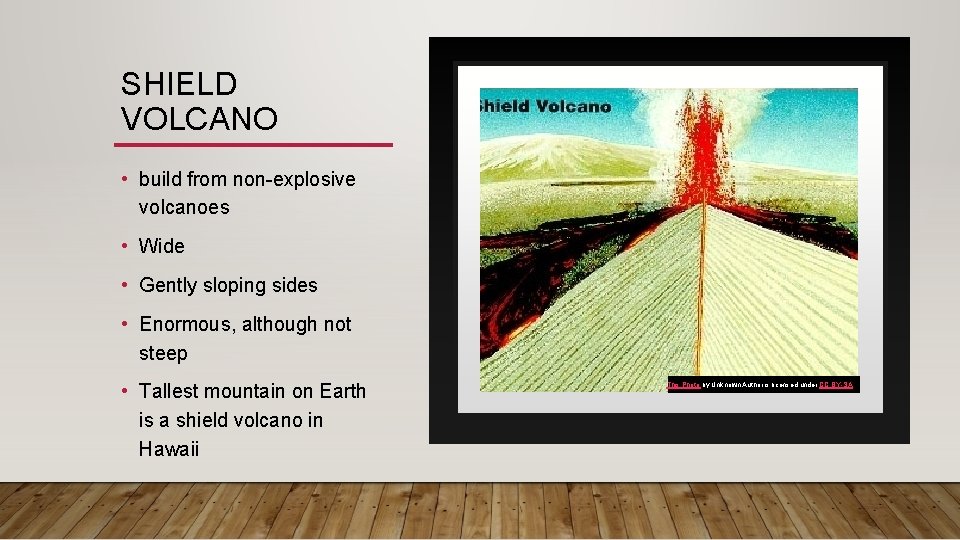
SHIELD VOLCANO • build from non-explosive volcanoes • Wide • Gently sloping sides • Enormous, although not steep • Tallest mountain on Earth is a shield volcano in Hawaii This Photo by Unknown Author is licensed under CC BY-SA
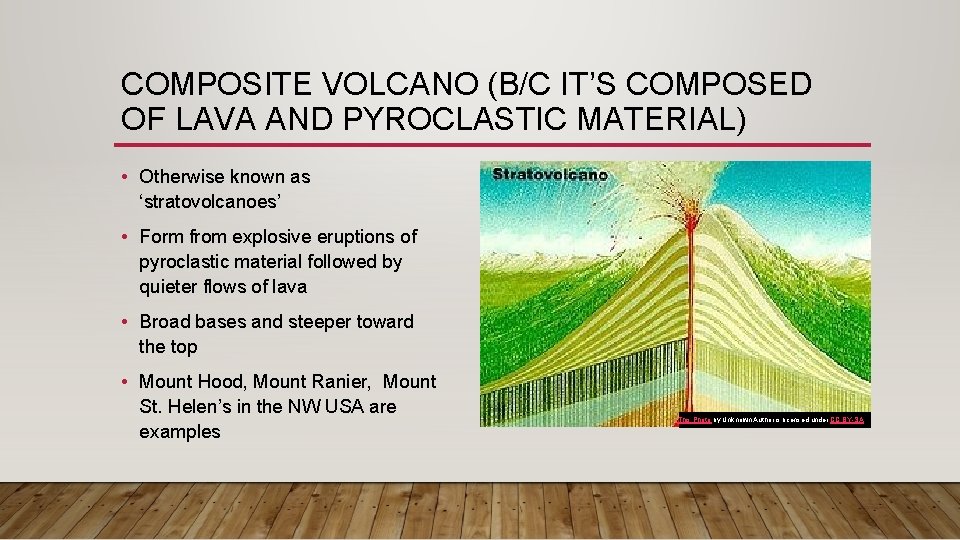
COMPOSITE VOLCANO (B/C IT’S COMPOSED OF LAVA AND PYROCLASTIC MATERIAL) • Otherwise known as ‘stratovolcanoes’ • Form from explosive eruptions of pyroclastic material followed by quieter flows of lava • Broad bases and steeper toward the top • Mount Hood, Mount Ranier, Mount St. Helen’s in the NW USA are examples This Photo by Unknown Author is licensed under CC BY-SA
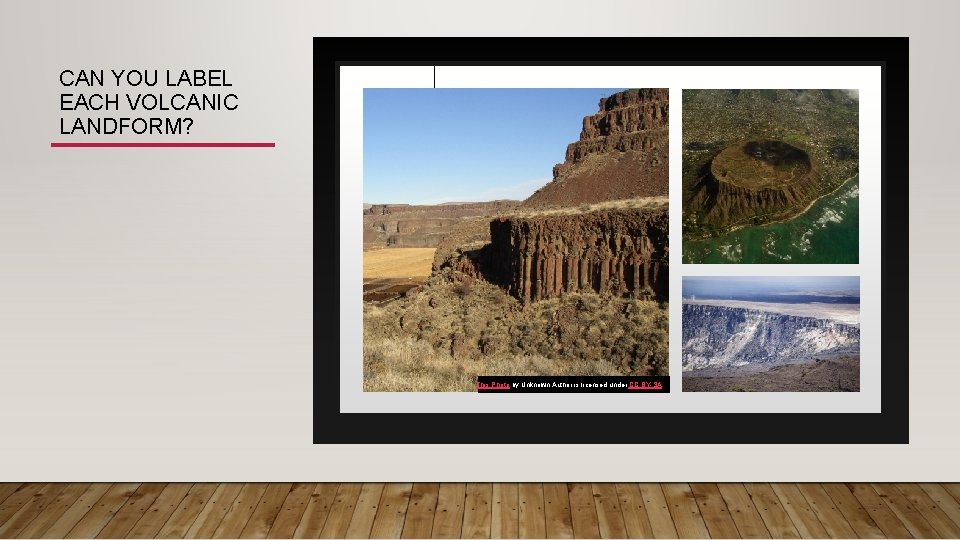
VOLCANIC LANDFORMS • Craters-funnel shaped pit at the top of a volcano • Calderas-semi-circular depression • Lava plateaus-landform that results from repeated eruptions of lava spread over a large area
CAN YOU LABEL EACH VOLCANIC LANDFORM? This Photo by Unknown Author is licensed under CC BY-SA
HOW DO WE PREDICT WHEN A VOLCANO WILL ERUPT? • Slight changes in volcano’s shape • Changes in ratio of gases • Study dormant and extinct volcanoes • Measure/monitor earthquakes • Measure slope angles (infrared, gps) • Temperature changes
WHAT CAUSES ERUPTIONS? • Increased pressure in Earth’s crust • Increased temperature in Earth’s crust • These changes causes magma to form. Magma rises up between tectonic plates where pressure then decreases. Magma then becomes less dense than the surrounding rock and rises like an air bubble in a jar of honey. Magma rises to the surface where the plates meet and form volcanoes. • Most of this happens at the Pacific Plate boundary known as the Ring of Fire
HOT SPOTS-VOLCANICALLY ACTIVE PLACES NOWHERE NEAR PLATE BOUNDARIES • Not all magma develops along tectonic plate boundaries • Hawaiian Islands are not on a boundary yet they have the world’s tallest volcanoes. • These islands were formed as a result from Hot Spots • Some scientists think it’s because these are sitting on mantle plumes of rising magma • Others feel it’s because there are cracks in the Earth’s crust • Neither theory has been proven
VOLCANOES CAN BE CLASSIFIED INTO 3 CATEGORIES • Extinct-never erupted in recorded history and will unlikely to erupt again • Dormant-currently not erupting but records suggest they may erupt some day • Active-currently erupting or show evidence they may erupt in the near future