
Volcanoes and Plate Tectonics Volcano a weak spot

- Slides: 13
Volcanoes and Plate Tectonics
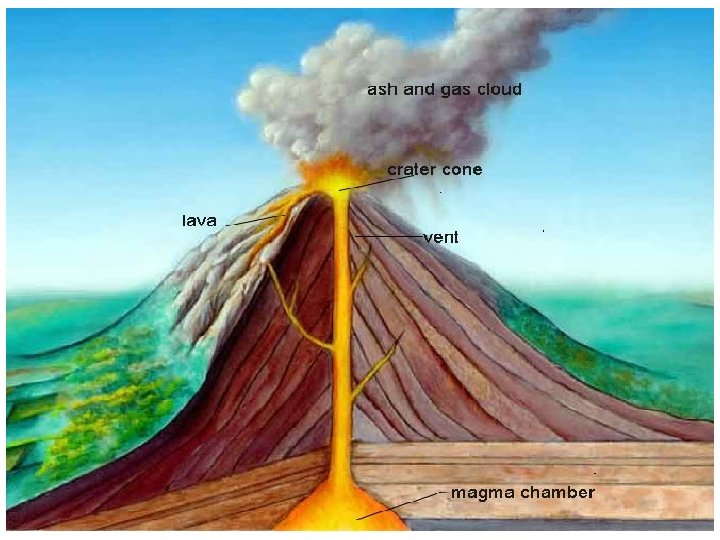
�Volcano – a weak spot in the crust where molten material, or magma, comes to the surface �Magma – a molten mixture of rock-forming substances, gases, and water from the mantle �When magma reaches the surface, it is called lava
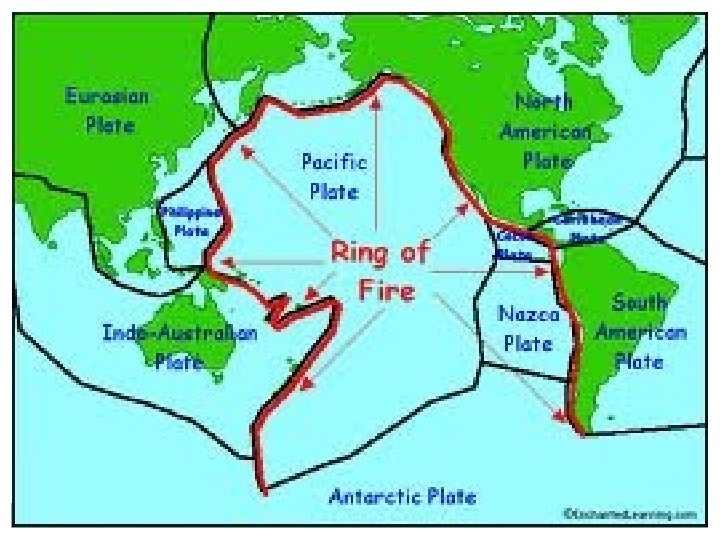
Volcanoes and Plate Boundaries �About 600 active volcanoes on land �Many more beneath the sea �Ring of Fire – the volcanoes the rim the Pacific Ocean �Volcanic belts form along the boundaries of Earth’s plates.
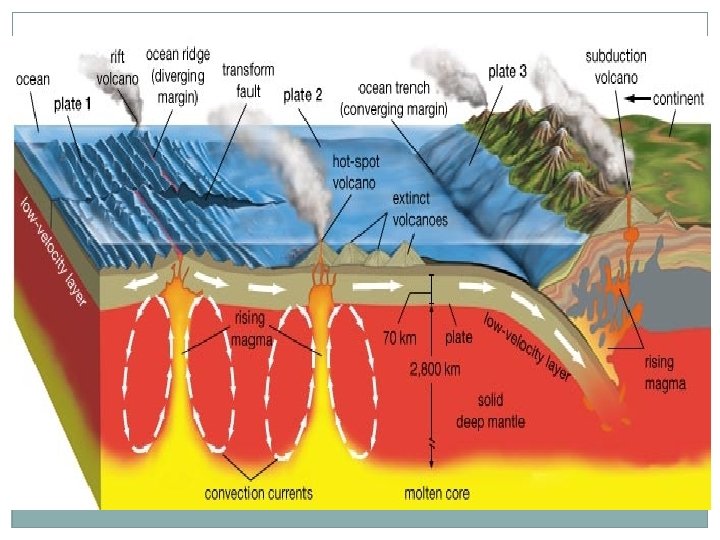
Diverging Boundaries �Diverging Boundaries – where boundaries pull apart �Along the rift valley, lava pours out of cracks in the ocean floor, building new mountains �Volcanoes form on diverging plate boundaries on land
Converging Boundaries �Continental plate and oceanic plate collide, oceanic plate dives under the continental plate �Produced the volcanoes of the Andes Mountains in South America and volcanoes of the Pacific Northwest in the United States
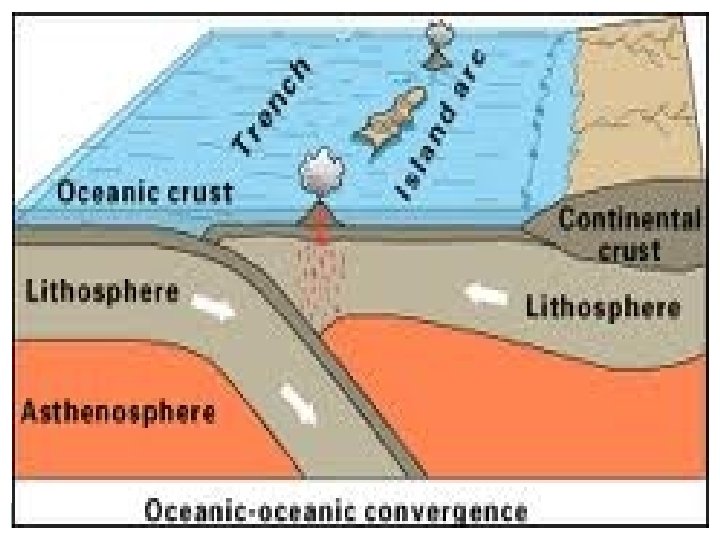
�Many volcanoes occur near these boundaries of two oceanic plates collide, creating a string of islands called an island arc �Major island arcs include Japan, new Zealand, Indonesia, the Philippines, and Aleutians, and the Caribbean islands
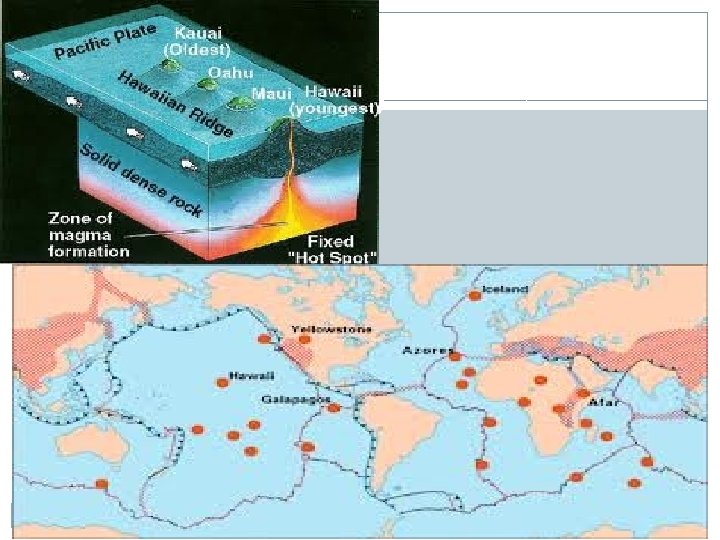
Hot Spot Volcanoes �A hot spot is an area where material form deep within the mantle rises and then melts, forming magma �Volcanoes forms above a hot spot when magma erupts through the crust and reaches the surface �Example, Hawaiian Islands �Hot spots can also be under the continents, Yellowstone National Park in Wyoming
Writing in Science �Travel Brochure – As a travel agent, you are planning a Pacific Ocean cruise that will visit volcanoes in the Ring of Fire and Hawaii. Write a travel brochure describing the types of volcanoes the group will see and explaining why the volcanoes formed where they did.