
Volcanoes and Other Igneous Activity The Nature of
- Slides: 30
Volcanoes and Other Igneous Activity
The Nature of Volcanic Eruptions Factors determining the “violence” or explosiveness of a volcanic eruption: composition of the magma temperature of the magma dissolved gases in the magma The above three factors actually control the viscosity of a given magma, which in turn, controls the nature of an eruption
The Nature of Volcanic Eruptions Viscosity is a measure of a material’s resistance to flow (e. g. , higher viscosity materials flow with great difficulty) Factors affecting viscosity temperature—hotter magmas are less viscous composition—silica (Si. O 2) content - higher silica content = higher viscosity (e. g. , felsic lava such as rhyolite) - lower silica content = lower viscosity or more fluid-like behavior (e. g. , mafic lava such as basalt)
The Nature of Volcanic Eruptions dissolved gases - gases expand within a magma as it nears Earth’s surface due to decreasing pressure - the violence of an eruption is related to how easily gases escape from magma fluid basaltic lavas generally produce quiet eruptions highly viscous lavas (rhyolite or andesite) produce more explosive eruptions
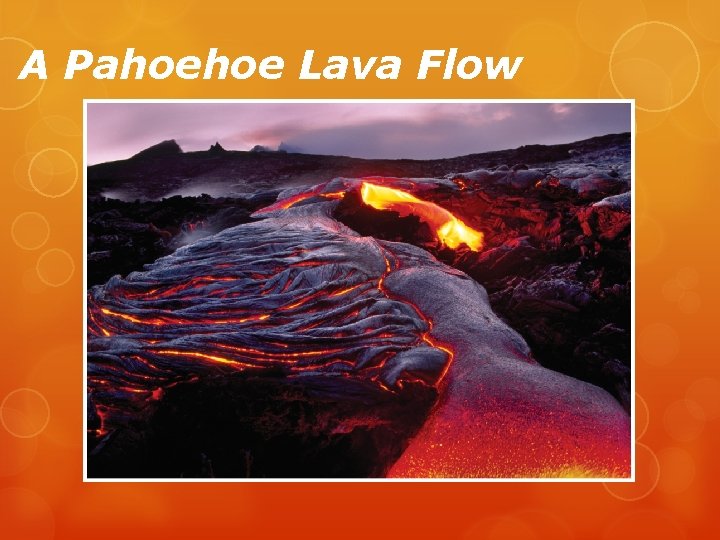
A Pahoehoe Lava Flow
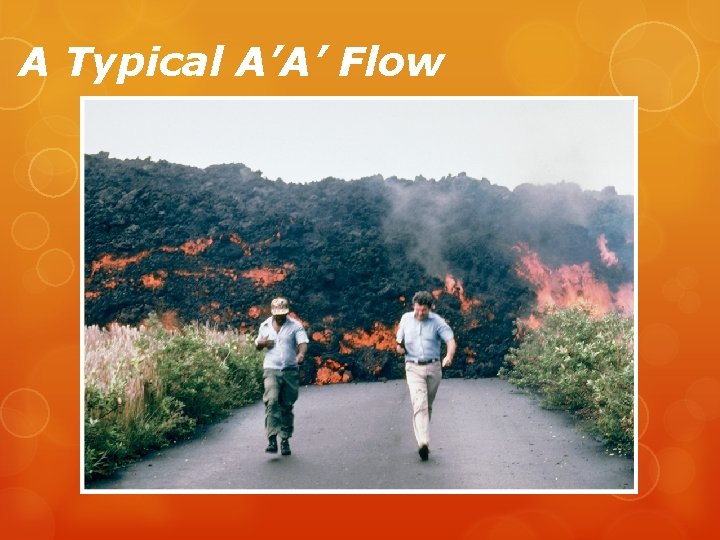
A Typical A’A’ Flow
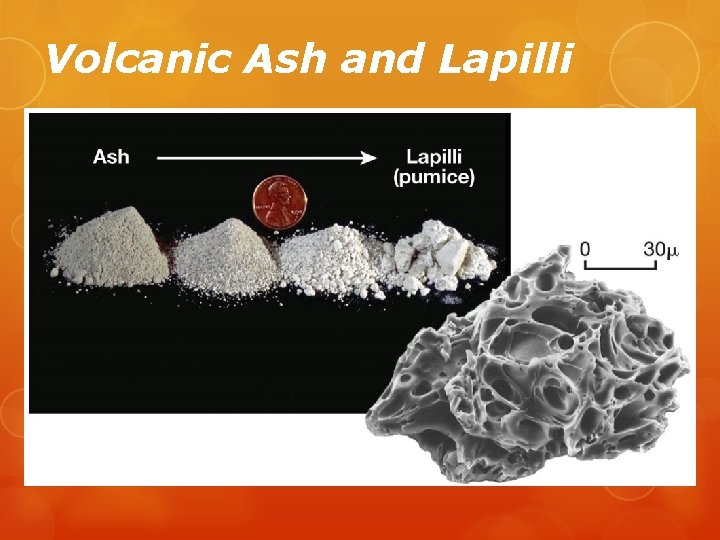
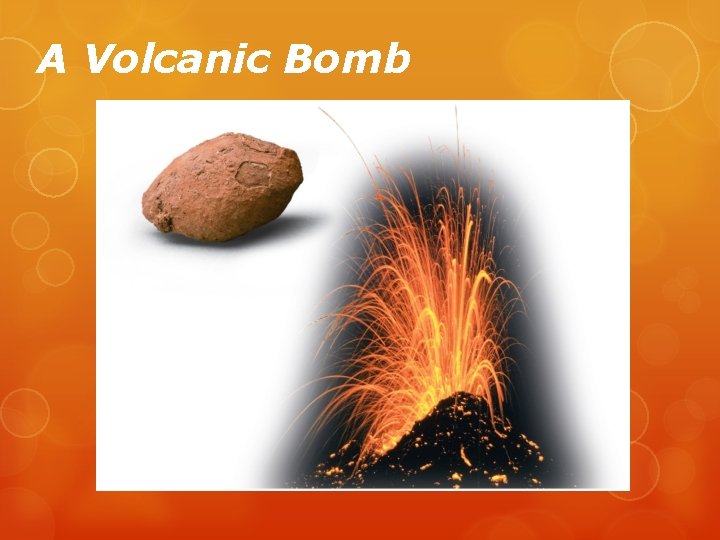
Materials Extruded from a Volcano Pyroclastic materials—fire fragments and types of debris ash and dust—fine, glassy fragments pumice—porous rock from frothy lava lapilli (lapillus)—walnut-sized material cinders—pea-sized material particles larger than lapilli blocks—hardened or cooled lava bombs—ejected as hot lava
Volcanic Ash and Lapilli
A Volcanic Bomb
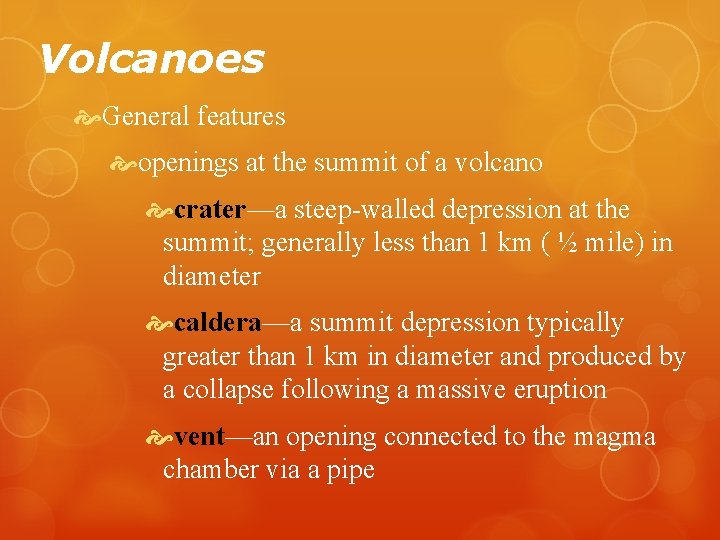
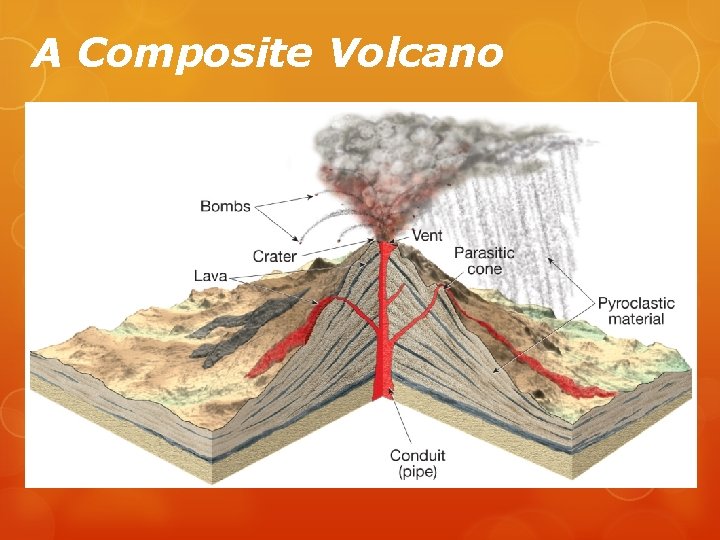
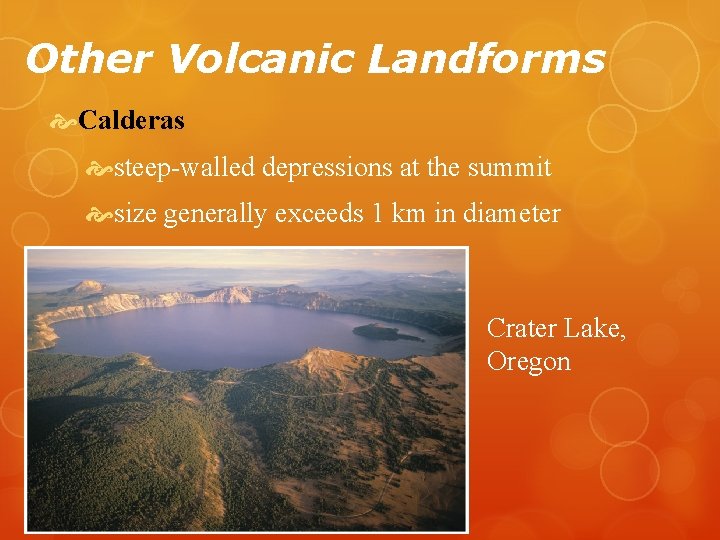
Volcanoes General features openings at the summit of a volcano crater—a steep-walled depression at the summit; generally less than 1 km ( ½ mile) in diameter caldera—a summit depression typically greater than 1 km in diameter and produced by a collapse following a massive eruption vent—an opening connected to the magma chamber via a pipe
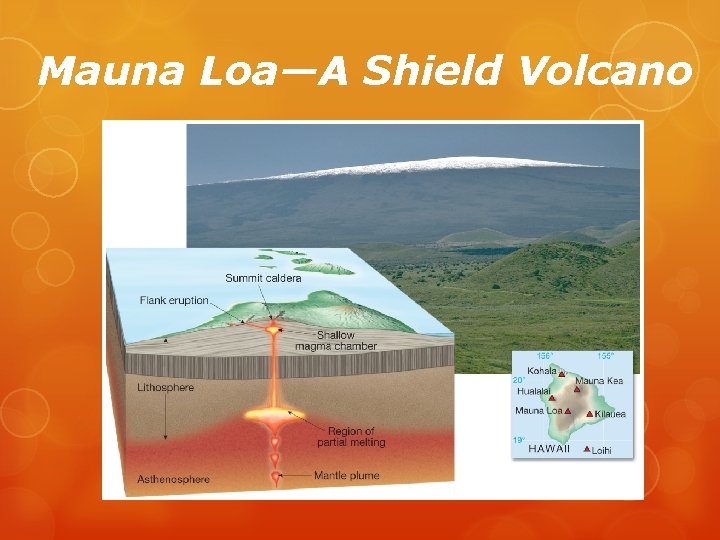
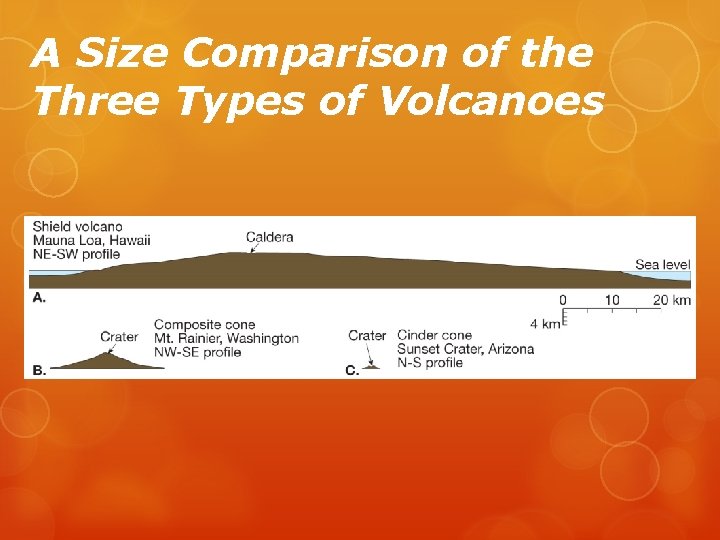
Types of Volcanoes Shield volcano broad, slightly dome-shaped composed primarily of basaltic lava generally covers large areas produced by mild eruptions of large volumes of lava Mauna Loa in Hawaii
Mauna Loa—A Shield Volcano
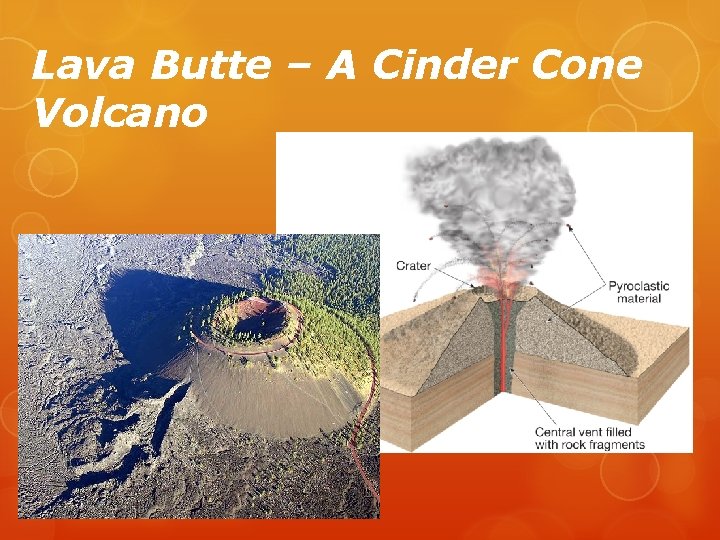
Types of Volcanoes Cinder cone built from ejected lava (mainly cindersized) fragments steep slope angle rather small size frequently occur in groups Lava Butte - Oregon
Lava Butte – A Cinder Cone Volcano
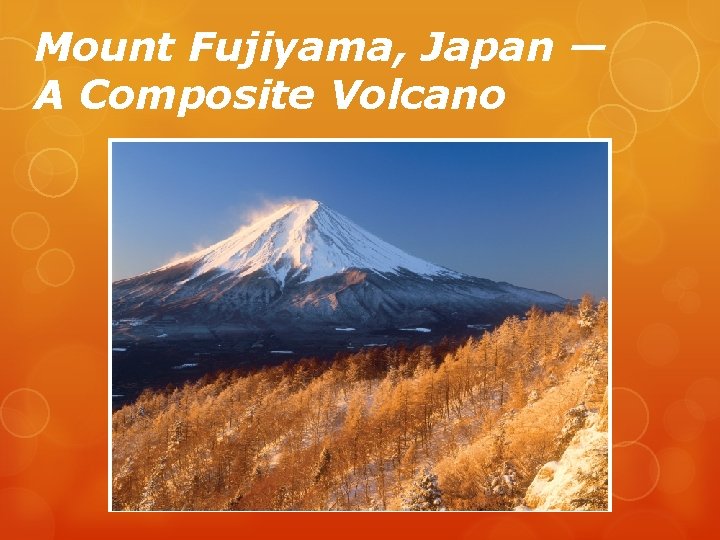
Types of Volcanoes Composite cone (Stratovolcano) most are located adjacent to the Pacific Ocean (e. g. , Mount Fujiyama and Mount St. Helens) large, classic-shaped volcano (thousands of feet high and several miles wide at base) composed of interbedded lava flows and layers of pyroclastic debris
Mount Fujiyama, Japan — A Composite Volcano
A Composite Volcano
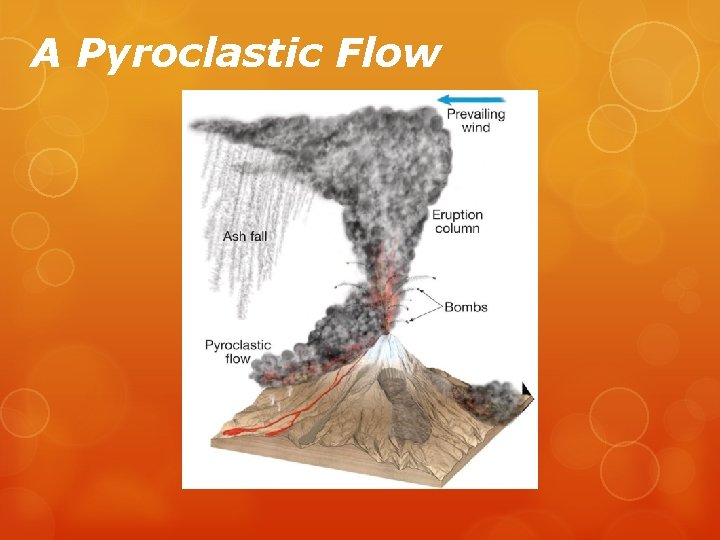
A Composite Volcano most violent type of activity (Mount Vesuvius) often produce nueé ardentes fiery pyroclastic flows made of hot gases infused with ash and other debris move down the slopes of a volcano at speeds up to 200 km (140 miles) per hour may produce a lahar (volcanic mudflow)
A Pyroclastic Flow
A Size Comparison of the Three Types of Volcanoes
Other Volcanic Landforms Calderas steep-walled depressions at the summit size generally exceeds 1 km in diameter Crater Lake, Oregon
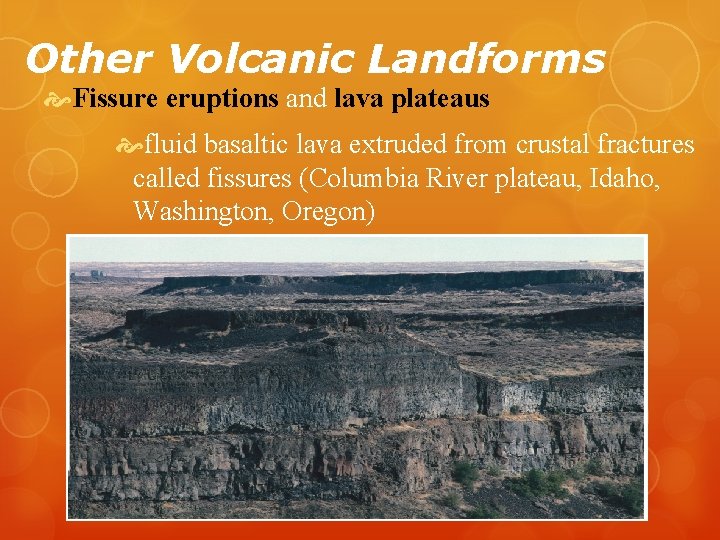
Other Volcanic Landforms Fissure eruptions and lava plateaus fluid basaltic lava extruded from crustal fractures called fissures (Columbia River plateau, Idaho, Washington, Oregon)
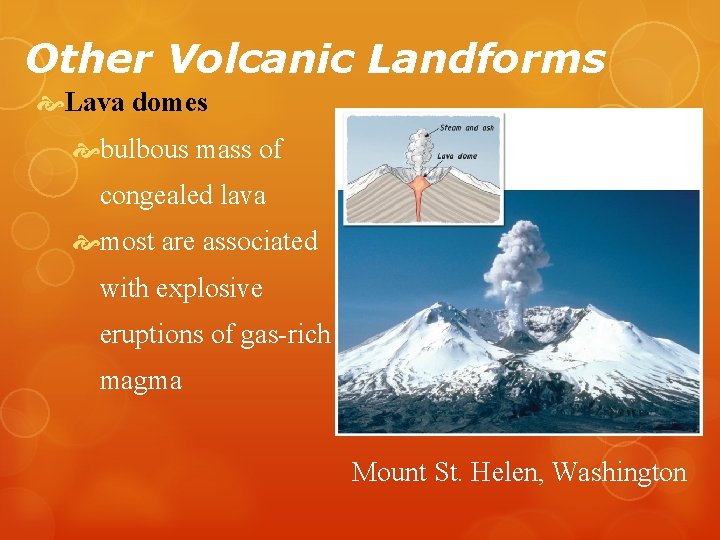
Other Volcanic Landforms Lava domes bulbous mass of congealed lava most are associated with explosive eruptions of gas-rich magma Mount St. Helen, Washington
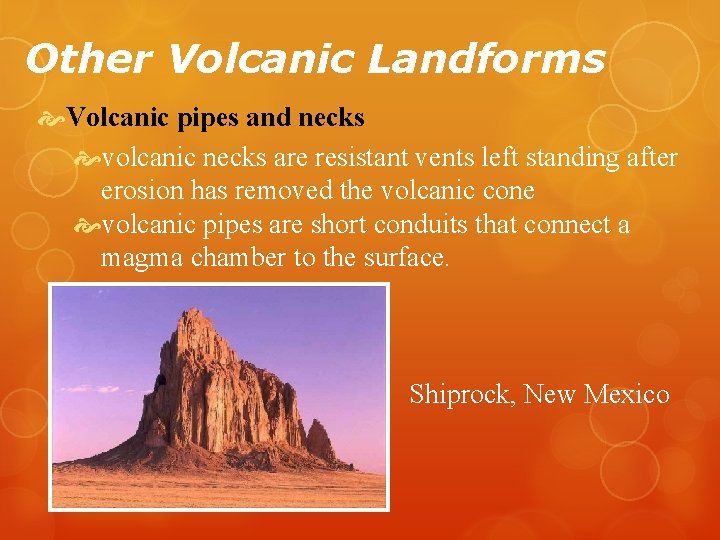
Other Volcanic Landforms Volcanic pipes and necks volcanic necks are resistant vents left standing after erosion has removed the volcanic cone volcanic pipes are short conduits that connect a magma chamber to the surface. Shiprock, New Mexico
Plate Tectonics and Igneous Activity Global distribution of igneous activity is not random most volcanoes are located within or near ocean basins (at subduction zones) basaltic rocks are common in both oceanic and continental settings; whereas granitic rocks are rarely found in the oceans
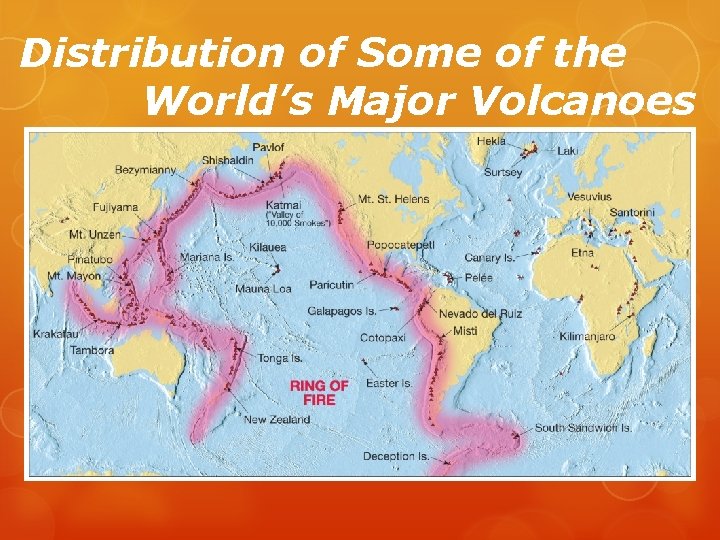
Distribution of Some of the World’s Major Volcanoes
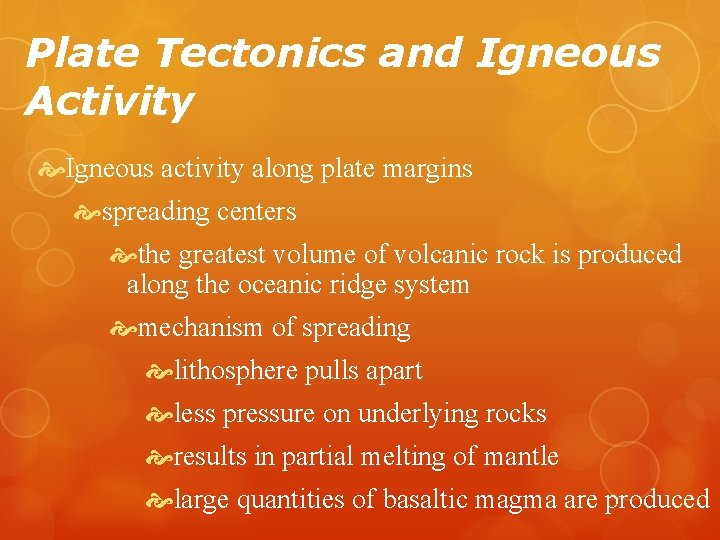
Plate Tectonics and Igneous Activity Igneous activity along plate margins spreading centers the greatest volume of volcanic rock is produced along the oceanic ridge system mechanism of spreading lithosphere pulls apart less pressure on underlying rocks results in partial melting of mantle large quantities of basaltic magma are produced
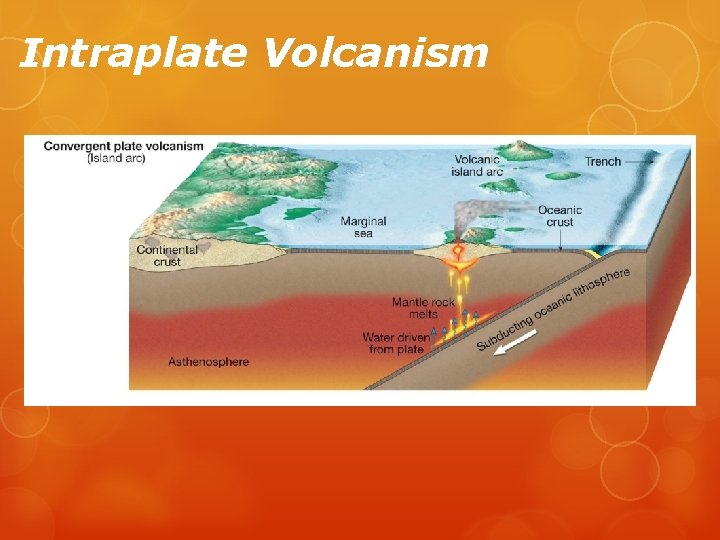
Plate Tectonics and Igneous Activity subduction zones occur in conjunction with deep oceanic trenches descending plate partially melts magma slowly moves upward rising magma can form either: an island arc if in the ocean a volcanic arc if on a continental margin associated with the Pacific Ocean basin region around the margin is known as the Ring of Fire where most of the world’s explosive volcanoes are found
Plate Tectonics and Igneous Activity intraplate volcanism activity within a tectonic plate associated with plumes of heat in the mantle form localized volcanic regions in the overriding plate called a hot spot produces basaltic magma sources in oceanic crust (e. g. , Hawaii and Iceland) produces granitic magma sources in continental crust (e. g. , Yellowstone National Park)
Intraplate Volcanism