
VOLCANOES AND MOUNTAIN FORMING Volcanoes Formed by hot
VOLCANOES AND MOUNTAIN FORMING
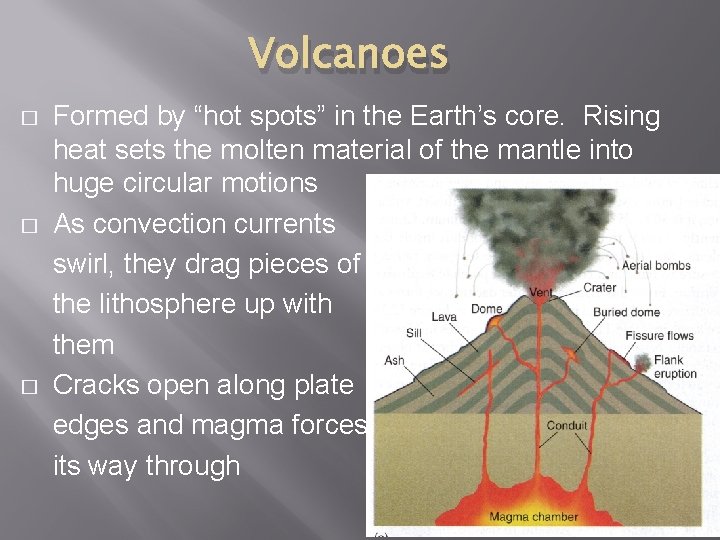
Volcanoes � � � Formed by “hot spots” in the Earth’s core. Rising heat sets the molten material of the mantle into huge circular motions As convection currents swirl, they drag pieces of the lithosphere up with them Cracks open along plate edges and magma forces its way through
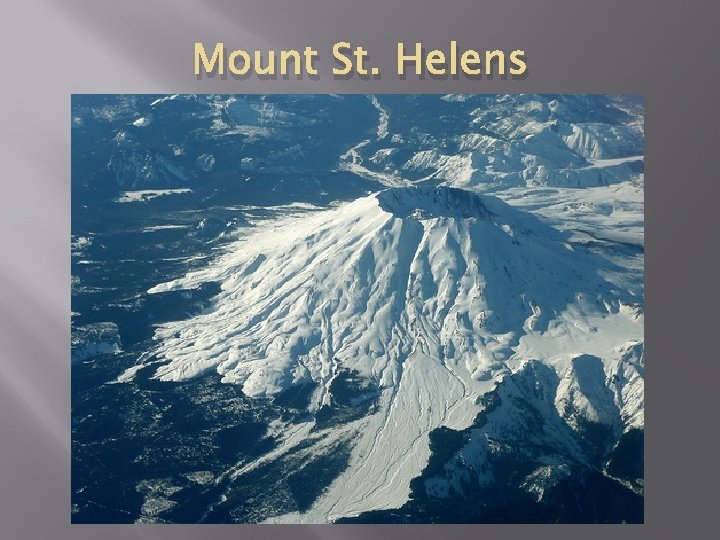
Mount St. Helens
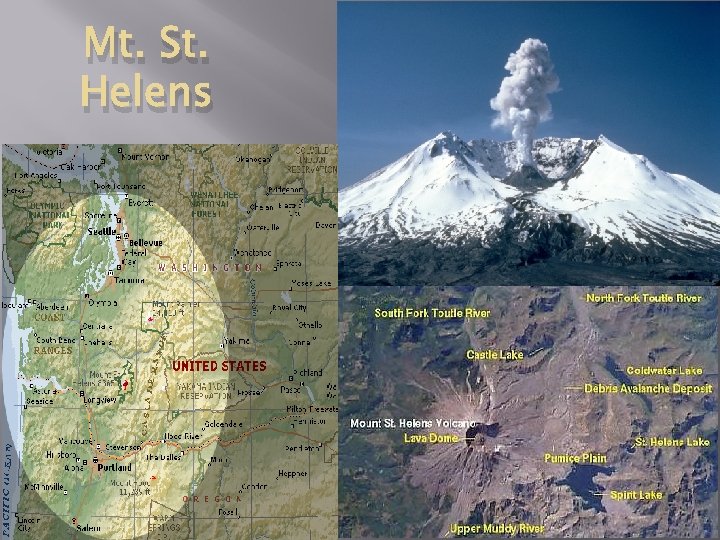
Mt. St. Helens
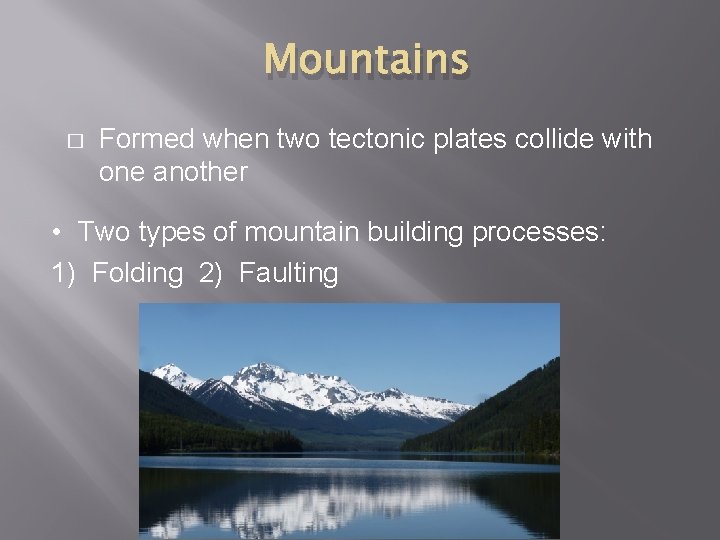
Mountains � Formed when two tectonic plates collide with one another • Two types of mountain building processes: 1) Folding 2) Faulting
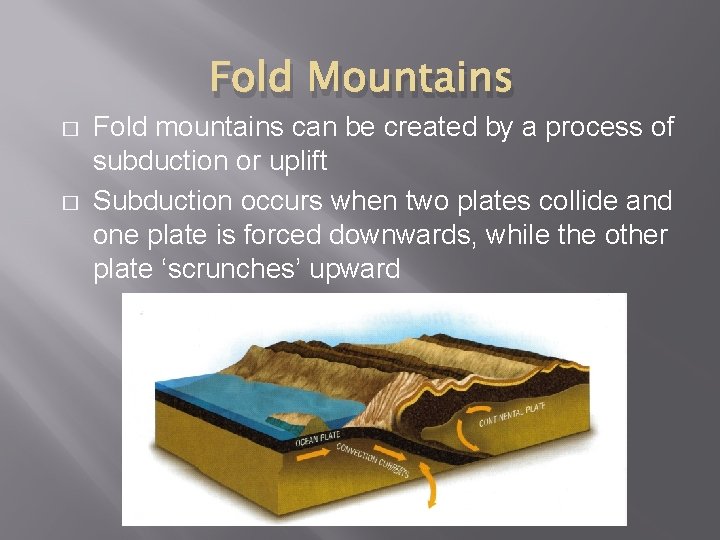
Fold Mountains � � Fold mountains can be created by a process of subduction or uplift Subduction occurs when two plates collide and one plate is forced downwards, while the other plate ‘scrunches’ upward
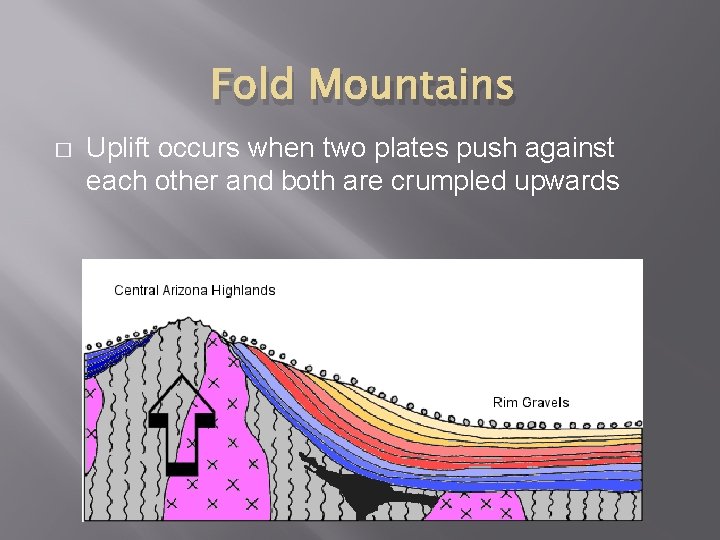
Fold Mountains � Uplift occurs when two plates push against each other and both are crumpled upwards
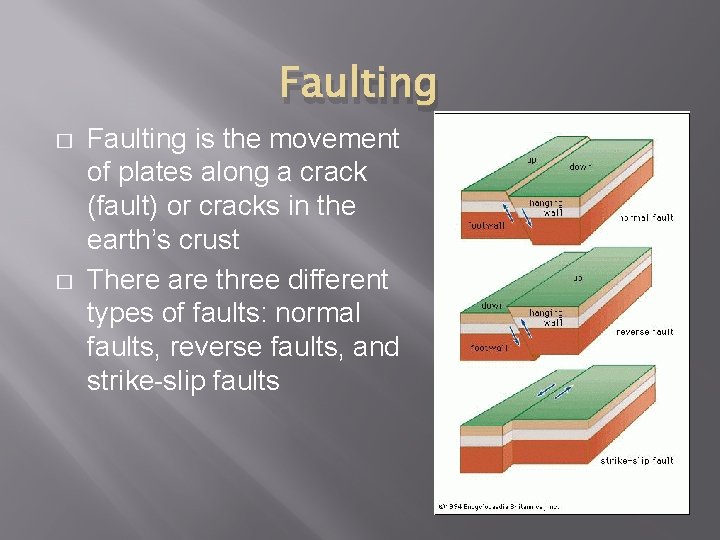
Faulting � � Faulting is the movement of plates along a crack (fault) or cracks in the earth’s crust There are three different types of faults: normal faults, reverse faults, and strike-slip faults
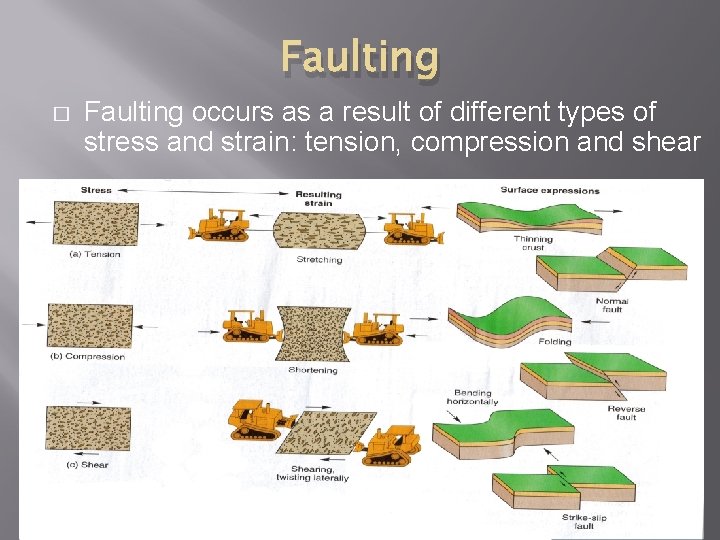
Faulting � Faulting occurs as a result of different types of stress and strain: tension, compression and shear
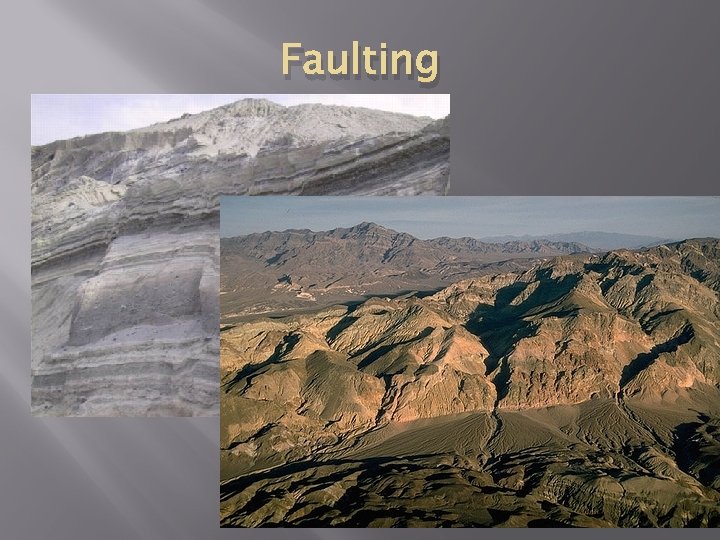
Faulting
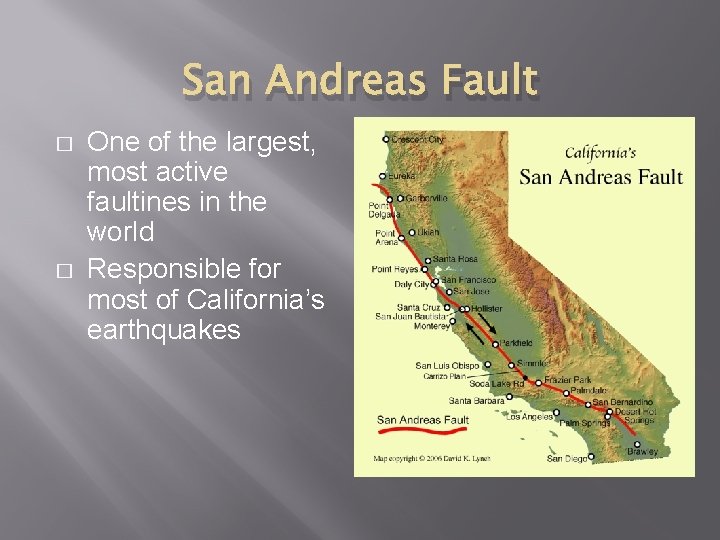
San Andreas Fault � � One of the largest, most active faultines in the world Responsible for most of California’s earthquakes

San Andreas Fault
- Slides: 13