
VOLCANOES AND IGNEOUS ROCKS Objectives Identify several different
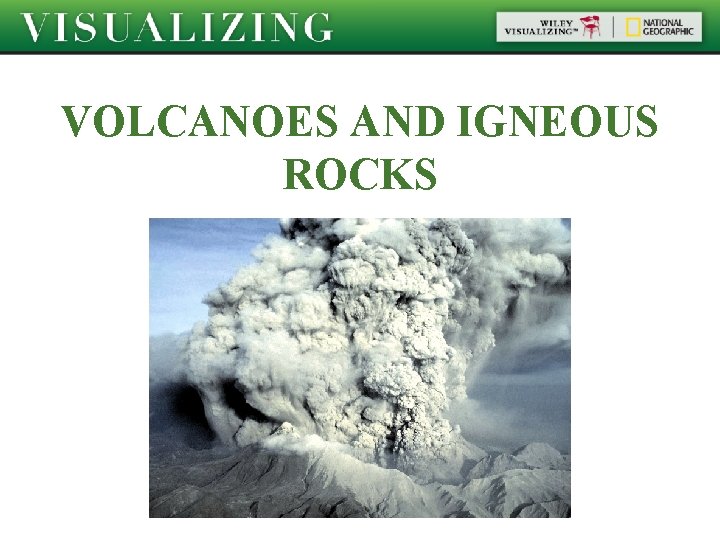
VOLCANOES AND IGNEOUS ROCKS
Objectives • Identify several different categories of volcanic eruptions. • Identify the volcanic hazards. • Describe how temperature, pressure, and water content affect a rock’s melting point. • Identify three properties that distinguish one lava from another. • Distinguish between and identify volcanic and plutonic rocks. • Describe the most common plutonic formations.
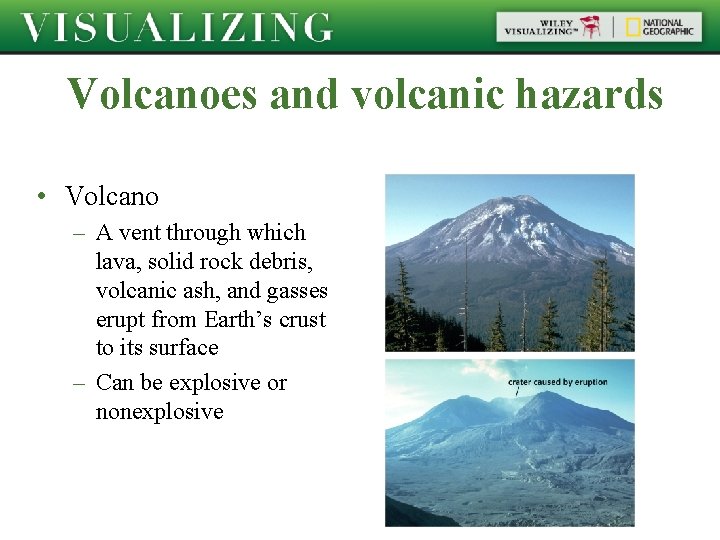
Volcanoes and volcanic hazards • Volcano – A vent through which lava, solid rock debris, volcanic ash, and gasses erupt from Earth’s crust to its surface – Can be explosive or nonexplosive
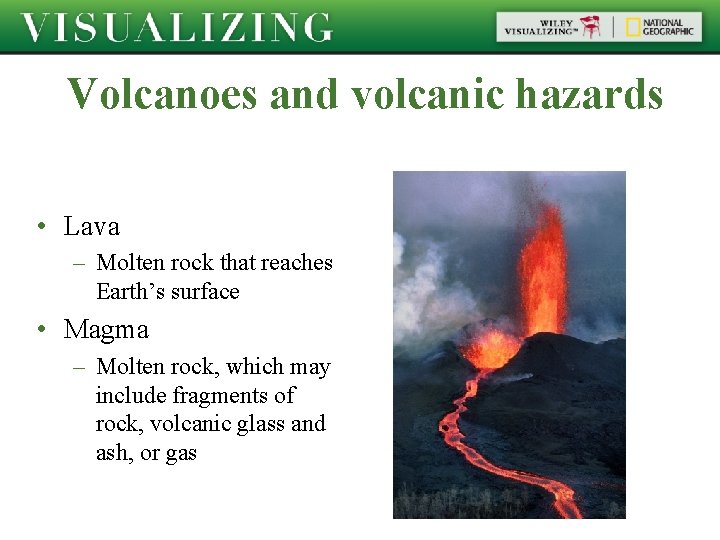
Volcanoes and volcanic hazards • Lava – Molten rock that reaches Earth’s surface • Magma – Molten rock, which may include fragments of rock, volcanic glass and ash, or gas
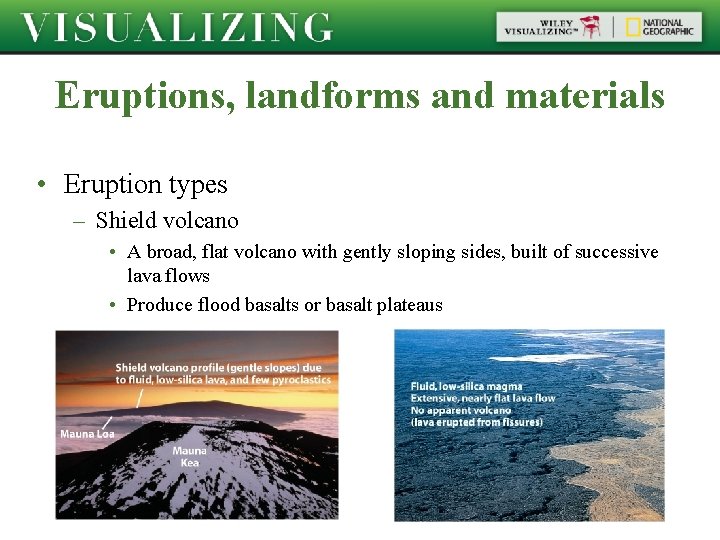
Eruptions, landforms and materials • Eruption types – Shield volcano • A broad, flat volcano with gently sloping sides, built of successive lava flows • Produce flood basalts or basalt plateaus
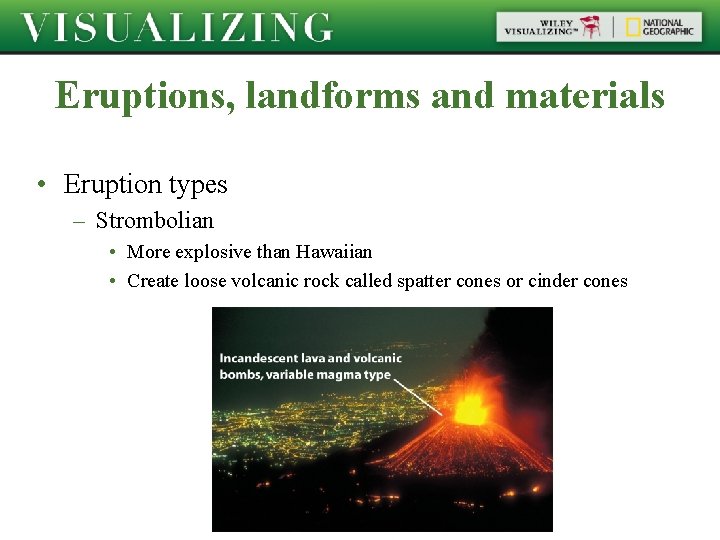
Eruptions, landforms and materials • Eruption types – Strombolian • More explosive than Hawaiian • Create loose volcanic rock called spatter cones or cinder cones
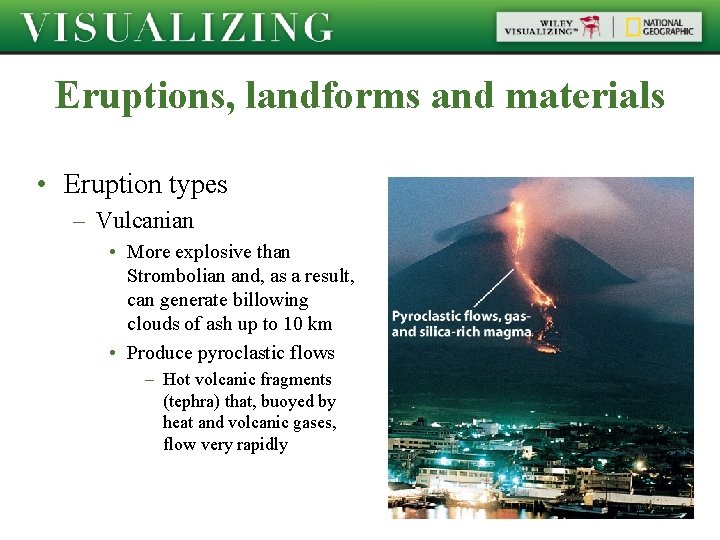
Eruptions, landforms and materials • Eruption types – Vulcanian • More explosive than Strombolian and, as a result, can generate billowing clouds of ash up to 10 km • Produce pyroclastic flows – Hot volcanic fragments (tephra) that, buoyed by heat and volcanic gases, flow very rapidly
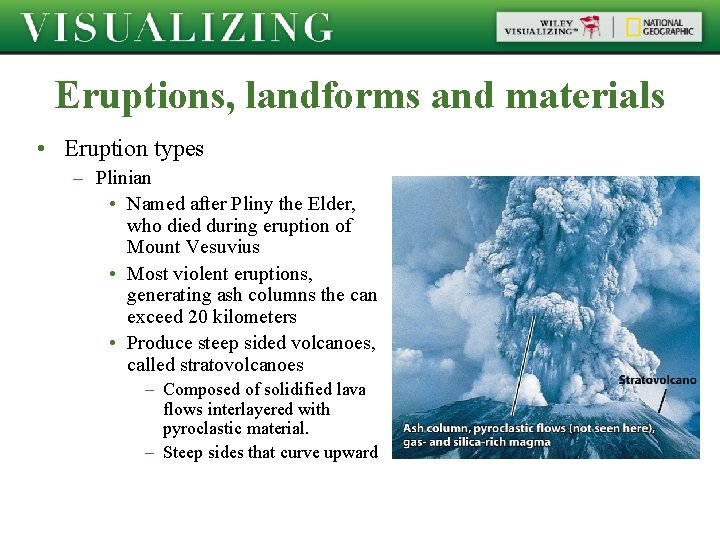
Eruptions, landforms and materials • Eruption types – Plinian • Named after Pliny the Elder, who died during eruption of Mount Vesuvius • Most violent eruptions, generating ash columns the can exceed 20 kilometers • Produce steep sided volcanoes, called stratovolcanoes – Composed of solidified lava flows interlayered with pyroclastic material. – Steep sides that curve upward
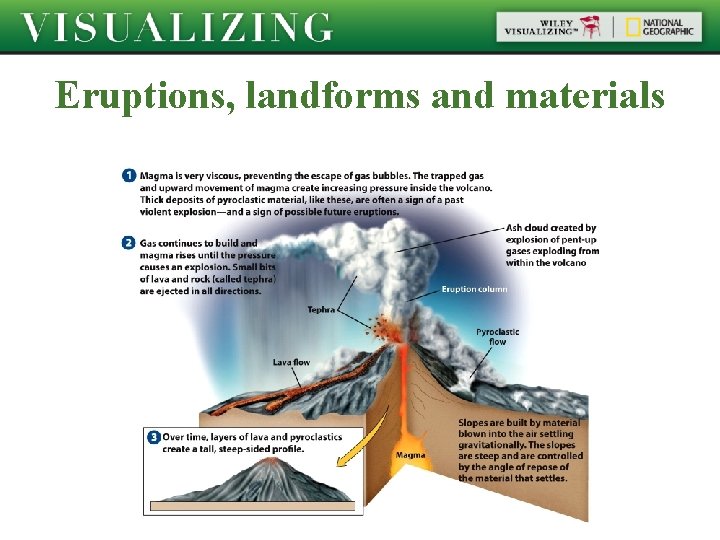
Eruptions, landforms and materials
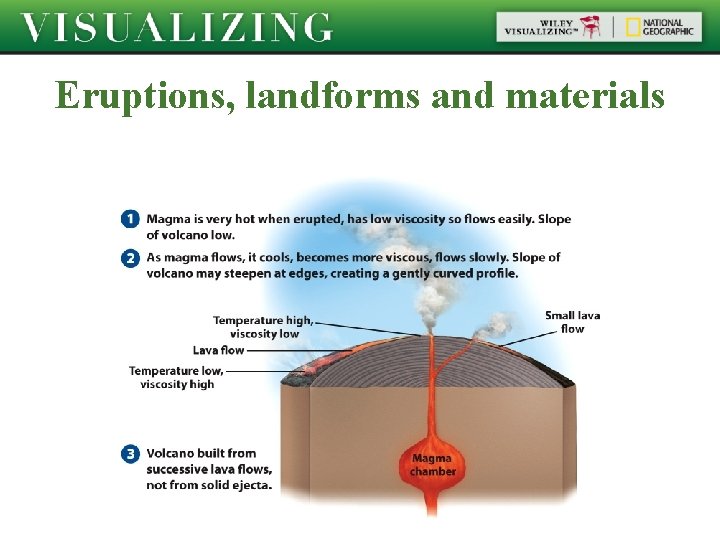
Eruptions, landforms and materials
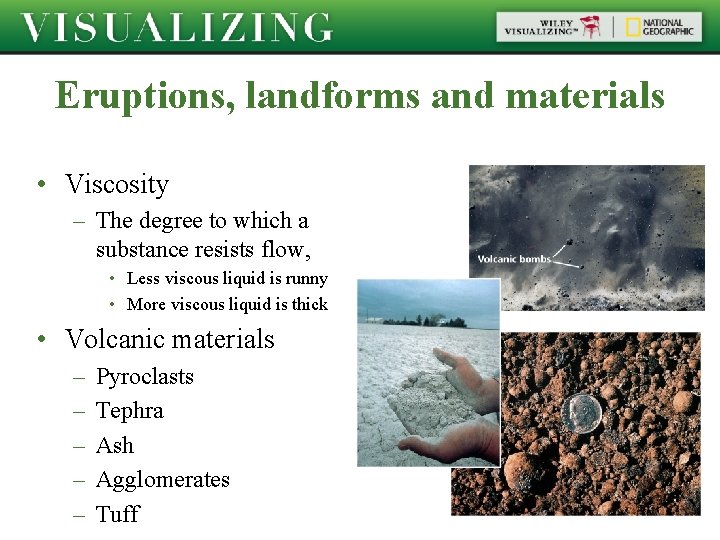
Eruptions, landforms and materials • Viscosity – The degree to which a substance resists flow, • Less viscous liquid is runny • More viscous liquid is thick • Volcanic materials – – – Pyroclasts Tephra Ash Agglomerates Tuff
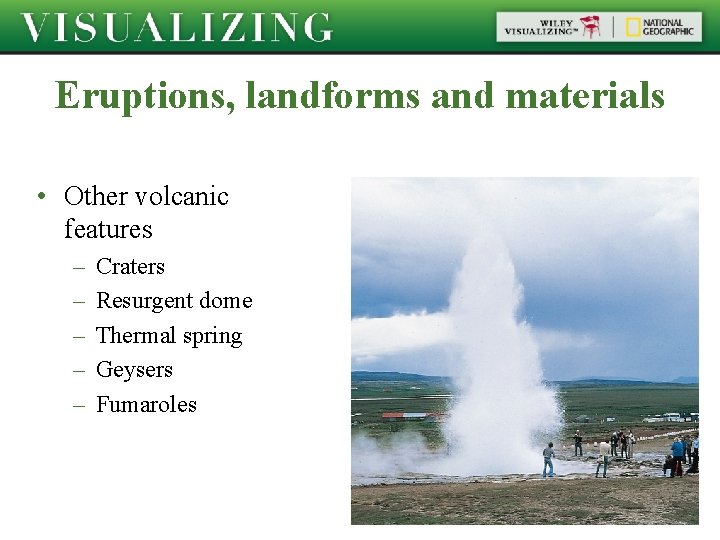
Eruptions, landforms and materials • Other volcanic features – – – Craters Resurgent dome Thermal spring Geysers Fumaroles
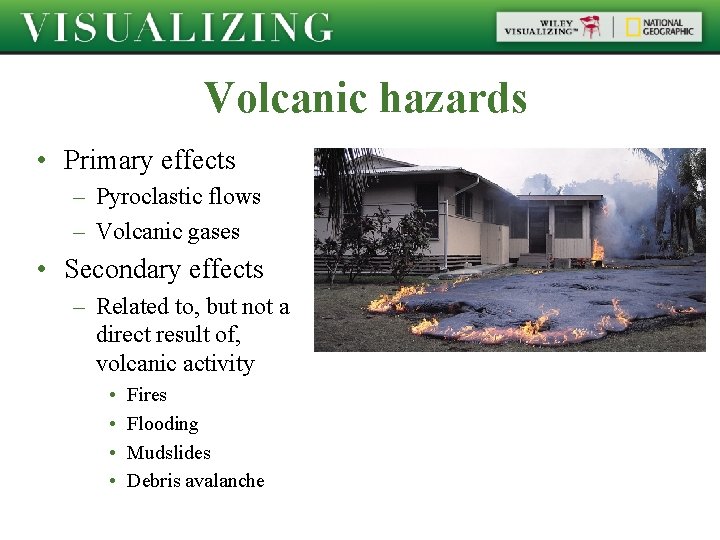
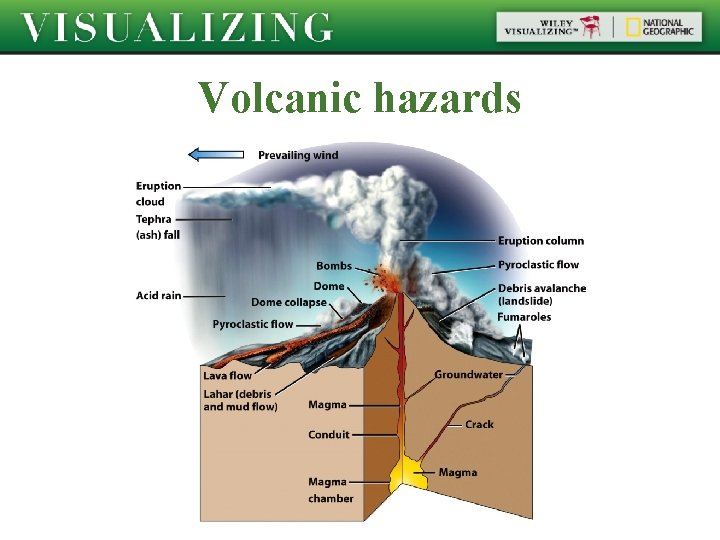
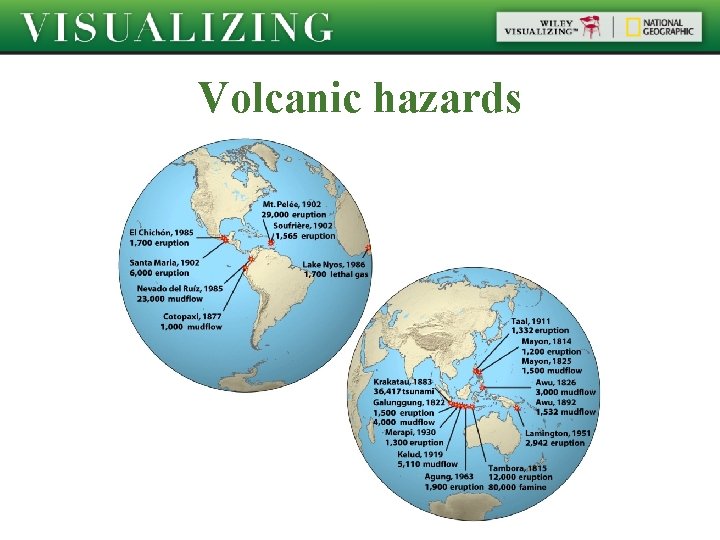
Volcanic hazards • Primary effects – Pyroclastic flows – Volcanic gases • Secondary effects – Related to, but not a direct result of, volcanic activity • • Fires Flooding Mudslides Debris avalanche
Volcanic hazards
Volcanic hazards
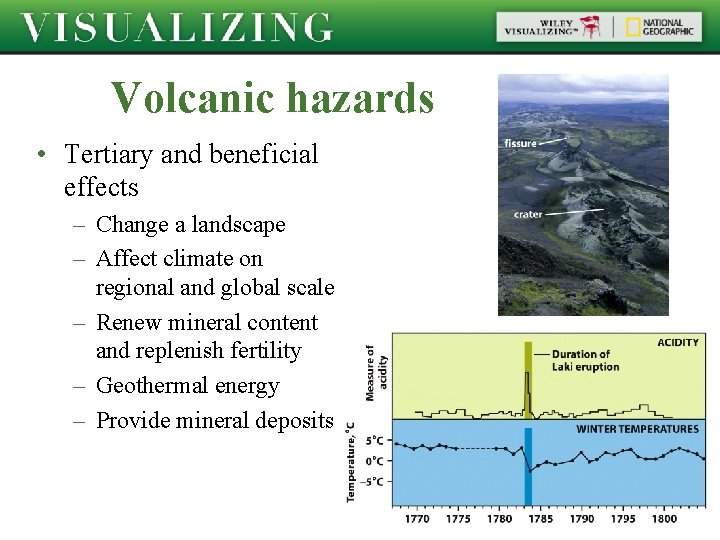
Volcanic hazards • Tertiary and beneficial effects – Change a landscape – Affect climate on regional and global scale – Renew mineral content and replenish fertility – Geothermal energy – Provide mineral deposits
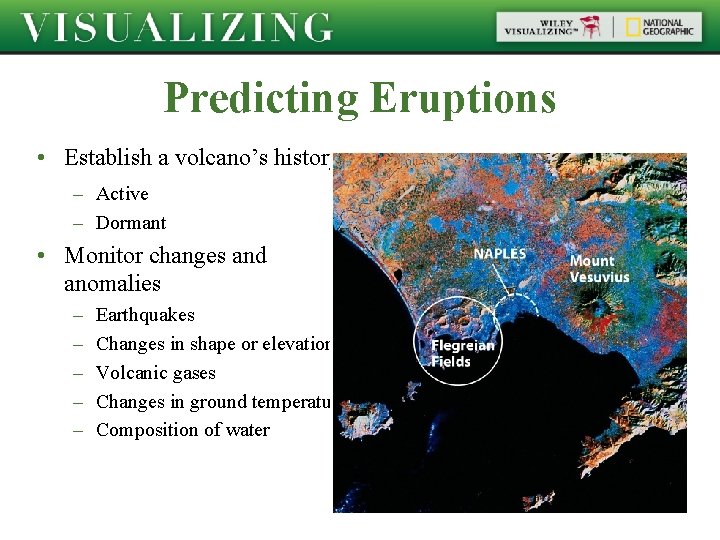
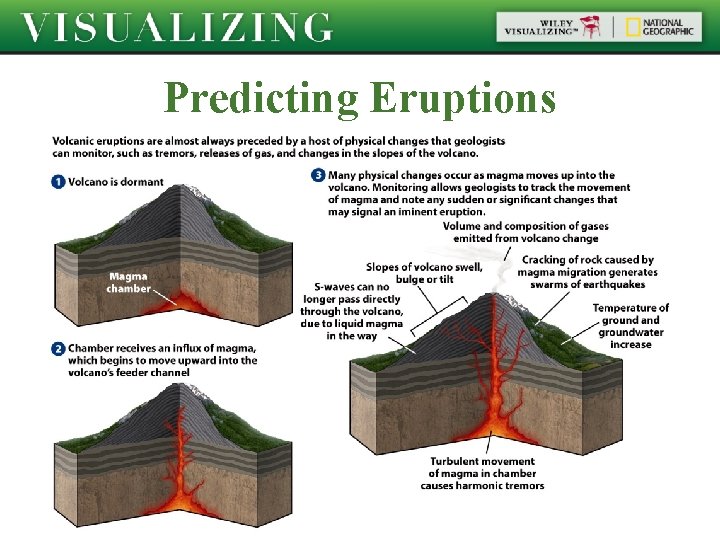
Predicting Eruptions • Establish a volcano’s history – Active – Dormant • Monitor changes and anomalies – – – Earthquakes Changes in shape or elevation Volcanic gases Changes in ground temperature Composition of water
Predicting Eruptions
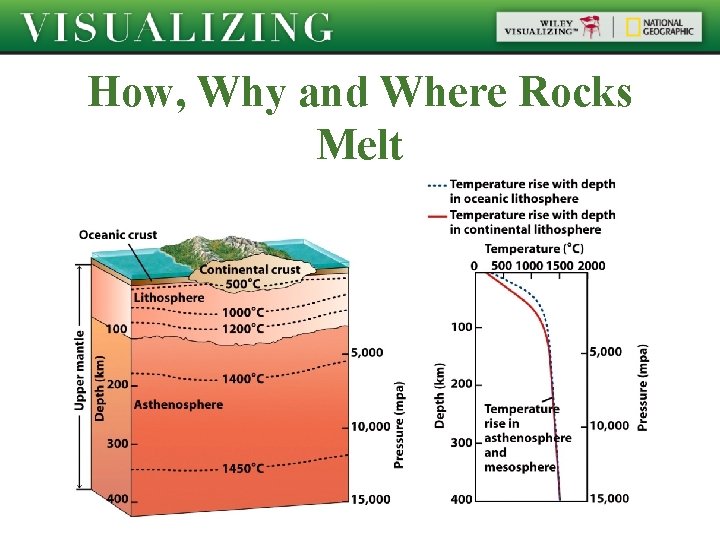
How, Why and Where Rocks Melt • Heat and pressure inside Earth – Continental crust: temperature rises 30°C/km, then about 6. 7°C/km – Ocean crust: temperature rises twice as rapid
How, Why and Where Rocks Melt
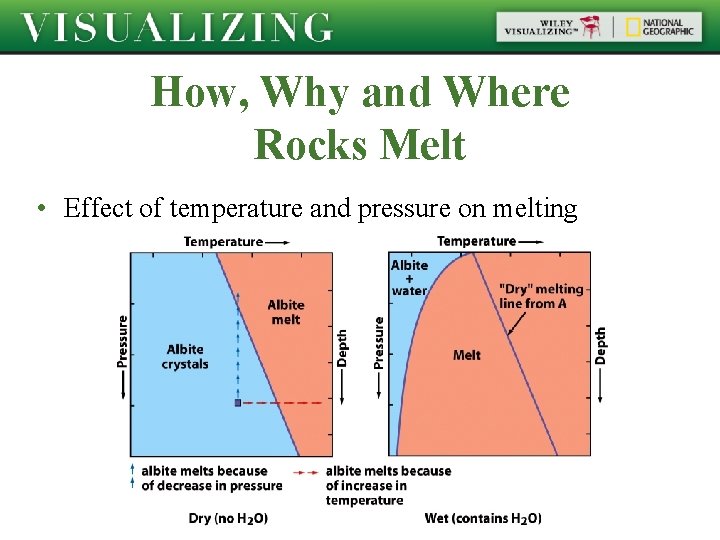
How, Why and Where Rocks Melt • Effect of temperature and pressure on melting
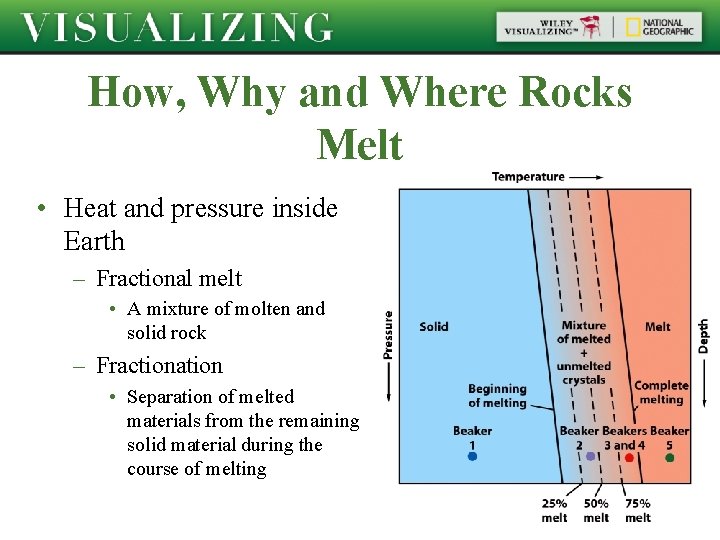
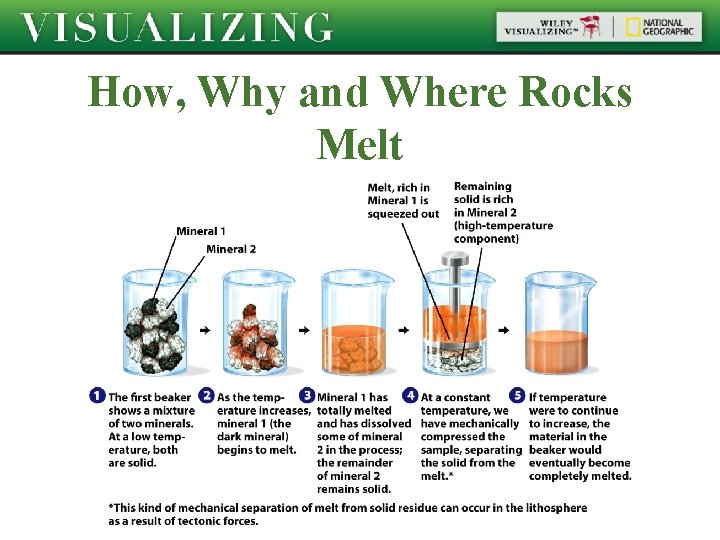
How, Why and Where Rocks Melt • Heat and pressure inside Earth – Fractional melt • A mixture of molten and solid rock – Fractionation • Separation of melted materials from the remaining solid material during the course of melting
How, Why and Where Rocks Melt
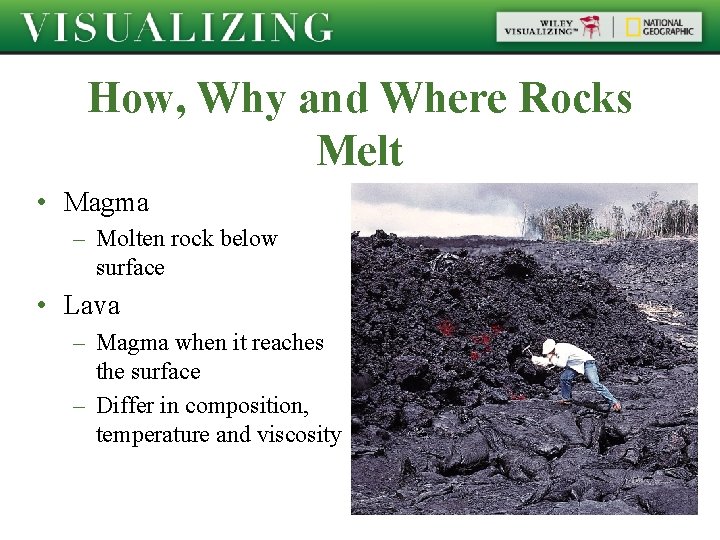
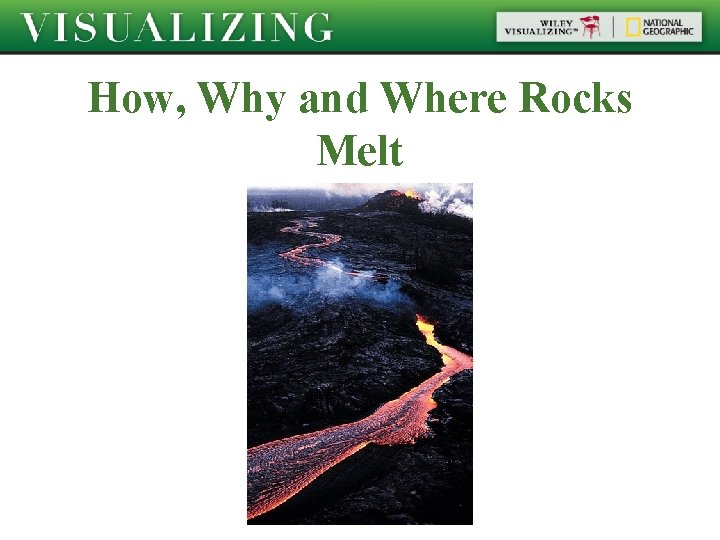
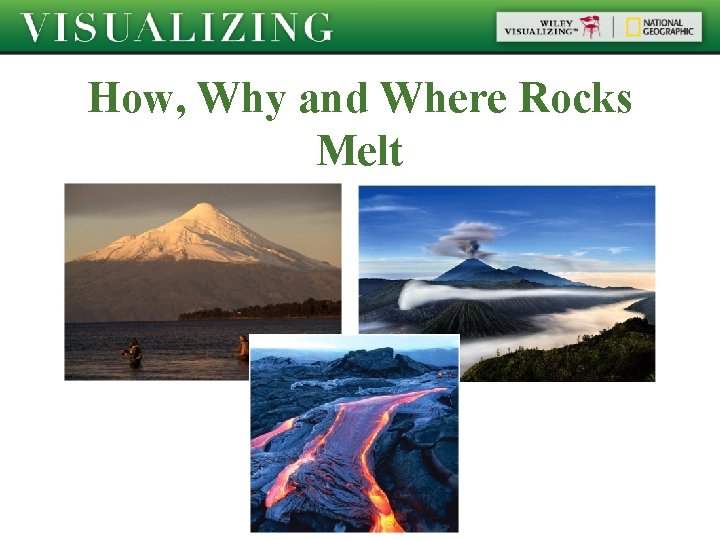
How, Why and Where Rocks Melt • Magma – Molten rock below surface • Lava – Magma when it reaches the surface – Differ in composition, temperature and viscosity
How, Why and Where Rocks Melt • Lava – Composition • 45 -75% of magma by weight is silica • Water vapor and carbon dioxide – Temperature • Lavas vary in temperature between 750°C and 1200°C • Magmas with high H 2 O contents melt at lower temperatures – Viscosity • Lavas vary in their ability to flow • Influenced by silica content and temperature
How, Why and Where Rocks Melt
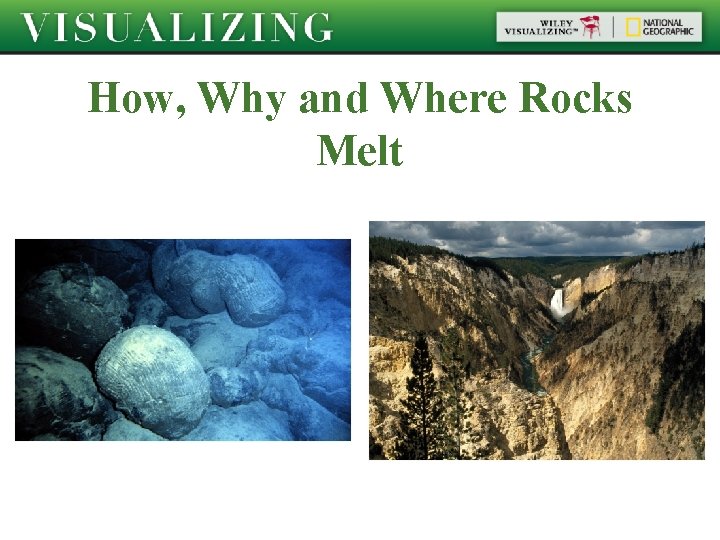
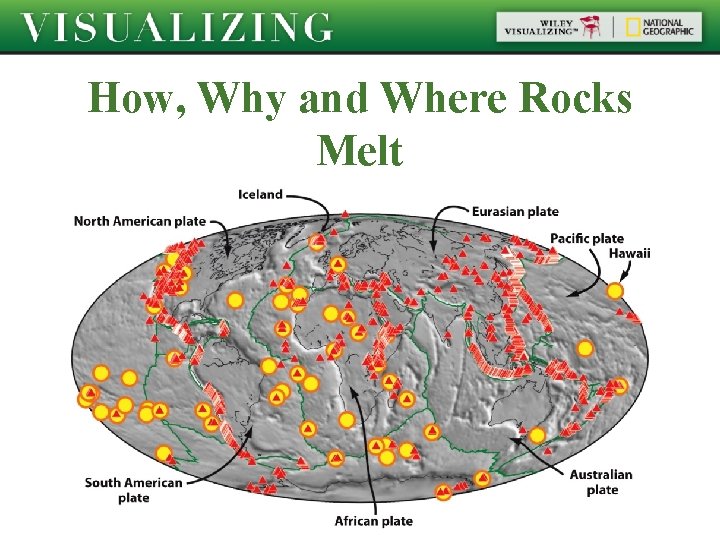
How, Why and Where Rocks Melt • The tectonic setting – Lava characteristics influenced by location • Oceanic, divergent margins – Lava is thin with a steep geothermal gradient • Subduction zones – Typically have high water content and melt at lower temperatures • Hot- spots – Lava tends to be hot and basaltic – Build giant shield volcanoes • Continental divergent margins are all different – High silica lava
How, Why and Where Rocks Melt
How, Why and Where Rocks Melt
How, Why and Where Rocks Melt
Cooling and Crystallization • Crystallization – The process whereby mineral grains form and grow in a cooling magma (or lava) – Classified as: • Volcanic • Plutonic
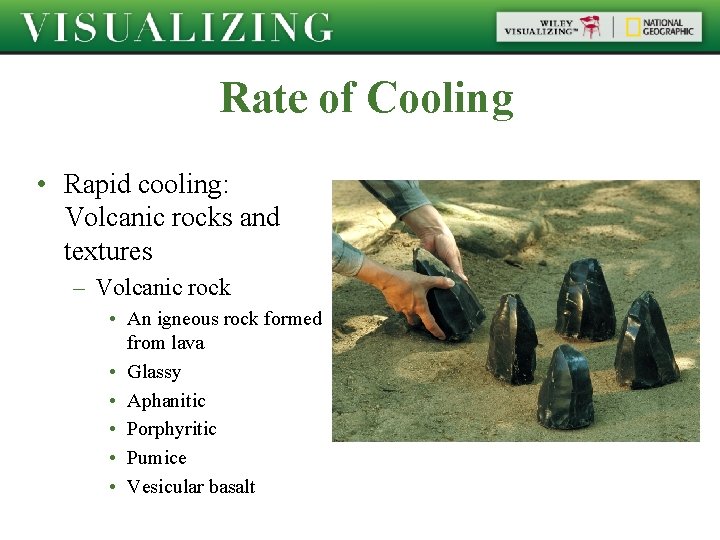
Rate of Cooling • Rapid cooling: Volcanic rocks and textures – Volcanic rock • An igneous rock formed from lava • Glassy • Aphanitic • Porphyritic • Pumice • Vesicular basalt
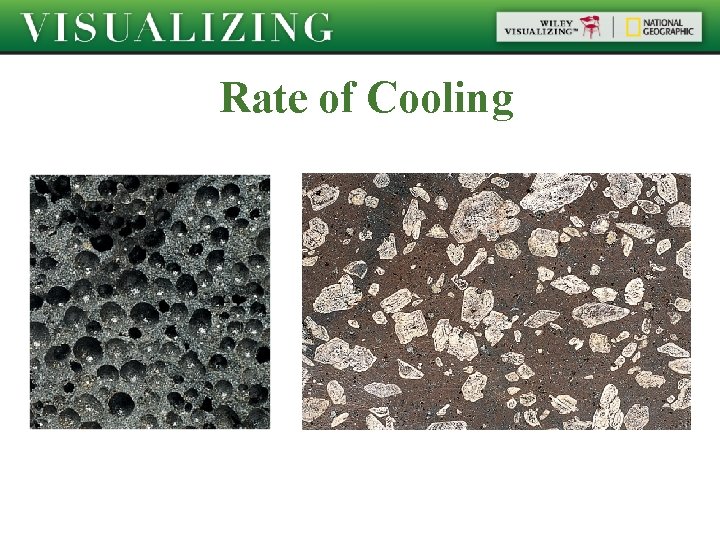
Rate of Cooling
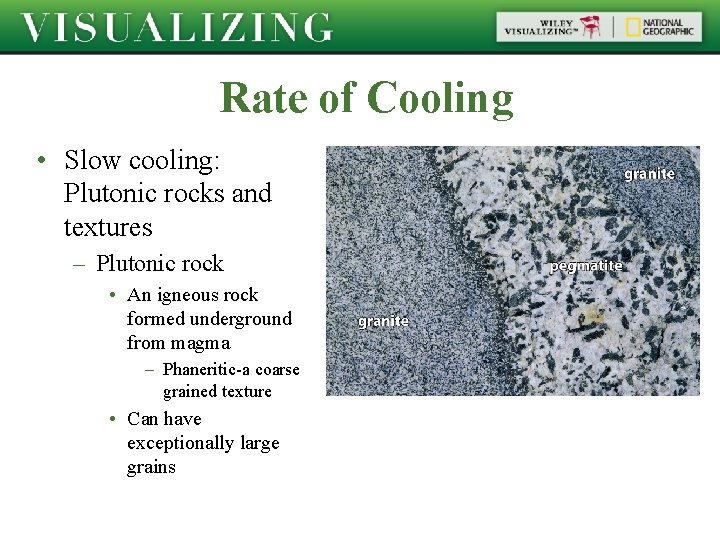
Rate of Cooling • Slow cooling: Plutonic rocks and textures – Plutonic rock • An igneous rock formed underground from magma – Phaneritic-a coarse grained texture • Can have exceptionally large grains
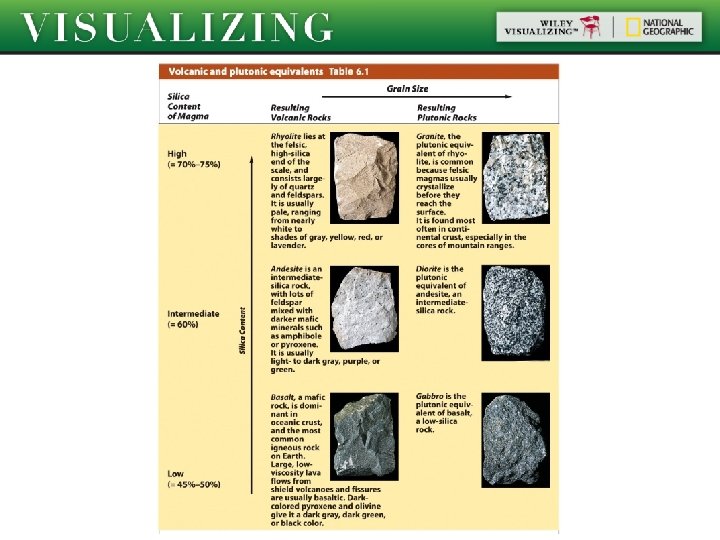
Chemical composition • Igneous rocks subdivided into three categories based on silica content – Felsic – Intermediate – Mafic
Fractional Crystallization • Separation of crystals from liquids during crystallization – Bowens reaction series – Predictable melting and cooling of minerals
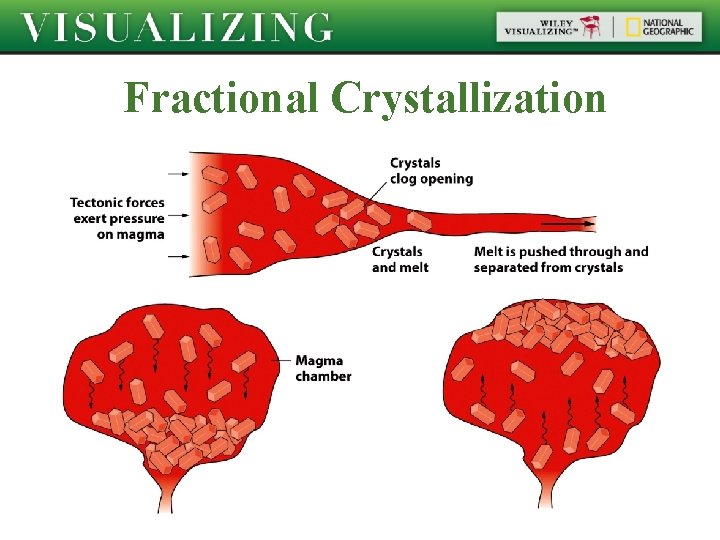
Fractional Crystallization
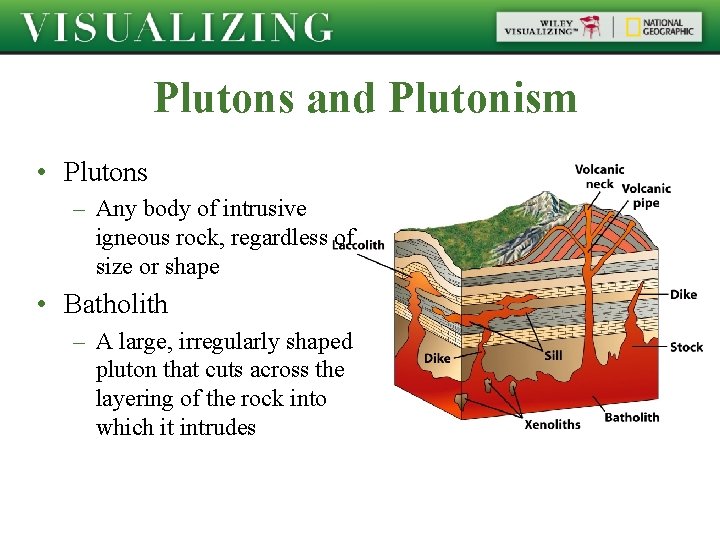
Plutons and Plutonism • Plutons – Any body of intrusive igneous rock, regardless of size or shape • Batholith – A large, irregularly shaped pluton that cuts across the layering of the rock into which it intrudes
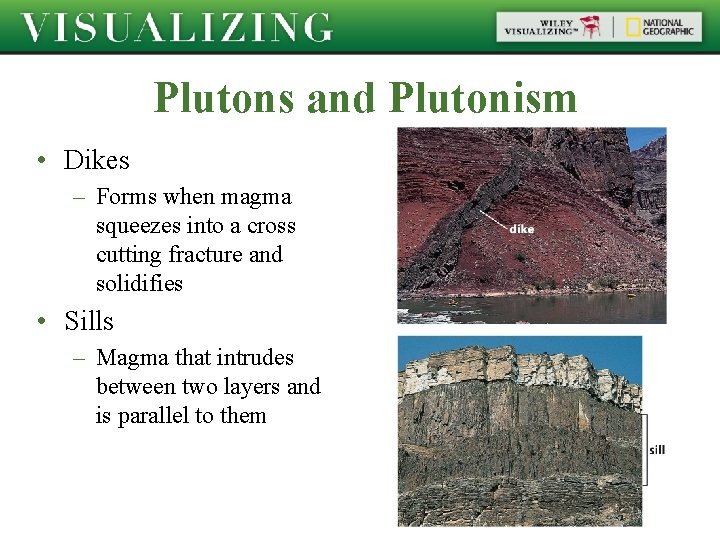
Plutons and Plutonism • Dikes – Forms when magma squeezes into a cross cutting fracture and solidifies • Sills – Magma that intrudes between two layers and is parallel to them
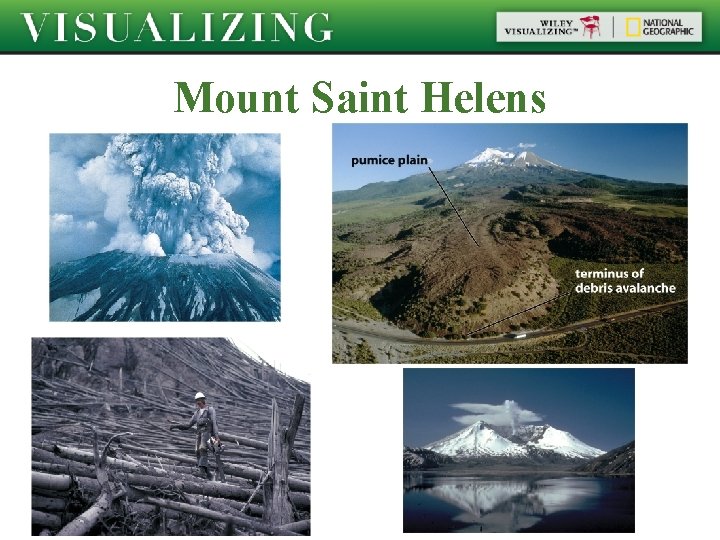
Mount Saint Helens
Critical Thinking • What factors might prevent magma from reaching Earth’s surface? • What reasons can you think of for living near a volcano? Do you think the advantages outweigh the disadvantages? • If you were to heat up a glass beaker full of crushed rock, the beaker would melt before you could finish studying the rock melting process. How do you think geologists study rock melting?
- Slides: 42