
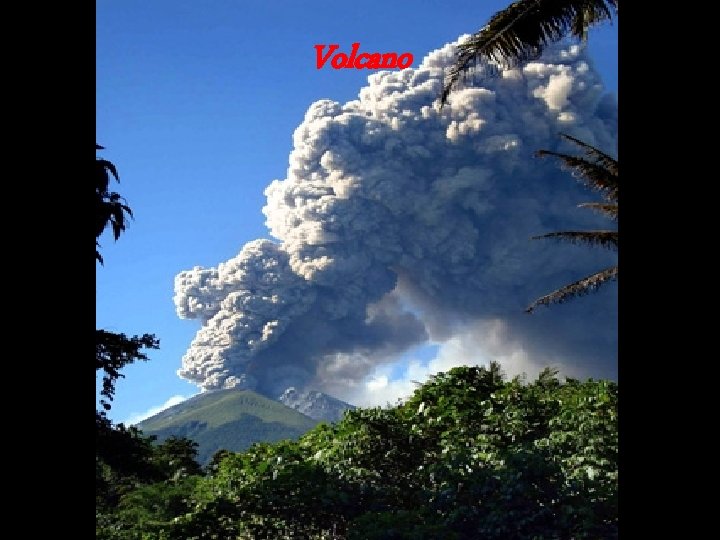
Volcano Volcano An opening in the Earths crust







- Slides: 60
Volcano
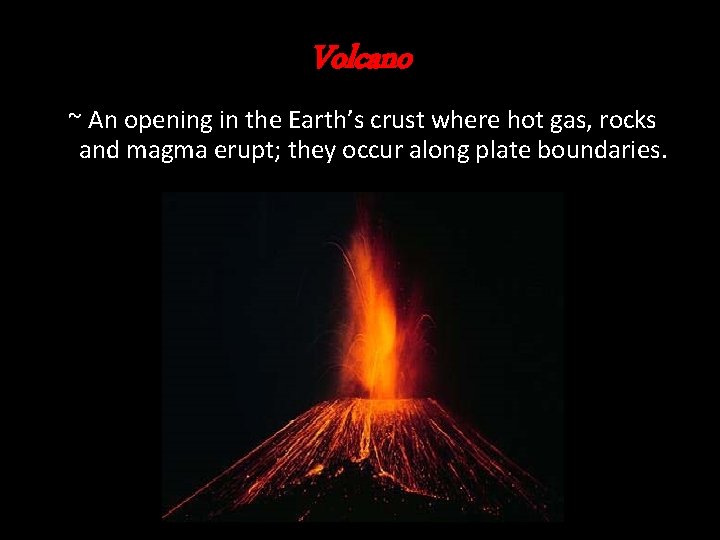
Volcano ~ An opening in the Earth’s crust where hot gas, rocks and magma erupt; they occur along plate boundaries.
Exciting, or Dangerous—Both?
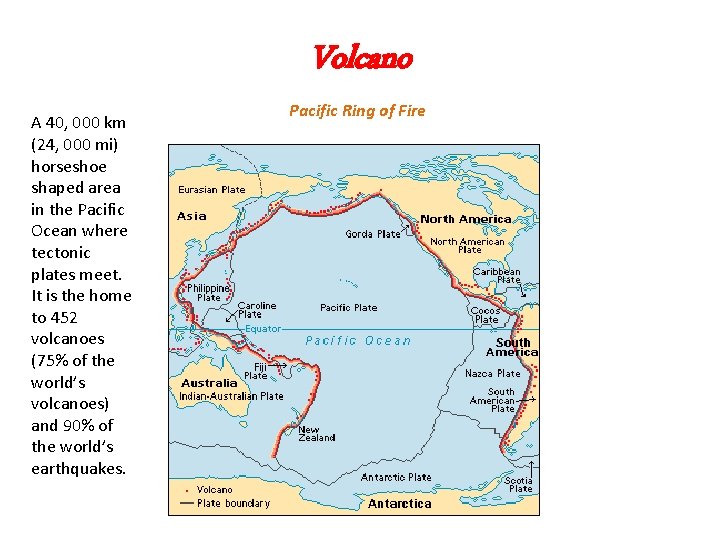
Volcano A 40, 000 km (24, 000 mi) horseshoe shaped area in the Pacific Ocean where tectonic plates meet. It is the home to 452 volcanoes (75% of the world’s volcanoes) and 90% of the world’s earthquakes. Pacific Ring of Fire
Volcano Classification: 1. Active 2. Intermittent 3. Dormant 4. Extinct
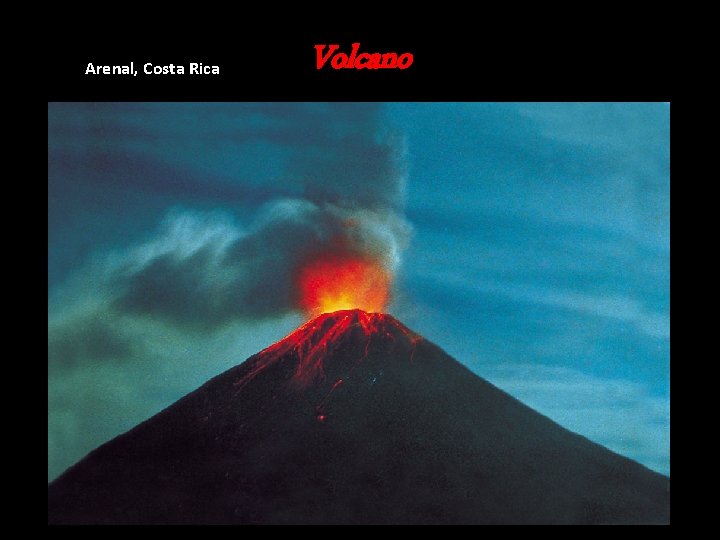
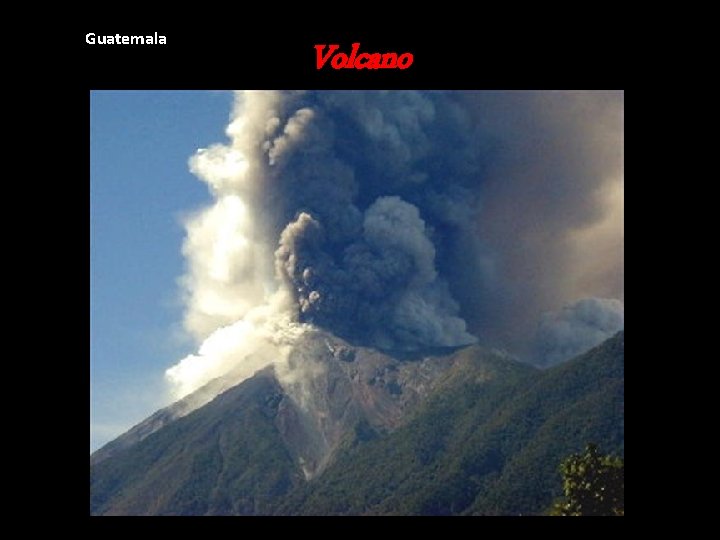
Volcano Active ~ Erupt constantly (daily, weekly, monthly, yearly)
Kilauea, Hawaii Volcano
Arenal, Costa Rica Volcano
Guatemala Volcano
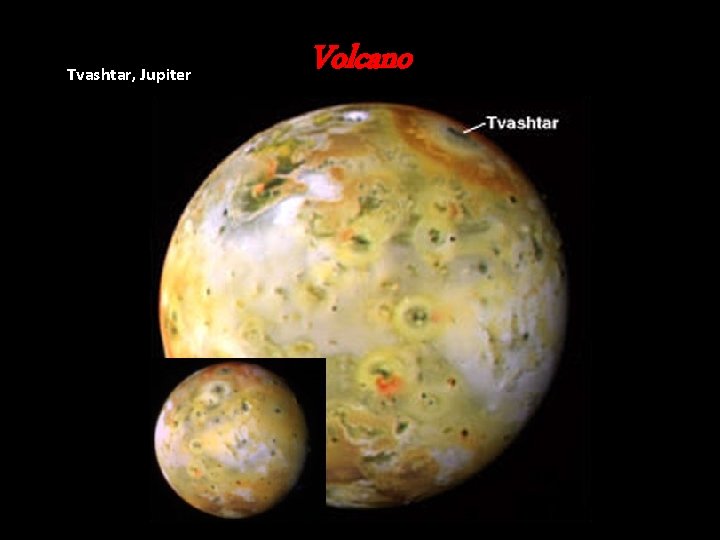
Tvashtar, Jupiter Volcano
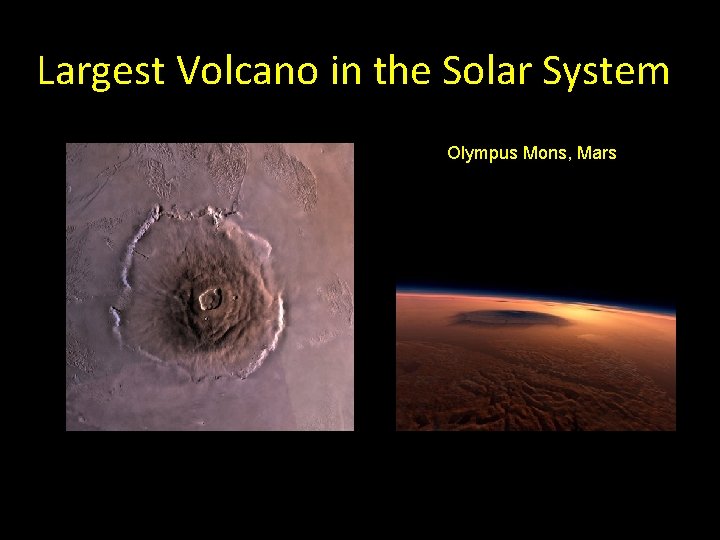
Largest Volcano in the Solar System Olympus Mons, Mars
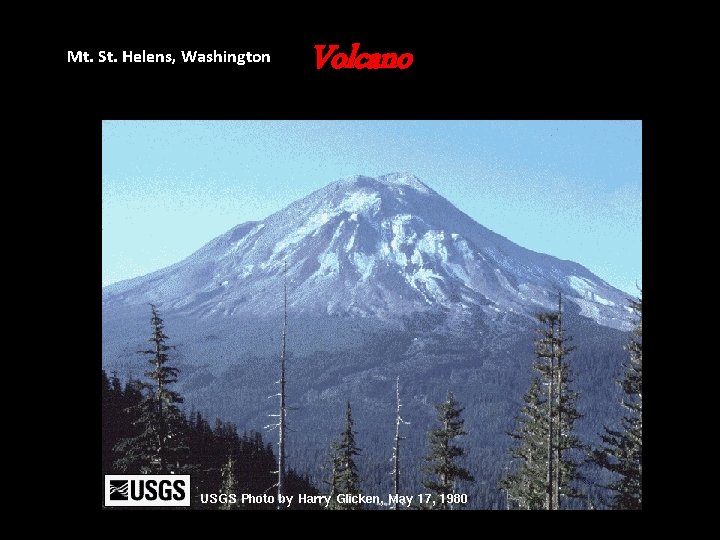
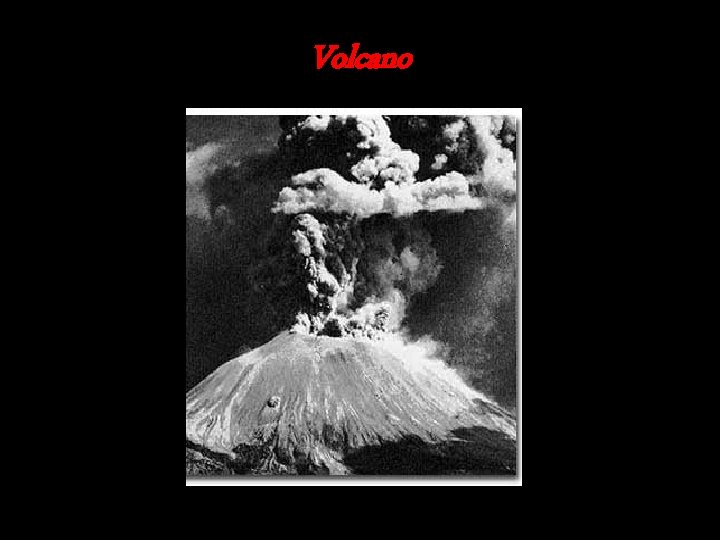
Volcano Intermittent ~ Erupt on a fairly regular basis (every few years, or so)
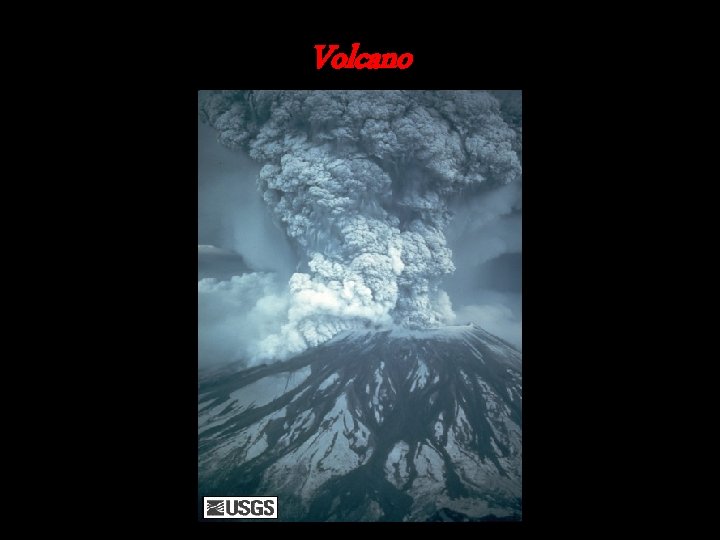
Mt. St. Helens, Washington Volcano
Volcano
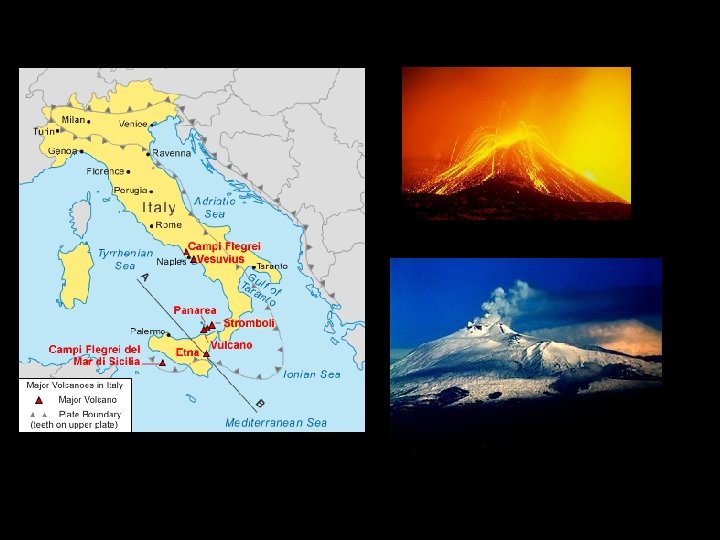
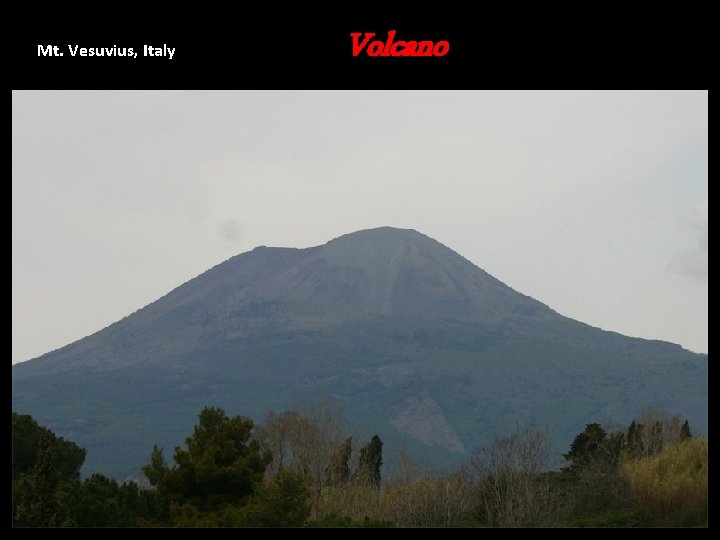
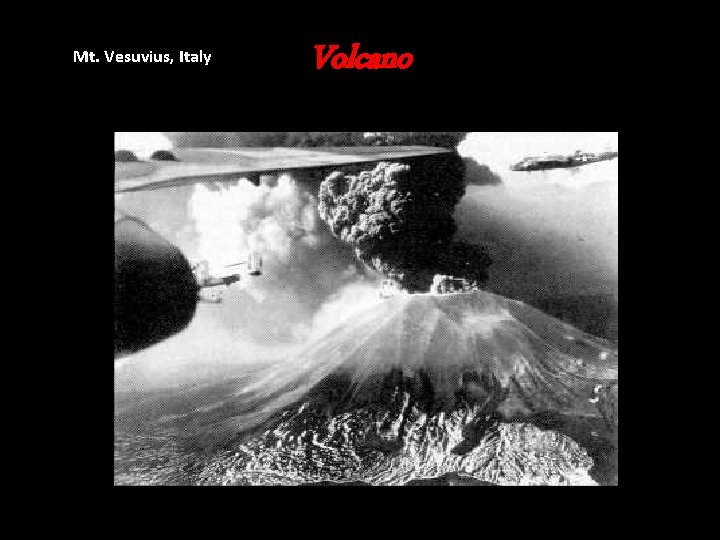
Mt. Vesuvius, Italy Volcano
Volcano
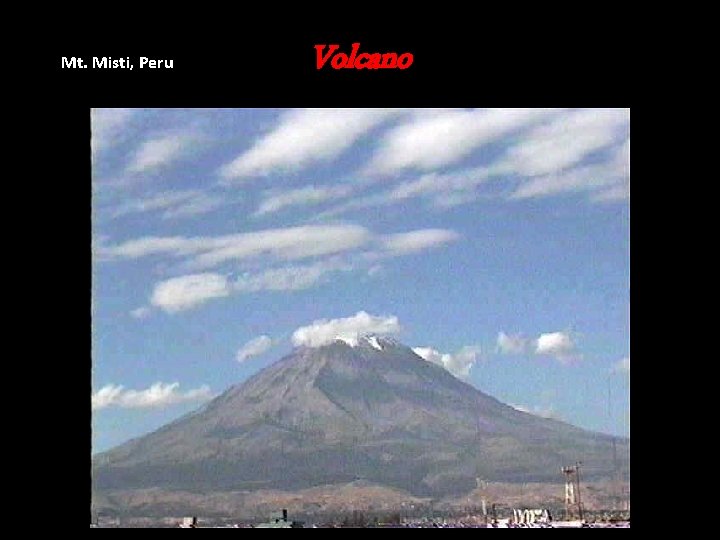
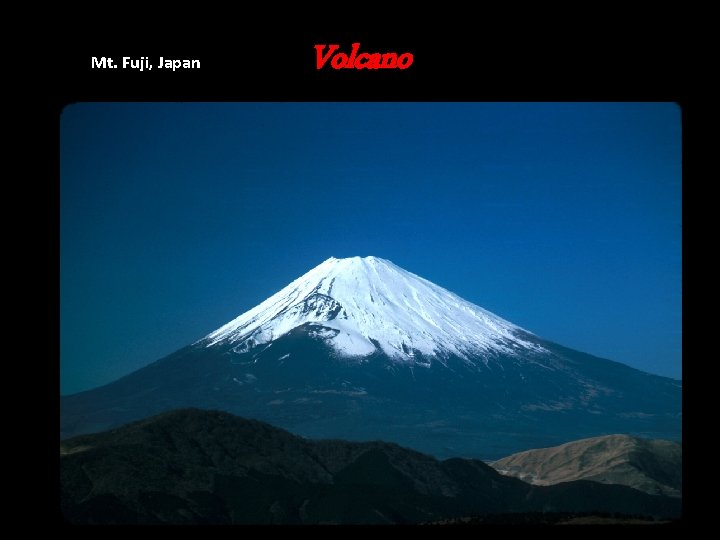
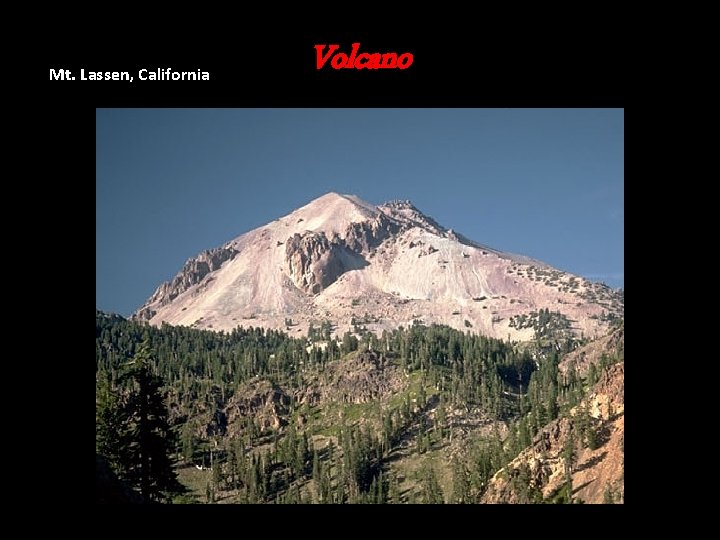
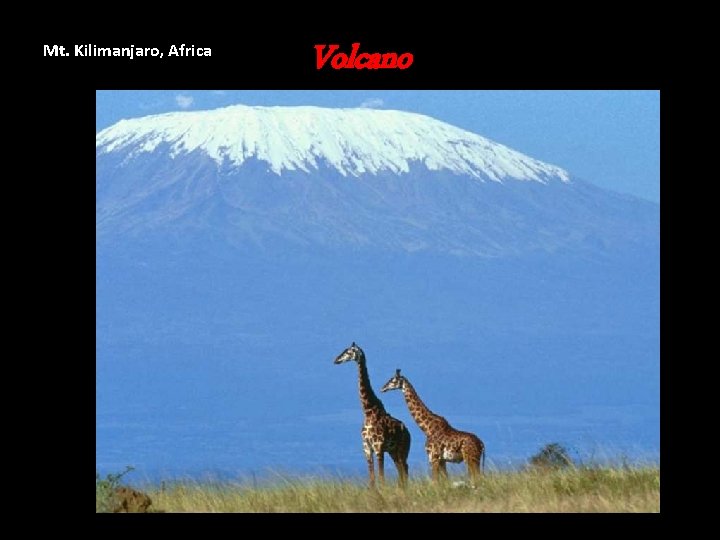
Volcano Dormant ~ Erupted a long time ago, have not in a while, but could again.
Mt. Misti, Peru Volcano
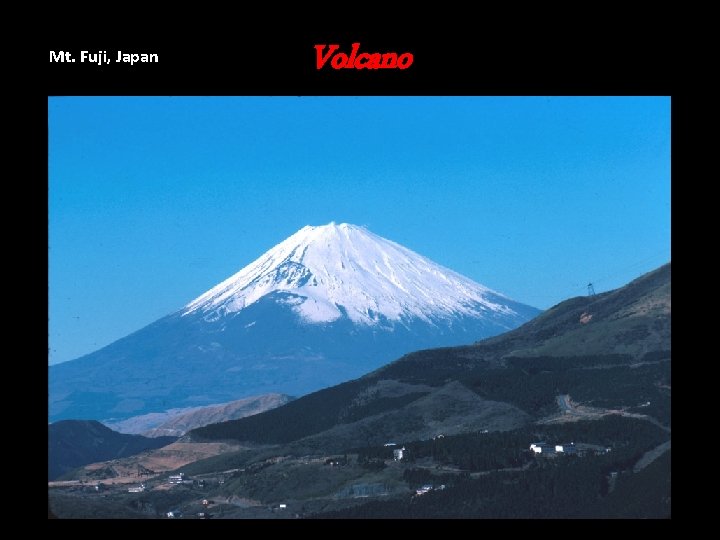
Mt. Fuji, Japan Volcano
Mt. Lassen, California Volcano
Mt. Kilimanjaro, Africa Volcano
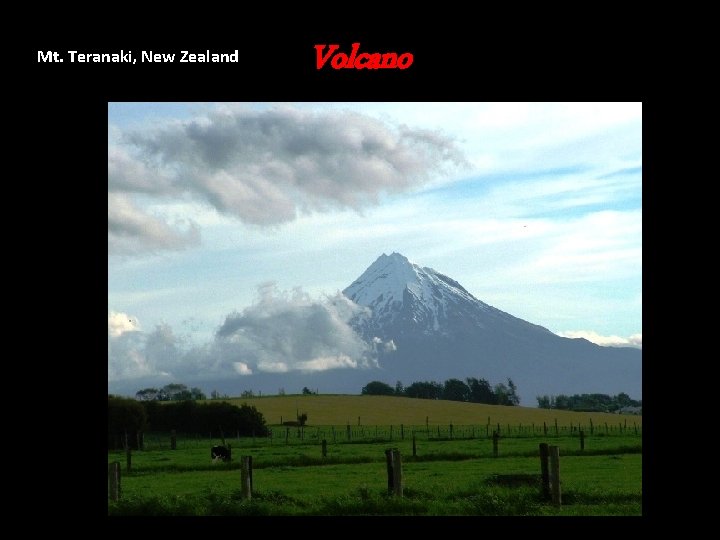
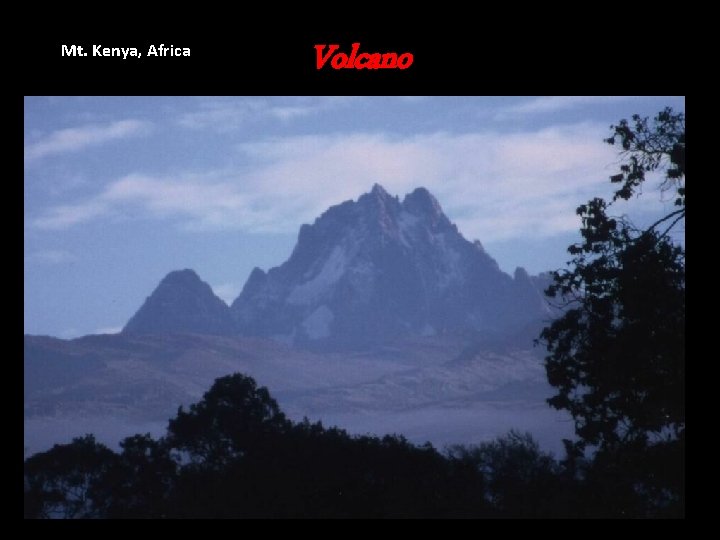
Volcano Extinct ~ Has not erupted for several years (perhaps millions) and won’t anymore
Mt. Teranaki, New Zealand Volcano
Mt. Kenya, Africa Volcano
Volcano Main Types 1. Cinder Cone 2. Shield Cone 3. Composite Cone
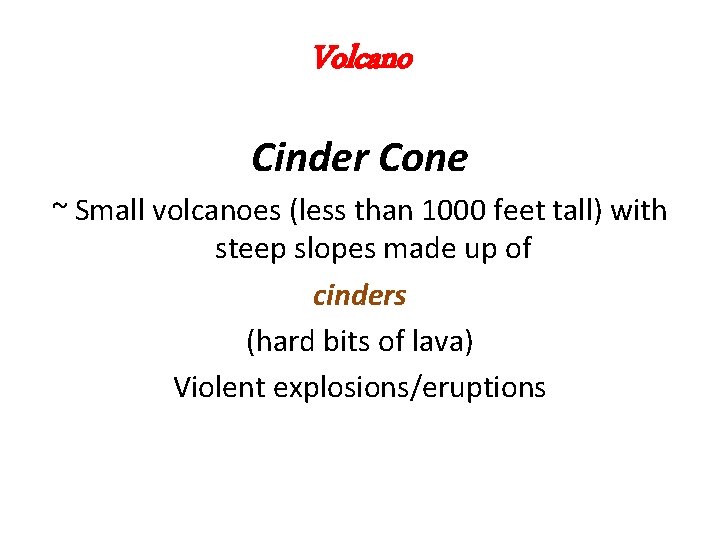
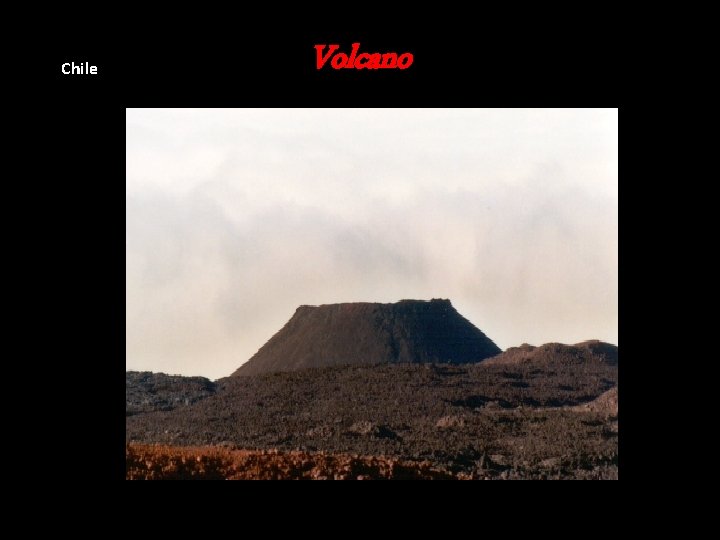
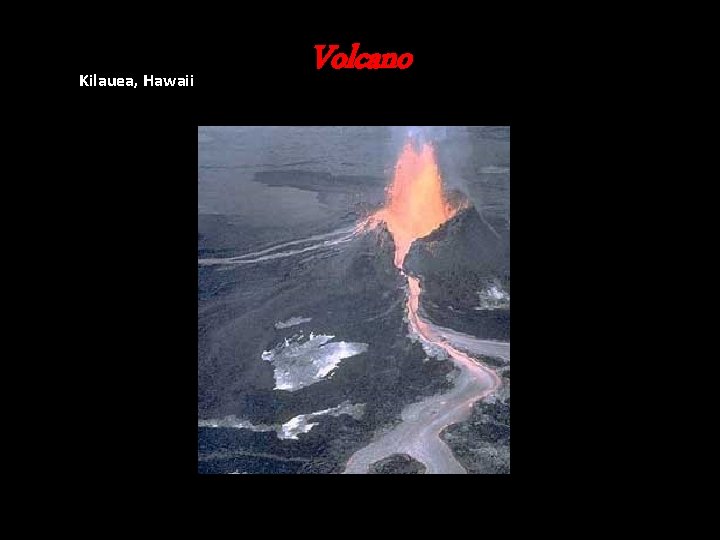
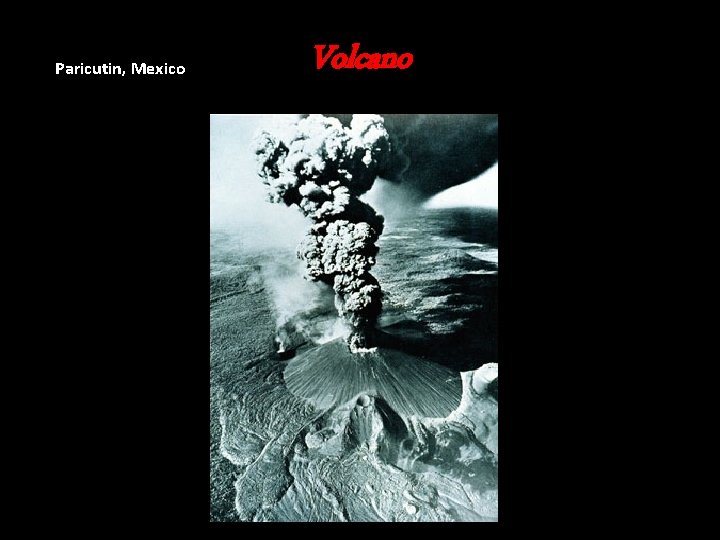
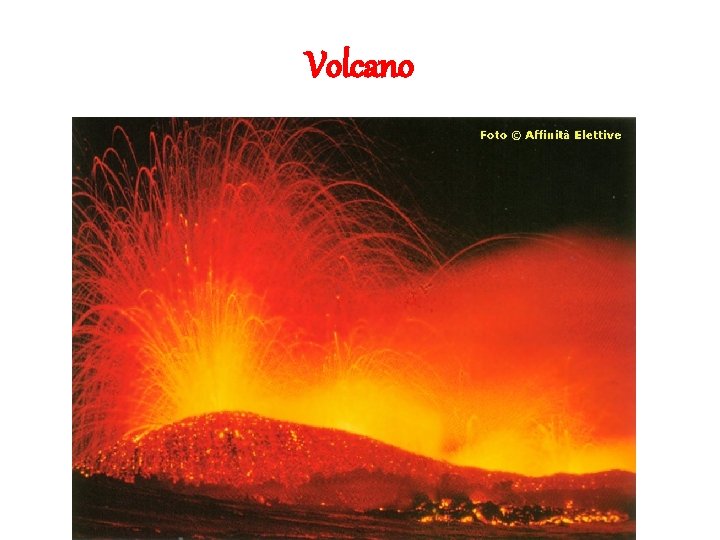
Volcano Cinder Cone ~ Small volcanoes (less than 1000 feet tall) with steep slopes made up of cinders (hard bits of lava) Violent explosions/eruptions
Chile Volcano
Kilauea, Hawaii Volcano
Paricutin, Mexico Volcano
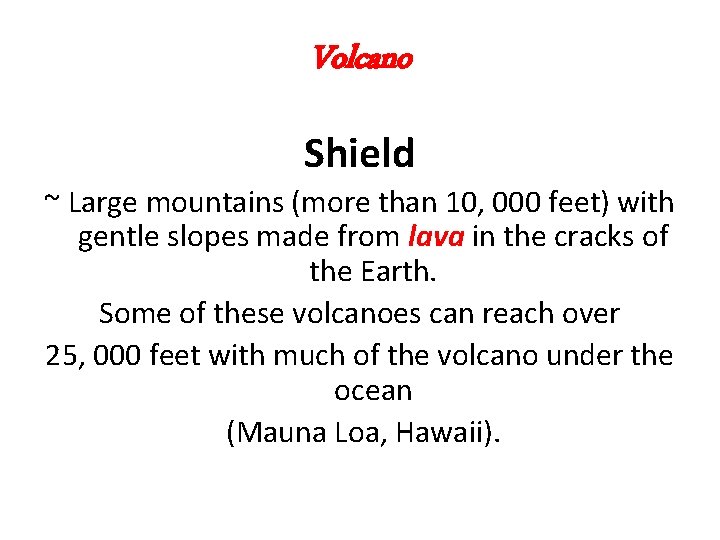
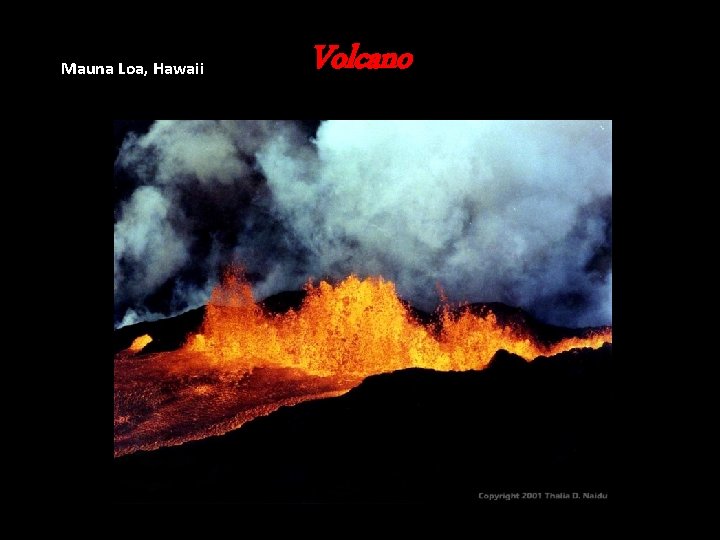
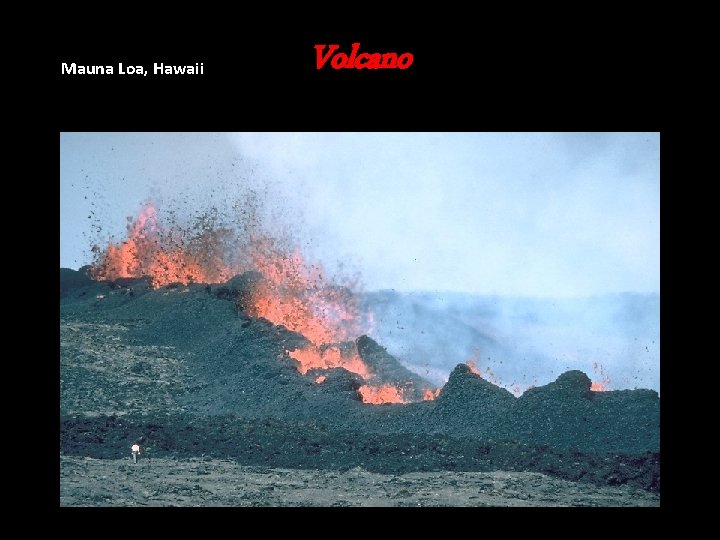
Volcano Shield ~ Large mountains (more than 10, 000 feet) with gentle slopes made from lava in the cracks of the Earth. Some of these volcanoes can reach over 25, 000 feet with much of the volcano under the ocean (Mauna Loa, Hawaii).
Mauna Loa, Hawaii Volcano
Mauna Loa, Hawaii Volcano
Mauna Loa, Hawaii Volcano
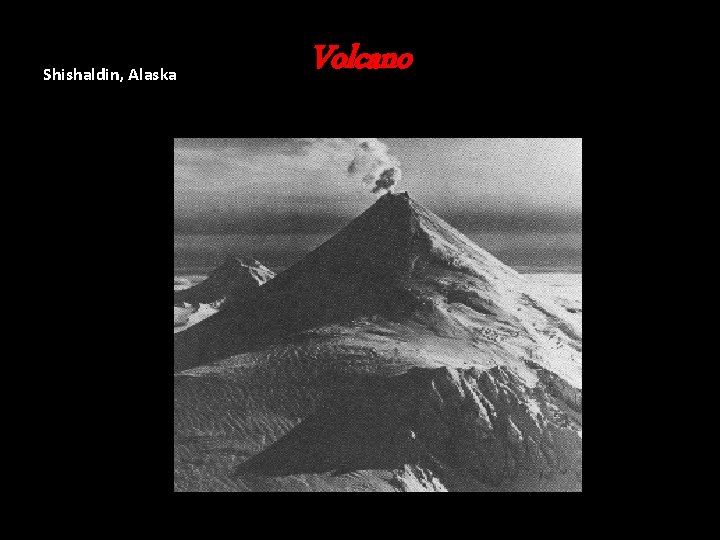
Volcano Composite ~ Large mountains above sea level made up of lava and rock bits (cinders ) Violent eruptions and steep slopes.
Mt. Fuji, Japan Volcano
Mt. Vesuvius, Italy Volcano
Shishaldin, Alaska Volcano
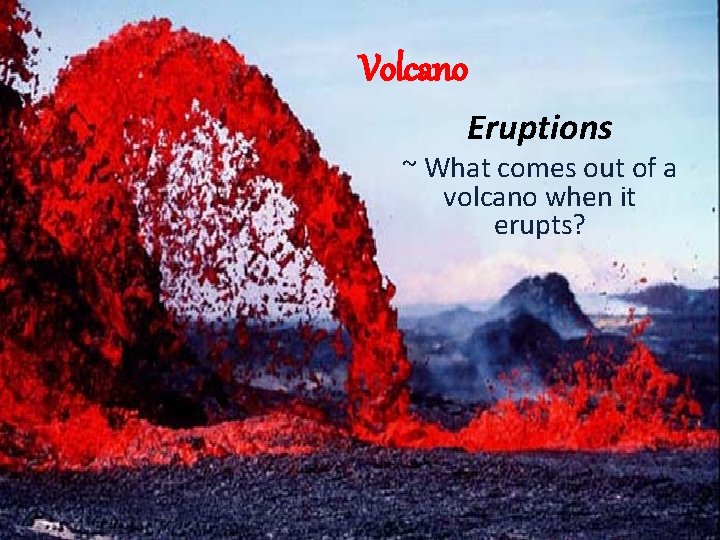
Volcano Eruptions ~ What comes out of a volcano when it erupts?
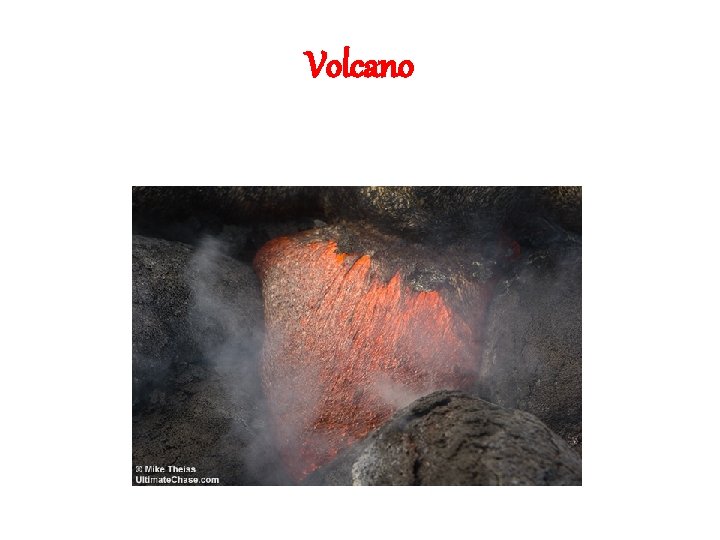
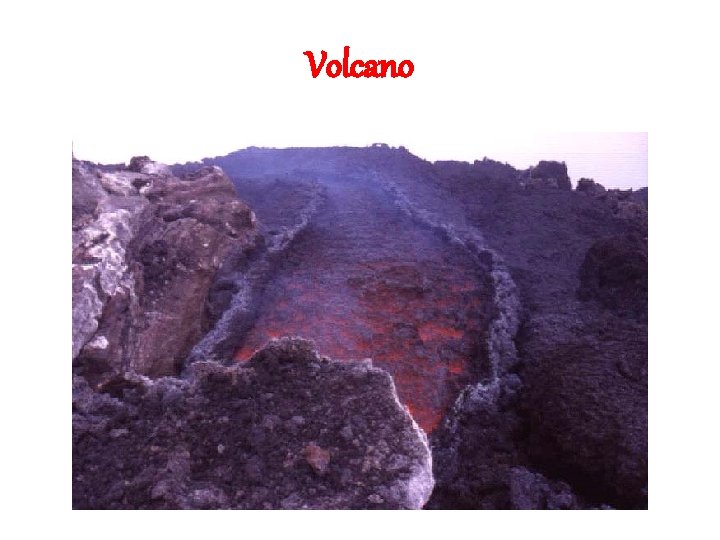
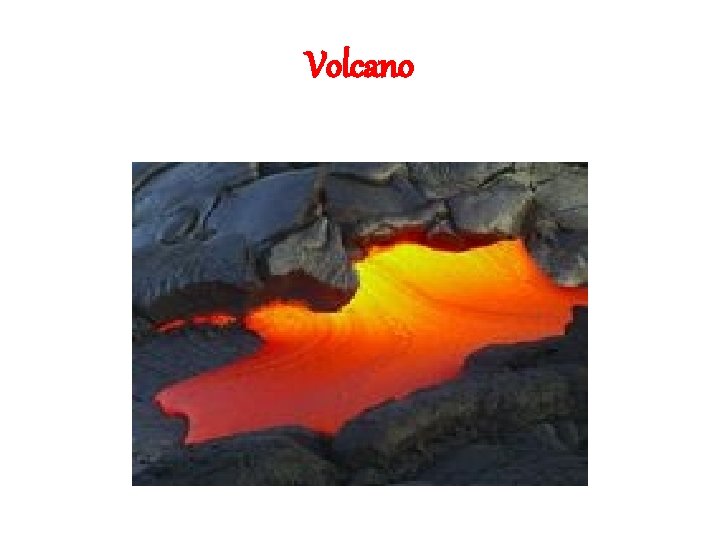
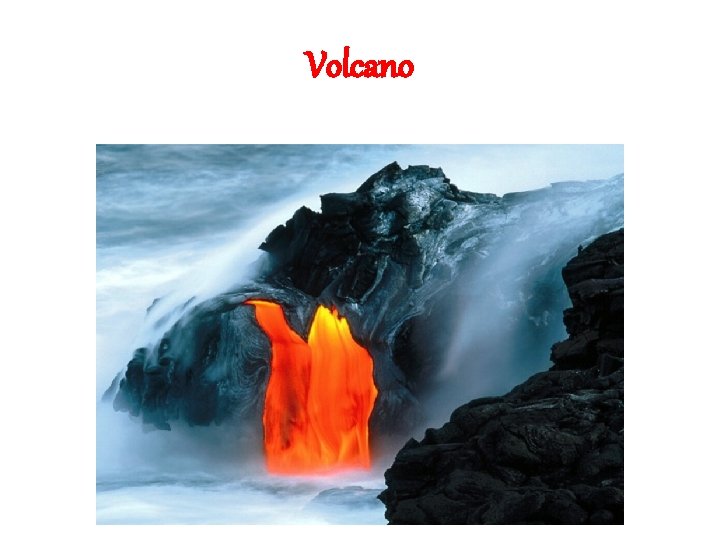
Volcano Lava ~ molten rock that will either ooze or flow quickly; the temperature usually is around 2, 000 degrees. The speed and shape of a lava flow depends on the type of volcano and strength of the eruption.
Volcano Ooze
Volcano
Volcano
Volcano Flow
Volcano
Volcano
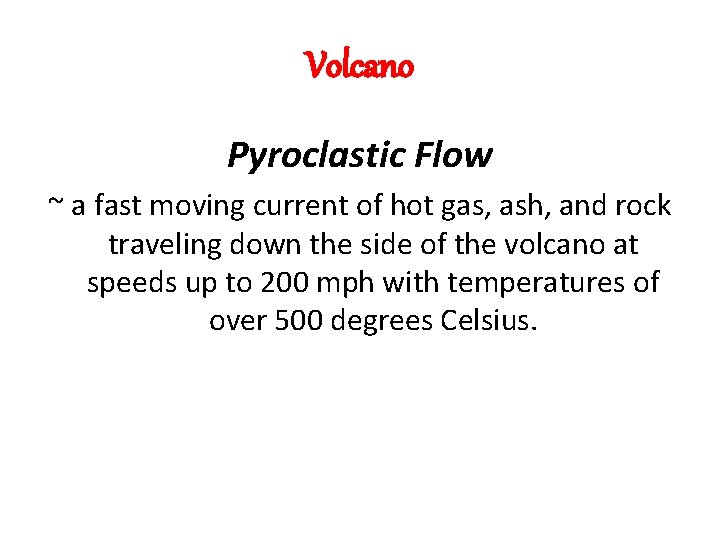
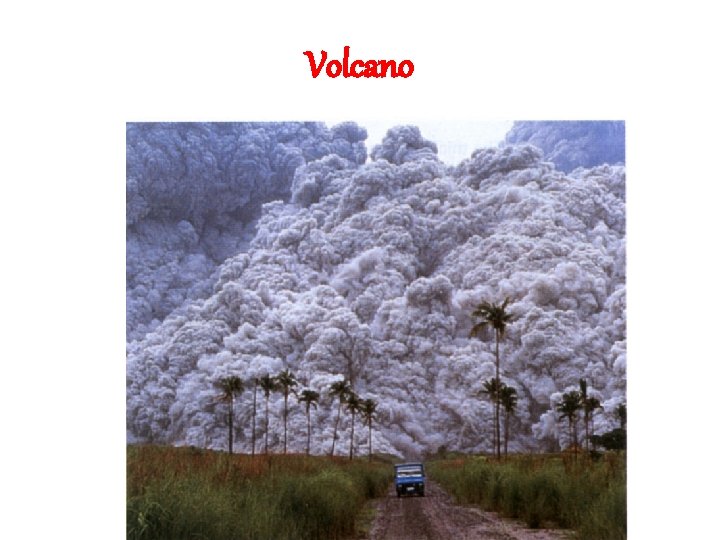
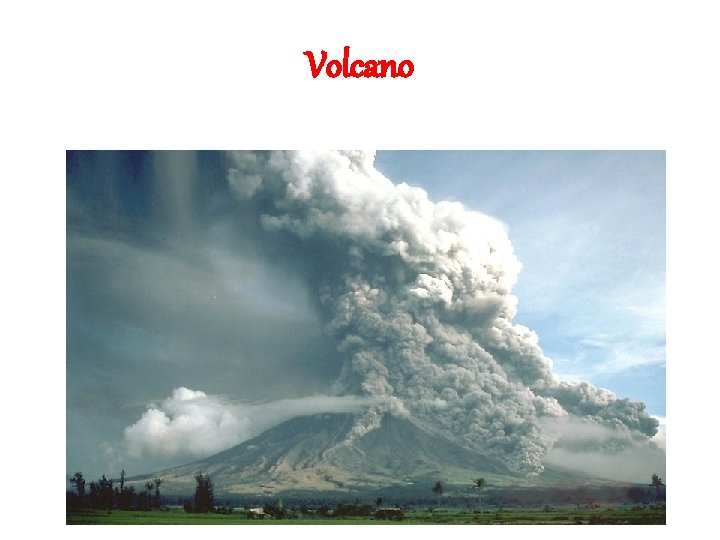
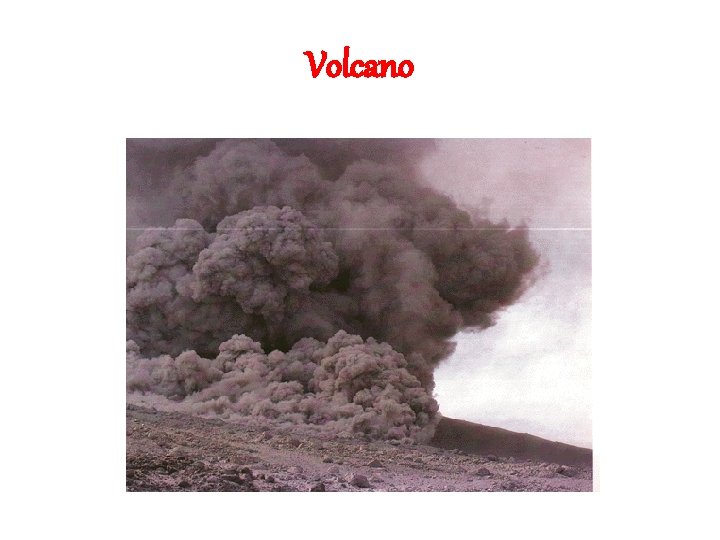
Volcano Pyroclastic Flow ~ a fast moving current of hot gas, ash, and rock traveling down the side of the volcano at speeds up to 200 mph with temperatures of over 500 degrees Celsius.
Mayon, Philippines Volcano
Volcano
Volcano
St. Augustine, Alaska Volcano
Lahar • A very hot, fast moving (cannot be outrun), and dangerous mix of melted snow, mud, and volcanic ash that results from volcanic steam or eruption. Click to View
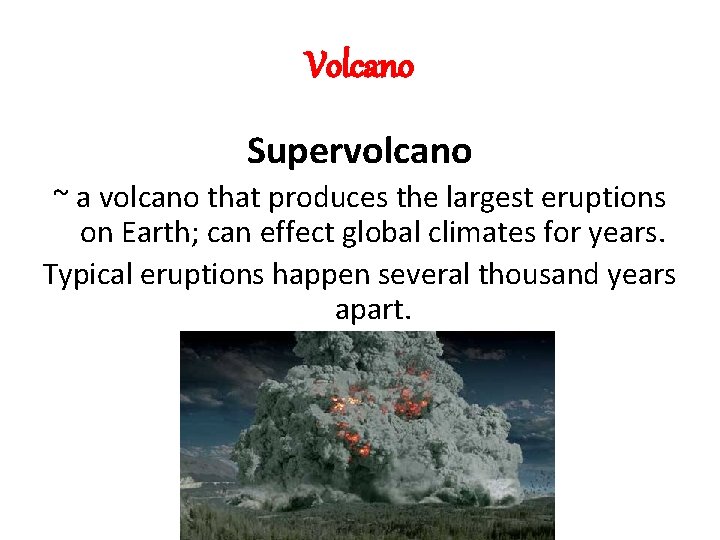
Volcano Supervolcano ~ a volcano that produces the largest eruptions on Earth; can effect global climates for years. Typical eruptions happen several thousand years apart.
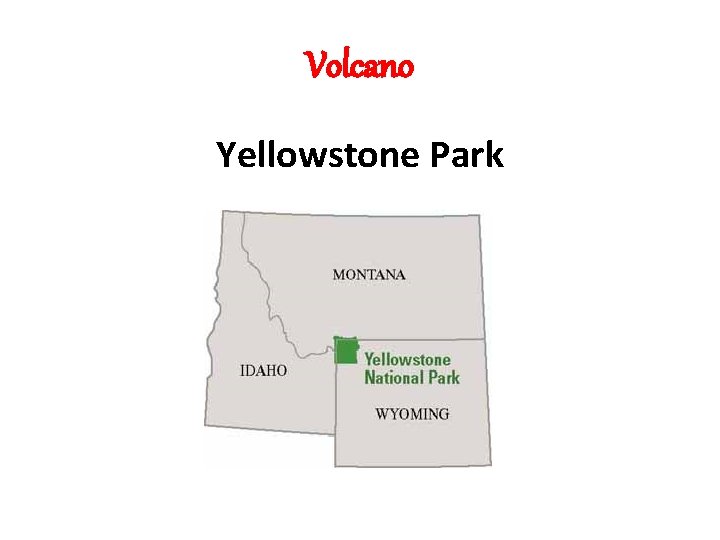
Volcano Yellowstone Park
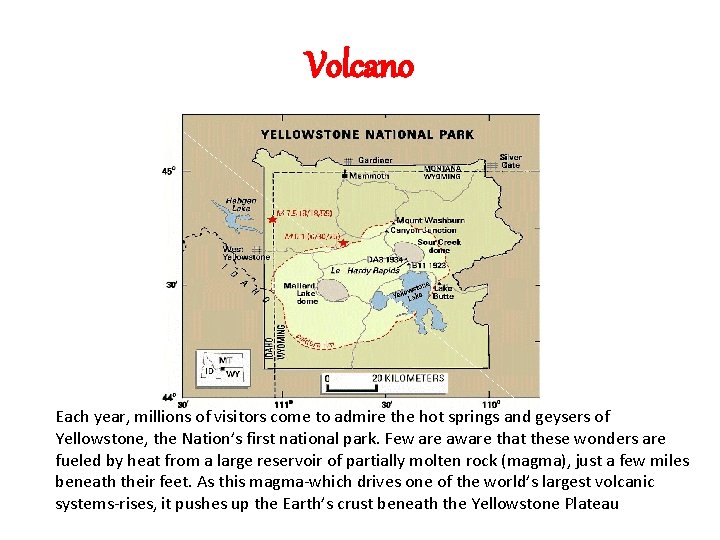
Volcano Each year, millions of visitors come to admire the hot springs and geysers of Yellowstone, the Nation’s first national park. Few are aware that these wonders are fueled by heat from a large reservoir of partially molten rock (magma), just a few miles beneath their feet. As this magma-which drives one of the world’s largest volcanic systems-rises, it pushes up the Earth’s crust beneath the Yellowstone Plateau
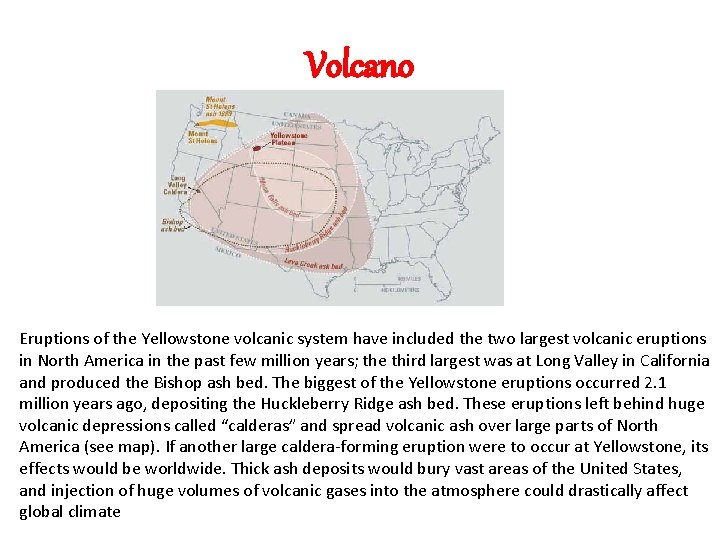
Volcano Eruptions of the Yellowstone volcanic system have included the two largest volcanic eruptions in North America in the past few million years; the third largest was at Long Valley in California and produced the Bishop ash bed. The biggest of the Yellowstone eruptions occurred 2. 1 million years ago, depositing the Huckleberry Ridge ash bed. These eruptions left behind huge volcanic depressions called “calderas” and spread volcanic ash over large parts of North America (see map). If another large caldera-forming eruption were to occur at Yellowstone, its effects would be worldwide. Thick ash deposits would bury vast areas of the United States, and injection of huge volumes of volcanic gases into the atmosphere could drastically affect global climate
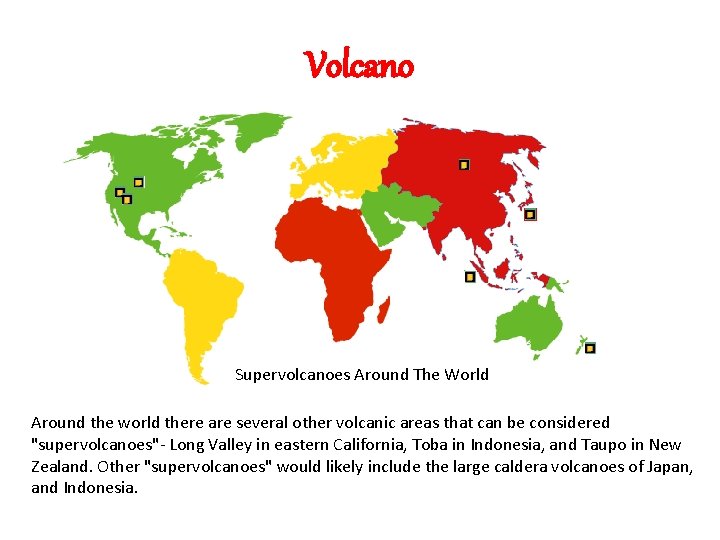
Volcano Supervolcanoes Around The World Around the world there are several other volcanic areas that can be considered "supervolcanoes"- Long Valley in eastern California, Toba in Indonesia, and Taupo in New Zealand. Other "supervolcanoes" would likely include the large caldera volcanoes of Japan, and Indonesia.
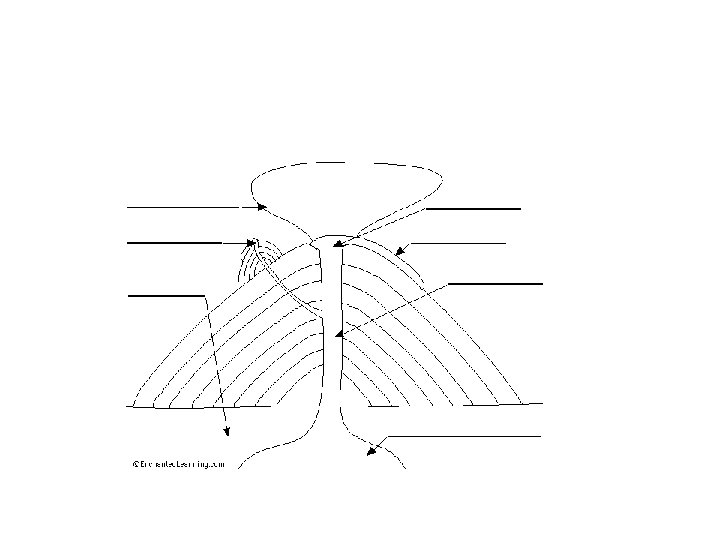
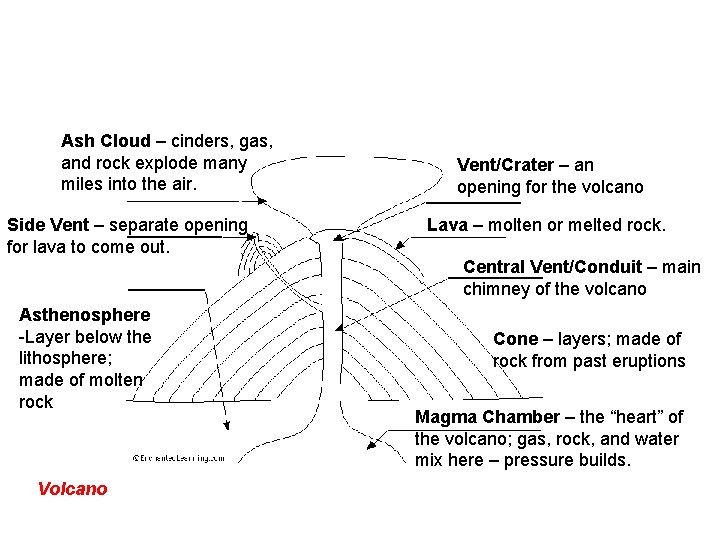
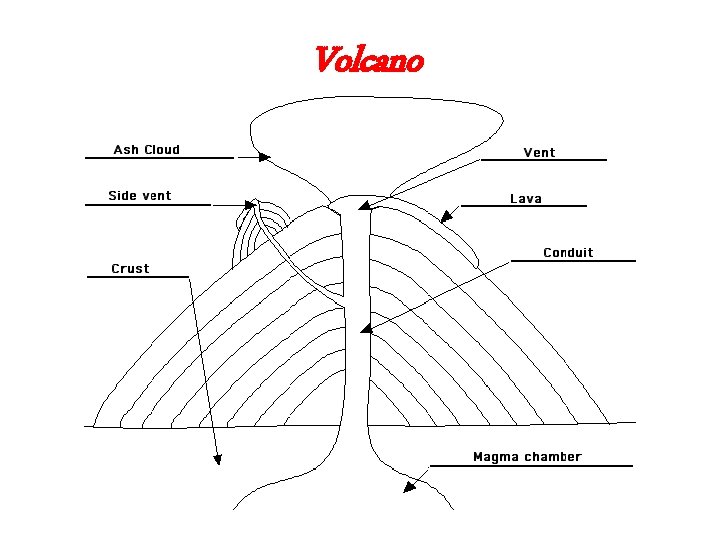
Ash Cloud – cinders, gas, and rock explode many miles into the air. Side Vent – separate opening for lava to come out. Vent/Crater – an opening for the volcano Lava – molten or melted rock. Central Vent/Conduit – main chimney of the volcano Asthenosphere -Layer below the lithosphere; made of molten rock Volcano Cone – layers; made of rock from past eruptions Magma Chamber – the “heart” of the volcano; gas, rock, and water mix here – pressure builds.
Volcano