
Volcanic hazards 1300 volcanoes known to have erupted

![Spurr Kasatochi Cleveland Okmok Visit the AVO website [http: //puff. images. alaska. edu/] for](https://slidetodoc.com/presentation_image_h/76581eae176fe9ff1989323edde00e3c/image-21.jpg "Spurr Kasatochi Cleveland Okmok Visit the AVO website [http: //puff. images. alaska. edu/] for")
- Slides: 48
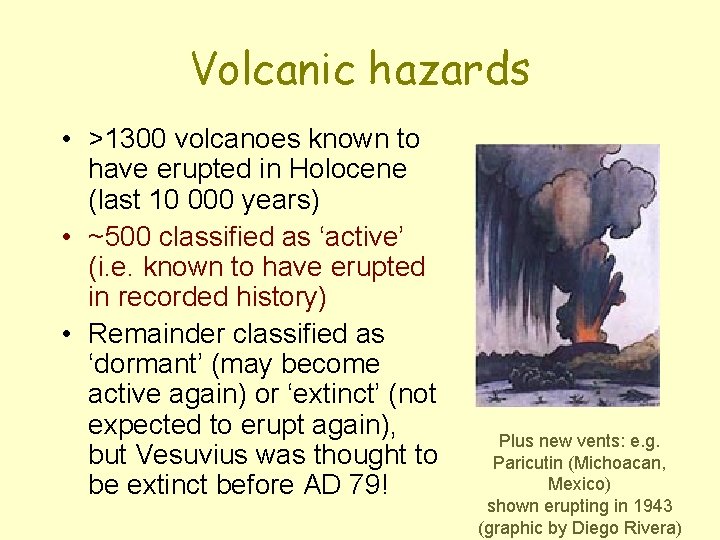
Volcanic hazards • >1300 volcanoes known to have erupted in Holocene (last 10 000 years) • ~500 classified as ‘active’ (i. e. known to have erupted in recorded history) • Remainder classified as ‘dormant’ (may become active again) or ‘extinct’ (not expected to erupt again), but Vesuvius was thought to be extinct before AD 79! Plus new vents: e. g. Paricutin (Michoacan, Mexico) shown erupting in 1943 (graphic by Diego Rivera)
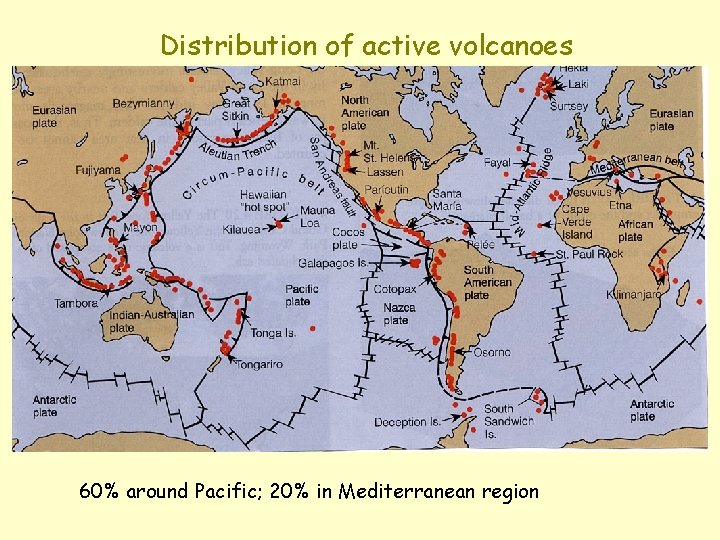
Distribution of active volcanoes 60% around Pacific; 20% in Mediterranean region
Major volcanic eruptions since AD 1600 (>8000 deaths)
Volcanoes Eruptive style and hazard depends on: • Tectonic setting • Depth of magma formation • Rate of magma movement to the surface • Percent and type of volatiles (gases)
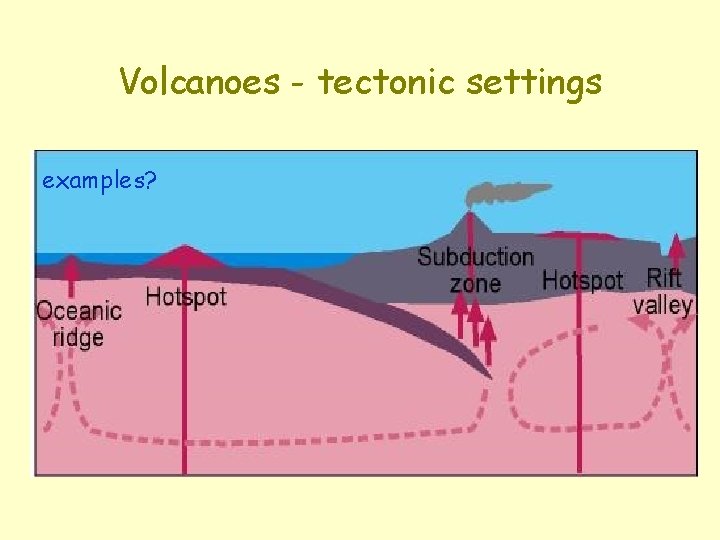
Volcanoes - tectonic settings examples?
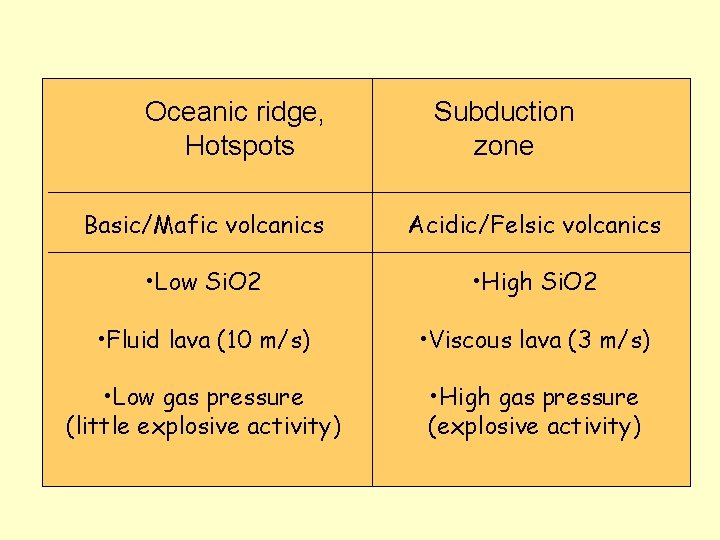
Oceanic ridge, Hotspots Subduction zone Basic/Mafic volcanics Acidic/Felsic volcanics • Low Si. O 2 • High Si. O 2 • Fluid lava (10 m/s) • Viscous lava (3 m/s) • Low gas pressure (little explosive activity) • High gas pressure (explosive activity)
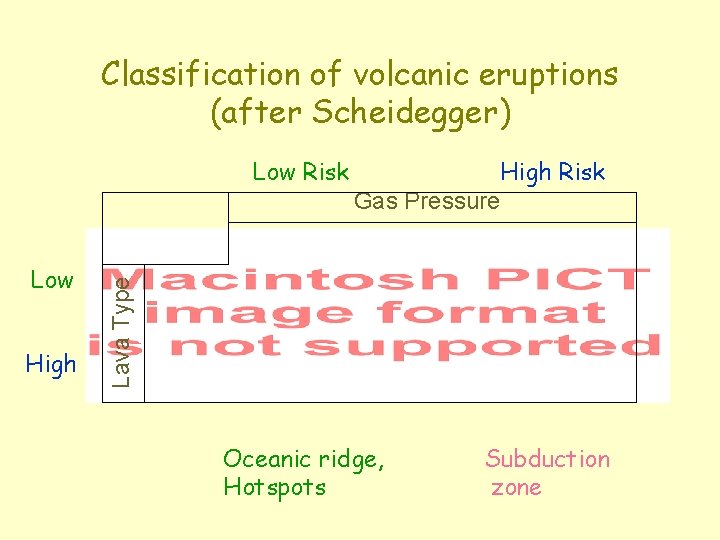
Classification of volcanic eruptions (after Scheidegger) Low High Risk Gas Pressure Lava Type Low Risk Oceanic ridge, Hotspots Subduction zone
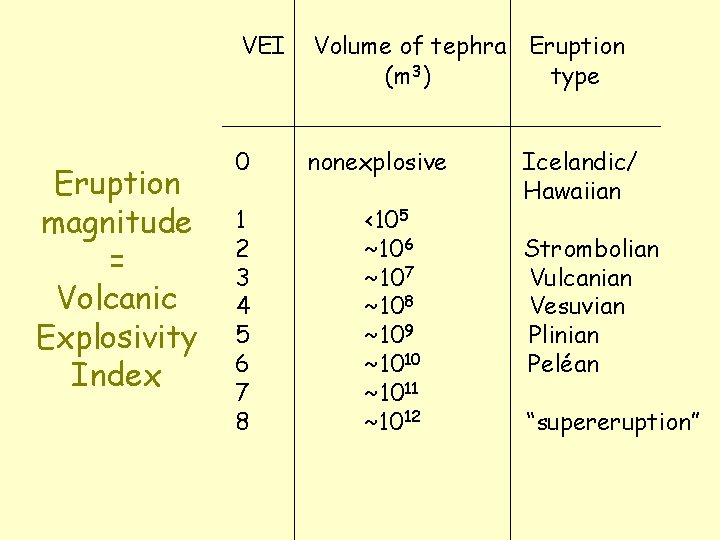
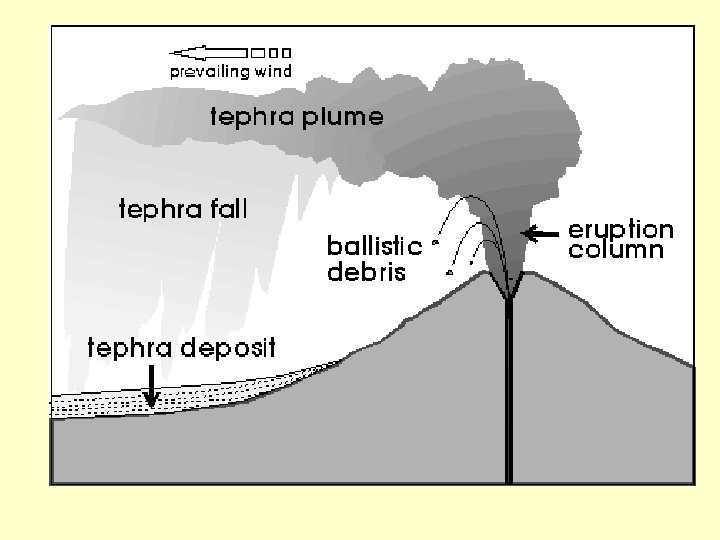
Eruption magnitude = Volcanic Explosivity Index VEI Volume of tephra Eruption (m 3) type 0 nonexplosive 1 2 3 4 5 6 7 8 <105 ~106 ~107 ~108 ~109 ~1010 ~1011 ~1012 Icelandic/ Hawaiian Strombolian Vulcanian Vesuvian Plinian Peléan “supereruption”
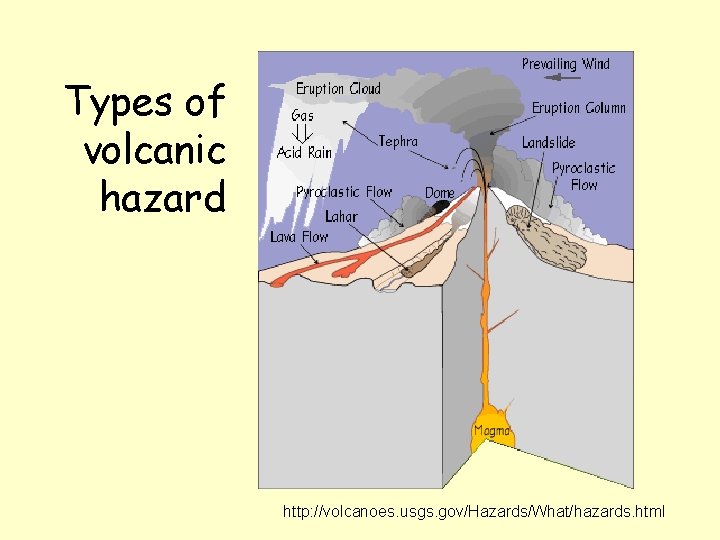
Types of volcanic hazard http: //volcanoes. usgs. gov/Hazards/What/hazards. html
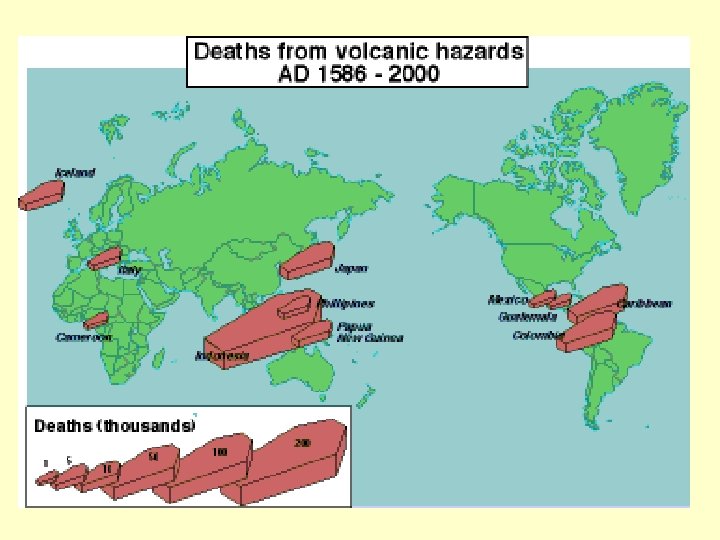
Volcanic hazards: deaths (AD 1900 -2000)
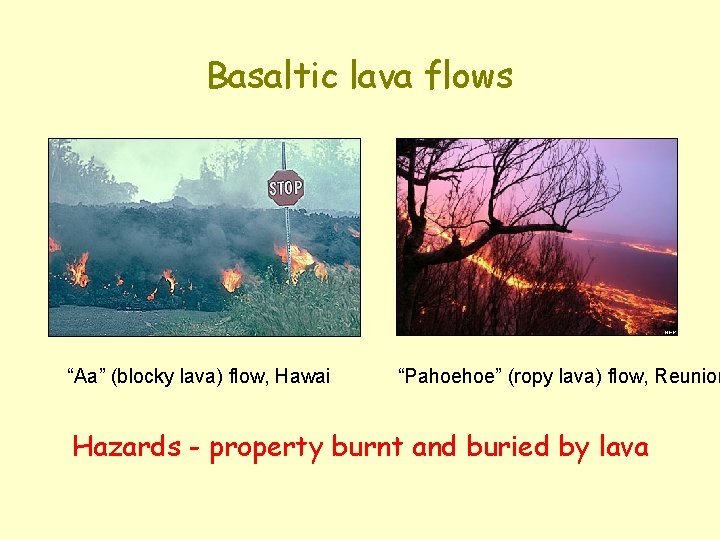
Basaltic lava flows “Aa” (blocky lava) flow, Hawai “Pahoehoe” (ropy lava) flow, Reunion Hazards - property burnt and buried by lava
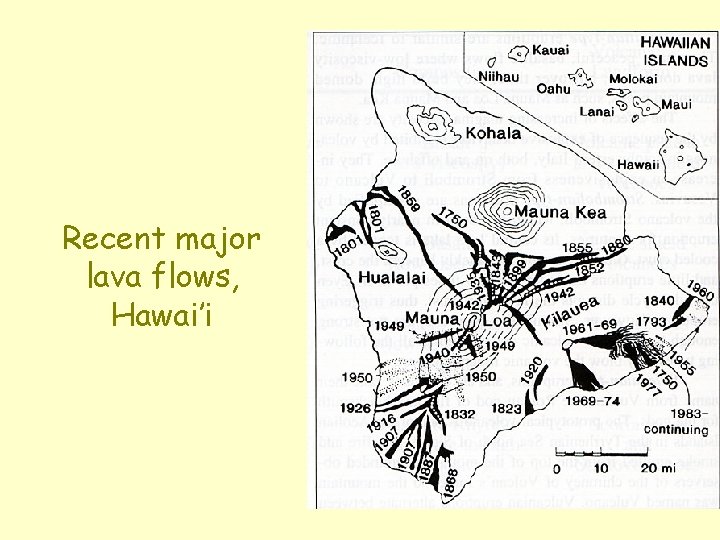
Recent major lava flows, Hawai’i
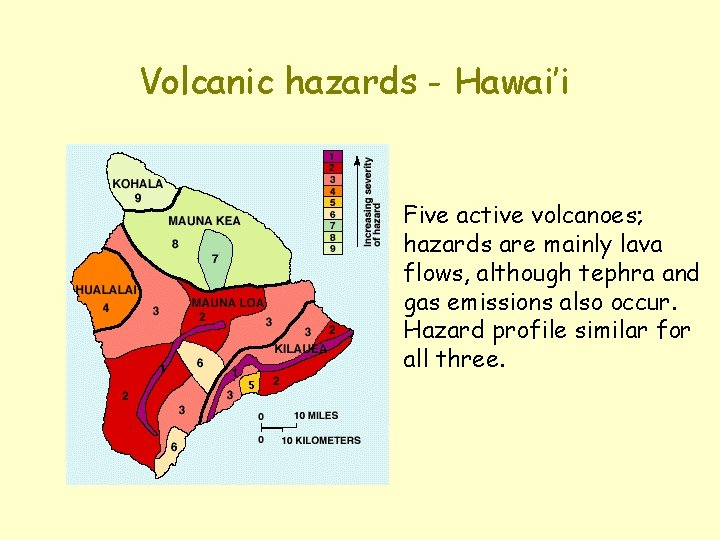
Volcanic hazards - Hawai’i Five active volcanoes; hazards are mainly lava flows, although tephra and gas emissions also occur. Hazard profile similar for all three.
Volcanoes of the Mediterranean
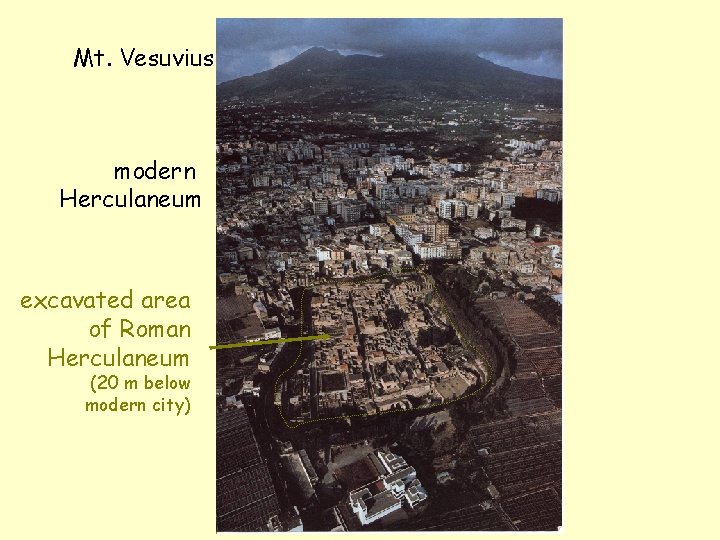
Mount Vesuvius: recent major eruptions • A. D. 79: destruction of Pompeii and Herculaneum; • 80 eruptions since then most violently in 1631 and 1906; quiet since 1944
Mt. Vesuvius modern Herculaneum excavated area of Roman Herculaneum (20 m below modern city)
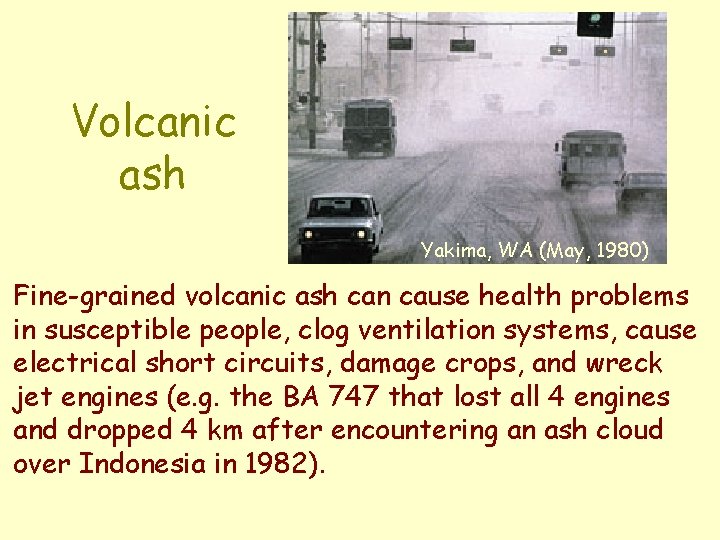
Volcanic ash Yakima, WA (May, 1980) Fine-grained volcanic ash can cause health problems in susceptible people, clog ventilation systems, cause electrical short circuits, damage crops, and wreck jet engines (e. g. the BA 747 that lost all 4 engines and dropped 4 km after encountering an ash cloud over Indonesia in 1982).
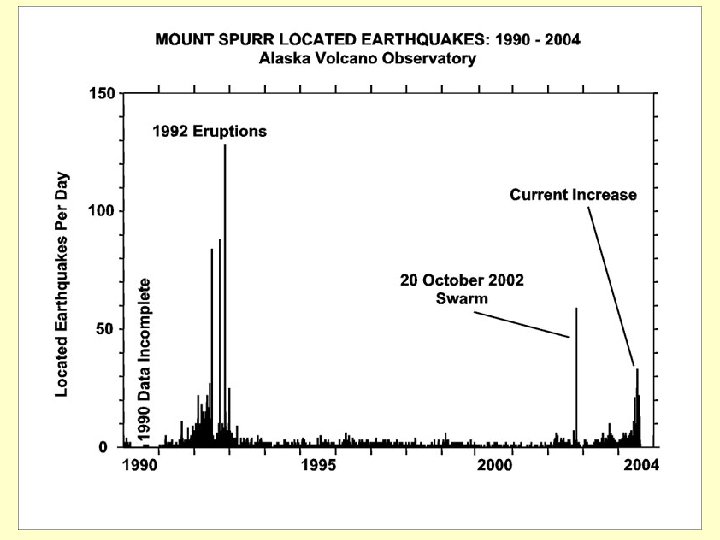
Spurr Kasatochi Cleveland Okmok Visit the AVO website [http: //puff. images. alaska. edu/] for animations of current eruptions
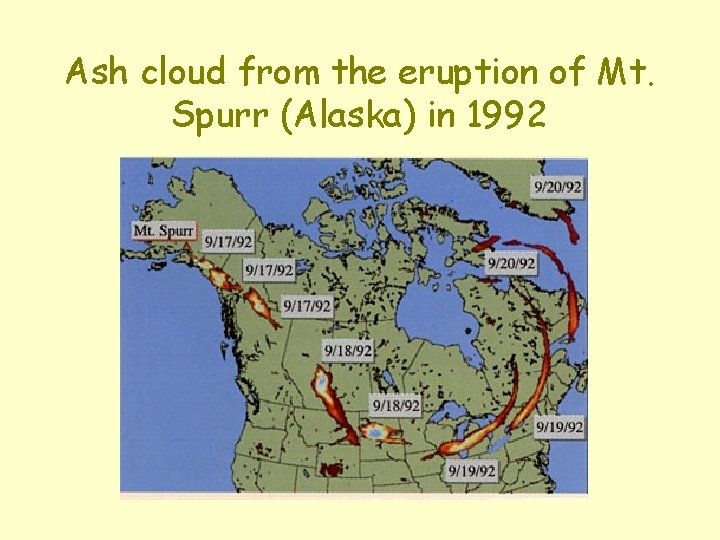
Ash cloud from the eruption of Mt. Spurr (Alaska) in 1992
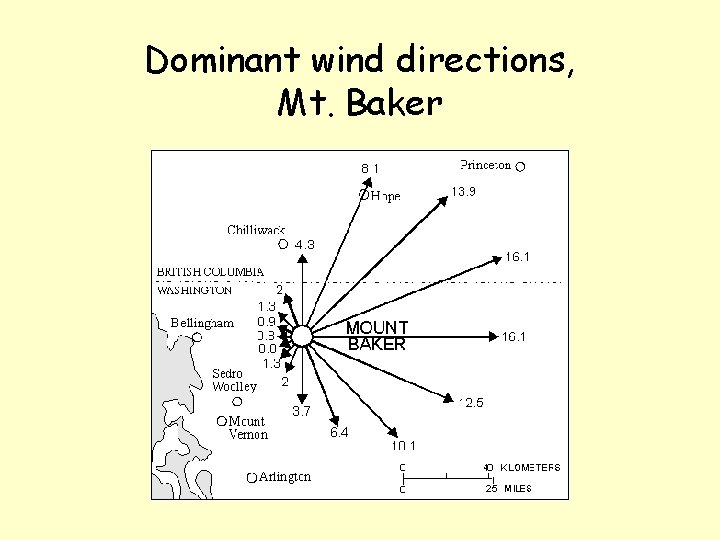
Dominant wind directions, Mt. Baker
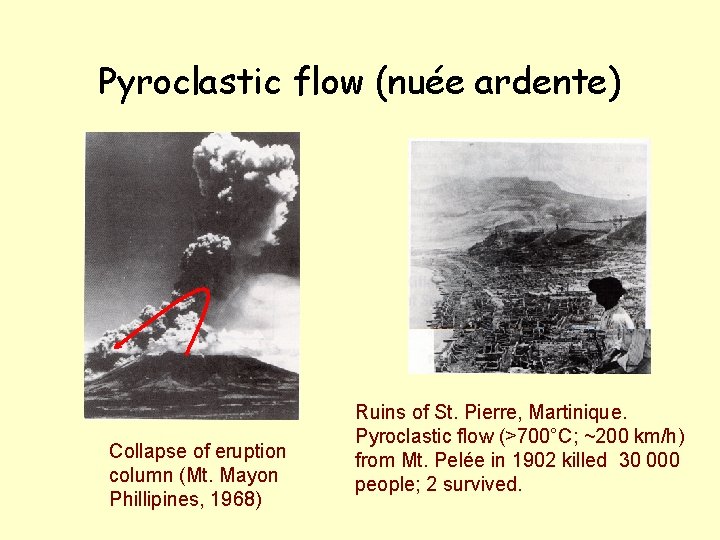
Pyroclastic flow (nuée ardente) Collapse of eruption column (Mt. Mayon Phillipines, 1968) Ruins of St. Pierre, Martinique. Pyroclastic flow (>700°C; ~200 km/h) from Mt. Pelée in 1902 killed 30 000 people; 2 survived.
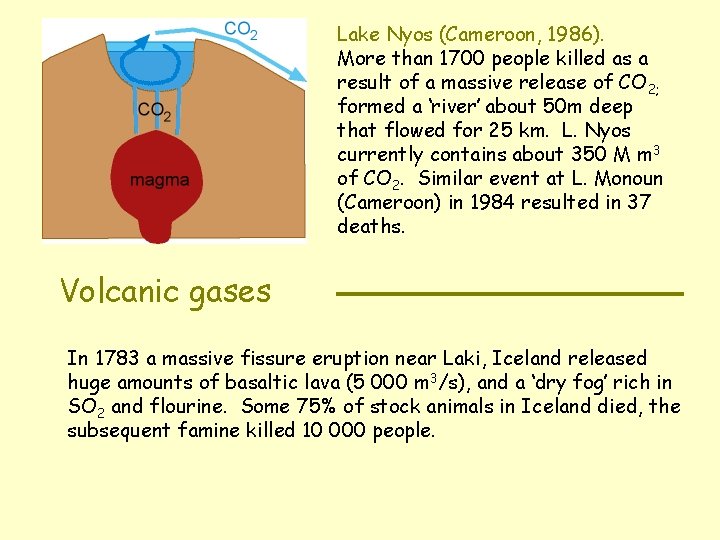
Lake Nyos (Cameroon, 1986). More than 1700 people killed as a result of a massive release of CO 2; formed a ‘river’ about 50 m deep that flowed for 25 km. L. Nyos currently contains about 350 M m 3 of CO 2. Similar event at L. Monoun (Cameroon) in 1984 resulted in 37 deaths. Volcanic gases In 1783 a massive fissure eruption near Laki, Iceland released huge amounts of basaltic lava (5 000 m 3/s), and a ‘dry fog’ rich in SO 2 and flourine. Some 75% of stock animals in Iceland died, the subsequent famine killed 10 000 people.
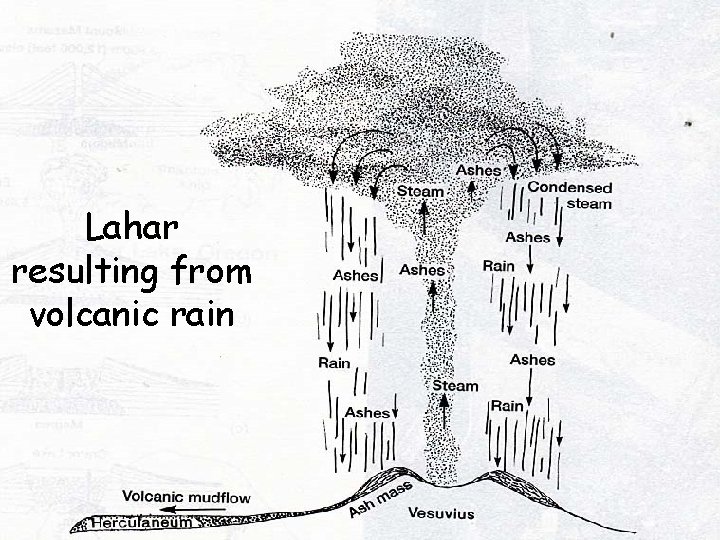
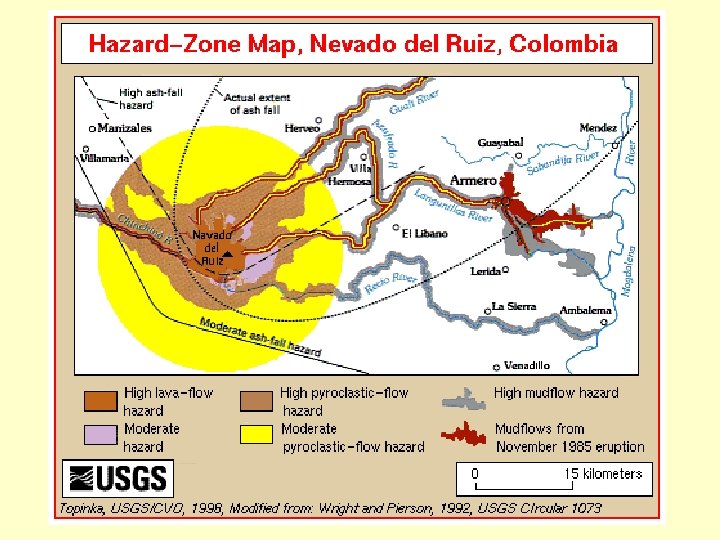
Lahars: volcanic mudflows • Eruptive “volcanic rain” (e. g. Herculaneum) melting of summit snow/ice (e. g. Nevado del Ruiz) • Post-eruptive intense rainstorms (e. g. Hurricane Mitch)
Lahar resulting from volcanic rain
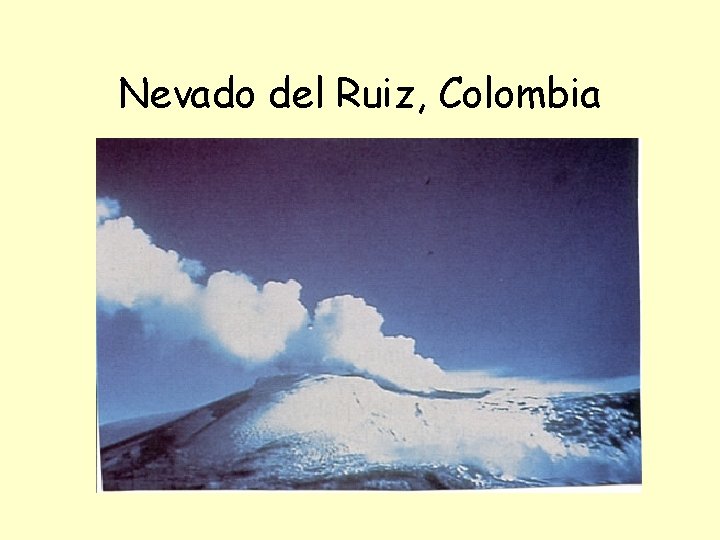
Nevado del Ruiz, Colombia
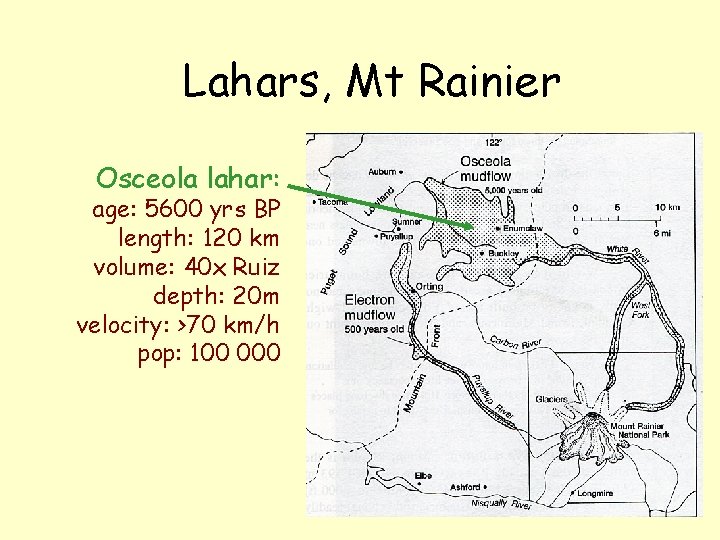
Lahars, Mt Rainier Osceola lahar: age: 5600 yrs BP length: 120 km volume: 40 x Ruiz depth: 20 m velocity: >70 km/h pop: 100 000
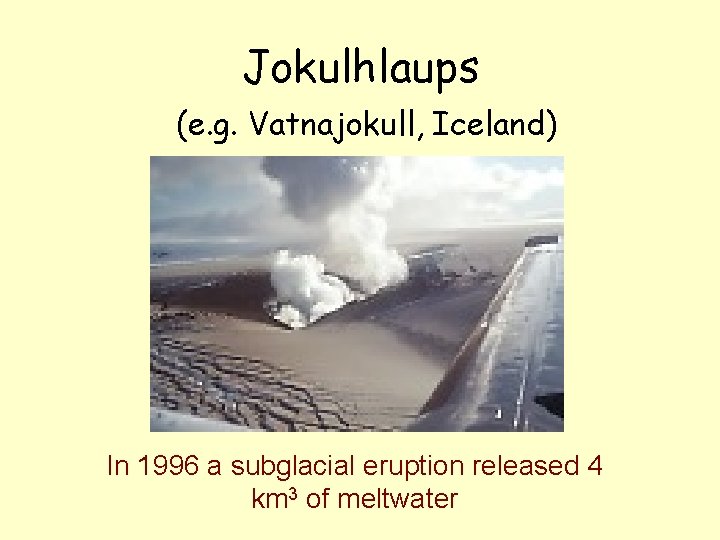
Jokulhlaups (e. g. Vatnajokull, Iceland) In 1996 a subglacial eruption released 4 km 3 of meltwater
Identification of high-risk volcanoes • Frequency and nature of past eruptions • Distribution and nature of eruptive products • Population density and property value in vicinity of volcano
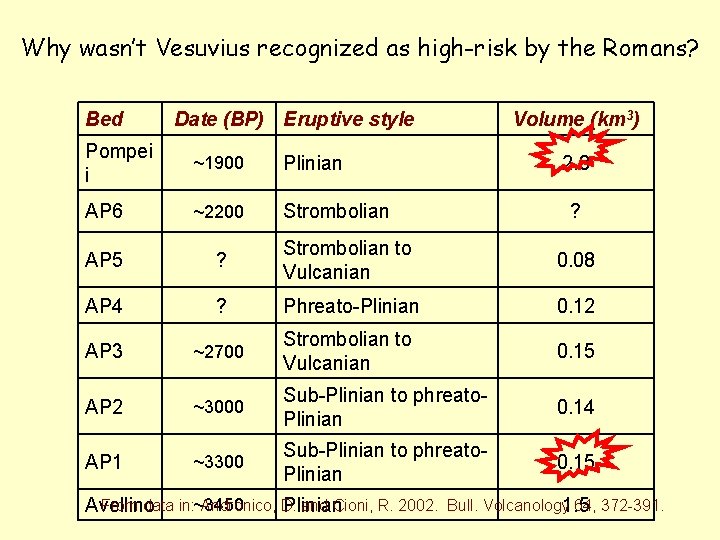
Why wasn’t Vesuvius recognized as high-risk by the Romans? Bed Date (BP) Eruptive style Volume (km 3) Pompei i ~1900 Plinian AP 6 ~2200 Strombolian AP 5 ? Strombolian to Vulcanian 0. 08 AP 4 ? Phreato-Plinian 0. 12 AP 3 ~2700 Strombolian to Vulcanian 0. 15 AP 2 ~3000 Sub-Plinian to phreato. Plinian 0. 14 AP 1 ~3300 Sub-Plinian to phreato. Plinian 0. 15 From data in: ~3450 Andronico, D. and Cioni, R. 2002. Avellino Plinian 2. 8 ? Bull. Volcanology 1. 5 64, 372 -391.
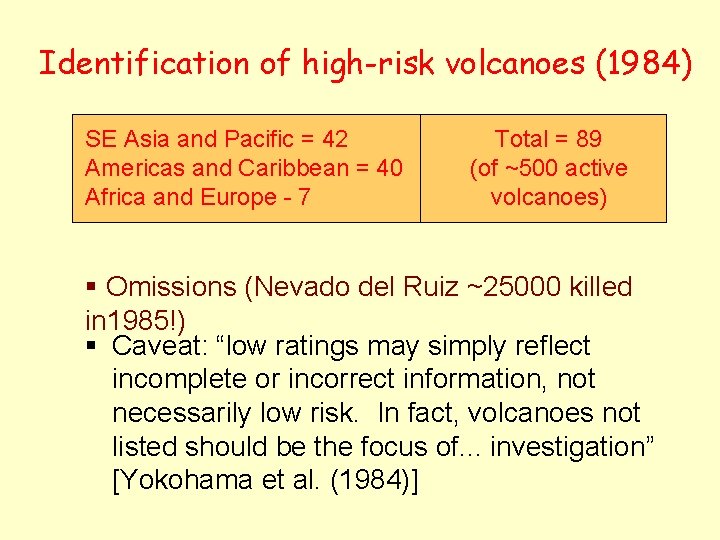
Identification of high-risk volcanoes (1984) SE Asia and Pacific = 42 Americas and Caribbean = 40 Africa and Europe - 7 Total = 89 (of ~500 active volcanoes) § Omissions (Nevado del Ruiz ~25000 killed in 1985!) § Caveat: “low ratings may simply reflect incomplete or incorrect information, not necessarily low risk. In fact, volcanoes not listed should be the focus of. . . investigation” [Yokohama et al. (1984)]
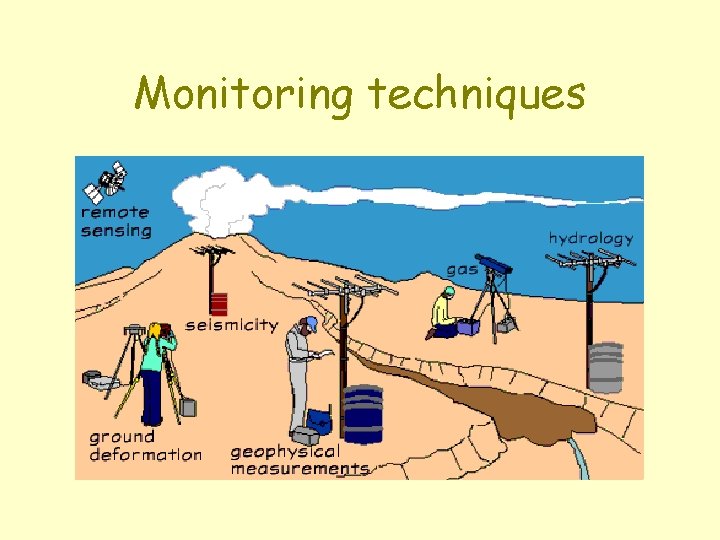
Monitoring techniques
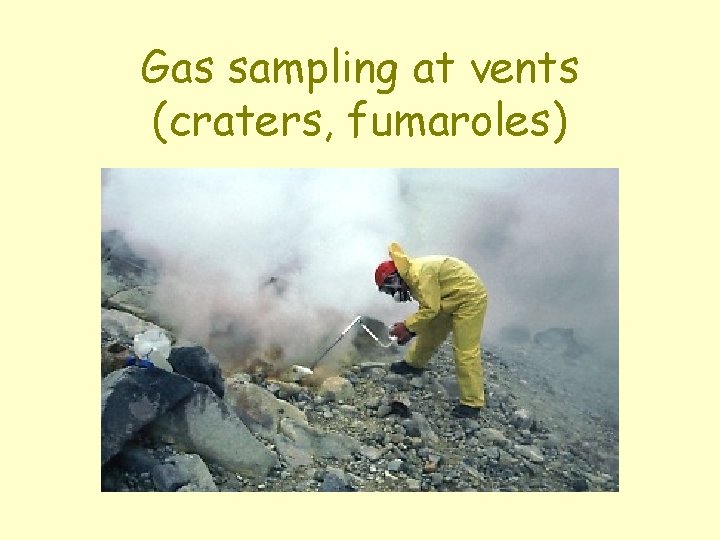
Gas sampling at vents (craters, fumaroles)
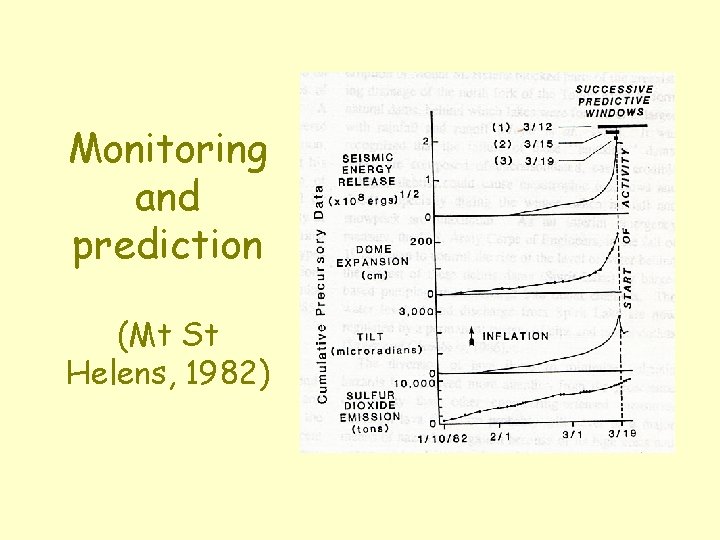
Monitoring and prediction (Mt St Helens, 1982)
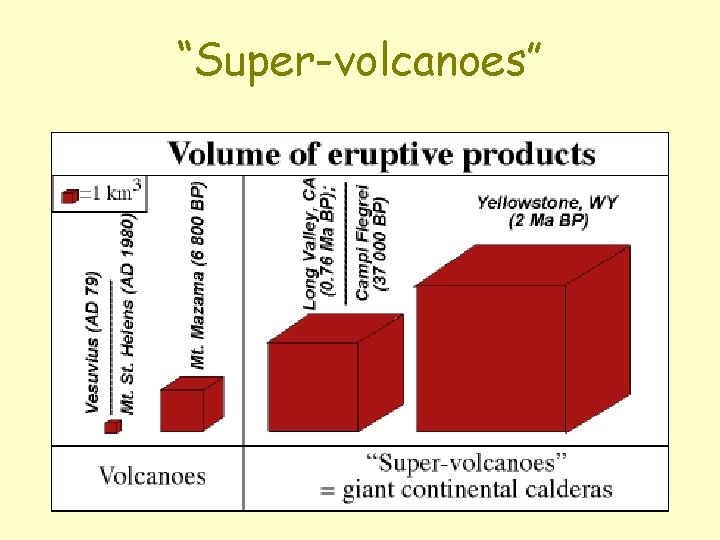
“Super-volcanoes”
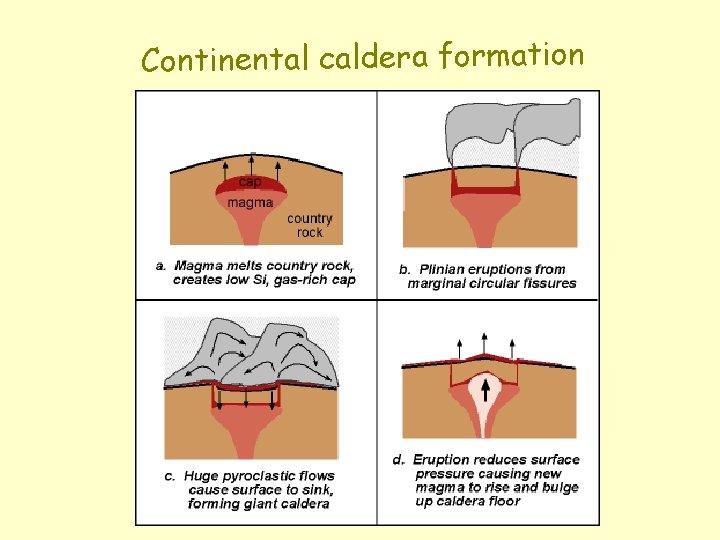
Continental caldera formation
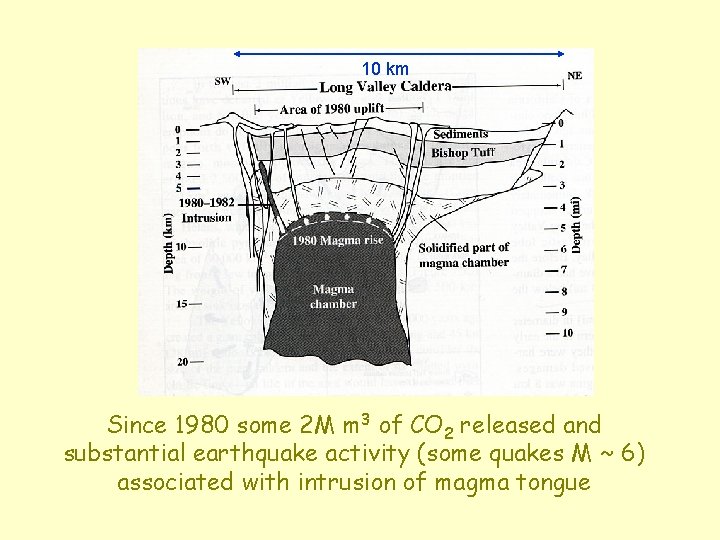
10 km Since 1980 some 2 M m 3 of CO 2 released and substantial earthquake activity (some quakes M ~ 6) associated with intrusion of magma tongue
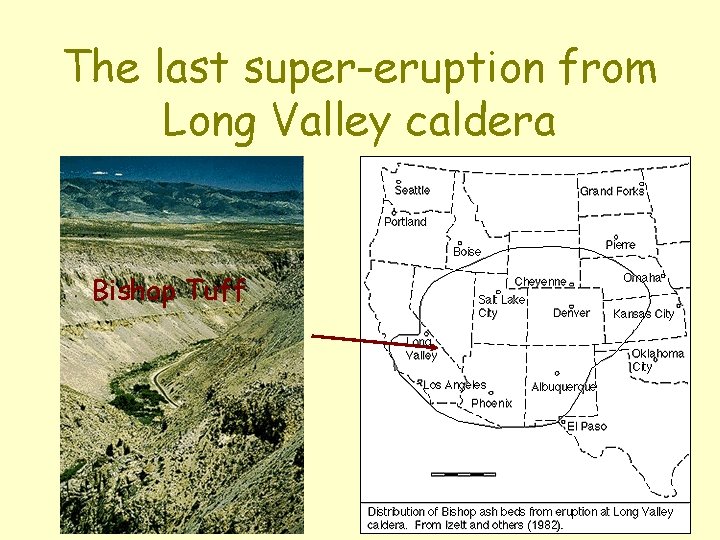
The last super-eruption from Long Valley caldera Bishop Tuff
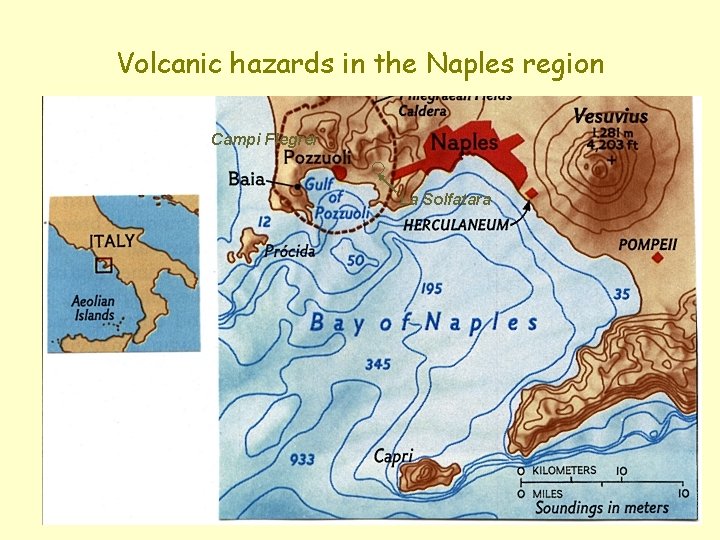
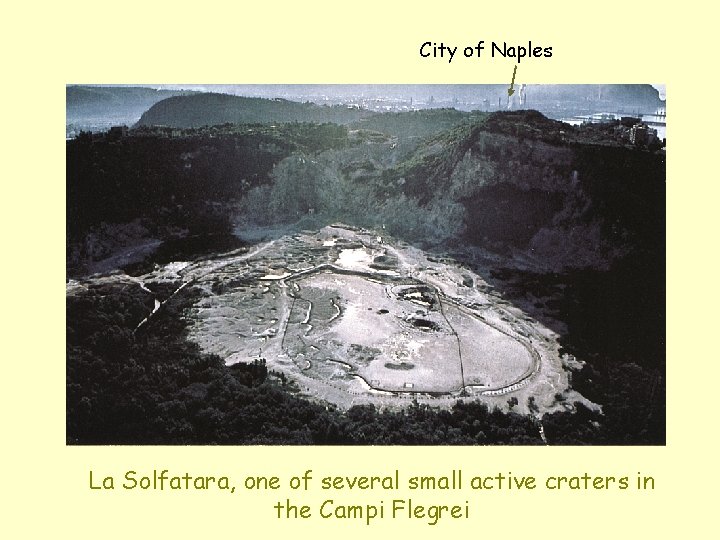
Volcanic hazards in the Naples region Campi Flegrei La Solfatara
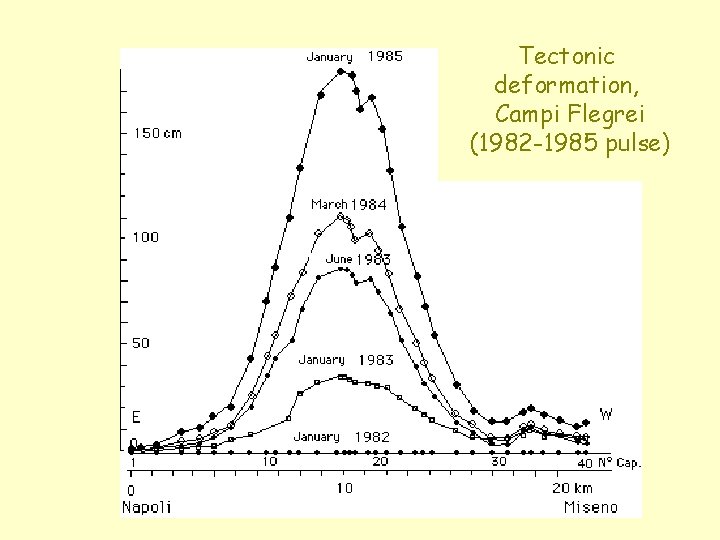
Tectonic deformation, Campi Flegrei (1982 -1985 pulse)
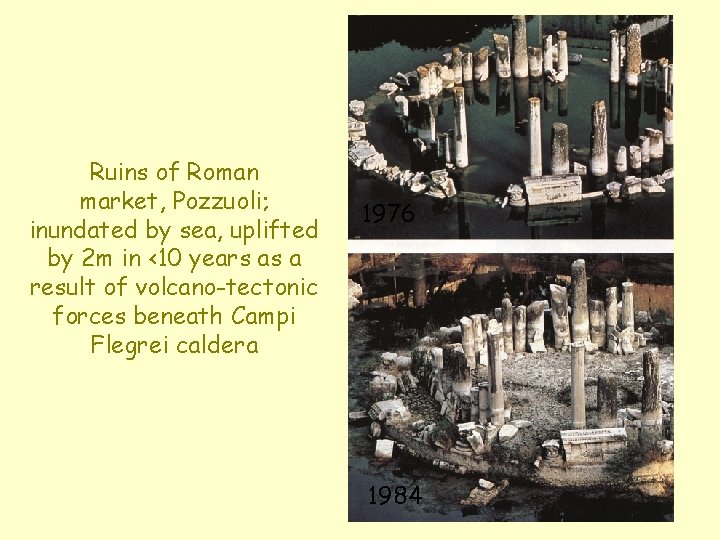
Ruins of Roman market, Pozzuoli; inundated by sea, uplifted by 2 m in <10 years as a result of volcano-tectonic forces beneath Campi Flegrei caldera 1976 1984
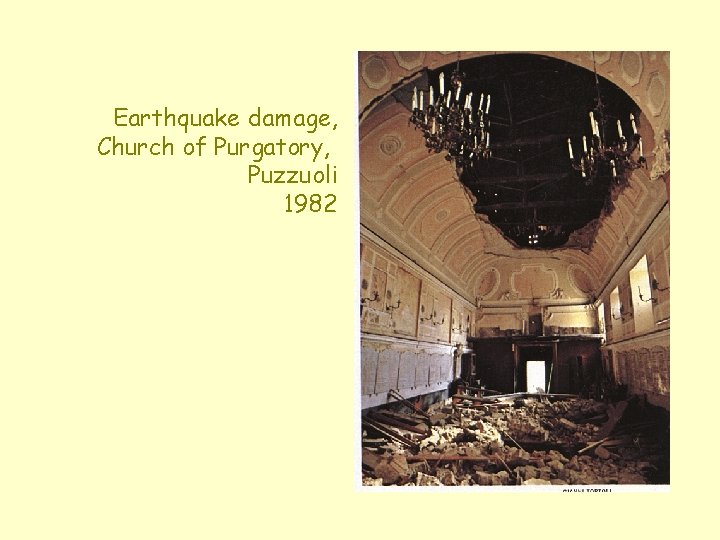
Earthquake damage, Church of Purgatory, Puzzuoli 1982
City of Naples La Solfatara, one of several small active craters in the Campi Flegrei
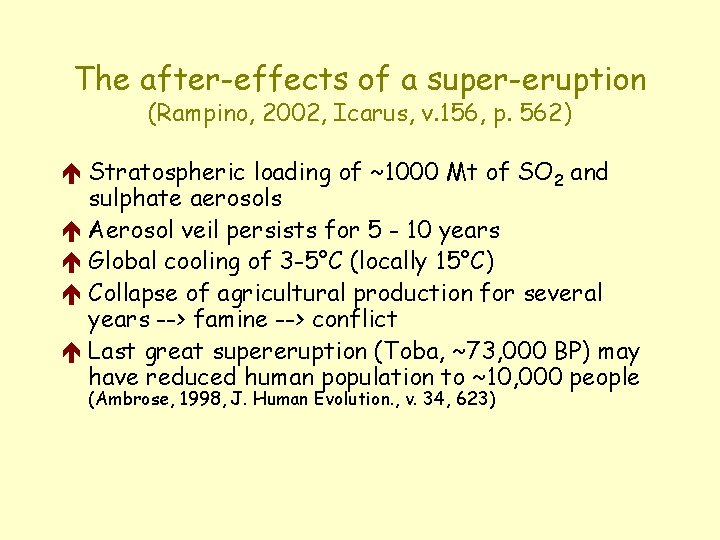
The after-effects of a super-eruption (Rampino, 2002, Icarus, v. 156, p. 562) é Stratospheric loading of ~1000 Mt of SO 2 and sulphate aerosols é Aerosol veil persists for 5 - 10 years é Global cooling of 3 -5°C (locally 15°C) é Collapse of agricultural production for several years --> famine --> conflict é Last great supereruption (Toba, ~73, 000 BP) may have reduced human population to ~10, 000 people (Ambrose, 1998, J. Human Evolution. , v. 34, 623)