
Volcanic Activity Magma Reaching the Surface n Materials
- Slides: 15
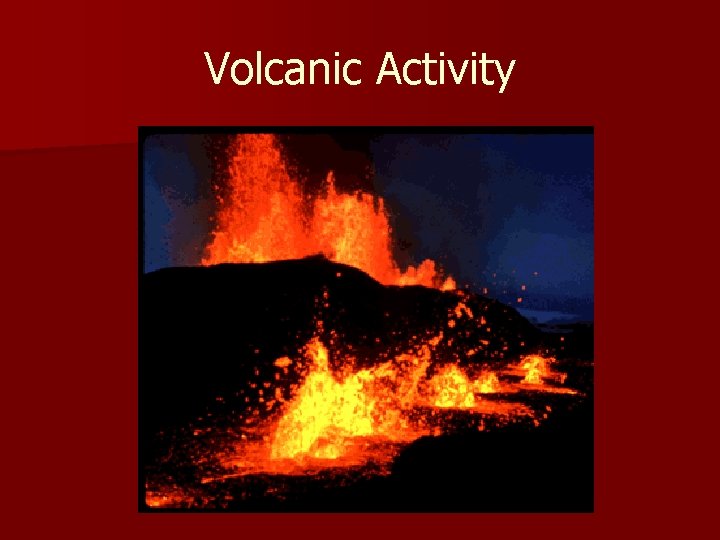
Volcanic Activity
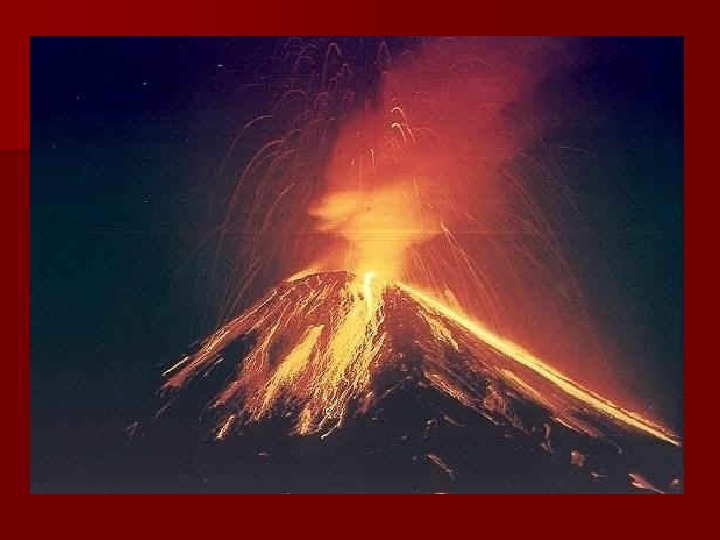
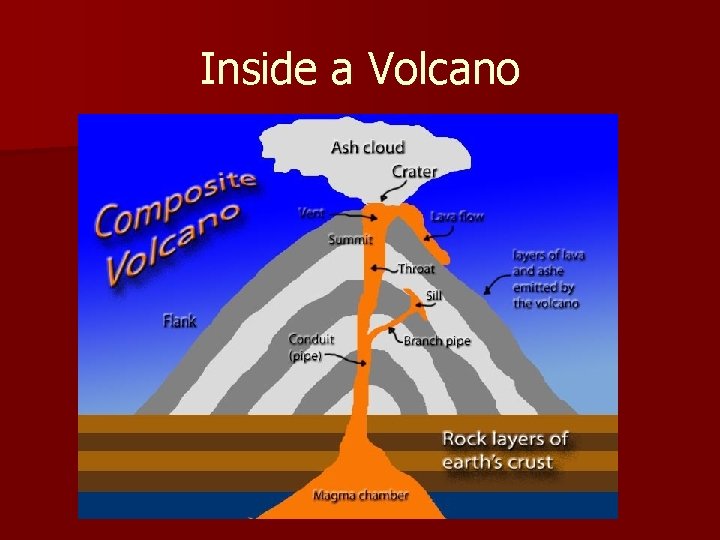
Magma Reaching the Surface n Materials pressure n Magma of asthenosphere under great less dense than surrounding rock rises until it reaches the surface or becomes trapped by rock layers
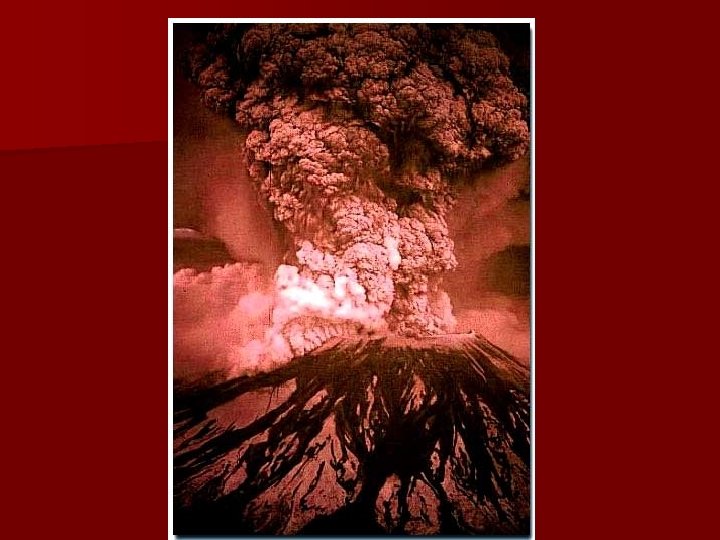
A Volcano Erupts n Dissolved gases in magma are under tremendous pressure n As magma rises pressure decreases n Gases dissolved in magma rush out, carrying magma when an opening develops in weak rock on the surface
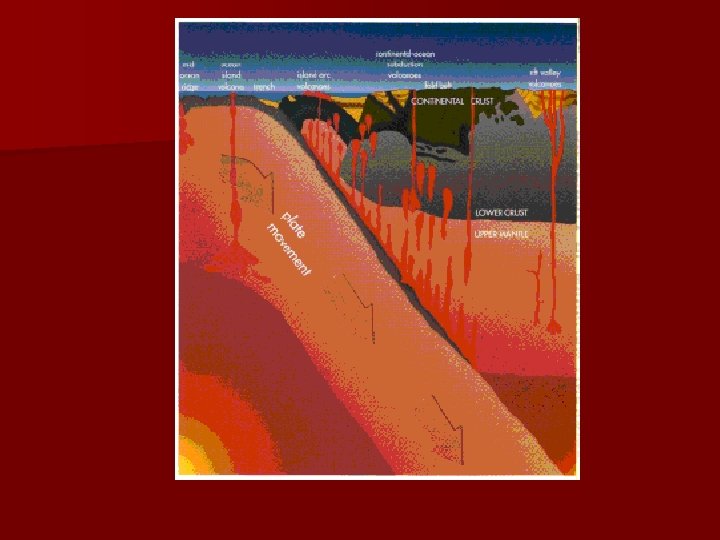
Inside a Volcano
Characteristics of Magma n Force of volcanic eruption impacted by: – Gas dissolved in magma – Thickness of magma – Temperature – Silica content
Characteristics of Magma n Some magma thick- flows slowly n Some more fluid- flows easily n Viscosity describes a liquids resistance to flow- higher viscosity, greater resistance n http: //www. seed. slb. com/en/scictr/lab/vis co_exp/index. htm
Characteristics of Magma n Temperature more fluid n More impacts thickness- hotter, silica- thicker magma – High silica- light lava, too sticky, doesn’t flow far, forms rhyolite, pumice, & obsidian – Low silica- flows easily, dark colored, forms basalt
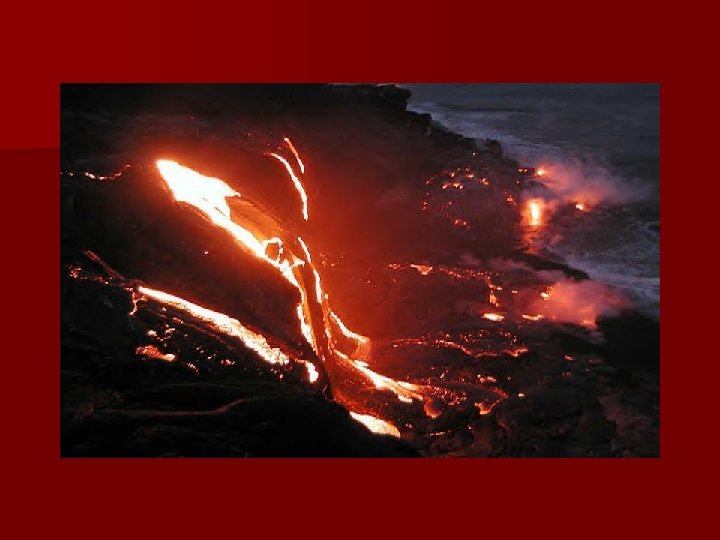
Types of Eruptions n Quiet Eruptions – Quiet eruption if magma flows easily – Gases bubble out gently – Lava oozes quietly from vent – Ex. Hawaii, Iceland – Forms from basaltic material, low in silica – Type of crust? !?
Types of Volcanic Eruptions n Explosive eruptions – Thick & sticky magma- explosive eruption – Dissolved gases can’t escape, pressure builds up, it explodes – Magma pushed out of volcano w/incredible force – Pyroclastic flow hurls ash, cinders, bombs – Forms from granitic material, high in silica – Crust type? !?
Stages of a Volcano n Active- erupting or shows signs of erupting in near future n Dormant- sleeping, expected to awaken in future & become active n Extinct- unlikely to erupt again
Other Volcanic Activity n Hot spring n Geyser n Geothermal energy