
VOIDING DYSFUNCTION IN CHILDREN Natalie Barganski RN CPNP
VOIDING DYSFUNCTION IN CHILDREN Natalie Barganski, RN, CPNP
Objectives The learner will be familiar with the presentation of voiding dysfunction The learner will be familiar with the evaluation of voiding dysfunction The learner will be familiar with different treatment options for voiding dysfunction
Physiology of micturition Muscles of the bladder and the internal urinary sphincter are innervated by autonomic nerves, sympathetic and parasympathetic These nerves are integrated at various sites in the spinal cord, brain stem, midbrain, and higher cortical centers
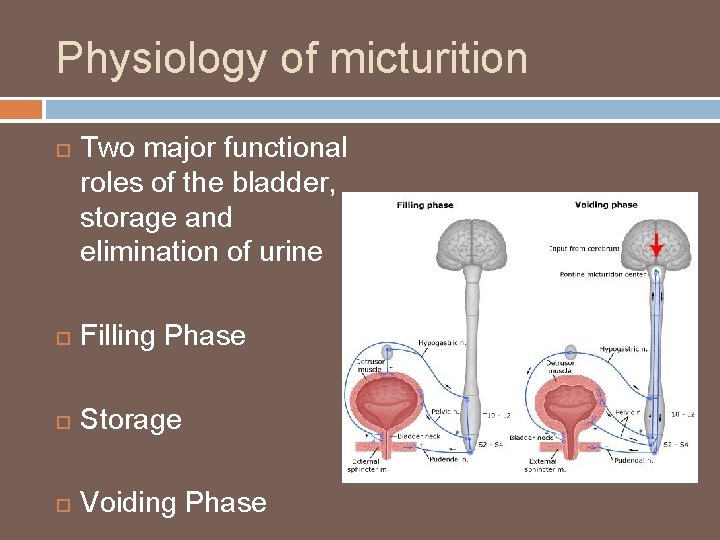
Physiology of micturition Two major functional roles of the bladder, storage and elimination of urine Filling Phase Storage Voiding Phase
Micturition continued It evolves from involuntary bladder emptying during infancy to daytime urinary continence, usually around 4 years of age, then night time incontinence usually by 5 -7 years of age It is usually achieved after successful nighttime daytime bowel continence
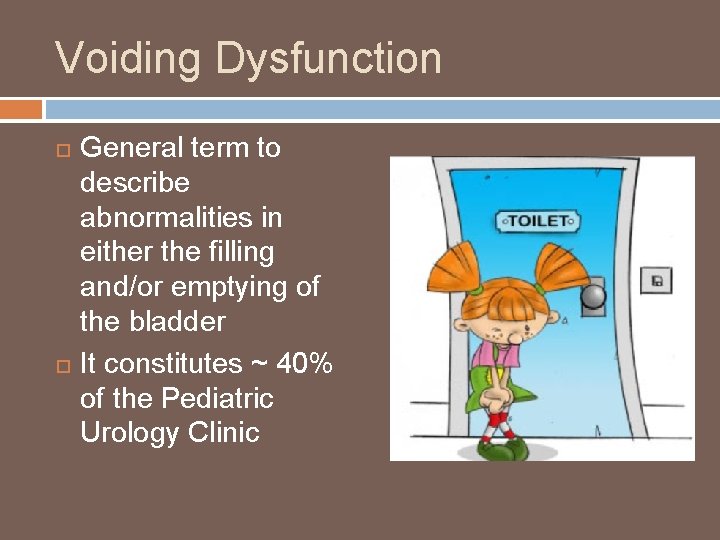
Voiding Dysfunction General term to describe abnormalities in either the filling and/or emptying of the bladder It constitutes ~ 40% of the Pediatric Urology Clinic
International Children’s Continence Society Global multidisciplinary organization of clinicians involved in the care of children with lower urinary tract dysfunction Standardized definitions for voiding dysfunction symptoms and disorders These definitions mostly apply to children who are five or more years of age
ICCS Definitions Daytime frequency Incontinence Urgency Hesitancy Straining
ICCS Definitions continued Weak stream Intermittent stream Holding maneuvers Post-micturition dribbling Residual urine
Categories Nocturnal enuresis or nighttime incontinence Continuous or intermittent daytime urinary incontinence – these disorders are generally applied to children at least 5 years of age or older
Nocturnal enuresis Monosymptomatic enuresis (MNE) Nonmonosymptomatic enuresis (NMNE)– occurs in children with enuresis who also describe other LUT symptoms Primary or secondary enuresis- 85% of all cases of childhood enuresis in primary
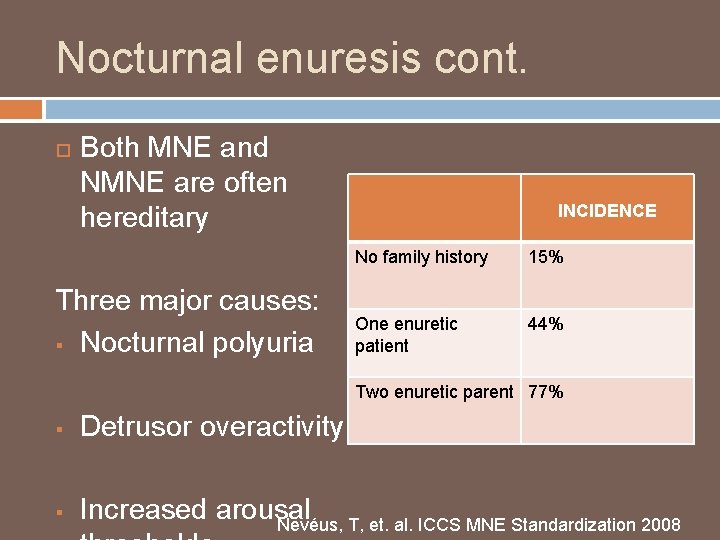
Nocturnal enuresis cont. Both MNE and NMNE are often hereditary Three major causes: § Nocturnal polyuria INCIDENCE No family history 15% One enuretic patient 44% Two enuretic parent 77% § Detrusor overactivity § Increased arousal Nevéus, T, et. al. ICCS MNE Standardization 2008
Daytime Urinary Incontinence Due to underlying abnormalities of bladder function Overactive bladder Voiding postponement and underactive bladder Dysfunctional voiding Other conditions- giggle incontinence, vaginal voiding, primary bladder neck dysfunction
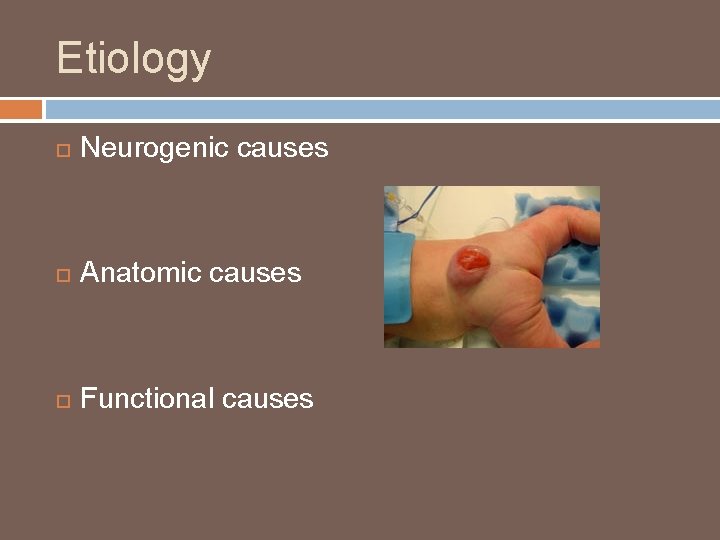
Etiology Neurogenic causes Anatomic causes Functional causes
Prevalence Nocturnal enuresis- 15% - 20% of 5 year olds, decreases with increasing age Daytime urinary incontinence Four – six year olds – up to 20% have daytime urinary incontinence Decreases with age Five – Six year old children – 10 % Six – Twelve year old children- 5 % Twelve – Eighteen year old children- 4 %
Categories based on risk § § § Minor Daytime frequency Giggle incontinence Stress incontinence Post void-dribbling Nocturnal enuresis § § § q § § § Moderate Underactive bladder Overactive bladder Dysfunctional elimination syndrome Severe Hinman Ochoa Myogenic failure
Associated conditions Urinary tract infection Vesicoureteral reflux Constipation and dysfunctional elimination syndrome Behavioral and neurodevelopmental issues Bladder extrophy, epispadias, ectopic ureter,
Assessment of urinary incontinence Main goals: Find those that are at risk for upper tract deterioration in order to prevent of renal impairment Establish the cause of incontinence Improve quality of life
History & Physical History is the KEY in determining the type of disorder Birth history Child’s medical history Family medical history Developmental history
Voiding History Toilet training history Voiding schedule Symptoms of voiding dysfunction Diet intake, including fluid intake (caffeinated) Bowel habits Family conflict or stress, behavior, peer relations Sleep
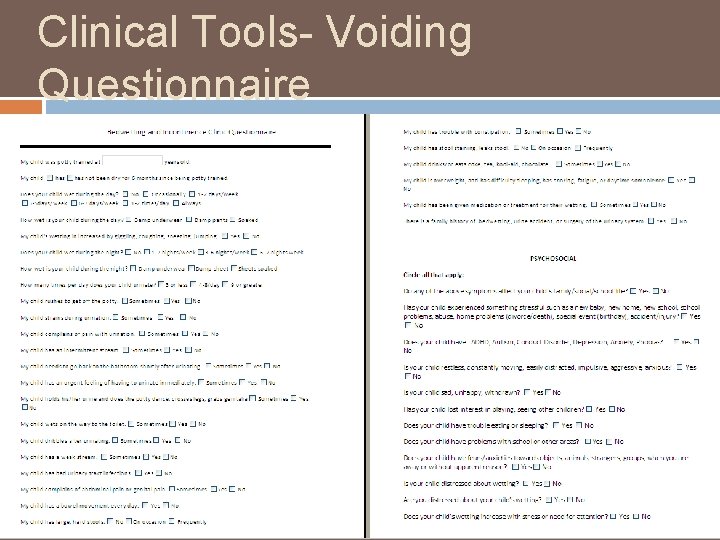
Clinical Tools- Voiding Questionnaire
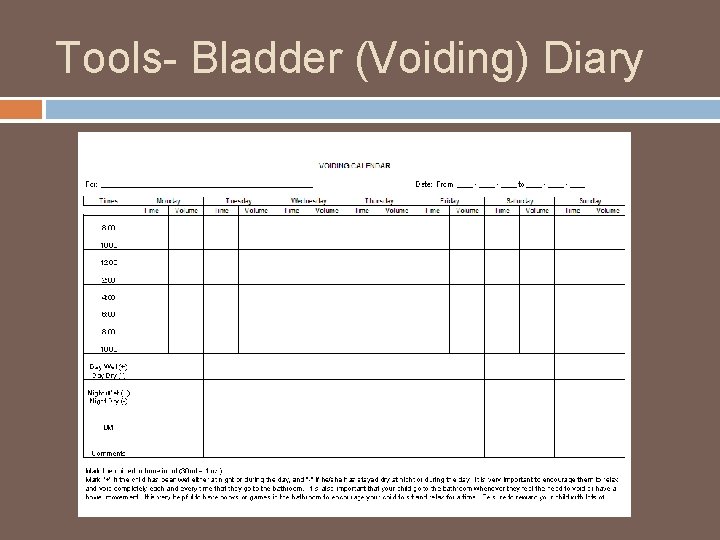
Tools- Bladder (Voiding) Diary
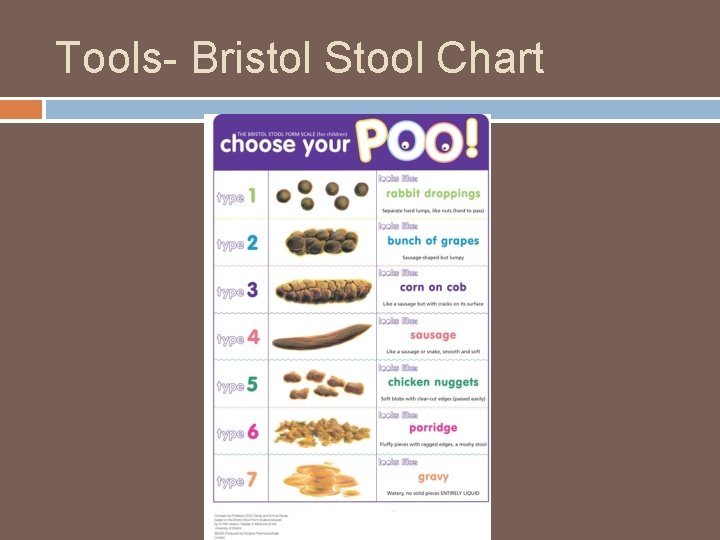
Tools- Bristol Stool Chart
Physical Examination q q q q Focus is on detecting neurologic and urologic abnormalities Height/weight Blood pressure Abdominal palpation Lower back Neurologic exam Genital examination
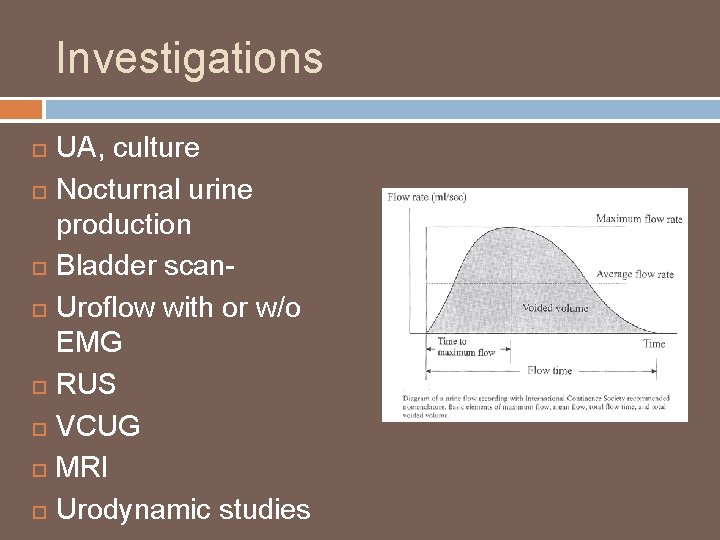
Investigations UA, culture Nocturnal urine production Bladder scan. Uroflow with or w/o EMG RUS VCUG MRI Urodynamic studies
Management § § FIRST- Treatment of Constipation 40% of children with LUT symptoms have constipation Large retrospective study of 234 patients showed a resolution of constipation was associated with elimination of wetting in 89% and 63 % of children with daytime or nighttime urinary incontinence, and prevention of UTIs Loening-Baucke, V. Pediatrics 1997; 100 -228
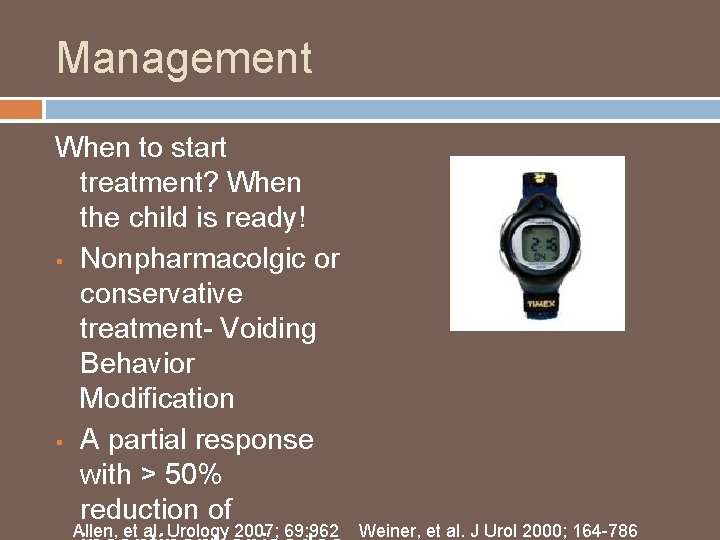
Management When to start treatment? When the child is ready! § Nonpharmacolgic or conservative treatment- Voiding Behavior Modification § A partial response with > 50% reduction of Allen, et al. Urology 2007; 69: 962 Weiner, et al. J Urol 2000; 164 -786
Management If conservative treatment fails to relieve symptoms treatment is condition specific NE- desmopressin, alarm, maybe anticholinergics, imipramine OAB- anticholinergic medication can be beneficial
Management Underactive bladder- timed voiding is important, avoid anticholinergics, alpha adrenergic blockade has been helpful in relaxing bladder outlet Non-neurogenic dysfunctional voidingconcern for upper urinary tract deterioration, may need urodynamics, pelvic floor relaxation techniques, biofeedback, or an alpha antagonist
Dysfunctional voiding Compensatory detrusor hypertrophy and hyperplasia Small capacity trabeculated bladder that may elevate bladder pressures Vesicoureteral reflux and resultant upper tract renal damage Detrusor decompensation and hypocontractility May need CIC or surgery
Management Biofeedback- therapy teaches children how to identify and control the muscle groups involved in voiding Reserved for children with detrusor sphincter dyssynergia contributing to daytime incontinence despite behavior modifications/pharmacotherapy Helpful in children with significant post void residuals who have recurrent UTI and constipation
THANK YOU!! QUESTIONS?
- Slides: 32