
Vocative Case for nouns of address i e


- Slides: 37
Vocative Case for nouns of address (i. e. , when calling someone by name)
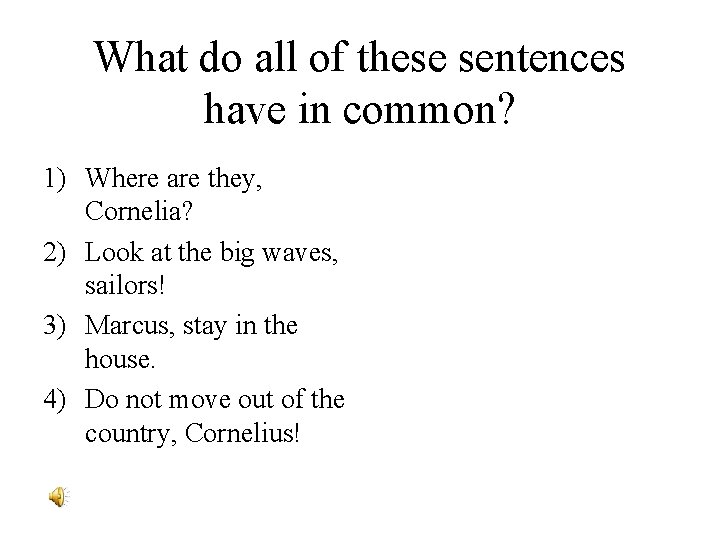
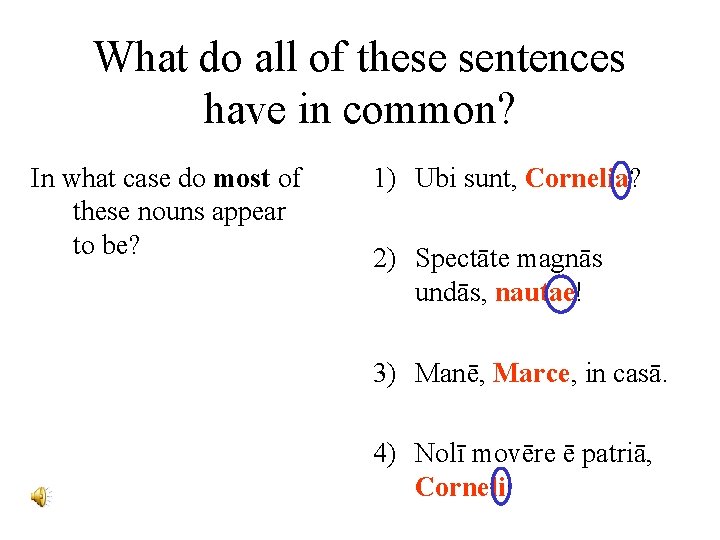
What do all of these sentences have in common? 1) Where are they, Cornelia? 2) Look at the big waves, sailors! 3) Marcus, stay in the house. 4) Do not move out of the country, Cornelius!
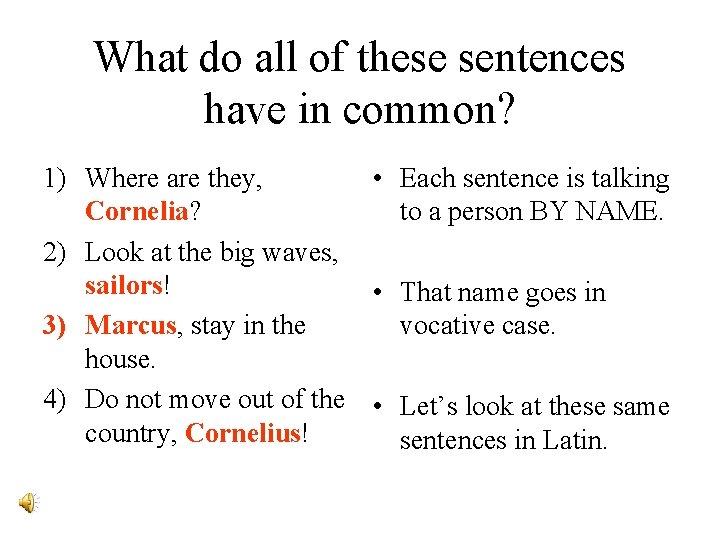
What do all of these sentences have in common? 1) Where are they, • Each sentence is talking Cornelia? to a person BY NAME. 2) Look at the big waves, sailors! • That name goes in 3) Marcus, stay in the vocative case. house. 4) Do not move out of the • Let’s look at these same country, Cornelius! sentences in Latin.
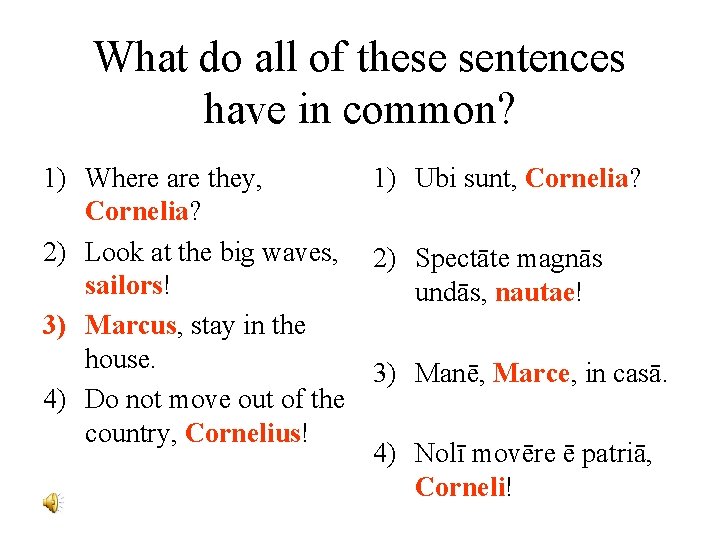
What do all of these sentences have in common? 1) Where are they, 1) Ubi sunt, Cornelia? 2) Look at the big waves, 2) Spectāte magnās sailors! undās, nautae! 3) Marcus, stay in the house. 3) Manē, Marce, in casā. 4) Do not move out of the country, Cornelius! 4) Nolī movēre ē patriā, Corneli!
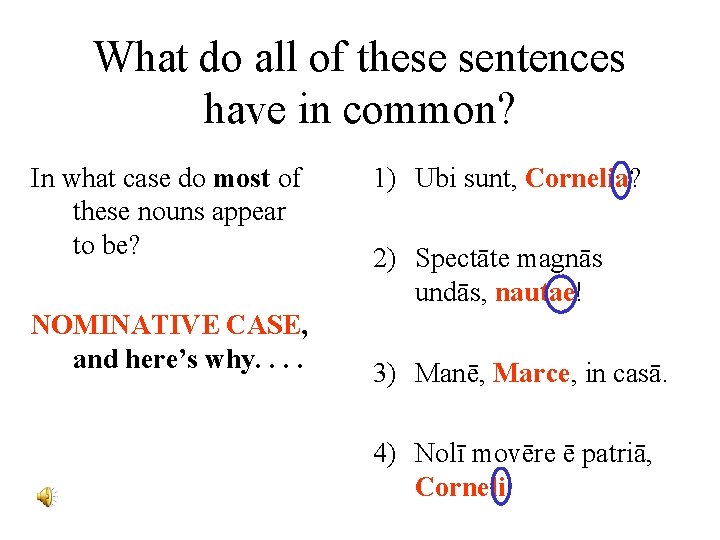
What do all of these sentences have in common? In what case do most of these nouns appear to be? 1) Ubi sunt, Cornelia? 2) Spectāte magnās undās, nautae! 3) Manē, Marce, in casā. 4) Nolī movēre ē patriā, Corneli!
What do all of these sentences have in common? In what case do most of these nouns appear to be? NOMINATIVE CASE, and here’s why. . 1) Ubi sunt, Cornelia? 2) Spectāte magnās undās, nautae! 3) Manē, Marce, in casā. 4) Nolī movēre ē patriā, Corneli!
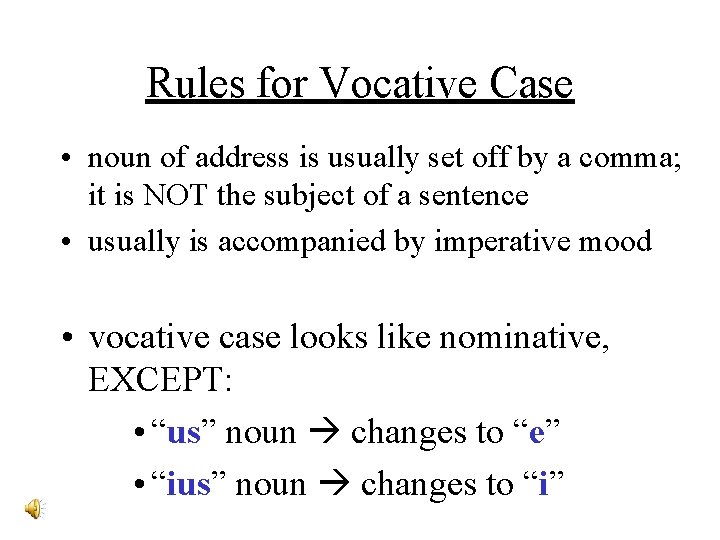
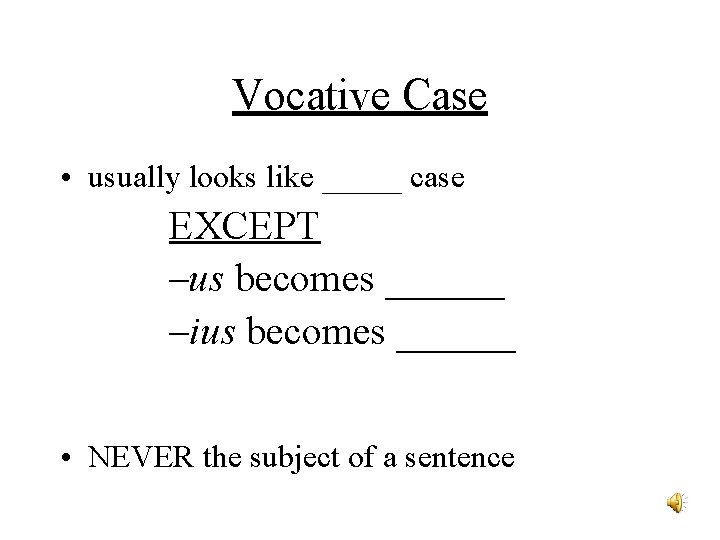
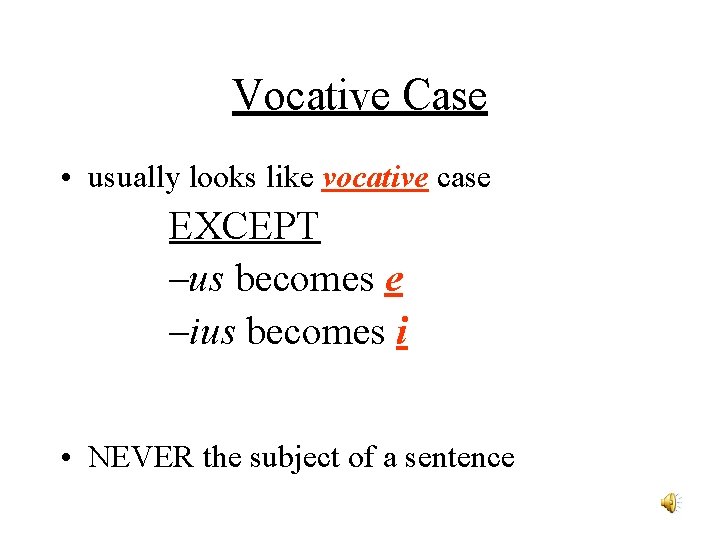
Rules for Vocative Case • noun of address is usually set off by a comma; it is NOT the subject of a sentence • usually is accompanied by imperative mood • vocative case looks like nominative, EXCEPT: • “us” noun changes to “e” • “ius” noun changes to “i”
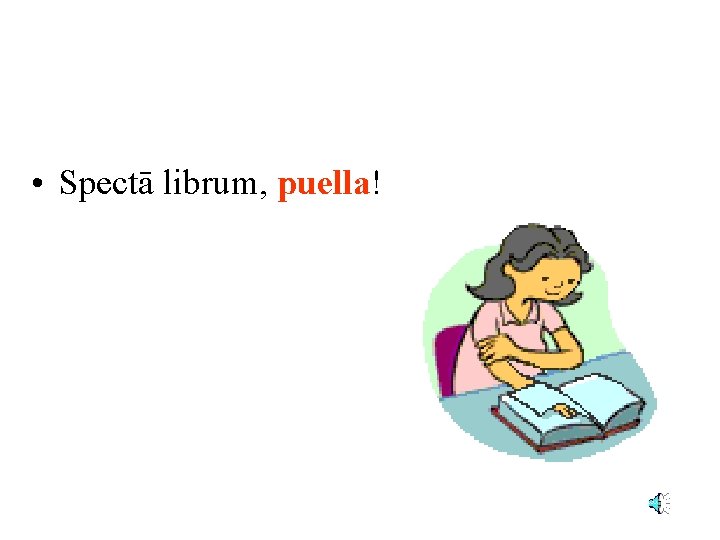
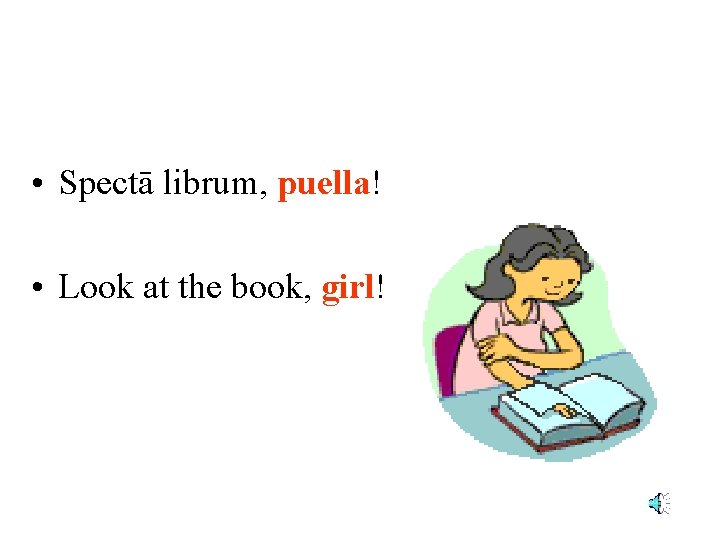
• Spectā librum, puella!
• Spectā librum, puella! • Look at the book, girl!
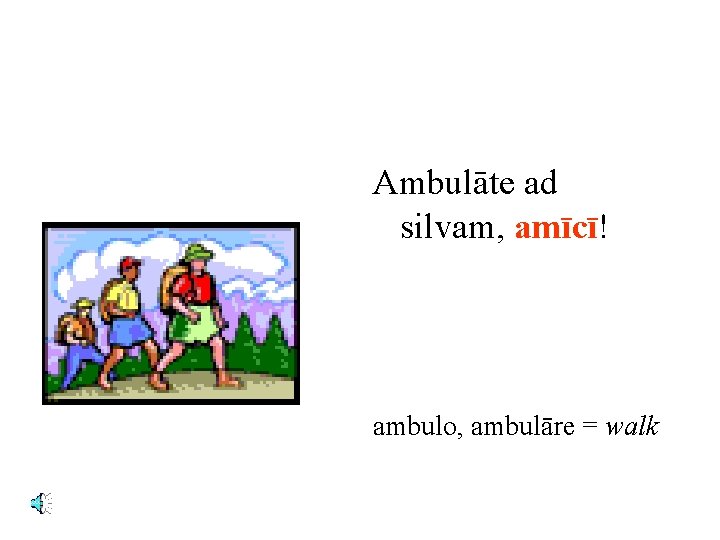
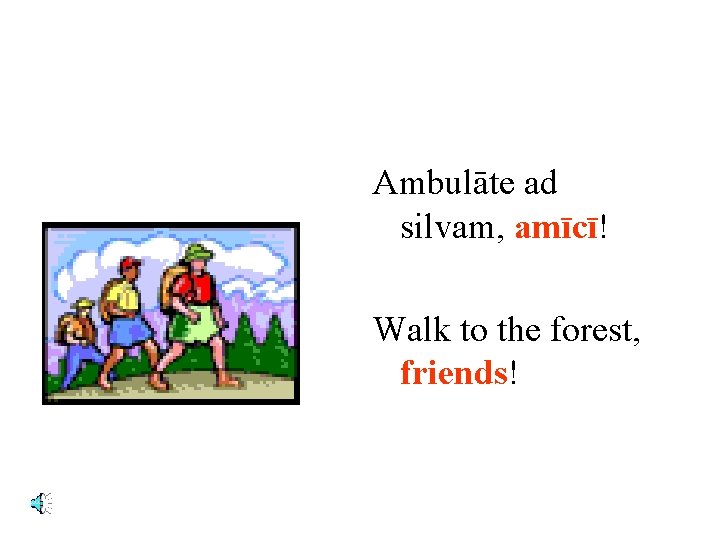
Ambulāte ad silvam, amīcī! ambulo, ambulāre = walk
Ambulāte ad silvam, amīcī! Walk to the forest, friends!
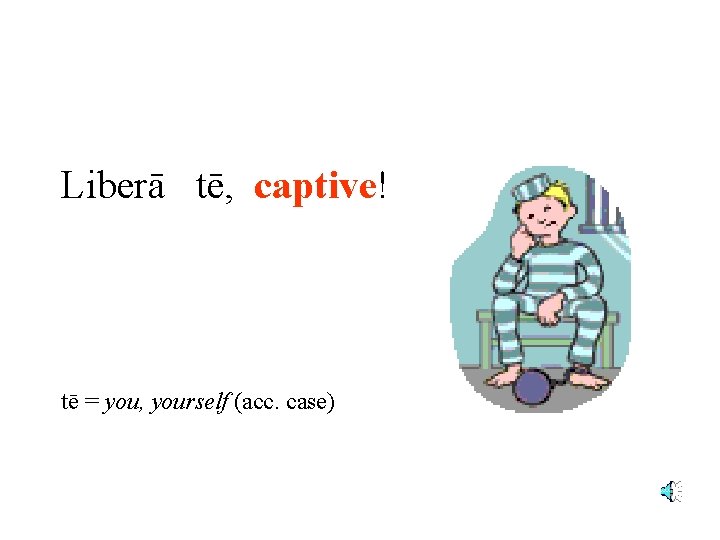
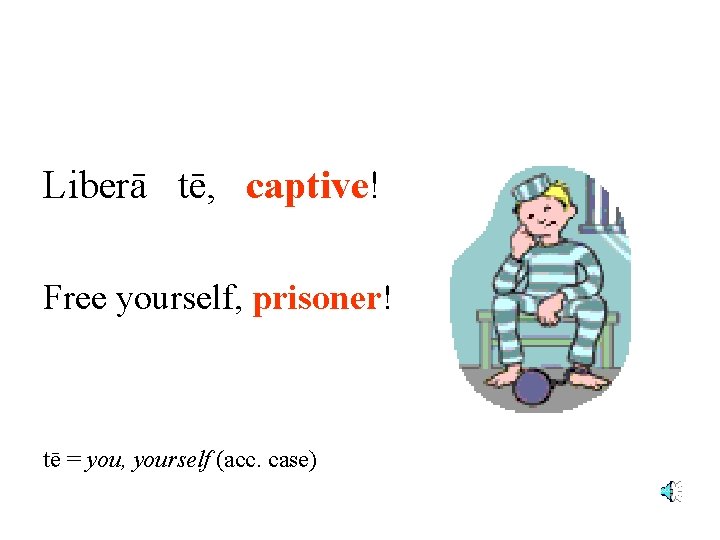
Liberā tē, captive! tē = you, yourself (acc. case)
Liberā tē, captive! Free yourself, prisoner! tē = you, yourself (acc. case)
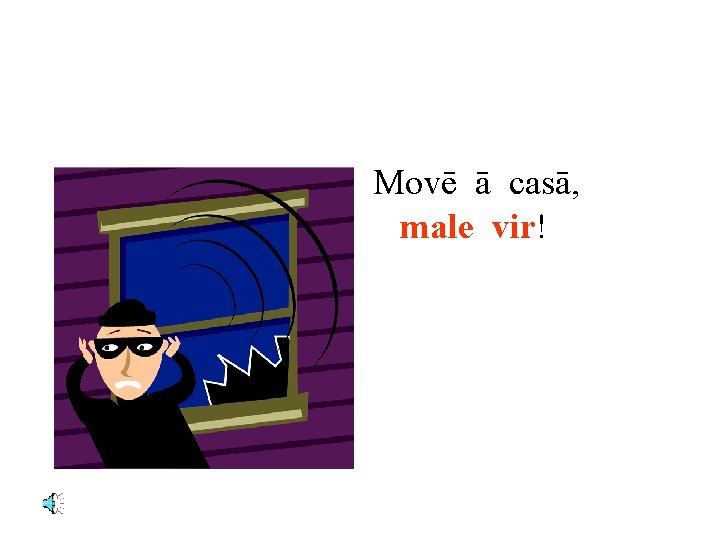
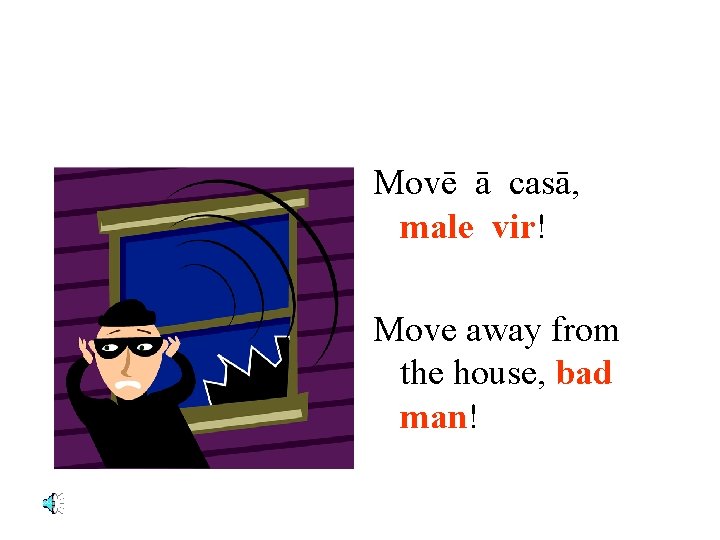
Movē ā casā, male vir!
Movē ā casā, male vir! Move away from the house, bad man!
Let’s Review • Vocative case looks like nominative, EXCEPT when a noun ends in a “us” or an “ius” (singular form only).
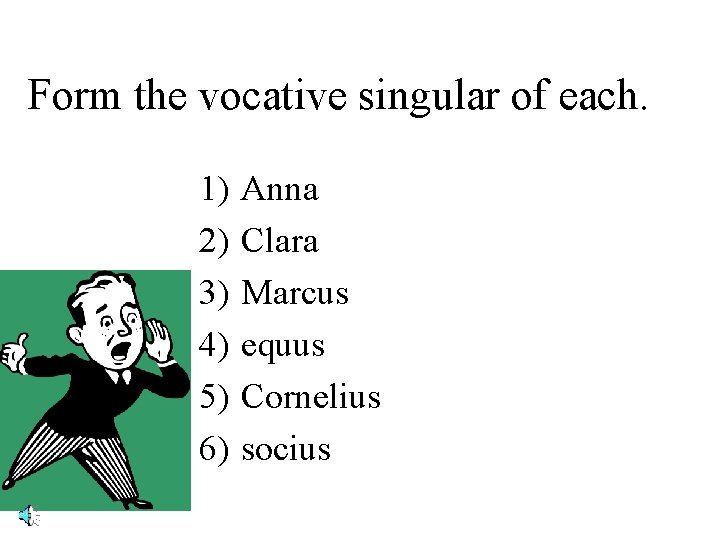
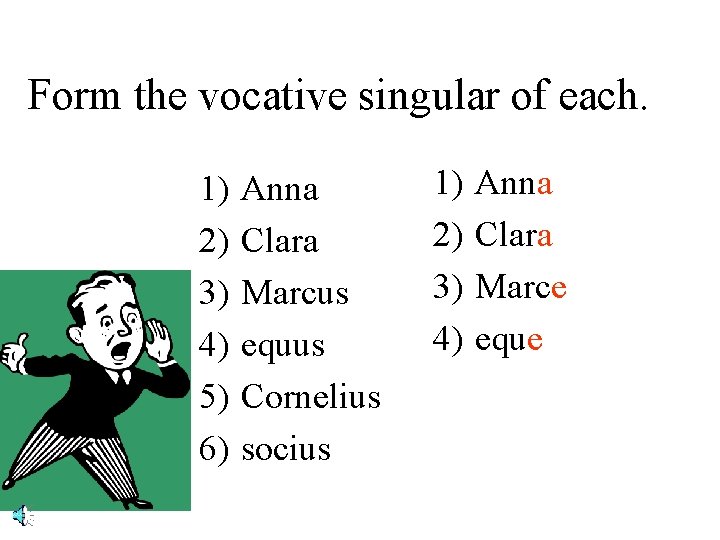
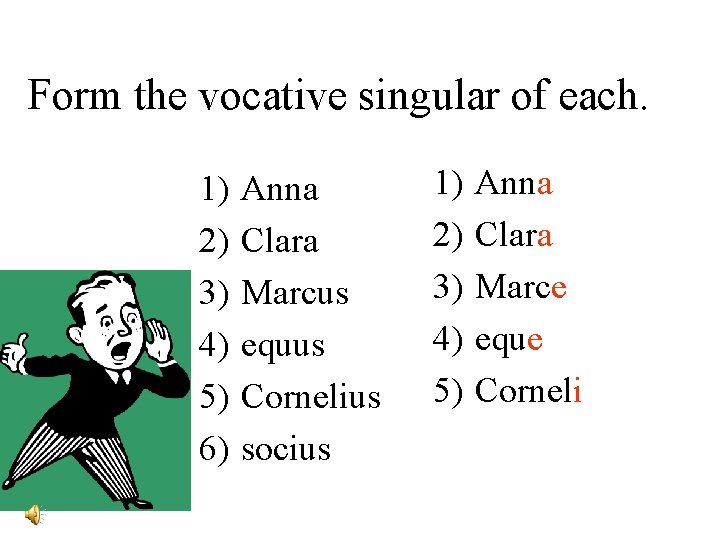
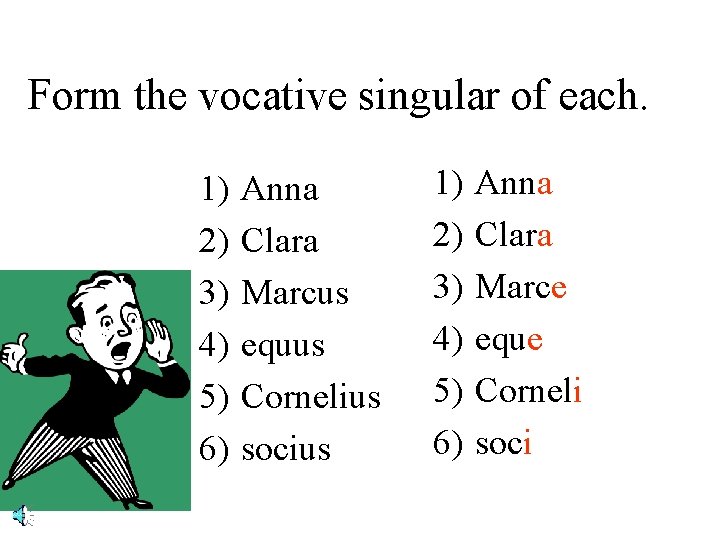
Form the vocative singular of each. 1) 2) 3) 4) 5) 6) Anna Clara Marcus equus Cornelius socius
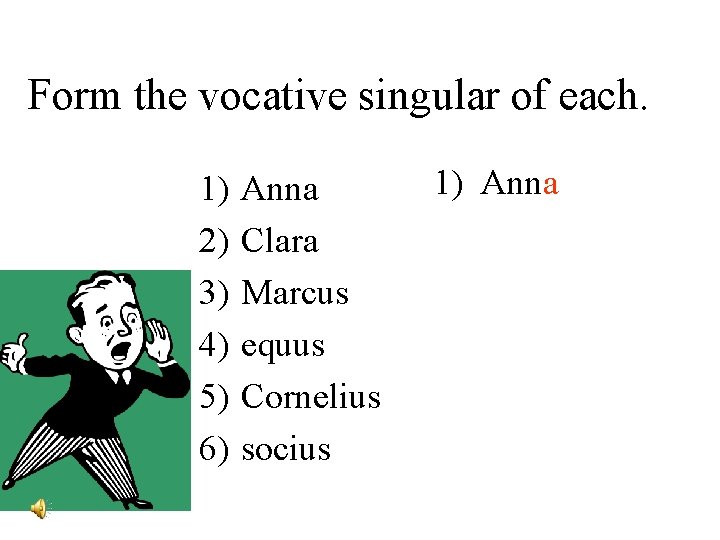
Form the vocative singular of each. 1) 2) 3) 4) 5) 6) Anna Clara Marcus equus Cornelius socius 1) Anna
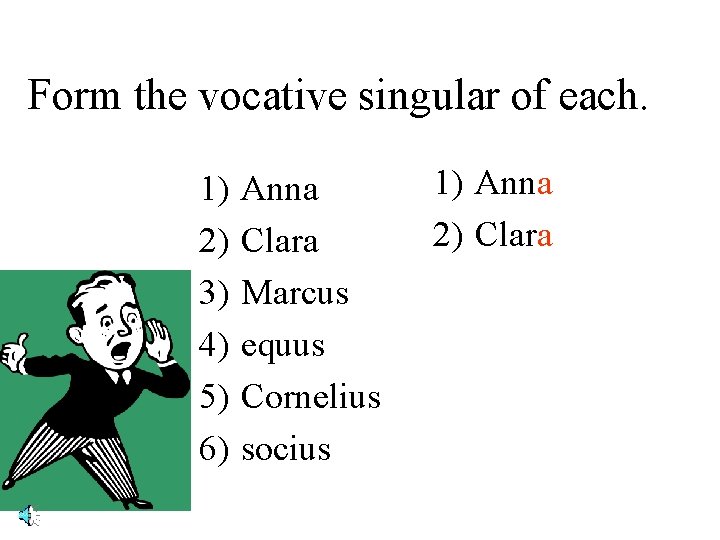
Form the vocative singular of each. 1) 2) 3) 4) 5) 6) Anna Clara Marcus equus Cornelius socius 1) Anna 2) Clara
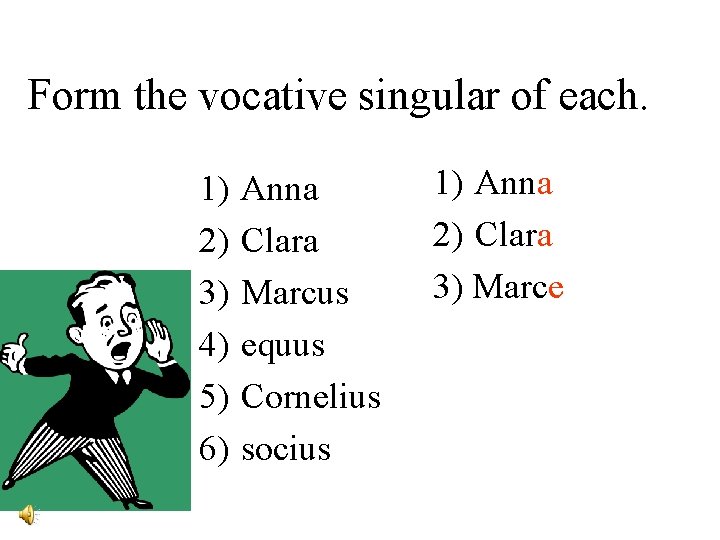
Form the vocative singular of each. 1) 2) 3) 4) 5) 6) Anna Clara Marcus equus Cornelius socius 1) Anna 2) Clara 3) Marce
Form the vocative singular of each. 1) 2) 3) 4) 5) 6) Anna Clara Marcus equus Cornelius socius 1) 2) 3) 4) Anna Clara Marce eque
Form the vocative singular of each. 1) 2) 3) 4) 5) 6) Anna Clara Marcus equus Cornelius socius 1) 2) 3) 4) 5) Anna Clara Marce eque Corneli
Form the vocative singular of each. 1) 2) 3) 4) 5) 6) Anna Clara Marcus equus Cornelius socius 1) 2) 3) 4) 5) 6) Anna Clara Marce eque Corneli soci
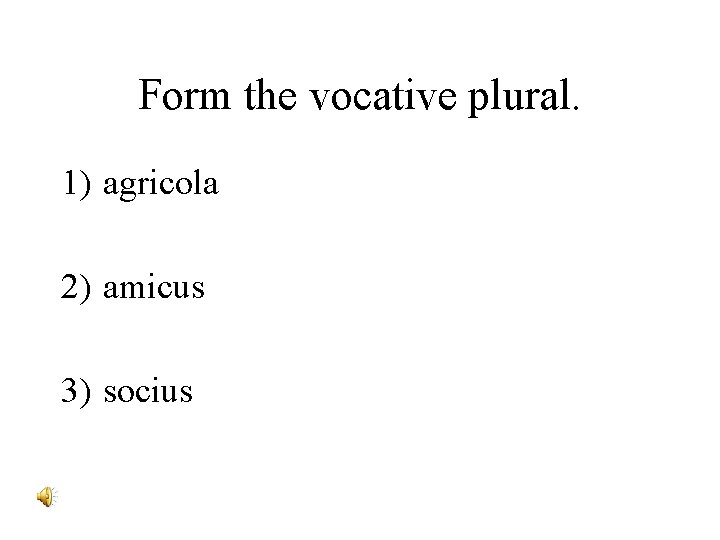
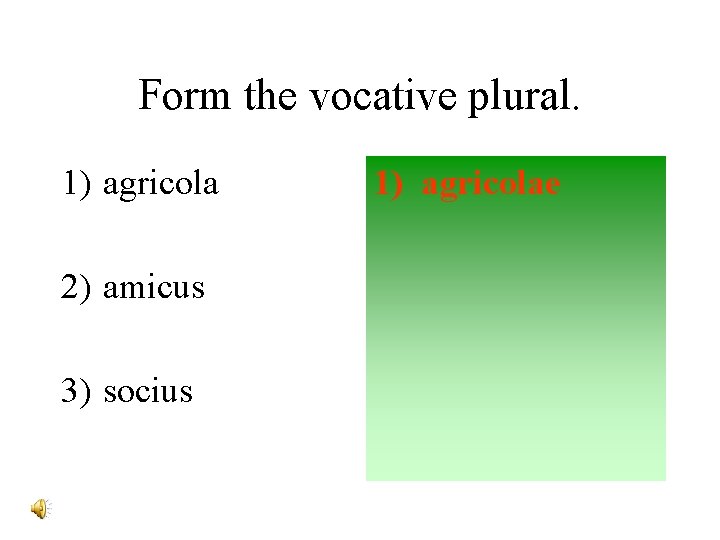
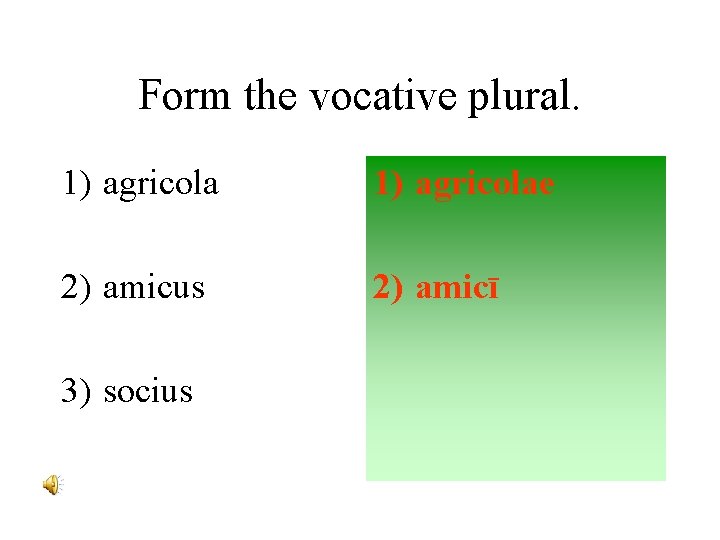
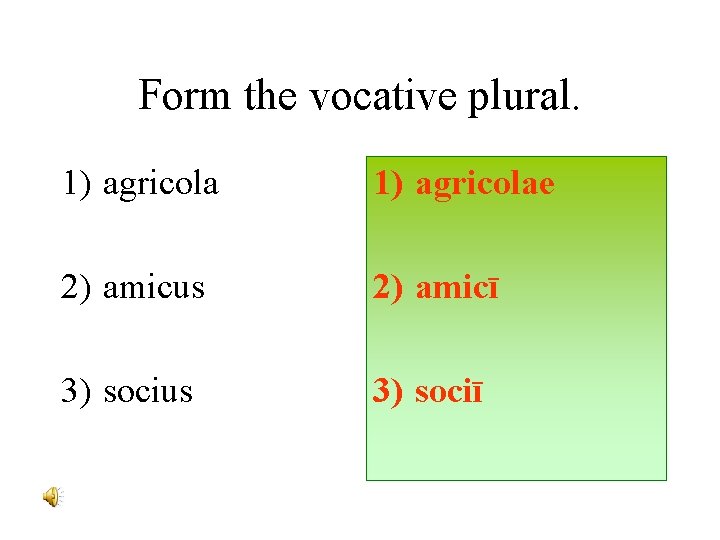
Form the vocative plural. 1) agricola 2) amicus 3) socius
Form the vocative plural. 1) agricola 2) amicus 3) socius 1) agricolae
Form the vocative plural. 1) agricolae 2) amicus 2) amicī 3) socius
Form the vocative plural. 1) agricolae 2) amicus 2) amicī 3) socius 3) sociī
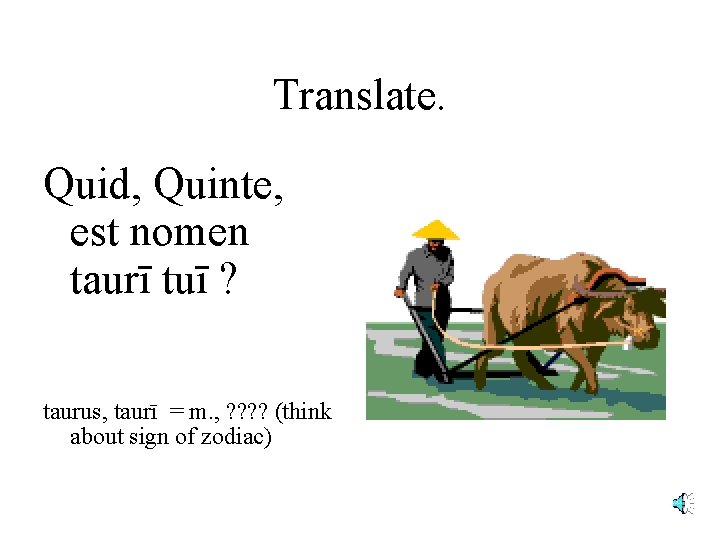
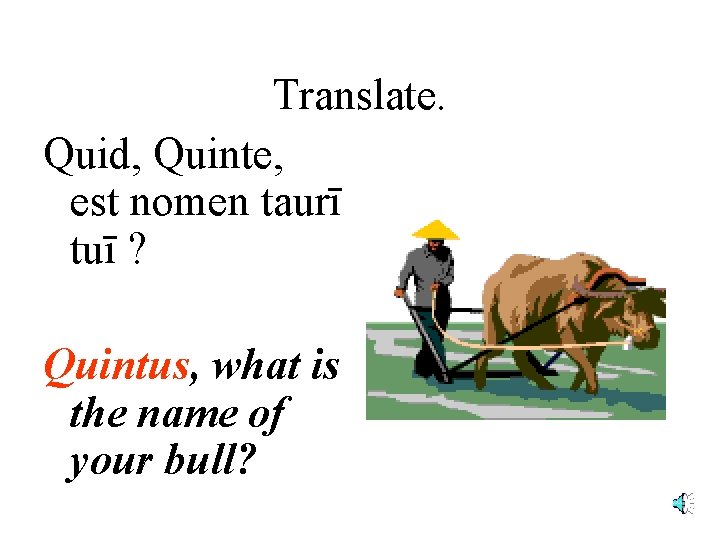
Translate. Quid, Quinte, est nomen taurī tuī ? taurus, taurī = m. , ? ? (think about sign of zodiac)
Translate. Quid, Quinte, est nomen taurī tuī ? Quintus, what is the name of your bull?
Work on the land, Metellus.
Work on the land, Metellus. Laborā in terrā, Metelle.
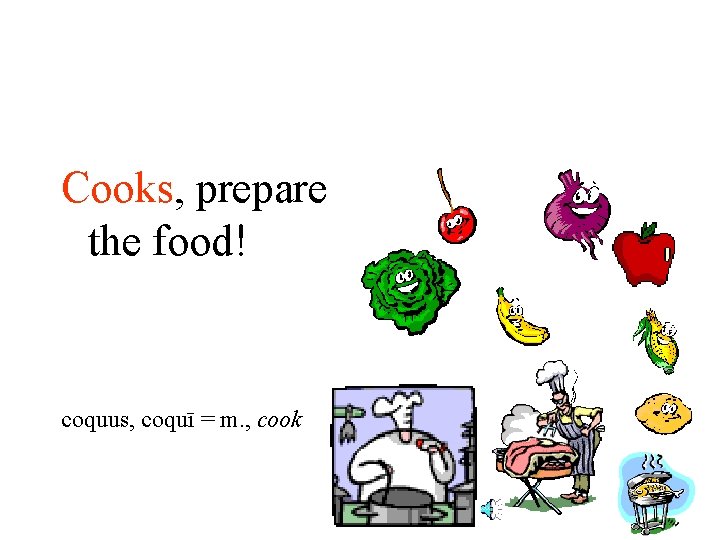
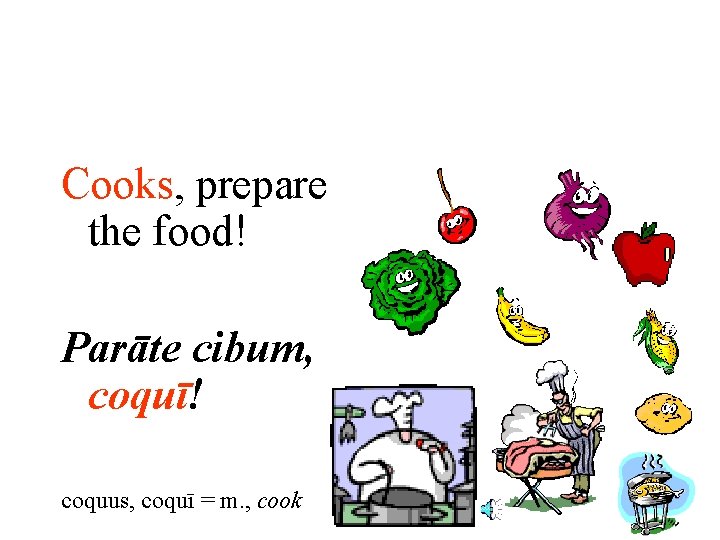
Cooks, prepare the food! coquus, coquī = m. , cook
Cooks, prepare the food! Parāte cibum, coquī! coquus, coquī = m. , cook
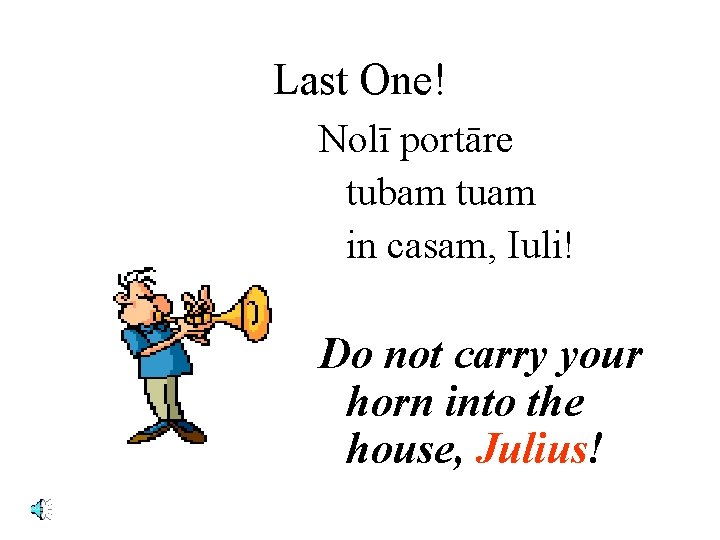
Last One! Nolī portāre tubam tuam in casam, Iuli! tuba, tubae = f. , horn
Last One! Nolī portāre tubam tuam in casam, Iuli! Do not carry your horn into the house, Julius!
Vocative Case • usually looks like _____ case EXCEPT –us becomes ______ –ius becomes ______ • NEVER the subject of a sentence
Vocative Case • usually looks like vocative case EXCEPT –us becomes e –ius becomes i • NEVER the subject of a sentence