
Vocabulary Weathering process that breaks rocks into sediments
Vocabulary: Weathering – process that breaks rocks into sediments Erosion – weathering and then removing rock debris Deposition – Sediments lose energy and drop Compaction – squeezes sediments together Cementation – dissolved minerals fill in spaces between sediments
Sedimentary Rocks • Rock formed from the weathered products of preexisting rocks • Rock type and clast size give clues to the environment of formation
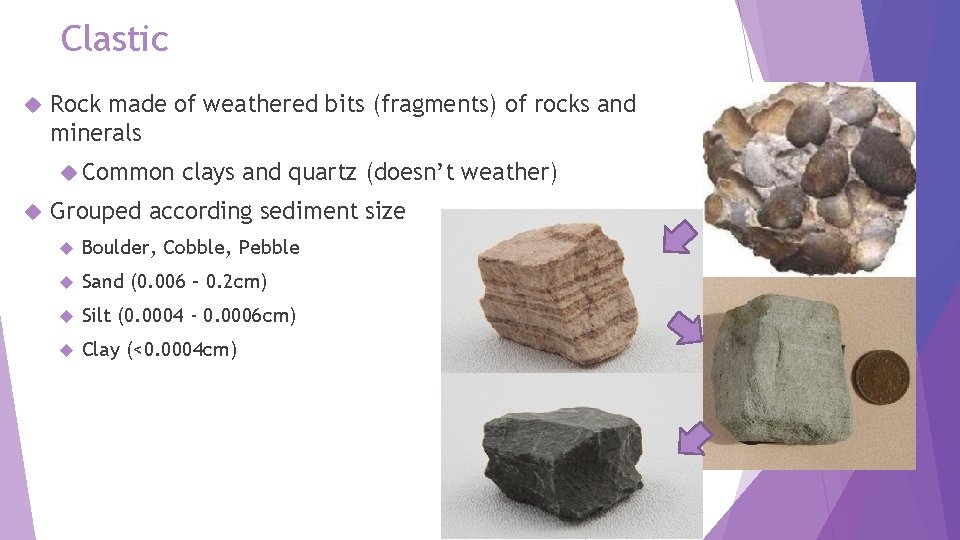
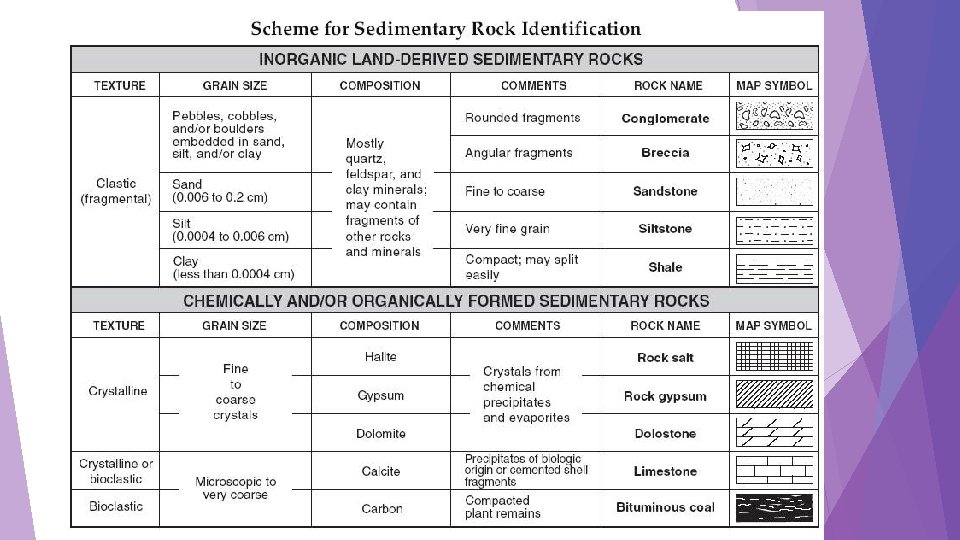
Clastic Rock made of weathered bits (fragments) of rocks and minerals Common clays and quartz (doesn’t weather) Grouped according sediment size Boulder, Cobble, Pebble Sand (0. 006 – 0. 2 cm) Silt (0. 0004 - 0. 0006 cm) Clay (<0. 0004 cm)
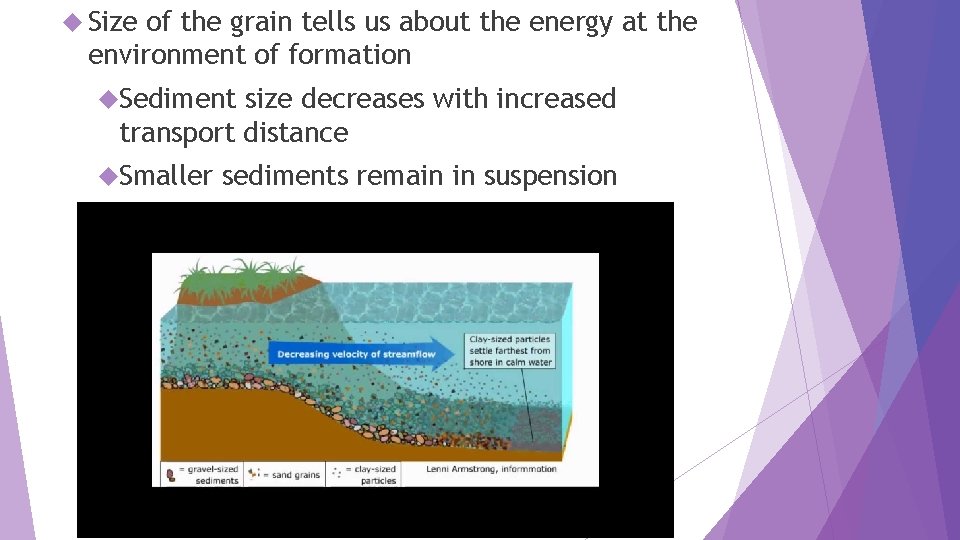
Size of the grain tells us about the energy at the environment of formation Sediment size decreases with increased transport distance Smaller sediments remain in suspension

Chemical or Crystalline Dissolved substances precipitate from a water solution (crystalline) Limestone, rock salt, rock gypsum (Evaporites)

Organic or Bioclastic Formed from biochemical sediment (shells, skeleton, organic remains) Limestone, coal
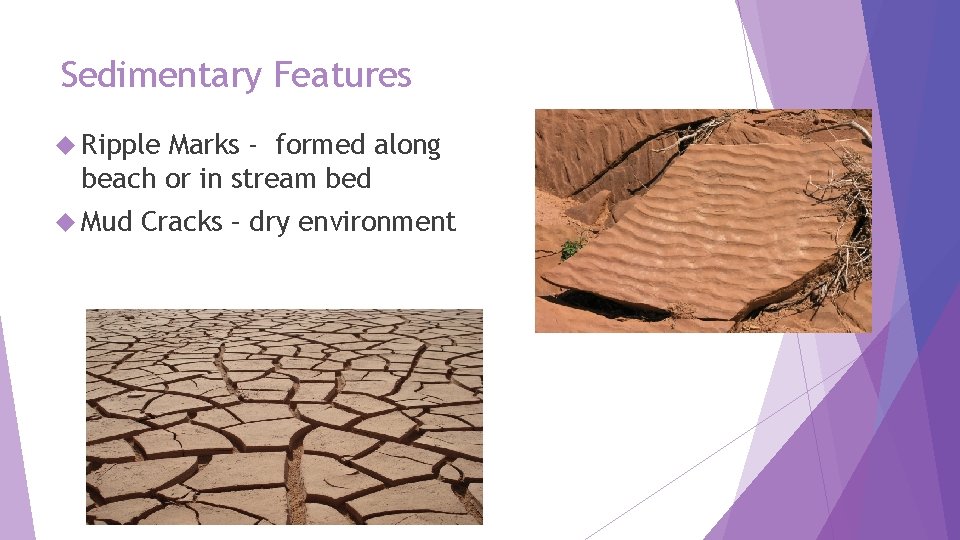
Sedimentary Features Ripple Marks - formed along beach or in stream bed Mud Cracks – dry environment
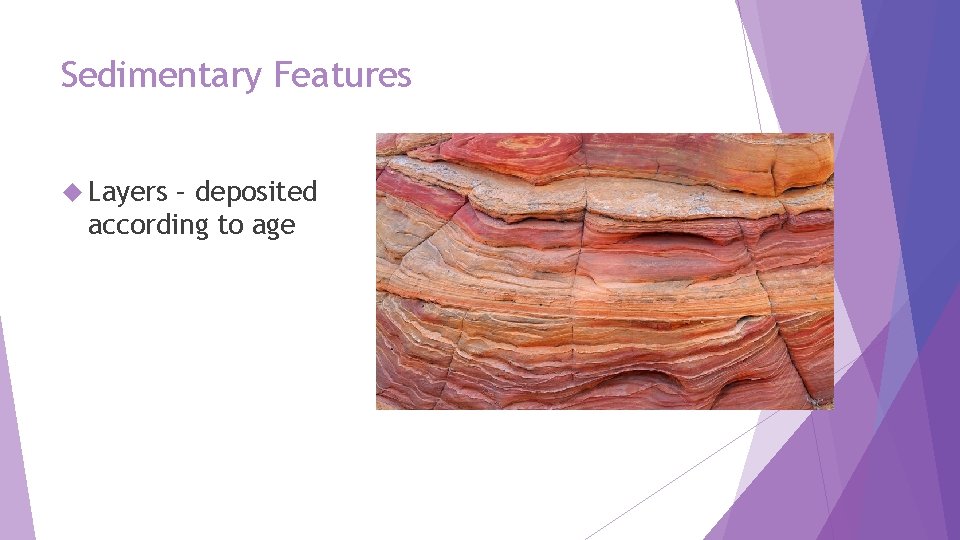
Sedimentary Features Layers – deposited according to age
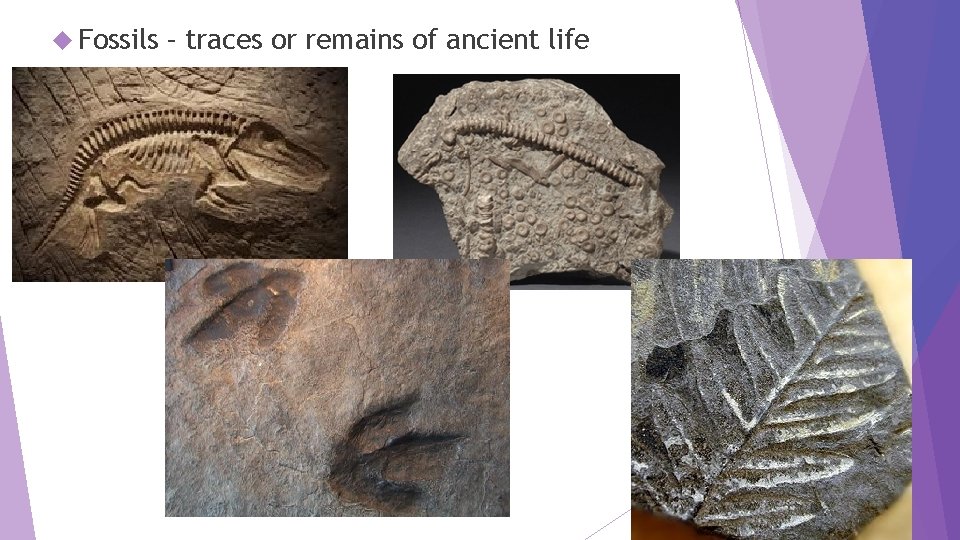
Fossils – traces or remains of ancient life
- Slides: 10