
Vocabulary Vocabulary Mitosis a type of cell division
Vocabulary

Vocabulary • Mitosis: a type of cell division that results in two daughter cells each having the same number and kind of chromosomes as the parent nucleus, typical of ordinary tissue growth Examples: Stem, Blood, Nerve, Brain, Muscle, Skin, and Bone cells • Meiosis: a type of cell division that results in four daughter cells each with half the number of chromosomes of the parent cell, as in the production of gametes and plant spores Examples: Egg and Sperm cells
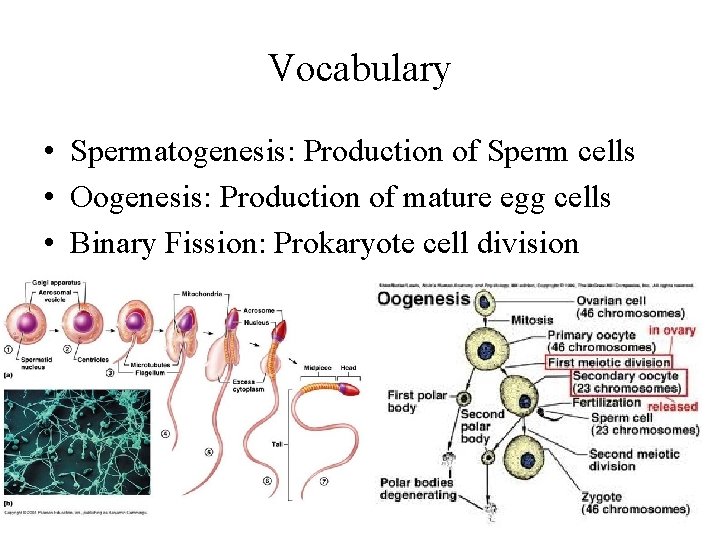
Vocabulary • Spermatogenesis: Production of Sperm cells • Oogenesis: Production of mature egg cells • Binary Fission: Prokaryote cell division
Vocabulary • Complete Dominance: One allele completely hides the other (Masks) • Incomplete Dominance: Both alleles influence the phenotype (Blending) • Codominance: Neither allele completely hides the other (spotting)
Vocabulary • Homozygous- two of the same alleles for a trait • Heterozygous- two different alleles for a trait • Genotype- Genetic make-up of an individual gene • Phenotype- External appearance of an organism, determined by the genotype. Physical Expression of a gene. • Allele- All traits/forms of a gene
Vocabulary • Prophase: Chromosomes are visible, Nucleus disappears Prepares for cell division • Metaphase: Chromosomes line up in the middle of the cell Middle of cell • Anaphase: Sister chromatids move away Away from the cell • Telophase: Chromosomes have split, cytoplasm still needs to divide Two Nuclei form
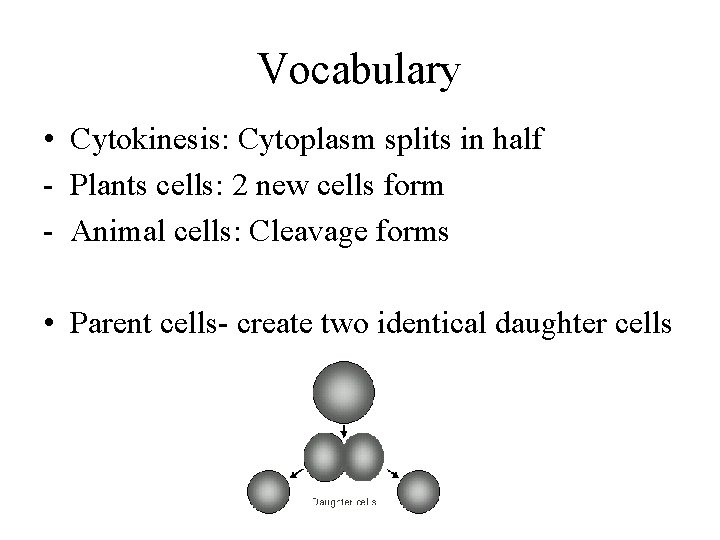
Vocabulary • Cytokinesis: Cytoplasm splits in half - Plants cells: 2 new cells form - Animal cells: Cleavage forms • Parent cells- create two identical daughter cells

Content

Prophase • • First phase of Mitosis Chromatin becomes Chromosomes= visible Centrioles move to the opposite ends of the Nucleus • Centrioles begin to form
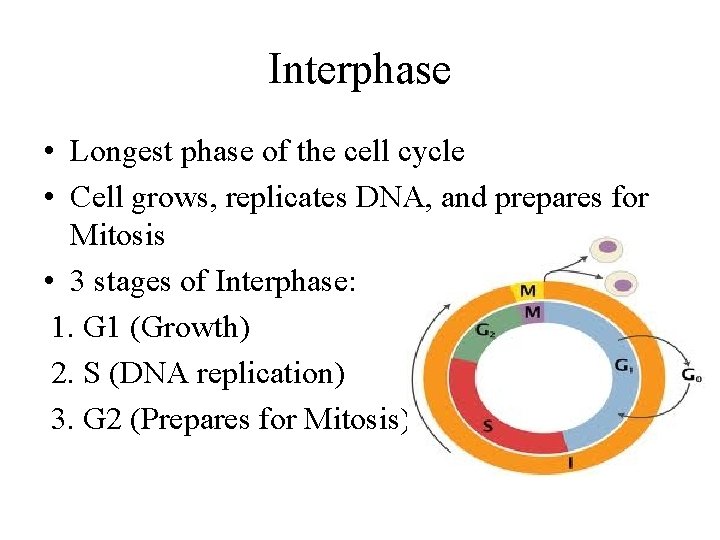
Interphase • Longest phase of the cell cycle • Cell grows, replicates DNA, and prepares for Mitosis • 3 stages of Interphase: 1. G 1 (Growth) 2. S (DNA replication) 3. G 2 (Prepares for Mitosis)

Metaphase • The mitotic spindle has fully developed at this point • Chromosomes line up in the middle • Chromosomes are connected to spindle fiber
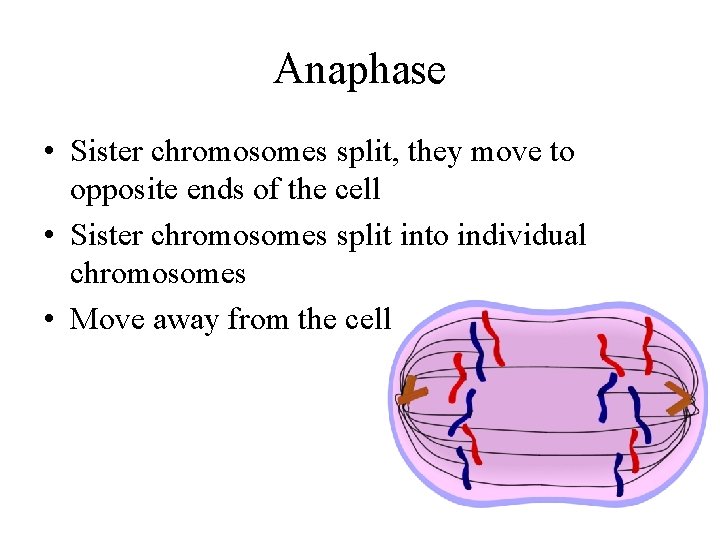
Anaphase • Sister chromosomes split, they move to opposite ends of the cell • Sister chromosomes split into individual chromosomes • Move away from the cell
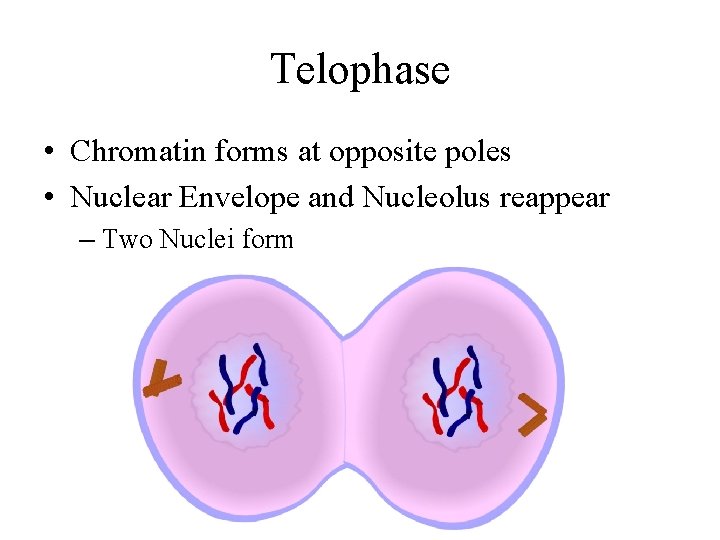
Telophase • Chromatin forms at opposite poles • Nuclear Envelope and Nucleolus reappear – Two Nuclei form
Video • http: //www. wimp. com/understandgenetics/
Citations • • http: //lh 3. ggpht. com/xfe. Ud. K 00 IDY/Uc. QBPslo. Ty. I/AAAAGr. M/IGw. D 7 g. Z 1 EAU/spermiogenesis _thumb 12. jpg? imgmax=800 http: //www. google. com/search? q=3+stages+of+interphase&safe=active&source=ln ms&tbm=isch&sa=X&ei=h. R 2 b. U 7 Tq. Mcqs. QSfu. YCg. CQ&sqi=2&ved=0 CAYQ_AUo. AQ&biw=1366&bih=651&gws_rd=ssl# q=oogenesis&safe=active&tbm=isch&facrc=_&imgdii=_&
- Slides: 15