
Vocabulary The Importance of Building a Powerful Vocabulary
Vocabulary The Importance of Building a Powerful Vocabulary for Success
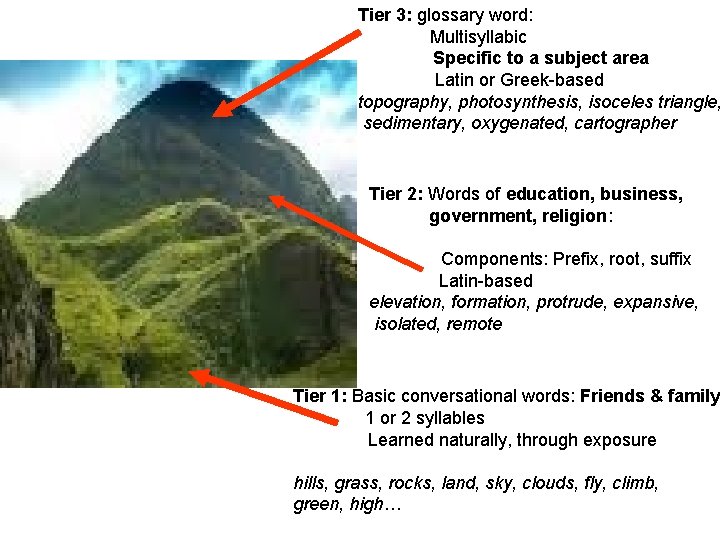
Tier 3: glossary word: Multisyllabic Specific to a subject area Latin or Greek-based topography, photosynthesis, isoceles triangle, sedimentary, oxygenated, cartographer Tier 2: Words of education, business, government, religion: Components: Prefix, root, suffix Latin-based elevation, formation, protrude, expansive, isolated, remote Tier 1: Basic conversational words: Friends & family 1 or 2 syllables Learned naturally, through exposure hills, grass, rocks, land, sky, clouds, fly, climb, green, high…
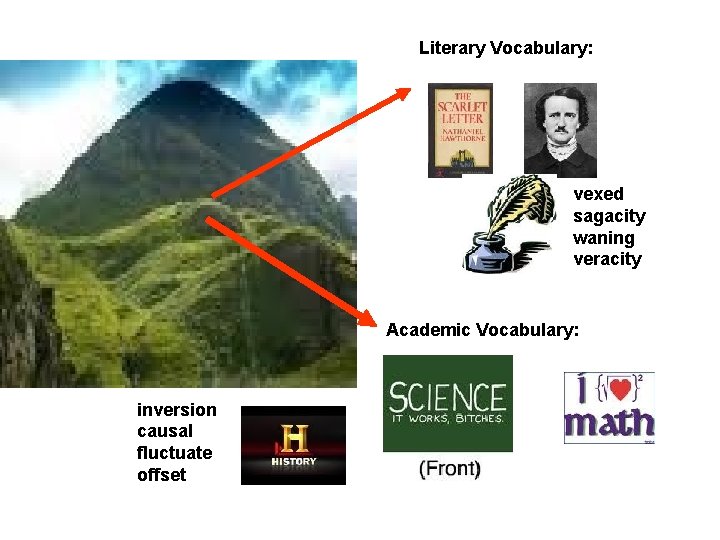
Literary Vocabulary: vexed sagacity waning veracity Academic Vocabulary: inversion causal fluctuate offset

Compare Tiers 1 & 2 tiny small little averag e big large giant huge infinitesimal miniscule petite middling grand copious enormous gargantuan
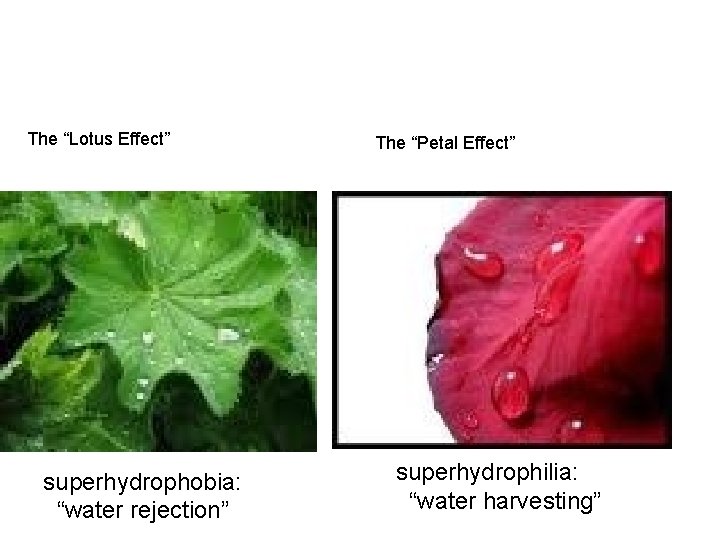
The “Lotus Effect” superhydrophobia: “water rejection” The “Petal Effect” superhydrophilia: “water harvesting”

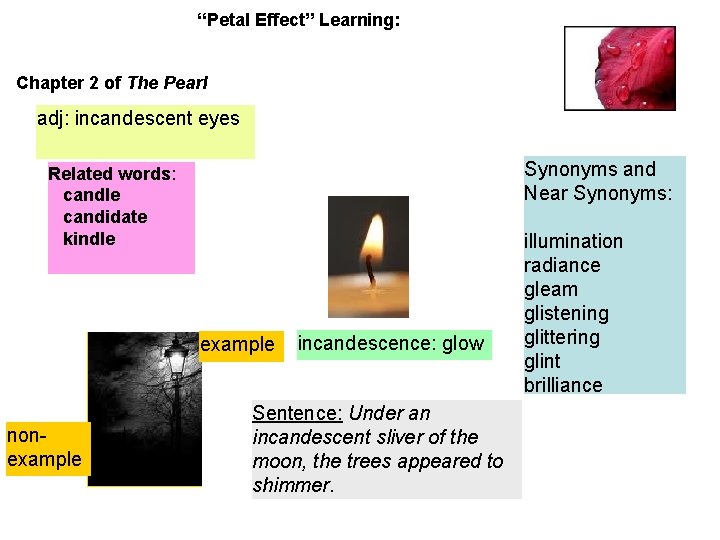
“Petal Effect” Learning: Chapter 2 of The Pearl adj: incandescent eyes Synonyms and Near Synonyms: Related words: candle candidate kindle example nonexample incandescence: glow Sentence: Under an incandescent sliver of the moon, the trees appeared to shimmer. illumination radiance gleam glistening glittering glint brilliance
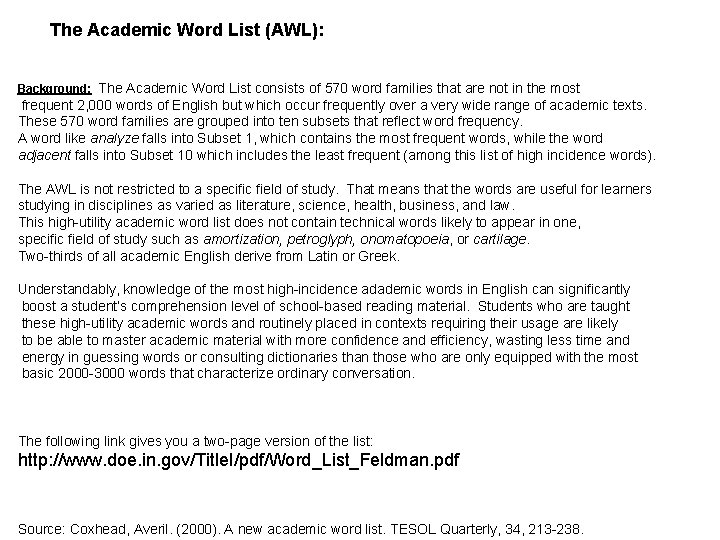
The Academic Word List (AWL): Background: The Academic Word List consists of 570 word families that are not in the most frequent 2, 000 words of English but which occur frequently over a very wide range of academic texts. These 570 word families are grouped into ten subsets that reflect word frequency. A word like analyze falls into Subset 1, which contains the most frequent words, while the word adjacent falls into Subset 10 which includes the least frequent (among this list of high incidence words). The AWL is not restricted to a specific field of study. That means that the words are useful for learners studying in disciplines as varied as literature, science, health, business, and law. This high-utility academic word list does not contain technical words likely to appear in one, specific field of study such as amortization, petroglyph, onomatopoeia, or cartilage. Two-thirds of all academic English derive from Latin or Greek. Understandably, knowledge of the most high-incidence adademic words in English can significantly boost a student’s comprehension level of school-based reading material. Students who are taught these high-utility academic words and routinely placed in contexts requiring their usage are likely to be able to master academic material with more confidence and efficiency, wasting less time and energy in guessing words or consulting dictionaries than those who are only equipped with the most basic 2000 -3000 words that characterize ordinary conversation. The following link gives you a two-page version of the list: http: //www. doe. in. gov/Title. I/pdf/Word_List_Feldman. pdf Source: Coxhead, Averil. (2000). A new academic word list. TESOL Quarterly, 34, 213 -238.
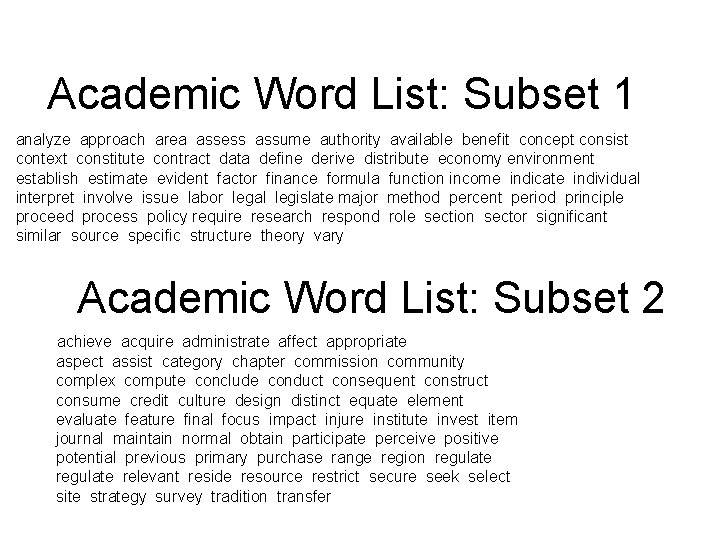
Academic Word List: Subset 1 analyze approach area assess assume authority available benefit concept consist context constitute contract data define derive distribute economy environment establish estimate evident factor finance formula function income indicate individual interpret involve issue labor legal legislate major method percent period principle proceed process policy require research respond role section sector significant similar source specific structure theory vary Academic Word List: Subset 2 achieve acquire administrate affect appropriate aspect assist category chapter commission community complex compute conclude conduct consequent construct consume credit culture design distinct equate element evaluate feature final focus impact injure institute invest item journal maintain normal obtain participate perceive positive potential previous primary purchase range region regulate relevant reside resource restrict secure seek select site strategy survey tradition transfer
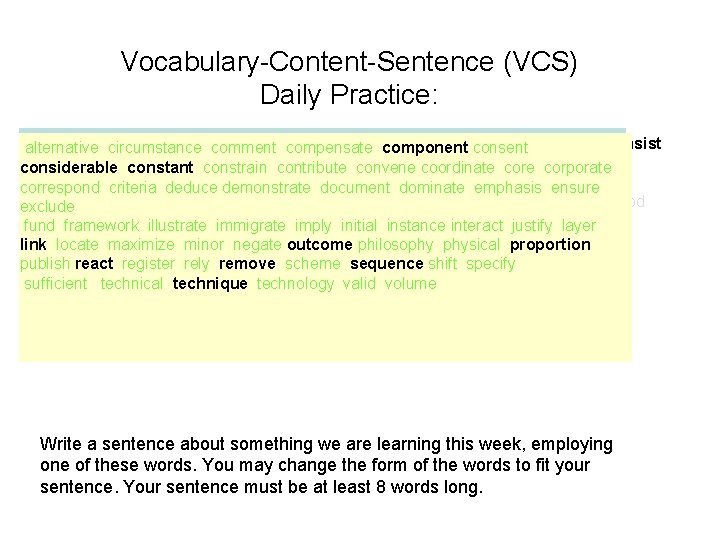
Vocabulary-Content-Sentence (VCS) Daily Practice: achieve acquire administrate affect appropriate analyze approach area assess assume authoritycomponent available consent benefit concept consist alternative circumstance comment compensate aspect assist category chapter community context constitute contract data commission define derive distribute economy environment considerable constant constrain contribute convene coordinate corporate complex compute conclude conduct consequent construct establish estimate evidentdemonstrate factor finance formula dominate function income indicate correspond criteria deduce document emphasis ensure consume credit culture design distinct equate element individual interpret involve issue labor legal legislate major method percent period exclude evaluate feature illustrate final focus impact injureresearch institute investinteract item principle proceed process policy require respond role section sector fund framework immigrate imply initial instance justify layer journal maintain normal obtain participate perceive positive significant similar source specific structure theory vary link locate maximize minor negate outcome philosophy physical proportion potential previous primary purchase range region regulate publish react register rely remove scheme sequence shift specify regulate resource restrict secure seek select sufficient relevant technicalreside technique technology valid volume site strategy survey tradition transfer Write a sentence about something we are learning this week, employing one of these words. You may change the form of the words to fit your sentence. Your sentence must be at least 8 words long.
- Slides: 10