
Vocabulary Ten AP Accost Verb To approach aggressively
Vocabulary Ten AP

Accost • Verb • To approach aggressively • The hippie accosted me outside the grocery store with a petition to save the pandas from gluten.
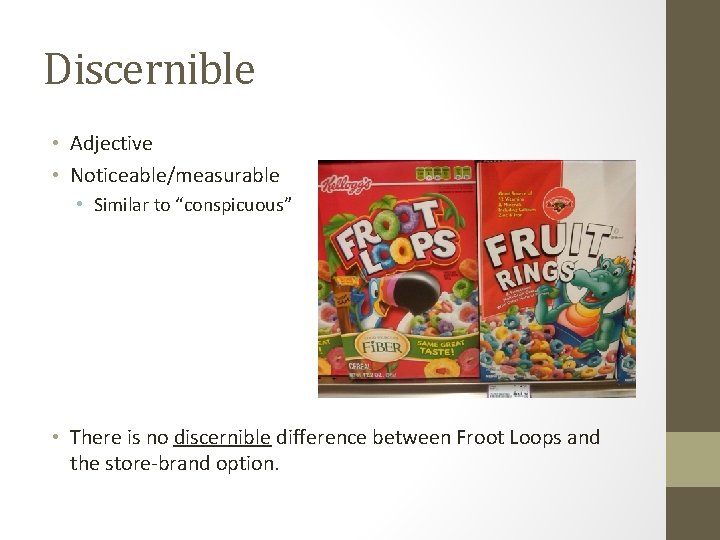
Discernible • Adjective • Noticeable/measurable • Similar to “conspicuous” • There is no discernible difference between Froot Loops and the store-brand option.
Catcher • Chapters 5 -10 • Choose two from this group to answer: • Describe Ally and Phoebe. In what ways does he seem to deliberately contrast them with himself? • Why does he attack Stradlater? (Two layers: Literal and—remember, you’re therapist—interpretive. Why does he really do it? ) • Why does he get so depressed by the skates? • And one from this section: • Describe the interaction between Holden and the woman on the train. Why does he tell her the things he does? • Describe the interaction between Holden and the girl with whom he dances at the bar. How does this interaction reinforce the contradictory nature of his personality as discussed in the earlier chapters?
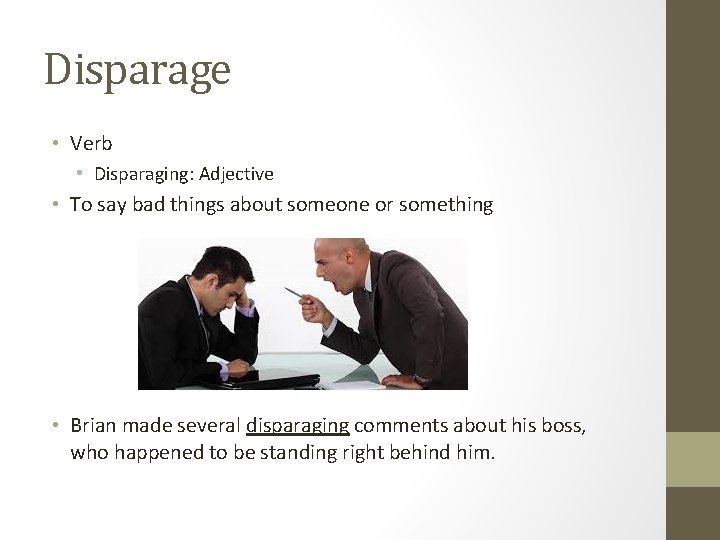
Disparage • Verb • Disparaging: Adjective • To say bad things about someone or something • Brian made several disparaging comments about his boss, who happened to be standing right behind him.
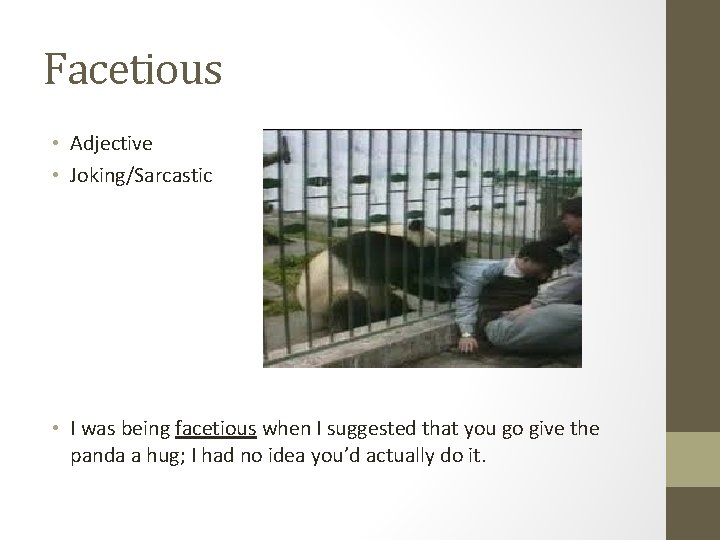
Facetious • Adjective • Joking/Sarcastic • I was being facetious when I suggested that you go give the panda a hug; I had no idea you’d actually do it.
Egregious • Adjective • Shockingly bad • Similar to flagrant • The items on the menu at our school are egregious.
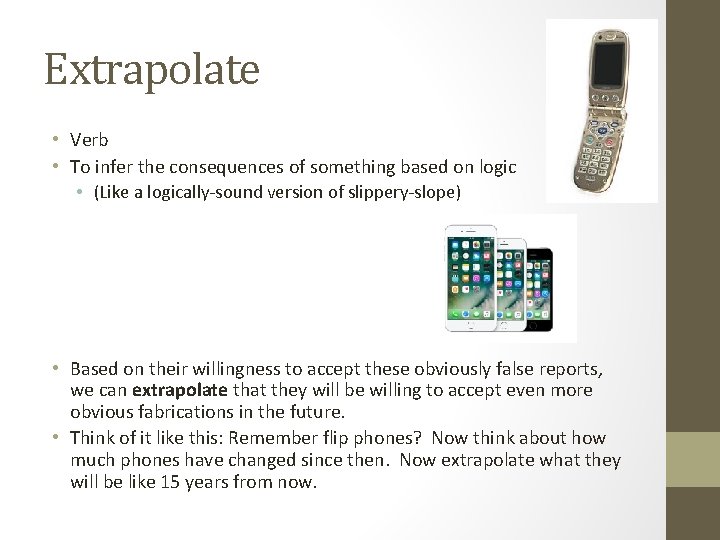
Extrapolate • Verb • To infer the consequences of something based on logic • (Like a logically-sound version of slippery-slope) • Based on their willingness to accept these obviously false reports, we can extrapolate that they will be willing to accept even more obvious fabrications in the future. • Think of it like this: Remember flip phones? Now think about how much phones have changed since then. Now extrapolate what they will be like 15 years from now.
Fleeting • Adjective • Temporary • Though many teenagers believe otherwise, most high school relationships are fleeting.
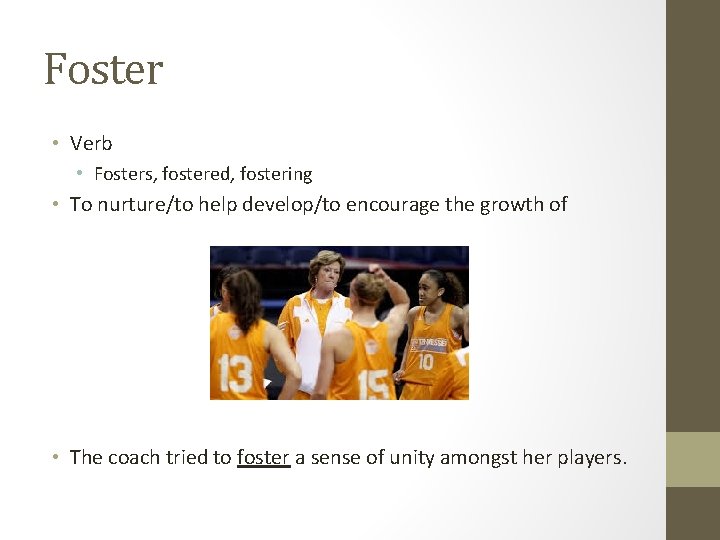
Foster • Verb • Fosters, fostered, fostering • To nurture/to help develop/to encourage the growth of • The coach tried to foster a sense of unity amongst her players.
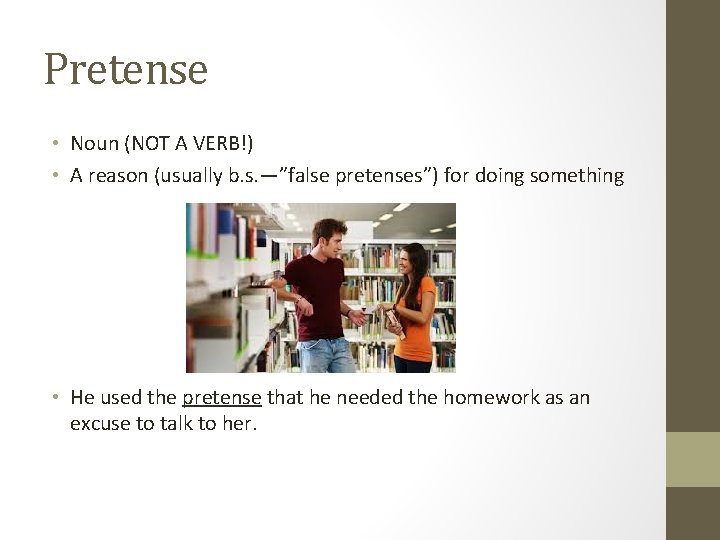
Pretense • Noun (NOT A VERB!) • A reason (usually b. s. —”false pretenses”) for doing something • He used the pretense that he needed the homework as an excuse to talk to her.
Qualify • Verb • To make a statement or position less absolute/ To put limits or provide exceptions to your argument • Like “some, ” “many, ” “up to a point, ” etc. • He qualified his initial position by acknowledging that, while many students would benefit from increased physical activity, there are some—like athletes—who are already active enough.
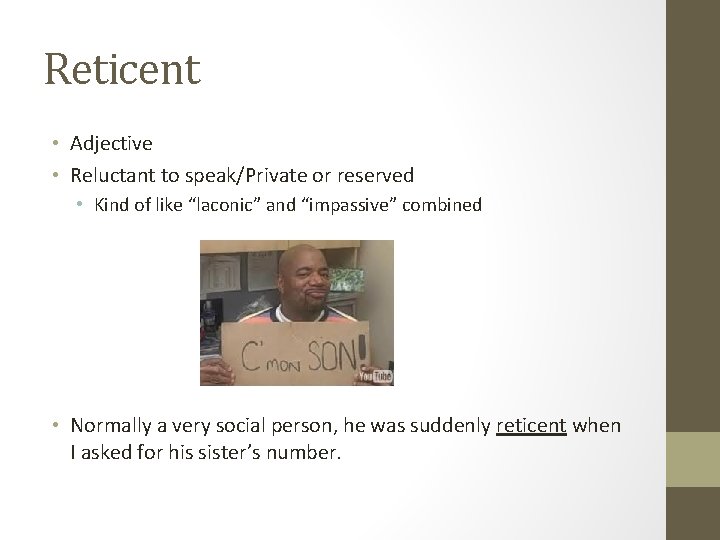
Reticent • Adjective • Reluctant to speak/Private or reserved • Kind of like “laconic” and “impassive” combined • Normally a very social person, he was suddenly reticent when I asked for his sister’s number.
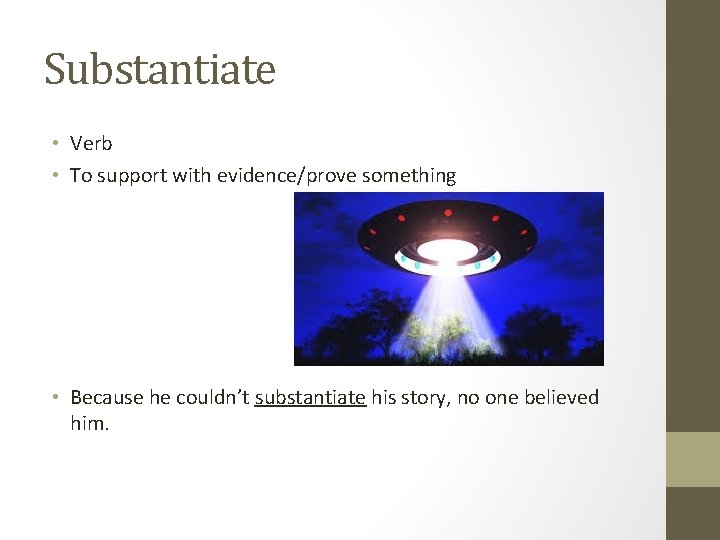
Substantiate • Verb • To support with evidence/prove something • Because he couldn’t substantiate his story, no one believed him.
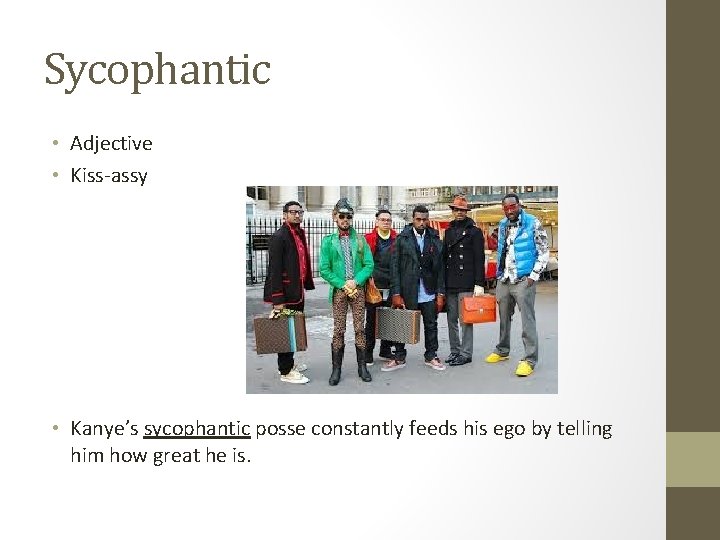
Sycophantic • Adjective • Kiss-assy • Kanye’s sycophantic posse constantly feeds his ego by telling him how great he is.
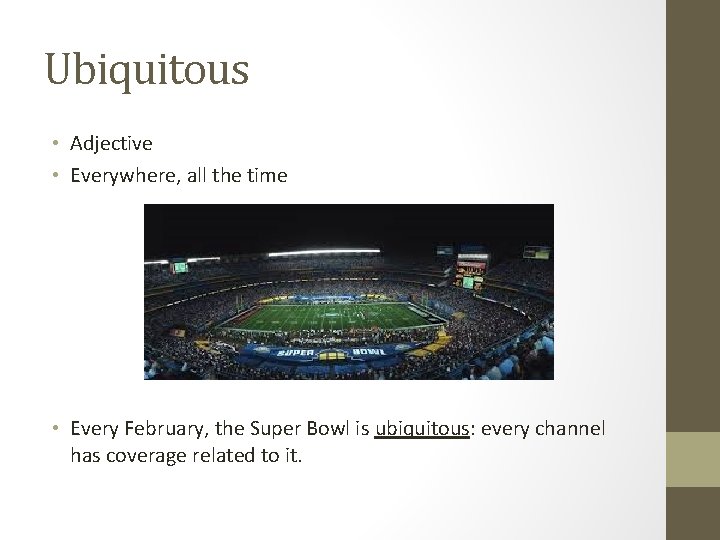
Ubiquitous • Adjective • Everywhere, all the time • Every February, the Super Bowl is ubiquitous: every channel has coverage related to it.
Grammar Nuance • Its vs. It’s • It’s • ALWAYS means “it is” • Not possessive • It’s getting late. • NOT: The dog hurt it’s foot (which means “the dog hurt it is foot. ) • Its • It’s counterintuitive, I know, but this one is possessive • Something belongs to “it” • The dog hurt its foot.
Grammar Nuance • Lose vs. Loose • This is about spelling. Get it right! • Lose: Verb: Opposite of “find” • • One O I always lose my phone! I always loose my phone = I set my phone free. Our team always looses = I have no idea; that doesn’t make any sense. • Loose: Adjective: Opposite of tight or confined • Two O’s • That handle is loose; you should fix it.
- Slides: 18