
Vocabulary Strategy Semantic Gradients KAREN MENGEL TITLE 1
Vocabulary Strategy: Semantic Gradients KAREN MENGEL, TITLE 1 TEACHER UNIFIED SCHOOL DISTRICT OF MARSHFIELD
What is the strategy semantic gradients? The strategy semantic gradients is a vocabulary strategy that builds deeper understanding of words.
Semantic gradients helps children understand how words are connected. Why use semantic gradient strategy? Semantic gradients provides children a way to compare words. Using semantic gradients combined with context clues helps children understand the deeper meaning of text. Activities for semantic gradients promote vocabulary awareness and appreciation for how knowing words affects the ability to understand what is being read, spoken, written, or listened to.
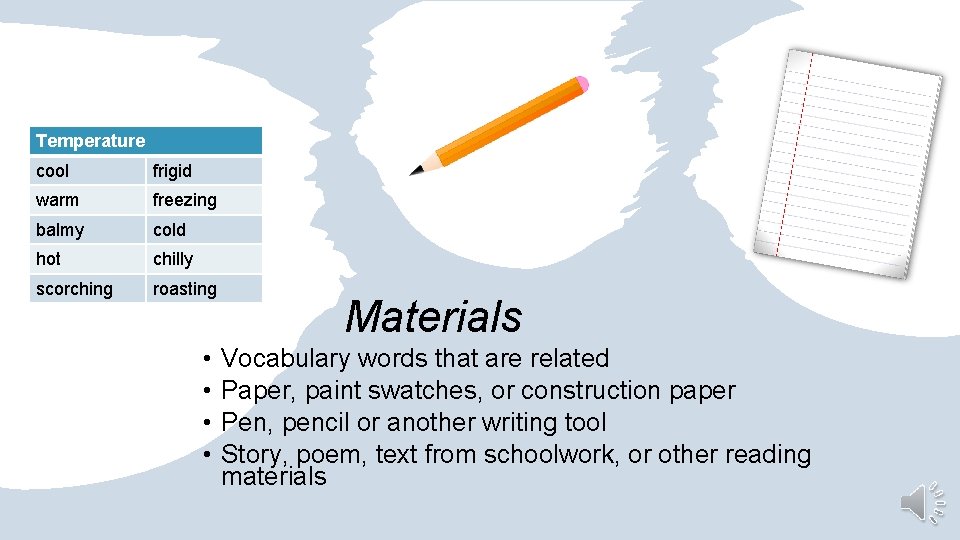
Temperature cool frigid warm freezing balmy cold hot chilly scorching roasting • • Materials Vocabulary words that are related Paper, paint swatches, or construction paper Pen, pencil or another writing tool Story, poem, text from schoolwork, or other reading materials
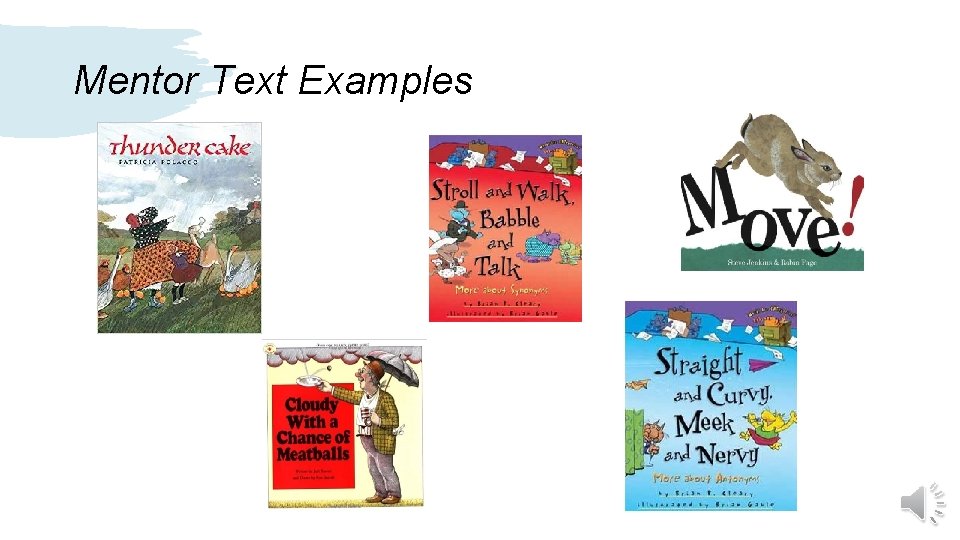
Mentor Text Examples
Selecting a Mentor Text • Mentor texts serve as models for learning a specific skill or strategy. • The text you select should fit well with the concept you want to teach. • Look for texts that use lots of synonyms, antonyms, and concept related vocabulary. • Select from picture books, poems, historical documents, textbooks, etc.
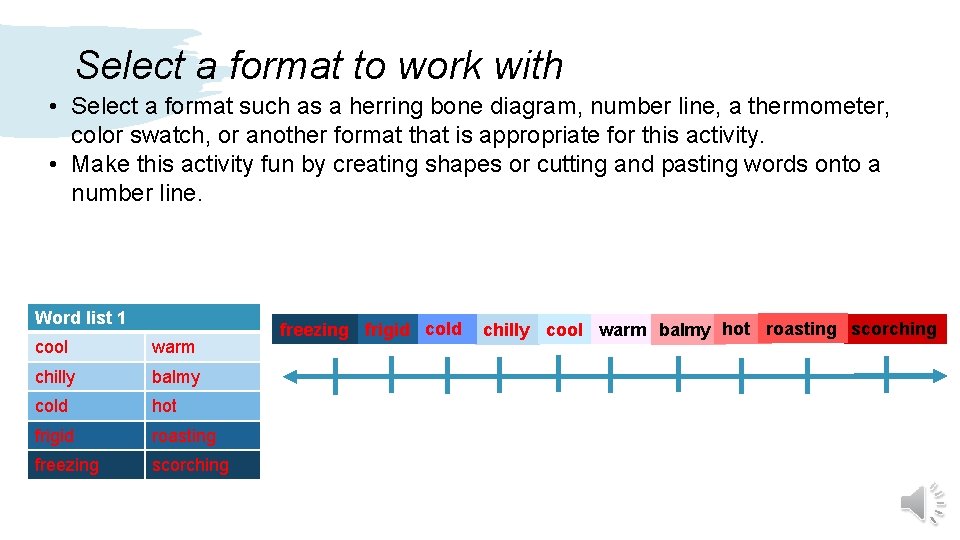
Select a format to work with • Select a format such as a herring bone diagram, number line, a thermometer, color swatch, or another format that is appropriate for this activity. • Make this activity fun by creating shapes or cutting and pasting words onto a number line. Word list 1 cool warm chilly balmy cold hot frigid roasting freezing scorching freezing frigid cold chilly cool warm balmy hot roasting scorching
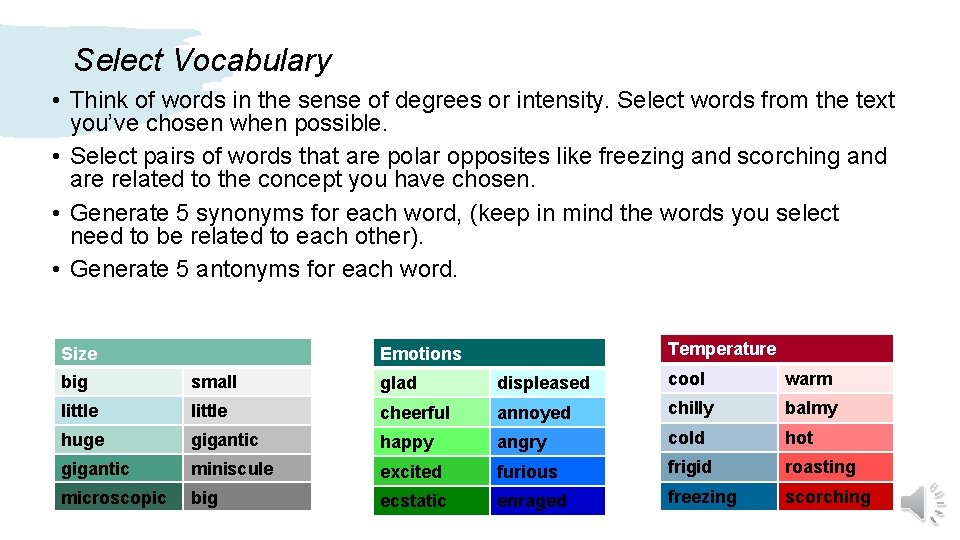
Select Vocabulary • Think of words in the sense of degrees or intensity. Select words from the text you’ve chosen when possible. • Select pairs of words that are polar opposites like freezing and scorching and are related to the concept you have chosen. • Generate 5 synonyms for each word, (keep in mind the words you select need to be related to each other). • Generate 5 antonyms for each word. Size Temperature Emotions big small glad displeased cool warm little cheerful annoyed chilly balmy huge gigantic happy angry cold hot gigantic miniscule excited furious frigid roasting microscopic big ecstatic enraged freezing scorching
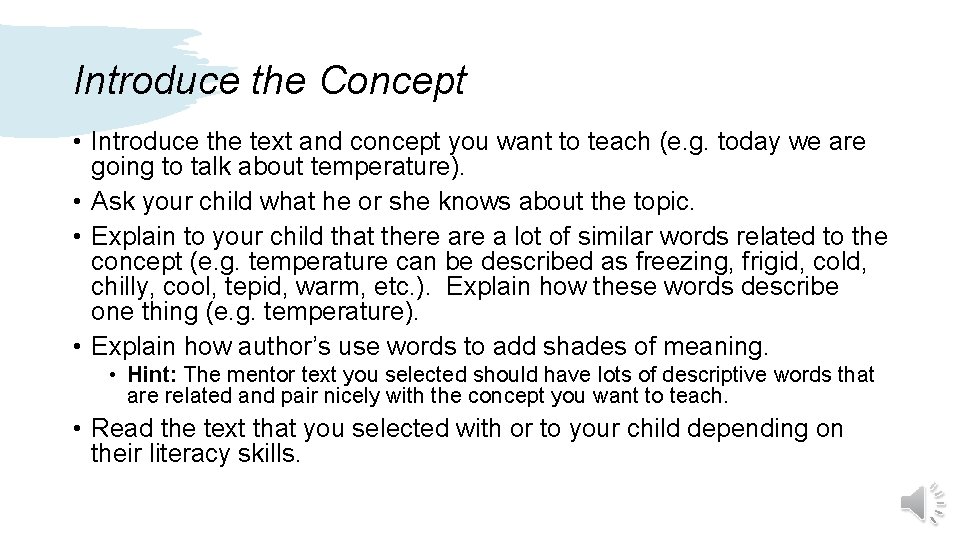
Introduce the Concept • Introduce the text and concept you want to teach (e. g. today we are going to talk about temperature). • Ask your child what he or she knows about the topic. • Explain to your child that there a lot of similar words related to the concept (e. g. temperature can be described as freezing, frigid, cold, chilly, cool, tepid, warm, etc. ). Explain how these words describe one thing (e. g. temperature). • Explain how author’s use words to add shades of meaning. • Hint: The mentor text you selected should have lots of descriptive words that are related and pair nicely with the concept you want to teach. • Read the text that you selected with or to your child depending on their literacy skills.
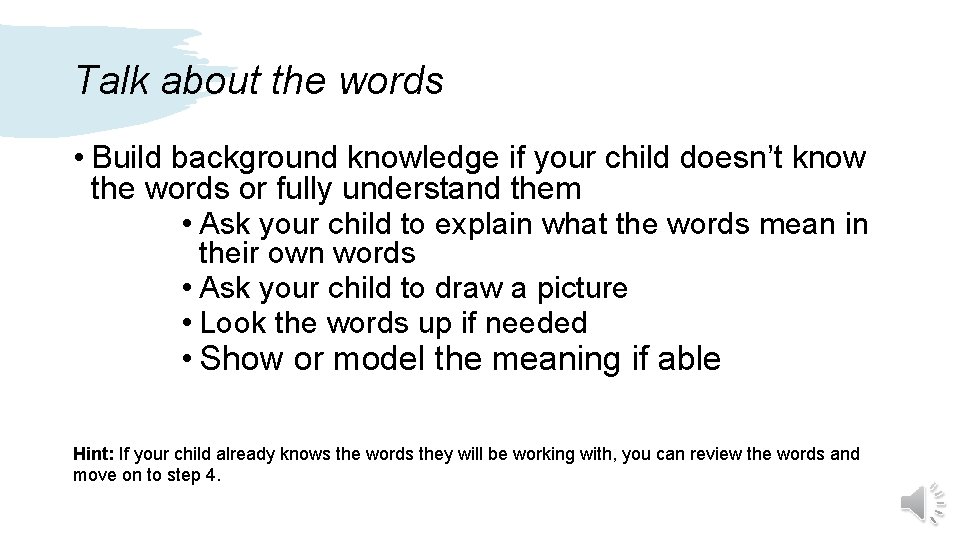
Talk about the words • Build background knowledge if your child doesn’t know the words or fully understand them • Ask your child to explain what the words mean in their own words • Ask your child to draw a picture • Look the words up if needed • Show or model the meaning if able Hint: If your child already knows the words they will be working with, you can review the words and move on to step 4.
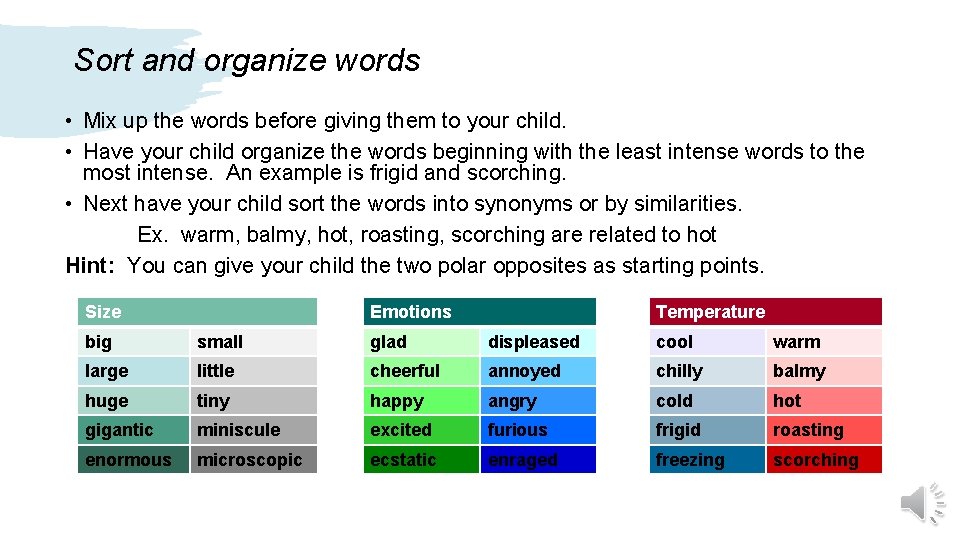
Sort and organize words • Mix up the words before giving them to your child. • Have your child organize the words beginning with the least intense words to the most intense. An example is frigid and scorching. • Next have your child sort the words into synonyms or by similarities. Ex. warm, balmy, hot, roasting, scorching are related to hot Hint: You can give your child the two polar opposites as starting points. Size Emotions Temperature big small glad displeased cool warm large little cheerful annoyed chilly balmy huge tiny happy angry cold hot gigantic miniscule excited furious frigid roasting enormous microscopic ecstatic enraged freezing scorching
Discuss the Activity and Connect to the Text • Talk to your child about the sorting process. • Ask your child how and why they sorted the words the way they did. • Praise your child for explaining their reasoning. • Ask your child how organizing the words on a gradient helps them.
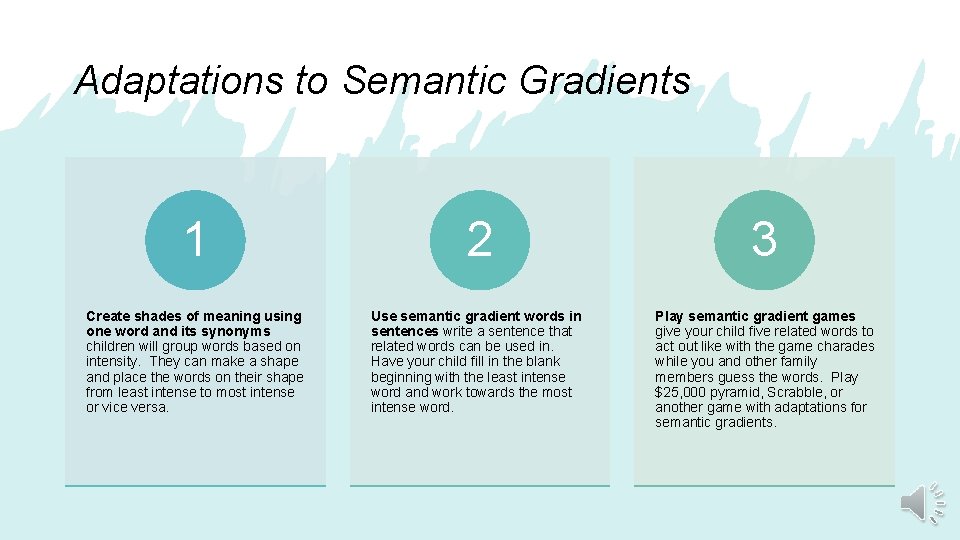
Adaptations to Semantic Gradients 1 2 3 Create shades of meaning using one word and its synonyms children will group words based on intensity. They can make a shape and place the words on their shape from least intense to most intense or vice versa. Use semantic gradient words in sentences write a sentence that related words can be used in. Have your child fill in the blank beginning with the least intense word and work towards the most intense word. Play semantic gradient games give your child five related words to act out like with the game charades while you and other family members guess the words. Play $25, 000 pyramid, Scrabble, or another game with adaptations for semantic gradients.
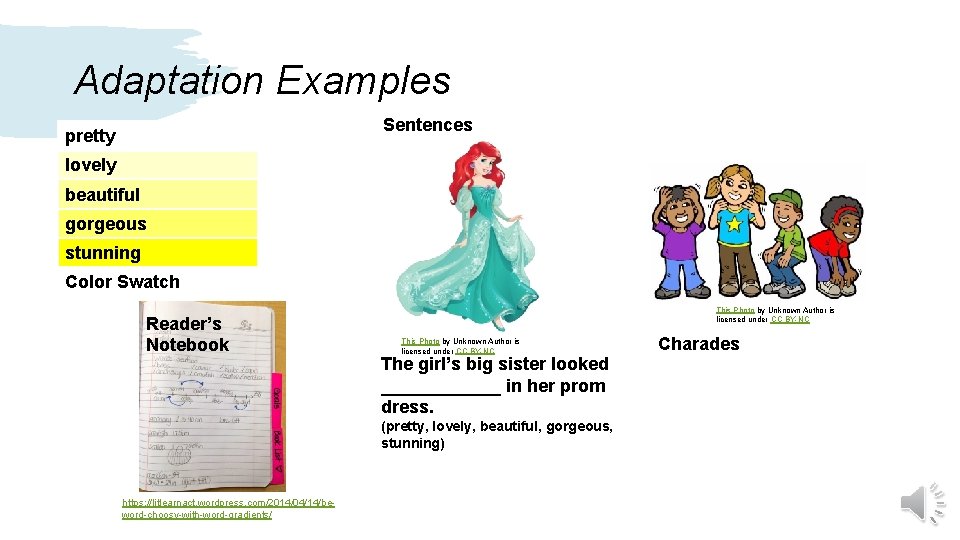
Adaptation Examples Sentences pretty lovely beautiful gorgeous stunning Color Swatch Reader’s Notebook This Photo by Unknown Author is licensed under CC BY-NC The girl’s big sister looked ______ in her prom dress. (pretty, lovely, beautiful, gorgeous, stunning) https: //litlearnact. wordpress. com/2014/04/14/beword-choosy-with-word-gradients/ Charades
Thank you for all that you do for your children! For more information about this strategy or other literacy strategies please e-mail me mengel@marshfieldschools. org
Resources Cahill, M. (2019, December 26). Semantic Gradients: Classroom Strategy. Retrieved from https: //www. readingrockets. org/strategies/semantic_gradient s Greenwood, S. C. , & Flanigan, K. (2007). Overlapping Vocabulary and Comprehension: Context Clues Complement Semantic Gradients. Reading Teacher, 61(3), 249 -254. doi: 10. 1598/RT. 61. 3. 5
- Slides: 16