
Vocabulary Nomad Animism Domesticate S S 2 2

Vocabulary • Nomad • Animism • Domesticate S. S. 2. 2. HS. 1 1
The Dawn of History From Nomads to Farmers to Civilization S. S. 2. 2. HS. 1 2
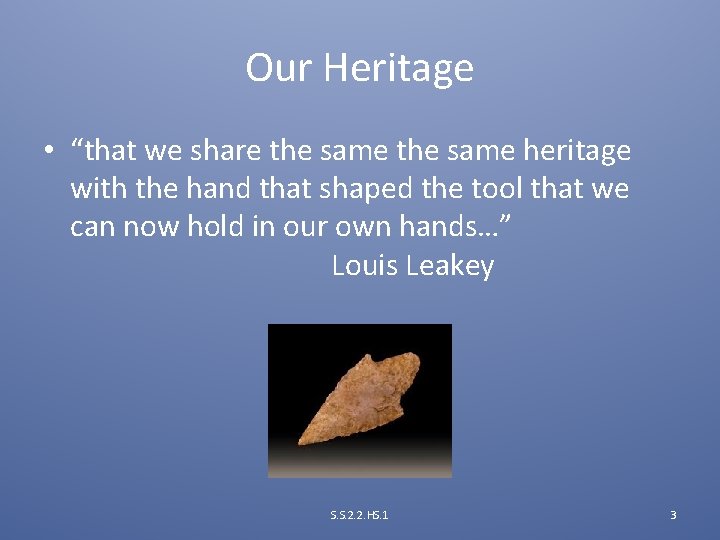
Our Heritage • “that we share the same heritage with the hand that shaped the tool that we can now hold in our own hands…” Louis Leakey S. S. 2. 2. HS. 1 3
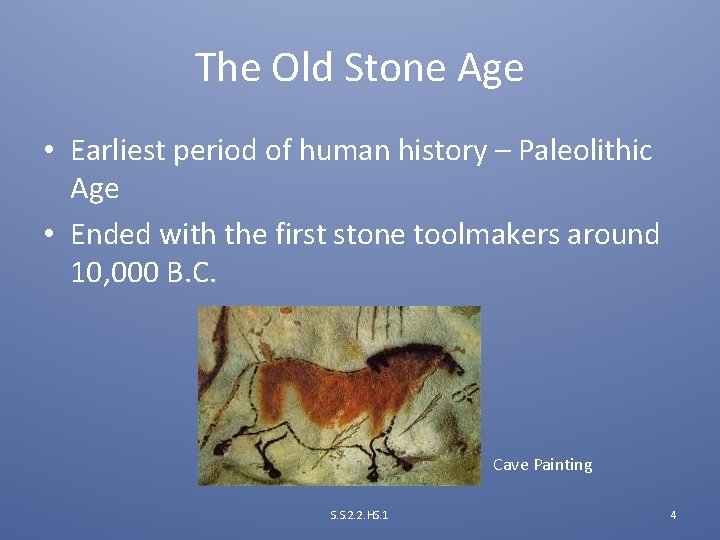
The Old Stone Age • Earliest period of human history – Paleolithic Age • Ended with the first stone toolmakers around 10, 000 B. C. Cave Painting S. S. 2. 2. HS. 1 4
Hunters and Food Gatherers • Paleolithic people were nomads • Lived in small hunting and food gathering groups of 20 to 30 people • They moved from place to place following game and ripening fruit/vegetables/nuts • Depended wholly on their environment to survive S. S. 2. 2. HS. 1 5

Hunters and Food Gatherers • Developed tools from stone, bone, or wood • Developed spoken language • Face severe challenges from the environment. – Ice age brought glaciers across northern regions • To endure the cold – developed clothing from animal skins for warmth – Lived in caves and learned to build fires for warmth and cooking S. S. 2. 2. HS. 1 6
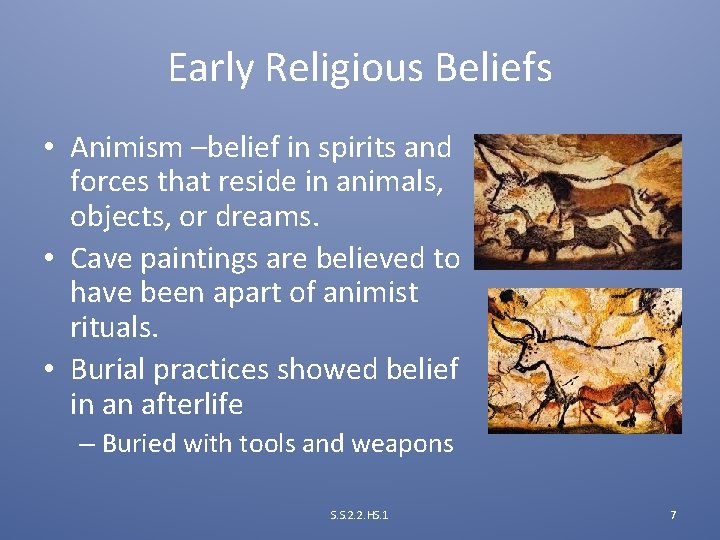
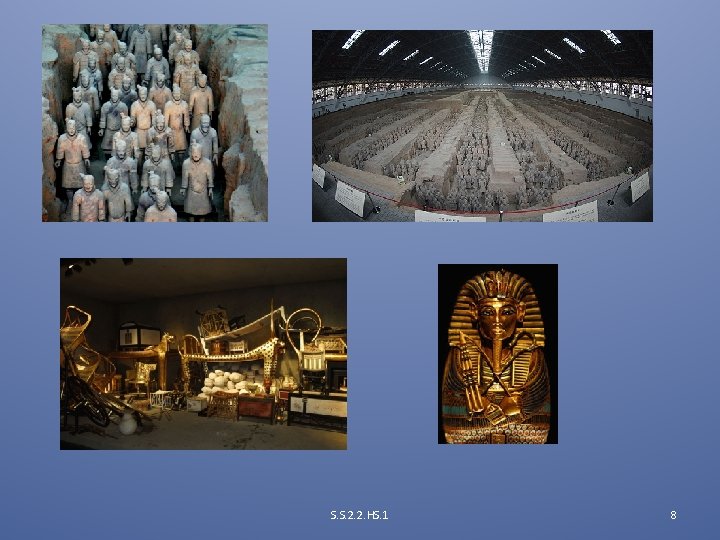
Early Religious Beliefs • Animism –belief in spirits and forces that reside in animals, objects, or dreams. • Cave paintings are believed to have been apart of animist rituals. • Burial practices showed belief in an afterlife – Buried with tools and weapons S. S. 2. 2. HS. 1 7
S. S. 2. 2. HS. 1 8
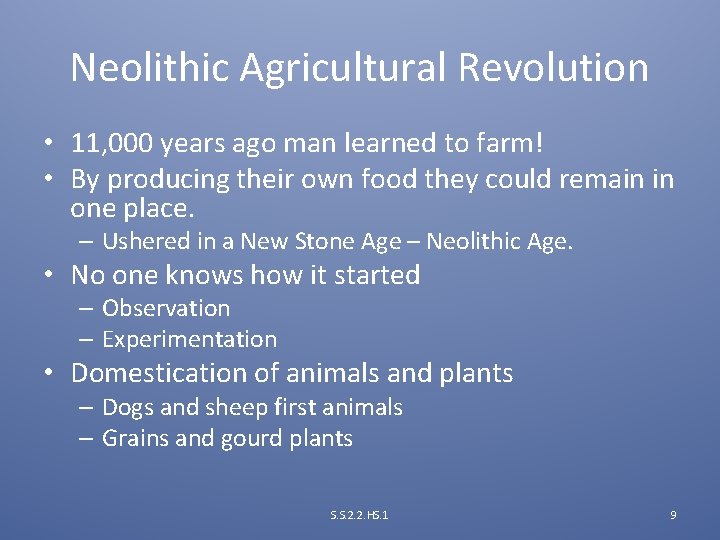
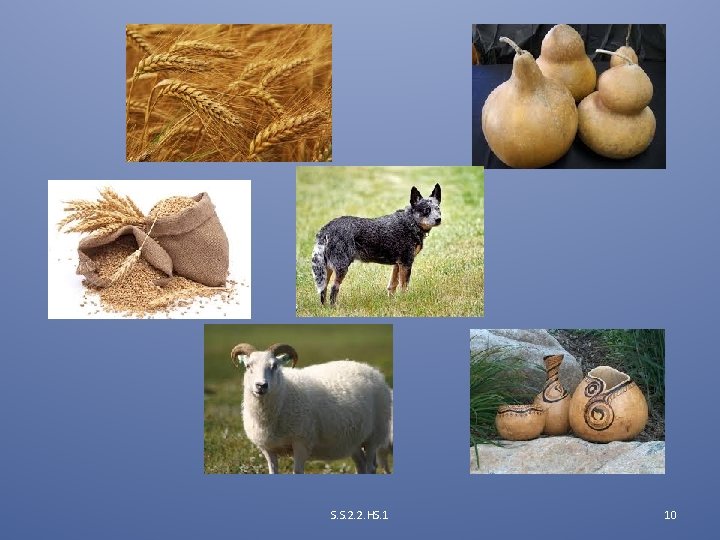
Neolithic Agricultural Revolution • 11, 000 years ago man learned to farm! • By producing their own food they could remain in one place. – Ushered in a New Stone Age – Neolithic Age. • No one knows how it started – Observation – Experimentation • Domestication of animals and plants – Dogs and sheep first animals – Grains and gourd plants S. S. 2. 2. HS. 1 9
S. S. 2. 2. HS. 1 10
Changing Ways of Life • People became food producers for the first time • Populations grew – Interactions between communities • Greatest change in human history until the Industrial Revolution of the 1700 s S. S. 2. 2. HS. 1 11
Changing Ways of Life • Work divided between male and females • Men dominated family, economic, and political life • When food was scarce, wars increased • Settled people had more personal possessions. – Begin to see differences in wealth S. S. 2. 2. HS. 1 12
Homework Questions • How did Paleolithic people learn to adapt to their environment? • What do burial customs suggest about the beliefs of early people? • What are the key features of the Neolithic agricultural revolution? • How did these features change people's lives? • Why would geography have played a more important role in the lives of people during the Old Stone Age than it plays in our lives today? S. S. 2. 2. HS. 1 13
- Slides: 13