
Vocabulary Myopathy Rhabdomyolysis Myositis Myasthemia Gravis Duchenne Muscular
Vocabulary • • Myopathy Rhabdomyolysis Myositis Myasthemia Gravis • Duchenne Muscular Dystrophys • Dystrophin 1
Muscle Disease-Introduction • Myopathy- neuromuscular disease in which the muscle fibers do not function for any one of many reasons, resulting in muscular weakness. • "Myopathy" simply means muscle ______ (myo- Greek "muscle" + patho-Greek "suffering"). – Infection – Toxins – Trauma

Muscle weakness • Inability to exert force to the degree that would be expected given the individual's general physical fitness. • Occur due to lack of energy producing molecules or a failure in the balance of electrolytes within and surrounding the muscle cell necessary for neuromuscular function.
Rhabdomyolysis • Rhabdomyolysis is the breakdown of damaged ____ muscle. Muscle breakdown causes the release of ____ into the bloodstream. Myoglobin is the protein that stores oxygen in your muscles. If you have too much myoglobin in your blood, it can cause _______ damage.

Skeletal muscle disorders • Primary muscle disease e. g muscular dystrophies • ______ of muscle (myositis) • Disorders of neuromuscular Transmission (Myasthenia Gravis)

Duchenne Muscular Dystrophy (DMD) • DMD – due to the absence of a gene located on the short arm of the X chromosome at the Xp 21 site. – results in the absence of the gene product ____ in skeletal muscle • Dystropin – membrane-associated structural protein – serves as a strut to maintain muscle fiber integrity during contraction
The progression of the disease • Affected person (male) are normal at birth and manifest the disease in early childhood. • 1 st affects the muscle of the pelvic girdle (difficult getting up from seated position) • Walking is difficult (have to use wheelchair) • Death commonly results from involvement of respiratory muscles.

Inflammation of muscle (Myositis) • Infectious disease (bacteria, viral, parasitic, exotoxic • Immune disease (SLE) • Other causes (radiation, ischemia)
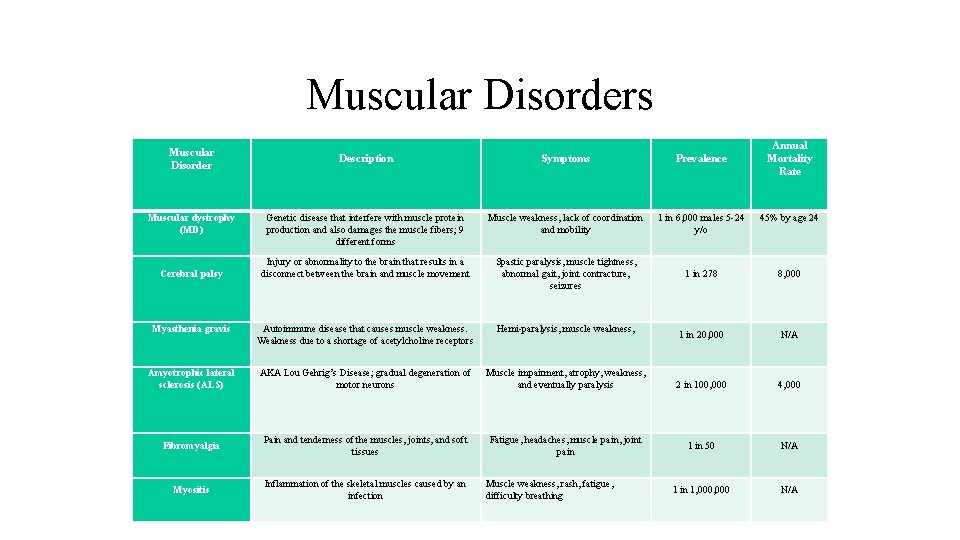
Muscular Disorders Muscular Disorder Annual Mortality Rate Description Symptoms Prevalence Genetic disease that interfere with muscle protein production and also damages the muscle fibers; 9 different forms Muscle weakness, lack of coordination and mobility 1 in 6, 000 males 5 -24 y/o 45% by age 24 Injury or abnormality to the brain that results in a disconnect between the brain and muscle movement Spastic paralysis, muscle tightness, abnormal gait, joint contracture, seizures 1 in 278 8, 000 Myasthenia gravis Autoimmune disease that causes muscle weakness. Weakness due to a shortage of acetylcholine receptors Hemi-paralysis, muscle weakness, 1 in 20, 000 N/A Amyotrophic lateral sclerosis (ALS) AKA Lou Gehrig’s Disease; gradual degeneration of motor neurons Muscle impairment, atrophy, weakness, and eventually paralysis 2 in 100, 000 4, 000 Fibromyalgia Pain and tenderness of the muscles, joints, and soft tissues Fatigue, headaches, muscle pain, joint pain 1 in 50 N/A Myositis Inflammation of the skeletal muscles caused by an infection 1 in 1, 000 N/A Muscular dystrophy (MD) Cerebral palsy Muscle weakness, rash, fatigue, difficulty breathing
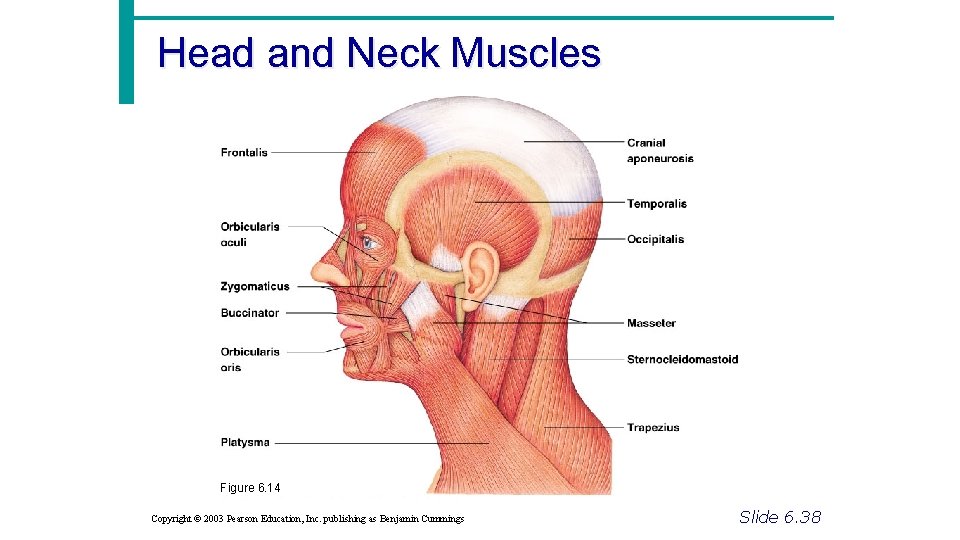
Head and Neck Muscles Figure 6. 14 Copyright © 2003 Pearson Education, Inc. publishing as Benjamin Cummings Slide 6. 38
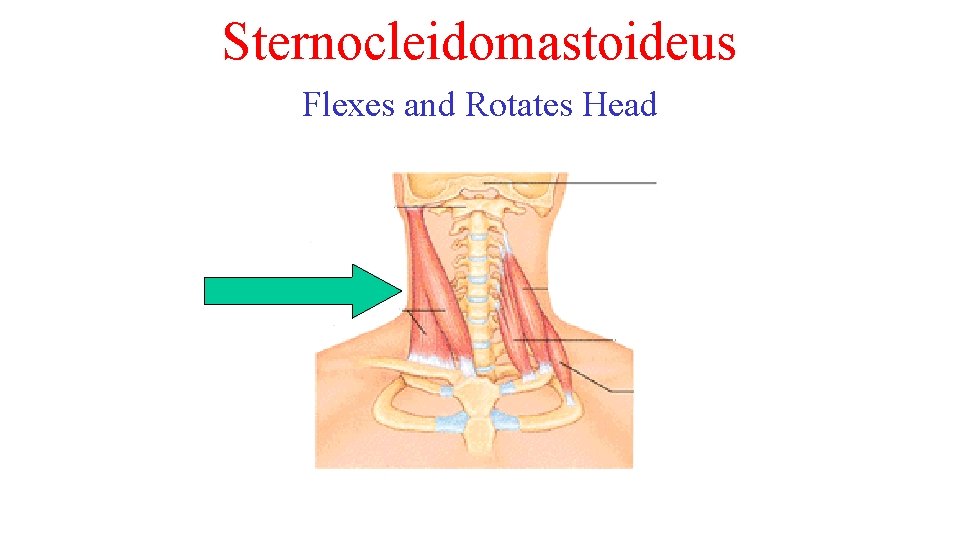
Sternocleidomastoideus Flexes and Rotates Head
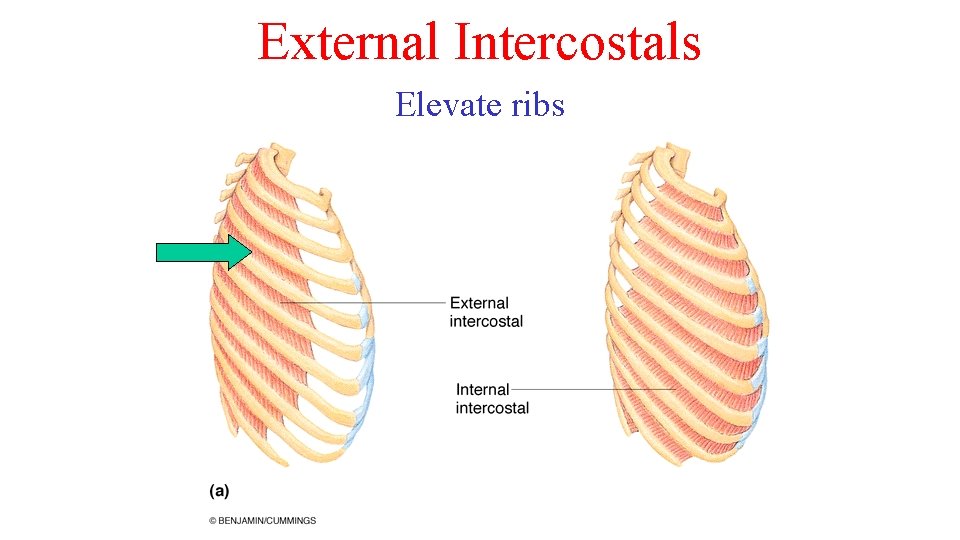
External Intercostals Elevate ribs
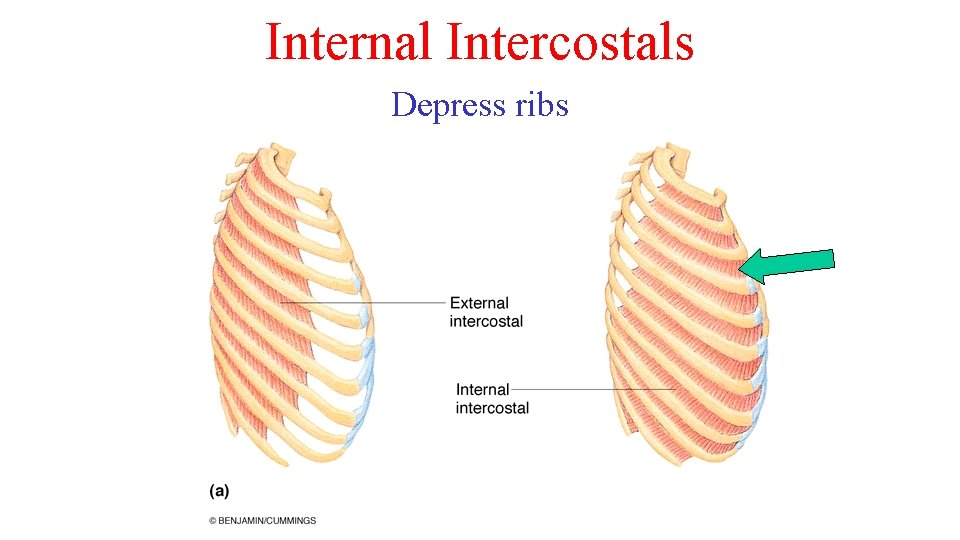
Internal Intercostals Depress ribs
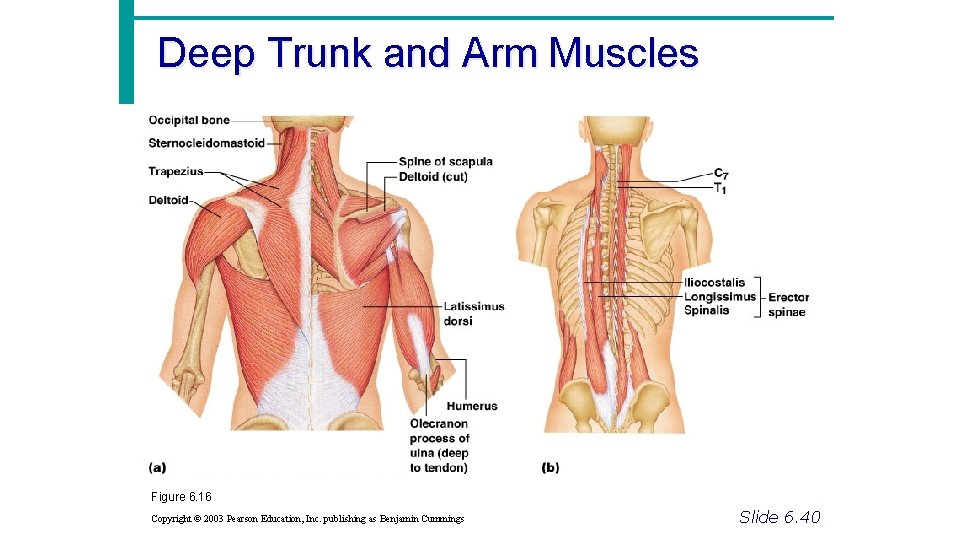
Deep Trunk and Arm Muscles Figure 6. 16 Copyright © 2003 Pearson Education, Inc. publishing as Benjamin Cummings Slide 6. 40
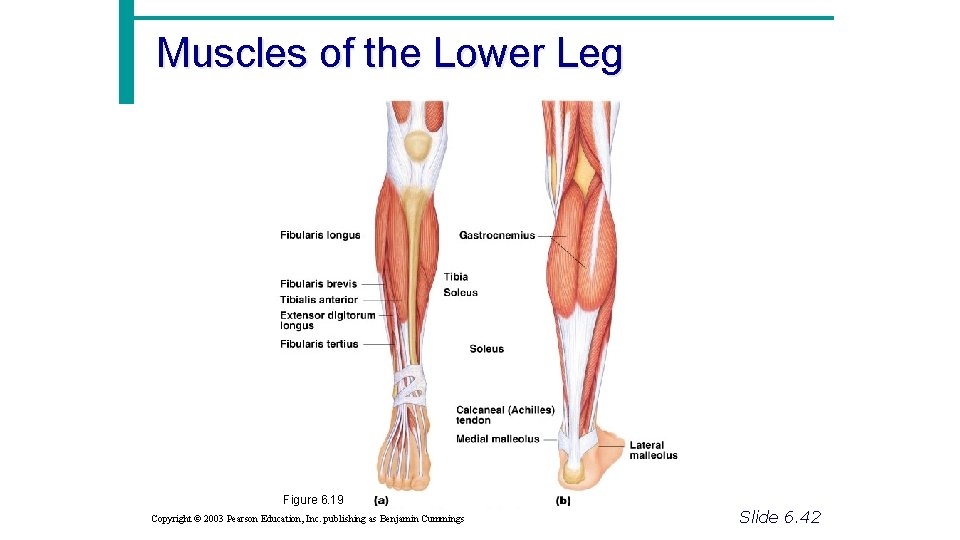
Muscles of the Lower Leg Figure 6. 19 Copyright © 2003 Pearson Education, Inc. publishing as Benjamin Cummings Slide 6. 42
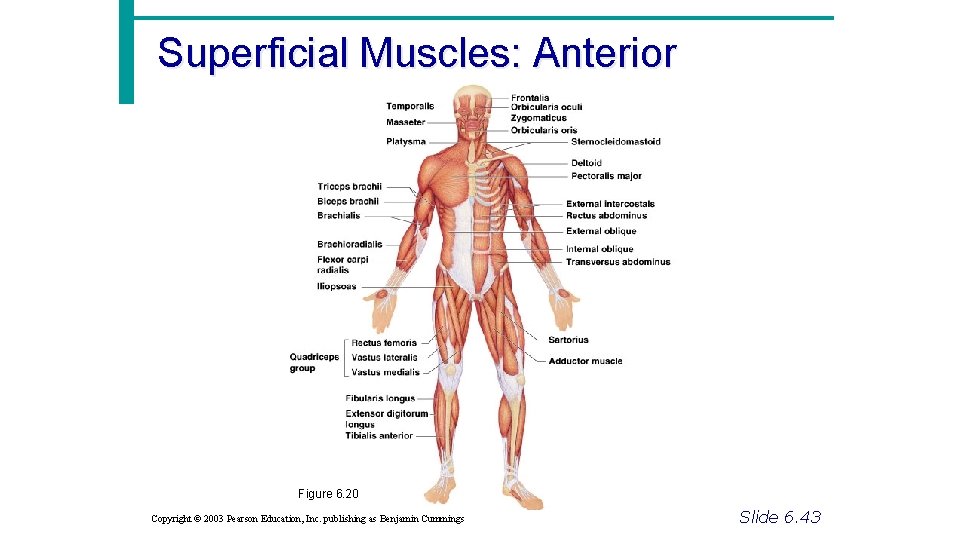
Superficial Muscles: Anterior Figure 6. 20 Copyright © 2003 Pearson Education, Inc. publishing as Benjamin Cummings Slide 6. 43
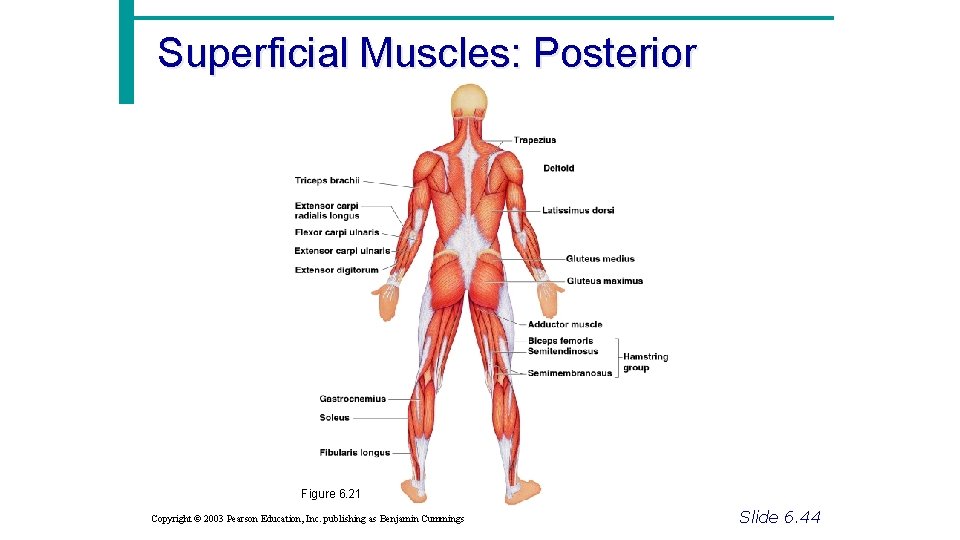
Superficial Muscles: Posterior Figure 6. 21 Copyright © 2003 Pearson Education, Inc. publishing as Benjamin Cummings Slide 6. 44
Types of Ordinary Body Movements · Flexion – decreases angle of joint and brings two bones closer together · Extension- opposite of flexion · Rotation- movement of a bone in longitudinal axis, shaking head “no” · Abduction/Adduction (see slides) · Circumduction (see slides) Copyright © 2003 Pearson Education, Inc. publishing as Benjamin Cummings Slide 6. 32
Brain. POP animation about Duchenne Muscular Dystrophy https: //www. youtube. com/watch? v=6 w. Ln. R 7 GJak Y&list=PLxdyj. GV 9 MTK 9 h 3 GNf. M 1 w. NBc. A 8 q 2 u Dkc 3 k
10 Bodybuilders Whose Muscles Exploded https: //www. youtube. com/watch? v =8 bo 2 TO 1 gf 14&t=106 s
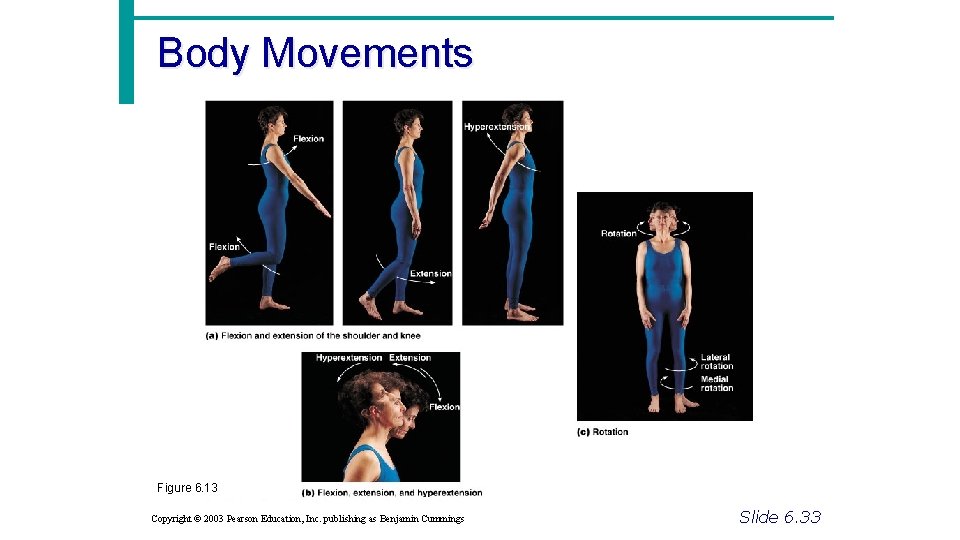
Body Movements Figure 6. 13 Copyright © 2003 Pearson Education, Inc. publishing as Benjamin Cummings Slide 6. 33
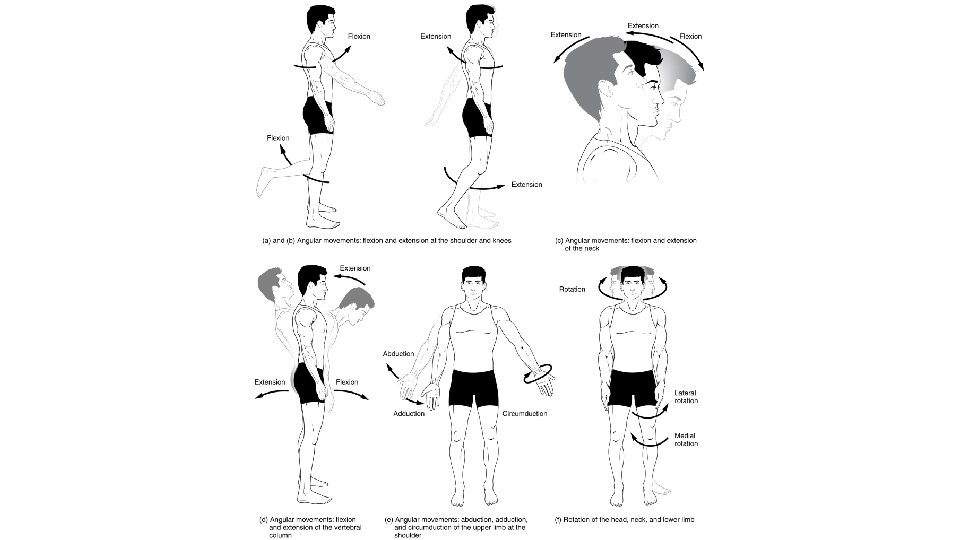
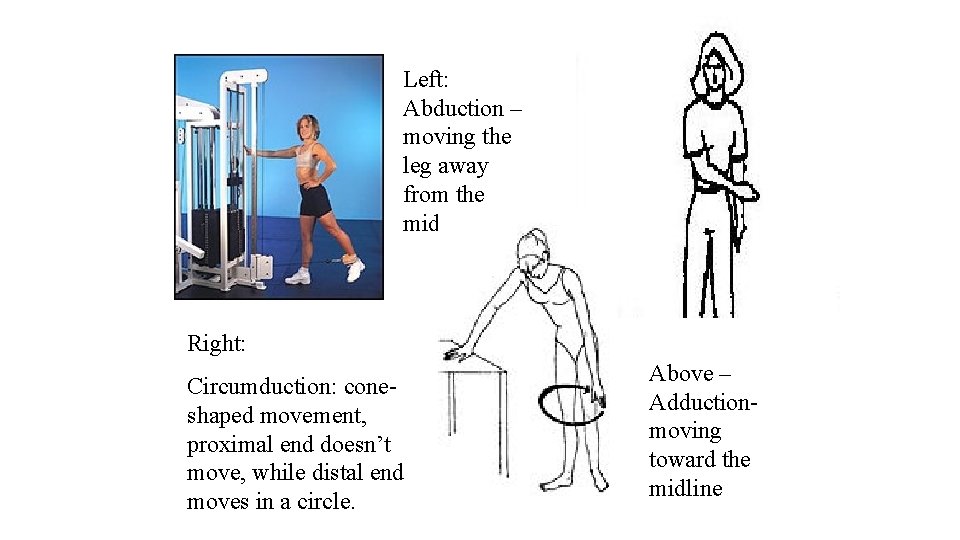
Left: Abduction – moving the leg away from the midline Right: Circumduction: coneshaped movement, proximal end doesn’t move, while distal end moves in a circle. Above – Adductionmoving toward the midline
- Slides: 23