
Vocabulary Development Randal Cremer Primary School Laura Randall

Vocabulary Development Randal Cremer Primary School Laura Randall Speech and Language Therapist
What are we going to do today? • Learn what we are doing at school to support your children’s language development • Think about learning words • Learn about things you can do to help your child at home • Have fun making a puppet with your child
What is Launchpad for Language? • An early years language development programme • It is tailored to meet the needs of Nursery & Reception children at Randal Cremer school. • Half a day a week specialist time to support with developing a communication friendly Early Years. • To work with parents and staff to support children’s language skills. • A range of fun activities is available to put in place each term.
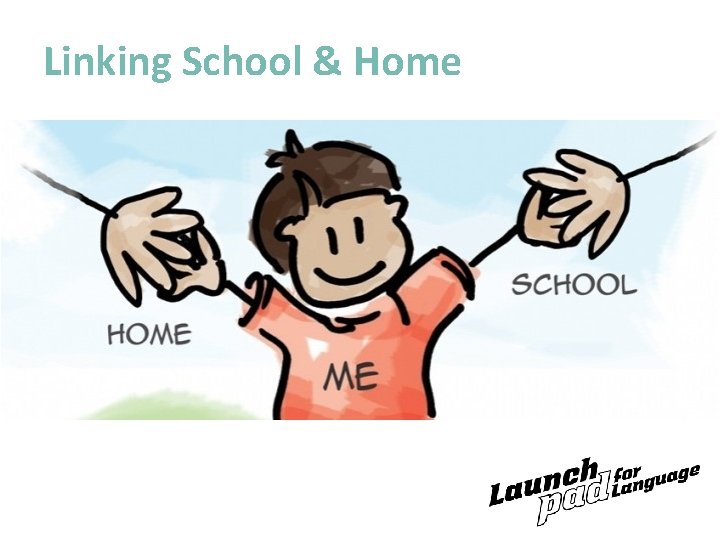
Linking School & Home

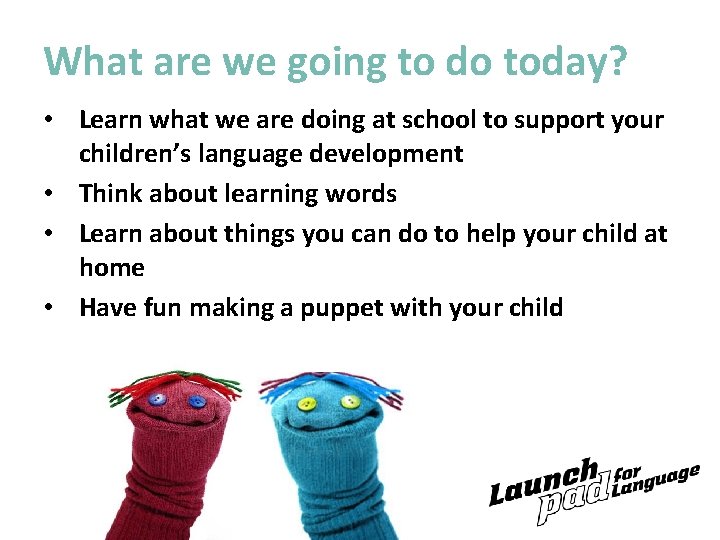
Spring Term - Concept Cat • Concept Cat is a puppet which helps us learn new words at school • Children receive explicit, multi sensory teaching of harder to learn words using a cat puppet. • Concept Cat has a story that is told every time he comes to play: “Concept Cat is a clever, clever cat. He looks here; he looks there; learning as he goes. And when he comes home he tells us a story. Todays story is all about the word…. . . ”
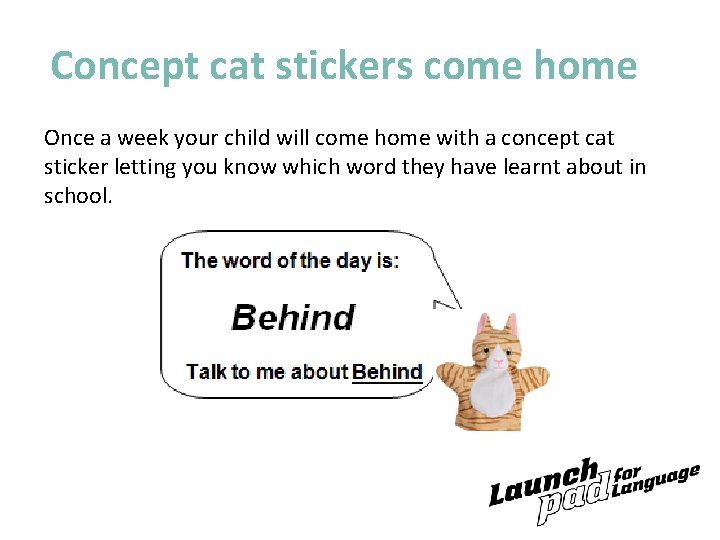
Concept cat stickers come home Once a week your child will come home with a concept cat sticker letting you know which word they have learnt about in school.
What you can do at home • Ask your child about the word and get them to show you what it means. However, be careful not to ask too many questions and instead talk about the new word with your child. • Use the word in sentences throughout the week in different settings. Your child is more likely to learn words and remember them accurately if they hear them in lots of different places. • Play games where you have to use the word e. g. ‘where is the teddy? ’ Behind the chair, Behind the box etc. • When talking about the word try not to use opposite words as this can be confusing e. g. instead say ‘behind’ and ‘not behind. ’ • Make up a story around the chosen word with your child. Include concept cat puppet you will make today.
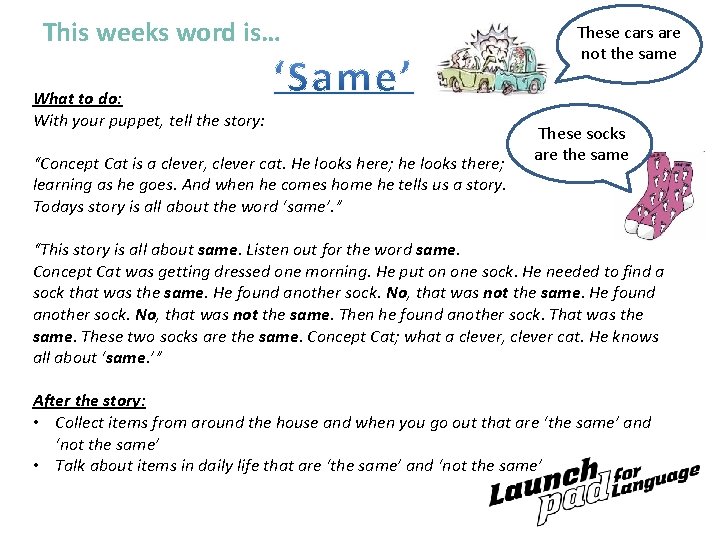
This weeks word is… What to do: With your puppet, tell the story: “Concept Cat is a clever, clever cat. He looks here; he looks there; learning as he goes. And when he comes home he tells us a story. Todays story is all about the word ‘same’. ” These cars are not the same These socks are the same “This story is all about same. Listen out for the word same. Concept Cat was getting dressed one morning. He put on one sock. He needed to find a sock that was the same. He found another sock. No, that was not the same. Then he found another sock. That was the same. These two socks are the same. Concept Cat; what a clever, clever cat. He knows all about ‘same. ’” After the story: • Collect items from around the house and when you go out that are ‘the same’ and ‘not the same’ • Talk about items in daily life that are ‘the same’ and ‘not the same’

Learning Words What do we need to do with words? Understand them Speak them Write them Read them
Why are words important? Vocabulary at 5 years is a powerful predictor of GCSE achievement Cunningham and Stanovich, 1997 • • Maths Writing Literacy Talking to friends
Vocabulary Increasingly academic focus- danger of speaking being seen as less important, but just as important as writing. New skills of speaking: describe, evaluate, negotiate, debate, give opinions, narrating. How many words do children at age 5 learn a year? 3000 (that’s 8 a day!)
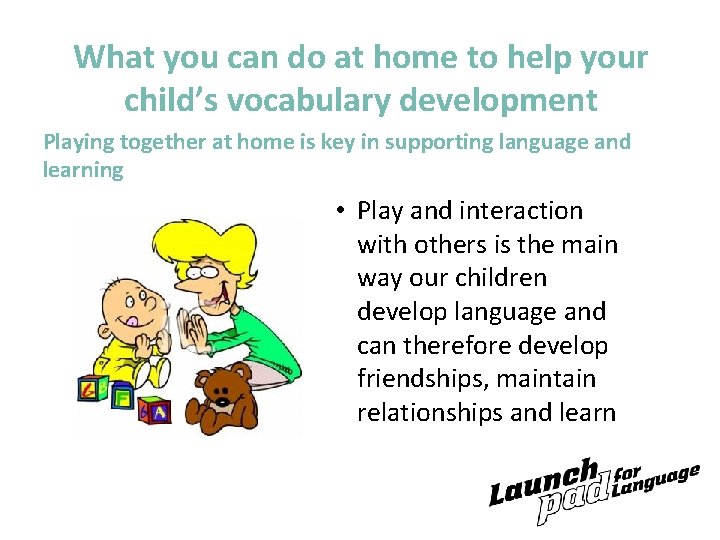
What you can do at home to help your child’s vocabulary development Playing together at home is key in supporting language and learning • Play and interaction with others is the main way our children develop language and can therefore develop friendships, maintain relationships and learn
How to help: Model new words Talk about words and things that you see Repeat words in lots of different contexts Spend time talking with your child in their home language • Use simple language • Encourage their expression e. g. questions to extend their thinking not test them • Think about the sounds of words, their meaning and experience them. • •

Have Fun with Words at home! Talk about words - avoid too many questions Stick words on the fridge Share special time together Play fun word games Share bookshave fun with stories
Games that link to sound, meaning & grammar 1) I spy with my little eye… something beginning with… something that is… 2) Exciting bag/box- Clapping syllables 3) Click your fingers/clap when you hear…
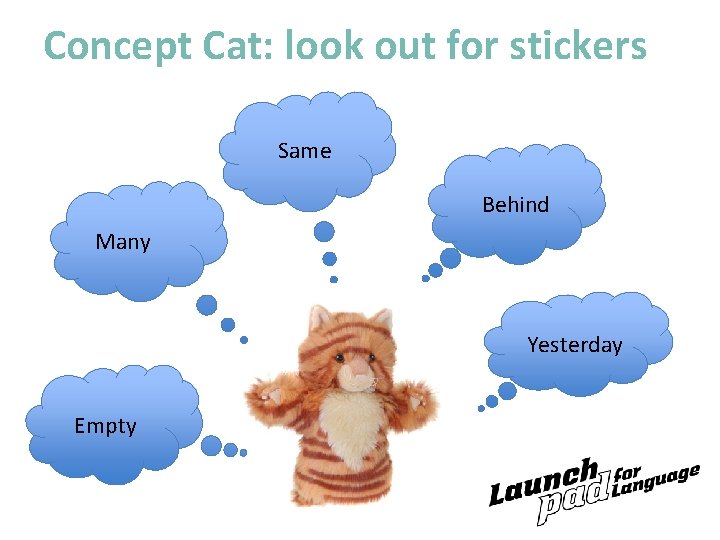
Concept Cat: look out for stickers Same Behind Many Yesterday Empty
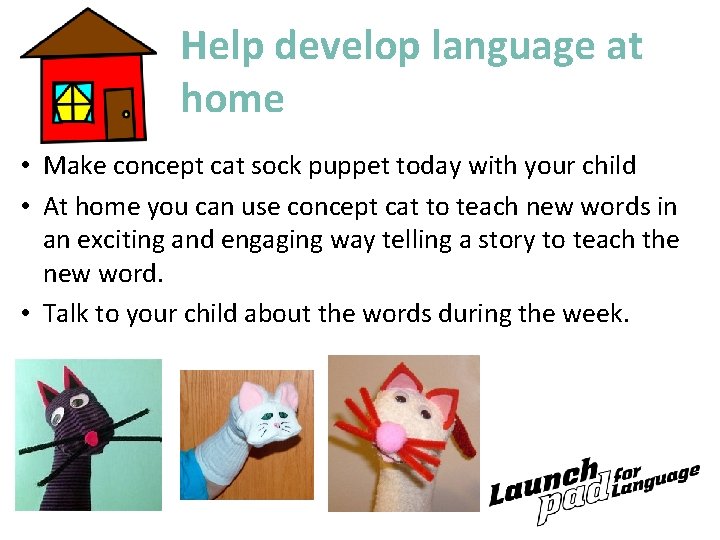
Help develop language at home • Make concept cat sock puppet today with your child • At home you can use concept cat to teach new words in an exciting and engaging way telling a story to teach the new word. • Talk to your child about the words during the week.

Laura. randall@learningtrust. co. uk Find us online: Web: http: //gethackneytalking. co. uk/ Twitter: @Hackney. Talk Facebook: https: //www. facebook. com/gethackneytalking/ Please talk to your class teacher if you have any concerns about your child’s Speech, Language & Communication
- Slides: 19