
Vocabulary and Academic Language in the CCSS Grades
Vocabulary and Academic Language in the CCSS Grades K– 5 Nancy Frey, Ph. D San Diego State University
Talk acquire a new language , you must use it , not merely listen to others using To

Academic language is a new language. Treat your students as language learners.
Common Core State Standards and Academic Language

“Fewer, Clearer, Higher”
Vocabulary ’s Impact on Learning Significant predictor of reading comprehension (Baker, Simmons, & Kame’enui, “Vocabulary Acquisition: Research Bases, ” What Reading Tells Us About Children With Diverse Learning Needs, 1998)
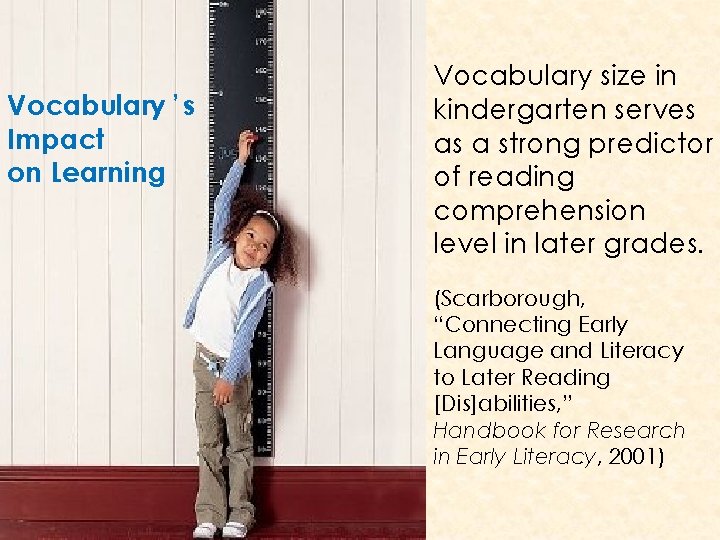
Vocabulary ’s Impact on Learning Vocabulary size in kindergarten serves as a strong predictor of reading comprehension level in later grades. (Scarborough, “Connecting Early Language and Literacy to Later Reading [Dis]abilities, ” Handbook for Research in Early Literacy, 2001)
Vocabulary ’s Impact on Learning Context-embedded vocabulary instruction promotes language acquisition for second language learners (Tong, Irby, Lara-Alecio, & Mathes, “English and Spanish Acquisition by Hispanic Second Graders in Developmental Bilingual Programs, ” Hispanic Journal of Behavior Sciences, 2008)

• “Determine or clarify the meaning of unknown and multiple meaning words and phrases …” • “Explore word relationships and nuances in word meanings …” • “Use words and phrases acquired through conversations, reading and being read to, and responding to texts …” —NGA Center & CCSSO, Common Core State Standards, 2010
• Role in text complexity • Predictive of student difficulty • Tier 2 words often overlooked in favor of Tier 3 • Difference between “words worth knowing” and those that are “essential to understanding” • Difference between knowing the definition and knowing the meaning
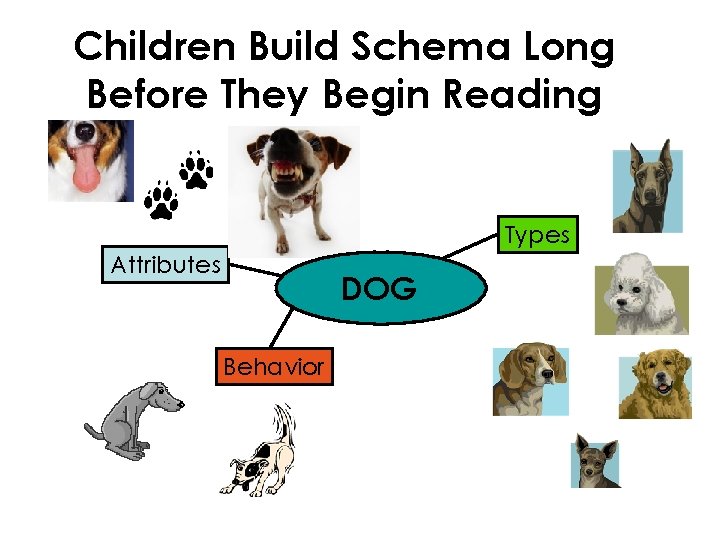
Children Build Schema Long Before They Begin Reading Types Attributes DOG Behavior
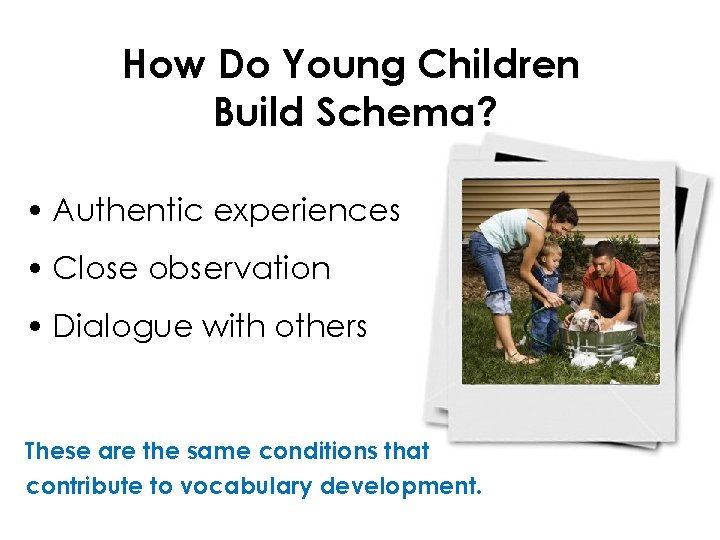
How Do Young Children Build Schema? • Authentic experiences • Close observation • Dialogue with others These are the same conditions that contribute to vocabulary development.
An Intentional Vocabulary Initiative • Make it intentional through word selection and intentional instruction. • Make it transparent through teacher modeling of word solving and word learning. • Make it useable with collaborative learning. • Make it personal by fostering student ownership. • Make it a priority with schoolwide practices. (Frey & Fisher, Learning Words Inside and Out, Grades 1– 6: Vocabulary Instruction That Boosts Achievement in All Subject Areas, 2009)

Step 1: Make It Intentional With Careful Word Selection
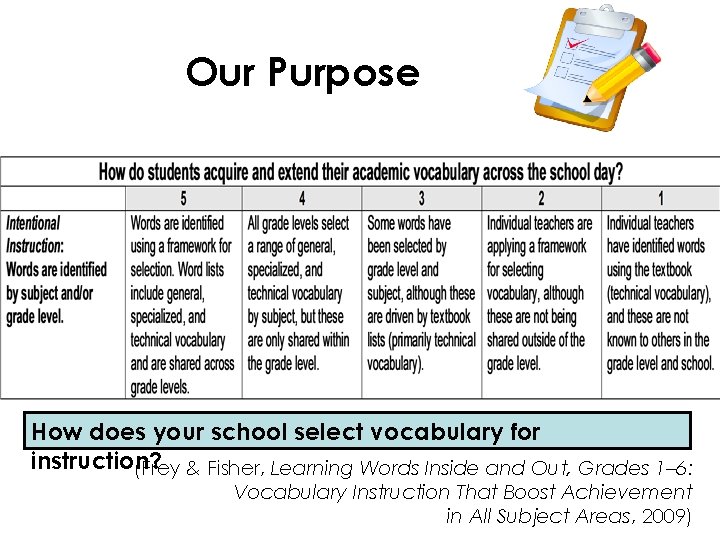
Our Purpose How does your school select vocabulary for instruction? (Frey & Fisher, Learning Words Inside and Out, Grades 1– 6: Vocabulary Instruction That Boost Achievement in All Subject Areas, 2009)
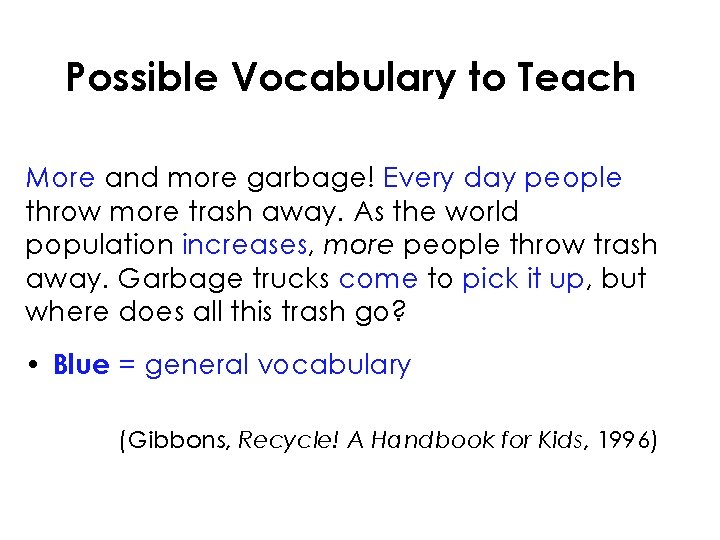
Possible Vocabulary to Teach More and more garbage! Every day people throw more trash away. As the world population increases, more people throw trash away. Garbage trucks come to pick it up, but where does all this trash go? • Blue = general vocabulary (Gibbons, Recycle! A Handbook for Kids, 1996)
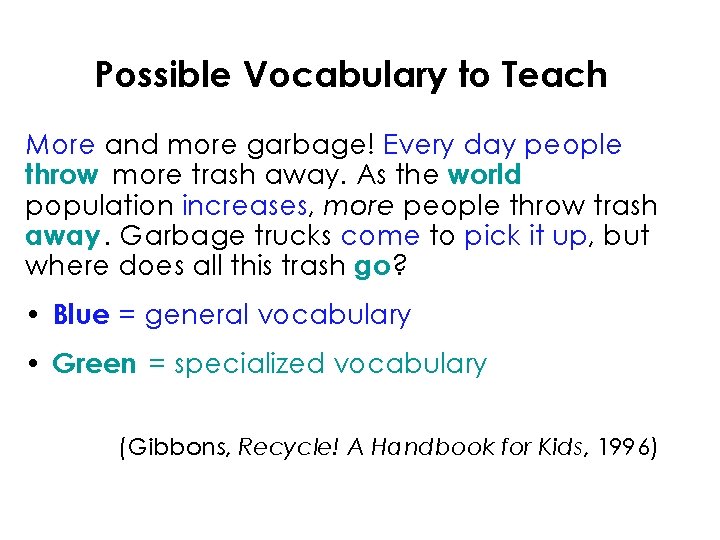
Possible Vocabulary to Teach More and more garbage! Every day people throw more trash away. As the world population increases, more people throw trash away. Garbage trucks come to pick it up, but where does all this trash go? • Blue = general vocabulary • Green = specialized vocabulary (Gibbons, Recycle! A Handbook for Kids, 1996)
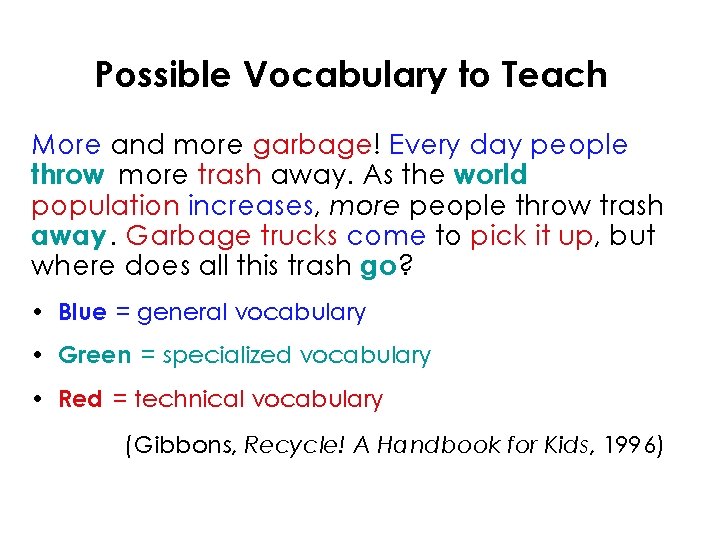
Possible Vocabulary to Teach More and more garbage! Every day people throw more trash away. As the world population increases, more people throw trash away. Garbage trucks come to pick it up, but where does all this trash go? • Blue = general vocabulary • Green = specialized vocabulary • Red = technical vocabulary (Gibbons, Recycle! A Handbook for Kids, 1996)
The Problem: Too Many Words! Must be narrowed, but how?
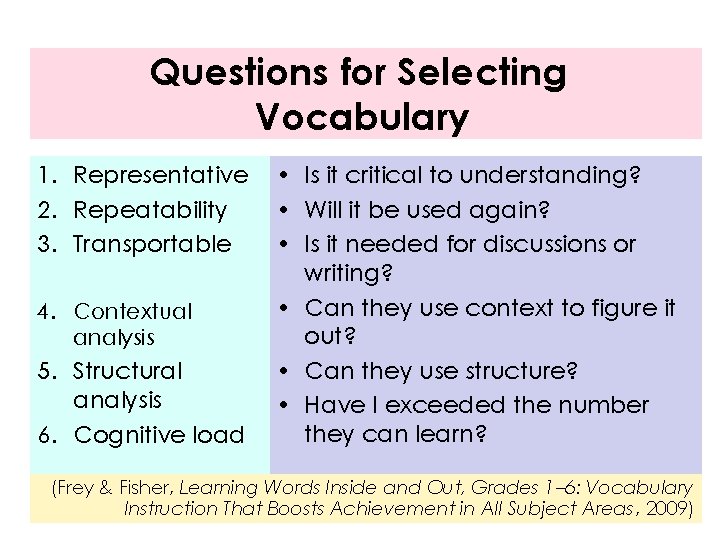
Questions for Selecting Vocabulary 1. Representative 2. Repeatability 3. Transportable 4. Contextual analysis 5. Structural analysis 6. Cognitive load • Is it critical to understanding? • Will it be used again? • Is it needed for discussions or writing? • Can they use context to figure it out? • Can they use structure? • Have I exceeded the number they can learn? (Frey & Fisher, Learning Words Inside and Out, Grades 1– 6: Vocabulary Instruction That Boosts Achievement in All Subject Areas, 2009)

Foundational words Content-Specific Words Word Part Lists Word Derivations
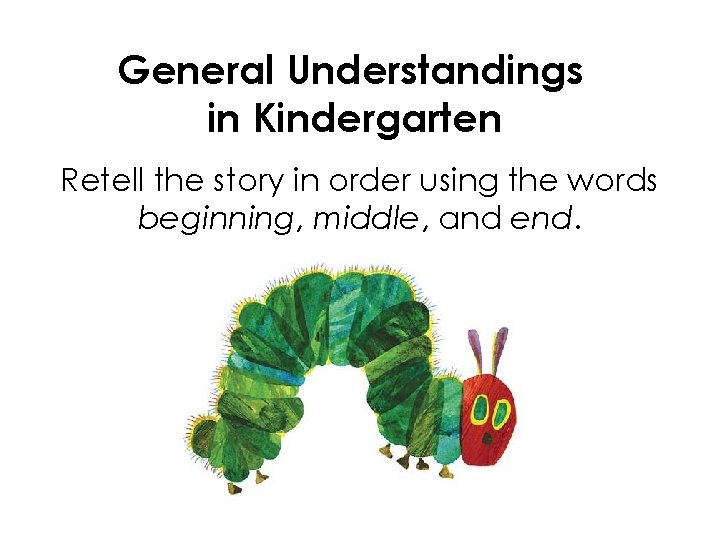
General Understandings in Kindergarten Retell the story in order using the words beginning, middle, and end.

Step 2: Make It Transparent With Modeling
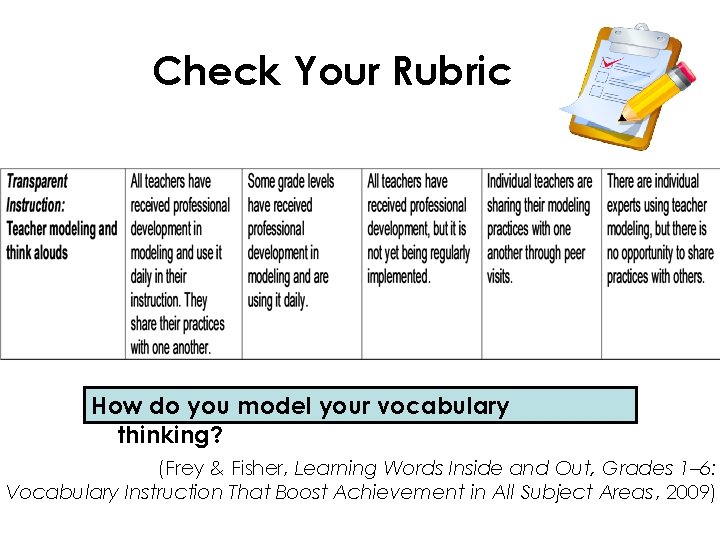
Check Your Rubric How do you model your vocabulary thinking? (Frey & Fisher, Learning Words Inside and Out, Grades 1– 6: Vocabulary Instruction That Boost Achievement in All Subject Areas, 2009)
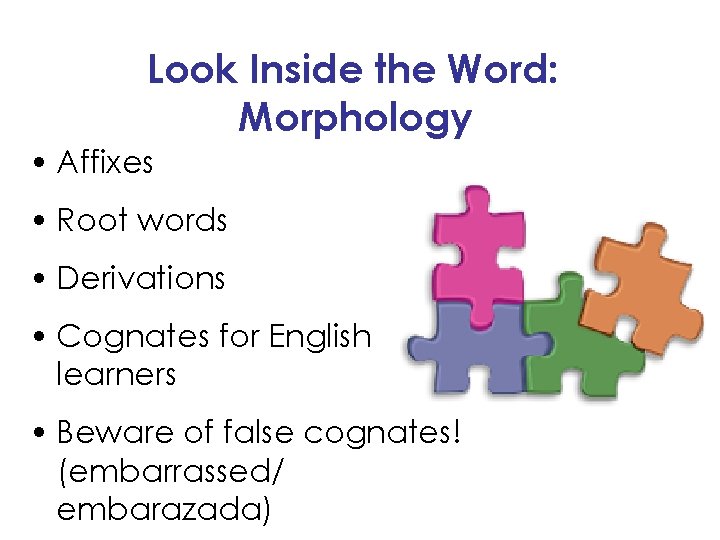
Look Inside the Word: Morphology • Affixes • Root words • Derivations • Cognates for English learners • Beware of false cognates! (embarrassed/ embarazada)
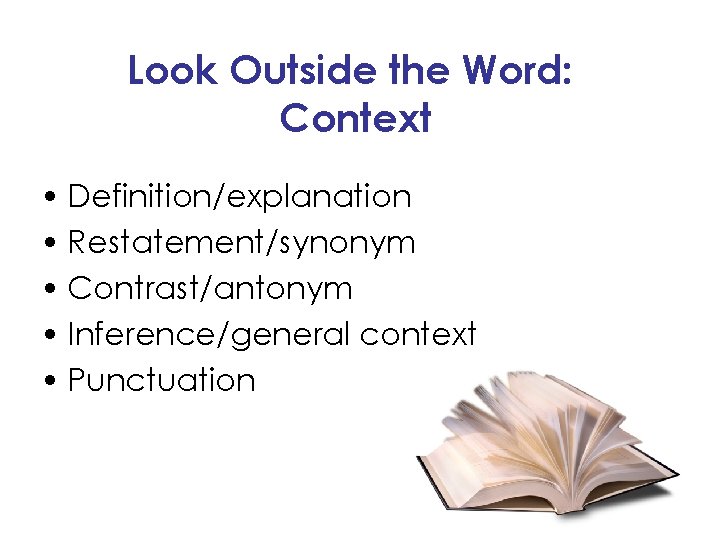
Look Outside the Word: Context • Definition/explanation • Restatement/synonym • Contrast/antonym • Inference/general context • Punctuation
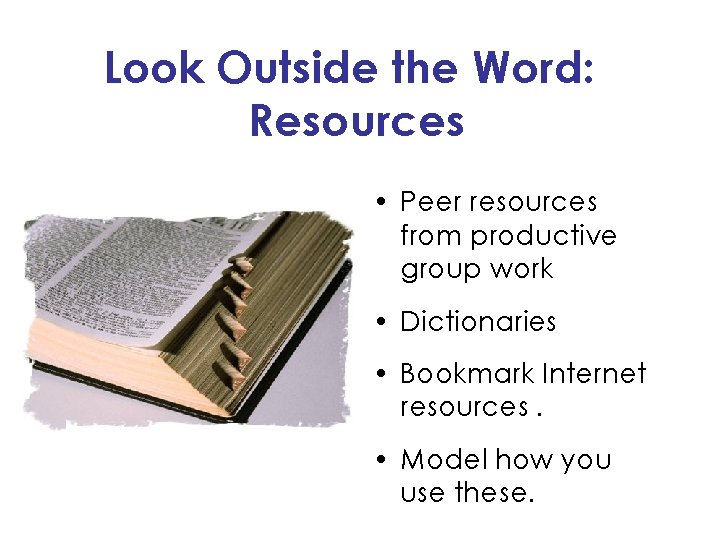
Look Outside the Word: Resources • Peer resources from productive group work • Dictionaries • Bookmark Internet resources. • Model how you use these.
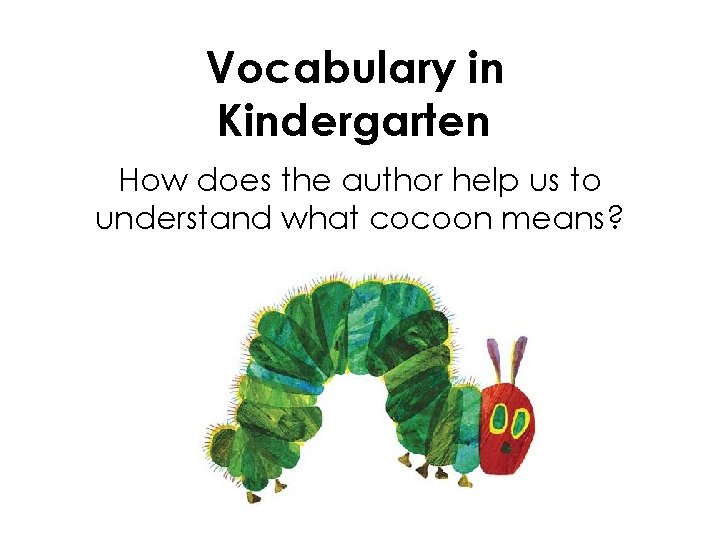
Vocabulary in Kindergarten How does the author help us to understand what cocoon means?
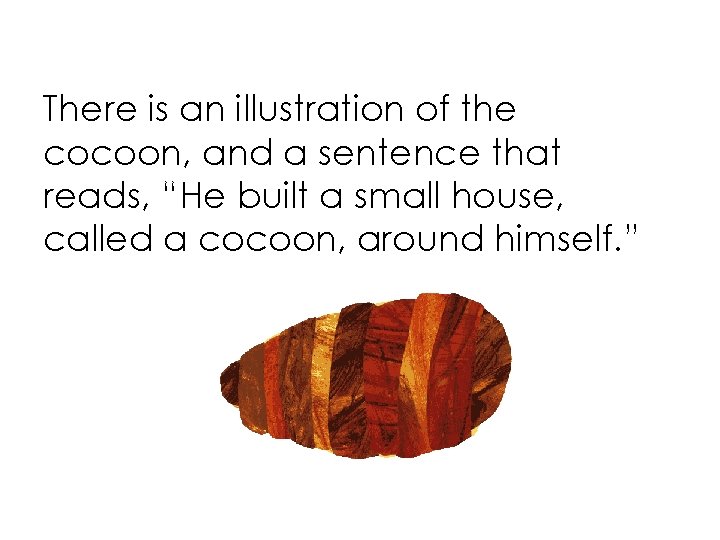
There is an illustration of the cocoon, and a sentence that reads, “He built a small house, called a cocoon, around himself. ”

Step 3: Make It Useable by Collaborating With Peers
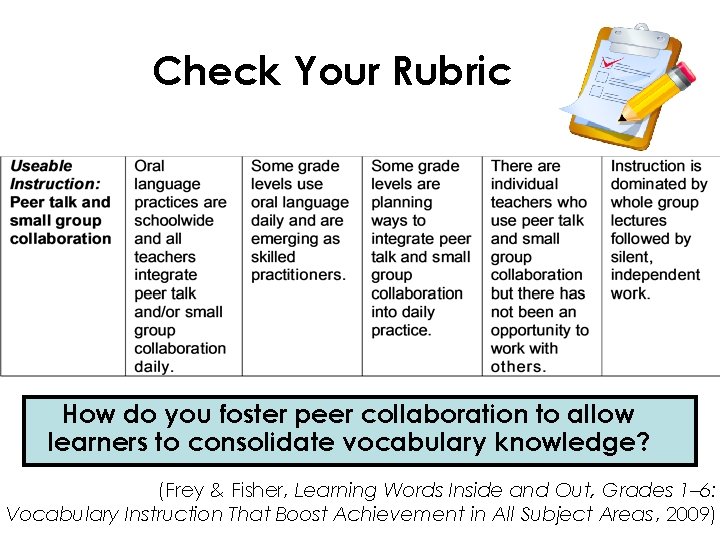
Check Your Rubric How do you foster peer collaboration to allow learners to consolidate vocabulary knowledge? (Frey & Fisher, Learning Words Inside and Out, Grades 1– 6: Vocabulary Instruction That Boost Achievement in All Subject Areas, 2009)
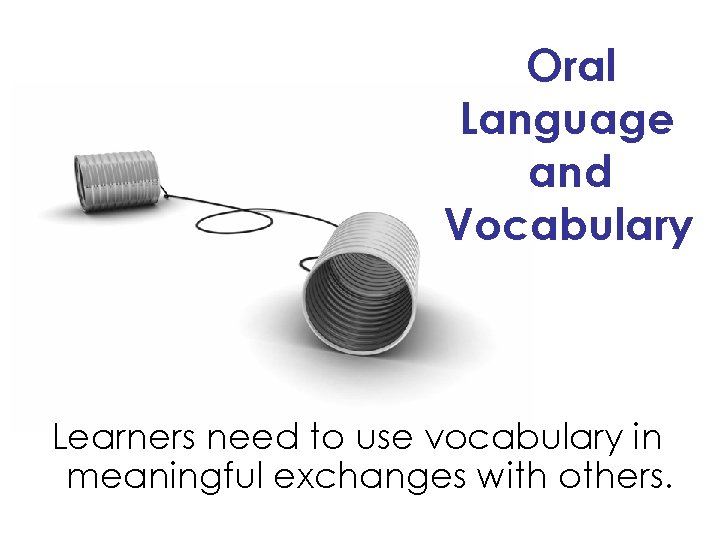
Oral Language and Vocabulary Learners need to use vocabulary in meaningful exchanges with others.
What better way than with word games?
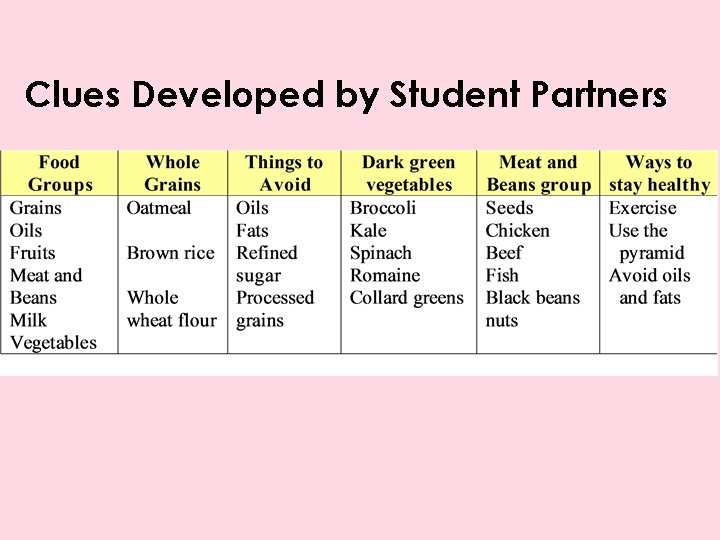
Clues Developed by Student Partners
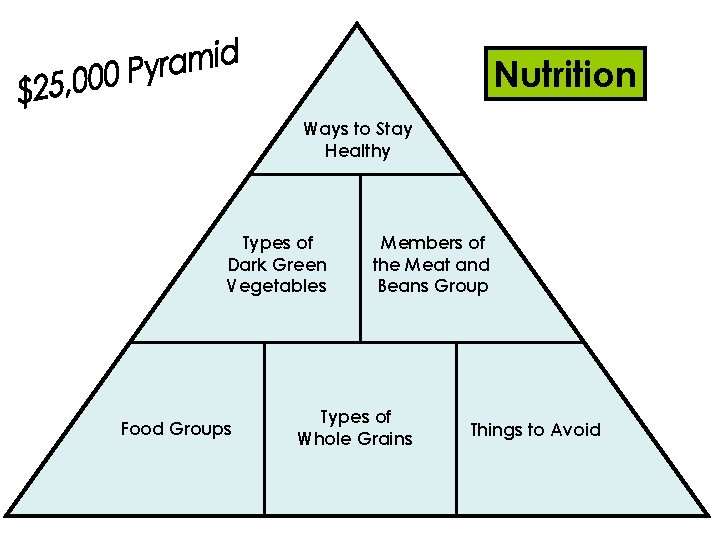
Nutrition Ways to Stay Healthy Types of Dark Green Vegetables Food Groups Members of the Meat and Beans Group Types of Whole Grains Things to Avoid
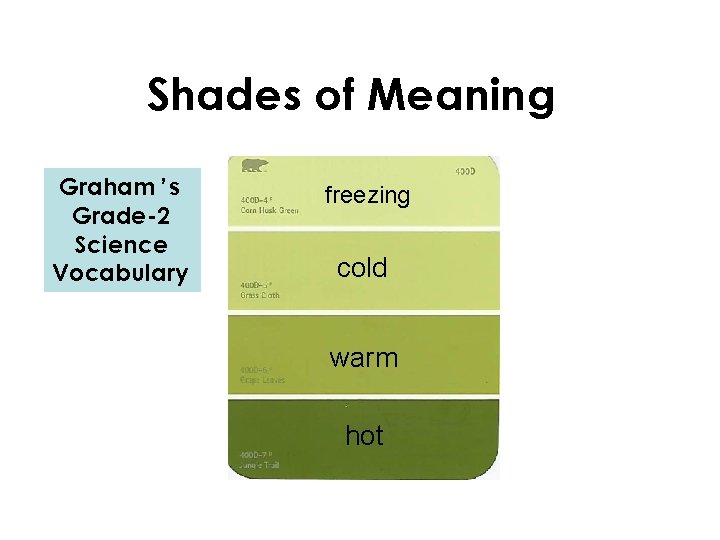
Shades of Meaning Graham ’s Grade-2 Science Vocabulary freezing cold warm hot
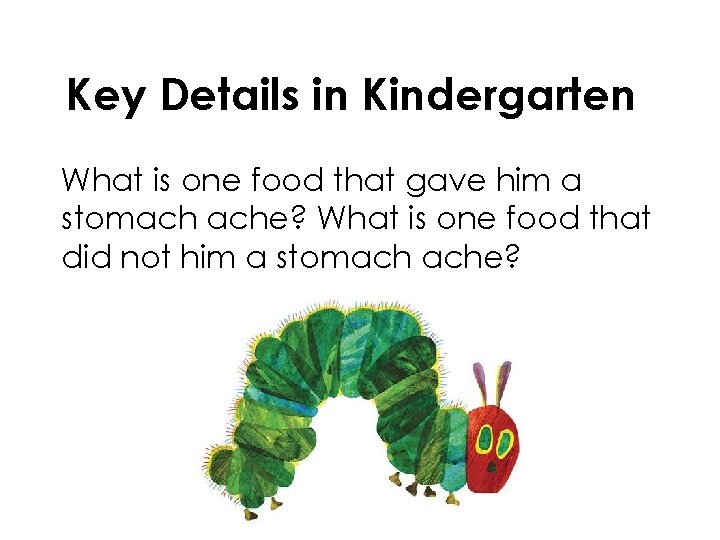
Key Details in Kindergarten What is one food that gave him a stomach ache? What is one food that did not him a stomach ache?
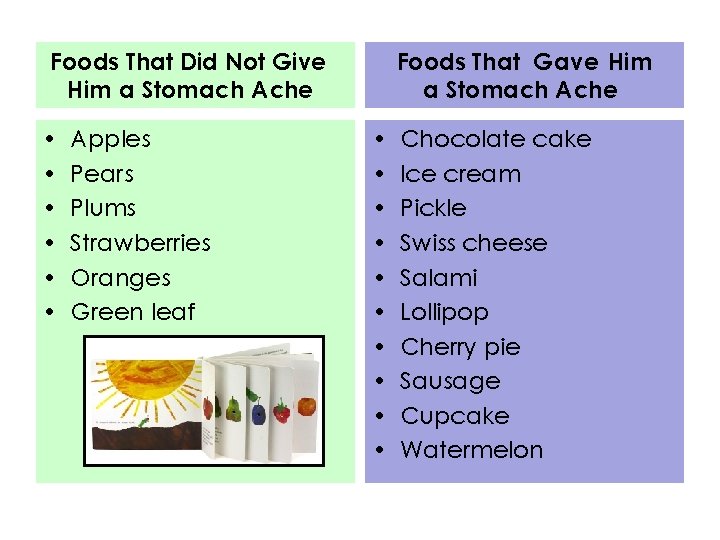
Foods That Did Not Give Him a Stomach Ache • • • Apples Pears Plums Strawberries Oranges Green leaf Foods That Gave Him a Stomach Ache • • • Chocolate cake Ice cream Pickle Swiss cheese Salami Lollipop Cherry pie Sausage Cupcake Watermelon
Step 4: Make It Personal With Individual Activities
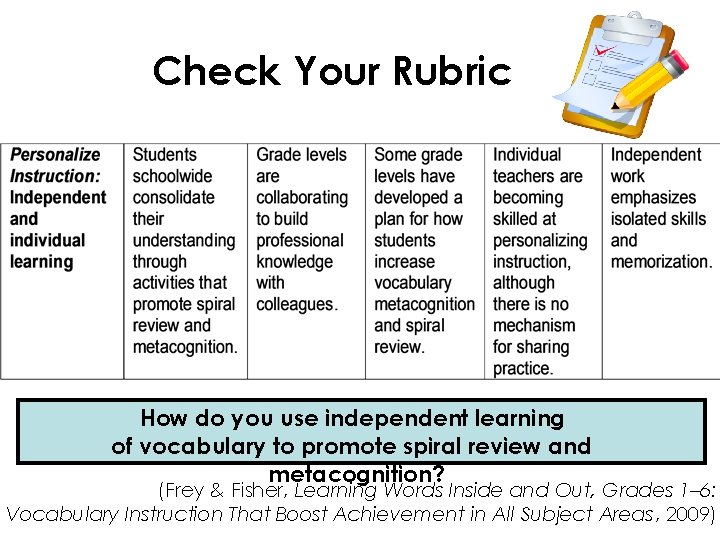
Check Your Rubric How do you use independent learning of vocabulary to promote spiral review and metacognition? (Frey & Fisher, Learning Words Inside and Out, Grades 1– 6: Vocabulary Instruction That Boost Achievement in All Subject Areas, 2009)
Generative Sentences The teacher states a condition for a sentence, and students compose orally and in writing. Use the word “hungry” in the third word of your sentence.
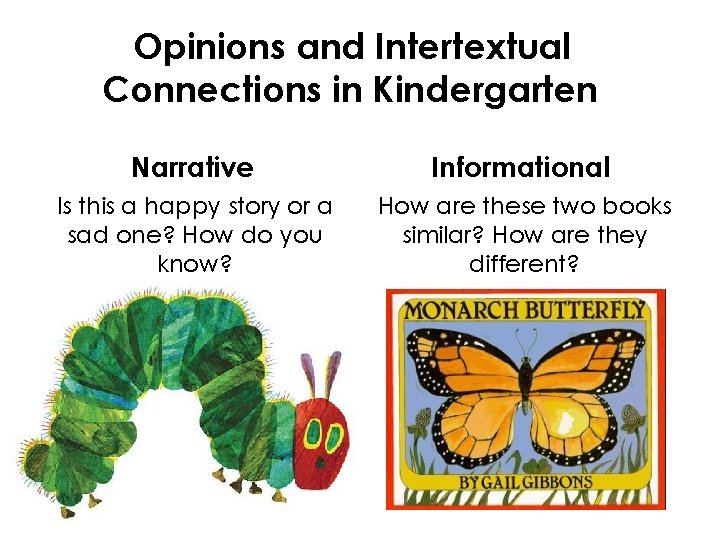
Opinions and Intertextual Connections in Kindergarten Narrative Informational Is this a happy story or a sad one? How do you know? How are these two books similar? How are they different?
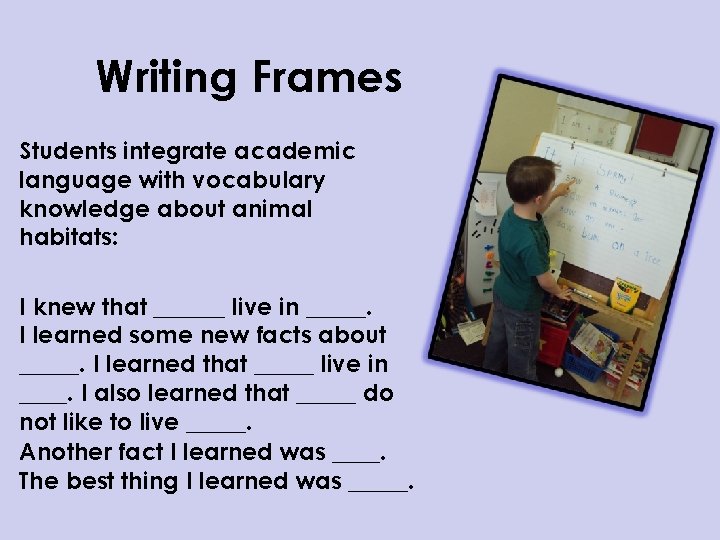
Writing Frames Students integrate academic language with vocabulary knowledge about animal habitats: I knew that ______ live in _____. I learned some new facts about _____. I learned that _____ live in ____. I also learned that _____ do not like to live _____. Another fact I learned was ____. The best thing I learned was _____.
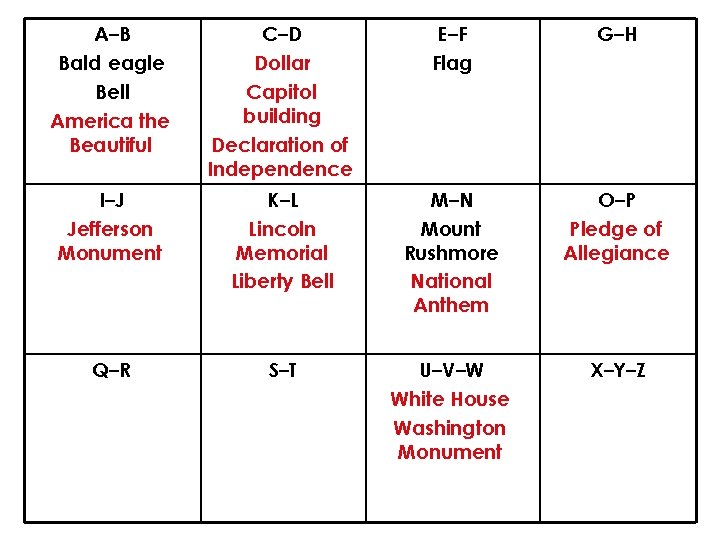
A–B Bald eagle Bell America the Beautiful C–D Dollar Capitol building Declaration of Independence E–F Flag G–H I–J Jefferson Monument K–L Lincoln Memorial Liberty Bell M–N Mount Rushmore National Anthem O–P Pledge of Allegiance Q–R S–T U–V–W White House Washington Monument X–Y–Z

Students assess themselves to see their own progress.

Step 5: Make It a Priority by Creating a Schoolwide Focus
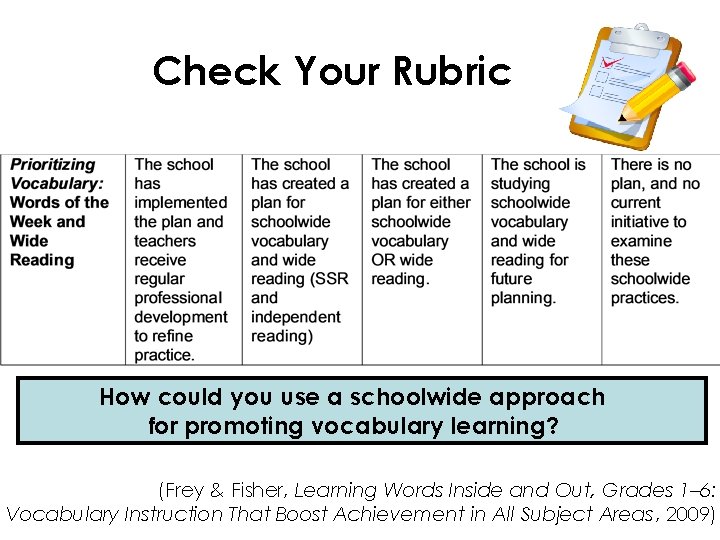
Check Your Rubric How could you use a schoolwide approach for promoting vocabulary learning? (Frey & Fisher, Learning Words Inside and Out, Grades 1– 6: Vocabulary Instruction That Boost Achievement in All Subject Areas, 2009)
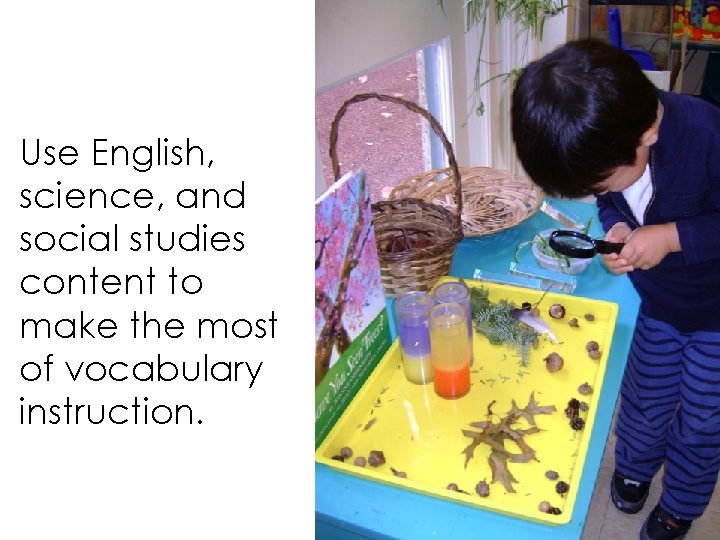
Use English, science, and social studies content to make the most of vocabulary instruction.
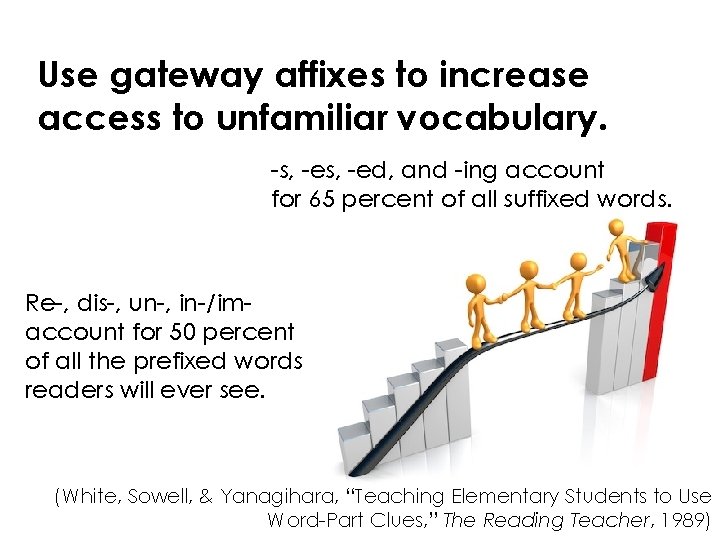
Use gateway affixes to increase access to unfamiliar vocabulary. -s, -ed, and -ing account for 65 percent of all suffixed words. Re-, dis-, un-, in-/imaccount for 50 percent of all the prefixed words readers will ever see. (White, Sowell, & Yanagihara, “Teaching Elementary Students to Use Word-Part Clues, ” The Reading Teacher, 1989)
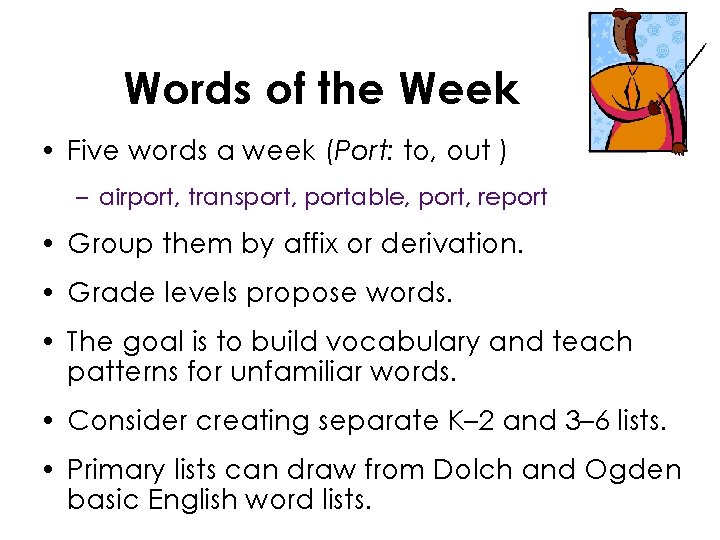
Words of the Week • Five words a week (Port: to, out ) – airport, transport, portable, port, report • Group them by affix or derivation. • Grade levels propose words. • The goal is to build vocabulary and teach patterns for unfamiliar words. • Consider creating separate K– 2 and 3– 6 lists. • Primary lists can draw from Dolch and Ogden basic English word lists.
Ideas for Extending WOW Efforts • Post the words on classroom word walls. • Give extra credit for using WOW words in writing. • Post words each week on school website and in newsletter. • Use words in games. (Bingo, Password, Concentration)
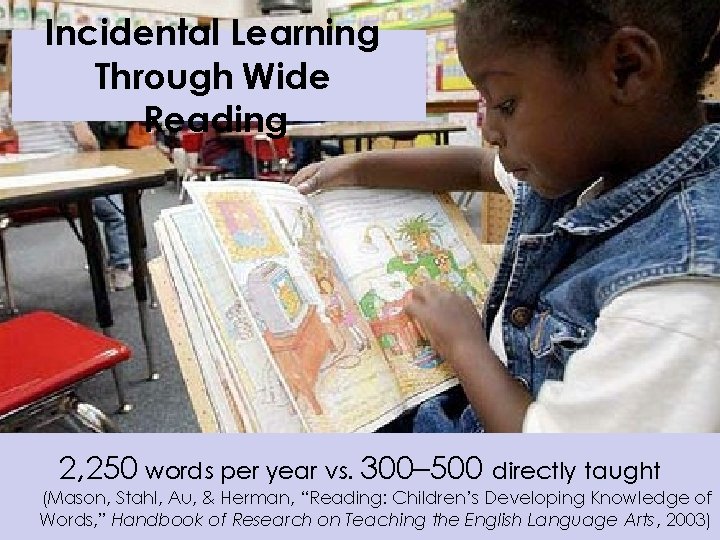
Incidental Learning Through Wide Reading 2, 250 words per year vs. 300– 500 directly taught (Mason, Stahl, Au, & Herman, “Reading: Children’s Developing Knowledge of Words, ” Handbook of Research on Teaching the English Language Arts, 2003)
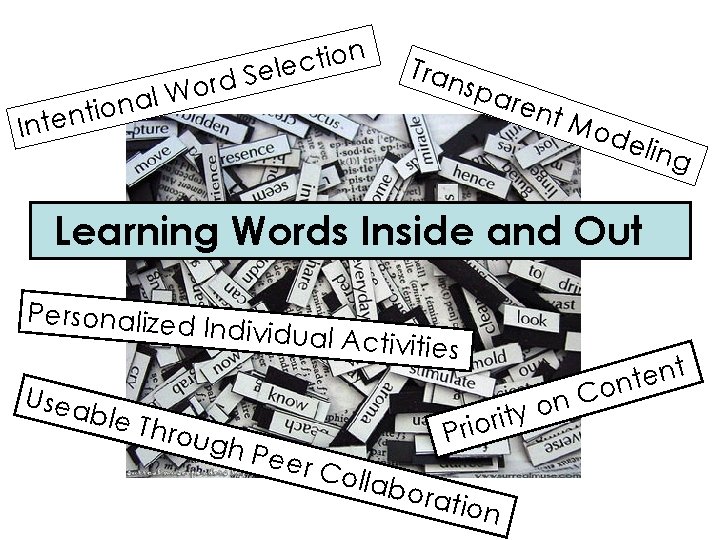
n o i t c e d Sel Tran r o W l tiona spa Inten ren t Mo deli ng Learning Words Inside and Out Personalized Usea ble T Individual Ac hrou gh P tivities eer C ollab P t n e t on C n o y t i r o ri orati on

To schedule professional development at your site, contact Solution Tree at (800) 733 -6786.
- Slides: 54