
Vocabulary 1 Grammar Hace time This is a

Vocabulary 1 Grammar
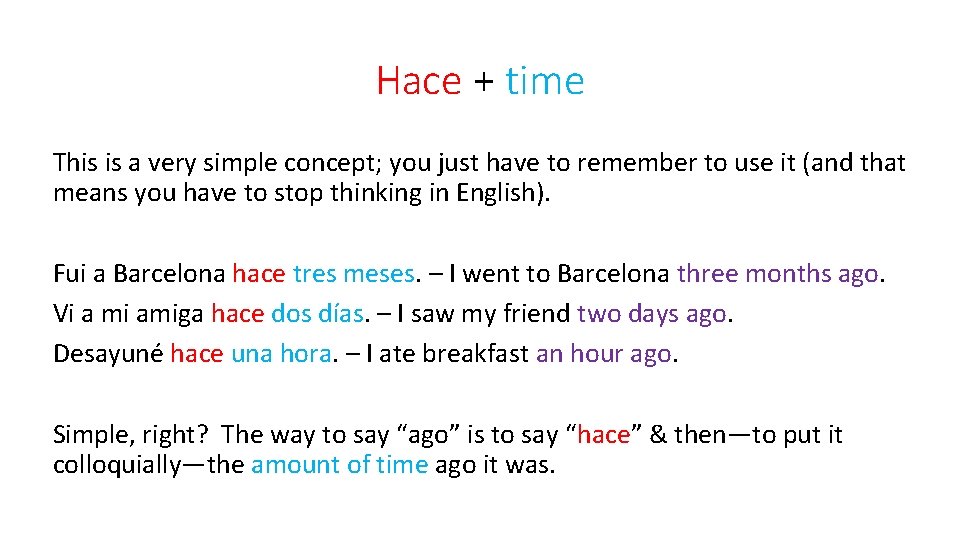
Hace + time This is a very simple concept; you just have to remember to use it (and that means you have to stop thinking in English). Fui a Barcelona hace tres meses. – I went to Barcelona three months ago. Vi a mi amiga hace dos días. – I saw my friend two days ago. Desayuné hace una hora. – I ate breakfast an hour ago. Simple, right? The way to say “ago” is to say “hace” & then—to put it colloquially—the amount of time ago it was.
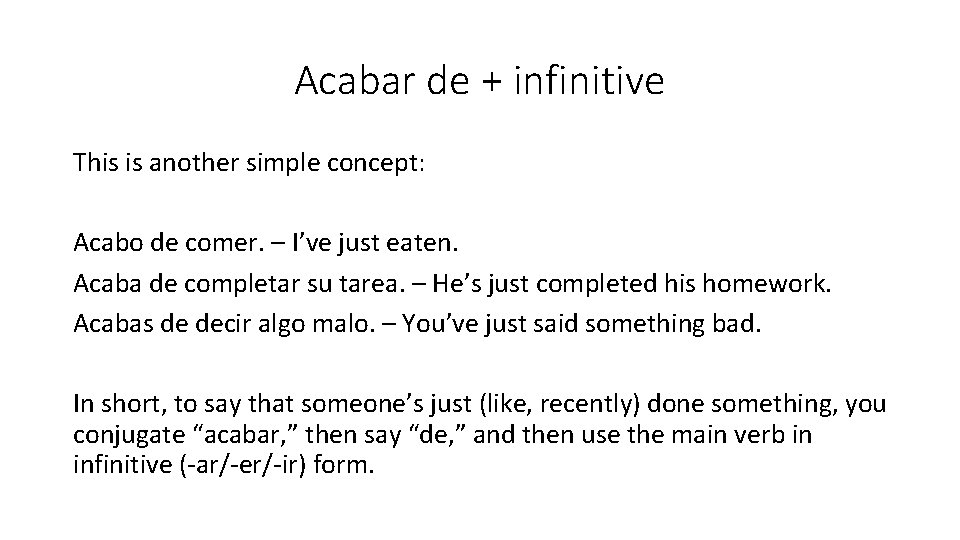
Acabar de + infinitive This is another simple concept: Acabo de comer. – I’ve just eaten. Acaba de completar su tarea. – He’s just completed his homework. Acabas de decir algo malo. – You’ve just said something bad. In short, to say that someone’s just (like, recently) done something, you conjugate “acabar, ” then say “de, ” and then use the main verb in infinitive (-ar/-er/-ir) form.
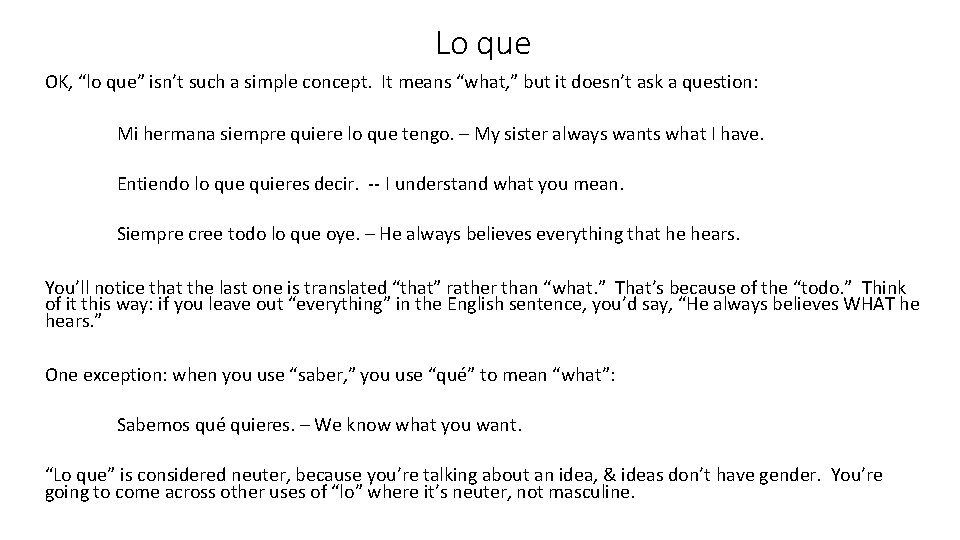
Lo que OK, “lo que” isn’t such a simple concept. It means “what, ” but it doesn’t ask a question: Mi hermana siempre quiere lo que tengo. – My sister always wants what I have. Entiendo lo que quieres decir. -- I understand what you mean. Siempre cree todo lo que oye. – He always believes everything that he hears. You’ll notice that the last one is translated “that” rather than “what. ” That’s because of the “todo. ” Think of it this way: if you leave out “everything” in the English sentence, you’d say, “He always believes WHAT he hears. ” One exception: when you use “saber, ” you use “qué” to mean “what”: Sabemos qué quieres. – We know what you want. “Lo que” is considered neuter, because you’re talking about an idea, & ideas don’t have gender. You’re going to come across other uses of “lo” where it’s neuter, not masculine.
Homework: write two sentences with “hace + que, ” two with “acabar de + infinitive, ” & two with “lo que. ” Writing by hand is fine.
- Slides: 5