
VOCAB Double helix DNA replication Nucleotide DNA helicase
VOCAB Double helix DNA replication Nucleotide DNA helicase Deoxyribose DNA polymerase Replication fork Base pairing Complementary base pairing semi-conservative replication Anti-parallel
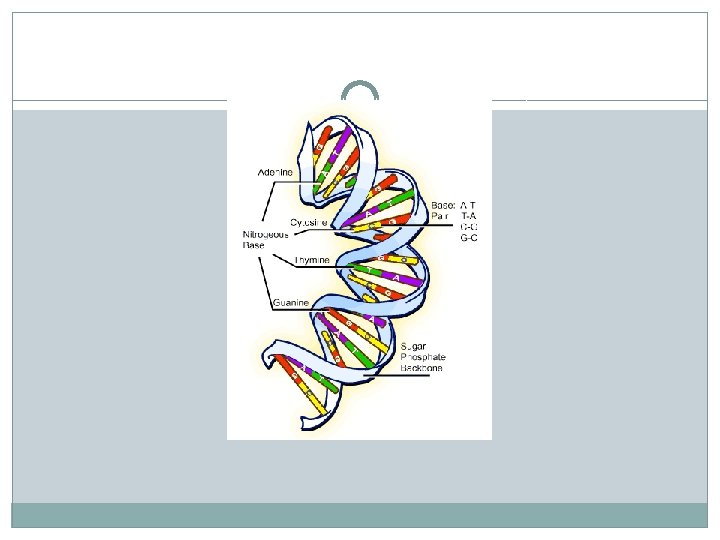
Each strand made up of NUCLEOTIDES. A nucleotide is made up of three parts: PHOSPHATE GROUP, 5 CARBON SUGAR (DEOXYRIBOSE) AND A NITROGEN BASE
The sugar and the Phosphate Group are the same in all DNA strands. The difference lies in the different Nitrogen Bases. THERE ARE 4 NITROGEN BASES: ADENINE (A), THYMINE (T), GUANINE (G), AND CYTOSINE (C)
When and where does DNA replication occur? IN THE NUCLEUS DURING THE S PHASE OF INTERPHASE
What is DNA Replication? It is a process by which DNA is copied in a cell before a cell divides by MITOSIS, MEIOSIS, or BINARY FISSION. Because the two strands are complementary, each strand serves as a template to make new complementary strand. Upon completion of replication, there are two IDENTICAL strands: ½ of each are from the original DNA strand.

http: //www. youtube. com/watch? v=te. V 62 zrm 2 P 0
1. Before DNA replication, the double helix unwinds. The enzyme, DNA Helicase, unwinds DNA by breaking Hydrogen bonds linking base pairs.
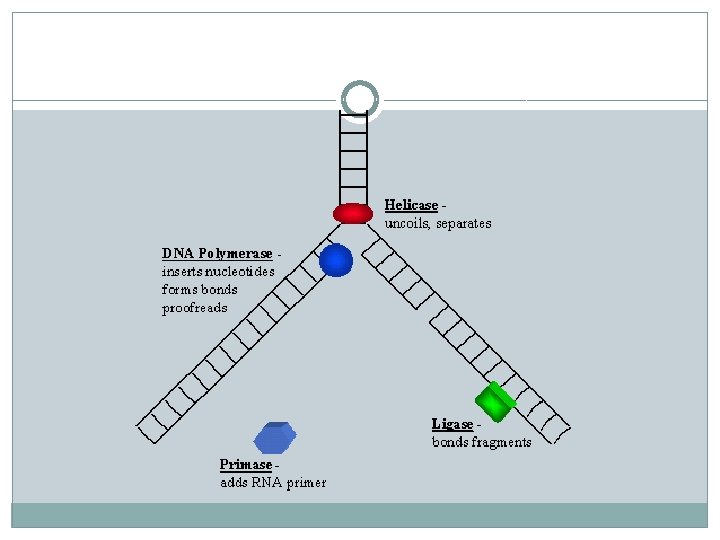
2. RNA primase inserts a starter of RNA nucleotides at initiation point.
3. DNA Polymerase binds a complementary “leading” strand of DNA nucleotides starting at 3’ end of RNA Primer.
As the strands separate, proteins attach to strand to keep them apart. Areas separate at REPLICATION FORKS.
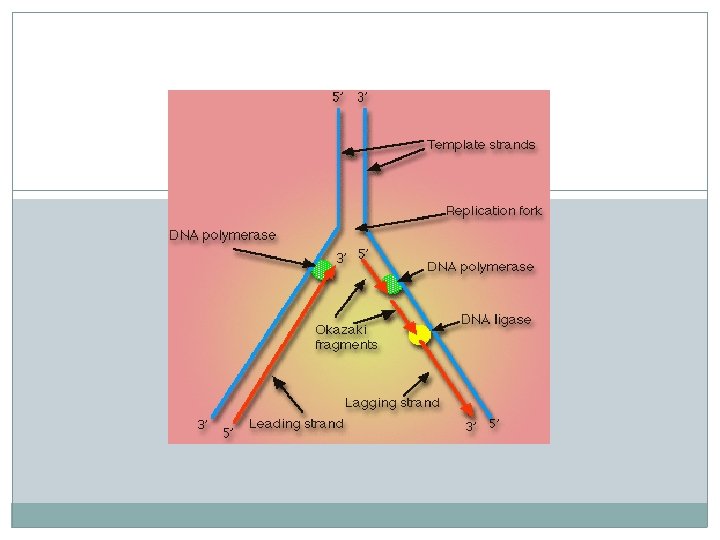
At Replication Fork, enzymes called DNA POLYMERASE moves along DNA strand adds nucleotides to exposed Nitrogen bases. As DNA polymerase moves, two new double helixes are formed.
4. RNA primase attaches more RNA primer in remaining gaps, yielding a series of Okazaki fragments (the lagging strand).
5. Exonuclease strips away RNA primer which DNA polymerase replaces with DNA nucleotides.
Once DNA polymerase has begun adding nucleotides, the process continues until all DNA has been copied. Then DNA polymerase falls off.
CHECKING FOR ERRORS DNA replication occurs with great accuracy. Only about 1 error in every billion paired nucleotides added. DNA Polymerases have a ‘proofreading’ role to fix any errors.
�http: //www. johnkyrk. com/DNAreplication. html
Let’s Recap Enzymes 1. Helicase: Unwinds DNA into single strands 2. RNA primase: inserts a starter of RNA nucleotides at initiation point. 3. DNA polymerase: moves along DNA strand adds nucleotides to exposed Nitrogen bases. 4. Exonuclease: strips away RNA primer which DNA polymerase replaces with DNA nucleotides.
- Slides: 20