
VOC Odor Control Engineering Lab VOC Odor Control
VOC & Odor Control Engineering Lab
VOC & Odor Control Engineering Lab
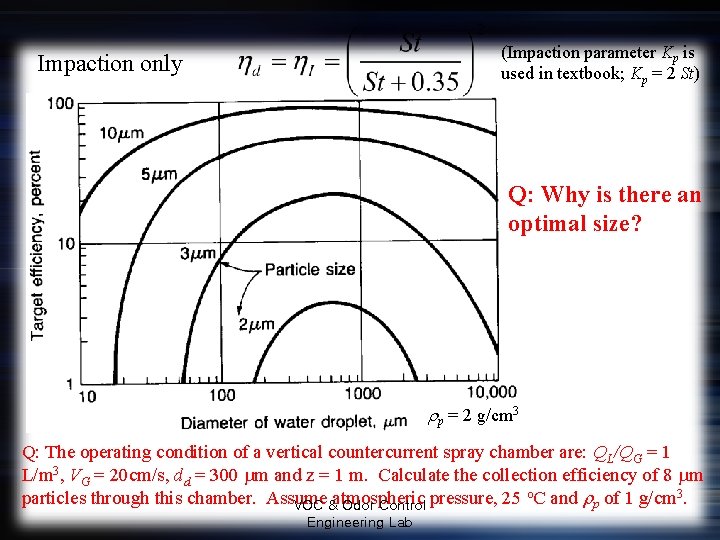
(Impaction parameter Kp is used in textbook; Kp = 2 St) Impaction only Q: Why is there an optimal size? rp = 2 g/cm 3 Q: The operating condition of a vertical countercurrent spray chamber are: QL/QG = 1 L/m 3, VG = 20 cm/s, dd = 300 mm and z = 1 m. Calculate the collection efficiency of 8 mm o 3 particles through this chamber. Assume VOC &atmospheric Odor Control pressure, 25 C and rp of 1 g/cm. Engineering Lab
VOC & Odor Control Engineering Lab
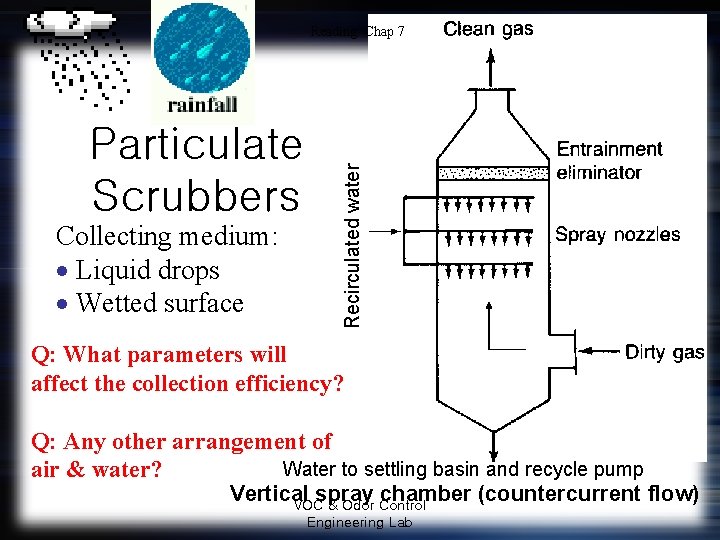
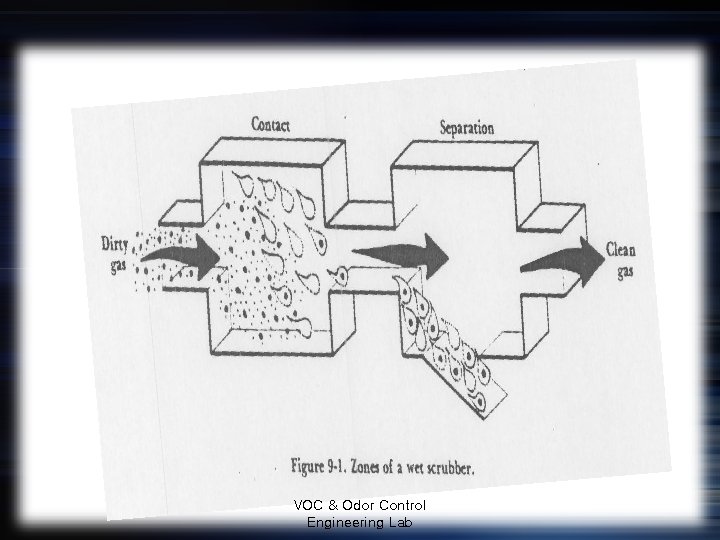
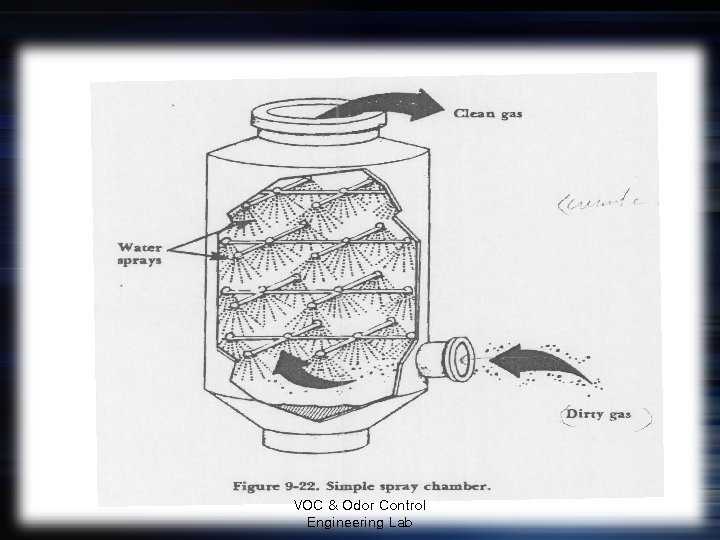
Particulate Scrubbers Collecting medium: · Liquid drops · Wetted surface Recirculated water Reading: Chap 7 Q: What parameters will affect the collection efficiency? Q: Any other arrangement of Water to settling basin and recycle pump air & water? Vertical spray chamber (countercurrent flow) VOC & Odor Control Engineering Lab
VOC & Odor Control Engineering Lab
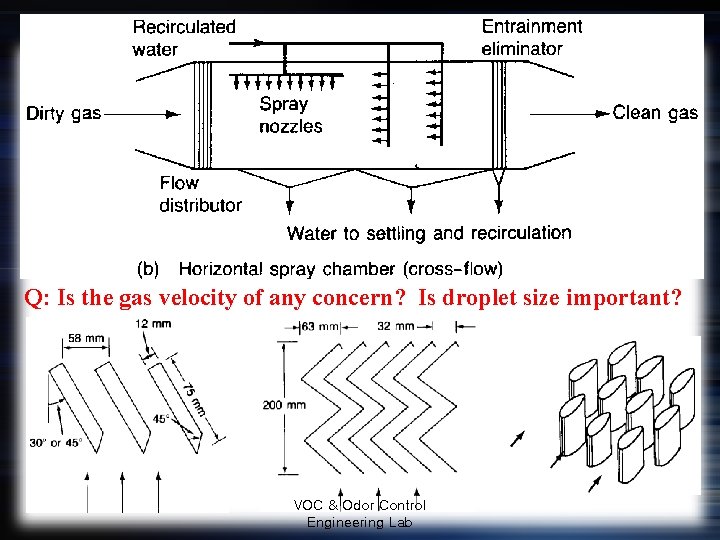
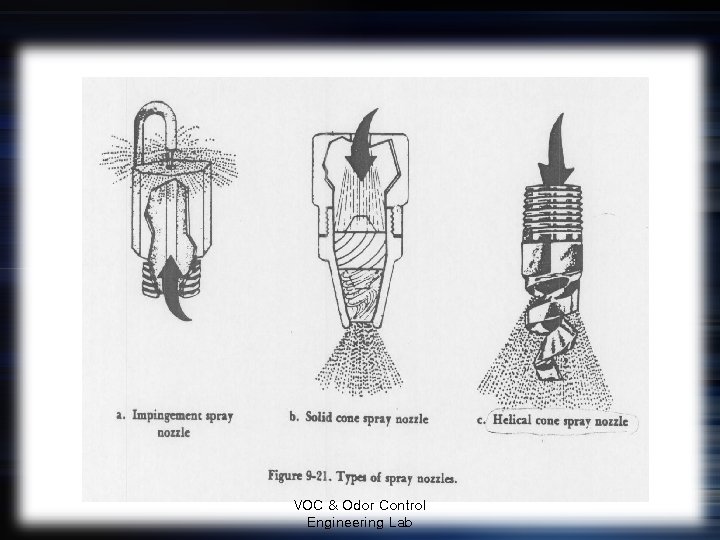
Q: Is the gas velocity of any concern? Is droplet size important? VOC & Odor Control Engineering Lab
VOC & Odor Control Engineering Lab
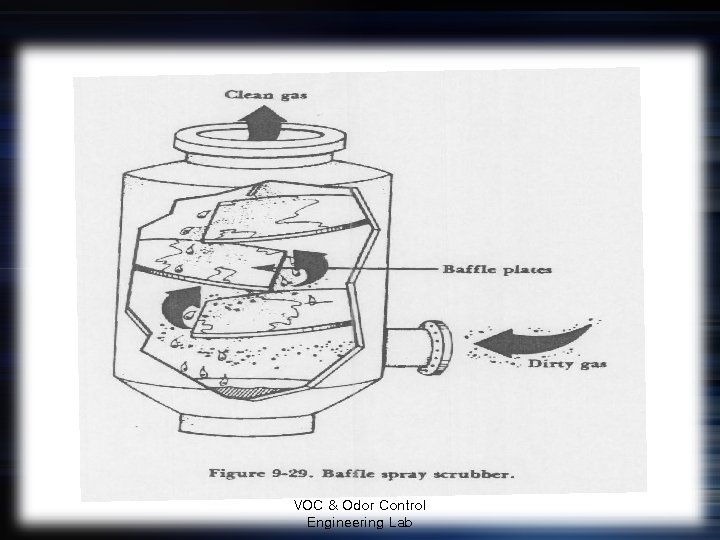
VOC & Odor Control Engineering Lab
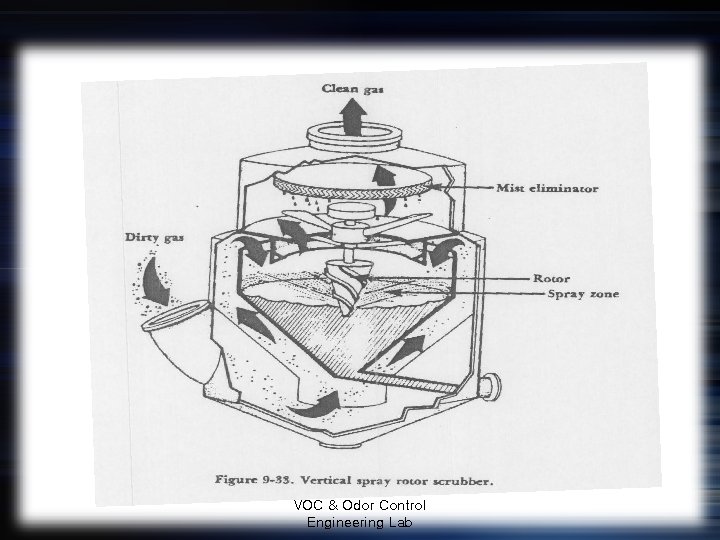
VOC & Odor Control Engineering Lab
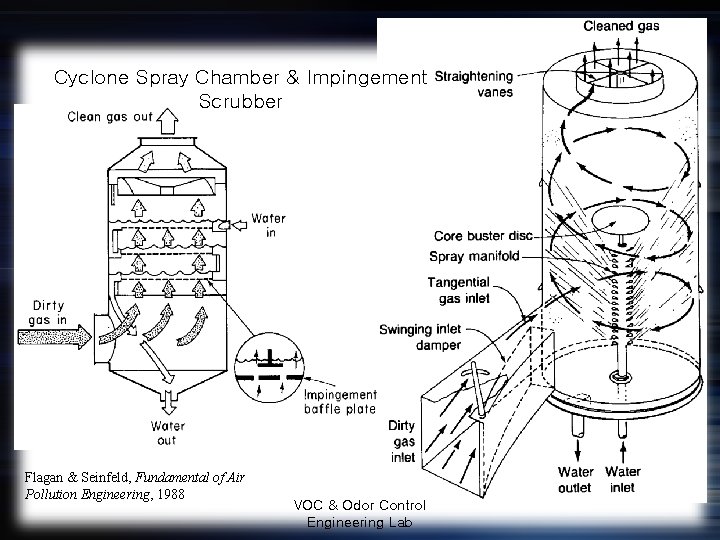
Cyclone Spray Chamber & Impingement Scrubber Flagan & Seinfeld, Fundamental of Air Pollution Engineering, 1988 VOC & Odor Control Engineering Lab
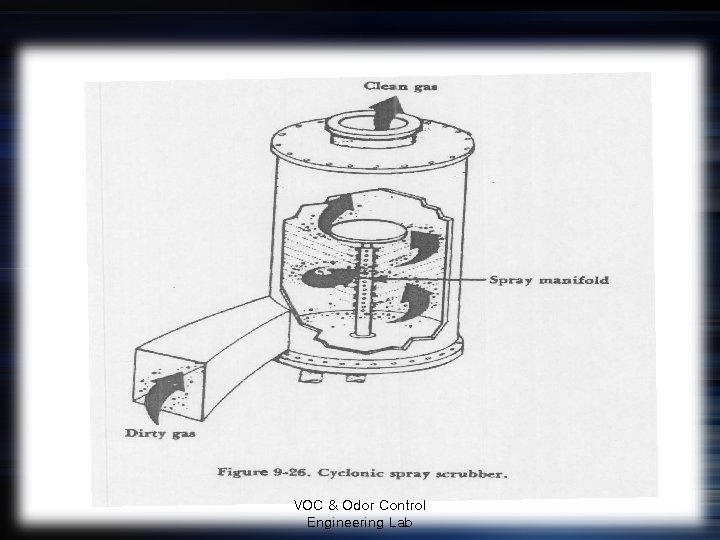
VOC & Odor Control Engineering Lab
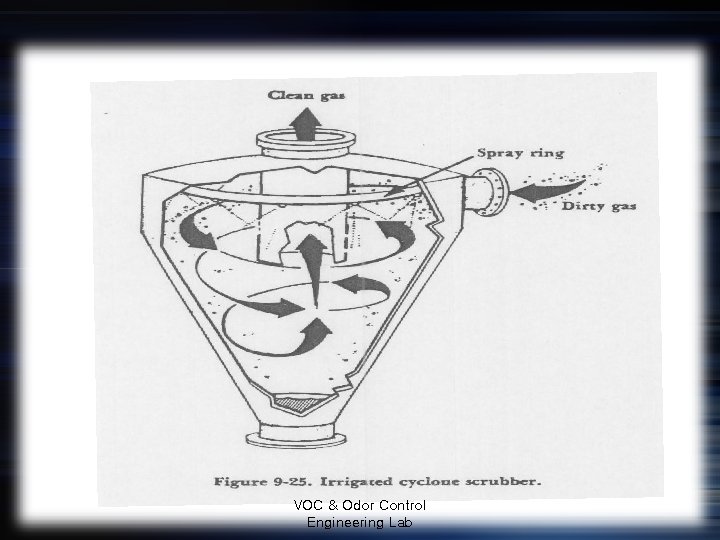
VOC & Odor Control Engineering Lab
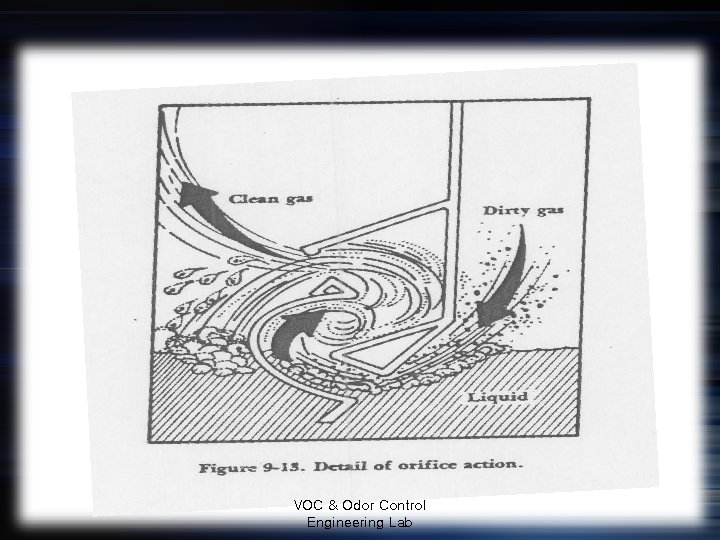
VOC & Odor Control Engineering Lab
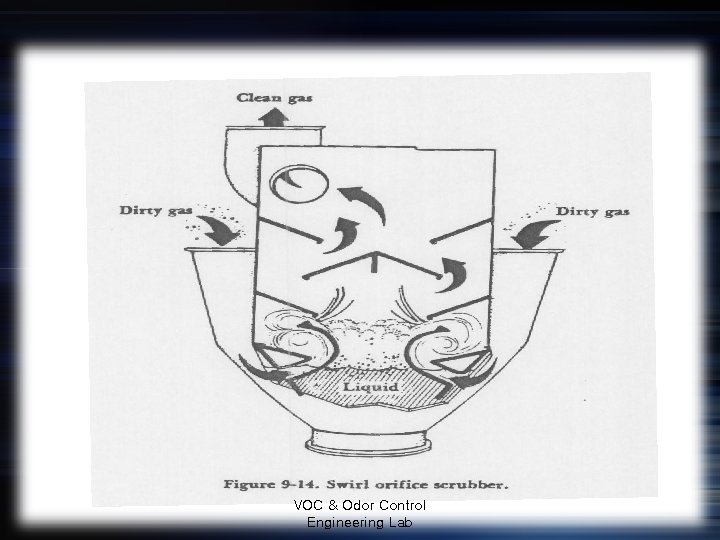
VOC & Odor Control Engineering Lab
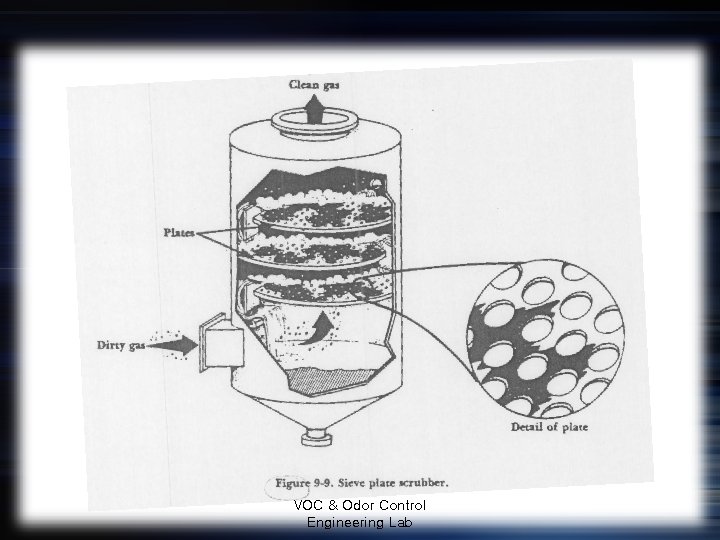
VOC & Odor Control Engineering Lab
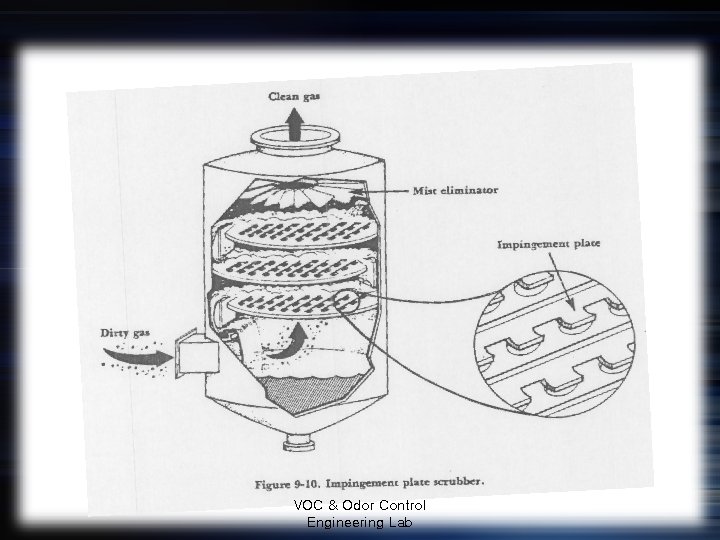
VOC & Odor Control Engineering Lab
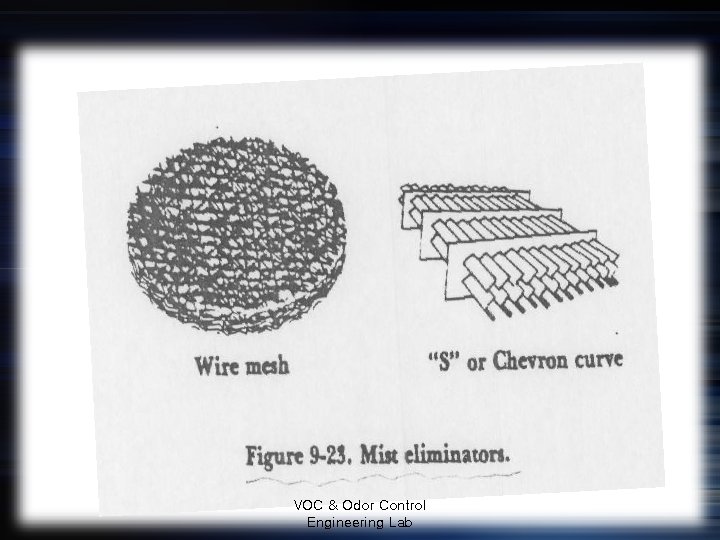
VOC & Odor Control Engineering Lab
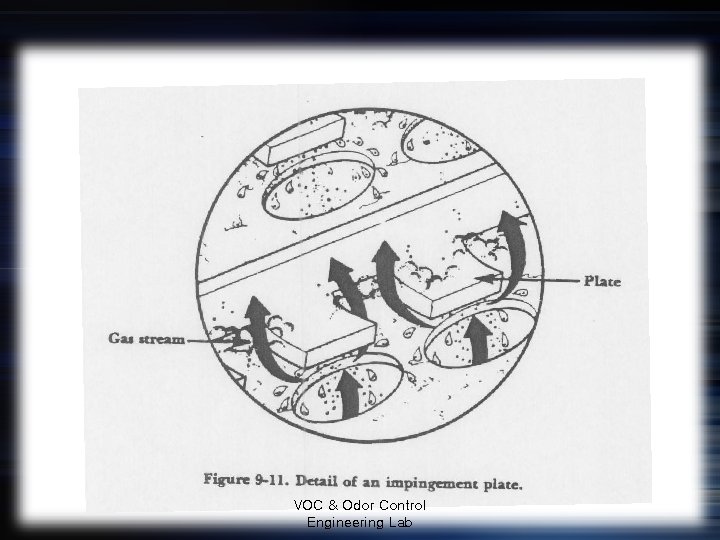
VOC & Odor Control Engineering Lab
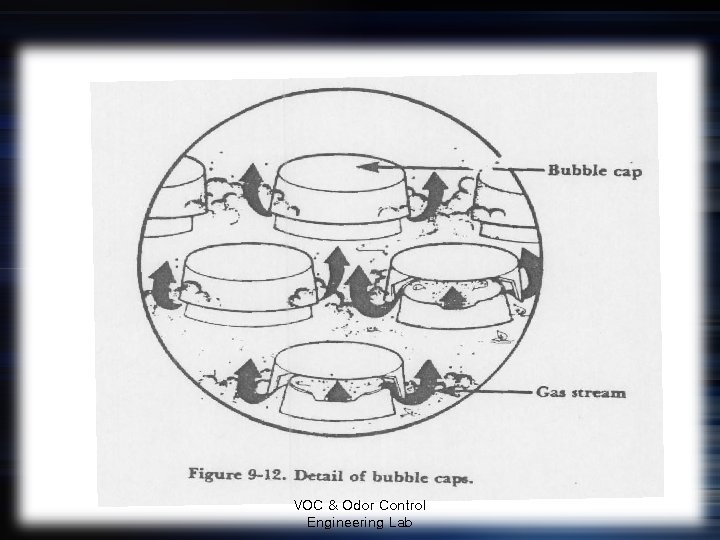
VOC & Odor Control Engineering Lab
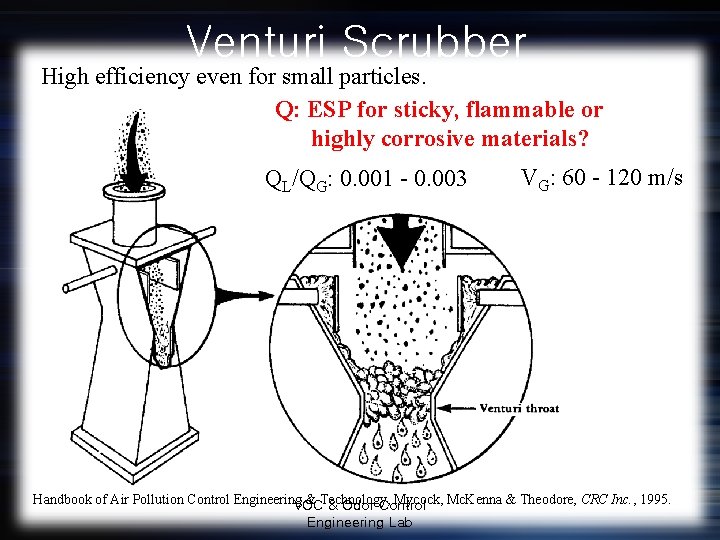
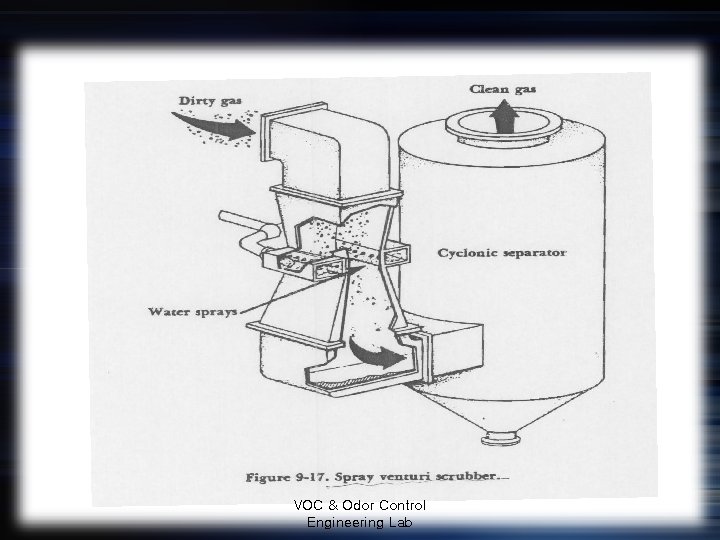
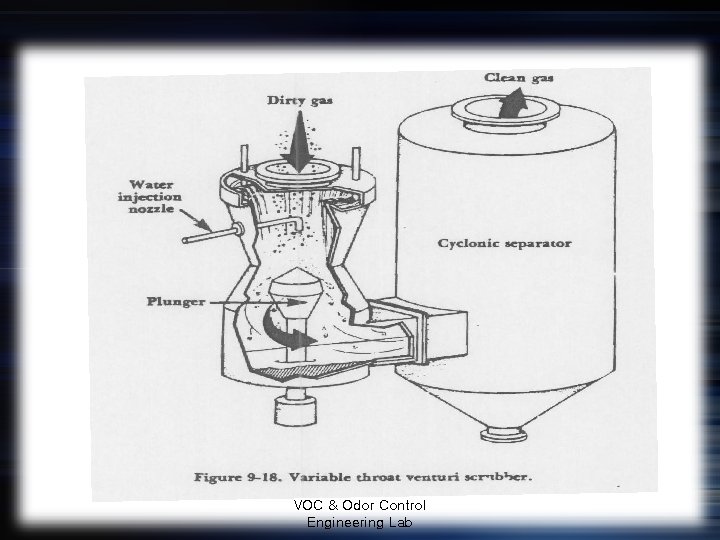
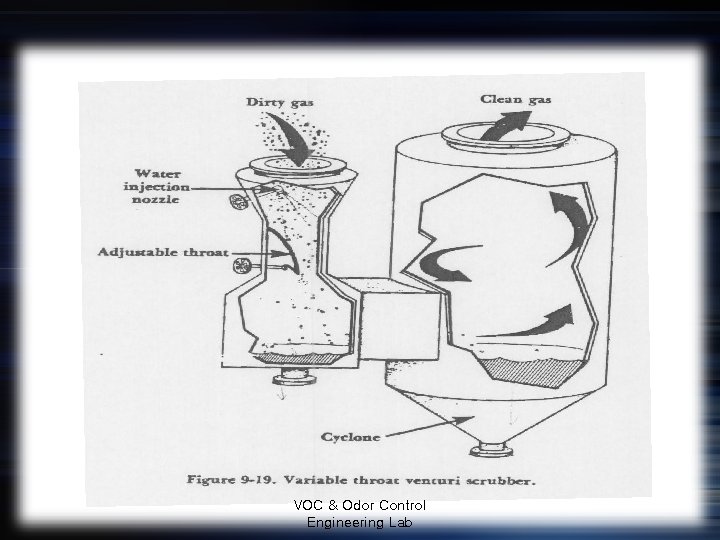
Venturi Scrubber High efficiency even for small particles. Q: ESP for sticky, flammable or highly corrosive materials? QL/QG: 0. 001 - 0. 003 VG: 60 - 120 m/s Handbook of Air Pollution Control Engineering & Technology, Mycock, Mc. Kenna & Theodore, CRC Inc. , 1995. VOC & Odor Control Engineering Lab
VOC & Odor Control Engineering Lab
VOC & Odor Control Engineering Lab
VOC & Odor Control Engineering Lab
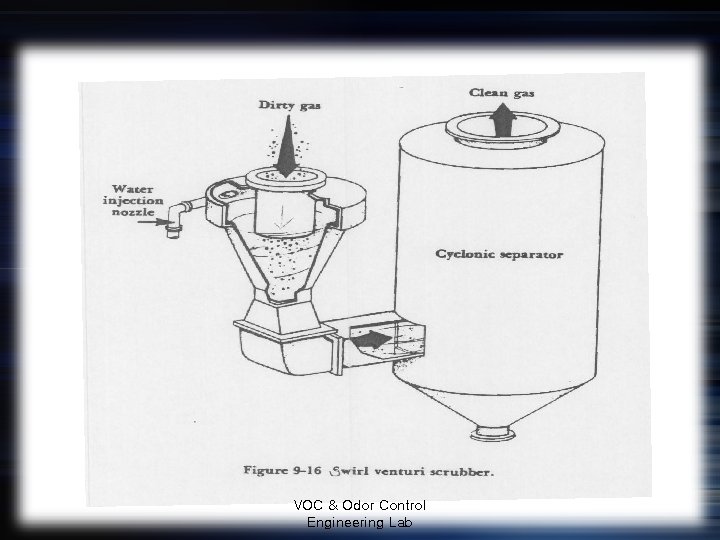
VOC & Odor Control Engineering Lab
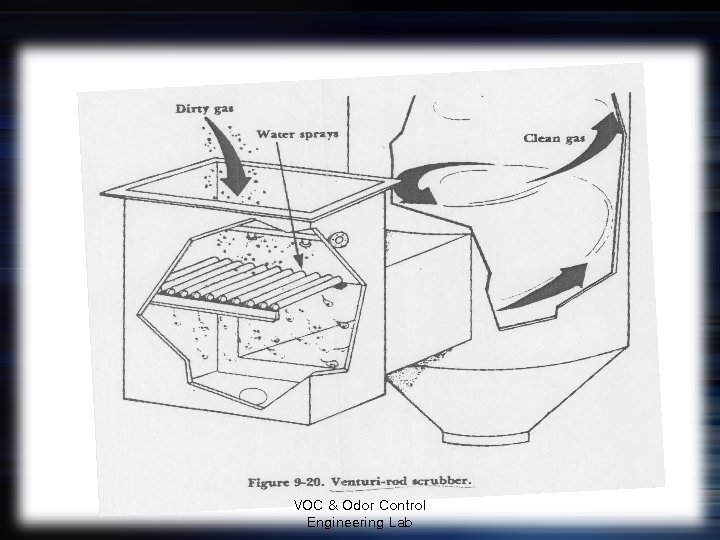
VOC & Odor Control Engineering Lab
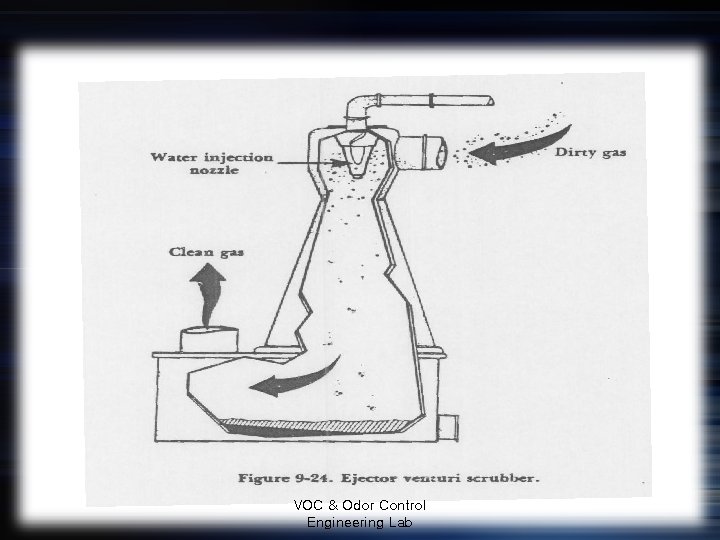
VOC & Odor Control Engineering Lab
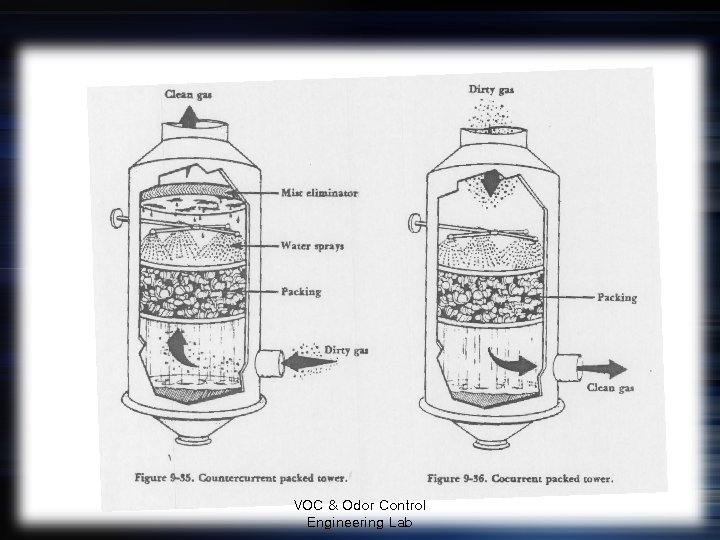
VOC & Odor Control Engineering Lab
VOC & Odor Control Engineering Lab
VOC & Odor Control Engineering Lab
VOC & Odor Control Engineering Lab
VOC & Odor Control Engineering Lab
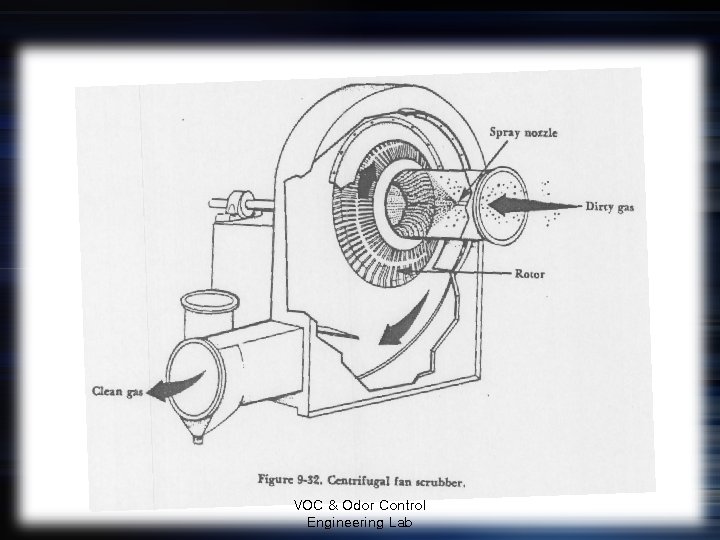
VOC & Odor Control Engineering Lab
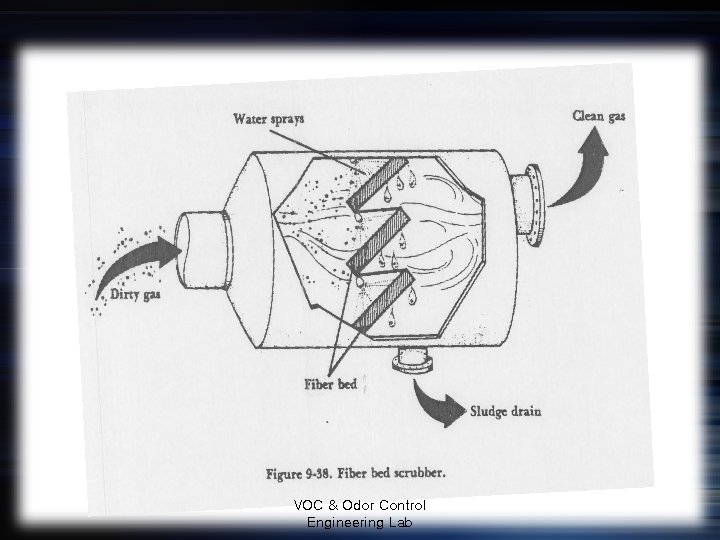
VOC & Odor Control Engineering Lab
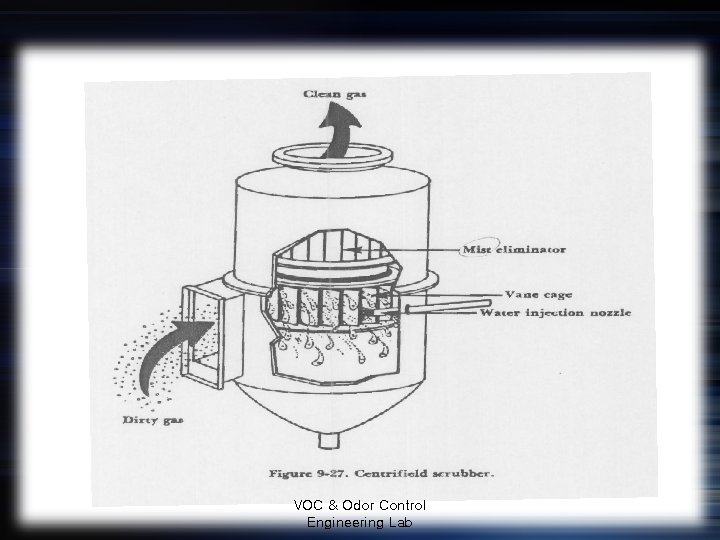
VOC & Odor Control Engineering Lab
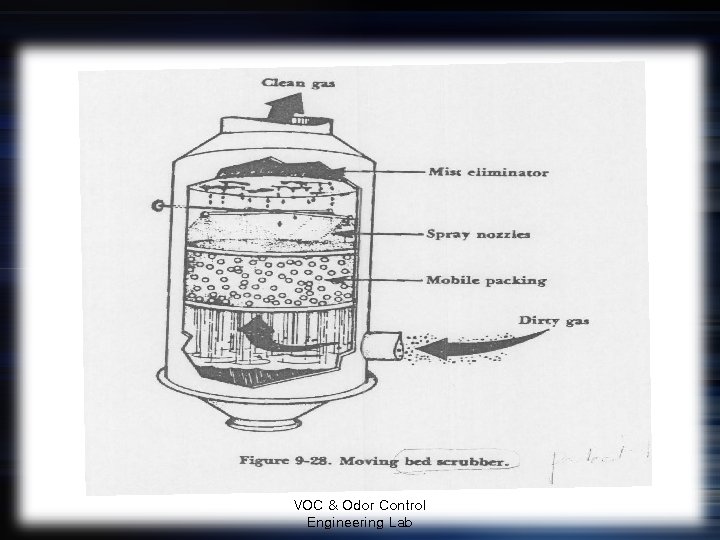
VOC & Odor Control Engineering Lab
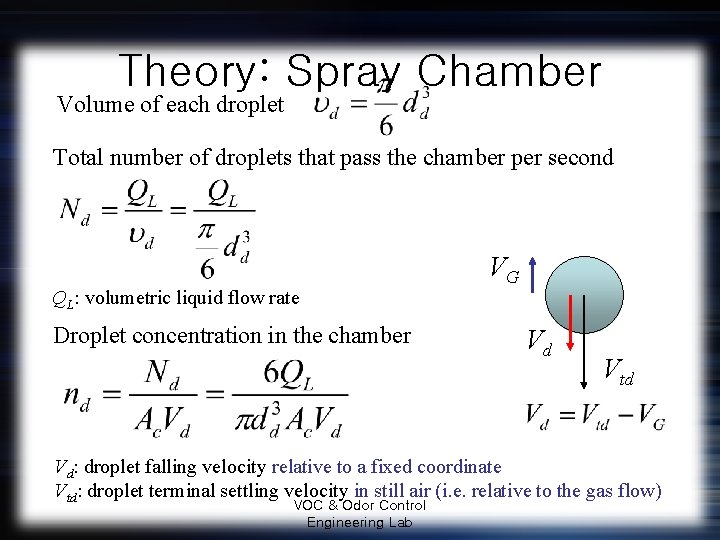
Theory: Spray Chamber Volume of each droplet Total number of droplets that pass the chamber per second QL: volumetric liquid flow rate Droplet concentration in the chamber VG Vd Vtd Vd: droplet falling velocity relative to a fixed coordinate Vtd: droplet terminal settling velocity in still air (i. e. relative to the gas flow) VOC & Odor Control Engineering Lab
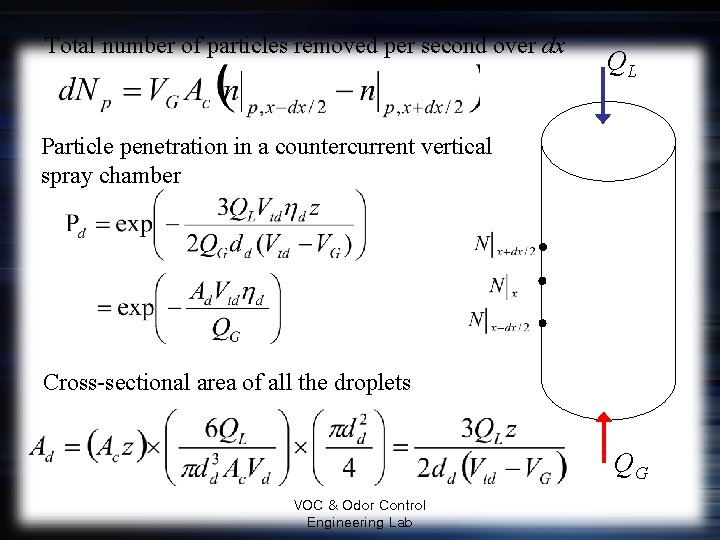
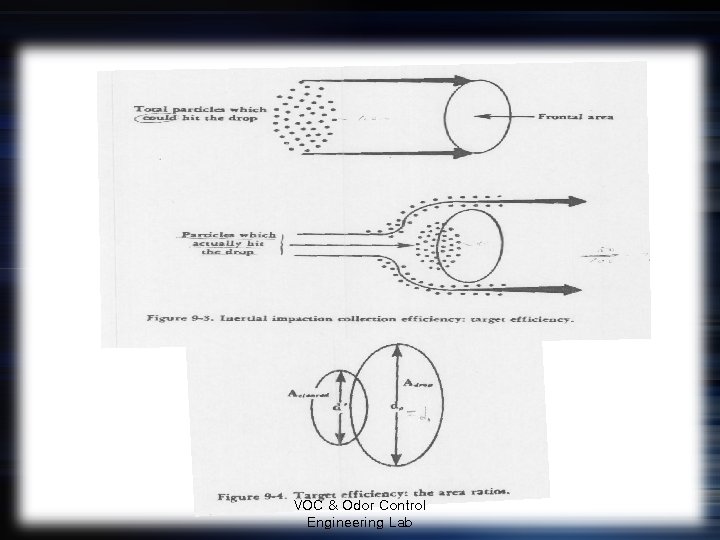
Total number of particles removed per second over dx QL Particle penetration in a countercurrent vertical spray chamber Cross-sectional area of all the droplets QG VOC & Odor Control Engineering Lab
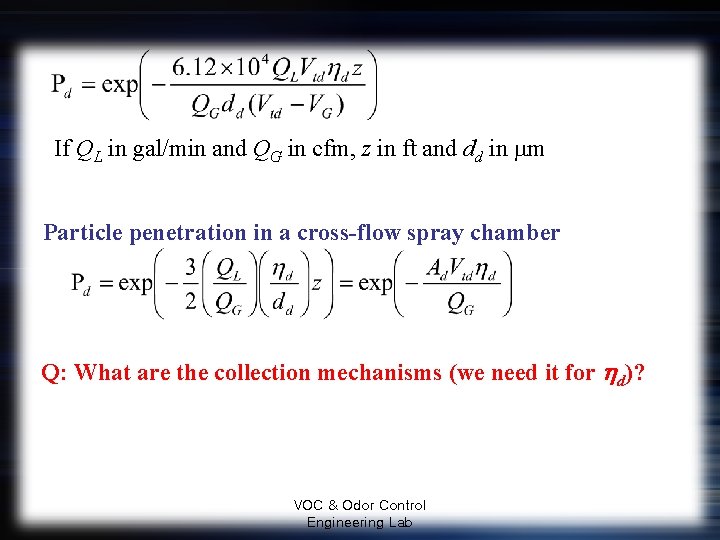
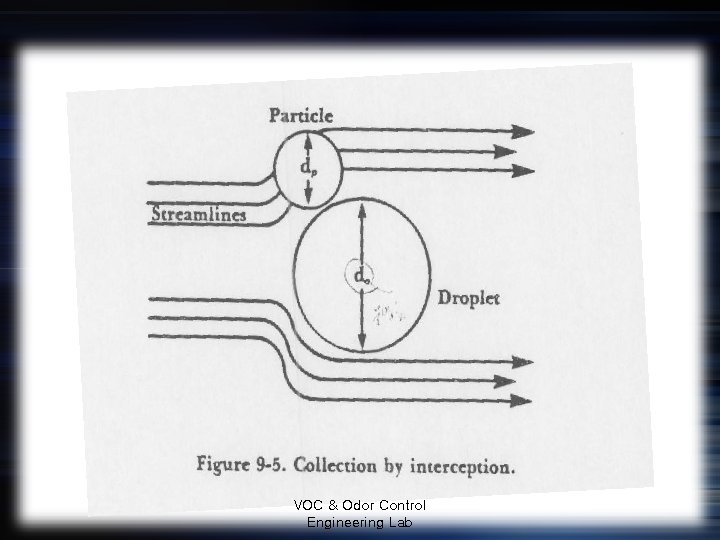
If QL in gal/min and QG in cfm, z in ft and dd in mm Particle penetration in a cross-flow spray chamber Q: What are the collection mechanisms (we need it for hd)? VOC & Odor Control Engineering Lab
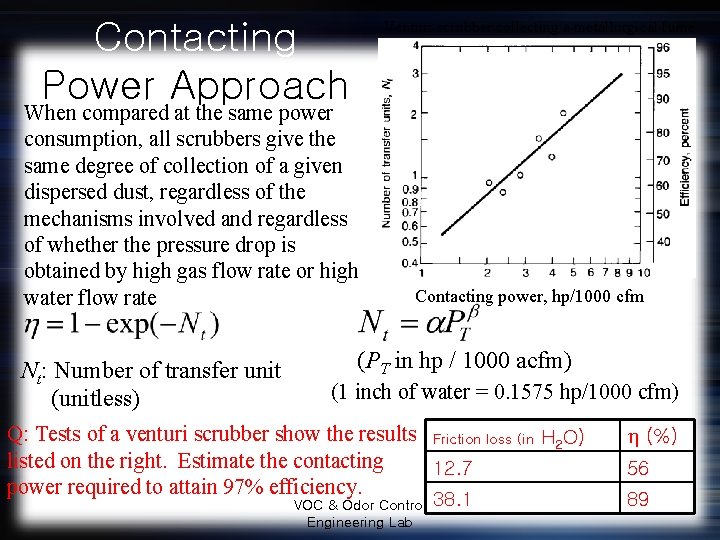
Contacting Power Approach Venturi scrubber collecting a metallurgical fume When compared at the same power consumption, all scrubbers give the same degree of collection of a given dispersed dust, regardless of the mechanisms involved and regardless of whether the pressure drop is obtained by high gas flow rate or high water flow rate Nt: Number of transfer unit (unitless) Contacting power, hp/1000 cfm (PT in hp / 1000 acfm) (1 inch of water = 0. 1575 hp/1000 cfm) Q: Tests of a venturi scrubber show the results Friction loss (in H 2 O) listed on the right. Estimate the contacting 12. 7 power required to attain 97% efficiency. VOC & Odor Control Engineering Lab 38. 1 h (%) 56 89
- Slides: 40