
VMS 101 VMS 101 Current Trends Common Terms




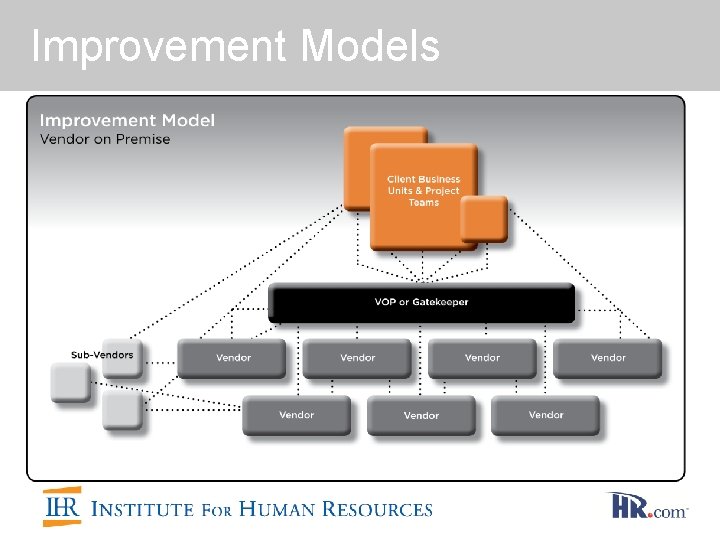
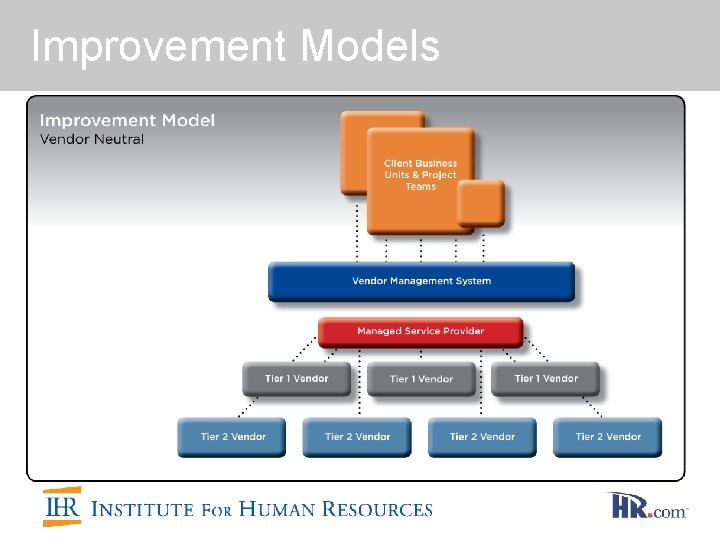
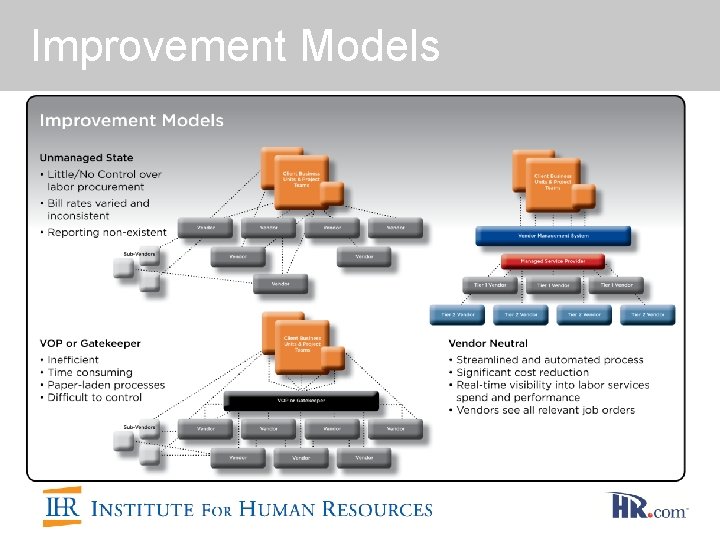








- Slides: 41
VMS 101
VMS 101 • • Current Trends Common Terms Definition of the VMS Improvement Models Who uses a VMS & why? Building a Business Case Key Considerations
Current Trends
The Workforce is Changing • • Workforce demographics. Demographic patterns have a direct impact on the available workforce and have created an imbalance between the supply and demand in critical workforce segments. Pressure to reduce headcount. Rising labor costs associated with full-time employees have put steady pressure on businesses’ bottom line. Greater use of contingent workers is a strategy used to ease some of this pressure. Value-add strategy. Organizations increasingly need to rapidly expand their capabilities, move into new markets, and address the competency gaps created by their evolving business strategies. Contingent workers can be a solution to enable organizations to adjust with the changing market conditions. Cost management. The increasing ratio of contingent workers in the total workforce — and their growing importance in delivering business results — is driving more focus on managing suppliers of the contingent workforce. Contingent Workforce: A Critical Talent Segment; Deloitte
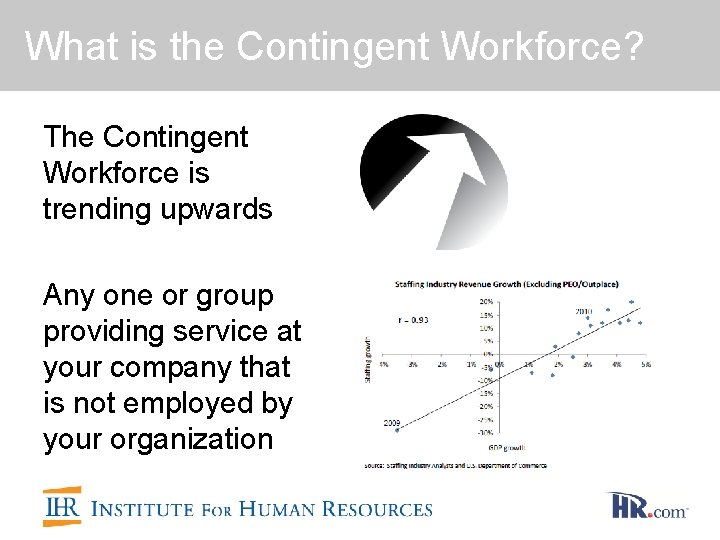
What is the Contingent Workforce? The Contingent Workforce is trending upwards Any one or group providing service at your company that is not employed by your organization
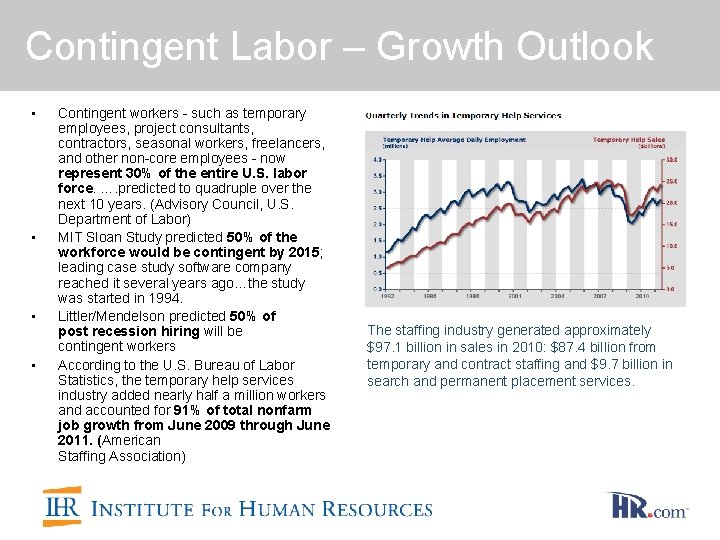
Contingent Labor – Growth Outlook • • Contingent workers - such as temporary employees, project consultants, contractors, seasonal workers, freelancers, and other non-core employees - now represent 30% of the entire U. S. labor force. …. predicted to quadruple over the next 10 years. (Advisory Council, U. S. Department of Labor) MIT Sloan Study predicted 50% of the workforce would be contingent by 2015; leading case study software company reached it several years ago…the study was started in 1994. Littler/Mendelson predicted 50% of post recession hiring will be contingent workers According to the U. S. Bureau of Labor Statistics, the temporary help services industry added nearly half a million workers and accounted for 91% of total nonfarm job growth from June 2009 through June 2011. (American Staffing Association) The staffing industry generated approximately $97. 1 billion in sales in 2010: $87. 4 billion from temporary and contract staffing and $9. 7 billion in search and permanent placement services.
2010 Steep Trend Upward 95% Services Procurement (SOW) 70% Multiple countries Data Source: Beeline clients spend under management
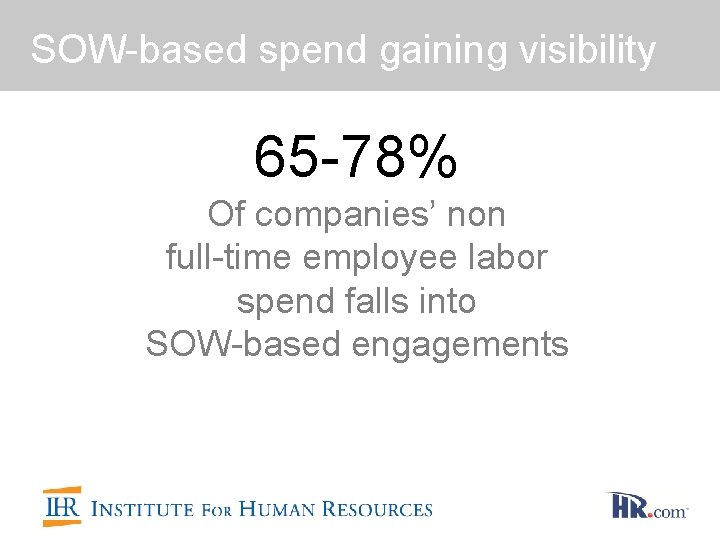
SOW-based spend gaining visibility 65 -78% Of companies’ non full-time employee labor spend falls into SOW-based engagements
Common Terms
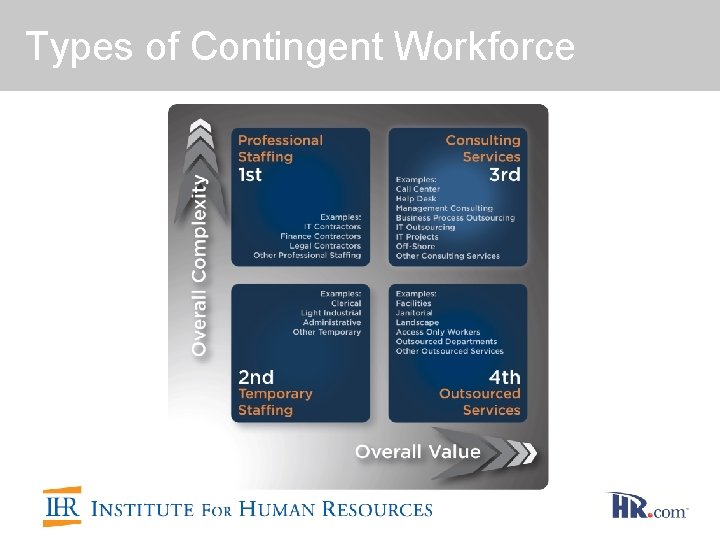
Types of Contingent Workforce
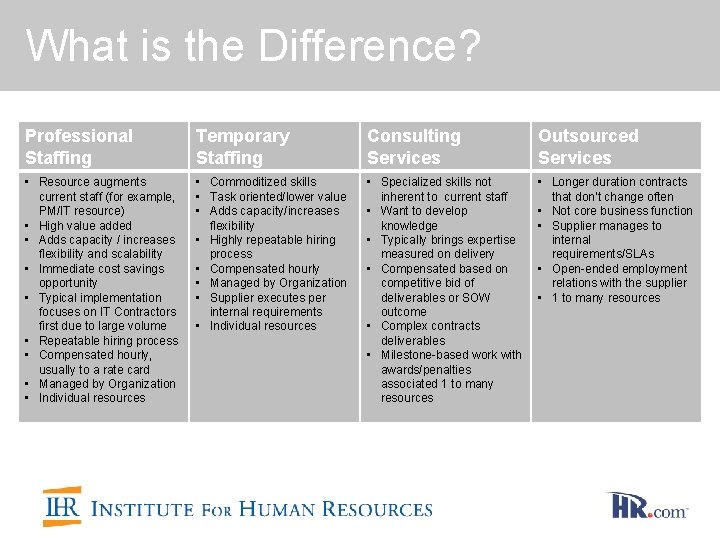
What is the Difference? Professional Staffing Temporary Staffing Consulting Services Outsourced Services • Resource augments current staff (for example, PM/IT resource) • High value added • Adds capacity / increases flexibility and scalability • Immediate cost savings opportunity • Typical implementation focuses on IT Contractors first due to large volume • Repeatable hiring process • Compensated hourly, usually to a rate card • Managed by Organization • Individual resources • Commoditized skills • Task oriented/lower value • Adds capacity/increases flexibility • Highly repeatable hiring process • Compensated hourly • Managed by Organization • Supplier executes per internal requirements • Individual resources • Specialized skills not inherent to current staff • Want to develop knowledge • Typically brings expertise measured on delivery • Compensated based on competitive bid of deliverables or SOW outcome • Complex contracts deliverables • Milestone-based work with awards/penalties associated 1 to many resources • Longer duration contracts that don’t change often • Not core business function • Supplier manages to internal requirements/SLAs • Open-ended employment relations with the supplier • 1 to many resources
Definition of the VMS
The VMS – What is it? Vendor Management System (VMS) is an Internet-enabled, often Web-based application that acts as a mechanism for business to manage and procure staffing services – temporary, and, in some cases, permanent placement services – as well as outside contract or contingent labor. Typical features of a VMS application include order distribution, consolidated billing and significant enhancements in reporting capability that outperforms manual systems and processes. [1]
The VMS – What is it? The VMS is the technology. The MSP / VOP / VMO is the service unit operating the VMS. Vendor Management System (VMS) is an Internet-enabled, often Web-based application that acts as a mechanism for business to manage and procure staffing services – temporary, and, in some cases, permanent placement services – as well as outside contract or contingent labor. Typical features of a VMS application include order distribution, consolidated billing and significant enhancements in reporting capability that outperforms manual systems and processes. [1]
Improvement Models
Improvement Models
Improvement Models
Improvement Models
Improvement Models
Who uses a VMS and why?
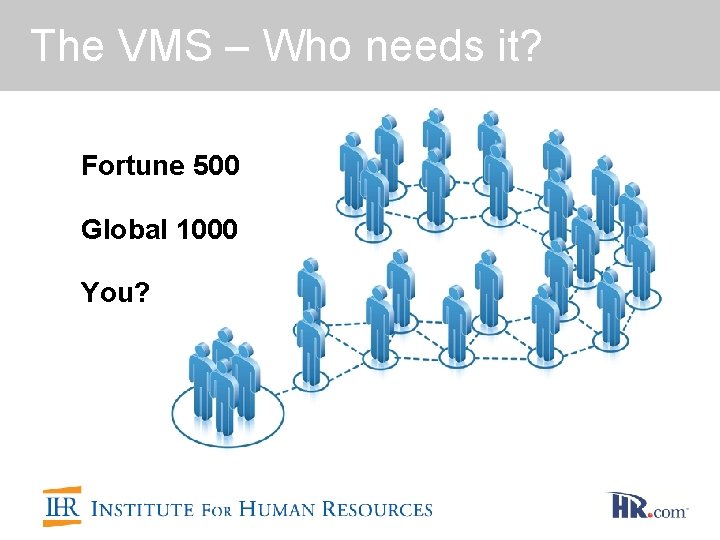
The VMS – Who needs it? Fortune 500 Global 1000 You?
Can you answer? • Are your labor rates at true market price or better? • Are you reducing and mitigating risk? • How much time does AP spend on invoices? • How many contractors do you use? How many suppliers? Are you leveraging your volume? • Who are your best suppliers? Do you have the data to be sure? • Can you see which consultants are assigned to which projects and have experience working on which systems? • Are you able to capture, approve and track time and expenses online? • Is your time-to-fill ratio the best it can be? • What percentage of your contract spend goes through preferred suppliers? • How much of your contract spend is through traditional staffing versus SOWs?
Could you answer?
Reasons to Implement a VMS
The #1 reason to implement a VMS is to save money!
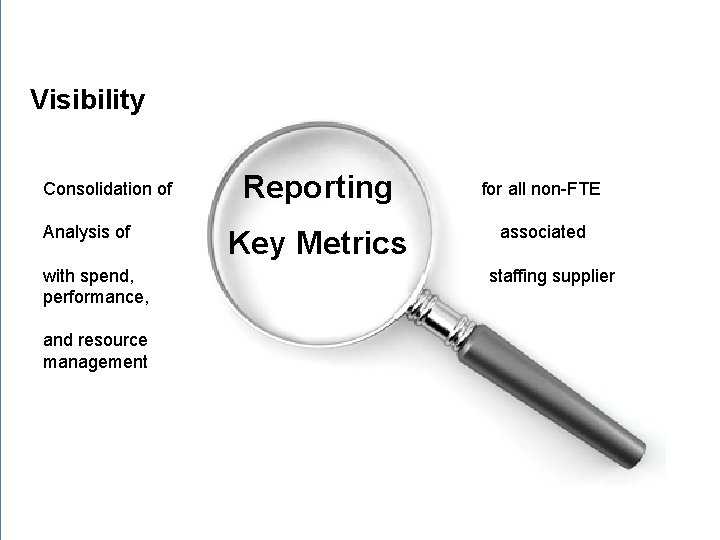
Visibility Consolidation of Analysis of with spend, performance, and resource management Reporting Key Metrics for all non-FTE associated staffing supplier
Compliance
Quality
Operational efficiency http: //www. flickr. com/photos/anikarenina/2390087821/sizes/o/in/photostream/
Enabling Business Process
Enabling Business Process Remember…the VMS is the technology. The MSP / VOP / VMO is the service unit operating the VMS.
Traditional Staff Augmentation
Building a Business Case
VMS providers, there a lot of different options!
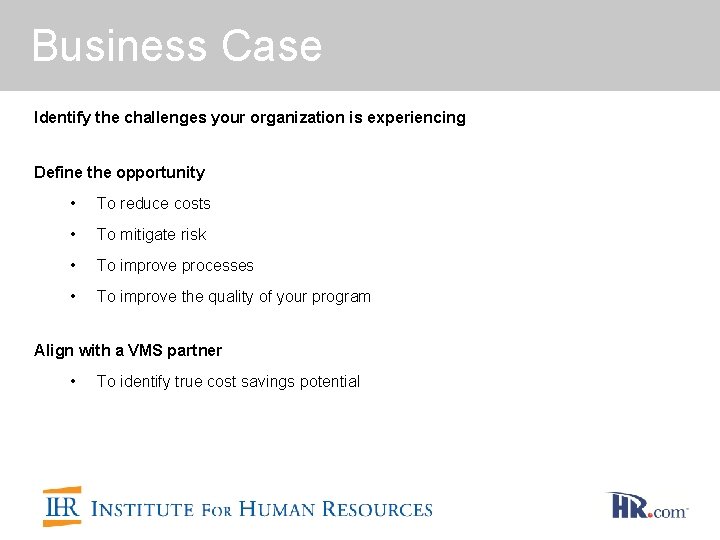
Business Case Identify the challenges your organization is experiencing Define the opportunity • To reduce costs • To mitigate risk • To improve processes • To improve the quality of your program Align with a VMS partner • To identify true cost savings potential
Key Considerations
Key Considerations • Financial stability of provider • Trusted partner commitment • Flexible technology • Expansion into other labor categories & SOW • Globalization • Visibility and analytics • Ease of use to minimize change management • Technology compliant
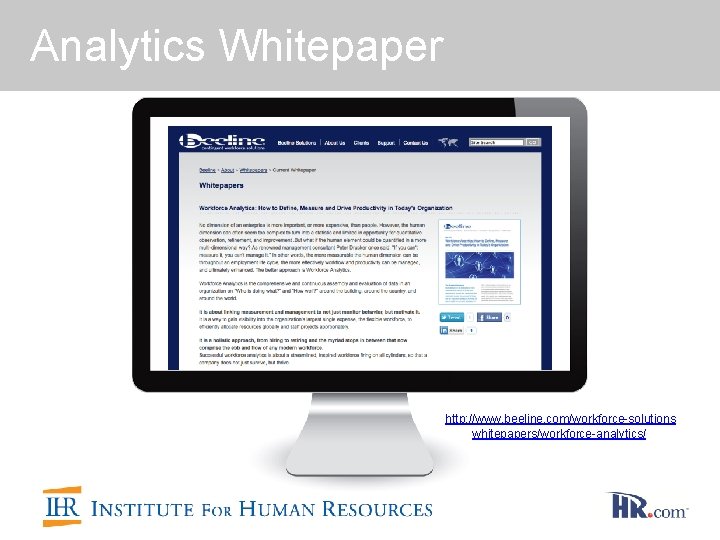
Analytics Whitepaper http: //www. beeline. com/workforce-solutions whitepapers/workforce-analytics/
Summary ü Current Trends ü Common Terms ü Definition of VMS ü Improvement Models ü Who Uses a VMS & Why? ü Building a Business Case ü Key Considerations
About Beeline • Founded in 2000 & an independent subsidiary of Adecco Group S. A. since January 2010 • Headquartered in Jacksonville, FL with key hub locations in Chicago, London, Zurich and Manila • 90+ clients and approaching $6 B in spend under management • Support of all services types – Staff Aug, SOW, Offshore, Recurring Services & Access Workers • Industry leading Usability, Reporting and Business Intelligence • Proven integration with ERP and other third party platforms • A 2010 & 2011 Staffing Industry Analysts “Top Overall Performer”