
VMONOS Get out a Pizarrita y un marcador





- Slides: 51
VÁMONOS Get out a “Pizarrita” y un “marcador. Wait for me to spell some words in Spanish 1. 2. 3. 4. 5. Describe how you would greet (say hello to) each of the following people. What would you say? What would your body language be? A. Your best friend B. Your mother/grandmother C. A celebrity D. Your brother or sister E. A stranger 3. Do you greet different people in different ways? Why or why not?
El OBJECTIVO I can greet people, ask how they are, and give a farewell in a polite way. I can respond to a greeting and say how I am. I can identify subject pronouns.
MOMENTO CULTURAL
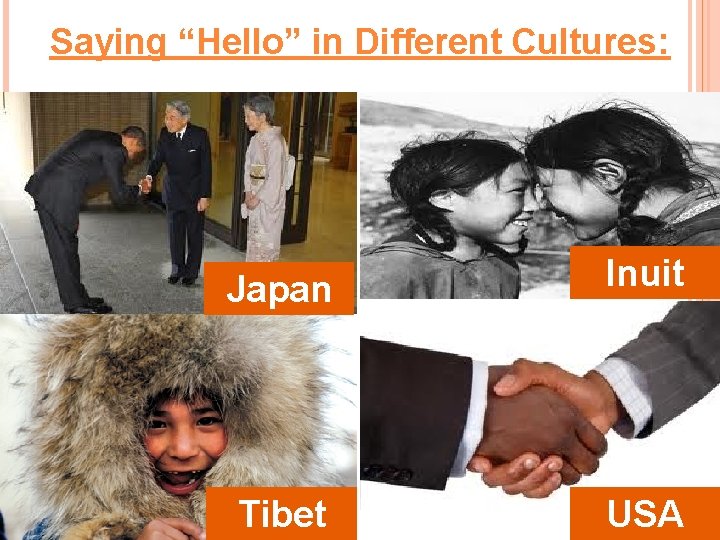
Saying “Hello” in Different Cultures: The ways that we greet and interact with different people depends on our relationships to them, but also on our culture. The ways that we interact with each other in the US might seem strange—or even inappropriate—to people in other parts of the world. When we meet people, they not only listen to what we say, but they also “read” what we do (our body language).
Saying “Hello” in Different Cultures: Japan Inuit Tibet USA
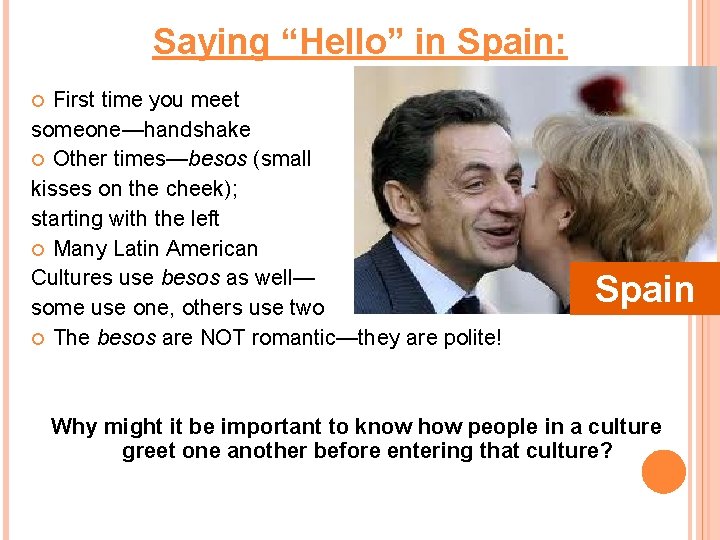
Saying “Hello” in Spain: First time you meet someone—handshake Other times—besos (small kisses on the cheek); starting with the left Many Latin American Cultures use besos as well— some use one, others use two The besos are NOT romantic—they are polite! Spain Why might it be important to know how people in a culture greet one another before entering that culture?
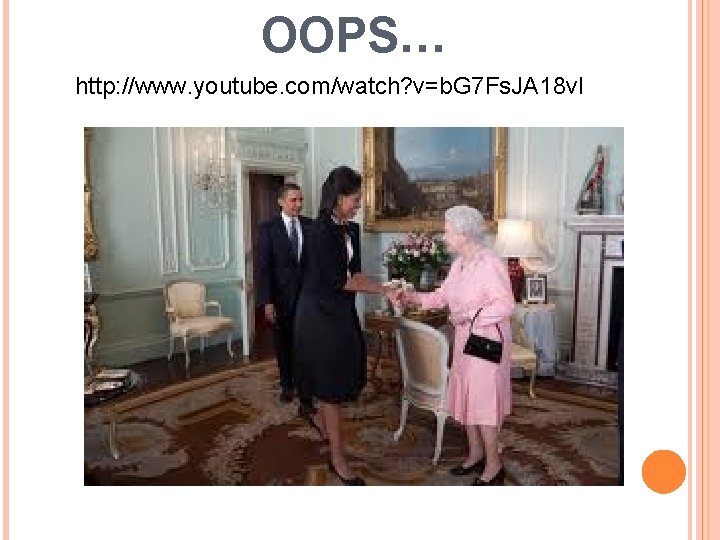
OOPS… http: //www. youtube. com/watch? v=b. G 7 Fs. JA 18 v. I
TAREA Each person needs a “homework log” This unit will last 7 days Make sure you notice the day of your first test- it is on the board! Study for at least 15 minutes and record it on your homework log �What could you do to study?
TAREA: Last Class-Review the alphabet Today. Review Greetings Vocab At least 15 minutes
UNIT # 1: GREETINGS &FAREWELLS
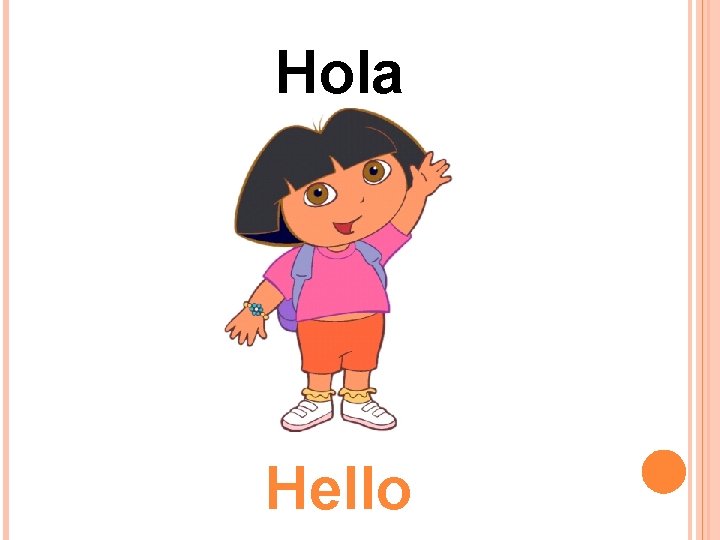
Hola Hello
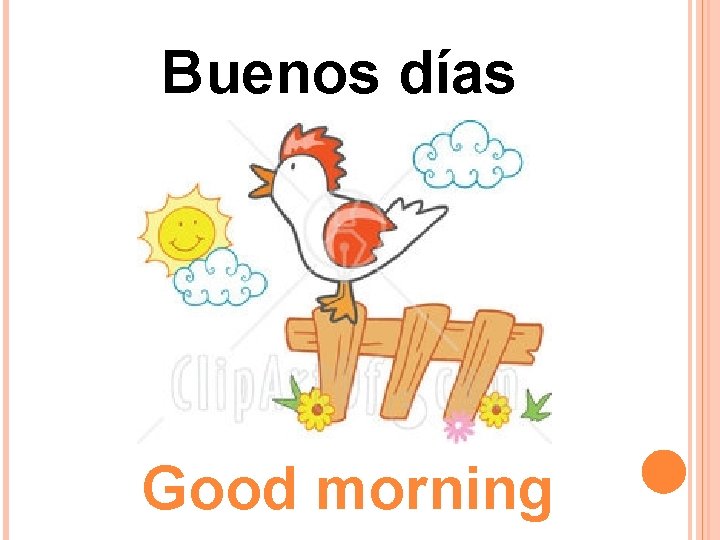
Buenos días Good morning
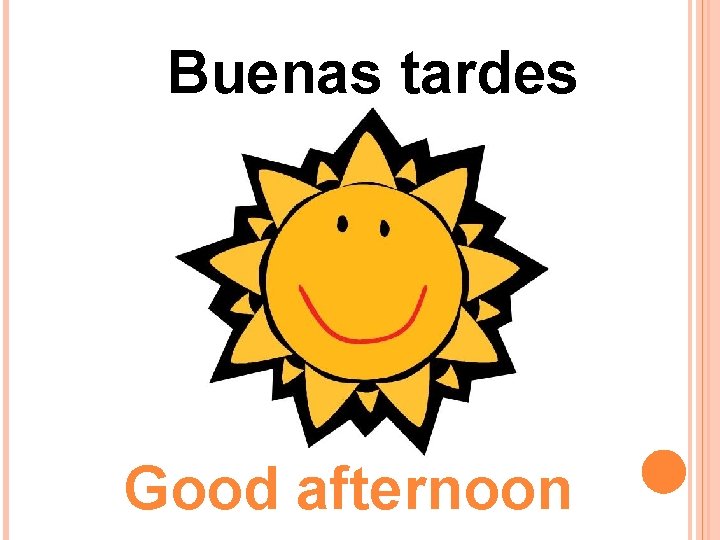
Buenas tardes Good afternoon
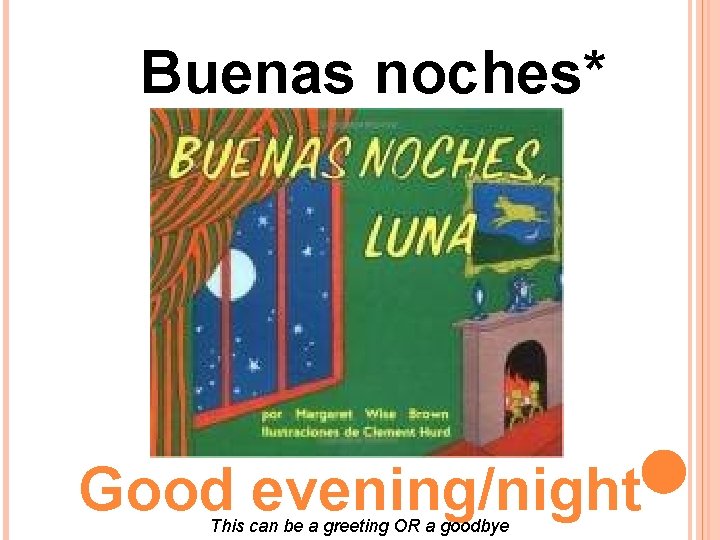
Buenas noches* Good evening/night This can be a greeting OR a goodbye
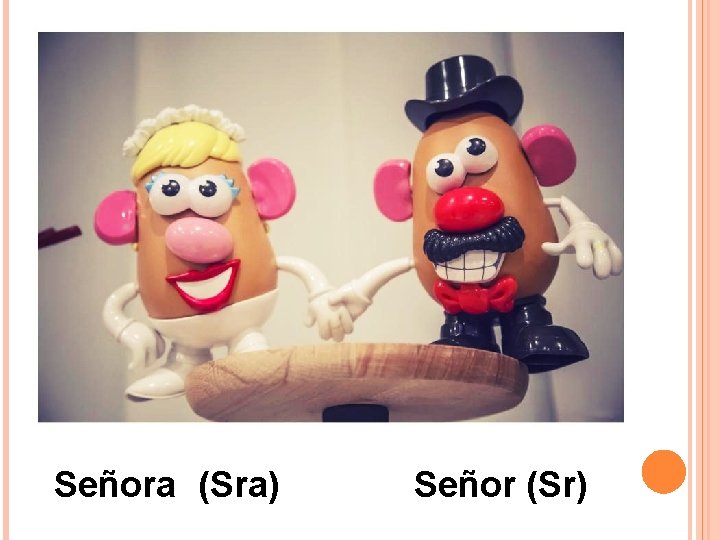
Señora (Sra) Señor (Sr)
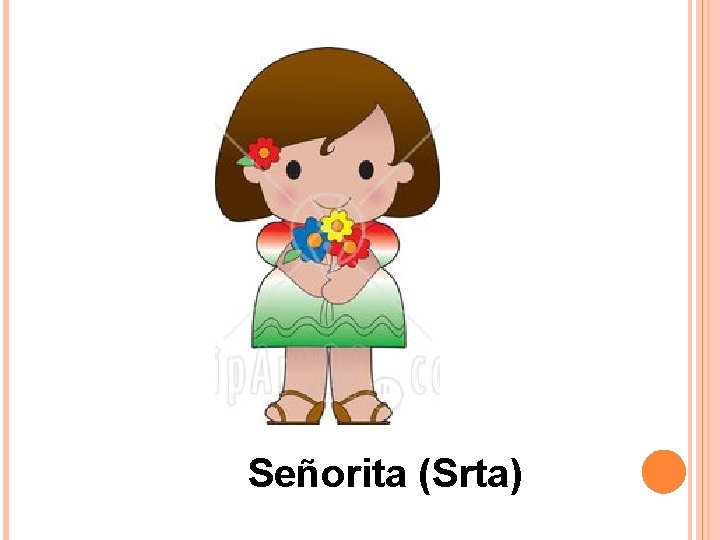
Señorita (Srta)
¿Cómo estás tú?
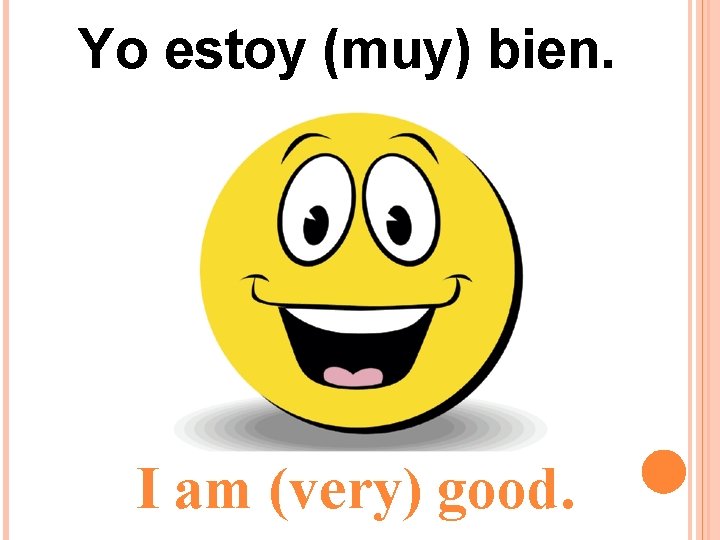
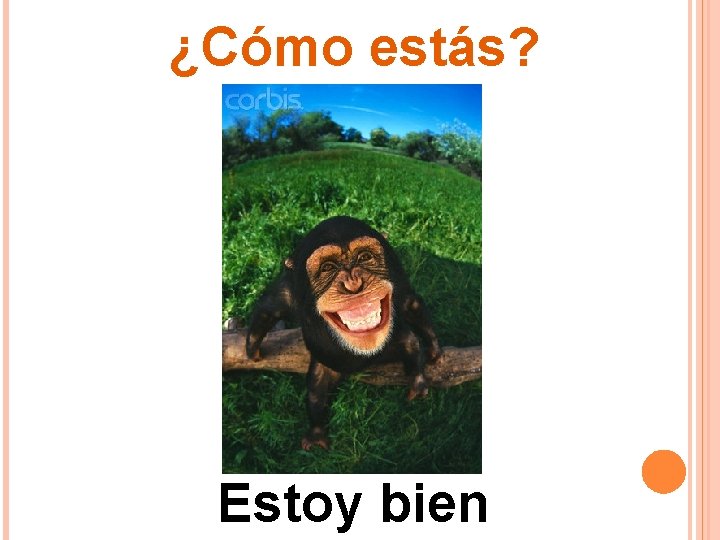
Yo estoy (muy) bien. I am (very) good.
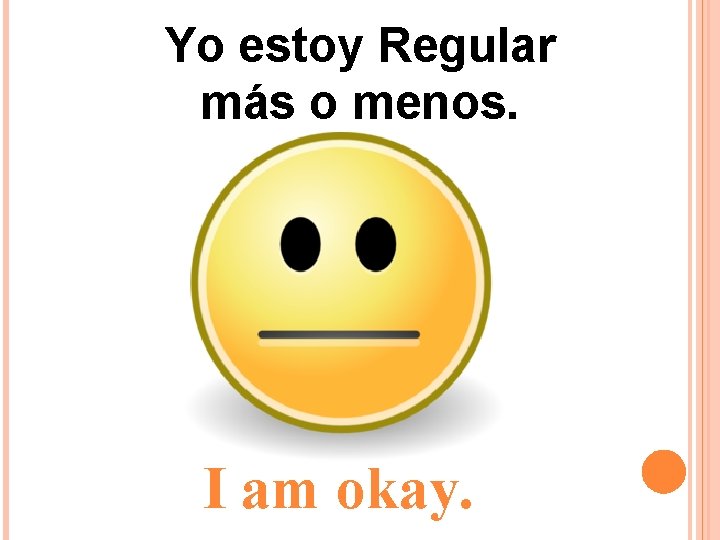
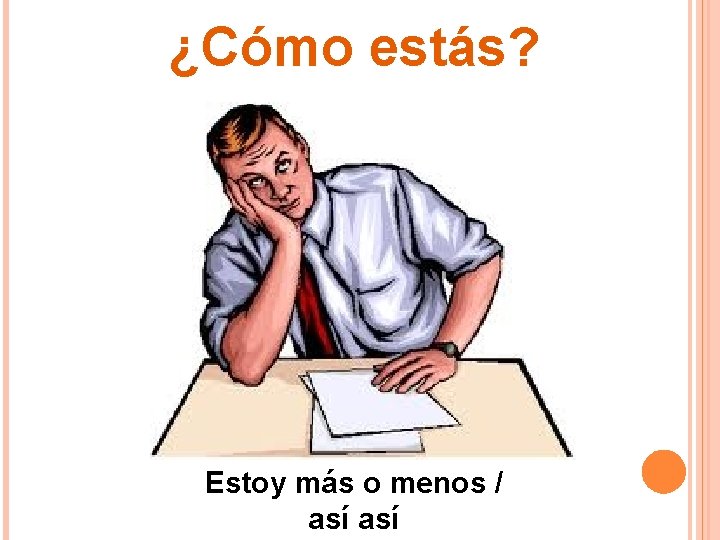
Yo estoy Regular más o menos. I am okay.
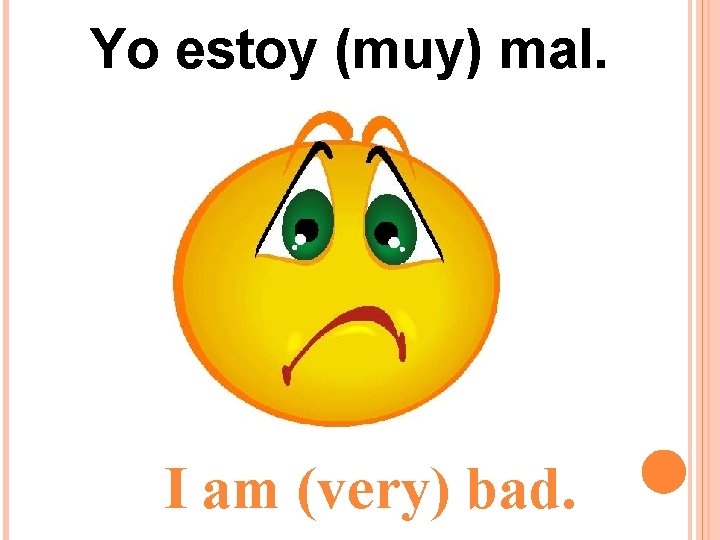
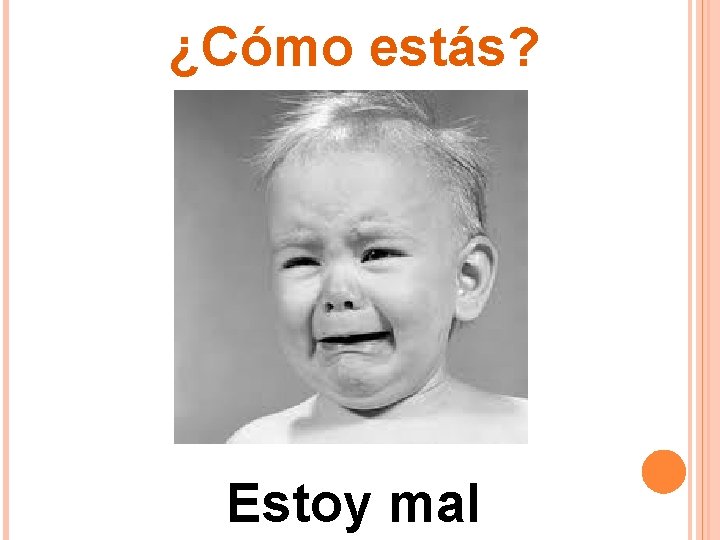
Yo estoy (muy) mal. I am (very) bad.
We don’t want to be rude… ¿Y tú? - And you?
Yo estoy bien!!!
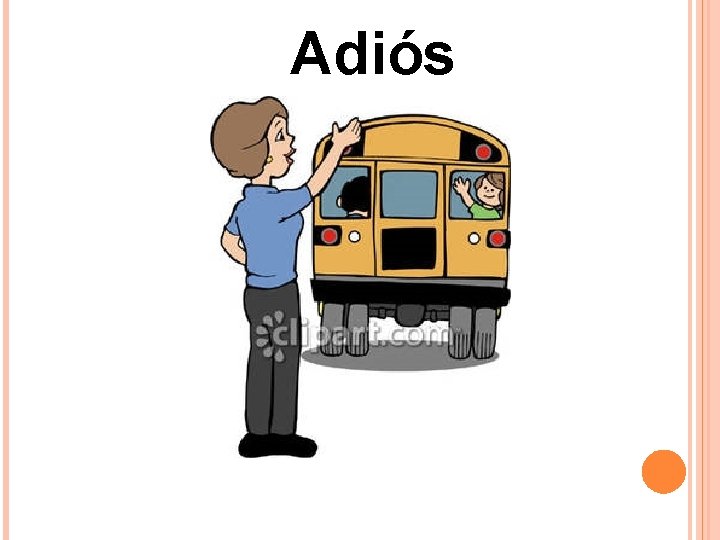
Adiós
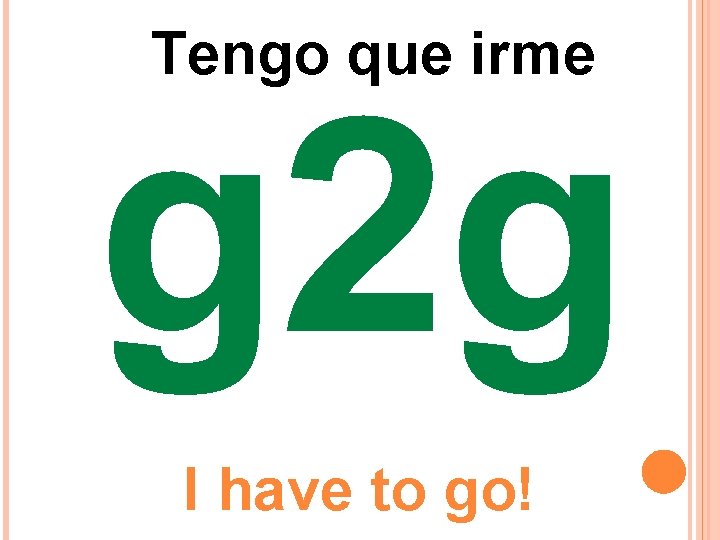
Tengo que irme g 2 g I have to go!
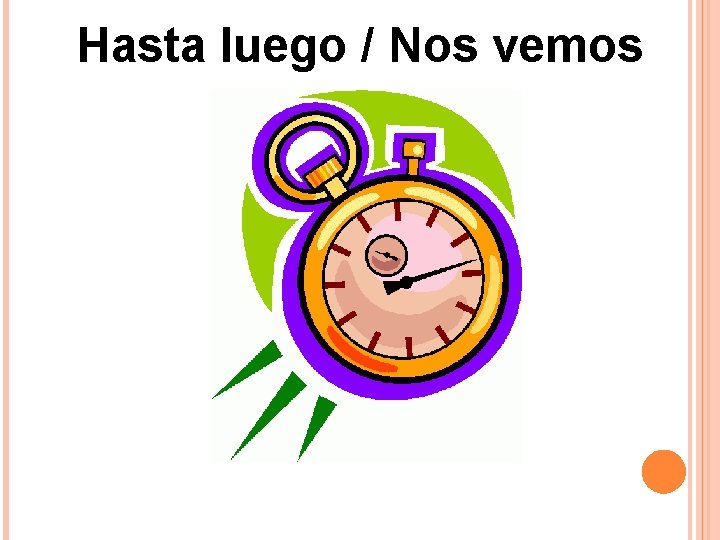
Hasta luego / Nos vemos
Hasta mañana
Hasta mañana See you tomorrow
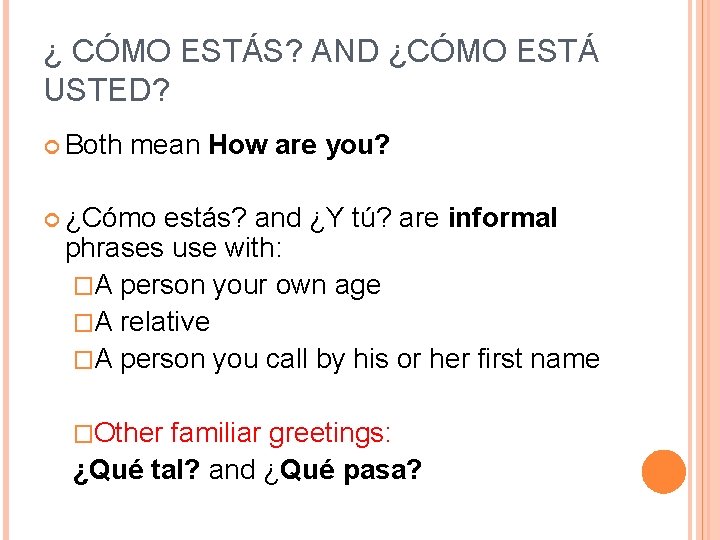
¿ CÓMO ESTÁS? AND ¿CÓMO ESTÁ USTED? Both mean How are you? ¿Cómo estás? and ¿Y tú? are informal phrases use with: �A person your own age �A relative �A person you call by his or her first name �Other familiar greetings: ¿Qué tal? and ¿Qué pasa?
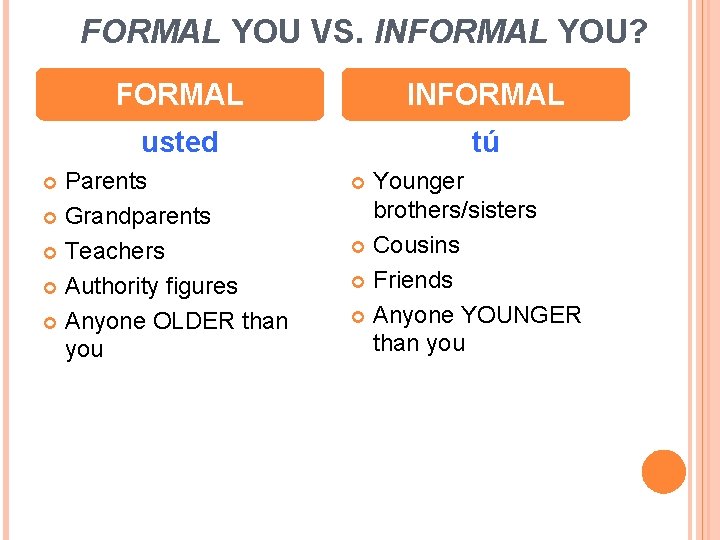
FORMAL YOU VS. INFORMAL YOU? FORMAL INFORMAL usted tú Parents Grandparents Teachers Authority figures Anyone OLDER than you Younger brothers/sisters Cousins Friends Anyone YOUNGER than you
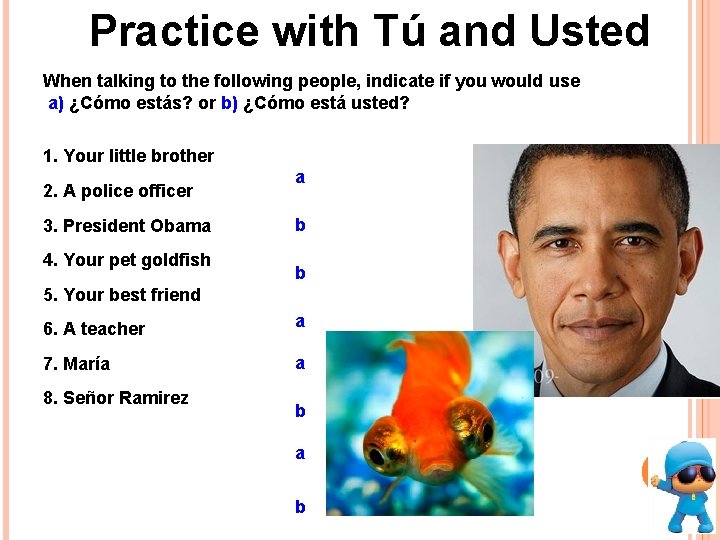
Practice with Tú and Usted When talking to the following people, indicate if you would use a) ¿Cómo estás? or b) ¿Cómo está usted? 1. Your little brother 2. A police officer 3. President Obama 4. Your pet goldfish a b b 5. Your best friend 6. A teacher a 7. María a 8. Señor Ramirez b a b
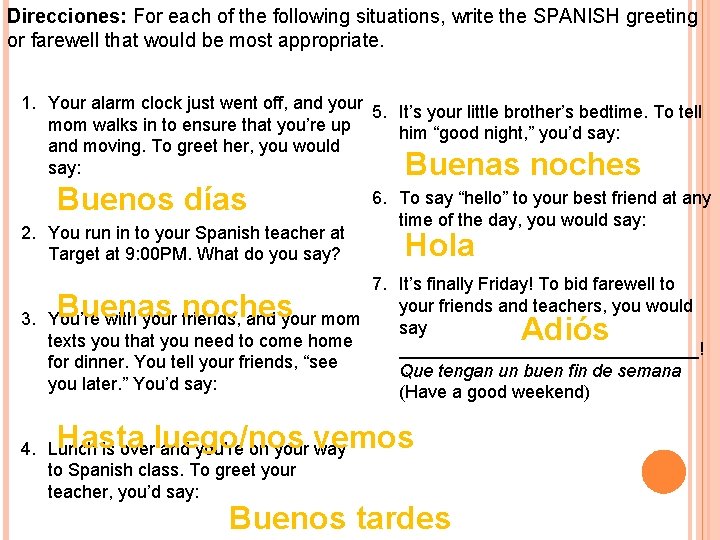
Direcciones: For each of the following situations, write the SPANISH greeting or farewell that would be most appropriate. 1. Your alarm clock just went off, and your 5. It’s your little brother’s bedtime. To tell mom walks in to ensure that you’re up him “good night, ” you’d say: and moving. To greet her, you would say: Buenos días 2. You run in to your Spanish teacher at Target at 9: 00 PM. What do you say? Buenas noches 6. To say “hello” to your best friend at any time of the day, you would say: Hola 7. It’s finally Friday! To bid farewell to your friends and teachers, you would 3. You’re with your friends, and your mom say texts you that you need to come home _______________! for dinner. You tell your friends, “see Que tengan un buen fin de semana you later. ” You’d say: (Have a good weekend) Buenas noches Hasta luego/nos vemos 4. Lunch is over and you’re on your way to Spanish class. To greet your teacher, you’d say: Buenos tardes Adiós
LET’S SEE THE VIDEO
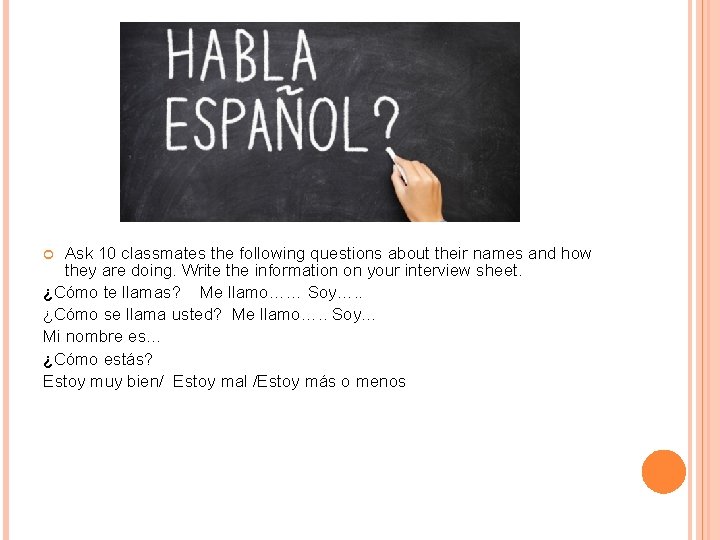
Ask 10 classmates the following questions about their names and how they are doing. Write the information on your interview sheet. ¿Cómo te llamas? Me llamo…… Soy…. . ¿Cómo se llama usted? Me llamo…. . Soy… Mi nombre es… ¿Cómo estás? Estoy muy bien/ Estoy mal /Estoy más o menos
ORIGIN & NAME:
¿Cómo te llamas? What is your name?
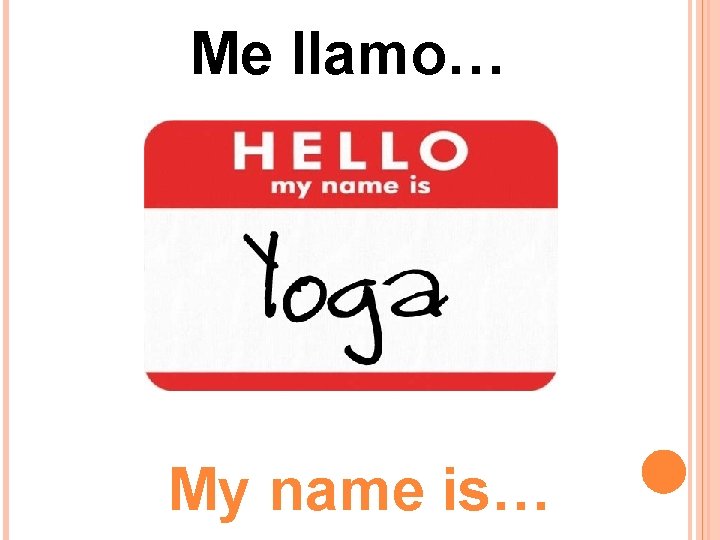
Me llamo… My name is…
¿De dónde eres (tú)? Where are you from?
Yo soy de… I am from…
¿Qué diría la Persona?
¿Cómo estás? Estoy mal
¿Cómo estás? Estoy bien
¿Cómo estás? Estoy más o menos / así
EXTRAS!
Mucho gusto Nice to meet you
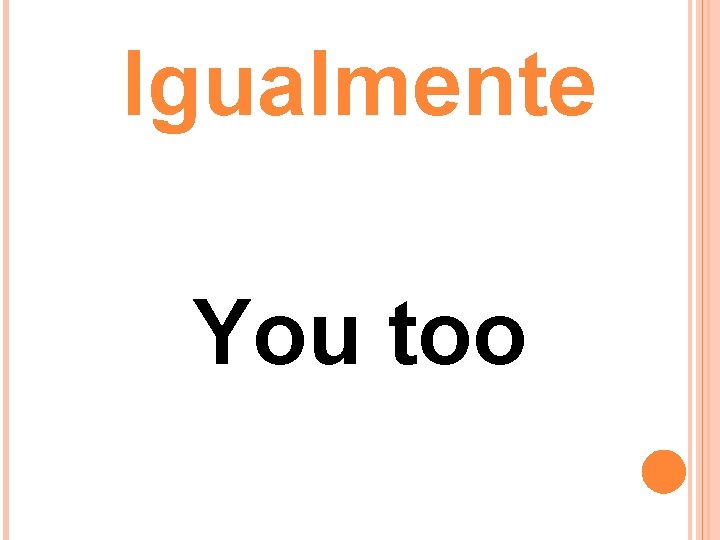
Igualmente You too
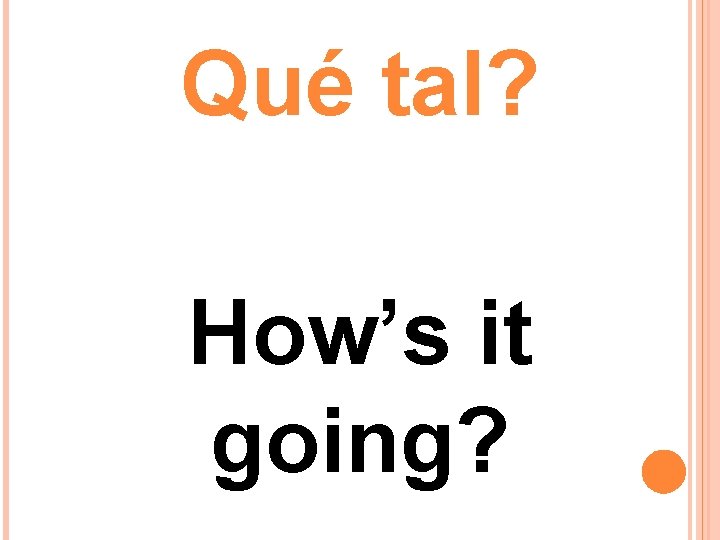
Qué tal? How’s it going?
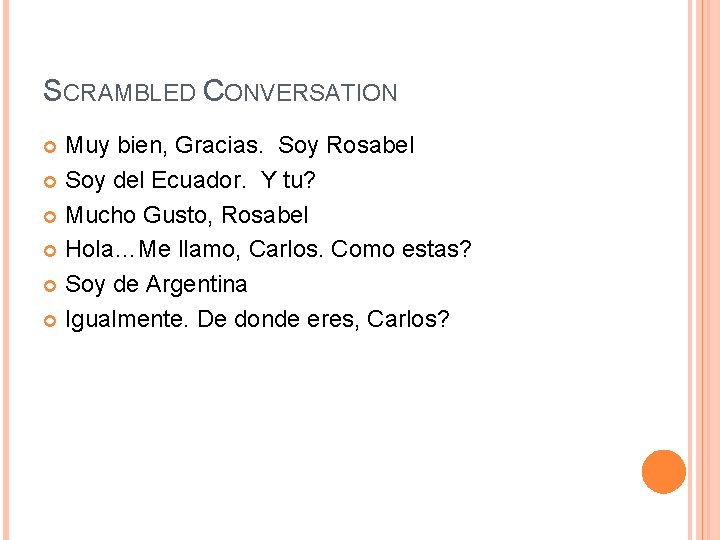
GP: WORK WITH A CLASSMATE TO PUT THIS SCRAMBLED CONVERSATION IN ORDER
SCRAMBLED CONVERSATION Muy bien, Gracias. Soy Rosabel Soy del Ecuador. Y tu? Mucho Gusto, Rosabel Hola…Me llamo, Carlos. Como estas? Soy de Argentina Igualmente. De donde eres, Carlos?
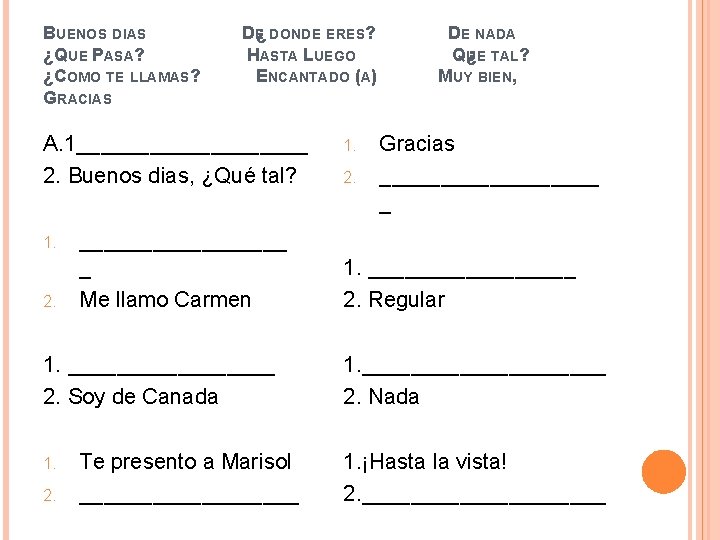
IP: COMPLETE THE FOLLOWING EXCHANGES.
BUENOS DIAS ¿QUE PASA? ¿COMO TE LLAMAS? GRACIAS DE¿ DONDE ERES? HASTA LUEGO ENCANTADO (A) A. 1__________ 2. Buenos dias, ¿Qué tal? 1. 2. _________ _ Me llamo Carmen 1. _________ 2. Soy de Canada 1. 2. Te presento a Marisol _________ 1. 2. DE NADA Q¿ UE TAL? MUY BIEN, Gracias _________ _ 1. _________ 2. Regular 1. __________ 2. Nada 1. ¡Hasta la vista! 2. __________
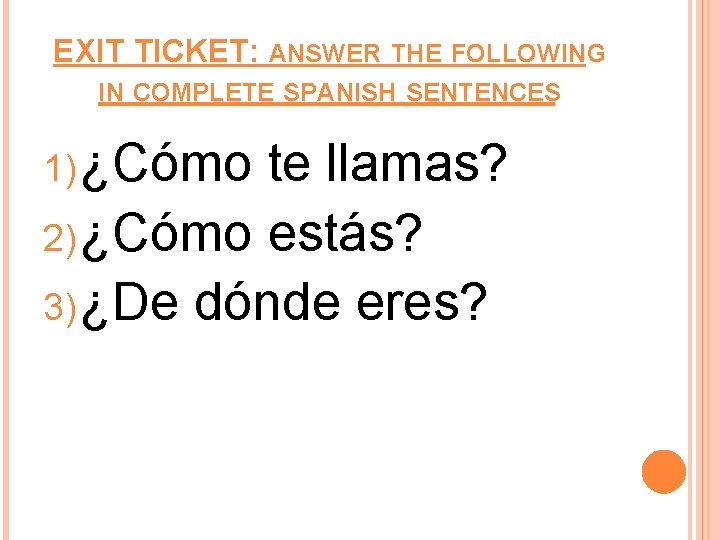
EXIT TICKET: ANSWER THE FOLLOWING IN COMPLETE SPANISH SENTENCES 1) ¿Cómo te llamas? 2) ¿Cómo estás? 3) ¿De dónde eres?