
VLBI in Africa Michael Bietenholz Hartebeesthoek Radio Observatory
VLBI in Africa Michael Bietenholz Hartebeesthoek Radio Observatory
Current Status of VLBI in Africa: Hart. RAO Picture: Thomas Abbott
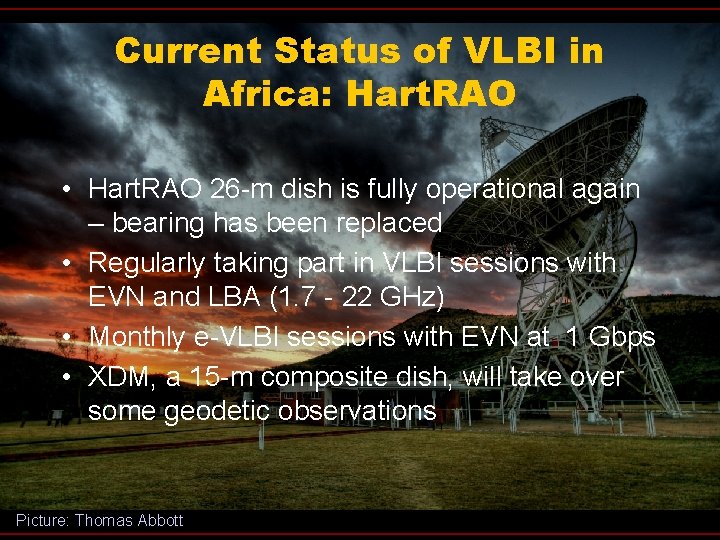
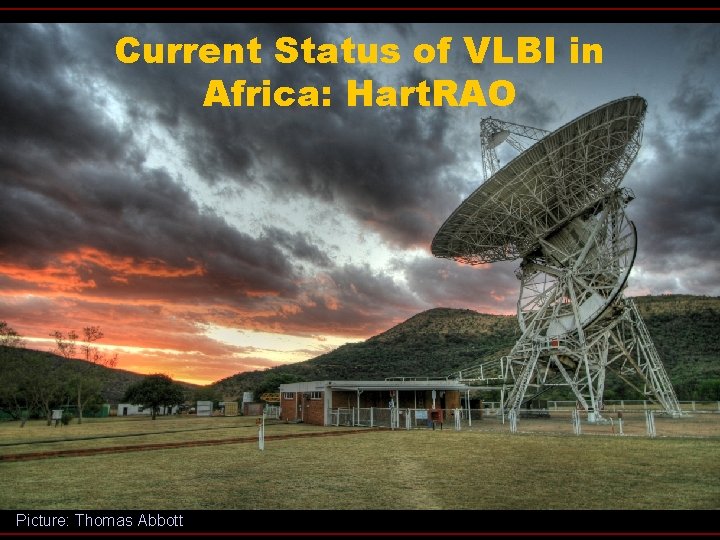
Current Status of VLBI in Africa: Hart. RAO • Hart. RAO 26 -m dish is fully operational again – bearing has been replaced • Regularly taking part in VLBI sessions with EVN and LBA (1. 7 - 22 GHz) • Monthly e-VLBI sessions with EVN at 1 Gbps • XDM, a 15 -m composite dish, will take over some geodetic observations Picture: Thomas Abbott
Current Status of VLBI in Africa: Meer. KAT
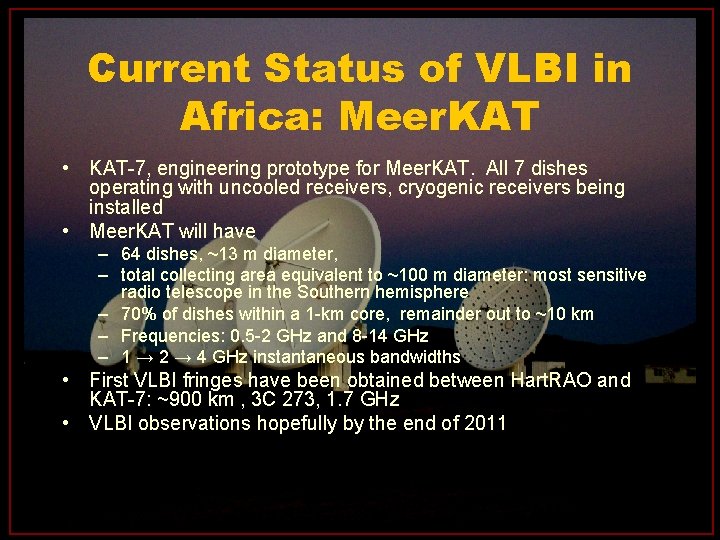
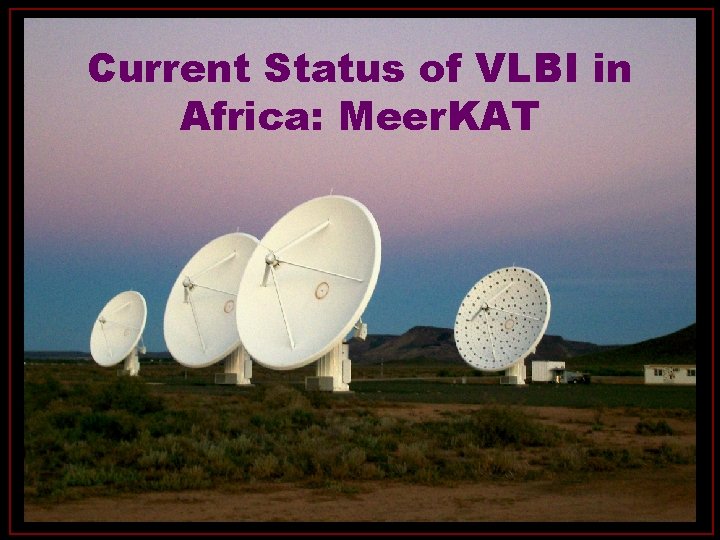
Current Status of VLBI in Africa: Meer. KAT • KAT-7, engineering prototype for Meer. KAT. All 7 dishes operating with uncooled receivers, cryogenic receivers being installed • Meer. KAT will have – 64 dishes, ~13 m diameter, – total collecting area equivalent to ~100 m diameter: most sensitive radio telescope in the Southern hemisphere – 70% of dishes within a 1 -km core, remainder out to ~10 km – Frequencies: 0. 5 -2 GHz and 8 -14 GHz – 1 → 2 → 4 GHz instantaneous bandwidths • First VLBI fringes have been obtained between Hart. RAO and KAT-7: ~900 km , 3 C 273, 1. 7 GHz • VLBI observations hopefully by the end of 2011
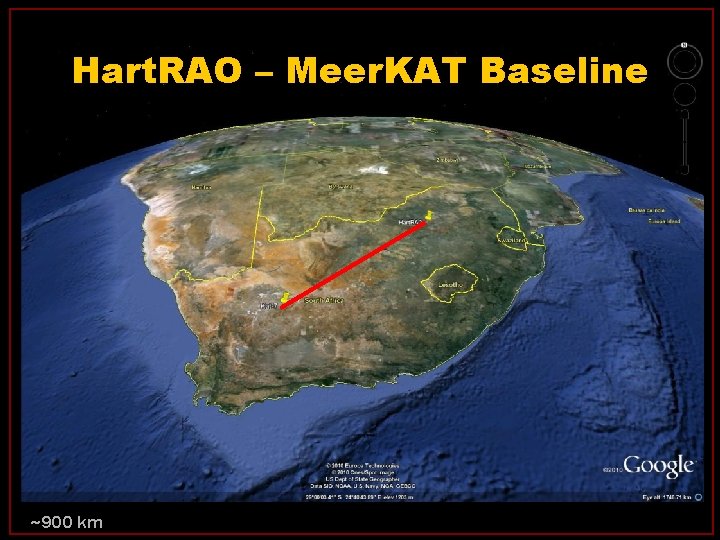
Hart. RAO – Meer. KAT Baseline ~900 km
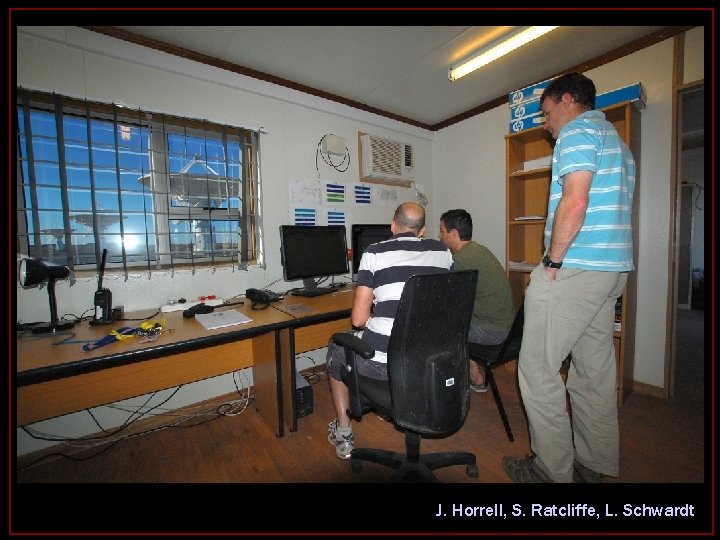
J. Horrell, S. Ratcliffe, L. Schwardt
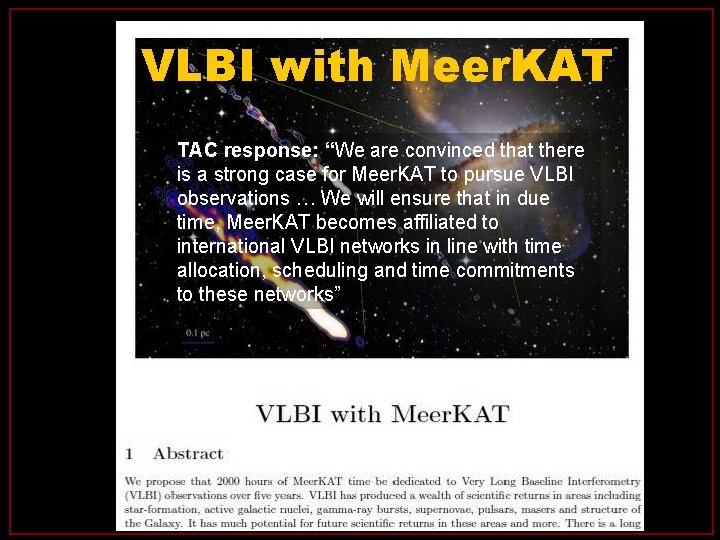
VLBI with Meer. KAT TAC response: “We are convinced that there is a strong case for Meer. KAT to pursue VLBI observations … We will ensure that in due time, Meer. KAT becomes affiliated to international VLBI networks in line with time allocation, scheduling and time commitments to these networks”
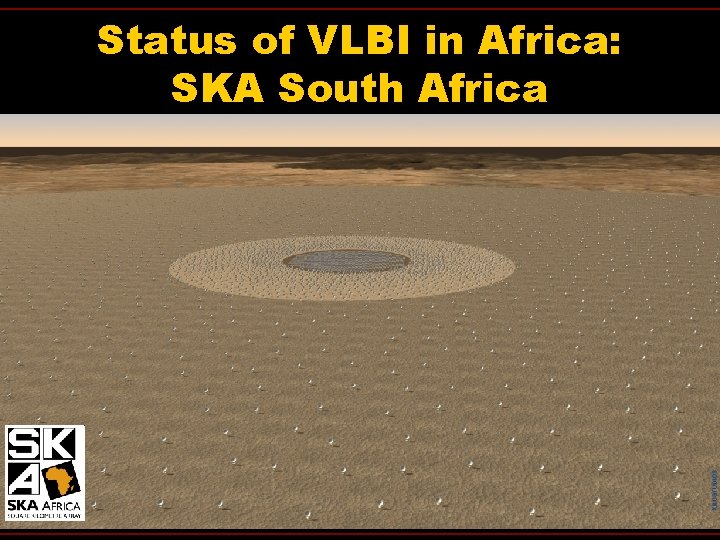
Status of VLBI in Africa: SKA South Africa
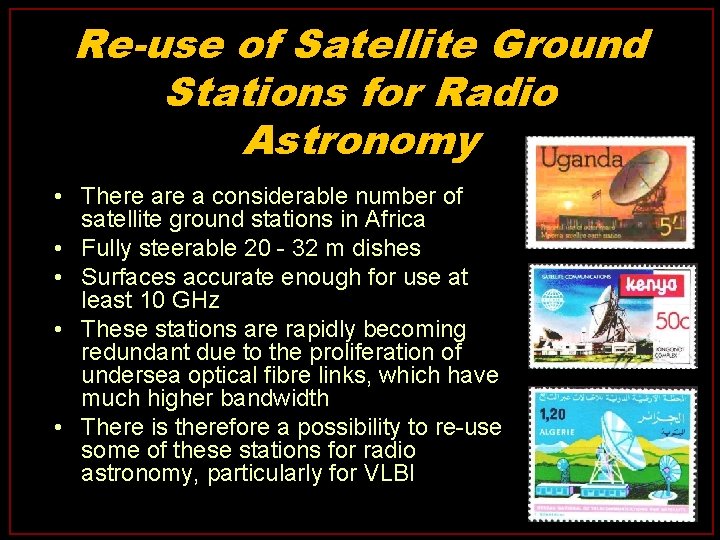
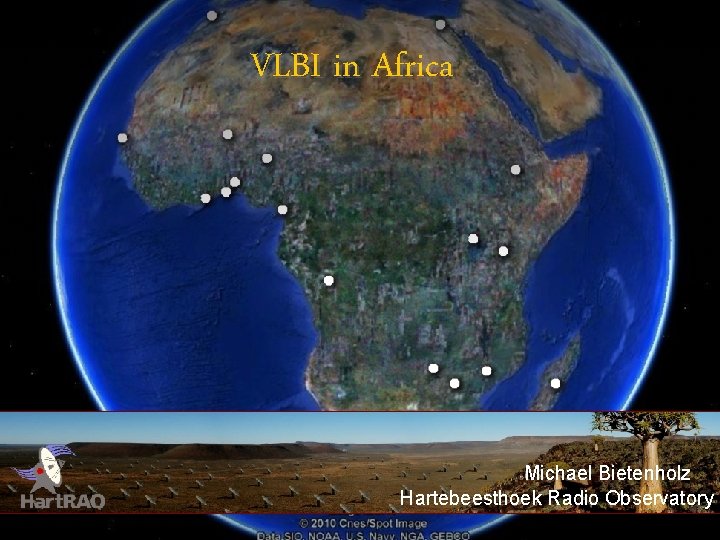
Re-use of Satellite Ground Stations for Radio Astronomy • There a considerable number of satellite ground stations in Africa • Fully steerable 20 - 32 m dishes • Surfaces accurate enough for use at least 10 GHz • These stations are rapidly becoming redundant due to the proliferation of undersea optical fibre links, which have much higher bandwidth • There is therefore a possibility to re-use some of these stations for radio astronomy, particularly for VLBI
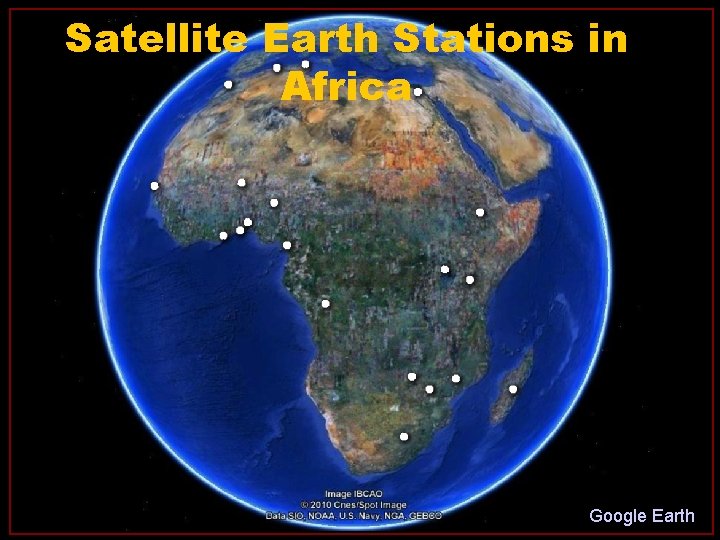
Satellite Earth Stations in Africa Google Earth
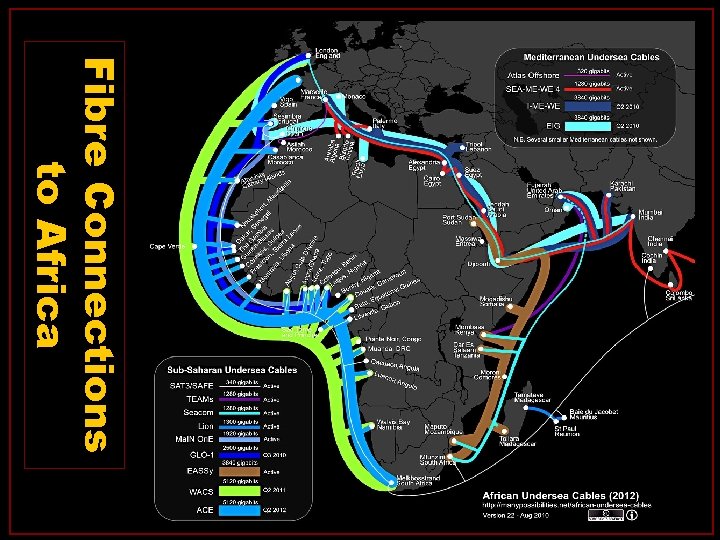
Fibre Connections to Africa
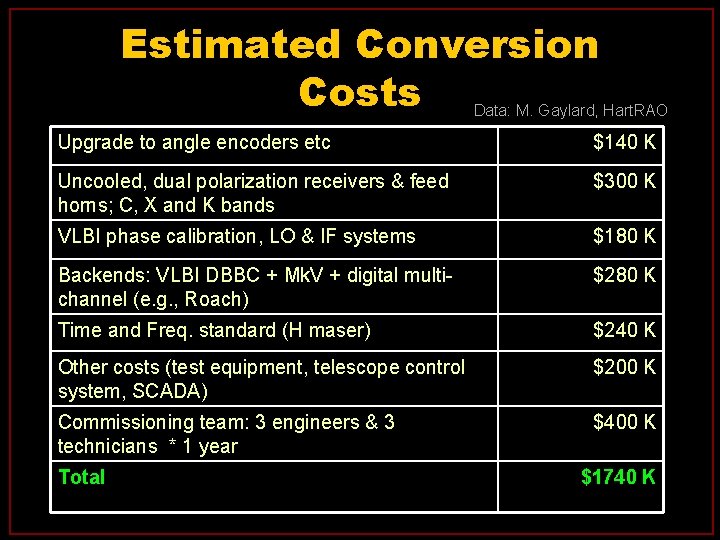
Estimated Conversion Costs Data: M. Gaylard, Hart. RAO Upgrade to angle encoders etc $140 K Uncooled, dual polarization receivers & feed horns; C, X and K bands $300 K VLBI phase calibration, LO & IF systems $180 K Backends: VLBI DBBC + Mk. V + digital multichannel (e. g. , Roach) $280 K Time and Freq. standard (H maser) $240 K Other costs (test equipment, telescope control system, SCADA) $200 K Commissioning team: 3 engineers & 3 technicians * 1 year $400 K Total $1740 K
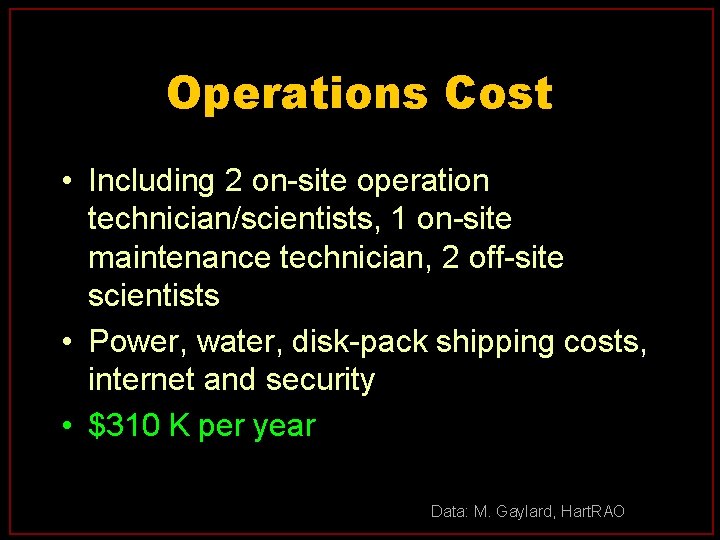
Operations Cost • Including 2 on-site operation technician/scientists, 1 on-site maintenance technician, 2 off-site scientists • Power, water, disk-pack shipping costs, internet and security • $310 K per year Data: M. Gaylard, Hart. RAO
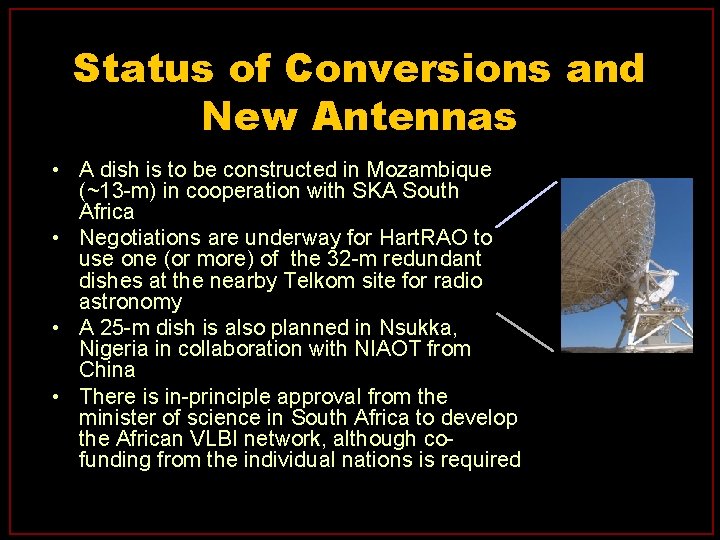
Status of Conversions and New Antennas • A dish is to be constructed in Mozambique (~13 -m) in cooperation with SKA South Africa • Negotiations are underway for Hart. RAO to use one (or more) of the 32 -m redundant dishes at the nearby Telkom site for radio astronomy • A 25 -m dish is also planned in Nsukka, Nigeria in collaboration with NIAOT from China • There is in-principle approval from the minister of science in South Africa to develop the African VLBI network, although cofunding from the individual nations is required
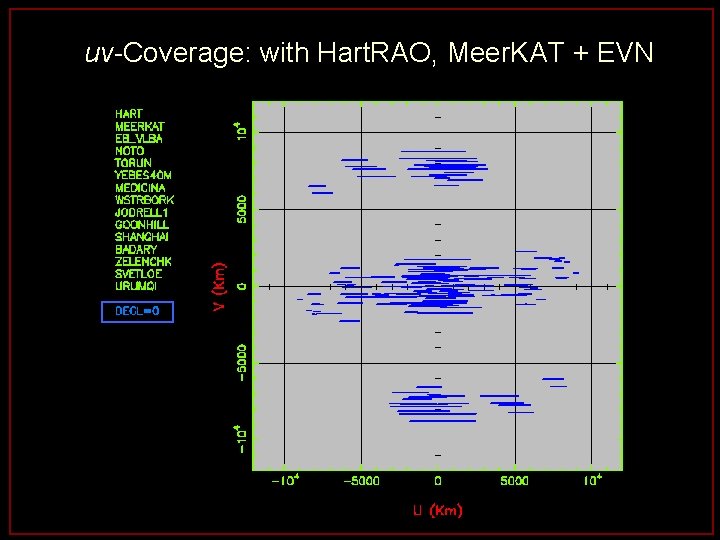
uv-Coverage: with Hart. RAO, Meer. KAT + EVN
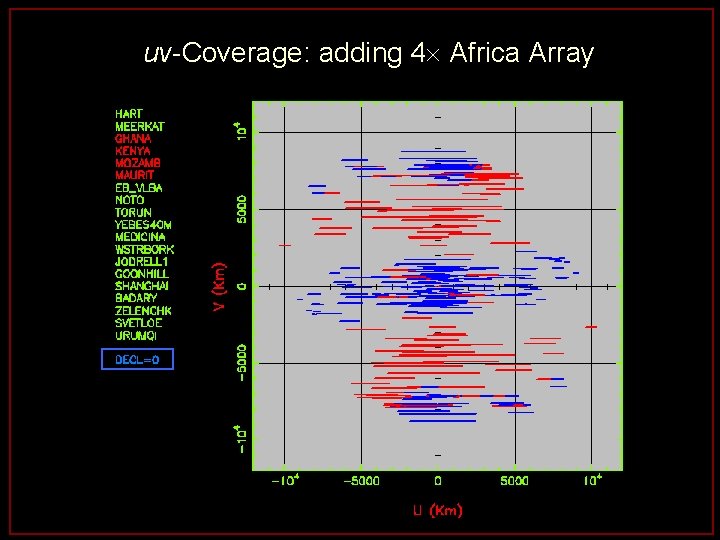
uv-Coverage: adding 4 Africa Array
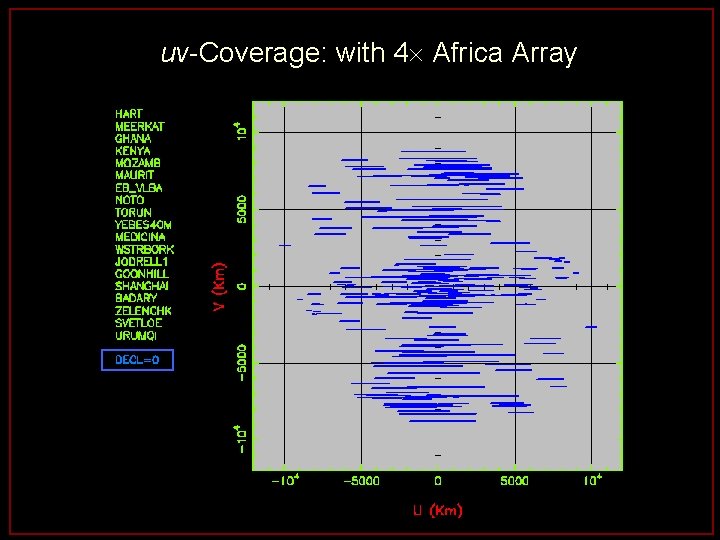
uv-Coverage: with 4 Africa Array
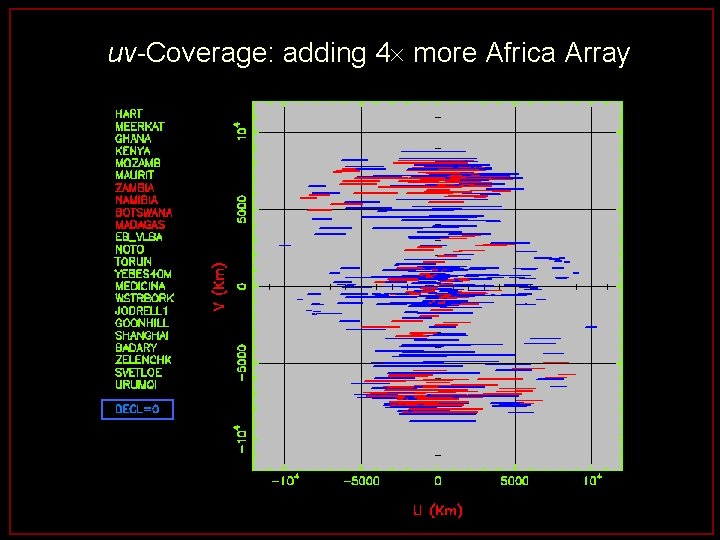
uv-Coverage: adding 4 more Africa Array
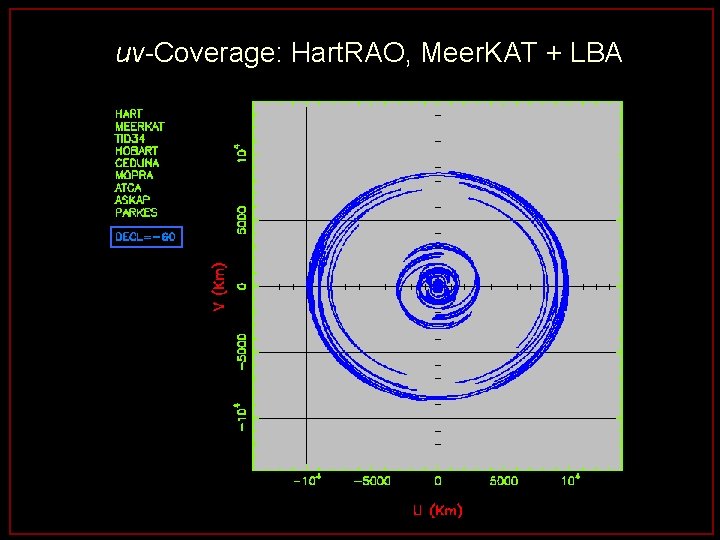
uv-Coverage: Hart. RAO, Meer. KAT + LBA
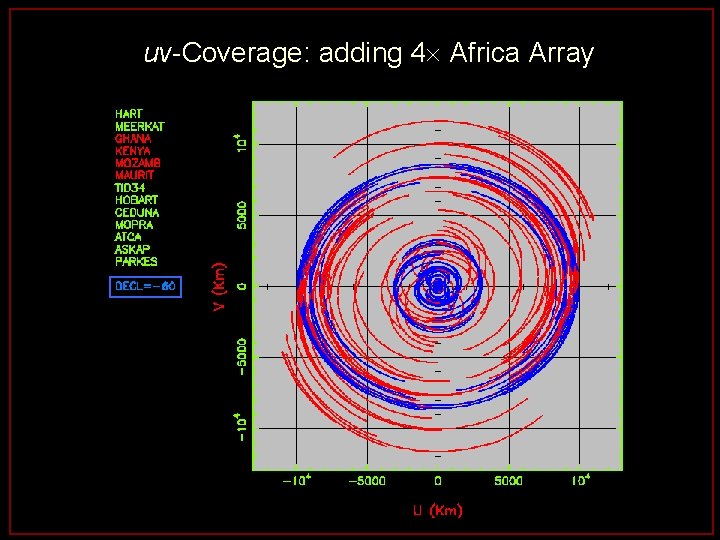
uv-Coverage: adding 4 Africa Array
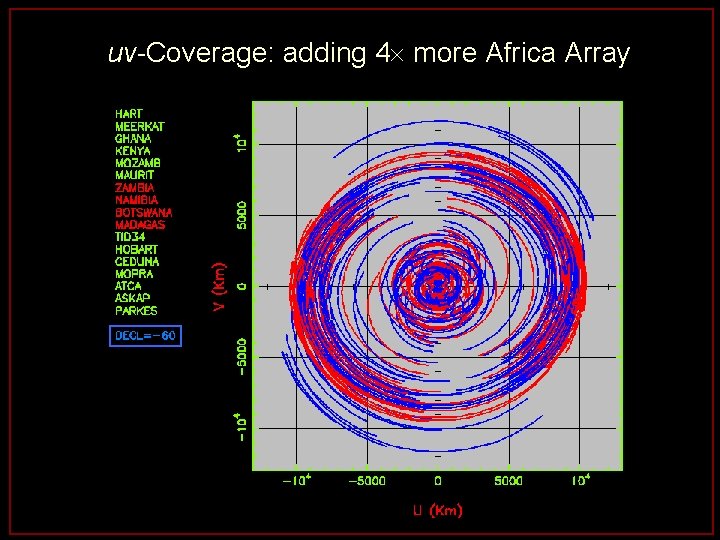
uv-Coverage: adding 4 more Africa Array
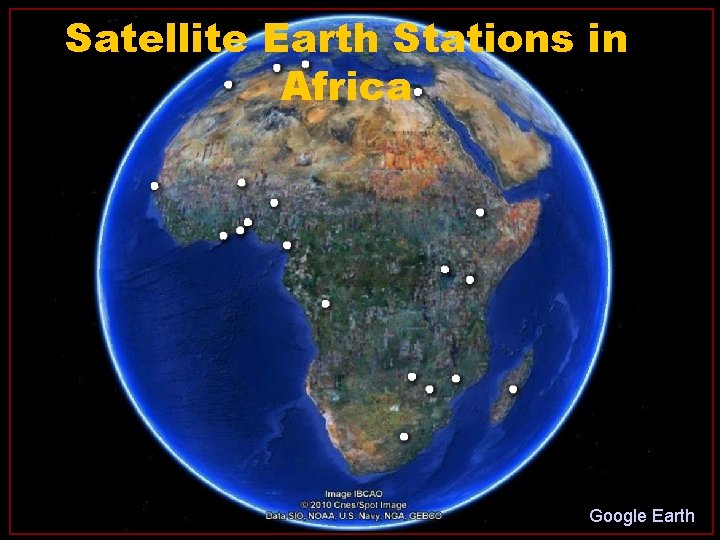
Satellite Earth Stations in Africa Google Earth
- Slides: 23