
VITAMINS Wendy Matte Stephanee Potts Jennifer Sulak Allie

- Slides: 94
VITAMINS Wendy Matte Stephanee Potts Jennifer Sulak Allie Walker Presentation for HORT 201 Spring 2001
Quiz – Do You Need a Multivitamin/Minera l Supplement? http: //www. eatright. org/nfs 81. html
What are vitamins ? n n Nutrients that our body does not make on its own. Thus we must obtain them from the foods we eat, or via vitamin supplements. They are essential for providing good health and are necessary for many life functions.
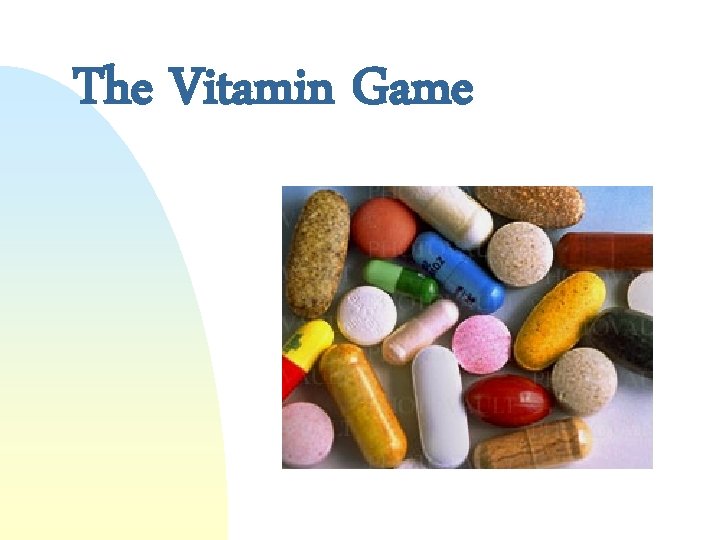
Supplements, what are they? n Defn: synthetic or natural substances which can be purchased as pills, tablets, capsules, wafers, powders, or liquids.
Top 10 ? ’s asked about Vitamin Supplements From Health Net link @ www. healthnet. com
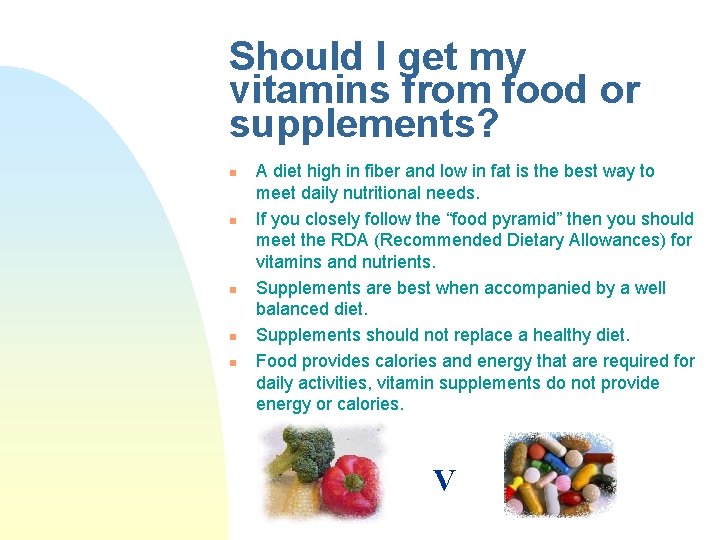
Should I get my vitamins from food or supplements? n n n A diet high in fiber and low in fat is the best way to meet daily nutritional needs. If you closely follow the “food pyramid” then you should meet the RDA (Recommended Dietary Allowances) for vitamins and nutrients. Supplements are best when accompanied by a well balanced diet. Supplements should not replace a healthy diet. Food provides calories and energy that are required for daily activities, vitamin supplements do not provide energy or calories. V
Do I need a multivitamin supplement? n n n It does not hurt to get a little to take a multivitamin daily to ensure proper nutrition. Most college students are not eating a well balanced diet and could use the added nutrition of a multivitamin. When choosing a supplement, select one that meets 100 -300% of the RDA.
What do Multivitamins contain? n n A multivitamin should contain fatsoluble vitamins A, D, E; watersoluble vitamins B 1, B 2, B 6, B 12, niacin, pantothenic acid, biotin, folic acid , and Vitamin C. They will also usually have minerals such as zinc, magnesium, copper, and calcium in them.
What does RDA mean? n n Recommended Dietary Allowances These are suggested levels of essential nutrients considered adequate to meet nutritional needs of healthy individuals.
What are antioxidants? n n n Defn: Substances that fight off freeradicals in our bodies. Free radicals are compounds within our bodies that may lead to chronic disease and/or are involved in cell tissue damage. Examples of vitamins that contain antioxidants are… C, E, and Beta Carotene.
What is the difference between fat-soluble and water-soluble vitamins? n n Fat-soluble are stored in the liver and fatty tissues. These are not readily excreted from the body. Water-soluble vitamins travel in the blood and are stored in limited amounts. These are readily excreted from the body through urine.
What factors should I consider before taking a vitamin supplement? n n n n Do you eat foods high in vitamins and minerals? Are you dieting? Do you follow the Food Guide Pyramid? Do you smoke and/or drink regularly? Are you pregnant? Are you over 50 years old? Are you taking prescription drugs?
Can I take too many vitamins? n n n For the most part vitamin supplements are safe to take. Follow the recommended dosages on the label of the bottle. Fat-soluble vitamins are more likely to be toxic to your health if taken in excess, because they are stored in the body, where as water-soluble are excreted.
Should I take my vitamins with food? n n It is advised to take your vitamins with a snack or meal to avoid stomach irritation. The presence of carbohydrates and proteins stimulate digestive enzymes that will allow for better absorption of nutrients for the supplements. (Iron should be taken on an empty stomach)
Stress & Nutrition of Your Body n n Stress can cause your body to excrete nutrients rather than using them to perform vital functions. Stress can also cause the production of free radicals which play a role in the development of cancer, heart disease, and aging.
Supplements that aid in suppressing stress n n n Increasing serotonin levels in the brain wards off stress related symptoms like depression, irritability, and frustration. The mineral magnesium can help to regulate serotonin levels. Antioxidant supplements can also break up free radicals that cause harm to your body.
The B Vitamins B-1, B-2, B-3, B-6, B-12
B-1 Thiamin (Vitamin F) n Important in: u Producing energy from carbohydrates u proper nerve function u stabilizing the appetite u promoting growth and good muscle tone u ATP production
Sources of B-1 n n n Pork Fish Liver Legumes Nuts Whole grain or enriched breads and cereals
Recommendations n n n Men 14+ 1. 2 mg/day Women 14 -18 1. 0 mg/day Women 19+ 1. 1 mg/day n n 1 broiled pork chop, 1. 25 cups corn flakes OR n n n 1 baked potato (w/ skin) 0. 5 cup of lentils 1 cup raisin bran
Warnings n B-1 is nontoxic even at high dosages
B-1 Deficiency n n n Loss of appetite Weakness & Feeling tired Insomnia Loss of weight Depression Heart & Gastrointestinal problems
Who’s at Risk? n n n Homeless & Malnourished Alcoholics People with malabsorption conditions
B-2 Riboflavin n Important in: energy production u carbohydrate, fat, and protein metabolism u formation of antibodies and red blood cells u cell respiration u maintenance of good vision, skin, nails, and hair u alleviating eye fatigue u
Sources of B-2 n Large amounts in u dairy u eggs u meats n Small amounts in u leafy green vegetables u enriched grains
Recommendations n n n Men 14 -70 1. 3 mg/day Women 14 -70 1. 0 mg/day 71+ Larger doses n n n n 1 cup raisin bran 1 cup milk 1 egg OR 1 small extra lean hamburger 1 cup plain yogurt 0. 5 cup fresh cooked spinach 1 cup cottage cheese
Warnings n n B-2 is nontoxic at supplemental and dietary levels. Light can destroy riboflavin, so purchase milk in opaque containers.
B-2 Deficiency n n n Itching and burning eyes Cracks and sores in mouth and lips Bloodshot eyes Dermatitis Oily skin Digestive disturbances
Who’s at Risk? n n n People with cataracts People with Sickle Cell Anemia Alcoholics
B-3 Niacinamide & Niacin n Important in: u energy production u maintenance of skin and tongue u improves circulation u maintenance of nervous system u health of the digestive track
B-3 Niacinamide & Niacin n Two Types u Niacinamide F does u Niacin (Nicotinamide) not regulate cholesterol (Nicotinic Acid) F highly toxic in large doses F Inosital Hexaniacinate is a supplement that gives the cholesterol regulation without high toxicity
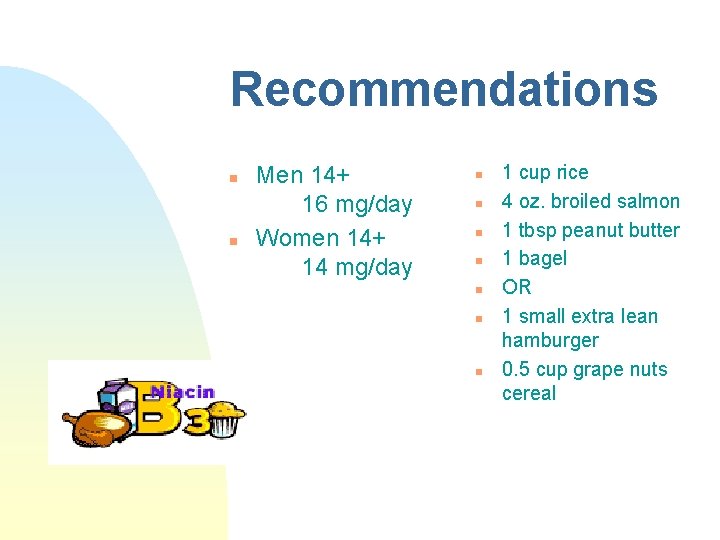
Recommendations n n Men 14+ 16 mg/day Women 14+ 14 mg/day n n n n 1 cup rice 4 oz. broiled salmon 1 tbsp peanut butter 1 bagel OR 1 small extra lean hamburger 0. 5 cup grape nuts cereal
Warnings n n In doses of only 50 -100 mg nicotinic acid can cause dilation of blood vessels and potentially painful tingling (“niacin flush”), diarrhea, nausea, vomiting, and long term liver damage. Nicotinamide is almost always safe to take, although a few cases of liver damage have been reported in doses of over 1000 mg/day.
B-3 Deficiency n Pellegra u disease caused by B-3 deficiency u rare in Western societies n n gastrointestinal disturbance, loss of appetite headache, insomnia, mental depression fatigue, aches, and pains nervousness, irritability
Who’s at Risk? n Most people get plenty of B-3 from their diet because it is added to white flour.
B-6 Pyridoxine n Important in: u Production of red blood cells u conversion of tryptophan to niacin (B-3) u immunity u nervous system functions u reducing muscle spasms, cramps, and numbness u maintaining proper balance of sodium and phosphorous in the body
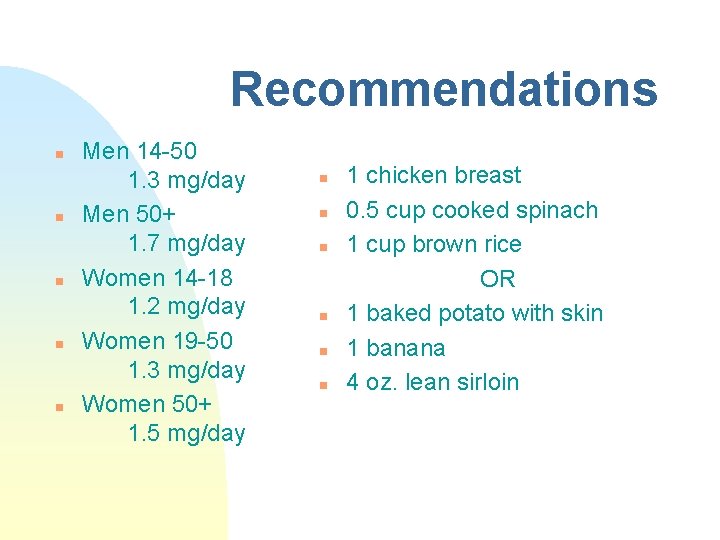
Recommendations n n n Men 14 -50 1. 3 mg/day Men 50+ 1. 7 mg/day Women 14 -18 1. 2 mg/day Women 19 -50 1. 3 mg/day Women 50+ 1. 5 mg/day n n n 1 chicken breast 0. 5 cup cooked spinach 1 cup brown rice OR 1 baked potato with skin 1 banana 4 oz. lean sirloin
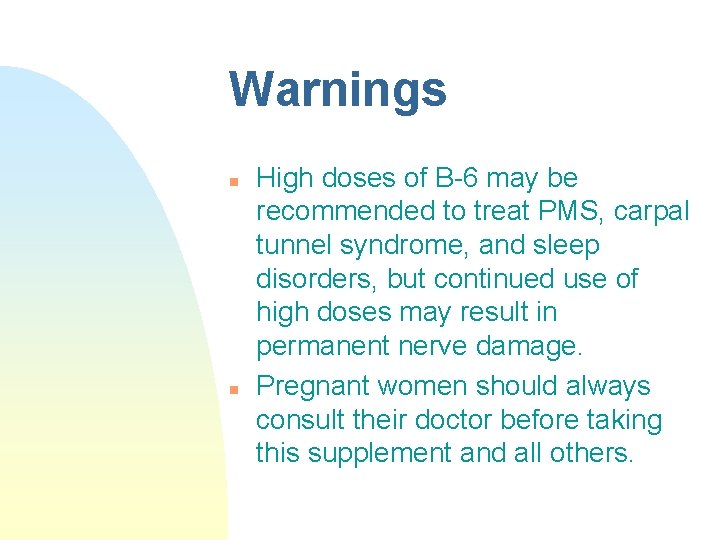
Warnings n n High doses of B-6 may be recommended to treat PMS, carpal tunnel syndrome, and sleep disorders, but continued use of high doses may result in permanent nerve damage. Pregnant women should always consult their doctor before taking this supplement and all others.
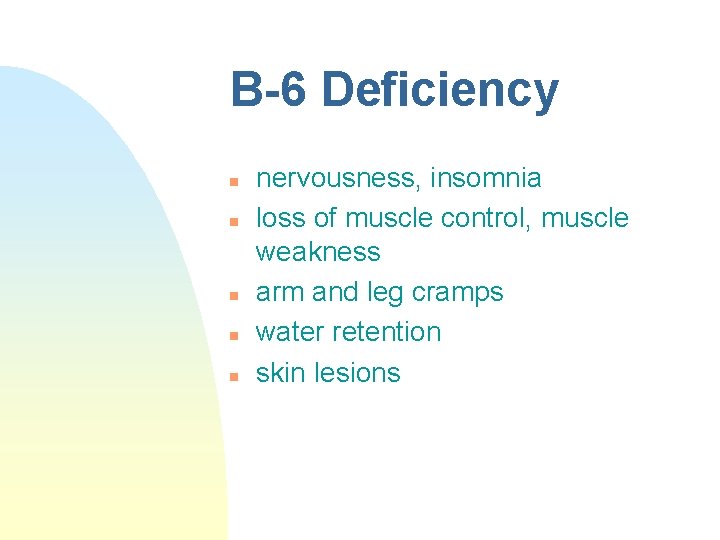
B-6 Deficiency n n nervousness, insomnia loss of muscle control, muscle weakness arm and leg cramps water retention skin lesions
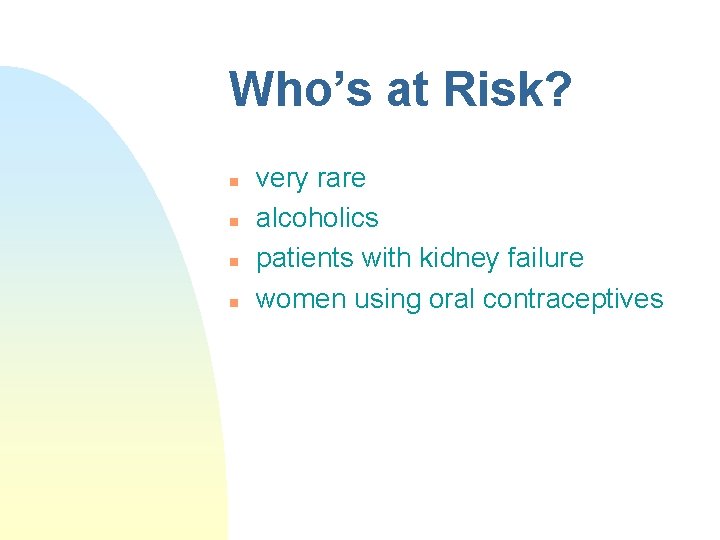
Who’s at Risk? n n very rare alcoholics patients with kidney failure women using oral contraceptives
B-12 Cobalamin n Important in: u proper nerve function u production of red blood cells u metabolizing fats and proteins u prevention of anemia u DNA reproduction u energy production?
Recommendations n Men and Women 14+ 2 -3 mcg/day n n n 1 chicken breast 1 hard boiled egg 1 cup plain low fat yogurt OR 1 cup milk 1 cup raisin bran
Warnings n n Vegetarians need to look fortified sources (soy milk, supplements). Elderly often have trouble absorbing.
B-12 Deficiency n n n anemia nerve damage hypersensitive skin
Who’s at Risk? n pernicious anemia u B-12 injections often taken regularly n n HIV Chronic Fatigue Syndrome
Vitamin A
What is Vitamin A? n n Fat-soluble Retinol u One n of the most active, usable forms Found in animal and plant sources
What does it do? n Vision u Generates pigments for the retina u Maintains surface lining of eyes n n n Bone growth Reproduction Cell division and differentiation Healthy Skin Regulate Immune System
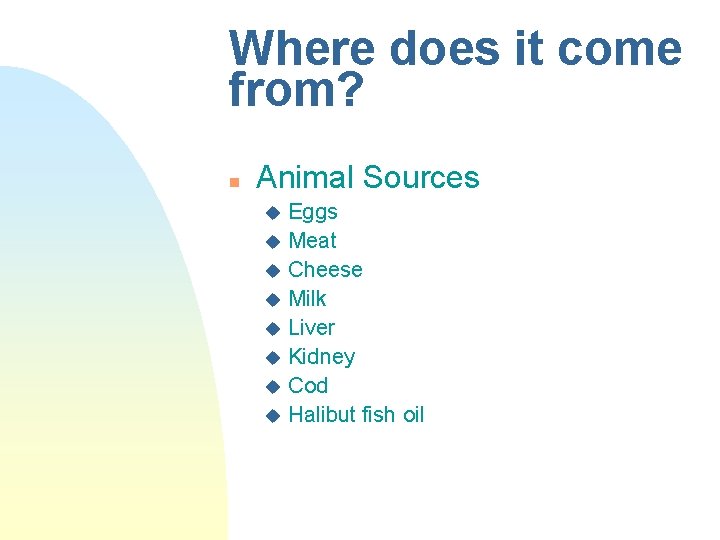
Where does it come from? n Animal Sources Eggs u Meat u Cheese u Milk u Liver u Kidney u Cod u Halibut fish oil u
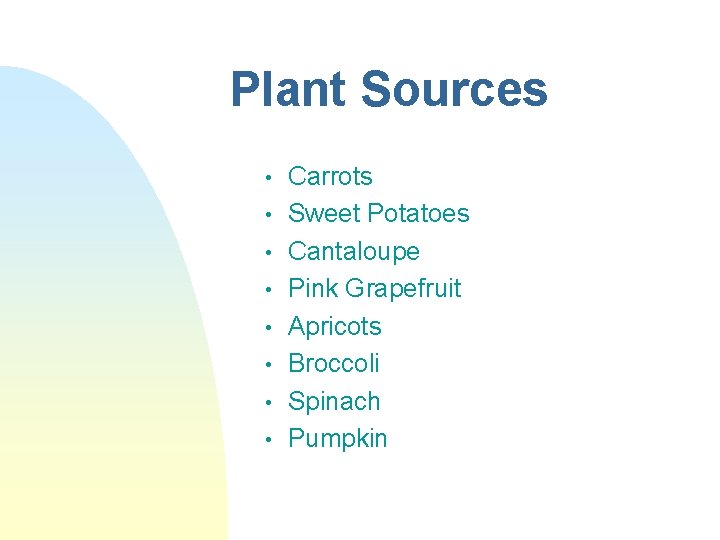
Plant Sources • • Carrots Sweet Potatoes Cantaloupe Pink Grapefruit Apricots Broccoli Spinach Pumpkin
What do these plants have in common? ? n n n Most are orange or yellow in color Beta-Carotene is precursor of Vitamin A Masked in some green plants
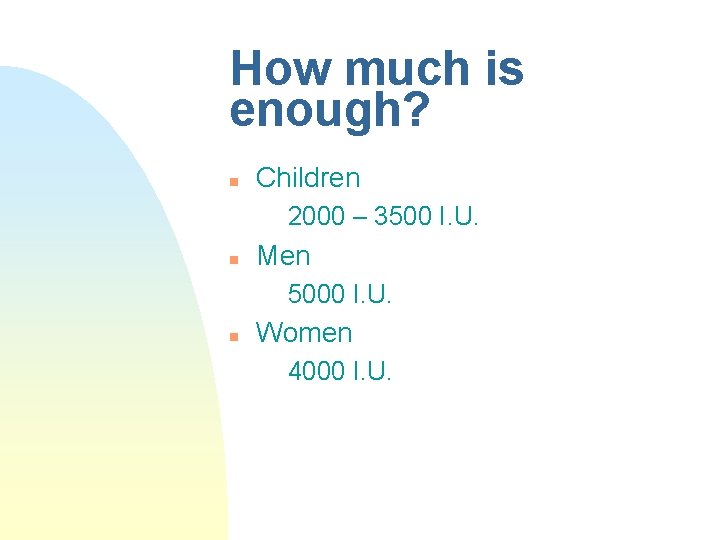
How much is enough? n Children 2000 – 3500 I. U. n Men 5000 I. U. n Women 4000 I. U.
Signs of Deficiency n n n Night blindness Decreased resistance to infections Extremely dry skin, hair or nails
Who Is At Risk For Deficiency? n n Young children Children with inadequate health care Adults in countries with high incidences of vitamin A deficiency or measles Adults or children with diseases of the pancreas, liver, intestines, or inadequate fat digestion/absorption
Too Much Can Be Toxic!! n Hypervitaminosis A leads to toxic symptoms: Dry, itchy skin u Headaches and fatigue u Hair loss u Liver damage u Blurred vision u Loss of appetite u Skin coloration u
Other Side Effects n Severe birth defects Women of child-bearing age should not consume more than 8000 IU per day u Retin-A (acne cream) or Accutane can cause birth defects u Retinol is most dangerous form because the body will not convert as much beta-carotene to vitamin A unless needed but it can still be harmful u n n n Skin can take on a yellow/orange glow Most cases of vitamin A overdose occur from supplements but can occur from diet RDA is considering establishing an Upper Limit
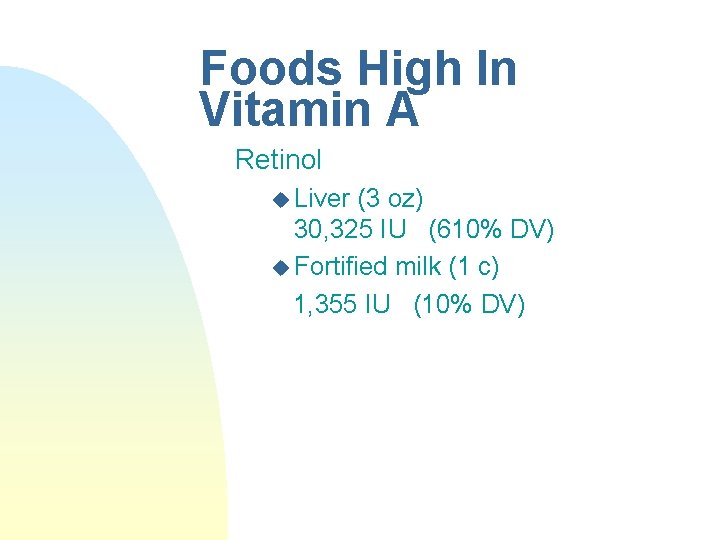
Foods High In Vitamin A Retinol u Liver (3 oz) 30, 325 IU (610% DV) u Fortified milk (1 c) 1, 355 IU (10% DV)
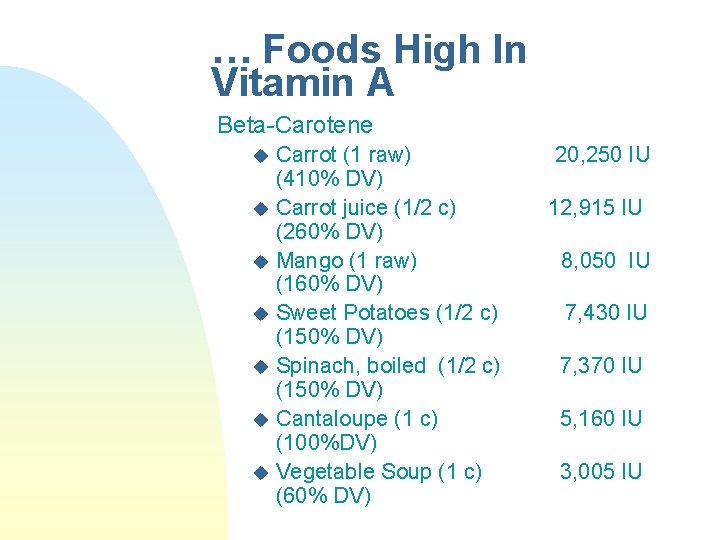
… Foods High In Vitamin A Beta-Carotene Carrot (1 raw) (410% DV) u Carrot juice (1/2 c) (260% DV) u Mango (1 raw) (160% DV) u Sweet Potatoes (1/2 c) (150% DV) u Spinach, boiled (1/2 c) (150% DV) u Cantaloupe (1 c) (100%DV) u Vegetable Soup (1 c) (60% DV) u 20, 250 IU 12, 915 IU 8, 050 IU 7, 430 IU 7, 370 IU 5, 160 IU 3, 005 IU
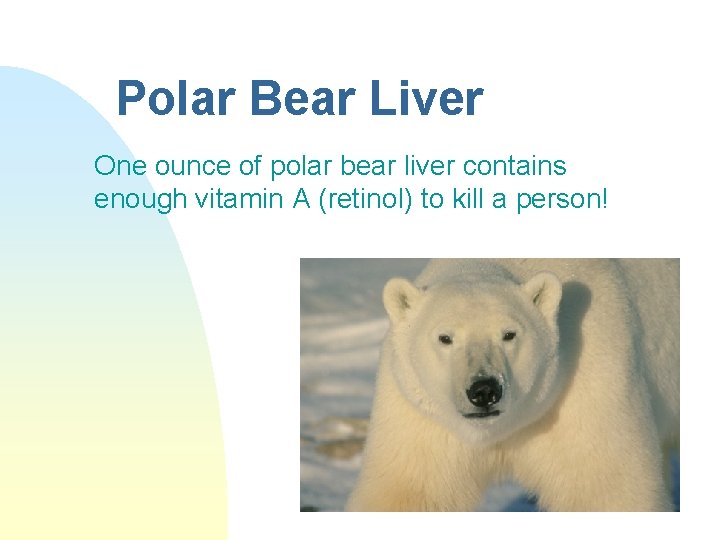
Polar Bear Liver One ounce of polar bear liver contains enough vitamin A (retinol) to kill a person!
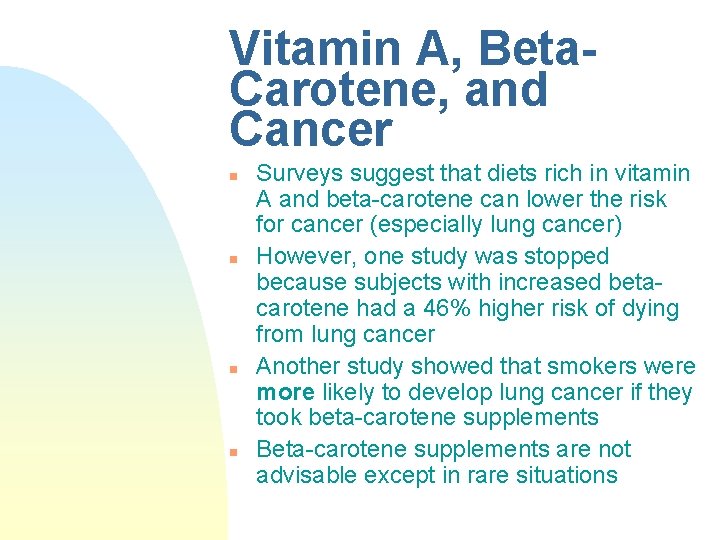
Vitamin A, Beta. Carotene, and Cancer n n Surveys suggest that diets rich in vitamin A and beta-carotene can lower the risk for cancer (especially lung cancer) However, one study was stopped because subjects with increased betacarotene had a 46% higher risk of dying from lung cancer Another study showed that smokers were more likely to develop lung cancer if they took beta-carotene supplements Beta-carotene supplements are not advisable except in rare situations
Vitamin E
Vitamin E What is it? n n Fat soluble Antioxidant u Reduce the energy of the free radical u Stop the free radical from forming in the first place u Interrupt an oxidizing chain reaction to minimize the damage of free radicals
Vitamin E What does it do? n Protects cell membranes and other fat-soluble parts of the body (LDL cholesterol) from oxidation May reduce the risk of heart disease u May also discourage development of some types of cancer u n n n Promotes normal growth and development Promotes normal red blood cell formation Acts as anti-blood clotting agent Plays some role in the body’s ability to process glucose Also been known to aid the process of wound healing
Vitamin E Heart disease: n n Two studies published in the New England Journal of Medicine by Harvard researchers Of 127, 000 health professionals, those who took large doses of Vitamin E had a 40% lower risk of heart disease
Vitamin E What’s the difference? n n n Alpha Tocopherol Tocopheryl (Acetate, Succinate)
Vitamin E What’s the difference? n n “d” = natural “dl” = synthetic
Vitamin E Where does it come from? n n n wheat germ oil vegetable oils nuts and seeds whole grains egg yolk leafy green vegetables
Specific Food Sources n vegetable oils u n nuts and seeds u n Almonds, hazelnuts, sunflower seeds, walnuts, and margarine whole grains u n Corn, cottonseed, and peanut oil whole-wheat flour, wheat germ Vegetables and fruits u Spinach, lettuce, onions, blackberries, apples, and pears
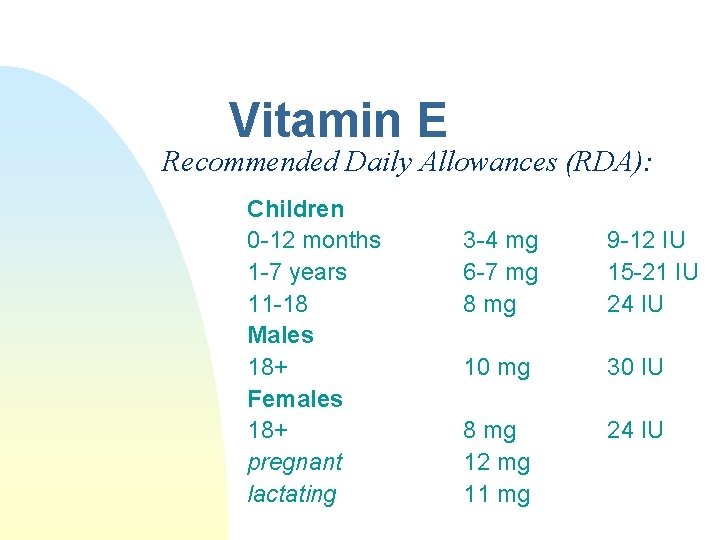
Vitamin E Recommended Daily Allowances (RDA): Children 0 -12 months 1 -7 years 11 -18 Males 18+ Females 18+ pregnant lactating 3 -4 mg 6 -7 mg 8 mg 9 -12 IU 15 -21 IU 24 IU 10 mg 30 IU 8 mg 12 mg 11 mg 24 IU
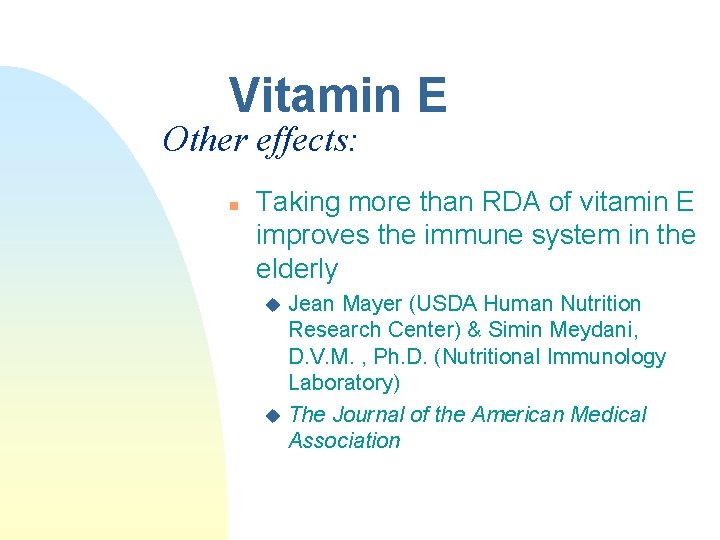
Vitamin E Other effects: n Taking more than RDA of vitamin E improves the immune system in the elderly Jean Mayer (USDA Human Nutrition Research Center) & Simin Meydani, D. V. M. , Ph. D. (Nutritional Immunology Laboratory) u The Journal of the American Medical Association u
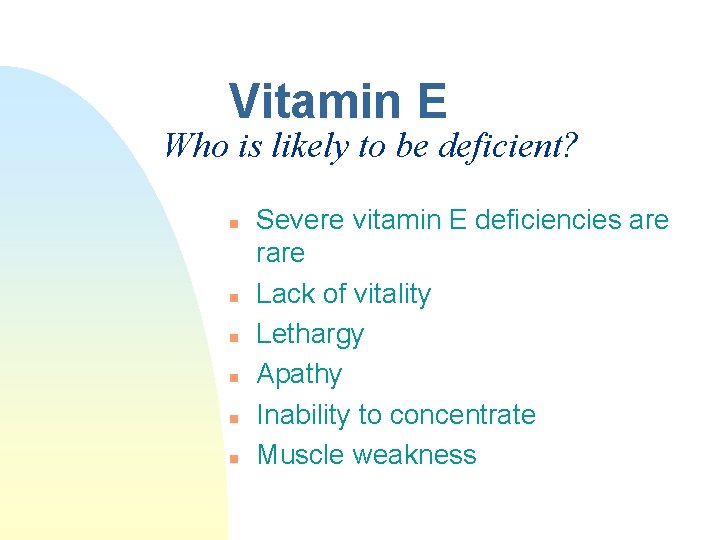
Vitamin E Who is likely to be deficient? n n n Severe vitamin E deficiencies are rare Lack of vitality Lethargy Apathy Inability to concentrate Muscle weakness
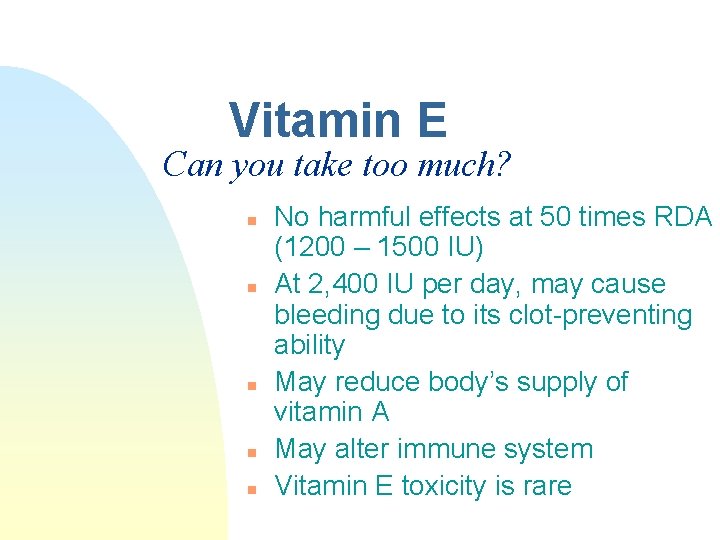
Vitamin E Can you take too much? n n n No harmful effects at 50 times RDA (1200 – 1500 IU) At 2, 400 IU per day, may cause bleeding due to its clot-preventing ability May reduce body’s supply of vitamin A May alter immune system Vitamin E toxicity is rare
Vitamin E Natural foods or supplements? n n Natural form more bioavailable Easier to obtain the amount needed from supplements
Vitamin E Who should take supplements? n n People over the age of 55 Smokers People who abuse alcohol Anyone with inadequate caloric or nutritional dietary intake or increased nutritional requirements
Vitamin E Miscellaneous: n n Freezing may destroy Vitamin E Extreme heat causes Vitamin E to break down Avoid deep-fat frying foods that are natural sources of Vitamin E Reduces potential toxicity of Vitamin A - Excessive doses causes Vitamin A depletion
Vitamin C
Vitamin C n n n Ascorbic acid (Toxic to viruses, bacteria, and some malignant tumor cells) Antioxidant water-soluble
What are C’s functions in the body? n n n n Protects you body from free radicals helps form connective tissue that hold your bones, muscles, and tissues together (collagen) aids in the healing of wounds aids the body in absorbing iron from plant sources helps to keep your gums healthy helps your body to fight infections aids in the prevention of heart disease helps prevent some forms of cancer
Harmful effects in larger doses: (over 1000 mg/ dose) n n Diarrhea gastrointestinal discomfort rebound Scurvy Avoid chewable tablets (may cause damage to teeth)
n Since Vitamin C is water-soluble excess amounts that the body does not need will be excreted, but larger doses can cause some problems. . .
Vitamin C daily recommendations n n LINK http: //www. women-offaith. com/health/supplements/vitc. htm
Recommended Dietary Intake n n Men: 60 mg/day Women: 60 mg/day Pregnant women: 95 mg/day Children: 45 mg/day n n Take divided doses of the vitamin twice daily to get the best results, and less excretion. Smoking, oral contraceptives, steroids, excessive alcohol consumption, and analgesics increase the need for this vitamin
Sources of Vitamin C n n n Guava, Broccoli, Cantaloupe, Red Bell Pepper, Orange Juice, Strawberries, Tomato Juice, Raw Tomato, Sweet Potato, Tangerine, Spinach, Leafy Greens, Berries, Citrus Fruits LINK (list of fruits &veggies that are good sources of C) www. heartinfo. org/nutrition/vitc 428 98. htm
Deficiency of C causes: n n n Weight loss fatigue and joint pain scurvy (bruising easily, bleeding gums, and tendency for bones to fracture) reduced resistance to colds and infections slow healing of wounds and fractured bones
Fact or Fiction: Vitamin C causes Kidney Stone formation n n Department of Nutrition, Harvard School of Public Health Study done on 45, 251 men that had no previous cases of kidney stones. Some subjects took up to 30 times the RDA values, and showed no increased risk of kidney stone formation.
To learn about more cool facts about Vitamin C, log on to: n n LINK www. cforyourself. com
Food or Supplement? n n The Mayo Clinic states that “your body needs macronutrients (proteins, carbohydrates, and fat) for energy and micronutrients (vitamins and minerals) for many functions. Whole foods are an excellent choice. ” They also stated that “an orange provides not only vitamin C but also carotene, calcium, and free sugars for energy. A vitamin C supplement is lacking these. ” The American Heart Association “recommends that healthy individuals obtain adequate nutrient intakes from food eaten in variety and moderation, rather than from supplements. ”
Regulation of Vitamin Suppleme nts
Need for reform? n n An overwhelming number of supplements had not been studied scientifically. In November 1994, Congress passed The Public Law 103 -417, The Dietary Supplement Health and Education Act(DSHEA).
The ODS Office of Dietary Supplements Mission: “. . to uncover new knowledge that will lead to better health for everyone”
Congressional Mandate for the ODS: n n n To explore the role of dietary supplements to improve health care To promote scientific study of dietary supplements in maintaining health and preventing chronic disease. To conduct and coordinate research on dietary supplements at the National Institute of Health. To collect & compile databases of federally funded research & scientific papers on dietary supplements. To coordinate funding for research on dietary supplements. To provide advice to other HHS agencies related to dietary supplements.
ODS Scientific Goals: n n n 1: Evaluate the role of dietary supplements in the prevention of disease and reduction of risk factors associated with disease. 2: Evaluate the role of dietary supplements in physical and mental health and in performance. 3: Explore the biochemical and cellular effects of dietary supplements on biological systems and their physiological impact across the life cycle 4: Improve scientific methodology as related to the study of dietary supplements. 5: Inform and educate scientists, health care providers, and the public about the benefits and risks of dietary supplements.
The Vitamin Game