
VITAMINS I eat to live and do not
- Slides: 22
VITAMINS
„I eat to live and do not live to eat” (Molière)
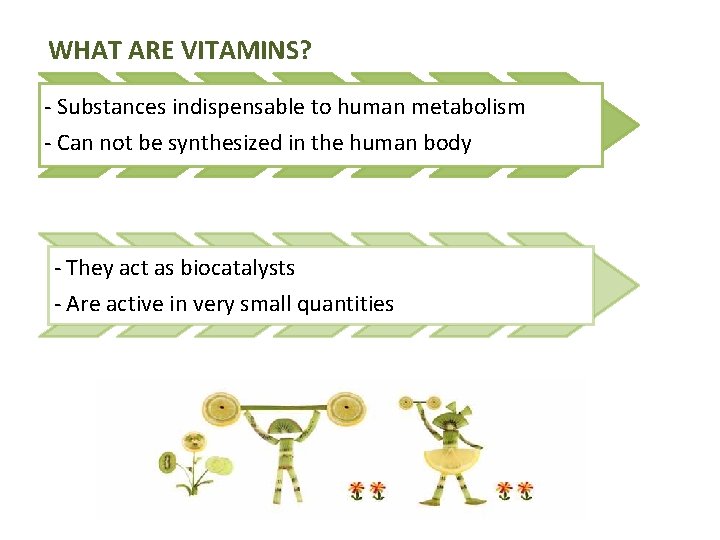
WHAT ARE VITAMINS? - Substances indispensable to human metabolism - Can not be synthesized in the human body - They act as biocatalysts - Are active in very small quantities
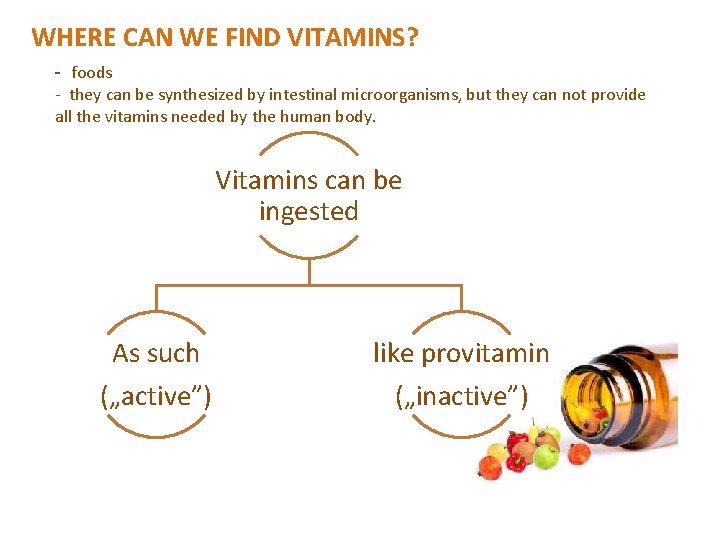
WHERE CAN WE FIND VITAMINS? - foods - they can be synthesized by intestinal microorganisms, but they can not provide all the vitamins needed by the human body. Vitamins can be ingested As such like provitamin („active”) („inactive”)
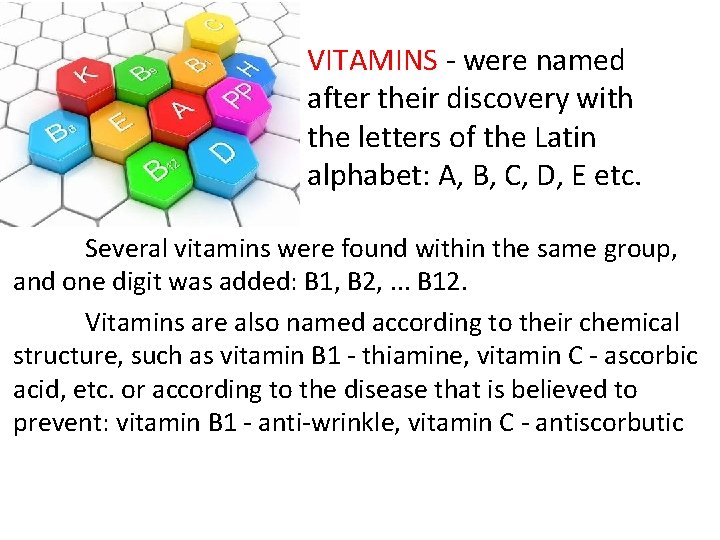
VITAMINS - were named after their discovery with the letters of the Latin alphabet: A, B, C, D, E etc. Several vitamins were found within the same group, and one digit was added: B 1, B 2, . . . B 12. Vitamins are also named according to their chemical structure, such as vitamin B 1 - thiamine, vitamin C - ascorbic acid, etc. or according to the disease that is believed to prevent: vitamin B 1 - anti-wrinkle, vitamin C - antiscorbutic
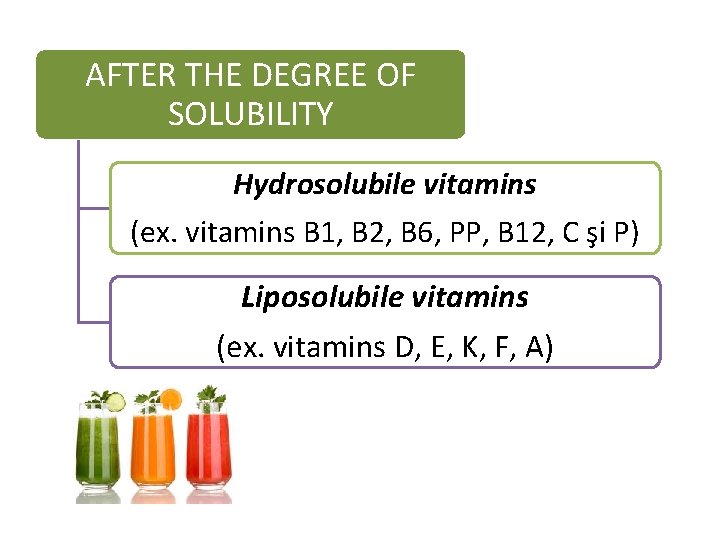
AFTER THE DEGREE OF SOLUBILITY Hydrosolubile vitamins (ex. vitamins B 1, B 2, B 6, PP, B 12, C şi P) Liposolubile vitamins (ex. vitamins D, E, K, F, A)
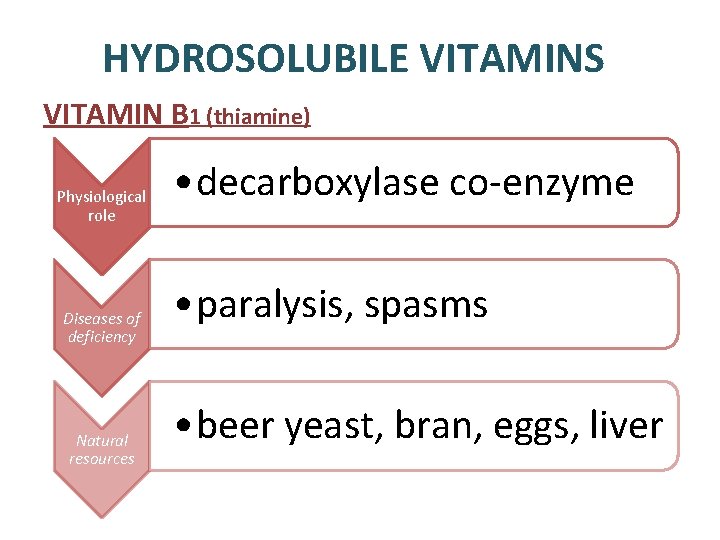
HYDROSOLUBILE VITAMINS VITAMIN B 1 (thiamine) Physiological role Diseases of deficiency Natural resources • decarboxylase co-enzyme • paralysis, spasms • beer yeast, bran, eggs, liver
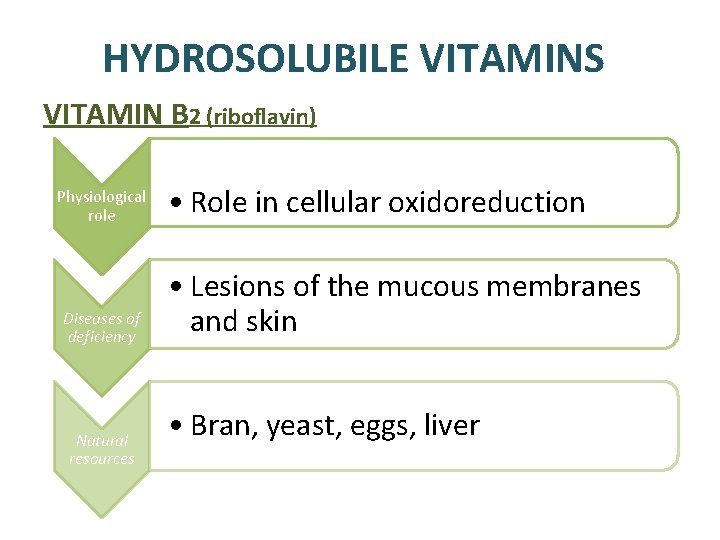
HYDROSOLUBILE VITAMINS VITAMIN B 2 (riboflavin) Physiological role Diseases of deficiency Natural resources • Role in cellular oxidoreduction • Lesions of the mucous membranes and skin • Bran, yeast, eggs, liver
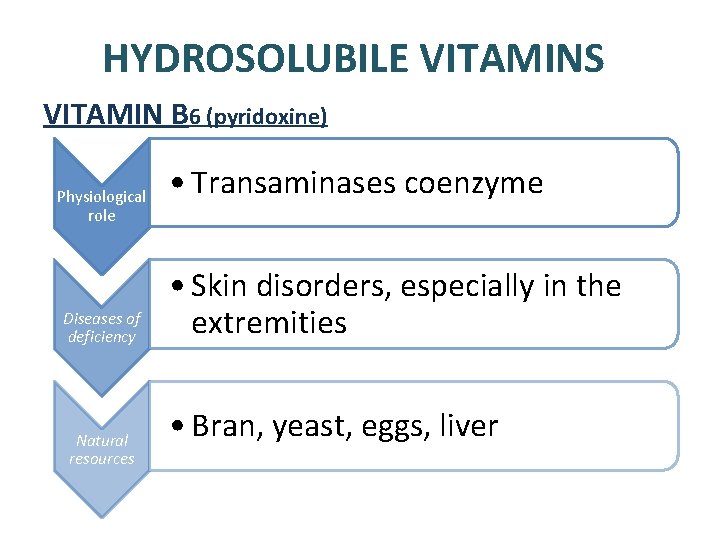
HYDROSOLUBILE VITAMINS VITAMIN B 6 (pyridoxine) Physiological role Diseases of deficiency Natural resources • Transaminases coenzyme • Skin disorders, especially in the extremities • Bran, yeast, eggs, liver
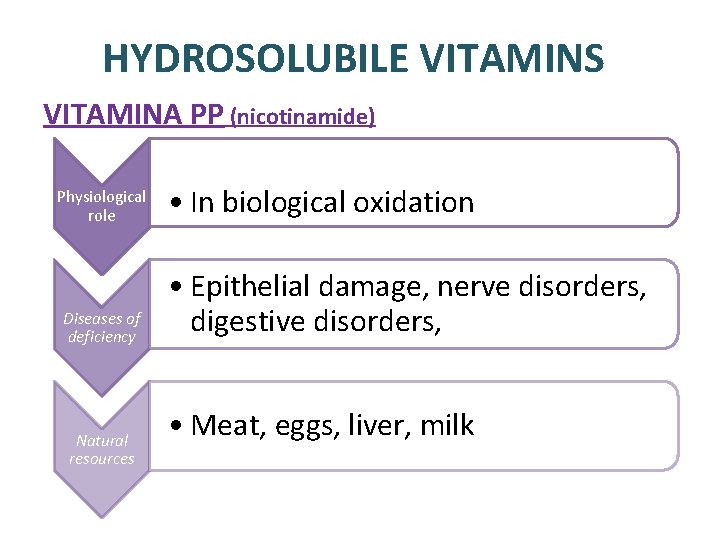
HYDROSOLUBILE VITAMINS VITAMINA PP (nicotinamide) Physiological role Diseases of deficiency Natural resources • In biological oxidation • Epithelial damage, nerve disorders, digestive disorders, • Meat, eggs, liver, milk
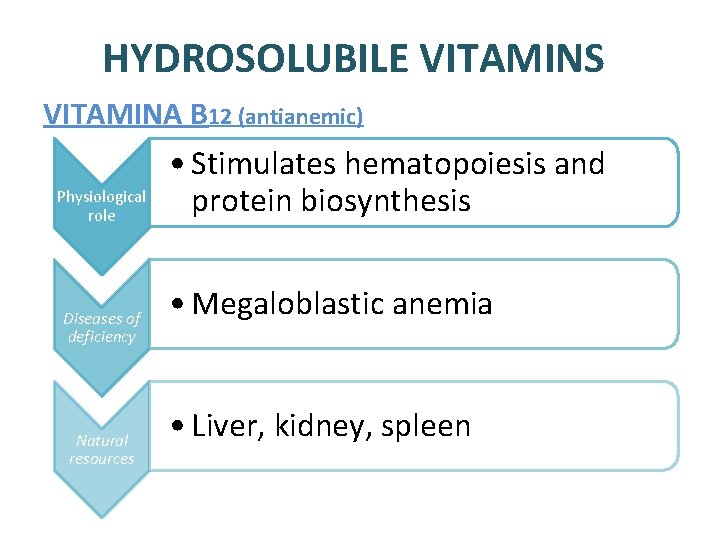
HYDROSOLUBILE VITAMINS VITAMINA B 12 (antianemic) Physiological role Diseases of deficiency Natural resources • Stimulates hematopoiesis and protein biosynthesis • Megaloblastic anemia • Liver, kidney, spleen
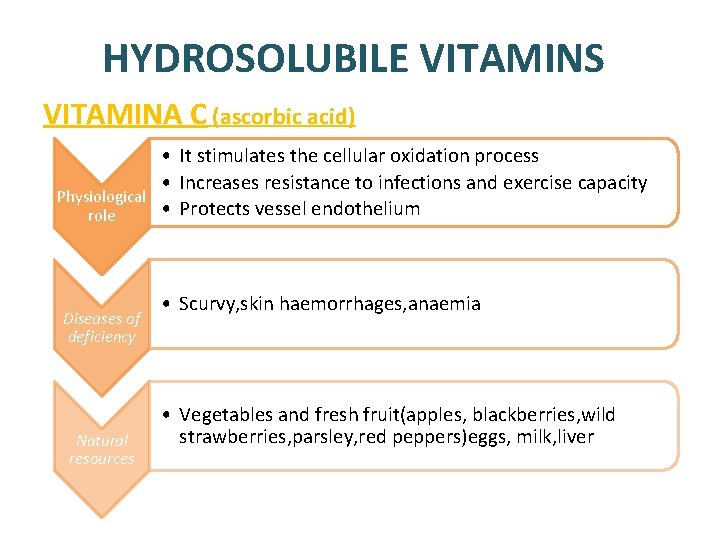
HYDROSOLUBILE VITAMINS VITAMINA C (ascorbic acid) Physiological role Diseases of deficiency Natural resources • It stimulates the cellular oxidation process • Increases resistance to infections and exercise capacity • Protects vessel endothelium • Scurvy, skin haemorrhages, anaemia • Vegetables and fresh fruit(apples, blackberries, wild strawberries, parsley, red peppers)eggs, milk, liver
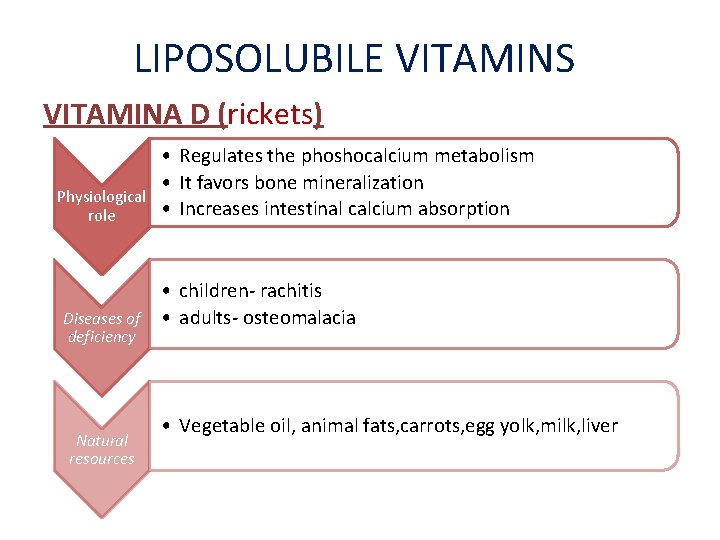
LIPOSOLUBILE VITAMINS VITAMINA D (rickets) Physiological role Diseases of deficiency Natural resources • Regulates the phoshocalcium metabolism • It favors bone mineralization • Increases intestinal calcium absorption • children- rachitis • adults- osteomalacia • Vegetable oil, animal fats, carrots, egg yolk, milk, liver
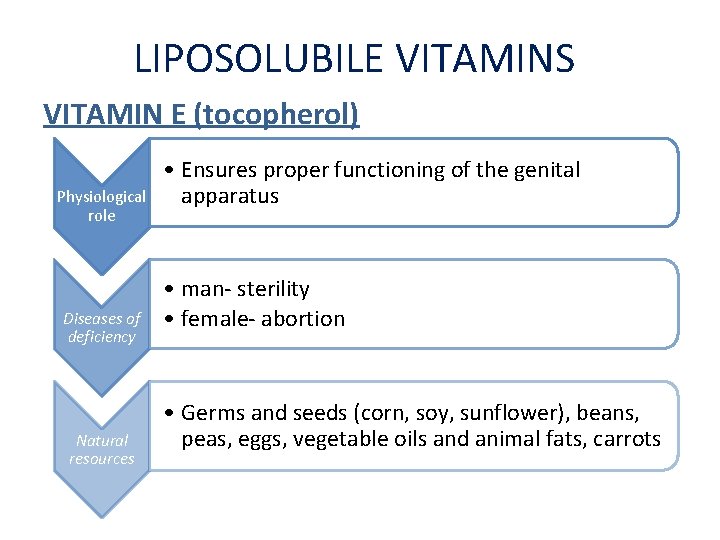
LIPOSOLUBILE VITAMINS VITAMIN E (tocopherol) Physiological role Diseases of deficiency Natural resources • Ensures proper functioning of the genital apparatus • man- sterility • female- abortion • Germs and seeds (corn, soy, sunflower), beans, peas, eggs, vegetable oils and animal fats, carrots
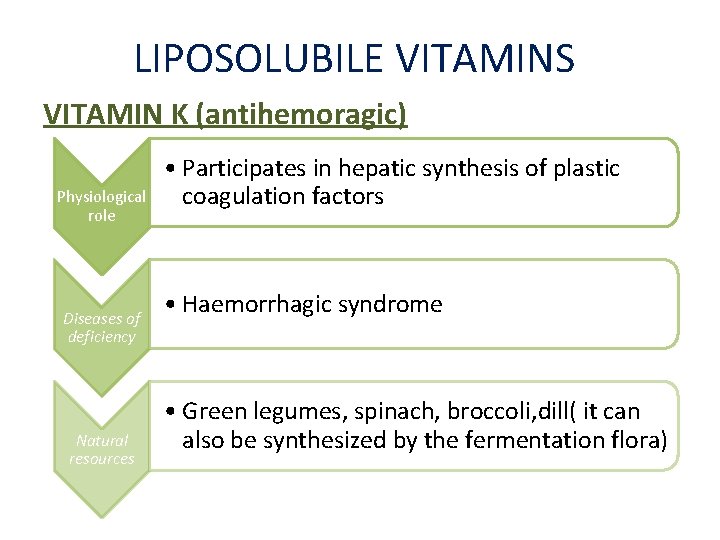
LIPOSOLUBILE VITAMINS VITAMIN K (antihemoragic) Physiological role Diseases of deficiency Natural resources • Participates in hepatic synthesis of plastic coagulation factors • Haemorrhagic syndrome • Green legumes, spinach, broccoli, dill( it can also be synthesized by the fermentation flora)
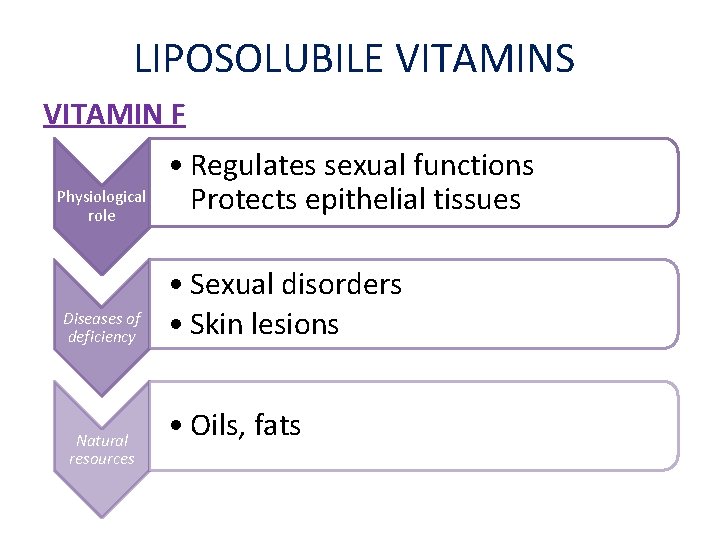
LIPOSOLUBILE VITAMINS VITAMIN F Physiological role Diseases of deficiency Natural resources • Regulates sexual functions Protects epithelial tissues • Sexual disorders • Skin lesions • Oils, fats
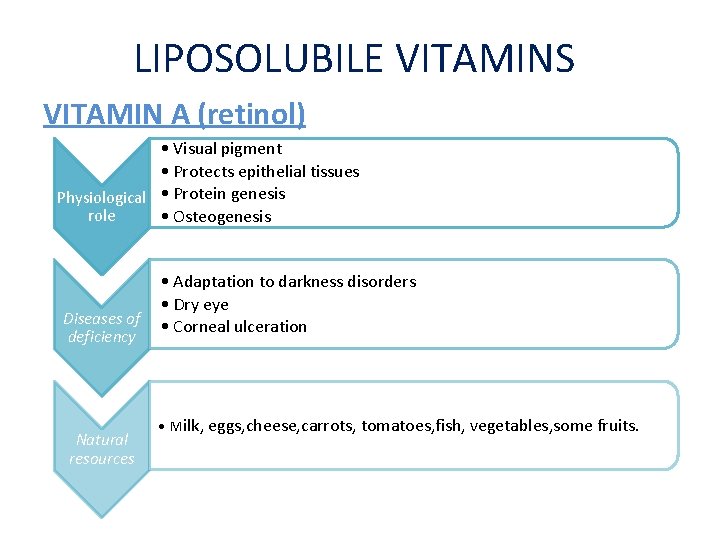
LIPOSOLUBILE VITAMINS VITAMIN A (retinol) • Visual pigment • Protects epithelial tissues Physiological • Protein genesis role • Osteogenesis Diseases of deficiency Natural resources • Adaptation to darkness disorders • Dry eye • Corneal ulceration • Milk, eggs, cheese, carrots, tomatoes, fish, vegetables, some fruits.
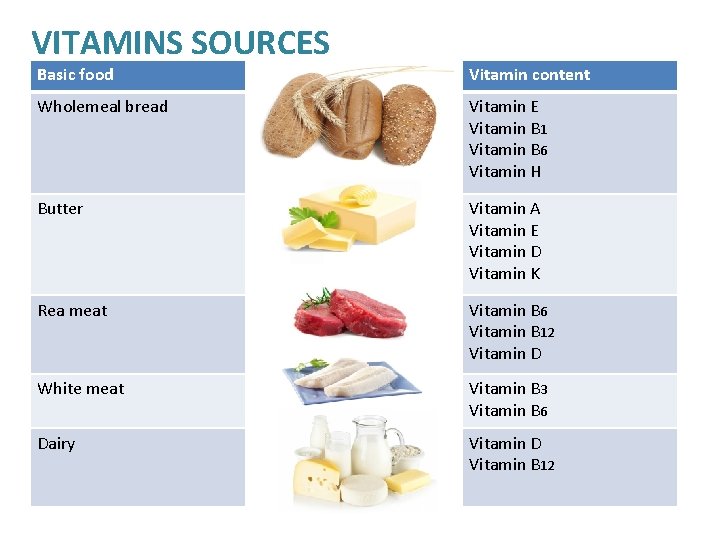
VITAMINS SOURCES Basic food Vitamin content Wholemeal bread Vitamin E Vitamin B 1 Vitamin B 6 Vitamin H Butter Vitamin A Vitamin E Vitamin D Vitamin K Rea meat Vitamin B 6 Vitamin B 12 Vitamin D White meat Vitamin B 3 Vitamin B 6 Dairy Vitamin D Vitamin B 12
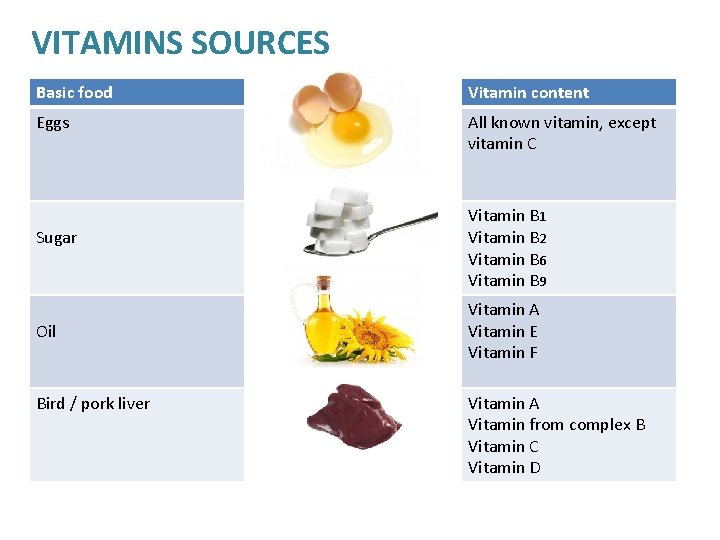
VITAMINS SOURCES Basic food Vitamin content Eggs All known vitamin, except vitamin C Sugar Oil Bird / pork liver Vitamin B 1 Vitamin B 2 Vitamin B 6 Vitamin B 9 Vitamin A Vitamin E Vitamin F Vitamin A Vitamin from complex B Vitamin C Vitamin D
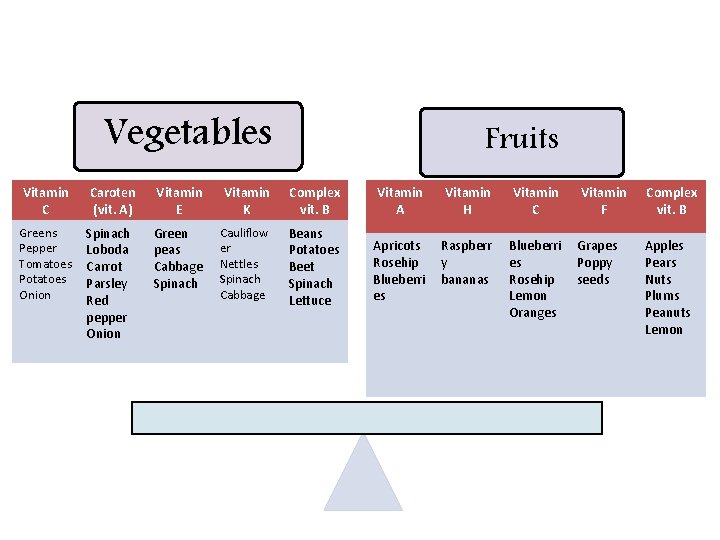
Vegetables Fruits Vitamin C Caroten (vit. A) Vitamin E Vitamin K Complex vit. B Vitamin A Vitamin H Vitamin C Vitamin F Complex vit. B Greens Pepper Tomatoes Potatoes Onion Spinach Loboda Carrot Parsley Red pepper Onion Green peas Cabbage Spinach Cauliflow er Nettles Spinach Cabbage Beans Potatoes Beet Spinach Lettuce Apricots Rosehip Blueberri es Raspberr y bananas Blueberri es Rosehip Lemon Oranges Grapes Poppy seeds Apples Pears Nuts Plums Peanuts Lemon
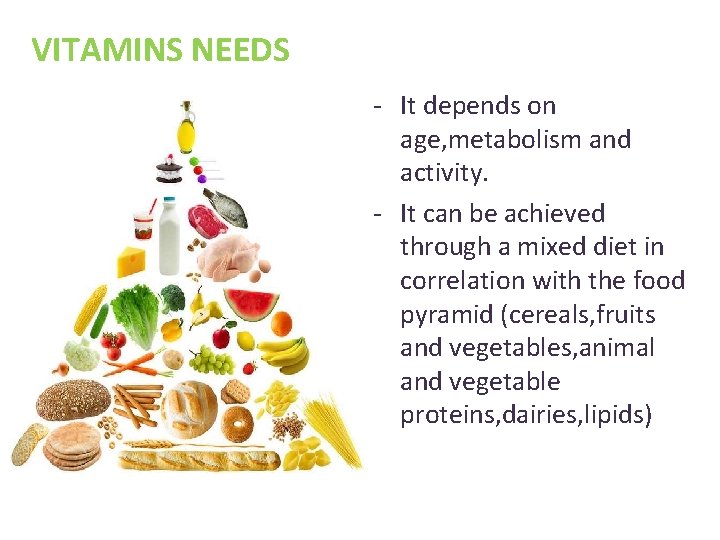
VITAMINS NEEDS - It depends on age, metabolism and activity. - It can be achieved through a mixed diet in correlation with the food pyramid (cereals, fruits and vegetables, animal and vegetable proteins, dairies, lipids)
AS A CONCLUSION. . . Choose a healthy diet, which consists of a variety of foods. . If you manage to control not only your BODY and DIET but also your MIND, you WIN twice