
VITAMINS Definition and Classification l Noncaloric organic nutrients
- Slides: 45
VITAMINS
Definition and Classification l Non-caloric organic nutrients l Needed in very small amounts l Facilitators – help body processes proceed; digestion, absorption, metabolism, growth etc. l Some appear in food as precursors or provitamins
Definition and Classification l 2 classes l Fat soluble: l Water soluble:
Definition and Classification l Fat soluble vitamins Found in the fats and oils of food. l Absorbed into the lymph and carried in blood with protein transporters = chylomicrons. l *Stored in liver and body fat and can become toxic if large amounts are consumed. l
Definition and Classification l Water soluble vitamins Found in vegetables, fruit and grains, meat. l Absorbed directly into the blood stream l Not stored in the body and toxicity is rare. Alcohol can increase elimination, smoking, etc. cause decreased absorption. l
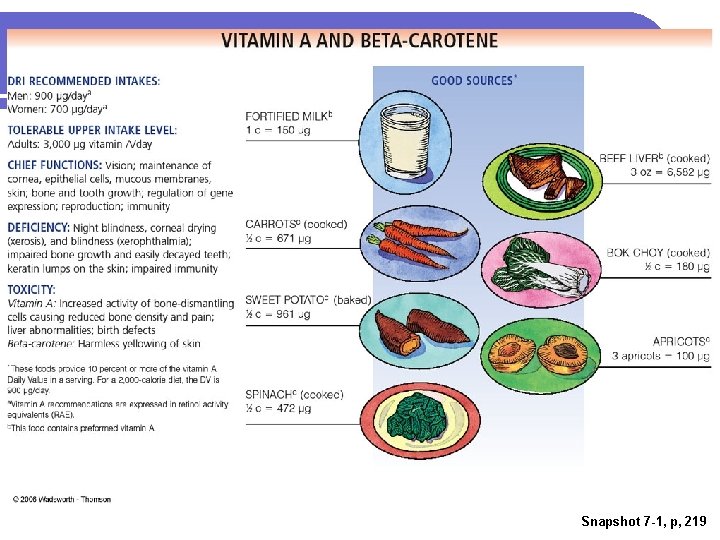
Fat Soluble Vitamins l Vitamin A l l 3 forms: retinol (stored in liver), retinal, retinoic acid Roles in body: l l l Regulation of gene expression Part of the visual pigment rhodopsin, maintains clarity of cornea (yes eating carrots is good for your eyesight) Required for cell growth and division - epithelial cells, bones and teeth Promotes development of immune cells, especially “Natural Killer Cells” Antioxidant
Fat Soluble Vitamins l Vitamin l A Deficiencies cause: Night blindness, xerophthalmia (keratin deposits in cornea), muscular degeneration. l Skin and mucous membrane dryness and infection, keratin deposits. l Anemia l Developmental defects – bones, teeth, immune system, vision l
Fat Soluble Vitamins l Vitamin l A Toxicities (Retin. A/Accutaine, single large doses of supplements, eating excessive amounts of liver) cause: Fragile RBCs, hemorrhage l Bone pain, fractures l Abdominal pain and diarrhea l Blurred vision l Dry skin, hair loss l Liver enlargement l
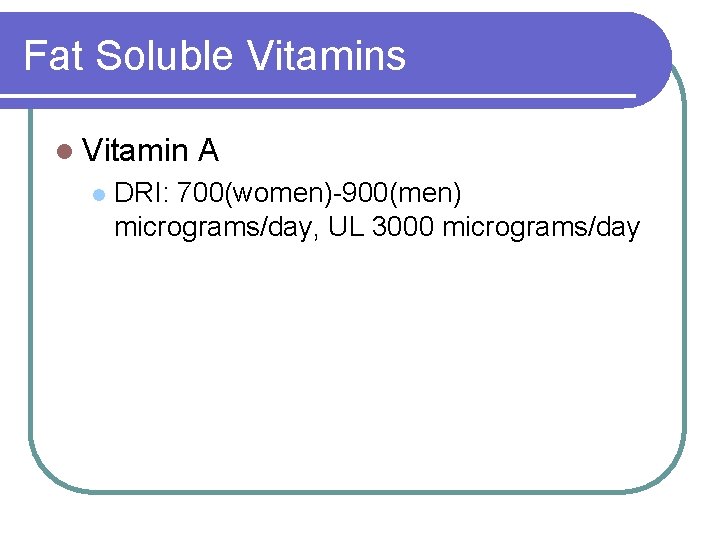
Fat Soluble Vitamins l Vitamin l A DRI: 700(women)-900(men) micrograms/day, UL 3000 micrograms/day
Snapshot 7 -1, p, 219
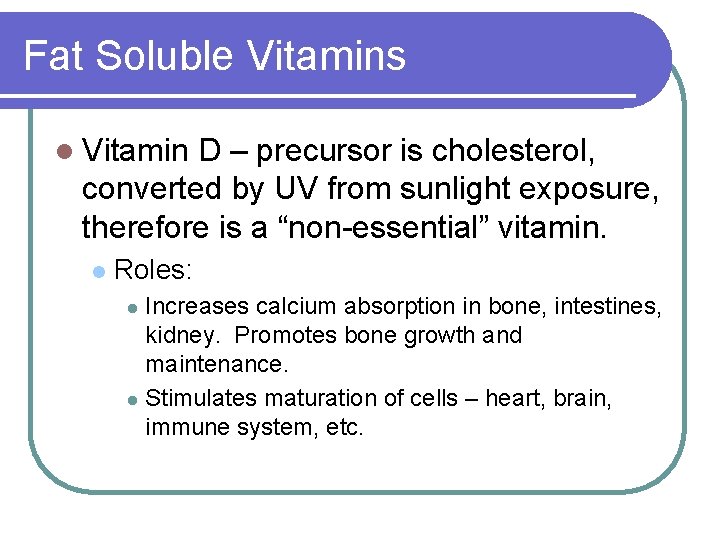
Fat Soluble Vitamins l Vitamin D – precursor is cholesterol, converted by UV from sunlight exposure, therefore is a “non-essential” vitamin. l Roles: Increases calcium absorption in bone, intestines, kidney. Promotes bone growth and maintenance. l Stimulates maturation of cells – heart, brain, immune system, etc. l
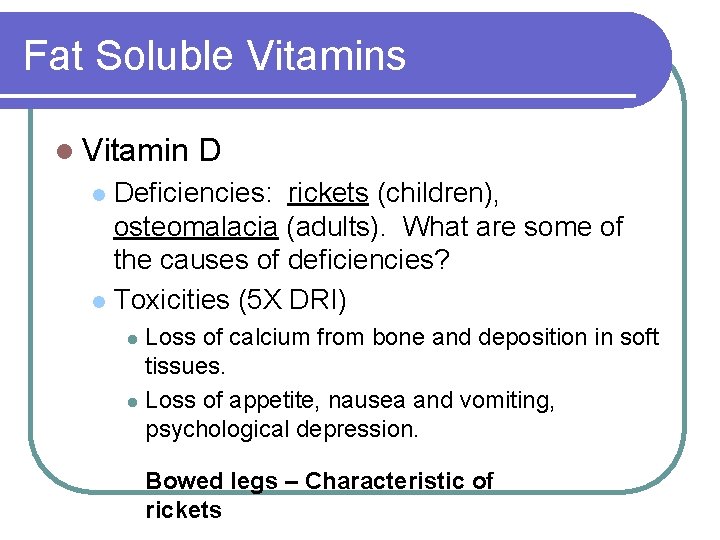
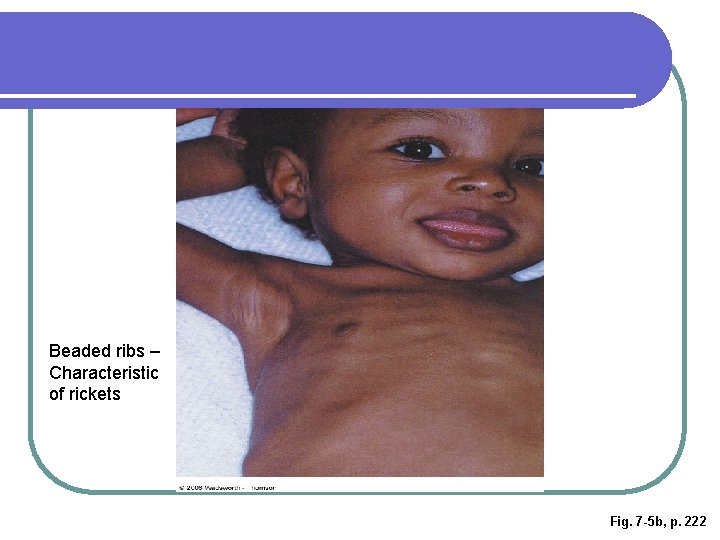
Fat Soluble Vitamins l Vitamin D Deficiencies: rickets (children), osteomalacia (adults). What are some of the causes of deficiencies? l Toxicities (5 X DRI) l Loss of calcium from bone and deposition in soft tissues. l Loss of appetite, nausea and vomiting, psychological depression. l Bowed legs – Characteristic of rickets
Beaded ribs – Characteristic of rickets Fig. 7 -5 b, p. 222
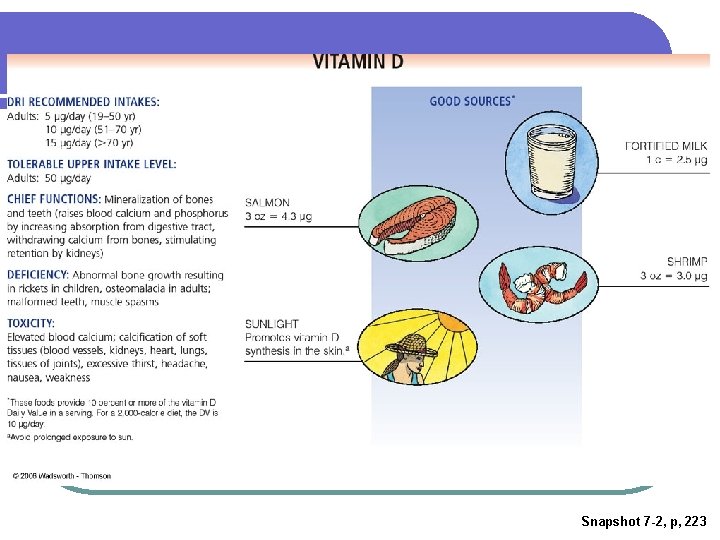
Fat Soluble Vitamins l Vitamin D DRI – 5 micrograms/day for ages 19 -50, 10 for ages 51 -70, 15 for ages >70. l Sources, see snapshot 7. 2 l
Snapshot 7 -2, p, 223
Fat Soluble Vitamins l Vitamin E – tocopherol, *alpha-, beta -, gamma-, and deltal Roles: Antioxidant (protects polyunsaturated fats) l Prevention of damage to lungs, RBCs, WBCs (immunity), heart l Necessary for normal nerve development l
Fat Soluble Vitamins l Vitamin l E Deficiencies (decreased absorption of fatsliver disease, low fat diets) Premature babies – fragile RBCs (hemolysis) l Loss of muscle coordination, vision, immune functions l l Toxicities (more than 1000 milligrams/day) l Increases the effects of anticoagulants (Coumadin, Warfarin)
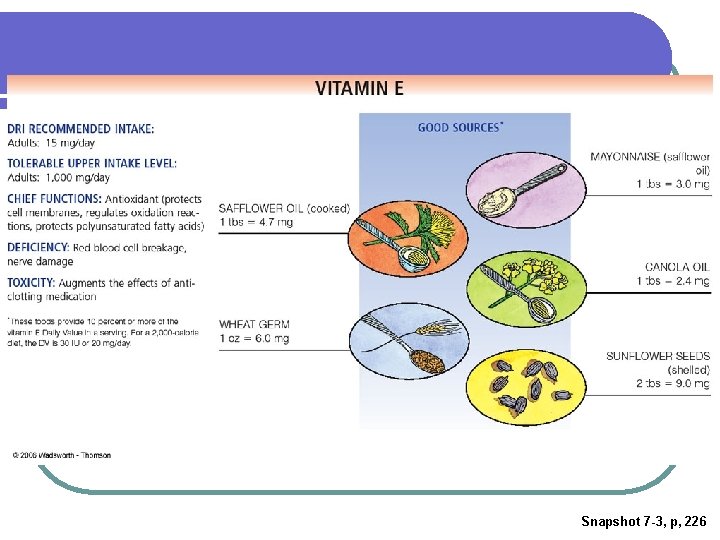
Fat Soluble Vitamins l Vitamin E DRI 15 milligrams/day (alpha-tocopherol) l Sources, see snapshot 7. 3 l
Snapshot 7 -3, p, 226
Fat Soluble Vitamins l Vitamin K – produced by bacteria in large intestine l Roles l l Promotes synthesis of blood clotting proteins (**Interferes with Coumadin) Bone formation Deficiencies are rare but seen in infants, after prolonged antibiotic therapy, and in patients with decreased bile production. Toxicities (>1000 mg/day): rupture of RBCs and jaundice
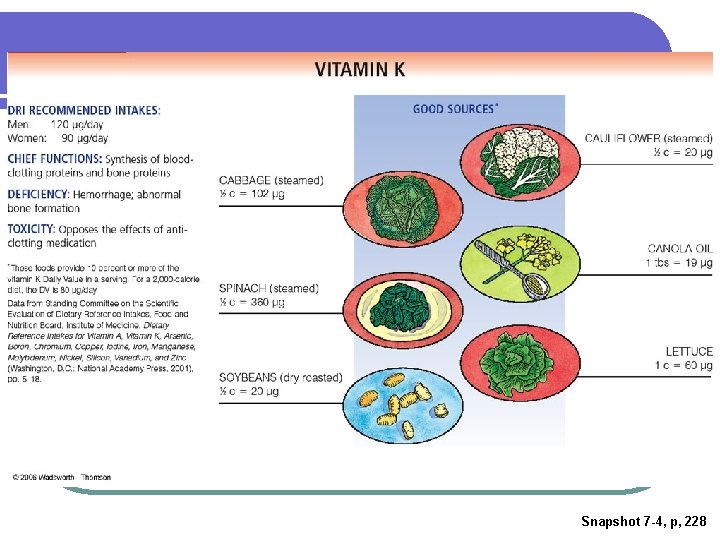
Fat Soluble Vitamins l Vitamin K DRI: 90(women) – 120(men) micrograms/day l Sources, see snapshot 7. 4 l
Snapshot 7 -4, p, 228
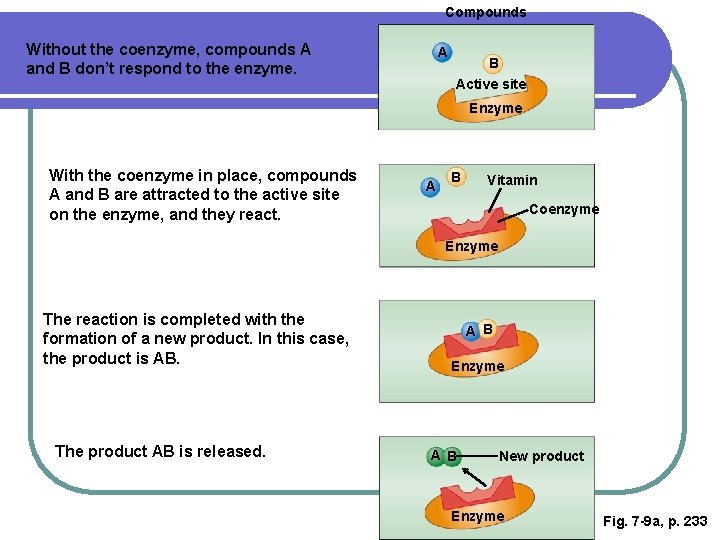
Water Soluble Vitamins l 8 B vitamins – Tender Romance Never Fails with 6 to 12 Beautiful Pearls (Thiamin, Riboflavin, Niacin, Folate, B 6, B 12, Biotin, and Pantothenic acid) Aid in metabolism of and energy release from carbohydrates, lipids, amino acids. l Mode of action – coenzymes or parts of coenzymes that are necessary for the proper activity of enzymes, fig 7. 9 l
Compounds Without the coenzyme, compounds A and B don’t respond to the enzyme. A B Active site Enzyme With the coenzyme in place, compounds A and B are attracted to the active site on the enzyme, and they react. A B Vitamin Coenzyme Enzyme The reaction is completed with the formation of a new product. In this case, the product is AB. The product AB is released. A B Enzyme A B New product Enzyme Fig. 7 -9 a, p. 233
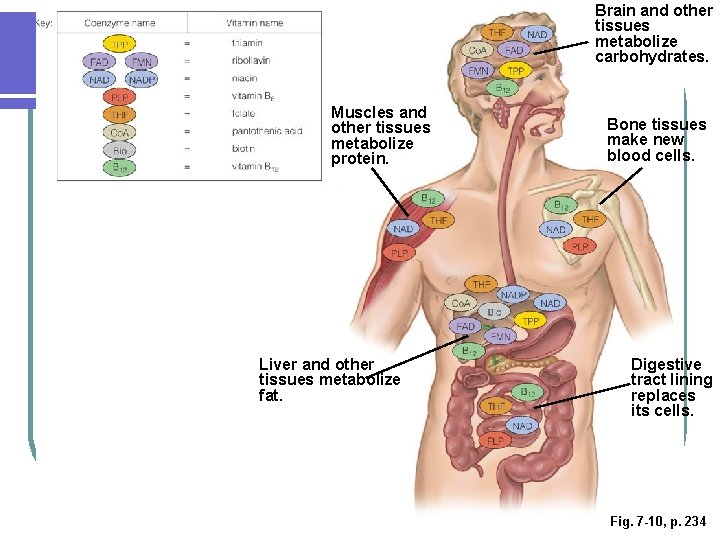
Brain and other tissues metabolize carbohydrates. Muscles and other tissues metabolize protein. Liver and other tissues metabolize fat. Bone tissues make new blood cells. Digestive tract lining replaces its cells. Fig. 7 -10, p. 234
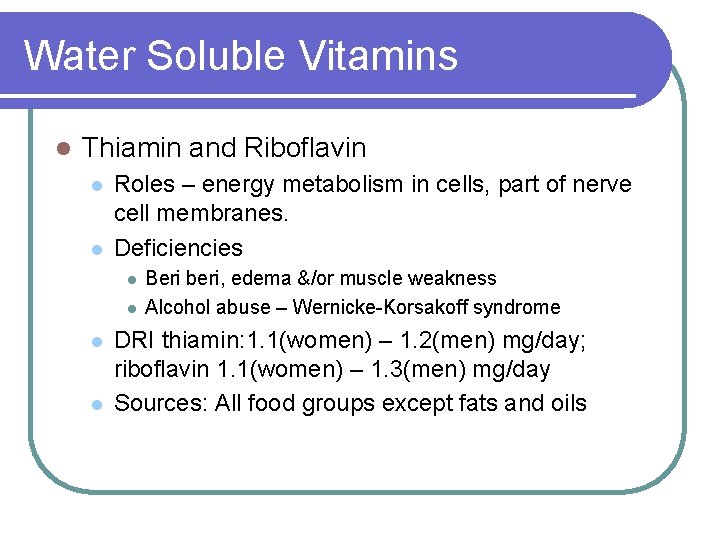
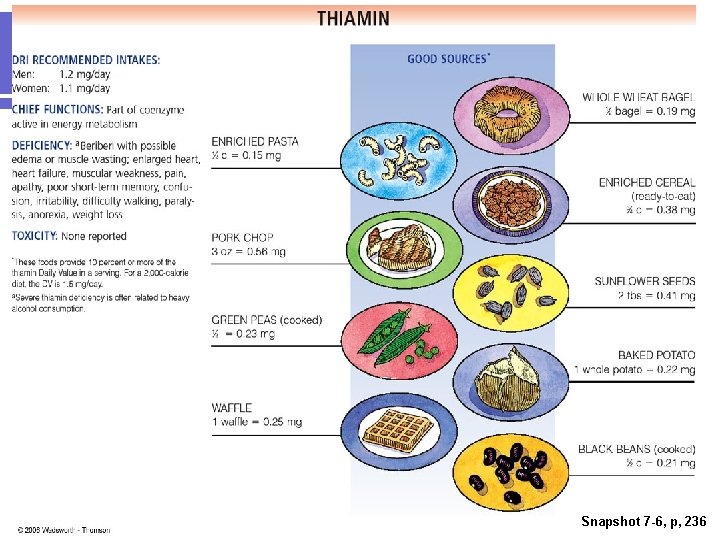
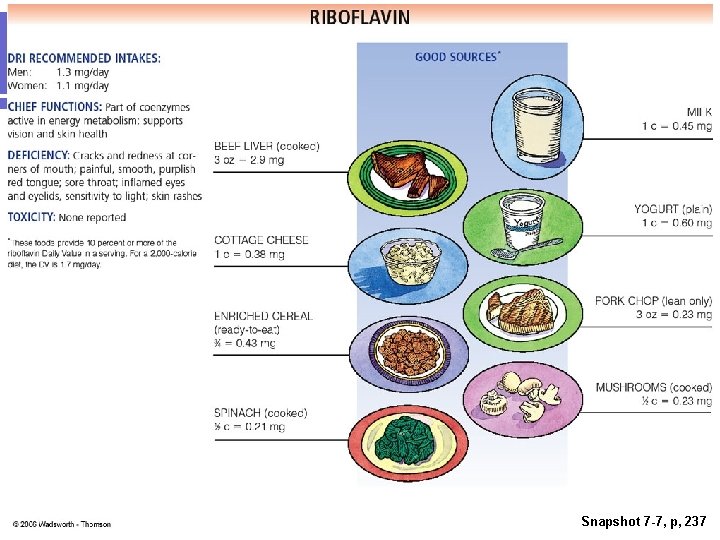
Water Soluble Vitamins l Thiamin and Riboflavin l l Roles – energy metabolism in cells, part of nerve cell membranes. Deficiencies l l Beri beri, edema &/or muscle weakness Alcohol abuse – Wernicke-Korsakoff syndrome DRI thiamin: 1. 1(women) – 1. 2(men) mg/day; riboflavin 1. 1(women) – 1. 3(men) mg/day Sources: All food groups except fats and oils
Snapshot 7 -6, p, 236
Snapshot 7 -7, p, 237
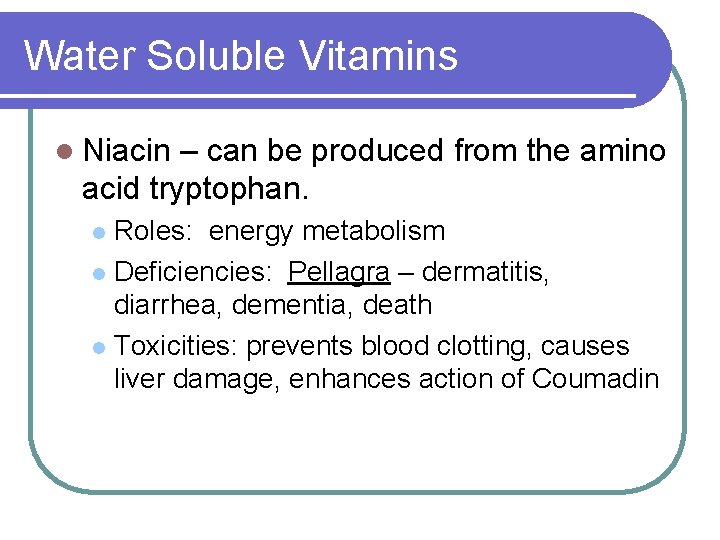
Water Soluble Vitamins l Niacin – can be produced from the amino acid tryptophan. Roles: energy metabolism l Deficiencies: Pellagra – dermatitis, diarrhea, dementia, death l Toxicities: prevents blood clotting, causes liver damage, enhances action of Coumadin l
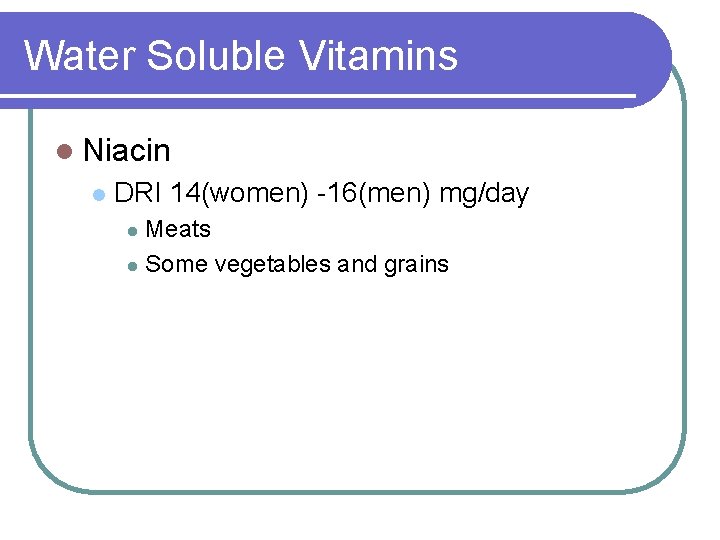
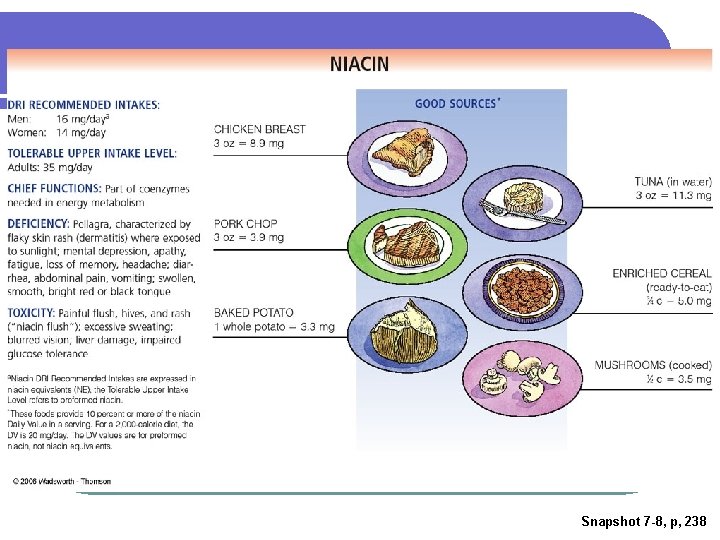
Water Soluble Vitamins l Niacin l DRI 14(women) -16(men) mg/day Meats l Some vegetables and grains l
Snapshot 7 -8, p, 238
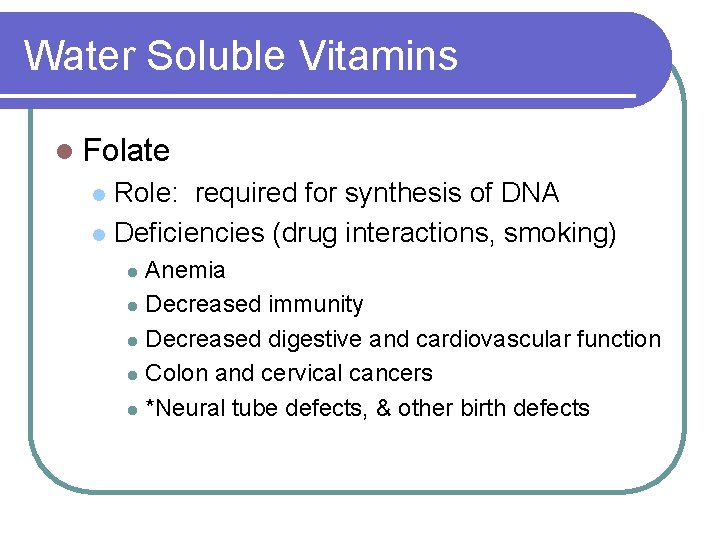
Water Soluble Vitamins l Folate Role: required for synthesis of DNA l Deficiencies (drug interactions, smoking) l Anemia l Decreased immunity l Decreased digestive and cardiovascular function l Colon and cervical cancers l *Neural tube defects, & other birth defects l
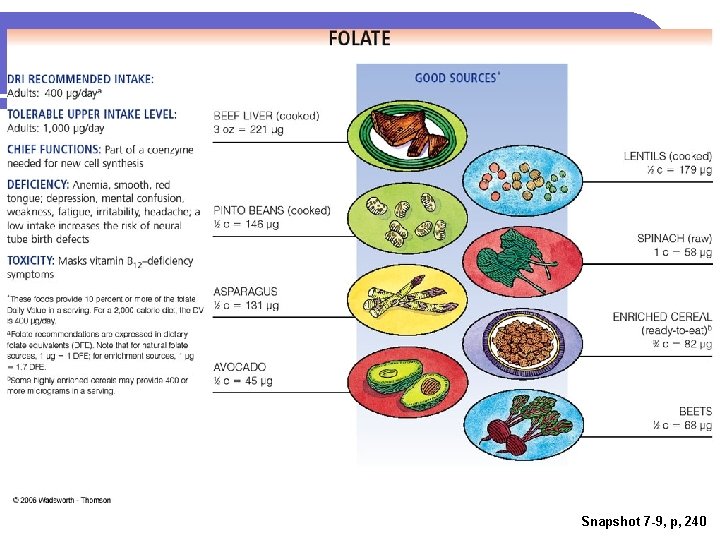
Water Soluble Vitamins l Folate Toxicities (>1000 mg/day): rare, interferes with anticancer drugs. l DRI 400 milligrams/day l Sources, snapshot 7. 8 l
Snapshot 7 -9, p, 240
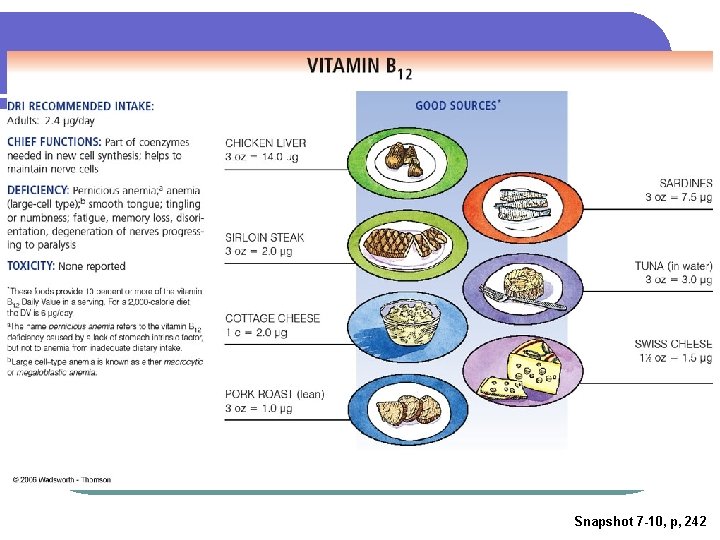
Water Soluble Vitamins l Vitamin B 12 (requires intrinsic factor for absorption) Roles: works with folate, part of insulating sheath around nerves. l Deficiencies: l Pernicious anemia l Paralysis l Nerve damage in fetus l
Water Soluble Vitamins l Vitamin B 12 DRI 2. 3 micrograms/day l Sources, see snapshot 7. 9 l l Meat and dairy
Snapshot 7 -10, p, 242
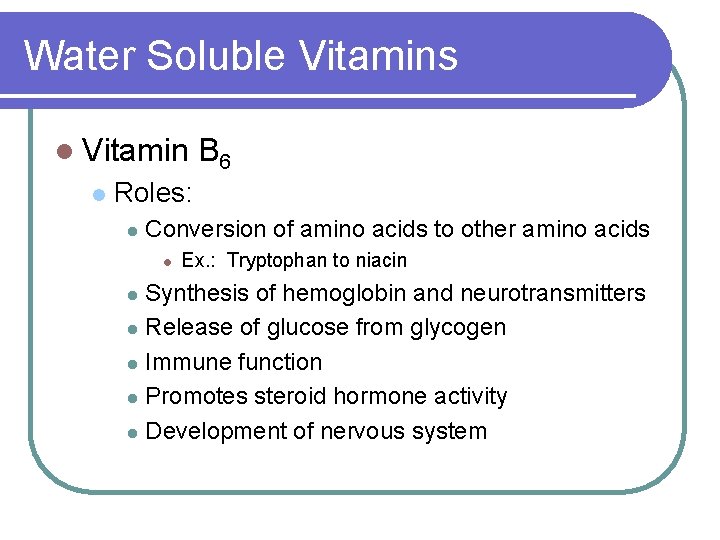
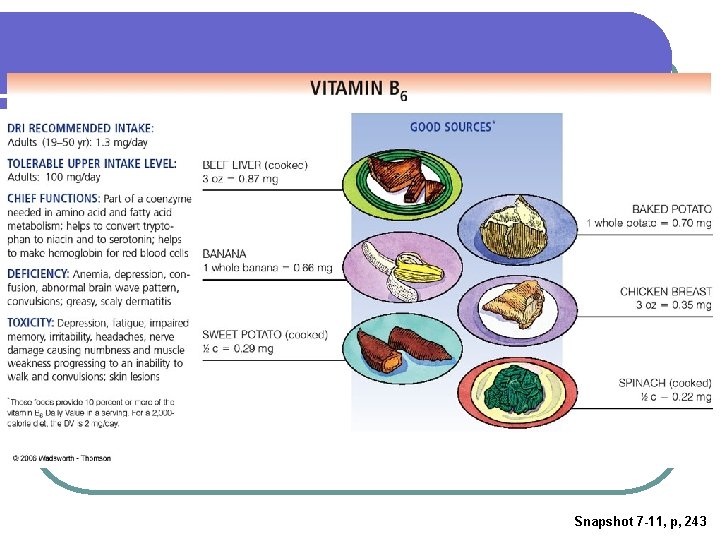
Water Soluble Vitamins l Vitamin l B 6 Roles: l Conversion of amino acids to other amino acids l Ex. : Tryptophan to niacin Synthesis of hemoglobin and neurotransmitters l Release of glucose from glycogen l Immune function l Promotes steroid hormone activity l Development of nervous system l
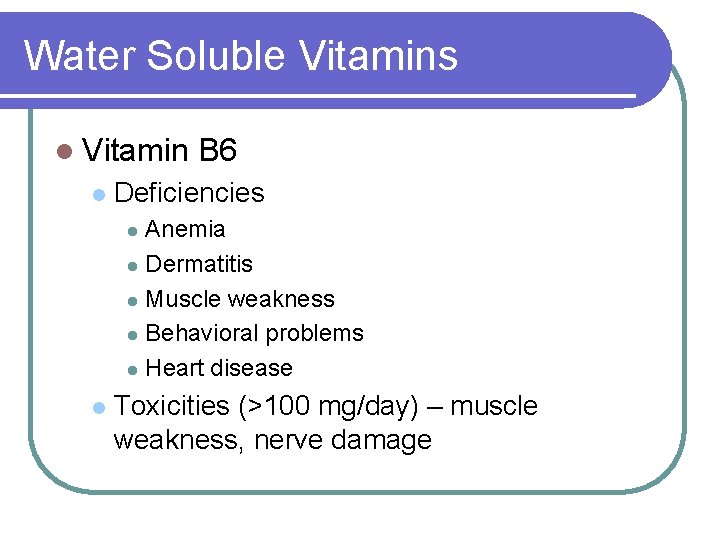
Water Soluble Vitamins l Vitamin l B 6 Deficiencies Anemia l Dermatitis l Muscle weakness l Behavioral problems l Heart disease l l Toxicities (>100 mg/day) – muscle weakness, nerve damage
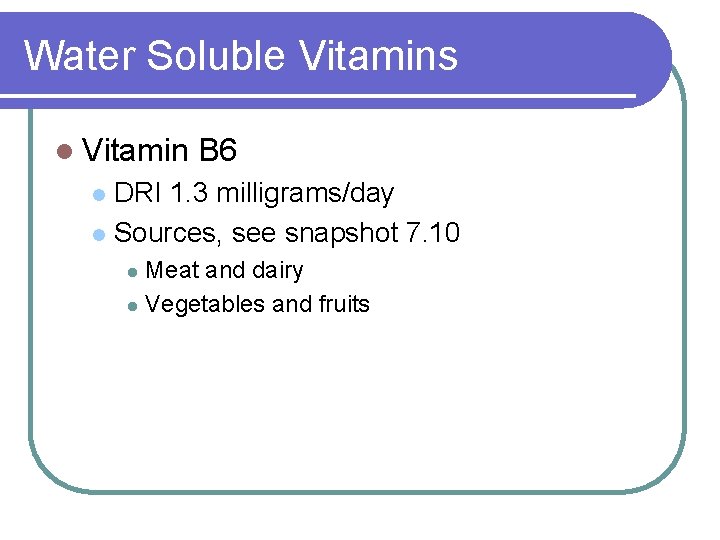
Water Soluble Vitamins l Vitamin B 6 DRI 1. 3 milligrams/day l Sources, see snapshot 7. 10 l Meat and dairy l Vegetables and fruits l
Snapshot 7 -11, p, 243
Water Soluble Vitamins l Biotin l and Pantothenic acid Roles: Metabolism of carbohydrates, fats and proteins l Synthesis of lipids, neurotransmitters, steroid hormones, hemoglobin. l
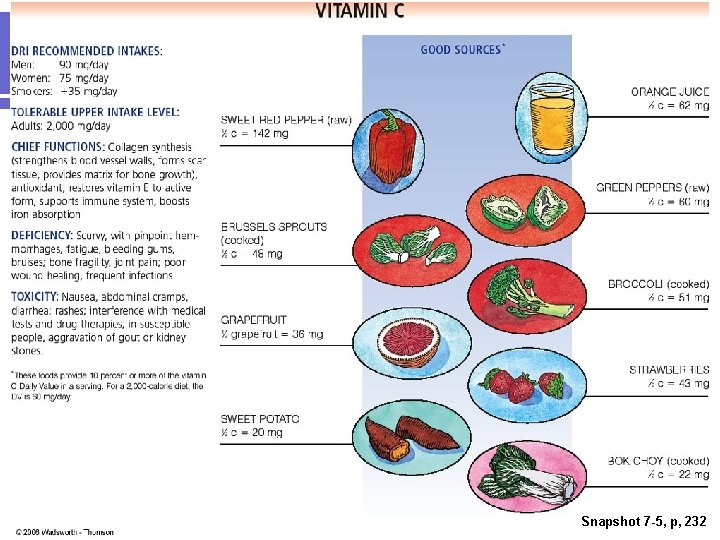
Water Soluble Vitamins l Vitamin C, ascorbic acid – history of controversy l Roles: Connective tissue development, collagen l Antioxidant l Promotes iron absorption, immunity l Protects vitamin E l
Water Soluble Vitamins l Vitamin C l l l Deficiency – Scurvy (skin and mucous membrane damage), anemia. Toxicity (> 2 grams/day) – pro-oxidant, activates oxidizing agents. DRI – 75(w) – (90(m) milligrams/day. Increased for smokers. Sources, see snapshot 7. 11 Notes: can interfere with diagnostic tests for diabetes, and blood clotting Prevents colds
Snapshot 7 -5, p, 232